US12649729B2
Pyrazole derivatives useful as NAMPT modulators
Publication
Application
Classifications
IPC Classifications
CPC Classifications
Applicants
Cytokinetics, Inc.
Inventors
Minxing Shen, Antonio Romero, Pu-Ping Lu
Abstract
Provided herein are compounds of formula (A): or a pharmaceutically acceptable salt thereof, wherein X, R 1 , R 2 , R 3 , R 4 , R y , and R z are as defined herein. Also provided herein is a pharmaceutically acceptable composition comprising a compound of formula (A), or a pharmaceutically acceptable salt thereof, as well as methods of using a compound of formula (A), or a pharmaceutically acceptable salt thereof, to treat various diseases and conditions mediated by nicotinamide phosphoribosyltransferase (NAMPT).
Description
CROSS REFERENCE TO RELATED APPLICATIONS
[0001]This application is a national stage application under 35 U.S.C. § 371 of International Application No. PCT/US2021/064422, filed internationally on Dec. 20, 2021, which claims priority to and the benefit of U.S. Provisional Application No. 63/128,756, filed on Dec. 21, 2020, the disclosures of which are incorporated herein by reference in their entirety.
FIELD
[0002]Provided herein are compounds, pharmaceutical compositions comprising such compounds, and methods of treating various diseases and conditions mediated by nicotinamide adenine dinucleotide (NAD+) modulation via nicotinamide phosphoribosyltransferase (NAMPT) with such compounds.
BACKGROUND
[0003]The present disclosure relates to the use of modulators of nicotinamide phosphoribosyltransferase (NAMPT) and derivatives thereof, as well as enhancers or inducers of NAMPT expression, NAMPT activity or NAMPT-mediated signaling for preventing or treating a variety of pathological conditions.
[0004]Nicotinamide adenine dinucleotide (NAD+) is an essential coenzyme (enzyme cofactor) involved in fundamental biological processes of both catabolic and anabolic metabolism. As a coenzyme, NAD is associated with many oxidative enzymes (typically dehydrogenases) involved in energy metabolism, serving as a universal electron carrier. NAD exists in cells in the oxidized state (NAD+ and NADP+), and the reduced state (NADH and NADPH), acting as a chemical means to capture and transfer free energy from oxidative processes in catabolism, or to provide small packets of energy to build macromolecules in anabolism. NADH produced from the oxidation of carbohydrates, lipids, and amino acids provides reducing equivalents to the electron transport chain of mitochondria, ultimately driving the synthesis of ATP in oxidative phosphorylation.
[0005]More than 200 enzymes use either NAD+ or NADP+ as a coenzyme, and the enzymatic functions are not limited to energy metabolism. It is now appreciated that NAD+ plays a role in regulating diverse functions, including mitochondrial function, respiratory capacity, and biogenesis, mitochondrial-nuclear signaling. Further, it controls cell signaling, gene expression, DNA repair, hematopoiesis, immune function, the unfolded protein response, and autophagy. Furthermore, NAD is anti-inflammatory and is the precursor for NADPH, which is the primary source of reducing power for combating oxidative stress. A large body of literature indicates that boosting NAD levels is an effective strategy to either prevent or ameliorate a wide variety of disease states (Stromland et al., Biochem Soc Trans. 2019, 47(1):119-130; Ralto et al., Nat Rev Nephrol. 2019; Fang et al., Trends Mol Med. 2017, 23(10):899-916; Yoshino et al., Cell Metab. 2011, 14(4):528-36; Yang and Sauve, Biochim Biophys Acta. 2016, 1864:1787-1800; Verdin, Science. 2015, 350(6265):1208-13).
[0006]Levels of NAD+ and NADP+-associated enzymes play important roles in normal physiology and are altered under various disease and stress conditions including aging. Cellular NAD+ levels decrease during aging, metabolic disease, inflammatory diseases, during ischemia/reperfusion injury, and in other conditions in humans (Massudi et al., PLoS ONE. 2012, 7(7): e42357) and animals (Yang et al., Cell. 2007, 130(6):1095-107; Braidy et al. PLoS One. 2011, 26;6(4):e19194; Peek et al. Science. 2013, 342(6158):1243417; Ghosh et al., J Neurosci. 2012, 32(17):5821-32), suggesting that modulation of cellular NAD+ level affects the speed and severity of the decline and deterioration of bodily functions. Therefore, an increase in cellular NAD+ concentration could be beneficial in the context of aging and age-related diseases.
[0007]The cellular NAD+ pool is controlled by a balance between the activity of NAD+-synthesizing and consuming enzymes. In mammals, NAD+ is synthesized from a variety of dietary sources, including one or more of its major precursors that include: tryptophan (Trp), nicotinic acid (NA), nicotinamide riboside (NR), nicotinamide mononucleotide (NMN), and nicotinamide (NAM). Based upon the bioavailability of its precursors, there are three pathways for the synthesis of NAD+ in cells: (i) from Trp by the de novo biosynthesis pathway or kynurenine pathway (ii) from NA in the Preiss-Handler pathway and (iii) from NAM, NR, and NMN in the salvage pathway (Verdin et al., Science. 2015, 350(6265):1208-13). Of these, the predominant NAD+ biosynthetic pathway involves the step of synthesis of nicotinamide mononucleotide (NMN) using nicotinamide and 5′-phosphoribosyl-pyrophosphate by the rate-limiting enzyme nicotinamide phosphoribosyl-transferase (NAMPT) that is critical to determination of longevity and responses to a variety of stresses (Fulco et al, Dev Cell. 2008, 14(5):661-73; Imai, Curr Pharm Des. 2009, 15(1):20-8; Revollo et al., J Biol Chem. 2004, 279(49):50754-63; Revollo et al., Cell Metab. 2007, November; 6(5):363-75; van der Veer et al., J Biol Chem. 2007, 282(15):10841-5; Yang et al., Cell. 2007, 130(6):1095-107). Thus, increasing the rate of NAMPT catalysis by a small molecule activator would be an effective strategy to boost NAD levels and thereby address a broad spectrum of disease states. These include cardiac diseases, chemotherapy induced tissue damage, renal diseases, metabolic diseases, muscular diseases, neurological diseases and injuries, diseases caused by impaired stem cell function, and DNA damage and primary mitochondrial disorders.
SUMMARY
[0008]In one aspect, provided herein is a compound of formula (A):
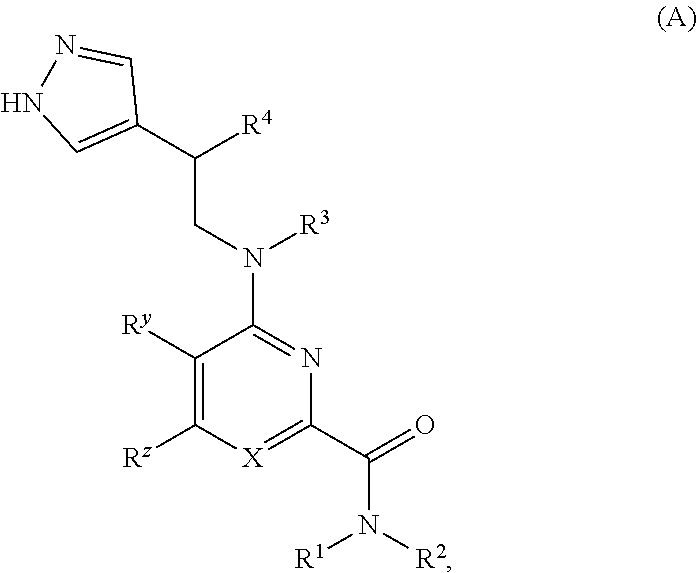
- [0010]or a pharmaceutically acceptable salt thereof, wherein:
- [0011]X is N or CH;
- [0012]R1 and R2 are each independently H, optionally substituted C1-6alkyl, optionally substituted C3-10cycloalkyl, optionally substituted C6-20aryl, optionally substituted 3-15 membered heterocyclyl, or optionally substituted 5-20 membered heteroaryl,
- [0013]or R1 and R2 are taken together with the nitrogen to which they are attached to form an optionally substituted 3-15 membered heterocyclyl;
- [0014]R3 is H or optionally substituted C1-6alkyl, and R4 is H;
- [0015]or R3 and R4 taken together are —CH2CH2—; and
- [0016]Ry and Rz are each independently H, halo, or optionally substituted C1-6alkyl;
- [0017]or Ry and Rz are taken together with the carbon atoms to which they are attached to form an optionally substituted non-aromatic cyclic ring containing 3 to 10 carbon atoms.
[0018]In another aspect, provided herein is a compound of formula (I):
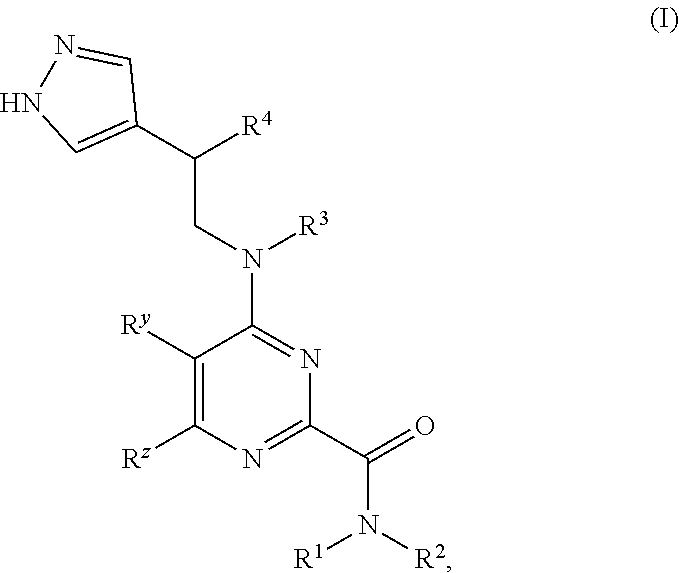
or a stereoisomer or tautomer thereof, or a pharmaceutically acceptable salt of any of the foregoing, wherein R1, R2, R3, R4, Ry, and Rz, are as defined above for the compound of formula (A).
[0020]In another aspect, provided herein is a compound of formula (I):
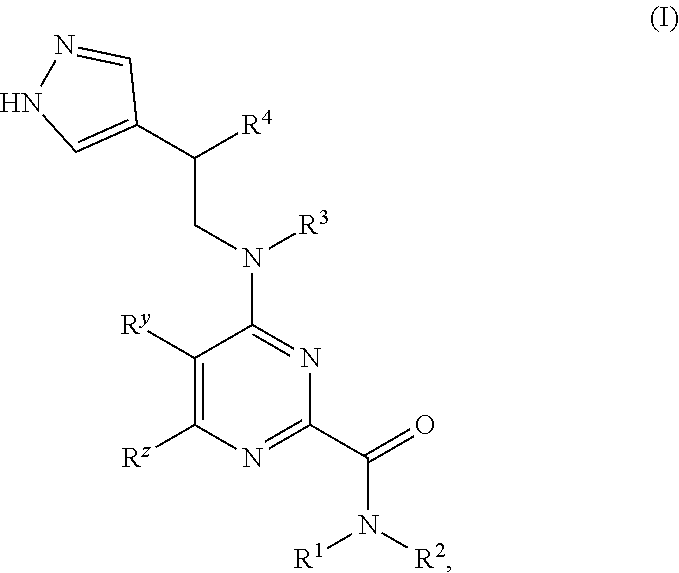
- [0022]or a pharmaceutically acceptable salt thereof, wherein:
- [0023]R1 and R2 are each independently H, optionally substituted C1-6alkyl, optionally substituted C3-10cycloalkyl, optionally substituted C6-20aryl, optionally substituted 3-15 membered heterocyclyl, or optionally substituted 5-20 membered heteroaryl,
- [0024]or R1 and R2 are taken together with the nitrogen to which they are attached to form an optionally substituted 3-15 membered heterocyclyl;
- [0025]R3 is H or optionally substituted C1-6alkyl, and
- [0026]R4 is H; or
- [0027]R3 and R4 taken together are —CH2CH2—; and
- [0028]Ry and Rz are each independently optionally substituted C1-6alkyl.
[0029]In another aspect, provided herein is a compound of formula (I-A):
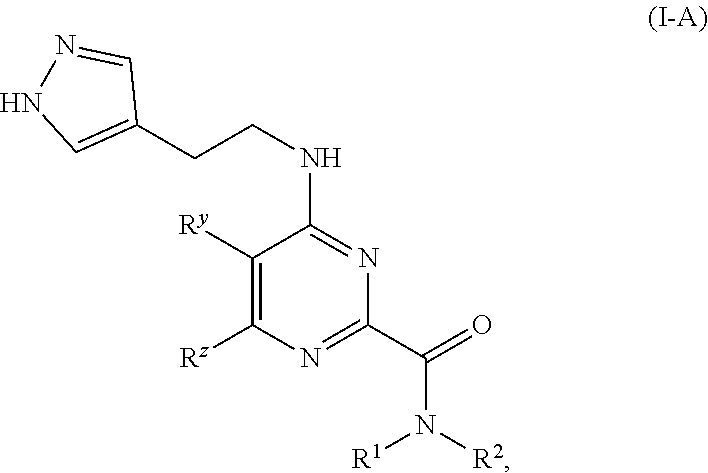
or a stereoisomer or tautomer thereof, or a pharmaceutically acceptable salt of any of the foregoing, wherein R1, R2, Ry, and Rz are as defined above for the compound of formula (I).
[0031]In a further aspect, provided herein is a compound of formula (I-A1):
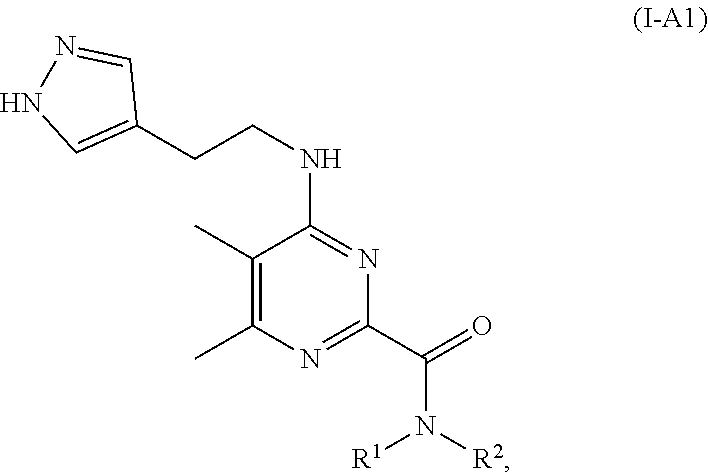
or a stereoisomer or tautomer thereof, or a pharmaceutically acceptable salt of any of the foregoing, wherein R1 and R2 are as defined above for the compound of formula (I).
[0033]In a further aspect, provided herein is a compound of formula (I-A2):
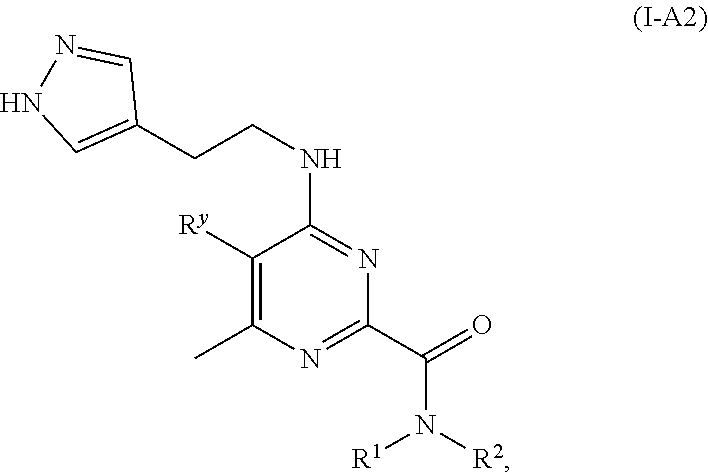
or a stereoisomer or tautomer thereof, or a pharmaceutically acceptable salt of any of the foregoing, wherein R1 and R2 are as defined above for the compound of formula (I) and wherein Ry is halo.
[0035]In a further aspect, provided herein is a compound of formula (I-A3):
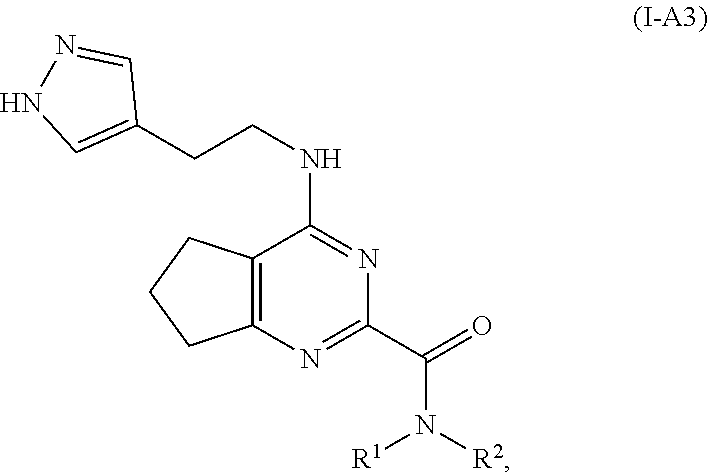
or a stereoisomer or tautomer thereof, or a pharmaceutically acceptable salt of any of the foregoing, wherein R1 and R2 are as defined above for the compound of formula (I).
[0037]In yet another aspect, provided herein is a compound of formula (I-B):
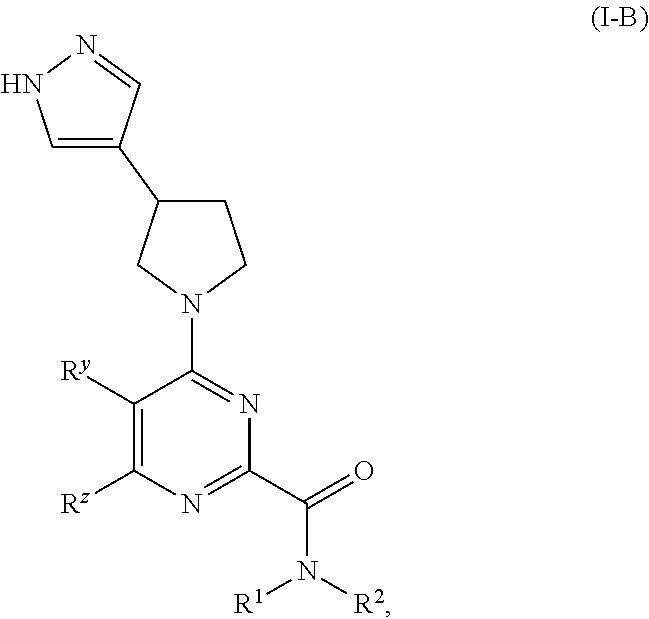
or a stereoisomer or tautomer thereof, or a pharmaceutically acceptable salt of any of the foregoing, wherein R1, R2, Ry, and Rz are as defined above for the compound of formula (I).
[0039]In another aspect, provided herein is a compound of formula (I-B1):
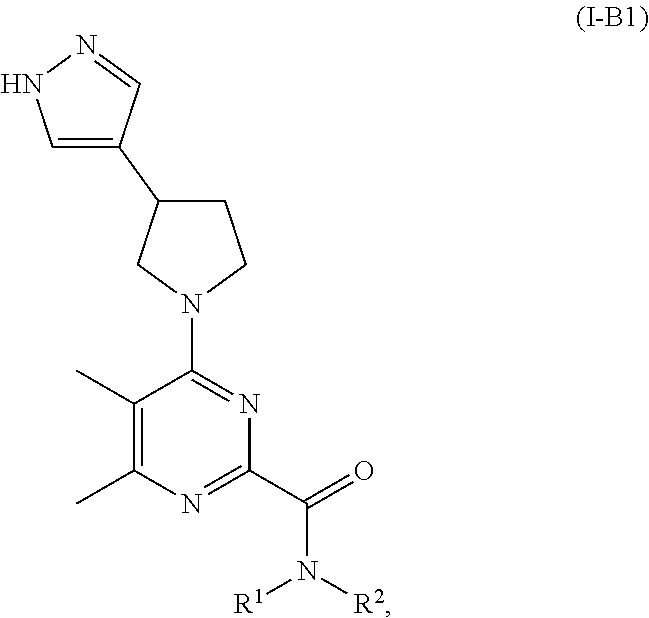
or a stereoisomer or tautomer thereof, or a pharmaceutically acceptable salt of any of the foregoing, wherein R1 and R2 are as defined above for the compound of formula (I).
[0041]In another aspect, provided herein is a compound of formula (II):

or a stereoisomer or tautomer thereof, or a pharmaceutically acceptable salt of any of the foregoing, wherein R1, R2, R3, R4, Ry, and Rz are as defined above for the compound of formula (A).
[0043]In another aspect, provided herein is a compound of formula (II-A):
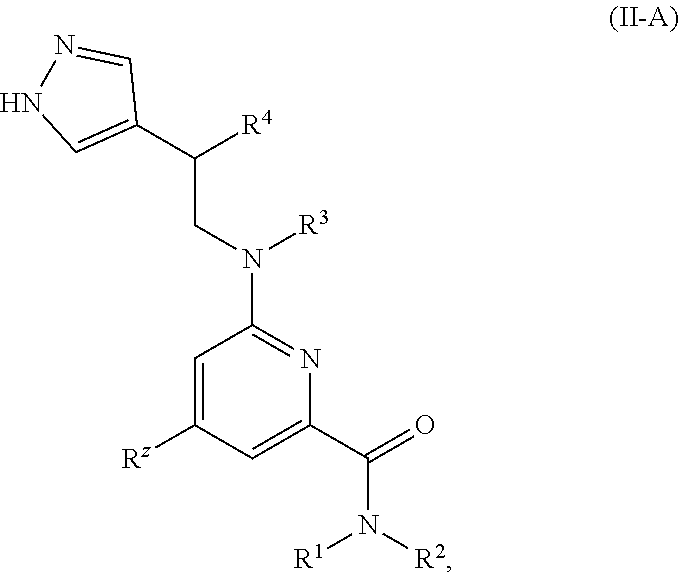
or a stereoisomer or tautomer thereof, or a pharmaceutically acceptable salt of any of the foregoing, wherein R1, R2, R3, R4, and Rz are as defined above for the compound of formula (II).
[0045]In another aspect, provided herein is a compound of formula (II-A1):
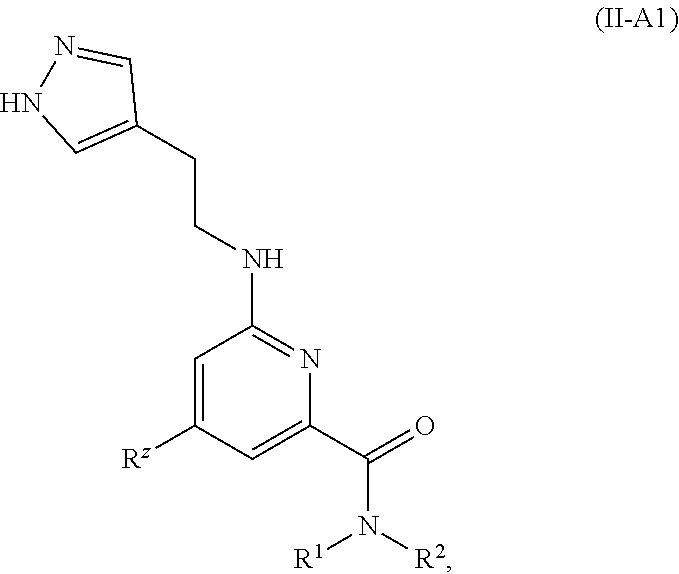
or a stereoisomer or tautomer thereof, or a pharmaceutically acceptable salt of any of the foregoing, wherein R1, R2, and Rz are as defined above for the compound of formula (II).
[0047]In a further aspect, provided herein are pharmaceutical compositions comprising a compound of formula (A) such as a compound of Table 1, or a pharmaceutically acceptable salt of any of the foregoing, optionally further comprising a pharmaceutically acceptable excipient. In some embodiments, provided herein are pharmaceutical compositions comprising a compound of formula (A), (I), (I-A), (I-A1), (I-A2), (I-A3), (I-B), (I-B1), (II), (II-A), or (II-A1), such as a compound of Table 1, or a pharmaceutically acceptable salt of any of the foregoing, optionally further comprising a pharmaceutically acceptable excipient. In some embodiments, provided herein are pharmaceutical compositions comprising a compound of formula (I), (I-A), (I-A1), (I-B), or (I-B1), such as a compound of Table 1, or a pharmaceutically acceptable salt of any of the foregoing, optionally further comprising a pharmaceutically acceptable excipient.
[0048]In another aspect, provided herein is a method of treating a disease or condition mediated by NAMPT activity in a subject in need thereof, comprising administering to the subject an effective amount of a compound of formula (A), (I), (I-A), (I-A1), (I-A2), (I-A3), (I-B), (I-B1), (II), (II-A), or (II-A1), such as a compound of Table 1, or a pharmaceutically acceptable salt thereof, or a pharmaceutical composition comprising a compound of formula (A), (I), (I-A), (I-A1), (I-A2), (I-A3), (I-B), (I-B1), (II), (II-A), or (II-A1), such as a compound of Table 1, or a pharmaceutically acceptable salt thereof. In some embodiments, provided herein is a method of treating a disease or condition mediated by NAMPT activity in a subject in need thereof, comprising administering to the subject an effective amount of a compound formula (I), (I-A), (I-A1), (I-B), or (I-B1), such as a compound of Table 1, or a pharmaceutically acceptable salt thereof, or a pharmaceutical composition comprising a compound of formula (I), (I-A), (I-A1), (I-B), or (I-B1), or a pharmaceutically acceptable salt thereof. In some embodiments, the disease or condition is selected from the group consisting of cancer, a hyperproliferative disease or condition, an inflammatory disease or condition, a metabolic disorder, a cardiac disease or condition, chemotherapy induced tissue damage, a renal disease, a metabolic disease, a neurological disease or injury, a neurodegenerative disorder or disease, diseases caused by impaired stem cell function, diseases caused by DNA damage, primary mitochondrial disorders, or a muscule disease or muscle wasting disorder. In some embodiments, the disease or condition is selected from the group consisting of obesity, atherosclerosis, insulin resistance, type 2 diabetes, cardiovascular disease, Alzheimer's disease, Huntington's disease, Parkinson's disease, amyotrophic lateral sclerosis, depression, Down syndrome, neonatal nerve injury, aging, axonal degeneration, carpal tunnel syndrome, Guillain-Barre syndrome, nerve damage, polio (poliomyelitis), and spinal cord injury.
[0049]Additional embodiments, features, and advantages of the present disclosure will be apparent from the following detailed description and through practice of the present disclosure.
[0050]For the sake of brevity, the disclosures of publications cited in this specification, including patents, are herein incorporated by reference.
DETAILED DESCRIPTION
Definitions
[0051]As used in the present specification, the following words and phrases are generally intended to have the meanings as set forth below, except to the extent that the context in which they are used indicates otherwise.
[0052]Throughout this application, unless the context indicates otherwise, references to a compound of formula (A) includes all subgroups of formula (A) defined herein, including all substructures, subgenera, preferences, embodiments, examples and particular compounds defined and/or described herein, in particular compounds of formula (I), (I-A), (I-A1), (I-A2), (I-A3), (I-B), (I-B1), (II), (II-A), or (II-A1), such as a compound of Table 1. References to a compound of formula (A) and subgroups thereof, include ionic forms, polymorphs, pseudopolymorphs, amorphous forms, solvates, co-crystals, chelates, isomers, tautomers, oxides (e.g., N-oxides, S-oxides), esters, prodrugs, isotopes and/or protected forms thereof. In some embodiments, references to a compound of formula (A) and subgroups thereof, include polymorphs, solvates, co-crystals, isomers, tautomers and/or oxides thereof. In some embodiments, references to a compound of formula (A) and subgroups thereof, include polymorphs, solvates, and/or co-crystals thereof. In some embodiments, references to a compound of formula (A) and subgroups thereof, include isomers, tautomers and/or oxides thereof. In some embodiments, references to a compound of formula (A) and subgroups thereof, include solvates thereof. Similarly, the term “salts” includes solvates of salts of compounds. In particular, throughout this application, unless the context indicates otherwise, references to a compound of formula (I) includes all subgroups of formula (I) defined herein, including all substructures, subgenera, preferences, embodiments, examples and particular compounds defined and/or described herein. References to a compound of formula (I) and subgroups thereof, include ionic forms, polymorphs, pseudopolymorphs, amorphous forms, solvates, co-crystals, chelates, isomers, tautomers, oxides (e.g., N-oxides, S-oxides), esters, prodrugs, isotopes and/or protected forms thereof. In some embodiments, references to a compound of formula (I) and subgroups thereof, include polymorphs, solvates, co-crystals, isomers, tautomers and/or oxides thereof. In some embodiments, references to a compound of formula (I) and subgroups thereof, include polymorphs, solvates, and/or co-crystals thereof. In some embodiments, references to a compound of formula (I) and subgroups thereof, include isomers, tautomers and/or oxides thereof. In some embodiments, references to a compound of formula (I) and subgroups thereof, include solvates thereof. Similarly, the term “salts” includes solvates of salts of compounds.
[0053]“Alkyl” encompasses straight and branched carbon chains having the indicated number of carbon atoms; for example, from 1 to 20 carbon atoms, or 1 to 12 carbon atoms, or 1 to 8 carbon atoms, or 1 to 6 carbon atoms. For example, C1-6alkyl encompasses both straight and branched chain alkyl of from 1 to 6 carbon atoms. When an alkyl residue having a specific number of carbons is named, all branched and straight chain versions having that number of carbons are intended to be encompassed; thus, for example, “propyl” includes n-propyl and isopropyl; and “butyl” includes n-butyl, sec-butyl, isobutyl, and t-butyl. Examples of alkyl groups include, but are not limited to, methyl, ethyl, propyl, isopropyl, n-butyl, sec-butyl, tert-butyl, pentyl, 2-pentyl, 3-pentyl, isopentyl, neopentyl, hexyl, 2-hexyl, 3-hexyl, and 3-methylpentyl.
[0054]As used herein, the term “alkylene” refers to divalent alkyl group as defined herein above having 1 to 20 carbon atoms. Unless otherwise provided, alkylene refers to moieties having 1 to 20 carbon atoms, 1 to 16 carbon atoms, 1 to 12 carbon atoms, 1 to 10 carbon atoms, 1 to 7 carbon atoms, or 1 to 4 carbon atoms. Alkylene groups include, but are not limited to, methylene, ethylene, n-propylene, iso-propylene, n-butylene, sec-butylene, iso-butylene, tert-butylene, n-pentylene, isopentylene, neopentylene, n-hexylene, 3-methylhexylene, 2,2-dimethylpentylene, 2,3-dimethylpentylene, n-heptylene, n-octylene, n-nonylene, and n-decylene.
[0055]When a range of values is given (e.g., C1-6 alkyl), each value within the range as well as all intervening ranges are included. For example, “C1-6 alkyl” includes C1, C2, C3, C4, C5, C6, C1-6, C2-6, C3-6, C4-6, C5-6, C1-5, C2-5, C3-5, C4-5, C1-4, C2-4, C3-4, C1-3, C2-3, and C1-2 alkyl.
[0056]“Alkenyl” refers to an unsaturated branched or straight-chain alkyl group having the indicated number of carbon atoms (e.g., 2 to 8, or 2 to 6 carbon atoms) and at least one carbon-carbon double bond. The group may be in either the cis or trans configuration (Z or E configuration) about the double bond(s). Alkenyl groups include, but are not limited to, ethenyl, propenyl (e.g., prop-1-en-1-yl, prop-1-en-2-yl, prop-2-en-1-yl (allyl), prop-2-en-2-yl), and butenyl (e.g., but-1-en-1-yl, but-1-en-2-yl, 2-methyl-prop-1-en-1-yl, but-2-en-1-yl, but-2-en-1-yl, but-2-en-2-yl, buta-1,3-dien-1-yl, buta-1,3-dien-2-yl).
[0057]“Alkynyl” refers to an unsaturated branched or straight-chain alkyl group having the indicated number of carbon atoms (e.g., 2 to 8 or 2 to 6 carbon atoms) and at least one carbon-carbon triple bond. Alkynyl groups include, but are not limited to, ethynyl, propynyl (e.g., prop-1-yn-1-yl, prop-2-yn-1-yl) and butynyl (e.g., but-1-yn-1-yl, but-1-yn-3-yl, but-3-yn-1-yl).
[0058]“Cycloalkyl” indicates a non-aromatic, fully saturated carbocyclic ring having the indicated number of carbon atoms, for example, 3 to 10, or 3 to 8, or 3 to 6 ring carbon atoms. Cycloalkyl groups may be monocyclic or polycyclic (e.g., bicyclic, tricyclic). Examples of cycloalkyl groups include cyclopropyl, cyclobutyl, cyclopentyl, and cyclohexyl, as well as bridged, caged, and spirocyclic ring groups (e.g., norbornane, bicyclo[2.2.2]octane, spiro[3.3]heptane). In addition, one ring of a polycyclic cycloalkyl group may be aromatic, provided the polycyclic cycloalkyl group is bound to the parent structure via a non-aromatic carbon. For example, a 1,2,3,4-tetrahydronaphthalen-1-yl group (wherein the moiety is bound to the parent structure via a non-aromatic carbon atom) is a cycloalkyl group, while 1,2,3,4-tetrahydronaphthalen-5-yl (wherein the moiety is bound to the parent structure via an aromatic carbon atom) is not considered a cycloalkyl group. Examples of polycyclic cycloalkyl groups consisting of a cycloalkyl group fused to an aromatic ring are described below.
[0059]“Cycloalkenyl” indicates a non-aromatic carbocyclic ring, containing the indicated number of carbon atoms (e.g., 3 to 10, or 3 to 8, or 3 to 6 ring carbon atoms) and at least one carbon-carbon double bond. Cycloalkenyl groups may be monocyclic or polycyclic (e.g., bicyclic, tricyclic). Examples of cycloalkenyl groups include cyclopropenyl, cyclobutenyl, cyclopentenyl, cyclopentadienyl, and cyclohexenyl, as well as bridged, caged (e.g., bicyclo[2.2.2]octene), and spirocyclic ring groups. In addition, one ring of a polycyclic cycloalkenyl group may be aromatic, provided the polycyclic alkenyl group is bound to the parent structure via a non-aromatic carbon atom. For example, inden-1-yl (wherein the moiety is bound to the parent structure via a non-aromatic carbon atom) is considered a cycloalkenyl group, while inden-4-yl (wherein the moiety is bound to the parent structure via an aromatic carbon atom) is not considered a cycloalkenyl group. Examples of polycyclic cycloalkenyl groups consisting of a cycloalkenyl group fused to an aromatic ring are described below.
[0060]“Aryl” indicates an aromatic carbocyclic ring having the indicated number of carbon atoms, for example, 6 to 20, or 6 to 12, or 6 to 10 carbon atoms. Aryl groups may be monocyclic or polycyclic (e.g., bicyclic, tricyclic). In some instances, both rings of a polycyclic aryl group are aromatic (e.g., naphthyl). In other instances, polycyclic aryl groups may include a non-aromatic ring fused to an aromatic ring, provided the polycyclic aryl group is bound to the parent structure via an atom in the aromatic ring. Thus, a 1,2,3,4-tetrahydronaphthalen-5-yl group (wherein the moiety is bound to the parent structure via an aromatic carbon atom) is considered an aryl group, while 1,2,3,4-tetrahydronaphthalen-1-yl (wherein the moiety is bound to the parent structure via a non-aromatic carbon atom) is not considered an aryl group. Similarly, a 1,2,3,4-tetrahydroquinolin-8-yl group (wherein the moiety is bound to the parent structure via an aromatic carbon atom) is considered an aryl group, while 1,2,3,4-tetrahydroquinolin-1-yl group (wherein the moiety is bound to the parent structure via a non-aromatic nitrogen atom) is not considered an aryl group. However, the term “aryl” does not encompass or overlap with “heteroaryl”, as defined herein, regardless of the point of attachment (e.g., both quinolin-5-yl and quinolin-2-yl are heteroaryl groups). In some instances, aryl is phenyl or naphthyl. In certain instances, aryl is phenyl. Additional examples of aryl groups comprising an aromatic carbon ring fused to a non-aromatic ring are described below.
[0061]“Heteroaryl” indicates an aromatic ring containing the indicated number of atoms (e.g., 5 to 20, 5 to 12, or 5 to 10 membered heteroaryl) made up of one or more heteroatoms (e.g., 1, 2, 3 or 4 heteroatoms) selected from N, O, and S and with the remaining ring atoms being carbon. Heteroaryl groups do not contain adjacent S and O atoms. In some embodiments, the total number of S and O atoms in the heteroaryl group is not more than 2. In some embodiments, the total number of S and O atoms in the heteroaryl group is not more than 1. Unless otherwise indicated, heteroaryl groups may be bound to the parent structure by a carbon or nitrogen atom, as valency permits. For example, “pyridyl” includes 2-pyridyl, 3-pyridyl and 4-pyridyl groups, and “pyrrolyl” includes 1-pyrrolyl, 2-pyrrolyl and 3-pyrrolyl groups.
[0062]In some instances, a heteroaryl group is monocyclic. Examples include pyrrole, pyrazole, imidazole, triazole (e.g., 1,2,3-triazole, 1,2,4-triazole, 1,2,4-triazole), tetrazole, furan, isoxazole, oxazole, oxadiazole (e.g., 1,2,3-oxadiazole, 1,2,4-oxadiazole, 1,3,4-oxadiazole), thiophene, isothiazole, thiazole, thiadiazole (e.g., 1,2,3-thiadiazole, 1,2,4-thiadiazole, 1,3,4-thiadiazole), pyridine, pyridazine, pyrimidine, pyrazine, triazine (e.g., 1,2,4-triazine, 1,3,5-triazine), and tetrazine.
[0063]In some instances, both rings of a polycyclic heteroaryl group are aromatic. Examples include indole, isoindole, indazole, benzoimidazole, benzotriazole, benzofuran, benzoxazole, benzoisoxazole, benzoxadiazole, benzothiophene, benzothiazole, benzoisothiazole, benzothiadiazole, 1H-pyrrolo[2,3-b]pyridine, 1H-pyrazolo[3,4-b]pyridine, 3H-imidazo[4,5-b]pyridine, 3H-[1,2,3]triazolo[4,5-b]pyridine, 1H-pyrrolo[3,2-b]pyridine, 1H-pyrazolo[4,3-b]pyridine, 1H-imidazo[4,5-b]pyridine, 1H-[1,2,3]triazolo[4,5-b]pyridine, 1H-pyrrolo[2,3-c]pyridine, 1H-pyrazolo[3,4-c]pyridine, 3H-imidazo[4,5-c]pyridine, 3H-[1,2,3]triazolo[4,5-c]pyridine, 1H-pyrrolo[3,2-c]pyridine, 1H-pyrazolo[4,3-c]pyridine, 1H-imidazo[4,5-c]pyridine, 1H-[1,2,3]triazolo[4,5-c]pyridine, furo[2,3-b]pyridine, oxazolo[5,4-b]pyridine, isoxazolo[5,4-b]pyridine, [1,2,3]oxadiazolo[5,4-b]pyridine, furo[3,2-b]pyridine, oxazolo[4,5-b]pyridine, isoxazolo[4,5-b]pyridine, [1,2,3]oxadiazolo[4,5-b]pyridine, furo[2,3-c]pyridine, oxazolo[5,4-c]pyridine, isoxazolo[5,4-c]pyridine, [1,2,3]oxadiazolo[5,4-c]pyridine, furo[3,2-c]pyridine, oxazolo[4,5-c]pyridine, isoxazolo[4,5-c]pyridine, [1,2,3]oxadiazolo[4,5-c]pyridine, thieno[2,3-b]pyridine, thiazolo[5,4-b]pyridine, is othiazolo[5,4-b]pyridine, [1,2,3]thiadiazolo[5,4-b]pyridine, thieno[3,2-b]pyridine, thiazolo[4,5-b]pyridine, isothiazolo[4,5-b]pyridine, [1,2,3]thiadiazolo[4,5-b]pyridine, thieno[2,3-c]pyridine, thiazolo[5,4-c]pyridine, isothiazolo[5,4-c]pyridine, [1,2,3]thiadiazolo[5,4-c]pyridine, thieno[3,2-c]pyridine, thiazolo[4,5-c]pyridine, isothiazolo[4,5-c]pyridine, [1,2,3]thiadiazolo[4,5-c]pyridine, quinoline, isoquinoline, cinnoline, quinazoline, quinoxaline, phthalazine, naphthyridine (e.g., 1,8-naphthyridine, 1,7-naphthyridine, 1,6-naphthyridine, 1,5-naphthyridine, 2,7-naphthyridine, 2,6-naphthyridine), imidazo[1,2-a]pyridine, 1H-pyrazolo[3,4-d]thiazole, 1H-pyrazolo[4,3-d]thiazole, and imidazo[2,1-b]thiazole.
[0064]In other instances, polycyclic heteroaryl groups may include a non-aromatic ring (e.g., cycloalkyl, cycloalkenyl, heterocycloalkyl, heterocycloalkenyl) fused to a heteroaryl ring, provided the polycyclic heteroaryl group is bound to the parent structure via an atom in the aromatic ring. For example, a 4,5,6,7-tetrahydrobenzo[d]thiazol-2-yl group (wherein the moiety is bound to the parent structure via an aromatic carbon atom) is considered a heteroaryl group, while 4,5,6,7-tetrahydrobenzo[d]thiazol-5-yl (wherein the moiety is bound to the parent structure via a non-aromatic carbon atom) is not considered a heteroaryl group. Examples of polycyclic heteroaryl groups consisting of a heteroaryl ring fused to a non-aromatic ring are described below.
[0065]As defined herein, “heterocyclyl” encompasses “heterocycloalkyl” and “heterocycloalkenyl,” as defined below.
[0066]“Heterocycloalkyl” indicates a non-aromatic, fully saturated ring having the indicated number of atoms (e.g., 3 to 15, 3 to 10, or 3 to 7 membered heterocycloalkyl) made up of one or more heteroatoms (e.g., 1, 2, 3 or 4 heteroatoms) selected from N, O and S and with the remaining ring atoms being carbon. Heterocycloalkyl groups may be monocyclic or polycyclic (e.g., bicyclic, tricyclic). Examples of heterocycloalkyl groups include oxiranyl, aziridinyl, azetidinyl, pyrrolidinyl, imidazolidinyl, pyrazolidinyl, piperidinyl, piperazinyl, morpholinyl and thiomorpholinyl. Examples include thiomorpholine S-oxide and thiomorpholine S,S-dioxide. Examples of spirocyclic heterocycloalkyl groups include azaspiro[3.3]heptane, diazaspiro[3.3]heptane, diazaspiro[3.4]octane, and diazaspiro[3.5]nonane. In addition, one ring of a polycyclic heterocycloalkyl group may be aromatic (e.g., aryl or heteroaryl), provided the polycyclic heterocycloalkyl group is bound to the parent structure via a non-aromatic carbon or nitrogen atom. For example, a 1,2,3,4-tetrahydroquinolin-1-yl group (wherein the moiety is bound to the parent structure via a non-aromatic nitrogen atom) is considered a heterocycloalkyl group, while 1,2,3,4-tetrahydroquinolin-8-yl group (wherein the moiety is bound to the parent structure via an aromatic carbon atom) is not considered a heterocycloalkyl group. Examples of polycyclic heterocycloalkyl groups consisting of a heterocycloalkyl group fused to an aromatic ring are described below.
[0067]“Heterocycloalkenyl” indicates a non-aromatic ring having the indicated number of atoms (e.g., 3 to 10, or 3 to 7, membered heterocycloalkyl) made up of one or more heteroatoms (e.g., 1, 2, 3 or 4 heteroatoms) selected from N, O and S and with the remaining ring atoms being carbon, and at least one double bond derived by the removal of one molecule of hydrogen from adjacent carbon atoms, adjacent nitrogen atoms, or adjacent carbon and nitrogen atoms of the corresponding heterocycloalkyl. Heterocycloalkenyl groups may be monocyclic or polycyclic (e.g., bicyclic, tricyclic). Examples of heterocycloalkenyl groups include dihydrofuranyl (e.g., 2,3-dihydrofuranyl, 2,5-dihydrofuranyl), dihydrothiophenyl (e.g., 2,3-dihydrothiophenyl, 2,5-dihydrothiophenyl), dihydropyrrolyl (e.g., 2,3-dihydro-1H-pyrrolyl, 2,5-dihydro-1H-pyrrolyl), dihydroimidazolyl (e.g., 2,3-dihydro-1H-imidazolyl, 4,5-dihydro-1H-imidazolyl), pyranyl, dihydropyranyl (e.g., 3,4-dihydro-2H-pyranyl, 3,6-dihydro-2H-pyranyl), tetrahydropyridinyl (e.g., 1,2,3,4-tetrahydropyridinyl, 1,2,3,6-tetrahydropyridinyl) and dihydropyridine (e.g., 1,2-dihydropyridine, 1,4-dihydropyridine). In addition, one ring of a polycyclic heterocycloalkenyl group may be aromatic (e.g., aryl or heteroaryl), provided the polycyclic heterocycloalkenyl group is bound to the parent structure via a non-aromatic carbon or nitrogen atom. For example, a 1,2-dihydroquinolin-1-yl group (wherein the moiety is bound to the parent structure via a non-aromatic nitrogen atom) is considered a heterocycloalkenyl group, while 1,2-dihydroquinolin-8-yl group (wherein the moiety is bound to the parent structure via an aromatic carbon atom) is not considered a heterocycloalkenyl group. Examples of polycyclic heterocycloalkenyl groups consisting of a heterocycloalkenyl group fused to an aromatic ring are described below.
[0068]Examples of polycyclic rings consisting of an aromatic ring (e.g., aryl or heteroaryl) fused to a non-aromatic ring (e.g., cycloalkyl, cycloalkenyl, heterocycloalkyl, heterocycloalkenyl) include indenyl, 2,3-dihydro-1H-indenyl, 1,2,3,4-tetrahydronaphthalenyl, benzo[1,3]dioxolyl, tetrahydroquinolinyl, 2,3-dihydrobenzo[1,4]dioxinyl, indolinyl, isoindolinyl, 2,3-dihydro-1H-indazolyl, 2,3-dihydro-1H-benzo[d]imidazolyl, 2,3-dihydrobenzofuranyl, 1,3-dihydroisobenzofuranyl, 1,3-dihydrobenzo[c]isoxazolyl, 2,3-dihydrobenzo[d]isoxazolyl, 2,3-dihydrobenzo[d]oxazolyl, 2,3-dihydrobenzo[b]thiophenyl, 1,3-dihydrobenzo[c]thiophenyl, 1,3-dihydrobenzo[c]isothiazolyl, 2,3-dihydrobenzo[d]isothiazolyl, 2,3-dihydrobenzo[d]thiazolyl, 5,6-dihydro-4H-cyclopenta[d]thiazolyl, 4,5,6,7-tetrahydrobenzo[d]thiazolyl, 5,6-dihydro-4H-pyrrolo[3,4-d]thiazolyl, 4,5,6,7-tetrahydrothiazolo[5,4-c]pyridinyl, indolin-2-one, indolin-3-one, isoindolin-1-one, 1,2-dihydroindazol-3-one, 1H-benzo[d]imidazol-2(3H)-one, benzofuran-2(3H)-one, benzofuran-3(2H)-one, isobenzofuran-1(3H)-one, benzo[c]isoxazol-3(1H)-one, benzo[d]isoxazol-3(2H)-one, benzo[d]oxazol-2(3H)-one, benzo[b]thiophen-2(3H)-one, benzo[b]thiophen-3(2H)-one, benzo[c]thiophen-1(3H)-one, benzo[c]isothiazol-3(1H)-one, benzo[d]isothiazol-3(2H)-one, benzo[d]thiazol-2(3H)-one, 4,5-dihydropyrrolo[3,4-d]thiazol-6-one, 1,2-dihydropyrazolo[3,4-d]thiazol-3-one, quinolin-4(3H)-one, quinazolin-4(3H)-one, quinazoline-2,4(1H,3H)-dione, quinoxalin-2(1H)-one, quinoxaline-2,3(1H,4H)-dione, cinnolin-4(3H)-one, pyridin-2(1H)-one, pyrimidin-2(1H)-one, pyrimidin-4(3H)-one, pyridazin-3(2H)-one, 1H-pyrrolo[3,2-b]pyridin-2(3H)-one, 1H-pyrrolo[3,2-c]pyridin-2(3H)-one, 1H-pyrrolo[2,3-c]pyridin-2(3H)-one, 1H-pyrrolo[2,3-b]pyridin-2(3H)-one, 1,2-dihydropyrazolo[3,4-d]thiazol-3-one and 4,5-dihydropyrrolo[3,4-d]thiazol-6-one. As discussed herein, whether each ring is considered an aryl, heteroaryl, cycloalkyl, cycloalkenyl, heterocycloalkyl or heterocycloalkenyl group is determined by the atom through which the moiety is bound to the parent structure.
[0069]“Halogen” or “halo” refers to fluorine, chlorine, bromine or iodine.
[0070]“Sulfonyl” refers to a —S(O)2H moiety. In some instances, the sulfonyl moiety is substituted, such that the H of the —S(O)2H moiety is replaced by a non-H moiety. For example, “sulfonyl substituted with methyl” refers to a —S(O)2—CH3 moiety.
[0071]Unless otherwise indicated, compounds disclosed and/or described herein include all possible enantiomers, diastereomers, meso isomers and other stereoisomeric forms, including racemic mixtures, optically pure forms and intermediate mixtures thereof. Enantiomers, diastereomers, meso isomers and other stereoisomeric forms can be prepared using chiral synthons or chiral reagents, or resolved using conventional techniques. Unless specified otherwise, when the compounds disclosed and/or described herein contain olefinic double bonds or other centers of geometric asymmetry, it is intended that the compounds include both E and Z isomers. When the compounds described herein contain moieties capable of tautomerization, and unless specified otherwise, it is intended that the compounds include all possible tautomers.
[0072]“Protecting group” has the meaning conventionally associated with it in organic synthesis, i.e., a group that selectively blocks one or more reactive sites in a multifunctional compound such that a chemical reaction can be carried out selectively on another unprotected reactive site, and such that the group can readily be removed after the selective reaction is complete. A variety of protecting groups are disclosed, for example, in T. H. Greene and P. G. M. Wuts, Protective Groups in Organic Synthesis, Third Edition, John Wiley & Sons, New York (1999). For example, a “hydroxy protected form” contains at least one hydroxy group protected with a hydroxy protecting group. Likewise, amines and other reactive groups may similarly be protected.
[0073]The term “pharmaceutically acceptable salt” refers to a salt of any of the compounds herein that are known to be non-toxic and are commonly used in the pharmaceutical literature. In some embodiments, the pharmaceutically acceptable salt of a compound retains the biological effectiveness of the compounds described herein and are not biologically or otherwise undesirable. Examples of pharmaceutically acceptable salts can be found in Berge et al., Pharmaceutical Salts, J. Pharmaceutical Sciences, January 1977, 66(1), 1-19. Pharmaceutically acceptable acid addition salts can be formed with inorganic acids and organic acids. Inorganic acids from which salts can be derived include, for example, hydrochloric acid, hydrobromic acid, sulfuric acid, nitric acid, and phosphoric acid. Organic acids from which salts can be derived include, for example, acetic acid, propionic acid, glycolic acid, pyruvic acid, lactic acid, oxalic acid, malic acid, maleic acid, malonic acid, succinic acid, fumaric acid, tartaric acid, citric acid, benzoic acid, cinnamic acid, mandelic acid, methanesulfonic acid, ethanesulfonic acid, 2-hydroxyethylsulfonic acid, p-toluenesulfonic acid, stearic acid and salicylic acid. Pharmaceutically acceptable base addition salts can be formed with inorganic and organic bases. Inorganic bases from which salts can be derived include, for example, sodium, potassium, lithium, ammonium, calcium, magnesium, iron, zinc, copper, manganese, and aluminum. Organic bases from which salts can be derived include, for example, primary, secondary, and tertiary amines; substituted amines including naturally occurring substituted amines; cyclic amines; and basic ion exchange resins. Examples of organic bases include isopropylamine, trimethylamine, diethylamine, triethylamine, tripropylamine, and ethanolamine. In some embodiments, the pharmaceutically acceptable base addition salt is selected from ammonium, potassium, sodium, calcium, and magnesium salts.
[0074]If the compound described herein is obtained as an acid addition salt, the free base can be obtained by basifying a solution of the acid salt. Conversely, if the compound is a free base, an addition salt, particularly a pharmaceutically acceptable addition salt, may be produced by dissolving the free base in a suitable organic solvent and treating the solution with an acid, in accordance with conventional procedures for preparing acid addition salts from base compounds (see, e.g., Berge et al., Pharmaceutical Salts, J. Pharmaceutical Sciences, January 1977, 66(1), 1-19). Those skilled in the art will recognize various synthetic methodologies that may be used to prepare pharmaceutically acceptable addition salts.
[0075]A “solvate” is formed by the interaction of a solvent and a compound. Suitable solvents include, for example, water and alcohols (e.g., ethanol). Solvates include hydrates having any ratio of compound to water, such as monohydrates, dihydrates and hemi-hydrates.
[0076]The term “substituted” means that the specified group or moiety bears one or more substituents including, but not limited to, substituents such as alkoxy, acyl, acyloxy, carbonylalkoxy, acylamino, amino, aminoacyl, aminocarbonylamino, aminocarbonyloxy, cycloalkyl, cycloalkenyl, aryl, heteroaryl, aryloxy, cyano, azido, halo, hydroxyl, nitro, carboxyl, thiol, thioalkyl, cycloalkyl, cycloalkenyl, alkyl, alkenyl, alkynyl, heterocycloalkyl, heterocycloalkenyl, aralkyl, aminosulfonyl, sulfonylamino, sulfonyl, oxo, carbonylalkylenealkoxy and the like. The term “unsubstituted” means that the specified group bears no substituents. Where the term “substituted” is used to describe a structural system, the substitution is meant to occur at any valency-allowed position on the system. When a group or moiety bears more than one substituent, it is understood that the substituents may be the same or different from one another. In some embodiments, a substituted group or moiety bears from one to five substituents. In some embodiments, a substituted group or moiety bears one substituent. In some embodiments, a substituted group or moiety bears two substituents. In some embodiments, a substituted group or moiety bears three substituents. In some embodiments, a substituted group or moiety bears four substituents. In some embodiments, a substituted group or moiety bears five substituents.
[0077]By “optional” or “optionally,” it is meant that the subsequently described event or circumstance may or may not occur, and that the description includes instances where the event or circumstance occurs and instances in which it does not. For example, “optionally substituted alkyl” encompasses both “alkyl” and “substituted alkyl,” as defined herein. It will be understood by those skilled in the art, with respect to any group containing one or more substituents, that such groups are not intended to introduce any substitution or substitution patterns that are sterically impractical, synthetically non-feasible, and/or inherently unstable. It will also be understood that where a group or moiety is optionally substituted, the disclosure includes both embodiments in which the group or moiety is substituted and embodiments in which the group or moiety is unsubstituted.
[0078]The compounds disclosed and/or described herein can be enriched isotopic forms, e.g., enriched in the content of 2H, 3H, 11C, 13C, and/or 14C. In one embodiment, the compound contains at least one deuterium atom. Such deuterated forms can be made, for example, by the procedure described in U.S. Pat. Nos. 5,846,514 and 6,334,997. Such deuterated compounds may improve the efficacy and increase the duration of action of compounds disclosed and/or described herein. Deuterium substituted compounds can be synthesized using various methods, such as those described in: Dean, D., Recent Advances in the Synthesis and Applications of Radiolabeled Compounds for Drug Discovery and Development, Curr. Pharm. Des., 2000; 6(10); Kabalka, G. et al., The Synthesis of Radiolabeled Compounds via Organometallic Intermediates, Tetrahedron, 1989, 45(21), 6601-21; and Evans, E., Synthesis of radiolabeled compounds, J. Radioanal. Chem., 1981, 64(1-2), 9-32.
[0079]The term “pharmaceutically acceptable carrier” or “pharmaceutically acceptable excipient” includes any and all solvents, dispersion media, coatings, antibacterial and antifungal agents, isotonic and absorption delaying agents, and the like. The use of such media and agents for pharmaceutically active substances is well known in the art. Except insofar as any conventional media or agent is incompatible with the active ingredient, its use in pharmaceutical compositions is contemplated. Supplementary active ingredients can also be incorporated into the pharmaceutical compositions.
[0080]The terms “patient,” “individual,” and “subject” refer to an animal, such as a mammal, bird, or fish. In some embodiments, the patient or subject is a mammal. Mammals include, for example, mice, rats, dogs, cats, pigs, sheep, horses, cows and humans. In some embodiments, the patient or subject is a human, for example a human that has been or will be the object of treatment, observation or experiment. The compounds, compositions and methods described herein can be useful in both human therapy and veterinary applications.
[0081]As used herein, the term “therapeutic” refers to the ability to modulate nicotinamide phosphoribosyltransferase (NAMPT). As used herein, “modulation” refers to a change in activity as a direct or indirect response to the presence of a chemical entity as described herein, relative to the activity of in the absence of the chemical entity. The change may be an increase in activity or a decrease in activity, and may be due to the direct interaction of the chemical entity with the a target or due to the interaction of the chemical entity with one or more other factors that in turn affect the target's activity. For example, the presence of the chemical entity may, for example, increase or decrease the target activity by directly binding to the target, by causing (directly or indirectly) another factor to increase or decrease the target activity, or by (directly or indirectly) increasing or decreasing the amount of target present in the cell or organism.
[0082]The term “therapeutically effective amount” or “effective amount” refers to that amount of a compound disclosed and/or described herein that is sufficient to affect treatment, as defined herein, when administered to a patient in need of such treatment. A therapeutically effective amount of a compound may be an amount sufficient to treat a disease responsive to modulation of nicotinamide phosphoribosyltransferase (NAMPT). The therapeutically effective amount will vary depending upon, for example, the subject and disease condition being treated, the weight and age of the subject, the severity of the disease condition, the particular compound, the dosing regimen to be followed, timing of administration, the manner of administration, all of which can readily be determined by one of ordinary skill in the art. The therapeutically effective amount may be ascertained experimentally, for example by assaying blood concentration of the chemical entity, or theoretically, by calculating bioavailability.
[0083]“Treatment” (and related terms, such as “treat”, “treated”, “treating”) includes one or more of: inhibiting a disease or disorder; slowing or arresting the development of clinical symptoms of a disease or disorder; and/or relieving a disease or disorder (i.e., causing relief from or regression of clinical symptoms). The term covers both complete and partial reduction of the condition or disorder, and complete or partial reduction of clinical symptoms of a disease or disorder. Thus, compounds described and/or disclosed herein may prevent an existing disease or disorder from worsening, assist in the management of the disease or disorder, or reduce or eliminate the disease or disorder.
[0084]“Prevention” (and related terms, such as “prevent”, “prevented”, “preventing”) includes causing the clinical symptoms of a disease or disorder not to develop. The term encompasses situations where the disease or disorder is not currently being experienced but is expected to arise. When used in a prophylactic manner, the compounds disclosed and/or described herein may prevent a disease or disorder from developing or lessen the extent of a disease or disorder that may develop.
Compounds
[0085]Compounds and salts thereof (such as pharmaceutically acceptable salts) are detailed herein, including in the Brief Summary and in the appended claims. Also provided are the use of all of the compounds described herein, including any and all stereoisomers, including geometric isomers (cis/trans), E/Z isomers, enantiomers, diastereomers, and mixtures thereof in any ratio including racemic mixtures, salts and solvates of the compounds described herein, as well as methods of making such compounds. Any compound described herein may also be referred to as a drug.
[0086]In one aspect, provided herein is a compound of formula (A):
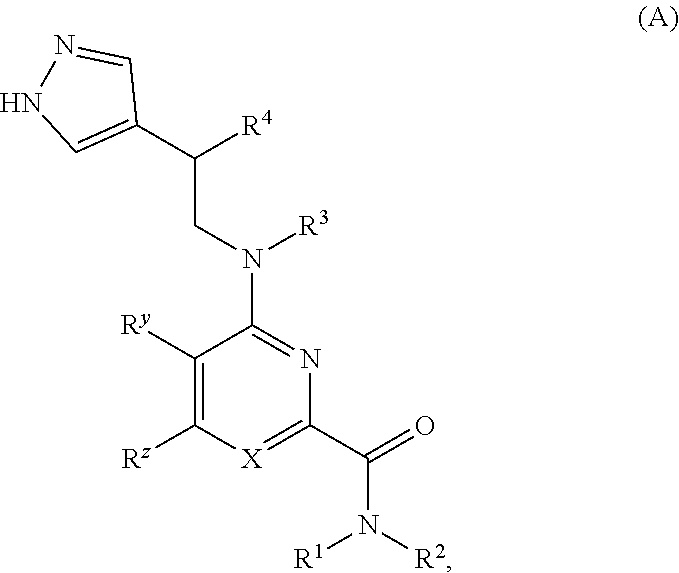
- [0088]or a pharmaceutically acceptable salt thereof, wherein:
- [0089]X is N or CH;
- [0090]R1 and R2 are each independently H, optionally substituted C1-6alkyl, optionally substituted C3-10cycloalkyl, optionally substituted C6-20aryl, optionally substituted 3-15 membered heterocyclyl, or optionally substituted 5-20 membered heteroaryl, or R1 and R2 are taken together with the nitrogen to which they are attached to form an optionally substituted 3-15 membered heterocyclyl;
- [0091]R3 is H or optionally substituted C1-6alkyl, and R4 is H; or R3 and R4 taken together are —CH2CH2—; and
- [0092]Ry and Rz are each independently H, halo, or optionally substituted C1-6alkyl; or Ry and Rz are taken together with the carbon atoms to which they are attached to form an optionally substituted non-aromatic cyclic ring containing 3 to 10 carbon atoms.
[0093]In some embodiments, provided is a compound of formula (A), or a stereoisomer or tautomer thereof, or a pharmaceutically acceptable salt of any of the foregoing, wherein X is N. In some embodiments, X is CH.
[0094]In some embodiments, provided herein is a compound of formula (I):

or a stereoisomer or tautomer thereof, or a pharmaceutically acceptable salt of any of the foregoing, wherein R1, R2, R3, R4, Ry, and Rz, are as defined elsewhere herein.
[0096]In some embodiments, provided herein is a compound of formula (I):

or a pharmaceutically acceptable salt thereof, wherein: R1 and R2 are each independently H, optionally substituted C1-6alkyl, optionally substituted C3-10cycloalkyl, optionally substituted C6-20aryl, optionally substituted 3-15 membered heterocyclyl, or optionally substituted 5-20 membered heteroaryl, or R1 and R2 are taken together with the nitrogen to which they are attached to form an optionally substituted 3-15 membered heterocyclyl; R3 is H or optionally substituted C1-6alkyl and R4 is H; or R3 and R4 taken together are —CH2CH2—; and Ry and Rz are each independently optionally substituted C1-6alkyl.
[0098]In some embodiments, provided herein is a compound of formula (I), or a stereoisomer or tautomer thereof, or a pharmaceutically acceptable salt of any of the foregoing, wherein R3 is H and R4 is H, such that the compound of formula (I) is a compound of formula (I A):
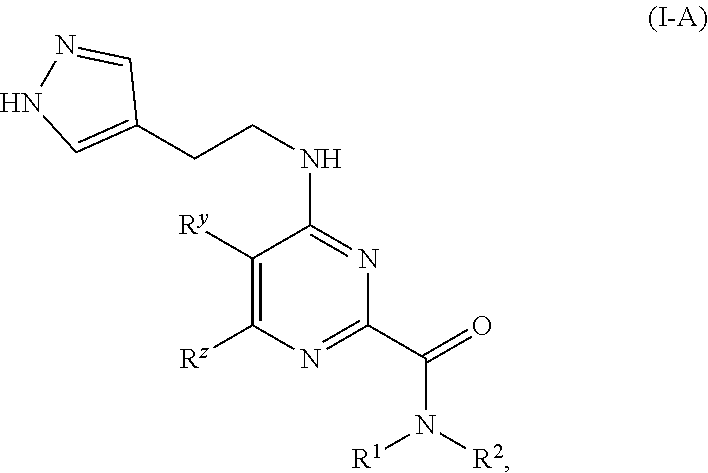
or a stereoisomer or tautomer thereof, or a pharmaceutically acceptable salt of any of the foregoing, wherein R1, R2, Ry, and Rz are as defined elsewhere herein.
[0100]In some embodiments, provided is a compound of formula (I), or a stereoisomer or tautomer thereof, or a pharmaceutically acceptable salt of any of the foregoing, wherein R3 is optionally substituted C1-6alkyl and R4 is H. In some embodiments, R3 is unsubstituted C1-6alkyl and R4 is H. In some embodiments, R3 is unsubstituted n-propyl and R4 is H. In some embodiments, R3 is C1-6alkyl, wherein the C1-6alkyl of R3 is substituted with one or more C6-20aryl, and R4 is H. In some embodiments, R3 is C1-6alkyl, wherein the C1-6alkyl of R3 is substituted with one or more phenyl, and R4 is H. In some embodiments, R3 is optionally substituted ethyl and R4 is H. In some embodiments, R3 is ethyl, wherein the ethyl of R3 is substituted with one or more C6-20aryl, and R4 is H. In some embodiments, R3 is ethyl, wherein the ethyl of R3 is substituted with one or more phenyl, and R4 is H. In some embodiments, R3 is

and R4 is H.
[0102]In some embodiments, provided herein is a compound of formula (I), such as a compound of formula (I-A), or a stereoisomer or tautomer thereof, or a pharmaceutically acceptable salt of any of the foregoing, wherein Ry and Rz are each independently unsubstituted C1-6alkyl. In some embodiments, Ry and Rz are each independently unsubstituted C1-3alkyl. In certain embodiments, Ry and Rz are each independently unsubstituted methyl.
[0103]In some embodiments, provided herein is a compound of formula (I-A), or a stereoisomer or tautomer thereof, or a pharmaceutically acceptable salt of any of the foregoing, wherein Ry and Rz are each independently unsubstituted methyl, such that the compound of formula (I-A) is a compound of formula (I-A1):

or a stereoisomer or tautomer thereof, or a pharmaceutically acceptable salt of any of the foregoing, wherein R1 and R2 are as defined elsewhere herein.
[0105]In some embodiments, provided herein is a compound of formula (I), such as a compound of formula (I-A), or a stereoisomer or tautomer thereof, or a pharmaceutically acceptable salt of any of the foregoing, wherein Ry is halo and Rz is unsubstituted C1-6alkyl. In some embodiments, Ry is halo and Rz is unsubstituted C1-3alkyl. In certain embodiments, Ry is halo and Rz is unsubstituted methyl.
[0106]In some embodiments, provided herein is a compound of formula (I-A), or a stereoisomer or tautomer thereof, or a pharmaceutically acceptable salt of any of the foregoing, wherein Ry is halo and Rz is unsubstituted methyl, such that the compound of formula (I-A) is a compound of formula (I-A2):
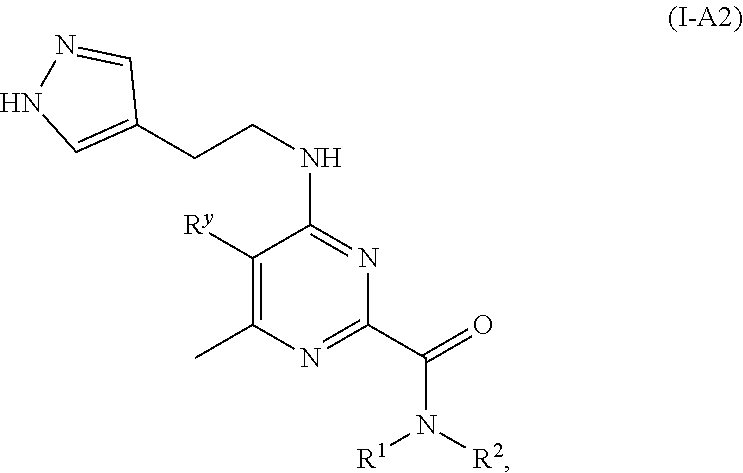
or a stereoisomer or tautomer thereof, or a pharmaceutically acceptable salt of any of the foregoing, wherein R1 and R2 are as defined elsewhere herein. In some embodiments, Ry is fluoro, chloro, or bromo. In some embodiments, Ry is fluoro or chloro. In some embodiments, Ry is fluoro. In some embodiments, Ry is chloro.
[0108]In some embodiments, provided herein is a compound of formula (I), such as a compound of formula (I-A), or a stereoisomer or tautomer thereof, or a pharmaceutically acceptable salt of any of the foregoing, wherein Ry and Rz are taken together with the carbon atoms to which they are attached to form an optionally substituted non-aromatic cyclic ring containing 3 to 10 carbon atoms. In some embodiments, Ry and Rz are taken together with the carbon atoms to which they are attached to form an optionally substituted non-aromatic cyclic ring containing 3 to 6 carbon atoms. In certain embodiments, Ry and Rz are taken together with the carbon atoms to which they are attached to form an optionally substituted non-aromatic cyclic ring containing 5 carbon atoms. In some embodiments, Ry and Rz are taken together with the carbon atoms to which they are attached to form an unsubstituted non-aromatic cyclic ring containing 3 to 10 carbon atoms, or an unsubstituted non-aromatic cyclic ring containing 3 to 6 carbon atoms. In some embodiments, Ry and Rz are taken together with the carbon atoms to which they are attached to form an optionally substituted non-aromatic cyclic ring containing 3 to 10 carbon atoms. In some embodiments, Ry and Rz are taken together with the carbon atoms to which they are attached to form an optionally substituted non-aromatic cyclic ring containing 3 to 6 carbon atoms. In certain embodiments, Ry and Rz are taken together with the carbon atoms to which they are attached to form an unsubstituted non-aromatic cyclic ring containing 5 carbon atoms.
[0109]In some embodiments, provided herein is a compound of formula (I-A), or a stereoisomer or tautomer thereof, or a pharmaceutically acceptable salt of any of the foregoing, having the formula (I-A3):

or a stereoisomer or tautomer thereof, or a pharmaceutically acceptable salt of any of the foregoing, wherein R1 and R2 are as defined above for the compound of formula (I).
[0111]In some embodiments, provided herein is a compound of formula (I), or a stereoisomer or tautomer thereof, or a pharmaceutically acceptable salt of any of the foregoing, wherein R3 and R4 taken together are —CH2CH2—, such that the compound of formula (I) is a compound of formula (I-B):
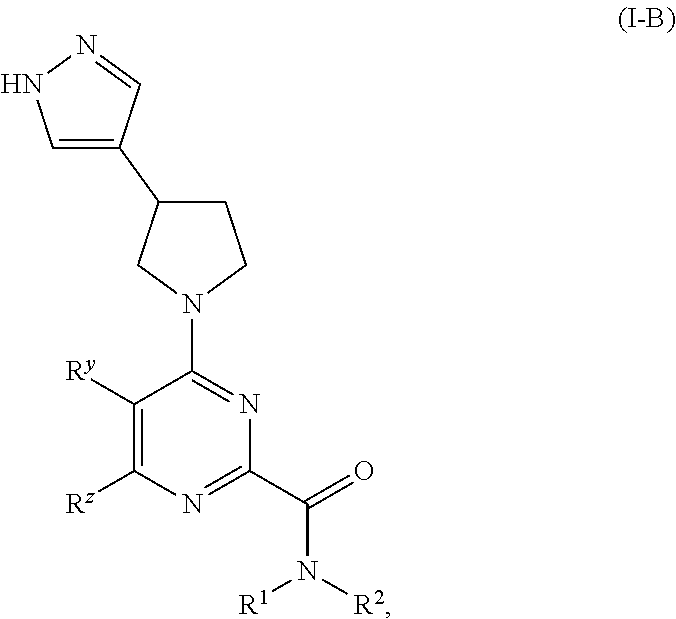
or a stereoisomer or tautomer thereof, or a pharmaceutically acceptable salt of any of the foregoing, wherein R1, R2, Ry, and Rz are as defined elsewhere herein.
[0113]In some embodiments, provided herein is a compound of formula (I), such as a compound of formula (I-B), or a stereoisomer or tautomer thereof, or a pharmaceutically acceptable salt of any of the foregoing, wherein Ry and Rz are each independently unsubstituted C1-6alkyl. In some embodiments, Ry and Rz are each independently unsubstituted C1-3alkyl. In certain embodiments, Ry and Rz are each independently unsubstituted methyl.
[0114]In some embodiments, provided herein is a compound of formula (I-B), or a stereoisomer or tautomer thereof, or a pharmaceutically acceptable salt of any of the foregoing, wherein Ry and Rz are each independently unsubstituted methyl, such that the compound of formula (I-B) is a compound of formula (I-B1):
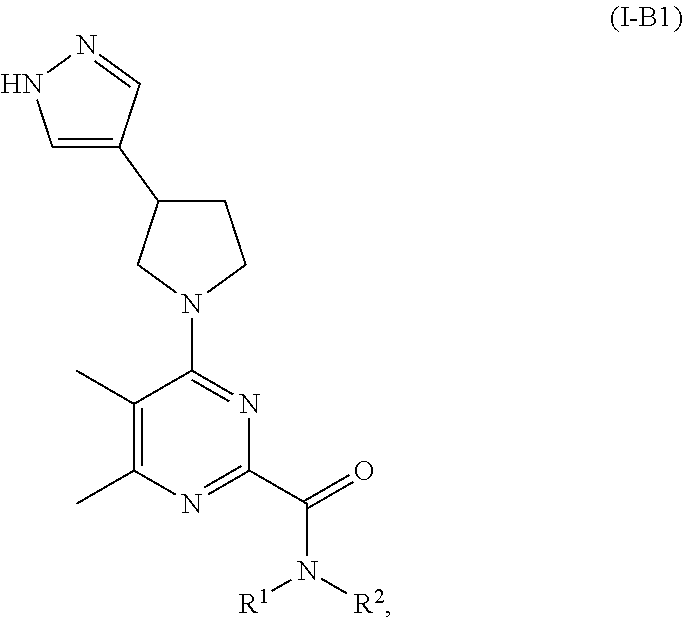
or a stereoisomer or tautomer thereof, or a pharmaceutically acceptable salt of any of the foregoing, wherein R1 and R2 are as defined elsewhere herein.
[0116]In some embodiments, provided is a compound of formula (A), (I), (I-A), or (I-B), or a stereoisomer or tautomer thereof, or a pharmaceutically acceptable salt of any of the foregoing, wherein Ry and Rz are each independently H, halo, or optionally substituted C1-6alkyl. In some embodiments, Ry and Rz are each independently optionally substituted C1-6alkyl. In some embodiments, Ry and Rz are each independently unsubstituted C1-6alkyl. In some embodiments, Ry and Rz are each independently unsubstituted C1-3alkyl. In certain embodiments, Ry and Rz are each independently unsubstituted methyl. In some embodiments, Ry is halo and Rz is optionally substituted C1-6alkyl. In some embodiments, Ry is halo and Rz is unsubstituted C1-6alkyl. In some embodiments, Ry is halo and Rz is unsubstituted C1-3alkyl. In certain embodiments, Ry is halo and Rz is unsubstituted methyl. In some embodiments, Ry is chloro or fluoro, and Rz is optionally substituted C1-6alkyl. In some embodiments, Ry is chloro or fluoro, and Rz is unsubstituted C1-6alkyl. In some embodiments, Ry is chloro or fluoro, and Rz is unsubstituted C1-3alkyl. In certain embodiments, Ry is chloro or fluoro, and Rz is unsubstituted methyl. In some embodiments, Ry is chloro and Rz is optionally substituted C1-6alkyl. In some embodiments, Ry is chloro and Rz is unsubstituted C1-6alkyl. In some embodiments, Ry is chloro and Rz is unsubstituted C1-3alkyl. In certain embodiments, Ry is chloro and Rz is unsubstituted methyl. In some embodiments, Ry is fluoro and Rz is optionally substituted C1-6alkyl. In some embodiments, Ry is fluoro and Rz is unsubstituted C1-6alkyl. In some embodiments, Ry is fluoro and Rz is unsubstituted C1-3alkyl. In certain embodiments, Ry is fluoro and Rz is unsubstituted methyl. In some embodiments, Ry is H and Rz is halo or optionally substituted C1-6alkyl. In some embodiments, Ry is H and Rz is optionally substituted C1-6alkyl. In some embodiments, Ry is H and Rz is unsubstituted C1-6alkyl. In some embodiments, Ry is H and Rz is unsubstituted C1-3alkyl. In certain embodiments, Ry is H and Rz is unsubstituted methyl. In some embodiments, Ry is H and Rz is halo. In some embodiments, Ry is H and Rz is bromo. In some embodiments, Ry and Rz are taken together with the carbon atoms to which they are attached to form an optionally substituted non-aromatic cyclic ring containing 3 to 10 carbon atoms. In some embodiments, Ry and Rz are taken together with the carbon atoms to which they are attached to form an optionally substituted non-aromatic cyclic ring containing 3 to 6 carbon atoms. In certain embodiments, Ry and Rz are taken together with the carbon atoms to which they are attached to form an optionally substituted non-aromatic cyclic ring containing 5 carbon atoms. In certain embodiments, Ry and Rz are taken together with the carbon atoms to which they are attached to form an unsubstituted non-aromatic cyclic ring containing 5 carbon atoms.
[0117]In some embodiments, provided herein is a compound of formula (II):
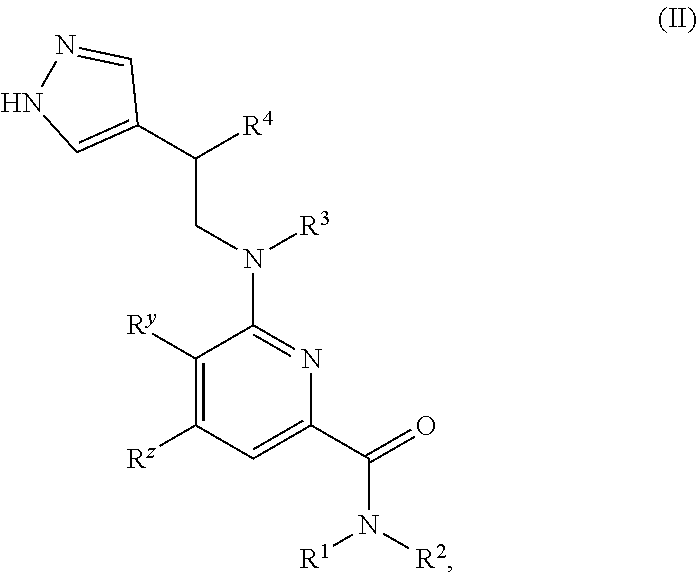
or a stereoisomer or tautomer thereof, or a pharmaceutically acceptable salt of any of the foregoing, wherein R1, R2, R3, R4, Ry, and Rz are as defined above for the compound of formula (A).
[0119]In some embodiments, provided is a compound of formula (A) or (II), or a stereoisomer or tautomer thereof, or a pharmaceutically acceptable salt of any of the foregoing, wherein Ry and Rz are each independently H, halo, or optionally substituted C1-6alkyl. In some embodiments, Ry and Rz are each independently optionally substituted C1-6alkyl. In some embodiments, Ry and Rz are each independently unsubstituted C1-6alkyl. In some embodiments, Ry and Rz are each independently unsubstituted C1-3alkyl. In certain embodiments, Ry and Rz are each independently unsubstituted methyl. In some embodiments, Ry is halo and Rz is optionally substituted C1-6alkyl. In some embodiments, Ry is halo and Rz is unsubstituted C1-6alkyl. In some embodiments, Ry is halo and Rz is unsubstituted C1-3alkyl. In certain embodiments, Ry is halo and Rz is unsubstituted methyl. In some embodiments, Ry is chloro or fluoro, and Rz is optionally substituted C1-6alkyl. In some embodiments, Ry is chloro or fluoro, and Rz is unsubstituted C1-6alkyl. In some embodiments, Ry is chloro or fluoro, and Rz is unsubstituted C1-3alkyl. In certain embodiments, Ry is chloro or fluoro, and Rz is unsubstituted methyl. In some embodiments, Ry is chloro and Rz is optionally substituted C1-6alkyl. In some embodiments, Ry is chloro and Rz is unsubstituted C1-6alkyl. In some embodiments, Ry is chloro and Rz is unsubstituted C1-3alkyl. In certain embodiments, Ry is chloro and Rz is unsubstituted methyl. In some embodiments, Ry is fluoro and Rz is optionally substituted C1-6alkyl. In some embodiments, Ry is fluoro and Rz is unsubstituted C1-6alkyl. In some embodiments, Ry is fluoro and Rz is unsubstituted C1-3alkyl. In certain embodiments, Ry is fluoro and Rz is unsubstituted methyl. In some embodiments, Ry is H and Rz is halo or optionally substituted C1-6alkyl. In some embodiments, Ry is H and Rz is optionally substituted C1-6alkyl. In some embodiments, Ry is H and Rz is unsubstituted C1-6alkyl. In some embodiments, Ry is H and Rz is unsubstituted C1-3alkyl. In certain embodiments, Ry is H and Rz is unsubstituted methyl. In some embodiments, Ry is H and Rz is halo. In some embodiments, Ry is H and Rz is bromo. In some embodiments, Ry and Rz are taken together with the carbon atoms to which they are attached to form an optionally substituted non-aromatic cyclic ring containing 3 to 10 carbon atoms. In some embodiments, Ry and Rz are taken together with the carbon atoms to which they are attached to form an optionally substituted non-aromatic cyclic ring containing 3 to 6 carbon atoms. In certain embodiments, Ry and Rz are taken together with the carbon atoms to which they are attached to form an optionally substituted non-aromatic cyclic ring containing 5 carbon atoms. In certain embodiments, Ry and Rz are taken together with the carbon atoms to which they are attached to form an unsubstituted non-aromatic cyclic ring containing 5 carbon atoms.
[0120]In some embodiments, provided herein is a compound of formula (II), or a stereoisomer or tautomer thereof, or a pharmaceutically acceptable salt of any of the foregoing, wherein Ry is H, such that the compound of formula (II) is a compound of formula (II-A):
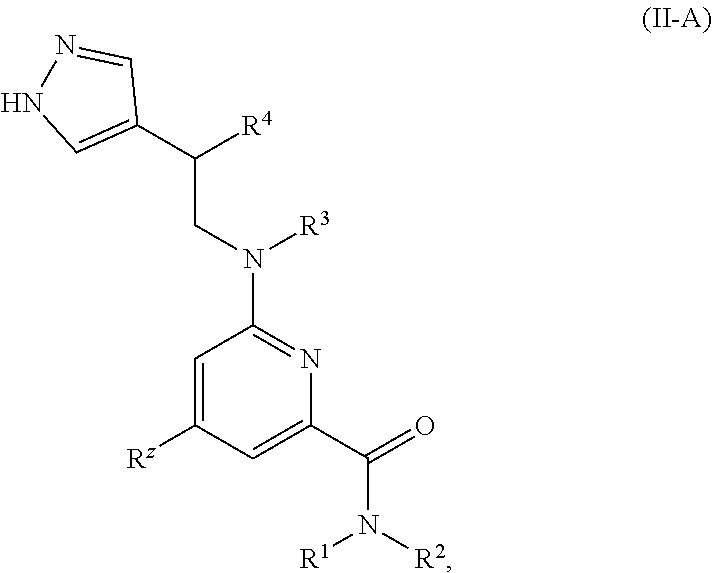
or a stereoisomer or tautomer thereof, or a pharmaceutically acceptable salt of any of the foregoing, wherein R1, R2, R3, R4, and Rz are as defined above for the compound of formula (II).
[0122]In some embodiments, provided herein is a compound of formula (II-A), or a stereoisomer or tautomer thereof, or a pharmaceutically acceptable salt of any of the foregoing, wherein R3 is H and R4 is H, such that the compound of formula (II-A) is a compound of formula (II-A1):
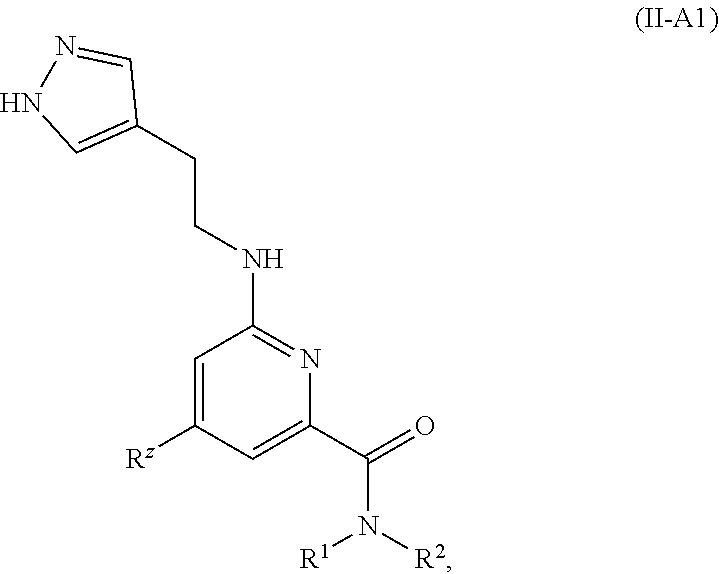
or a stereoisomer or tautomer thereof, or a pharmaceutically acceptable salt of any of the foregoing, wherein R1, R2, and Rz are as defined above for the compound of formula (II-A).
[0124]In some embodiments, provided is a compound of formula (II), (II-A), or (II-A1), or a stereoisomer or tautomer thereof, or a pharmaceutically acceptable salt of any of the foregoing, wherein Rz is halo or optionally substituted C1-6alkyl. In some embodiments, Rz is optionally substituted C1-6alkyl. In some embodiments, Rz is unsubstituted C1-6alkyl. In some embodiments, Rz is unsubstituted C1-3alkyl. In certain embodiments, Rz is unsubstituted methyl. In some embodiments, Rz is halo. In some embodiments, Rz is bromo.
[0125]In some embodiments, provided is a compound of formula (A), (I), (II), or (II-A), or a stereoisomer or tautomer thereof, or a pharmaceutically acceptable salt of any of the foregoing, wherein R3 is optionally substituted C1-6alkyl and R4 is H. In some embodiments, R3 is unsubstituted C1-6alkyl and R4 is H. In some embodiments, R3 is unsubstituted n-propyl and R4 is H. In some embodiments, R3 is C1-6alkyl, wherein the C1-6alkyl of R3 is substituted with one or more C6-20aryl, and R4 is H. In some embodiments, R3 is C1-6alkyl, wherein the C1-6alkyl of R3 is substituted with one or more phenyl, and R4 is H. In some embodiments, R3 is optionally substituted ethyl and R4 is H. In some embodiments, R3 is ethyl, wherein the ethyl of R3 is substituted with one or more C6-20aryl, and R4 is H. In some embodiments, R3 is ethyl, wherein the ethyl of R3 is substituted with one or more phenyl, and R4 is H. In some embodiments, R3 is
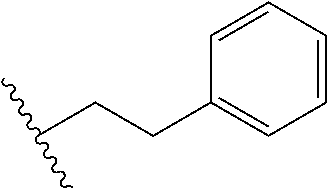
and R4 is H. In some embodiments, R3 is H and R4 is H. In some embodiments, R3 and R4 taken together are —CH2CH2—.
[0127]In some embodiments, provided herein is a compound of formula (A), such as a compound of formula (I), (I-A), (I-A1), (I-A2), (I-A3), (I-B), (I-B1), (II), (II-A), or (II-A1), or a stereoisomer or tautomer thereof, or a pharmaceutically acceptable salt of any of the foregoing, wherein R1 and R2 are each independently H, optionally substituted C1-6alkyl, optionally substituted C3-10cycloalkyl, optionally substituted C6-20aryl, optionally substituted 3-15 membered heterocyclyl, or optionally substituted 5-20 membered heteroaryl. In some embodiments, one of R1 and R2 is H and the other of R1 and R2 is optionally substituted C1-6alkyl, optionally substituted C3-10cycloalkyl, optionally substituted C6-20aryl, optionally substituted 3-15 membered heterocyclyl, or optionally substituted 5-20 membered heteroaryl.
[0128]In some embodiments, provided herein is a compound of formula (I), such as a compound of formula (I-A), (I-A1), (I-B), or (I-B1), or a stereoisomer or tautomer thereof, or a pharmaceutically acceptable salt of any of the foregoing, wherein R1 and R2 are each independently H, optionally substituted C1-6alkyl, optionally substituted C3-10cycloalkyl, optionally substituted C6-20aryl, optionally substituted 3-15 membered heterocyclyl, or optionally substituted 5-20 membered heteroaryl. In some embodiments, one of R1 and R2 is H and the other of R1 and R2 is optionally substituted C1-6alkyl, optionally substituted C3-10cycloalkyl, optionally substituted C6-20aryl, optionally substituted 3-15 membered heterocyclyl, or optionally substituted 5-20 membered heteroaryl.
[0129]In some embodiments, provided herein is a compound of formula (A), such as a compound of formula (I), (I-A), (I-A1), (I-A2), (I-A3), (I-B), (I-B1), (II), (II-A), or (II-A1), or a stereoisomer or tautomer thereof, or a pharmaceutically acceptable salt of any of the foregoing, wherein R1 and R2 are each independently H. In some embodiments, provided herein is a compound of formula (I), such as a compound of formula (I-A), (I-A1), (I-B), or (I-B1), or a stereoisomer or tautomer thereof, or a pharmaceutically acceptable salt of any of the foregoing, wherein R1 and R2 are each independently H. In some embodiments, provided herein is a compound of formula (A), such as a compound of formula (I), (I-A), (I-A1), (I-A2), (I-A3), (I-B), (I-B1), (II), (II-A), or (II-A1), or a stereoisomer or tautomer thereof, or a pharmaceutically acceptable salt of any of the foregoing, wherein one of R1 and R2 is H and the other of R1 and R2 is optionally substituted C1-6alkyl. In other embodiments, provided herein is a compound of formula (I), such as a compound of formula (I-A), (I-A1), (I-B), or (I-B1), or a stereoisomer or tautomer thereof, or a pharmaceutically acceptable salt of any of the foregoing, wherein one of R1 and R2 is H and the other of R1 and R2 is optionally substituted C1-6alkyl. In some embodiments, provided herein is a compound of formula (A), such as a compound of formula (I), (I-A), (I-A1), (I-A2), (I-A3), (I-B), (I-B1), (II), (II-A), or (II-A1), or a stereoisomer or tautomer thereof, or a pharmaceutically acceptable salt of any of the foregoing, wherein R1 and R2 are each independently optionally substituted C1-6alkyl. In other embodiments, provided herein is a compound of formula (I), such as a compound of formula (I-A), (I-A1), (I-B), or (I-B1), or a stereoisomer or tautomer thereof, or a pharmaceutically acceptable salt of any of the foregoing, wherein R1 and R2 are each independently optionally substituted C1-6alkyl. In some embodiments of the foregoing, wherein one or both of R1 and R2 is optionally substituted C1-6alkyl, the C1-6alkyl of R1 and/or R2 is, independently at each occurrence, unsubstituted or is substituted with one or more Rm, wherein Rm is, independently at each occurrence, —OH, halo, optionally substituted C1-6alkoxy, optionally substituted sulfonyl, optionally substituted C3-10cycloalkyl, optionally substituted 3-15 membered heterocyclyl, optionally substituted C6-20aryl, or optionally substituted 5-20 membered heteroaryl. In some embodiments, wherein one or both of R1 and R2 is optionally substituted C1-6alkyl, the C1-6alkyl of R1 and/or R2 is, independently at each occurrence, unsubstituted or is substituted with one Rm. In other embodiments, wherein one or both of R1 and R2 is optionally substituted C1-6alkyl, the C1-6alkyl of R1 and/or R2 is, independently at each occurrence, unsubstituted or is substituted with two Rm. In other embodiments, wherein one or both of R1 and R2 is optionally substituted C1-6alkyl, the C1-6alkyl of R1 and/or R2 is, independently at each occurrence, unsubstituted or is substituted with three or more Rm.
[0130]In some embodiments, the C1-6alkoxy, sulfonyl, C3-20cycloalkyl, 3-15 membered heterocyclyl, C6-20aryl, or 5-20 membered heteroaryl of Rm is, independently at each occurrence, unsubstituted or is substituted with one or more Rn, wherein Rn is, independently at each occurrence, halo, —OH, C1-6alkyl, C1-6alkoxy, —C(O)—C6-20aryl, —C1-6alkyl-C6-20aryl, or C6-20aryl, wherein the C6-20aryl of Rn is, independently at each occurrence, optionally substituted with one or more halo. In some embodiments, the C1-6alkoxy, sulfonyl, C3-10cycloalkyl, 3-15 membered heterocyclyl, C6-20aryl, or 5-20 membered heteroaryl of Rm is, independently at each occurrence, unsubstituted or is substituted with one Rn. In some embodiments, the C1-6alkoxy, sulfonyl, C3-10cycloalkyl, 3-15 membered heterocyclyl, C6-20aryl, or 5-20 membered heteroaryl of Rm is, independently at each occurrence, unsubstituted or is substituted with two Rn. In some embodiments, the C1-6alkoxy, sulfonyl, C3-10cycloalkyl, 3-15 membered heterocyclyl, C6-20aryl, or 5-20 membered heteroaryl of Rm is, independently at each occurrence, unsubstituted or is substituted with three or more Rn. In some embodiments, the C1-6alkoxy, sulfonyl, C3-10cycloalkyl, 3-15 membered heterocyclyl, C6-20aryl, or 5-20 membered heteroaryl of Rm is, independently at each occurrence, unsubstituted or is substituted with one to five Rn.
[0131]In some embodiments, provided herein is a compound of formula (A), such as a compound of formula (I), (I-A), (I-A1), (I-A2), (I-A3), (I-B), (I-B1), (II), (II-A), or (II-A1), or a stereoisomer or tautomer thereof, or a pharmaceutically acceptable salt of any of the foregoing, wherein one of R1 and R2 is H and the other of R1 and R2 is unsubstituted C1-6alkyl. In some embodiments, one of R1 and R2 is H and the other of R1 and R2 is unsubstituted methyl. In some embodiments, provided herein is a compound of formula (I), such as a compound of formula (I A), (I-A1), (I-B), or (I-B1), or a stereoisomer or tautomer thereof, or a pharmaceutically acceptable salt of any of the foregoing, wherein one of R1 and R2 is H and the other of R1 and R2 is unsubstituted C1-6alkyl. In some embodiments, one of R1 and R2 is H and the other of R1 and R2 is unsubstituted methyl.
[0132]In some embodiments, one of R1 and R2 is H and the other of R1 and R2 is C1-6alkyl, wherein the C1-6alkyl of R1 or R2 is optionally substituted with one or more Rm, wherein each Rm is independently 5-20 membered heteroaryl or C6-20aryl, wherein the 5-20 membered heteroaryl or C6-20aryl of Rm is independently optionally substituted with one or more halo, C1-6alkyl, or C1-6alkoxy. In some embodiments, R1 and R2 are both independently optionally substituted C1-6alkyl, wherein the optionally substituted C1-6alkyl of R1 and R2 is independently optionally substituted with one or more Rm, wherein Rm is 5-20 membered heteroaryl or C6-20aryl, wherein the 5-20 membered heteroaryl or C6-20aryl or Rm is independently optionally substituted with one or more halo, C1-6alkyl, or C1-6alkoxy.
[0133]In some embodiments, one of R1 and R2 is H and the other of R1 and R2 is C1-6alkyl, wherein the C1-6alkyl of R1 or R2 is optionally substituted with one or more Rm, wherein each Rm is independently —OH, halo, or C1-6alkoxy. In some embodiments, each of R1 and R2 is C1-6alkyl, wherein the C1-6alkyl of R1 or R2 is optionally substituted with one or more Rm, wherein each Rm is independently —OH, halo, or C1-6alkoxy.
[0134]In some embodiments, one of R1 and R2 is H and the other of R1 and R2 is C1-6alkyl, wherein the C1-6alkyl of R1 or R2 is optionally substituted with one or more Rm, wherein each Rm is independently 5-20 membered heteroaryl or C6-20aryl, wherein the 5-20 membered heteroaryl or C6-20aryl of Rm is optionally substituted with one or more halo. In some embodiments, each of R1 and R2 is independently C1-6alkyl, wherein the C1-6alkyl of R1 or R2 is optionally substituted with one or more Rm, wherein each Rm is independently 5-20 membered heteroaryl or C6-20aryl, wherein the 5-20 membered heteroaryl or C6-20aryl of Rm is optionally substituted with one or more halo. In some embodiments, the halo is independently chloro or fluoro.
[0135]In some embodiments, one of R1 and R2 is H and the other of R1 and R2 is C1-6alkyl, wherein the C1-6alkyl of R1 or R2 is optionally substituted with one or more Rm, wherein each Rm is independently 5-20 membered heteroaryl, wherein the 5-20 membered heteroaryl of Rm is optionally substituted with one or more C1-6alkyl, C1-6alkoxy, or halo. In some embodiments, each of R1 and R2 is independently C1-6alkyl, wherein the C1-6alkyl of R1 or R2 is optionally substituted with one or more Rm, wherein each Rm is independently 5-20 membered heteroaryl, wherein the 5-20 membered heteroaryl of Rm is optionally substituted with one or more C1-6alkyl, C1-6alkoxy, or halo. In some embodiments, the halo is independently chloro or fluoro. In some embodiments, the 5-20 membered heteroaryl is benzofuranyl, indazolyl, pyridinyl, imidazolyl, oxazolyl, isoxazolyl, pyrazolyl, furanyl, thiazolyl, or thiophenyl.
[0136]In some embodiments, one of R1 and R2 is H and the other of R1 and R2 is C1-6alkyl, wherein the C1-6alkyl of R1 or R2 is optionally substituted with one or more Rm, wherein each Rm is independently C6-20aryl, wherein the C6-20aryl of Rm is optionally substituted with one or more C1-6alkyl, C1-6alkoxy, or halo. In some embodiments, each of R1 and R2 is independently C1-6alkyl, wherein the C1-6alkyl of R1 or R2 is optionally substituted with one or more Rm, wherein each Rm is independently C6-20aryl, wherein the C6-20aryl of Rm is optionally substituted with one or more C1-6alkyl, C1-6alkoxy, or halo. In some embodiments, the halo is independently chloro or fluoro.
[0137]In some embodiments, one of R1 and R2 is H and the other of R1 and R2 is C1-6alkyl, wherein the C1-6alkyl of R1 or R2 is optionally substituted with one or more Rm, wherein each Rm is independently phenyl, wherein the phenyl of Rm is optionally substituted with one or more C1-6alkyl, C1-6alkoxy, or halo. In some embodiments, each of R1 and R2 is independently C1-6alkyl, wherein the C1-6alkyl of R1 or R2 is optionally substituted with one or more Rm, wherein each Rm is independently phenyl, wherein the phenyl of Rm is optionally substituted with one or more C1-6alkyl, C1-6alkoxy, or halo. In some embodiments, the halo is independently chloro or fluoro.
[0138]In some embodiments, one of R1 and R2 is H and the other of R1 and R2 is C1-6alkyl, wherein the C1-6alkyl of R1 or R2 is optionally substituted with one or more Rm, wherein each Rm is independently 5-6 membered heteroaryl, wherein the 5-6 membered heteroaryl of Rm is optionally substituted with one or more C1-6alkyl, C1-6alkoxy, or halo. In some embodiments, one of R1 and R2 is H and the other of R1 and R2 is C1-6alkyl, wherein the C1-6alkyl of R1 or R2 is optionally substituted with one or more Rm, wherein each Rm is independently 5-6 membered heteroaryl, wherein the 5-6 membered heteroaryl of Rm is optionally substituted with one or more halo. In some embodiments, each of R1 and R2 is independently C1-6alkyl, wherein the C1-6alkyl of R1 or R2 is optionally substituted with one or more Rm, wherein each Rm is independently 5-6 membered heteroaryl, wherein the 5-6 membered heteroaryl of Rm is optionally substituted with one or more C1-6alkyl, C1-6alkoxy, or halo. In some embodiments, each of R1 and R2 is independently C1-6alkyl, wherein the C1-6alkyl of R1 or R2 is optionally substituted with one or more Rm, wherein each Rm is independently 5-6 membered heteroaryl, wherein the 5-6 membered heteroaryl of Rm is optionally substituted with one or more halo. In some embodiments of the foregoing, the 5-6 membered heteroaryl is pyridinyl. In some embodiments, the 5-6 heteroaryl is imidazolyl, oxazolyl, isoxazolyl, pyrazolyl, furanyl, thiazolyl, or thiophenyl. In some embodiments of the foregoing, the 5-6 membered heteroaryl of Rm is optionally substituted with one or more halo, wherein the halo is independently chloro or fluoro. In some embodiments, the halo is fluoro. In some embodiments, provided herein is a compound of formula (A), such as a compound of formula (I), (I-A), (I-A1), (I-A2), (I-A3), (I-B), (I-B1), (II), (II-A), or (II-A1), or a stereoisomer or tautomer thereof, or a pharmaceutically acceptable salt of any of the foregoing, wherein one of R1 and R2 is H and the other of R1 and R2 is C1-6alkyl, wherein the C1-6alkyl of R1 or R2 is optionally substituted with one Rm, wherein Rm is pyridinyl, wherein the pyridinyl of Rm is optionally substituted with one or more fluoro. In some embodiments, one of R1 and R2 is H and the other of R1 and R2 is
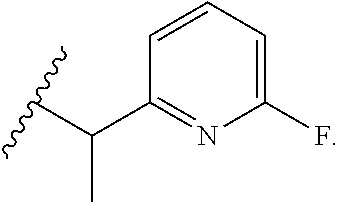
In some embodiments, one of R1 and R2 is H and the other of R1 and R2 is
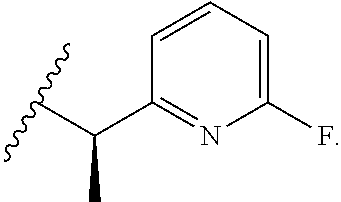
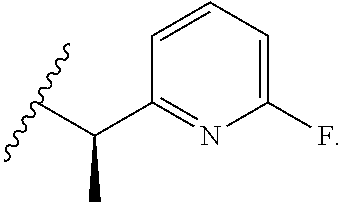
In some embodiments, provided herein is a compound of formula (I), such as a compound of formula (I-A), (I-A1), (I-B), or (I-B1), or a stereoisomer or tautomer thereof, or a pharmaceutically acceptable salt of any of the foregoing, wherein one of R1 and R2 is H and the other of R1 and R2 is C1-6alkyl, wherein the C1-6alkyl of R1 or R2 is optionally substituted with one Rm, wherein Rm is pyridinyl, wherein the pyridinyl of Rm is optionally substituted with one or more fluoro. In some embodiments, one of R1 and R2 is H and the other of R1 and R2 is
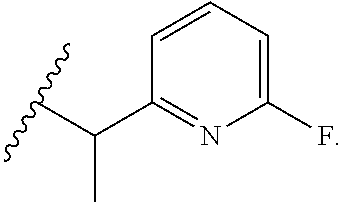
In some embodiments, one of R1 and R2 is H and the other of R1 and R2 is
[0143]In some embodiments, one of R1 and R2 is H and the other of R1 and R2 is C1-6alkyl, wherein the C1-6alkyl of R1 or R2 is optionally substituted with one or more Rm, wherein each Rm is C3-10cycloalkyl. In some embodiments, Rm is C3-6cycloalkyl. In some embodiments, Rm is cyclohexyl. In some embodiments, one of R1 and R2 is H and the other of R1 and R2 is C1-6alkyl, wherein the C1-6alkyl of R1 or R2 is optionally substituted with one or more Rm, wherein each Rm is C3-10cycloalkyl or 5-20 membered heteroaryl. In some embodiments, the C3-10cycloalkyl of Rm is spiro.
[0144]In some embodiments, one of R1 and R2 is H and the other of R1 and R2 is C1-6alkyl, wherein the C1-6alkyl of R1 or R2 is optionally substituted with one or more Rm, wherein each Rm is sulfonyl, wherein the sulfonyl of Rm is independently optionally substituted with one or more —C1-6alkyl-C6-20aryl. In some embodiments, each of R1 and R2 is C1-6alkyl, wherein the C1-6alkyl of R1 or R2 is independently optionally substituted with one or more Rm, wherein each Rm is sulfonyl, wherein the sulfonyl of Rm is independently optionally substituted with one or more —C1-6alkyl-C6-20aryl. in some embodiments, one of R1 and R2 is H and the other of R1 and R2 is
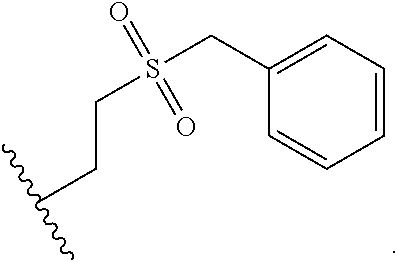
[0146]In some embodiments, one of R1 and R2 is H and the other of R1 and R2 is C1-6alkyl, wherein the C1-6alkyl of R1 or R2 is optionally substituted with one or more Rm, wherein Rm is 3-15 membered heterocyclyl, wherein the 3-15 membered heterocyclyl of Rm is independently optionally substituted with one or more Rn, wherein Rn is C6-20aryl, wherein the C6-20aryl of Rn is optionally substituted with one or more halo. In some embodiments, each of R1 and R2 is C1-6alkyl, wherein the C1-6alkyl of R1 or R2 is optionally substituted with one or more Rm, wherein Rm is 3-15 membered heterocyclyl, wherein the 3-15 membered heterocyclyl of Rm is independently optionally substituted with one or more Rn, wherein Rn is C6-20aryl, wherein the C6-20aryl of Rn is optionally substituted with one or more halo. In some embodiments, the halo is independently chloro or fluoro. In some embodiments, one of R1 and R2 is H and the other of R1 and R2 is C1-6alkyl, wherein the C1-6alkyl of R1 or R2 is optionally substituted with one or more Rm, wherein Rm is oxetanyl, wherein the oxetanyl of Rm is independently optionally substituted with one or more Rn, wherein Rn is phenyl, wherein the phenyl of Rn is optionally substituted with one or more halo. In some embodiments, the halo is independently fluoro or chloro. In some embodiments, the 3-15 membered heterocyclyl of Rm is spiro.
[0147]In some embodiments, one of R1 and R2 is H and the other of R1 and R2 is C1-6alkyl, wherein the C1-6alkyl of R1 or R2 is optionally substituted with one or more Rm, wherein Rm is 3-15 membered heterocyclyl or C6-20aryl, wherein the C6-20aryl of Rm is optionally substituted with one or more halo. In some embodiments, the halo is independently fluoro or chloro. In some embodiments, one of R1 and R2 is H and the other of R1 and R2 is C1-6alkyl, wherein the C1-6alkyl of R1 or R2 is optionally substituted with one or more Rm, wherein Rm is 3-15 membered heterocyclyl or unsubstituted C6-20aryl. In some embodiments, one of R1 and R2 is H and the other of R1 and R2 is C1-6alkyl, wherein the C1-6alkyl of R1 or R2 is optionally substituted with one or more Rm, wherein Rm is 3-15 membered heterocyclyl or C6-20aryl, wherein the C6-20aryl of Rm is substituted with one or more halo. In some embodiments, the halo is independently fluoro or chloro.
[0148]In some embodiments, one of R1 and R2 is H and the other of R1 and R2 is optionally substituted C3-10cycloalkyl. In some embodiments, one of R1 and R2 is H and the other of R1 and R2 is unsubstituted C3-10cycloalkyl. In some embodiments, one of R1 and R2 is H and the other of R1 and R2 is C3-10cycloalkyl, wherein the C3-10cycloalkyl of R1 or R2 is substituted with one or more halo or C6-20aryl. In some embodiments, one of R1 and R2 is H and the other of R1 and R2 is cyclobutyl, wherein the cyclobutyl of R1 or R2 is optionally substituted with one or more halo or C6-20aryl. In some embodiments, one of R1 and R2 is H and the other of R1 and R2 is cyclobutyl, wherein the cyclobutyl of R1 or R2 is optionally substituted with one or more phenyl. In some embodiments, one of R1 and R2 is H and the other of R1 and R2 is dihydroindenyl, wherein the dihydroindenyl of R1 or R2 is optionally substituted with one or more halo or C6-20aryl. In some embodiments, one of R1 and R2 is H and the other of R1 and R2 is dihydroindenyl, wherein the dihydroindenyl of R1 or R2 is optionally substituted with one or more halo. In some embodiments of the foregoing, the halo is independently chloro or fluoro. In some embodiments, the halo is fluoro.
[0149]In some embodiments, one of R1 and R2 is H and the other of R1 and R2 is optionally substituted 3-15 membered heterocyclyl. In some embodiments, one of R1 and R2 is H and the other of R1 and R2 is optionally substituted 3-8 membered heterocyclyl. In some embodiments, one of R1 and R2 is H and the other of R1 and R2 is optionally substituted 3-6 membered heterocyclyl. In some embodiments, one of R1 and R2 is H and the other of R1 and R2 is unsubstituted 3-15 membered heterocyclyl. In some embodiments, one of R1 and R2 is H and the other of R1 and R2 is 3-15 membered heterocyclyl, wherein the 3-15 membered heterocyclyl of R1 or R2 is substituted with one or more Rp, wherein Rp is, independently at each occurrence, C1-6alkyl or C6-20aryl, wherein the C1-6alkyl of Rp is, independently at each occurrence, optionally substituted with one or more Rp, wherein Rp is, independently at each occurrence, C6-20aryl, wherein the C6-20aryl of Rp is, independently at each occurrence, optionally substituted with one or more halo. In some embodiments, one of R1 and R2 is H and the other of R1 and R2 is 3-15 membered heterocyclyl, wherein the 3-15 membered heterocyclyl of R1 or R2 is substituted with one Rp, wherein Rp is C6-20aryl. In some embodiments, one of R1 and R2 is H and the other of R1 and R2 is oxetanyl, wherein the oxetanyl of R1 or R2 is substituted with one Rp, wherein Rp is phenyl. In some embodiments, one of R1 and R2 is H and the other of R1 and R2 is 3-15 membered heterocyclyl, wherein the 3-15 membered heterocyclyl of R1 or R2 is substituted with one or more Rp, wherein Rp is, independently at each occurrence, C1-6alkyl, wherein the C1-6alkyl of Rp is, independently at each occurrence, optionally substituted with one or more Rp, wherein Rp is, independently at each occurrence, C6-20aryl, wherein the C6-20aryl of Rp is, independently at each occurrence, optionally substituted with one or more halo. In some embodiments, one of R1 and R2 is H and the other of R1 and R2 is tetrahydropyranyl, wherein the tetrahydropyranyl of R1 or R2 is substituted with one or more Rp, wherein Rp is, independently at each occurrence, C1-6alkyl, wherein the C1-6alkyl of Rp is, independently at each occurrence, optionally substituted with one or more Rp, wherein Rp is, independently at each occurrence, phenyl, wherein the phenyl of Rp is, independently at each occurrence, optionally substituted with one or more halo. In some embodiments, each halo is independently chloro or fluoro.
[0150]In some embodiments, one of R1 and R2 is H and the other of R1 and R2 is optionally substituted C6-20aryl. In some embodiments, one of R1 and R2 is H and the other of R1 and R2 is unsubstituted C6-20aryl. In some embodiments, one of R1 and R2 is H and the other of R1 and R2 is C6-20aryl, wherein the C6-20aryl of R1 or R2 is substituted with one or more halo or C1-6alkyl. In some embodiments, one of R1 and R2 is H and the other of R1 and R2 is phenyl, wherein the phenyl of R1 or R2 is optionally substituted with one or more halo or C1-6alkyl. In some embodiments of the foregoing, the halo is independently chloro or fluoro. In some embodiments, the C1-6alkyl is methyl.
[0151]In some embodiments, one of R1 and R2 is H and the other of R1 and R2 is optionally substituted 5-20 membered heteroaryl. In some embodiments, one of R1 and R2 is H and the other of R1 and R2 is unsubstituted 5-20 membered heteroaryl. In some embodiments, one of R1 and R2 is H and the other of R1 and R2 is 5-20 membered heteroaryl, wherein the 5-20 membered heteroaryl of R1 or R2 is substituted with one or more halo. In some embodiments, one of R1 and R2 is H and the other of R1 and R2 is 5-6 membered heteroaryl, wherein the 5-6 membered heteroaryl of R1 or R2 is optionally substituted with one or more halo. In some embodiments, one of R1 and R2 is H and the other of R1 and R2 is pyridinyl, wherein the pyridinyl of R1 or R2 is optionally substituted with one or more halo. In some embodiments of the foregoing, the halo is independently chloro or fluoro.
[0152]In some embodiments, provided herein is a compound of formula (A), such as a compound of formula (I), (I-A), (I-A1), (I-A2), (I-A3), (I-B), (I-B1), (II), (II-A), or (II-A1), or a stereoisomer or tautomer thereof, or a pharmaceutically acceptable salt of any of the foregoing, wherein R1 and R2 are taken together with the nitrogen to which they are attached to form an optionally substituted 3-15 membered heterocyclyl. In some embodiments, R1 and R2 are taken together with the nitrogen to which they are attached to form an optionally substituted 3-12 membered heterocyclyl. In other embodiments, R1 and R2 are taken together with the nitrogen to which they are attached to form an optionally substituted 3-10 membered heterocyclyl. In some embodiments, R1 and R2 are taken together with the nitrogen to which they are attached to form an optionally substituted 3-8 membered heterocyclyl. In other embodiments, R1 and R2 are taken together with the nitrogen to which they are attached to form an optionally substituted 3-6 membered heterocyclyl. In some embodiments, R1 and R2 are taken together with the nitrogen to which they are attached to form an optionally substituted 5-6 membered heterocyclyl. In some embodiments, provided herein is a compound of formula (I), such as a compound of formula (I A), (I-A1), (I-B), or (I-B1), or a stereoisomer or tautomer thereof, or a pharmaceutically acceptable salt of any of the foregoing, wherein R1 and R2 are taken together with the nitrogen to which they are attached to form an optionally substituted 3-15 membered heterocyclyl. In some embodiments, R1 and R2 are taken together with the nitrogen to which they are attached to form an optionally substituted 3-12 membered heterocyclyl. In other embodiments, R1 and R2 are taken together with the nitrogen to which they are attached to form an optionally substituted 3-10 membered heterocyclyl. In some embodiments, R1 and R2 are taken together with the nitrogen to which they are attached to form an optionally substituted 3-8 membered heterocyclyl. In other embodiments, R1 and R2 are taken together with the nitrogen to which they are attached to form an optionally substituted 3-6 membered heterocyclyl. In some embodiments, R1 and R2 are taken together with the nitrogen to which they are attached to form an optionally substituted 5-6 membered heterocyclyl.
[0153]In some embodiments, wherein R1 and R2 are taken together with the nitrogen to which they are attached to form an optionally substituted 3-15 membered heterocyclyl, the optionally substituted 3-15 membered heterocyclyl is monocyclic. In other embodiments, the optionally substituted 3-15 membered heterocyclyl is bicyclic. In still other embodiments, the optionally substituted 3-15 membered heterocyclyl is tricyclic. In some embodiments, optionally substituted 3-15 membered heterocyclyl is spiro. In other embodiments, optionally substituted 3-15 membered heterocyclyl is bridged.
[0154]In some embodiments, provided herein is a compound of formula (A), such as a compound of formula (I), (I-A), (I-A1), (I-A2), (I-A3), (I-B), (I-B1), (II), (II-A), or (II-A1), or a stereoisomer or tautomer thereof, or a pharmaceutically acceptable salt of any of the foregoing, wherein R1 and R2 are taken together with the nitrogen to which they are attached to form an optionally substituted azetidinyl, an optionally substituted pyrrolidinyl, an optionally substituted piperidinyl, an optionally substituted piperazinyl, an optionally substituted morpholinyl, an optionally substituted spiro[azetidine-3,3′-indolin]-2′-on-yl, or an optionally substituted 2-azaspiro[3.3]heptanyl. In some embodiments, R1 and R2 are taken together with the nitrogen to which they are attached to form an optionally substituted azetidinyl, an optionally substituted pyrrolidinyl, an optionally substituted piperidinyl, an optionally substituted piperazinyl, or an optionally substituted morpholinyl. In some embodiments, R1 and R2 are taken together with the nitrogen to which they are attached to form an optionally substituted azetidinyl. In some embodiments, R1 and R2 are taken together with the nitrogen to which they are attached to form an optionally substituted pyrrolidinyl, an optionally substituted piperidinyl, or an optionally substituted piperazinyl. In some embodiments, R1 and R2 are taken together with the nitrogen to which they are attached to form an optionally substituted pyrrolidinyl. In some embodiments, R1 and R2 are taken together with the nitrogen to which they are attached to form an optionally substituted morpholinyl. In some embodiments, provided herein is a compound of formula (I), such as a compound of formula (I-A), (I-A1), (I-B), or (I-B1), or a stereoisomer or tautomer thereof, or a pharmaceutically acceptable salt of any of the foregoing, wherein R1 and R2 are taken together with the nitrogen to which they are attached to form an optionally substituted azetidinyl, an optionally substituted pyrrolidinyl, an optionally substituted piperidinyl, an optionally substituted piperazinyl, an optionally substituted morpholinyl, an optionally substituted spiro[azetidine-3,3′-indolin]-2′-on-yl, or an optionally substituted 2-azaspiro[3.3]heptanyl. In some embodiments, R1 and R2 are taken together with the nitrogen to which they are attached to form an optionally substituted azetidinyl, an optionally substituted pyrrolidinyl, an optionally substituted piperidinyl, an optionally substituted piperazinyl, or an optionally substituted morpholinyl. In some embodiments, R1 and R2 are taken together with the nitrogen to which they are attached to form an optionally substituted azetidinyl. In some embodiments, R1 and R2 are taken together with the nitrogen to which they are attached to form an optionally substituted pyrrolidinyl, an optionally substituted piperidinyl, or an optionally substituted piperazinyl. In some embodiments, R1 and R2 are taken together with the nitrogen to which they are attached to form an optionally substituted pyrrolidinyl. In some embodiments, R1 and R2 are taken together with the nitrogen to which they are attached to form an optionally substituted morpholinyl.
[0155]In some embodiments, the 3-15 membered heterocyclyl formed by R1 and R2 is unsubstituted or is substituted with one or more Rs, wherein Rs is, independently at each occurrence, halo, —OH, —CN, oxo, optionally substituted C1-6alkyl, optionally substituted optionally substituted C1-6alkoxy, optionally substituted C3-10cycloalkyl, optionally substituted 3-15 membered heterocyclyl, optionally substituted C6-20aryl, or optionally substituted 5-20 membered heteroaryl. In some embodiments, the 3-15 membered heterocyclyl formed by R1 and R2 is unsubstituted or is substituted with one Rs. In some embodiments, the 3-15 membered heterocyclyl formed by R1 and R2 is unsubstituted or is substituted with two Rs. In other embodiments, the 3-15 membered heterocyclyl formed by R1 and R2 is unsubstituted or is substituted with three or more Rs.
[0156]In some embodiments, the 3-15 membered heterocyclyl formed by R1 and R2 is unsubstituted or is substituted with one or more Rs, wherein Rs is, independently at each occurrence, halo, —OH, —CN, oxo, C1-6alkyl, C1-6alkoxy, C3-10cycloalkyl, 3-15 membered heterocyclyl, C6-20aryl, or 5-20 membered heteroaryl, wherein the C1-6alkyl, C1-6alkoxy, C3-10cycloalkyl, 3-15 membered heterocyclyl, C6-20aryl, or 5-20 membered heteroaryl of Rs is, independently at each occurrence, optionally substituted with one or more halo, —OH, C1-6alkyl, or C6-20aryl. In some embodiments of the foregoing, the C1-6alkyl, C1-6alkoxy, C3-10cycloalkyl, 3-15 membered heterocyclyl, C6-20aryl, or 5-20 membered heteroaryl of Rs is, independently at each occurrence, optionally substituted with one or more halo, —OH, methyl, or phenyl. In some embodiments, the 3-15 membered heterocyclyl formed by R1 and R2 is substituted with one or more Rs, wherein Rs is, independently at each occurrence, —OH, —CN, halo, C1-6alkyl, C1-6alkoxy, or phenyl, wherein the phenyl of Rs is, independently at each occurrence, optionally substituted with one or more halo. In some embodiments, the halo is independently chloro or fluoro.
[0157]In some embodiments, the 3-15 membered heterocyclyl formed by R1 and R2 is unsubstituted. In other embodiments, the 3-15 membered heterocyclyl formed by R1 and R2 is substituted with one or more Rs, wherein Rs is, independently at each occurrence, halo, —OH, —CN, oxo, C1-6alkyl, C1-6alkoxy, C3-10cycloalkyl, 3-15 membered heterocyclyl, C6-20aryl, or 5-20 membered heteroaryl, wherein the C1-6alkyl, C1-6alkoxy, C3-10cycloalkyl, 3-15 membered heterocyclyl, C6-20aryl, or 5-20 membered heteroaryl of Rs is, independently at each occurrence, optionally substituted with one or more halo, —OH, C1-6alkyl, or C6-20aryl. In some embodiments, the 3-15 membered heterocyclyl formed by R1 and R2 is substituted with one or more Rs, wherein Rs is, independently at each occurrence, halo, —OH, —CN, oxo, C1-6alkyl, or C1-6alkoxy, wherein the C1-6alkyl or C1-6alkoxy, of Rs is, independently at each occurrence, optionally substituted with one or more halo, —OH, C1-6alkyl, or C6-20aryl. In some embodiments, the 3-15 membered heterocyclyl formed by R1 and R2 is unsubstituted or is substituted with one or more Rs, wherein Rs is, independently at each occurrence, C3-10cycloalkyl, 3-15 membered heterocyclyl, C6-20aryl, or 5-20 membered heteroaryl, wherein the C3-10cycloalkyl, 3-15 membered heterocyclyl, C6-20aryl, or 5-20 membered heteroaryl of Rs is, independently at each occurrence, optionally substituted with one or more halo, —OH, C1-6alkyl, or C6-20aryl. In some embodiments, the 3-15 membered heterocyclyl formed by R1 and R2 is unsubstituted or is substituted with one or more Rs, wherein Rs is, independently at each occurrence, C6-20aryl, wherein the C6-20aryl of Rs is, independently at each occurrence, optionally substituted with one or more halo. In some embodiments, the 3-15 membered heterocyclyl formed by R1 and R2 is unsubstituted or is substituted with one or more Rs, wherein Rs is, independently at each occurrence, phenyl, wherein the phenyl of Rs is, independently at each occurrence, optionally substituted with one or more halo. In some embodiments of the foregoing, the halo is independently chloro or fluoro.
[0158]In some embodiments, provided herein is a compound of formula (A), such as a compound of formula (I), (I-A), (I-A1), (I-A2), (I-A3), (I-B), (I-B1), (II), (II-A), or (II-A1), or a stereoisomer or tautomer thereof, or a pharmaceutically acceptable salt of any of the foregoing, wherein R1 and R2 are taken together with the nitrogen to which they are attached to form a pyrrolidinyl, wherein the pyrrolidinyl formed by R1 and R2 is substituted with one Rs, wherein Rs is phenyl, wherein the phenyl of Rs is substituted with one or more fluoro. In some embodiments, R1 and R2 are taken together with the nitrogen to which they are attached to form
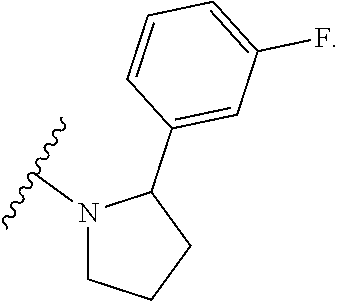
In some embodiments, R1 and R2 are taken together with the nitrogen to which they are attached to form
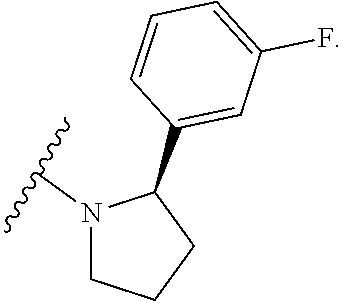
In some embodiments, provided herein is a compound of formula (I), such as a compound of formula (I-A), (I-A1), (I-B), or (I-B1), or a stereoisomer or tautomer thereof, or a pharmaceutically acceptable salt of any of the foregoing, wherein R1 and R2 are taken together with the nitrogen to which they are attached to form a pyrrolidinyl, wherein the pyrrolidinyl formed by R1 and R2 is substituted with one Rs, wherein Rs is phenyl, wherein the phenyl of Rs is substituted with one or more fluoro. In some embodiments, R1 and R2 are taken together with the nitrogen to which they are attached to form
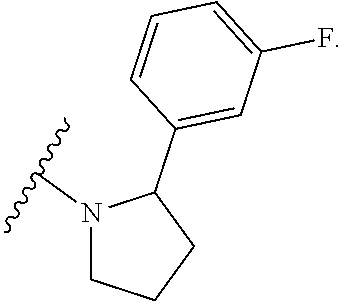
In some embodiments, R1 and R2 are taken together with the nitrogen to which they are attached to form
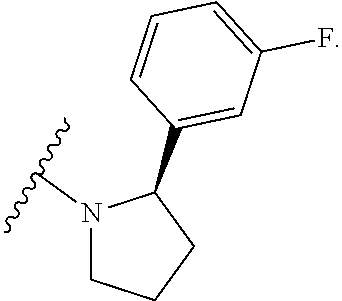
[0163]In some embodiments, provided herein are compounds, and salts thereof, as described in Table 1.
| TABLE 1 | ||
|---|---|---|
| No. | Structure | Name |
| 1 | 4-((2-(1H-pyrazol-4- yl)ethyl)(phenethyl)amino)- 5,6-dimethylpyrimidine-2- carboxamide | |
| 2 | 4-((2-(1H-pyrazol-4- yl)ethyl)(phenethyl)amino)- N,5,6-trimethylpyrimidine-2- carboxamide | |
| 3 | (4-((2-(1H-pyrazol-4- yl)ethyl)amino)-5,6- dimethylpyrimidin-2-yl)(3-(3- fluorophenyl)-3- hydroxyazetidin-1- yl)methanone | |
| 4 | (R)-4-((2-(1H-pyrazol-4- yl)ethyl)amino)-N-(1-(6- fluoropyridin-2-yl)ethyl)-5,6- dimethylpyrimidine-2- carboxamide | |
| 5 | 4-((2-(1H-pyrazol-4- yl)ethyl)amino)-N-((3- flurophenyl)(1-methyl-1H- imidazol-2-yl)methyl)-N,5,6- trimethylpyrimidine-2- carboxamide | |
| 6 | (4-(1H-indol-3-yl)piperidin-1- yl)(4-((2-(1H-pyrazol-4- yl)ethyl)amino)-5,6- dimethylpyrimidin-2- yl)methanone | |
| 7 | (4-((2-(1H-pyrazol-4- yl)ethyl)amino)-5,6- dimethylpyrimidin-2-yl)(3-(3- fluorophenyl)morpholino)meth- anone | |
| 8 | (S)-4-((2-(1H-pyrazol-4- yl)ethyl)amino)-5,6-dimethyl- N-(1-(thiophen-2- yl)ethyl)pyrimidine-2- carboxamide | |
| 9 | (S)-(4-(3-(1H-pyrazol-4- yl)pyrrolidin-1-yl)-5,6- dimethylpyrimidin-2-yl)(3- hydroxy-3-phenylazeitidin-1- yl)methanone | |
| 10 | (S)-4-((2-(1H-pyrazol-4- yl)ethyl)amino)-N-(1-(3- fluorophenyl)ethyl)-5,6- dimethylpyrimidine-2- carboxamide | |
| 11 | 4-((2-(1H-pyrazol-4- yl)ethyl)amino)-N-(2-(3- fluorophenyl)propan-2-yl)-5,6- dimethylpyrimidine-2- carboxamide | |
| 12 | (4-((2-(1H-pyrazol-4- yl)ethyl)amino)-5,6- dimethylpyrimidin-2-yl)(3-(3- chlorophenyl)morpholino)meth- anone | |
| 13 | (R)-(4-((2-(1H-pyrazol-4- yl)ethyl)amino)-5,6- dimethylpyrimidin-2-yl)(2-(3- chlorophenyl)pyrrolidin-1- yl)methanone | |
| 14 | (R)-4-((2-(1H-pyrazol-4- yl)ethyl)amino)-5,6-dimethyl- N-(1-(thiophen-2- yl)ethyl)pyrimidine-2- carboxamide | |
| 15 | (R)-(4-((2-(1H-pyrazol-4- yl)ethyl)amino)-5,6- dimethylpyrimidin-2-yl)(2-(3- fluorophenyl)pyrrolidin-1- yl)methanone | |
| 16 | (R)-(4-((2-(1H-pyrazol-4- yl)ethyl)amino)-5,6- dimethylpyrimidin-2-yl)(3- phenylmorpholino)methanone | |
| 17 | (R)-4-((2-(1H-pyrazol-4- yl)ethyl)amino)-5,6-dimethyl- N-(1-phenylethyl)pyrimidine- 2-carboxamide | |
| 18 | (4-((2-(1H-pyrazol-4- yl)ethyl)amino)-5,6- dimethylpyrimidin-2-yl)(3-(3- fluorophenyl)azetidin-1- yl)methanone | |
| 19 | 4-((2-(1H-pyrazol-4- yl)ethyl)amino)-5,6-dimethyl- N-(thiophen-2- ylmethyl)pyrimidine-2- carboxamide | |
| 20 | 4-((2-(1H-pyrazol-4- yl)ethyl)amino)-N-((3- fluorophenyl)(1-methyl-1H- imidazol-2-yl)methyl)-5,6- dimethylpyrimidine-2- carboxamide | |
| 21 | 4-((2-(1H-pyrazol-4- yl)ethyl)amino)-5,6-dimethyl- N-(2-phenylpropan-2- yl)pyrimidine-2-carboxamide | |
| 22 | (4-((2-(1H-pyrazol-4- yl)ethyl)amino)-5,6- dimethylpyrimidin-2-yl)(3- hydroxy-3-phenylazetidin-1- yl)methanone | |
| 23 | 4-((2-(1H-pyrazol-4- yl)ethyl)amino)-N-((3- fluorophenyl)(oxazol-2- yl)methyl)-5,6- dimethylpyrimidine-2- carboxamide | |
| 24 | (4-((2-(1H-pyrazol-4- yl)ethyl)amino)-5,6- dimethylpyrimidin-2-yl)(2-(3- fluorophenyl)piperazin-1- yl)methanone | |
| 25 | (4-((2-(1H-pyrazol-4- yl)ethyl)amino)-5,6- dimethylpyrimidin-2-yl)(3- methyl-3- phenylmorpholino)methanone | |
| 26 | (R)-4-((2-(1H-pyrazol-4- yl)ethyl)amino)-N-(1-(2- chlorophenyl)ethyl)-5,6- dimethylpyrimidine-2- carboxamide | |
| 27 | 4-((2-(1H-pyrazol-4- yl)ethyl)amino)-N-(2-(3- fluorophenyl)-2- methylpropyl)-5,6- dimethylpyrimidine-2- carboxamide | |
| 28 | (4-((2-(1H-pyrazol-4- yl)ethyl)amino)-5,6- dimethylpyrimidin-2-yl)(4,4- difluoro-2-phenylpiperidin-1- yl)methanone | |
| 29 | (S)-4-((2-(1H-pyrazol-4- yl)ethyl)amino)-N-(1-(2- chlorophenyl)ethyl)-N,5,6- trimethylpyrimidine-2- carboxamide | |
| 30 | (R)-4-((2-(1H-pyrazol-4- yl)ethyl)amino)-N-(1-(3- chloropyridin-2-yl)ethyl)-5,6- dimethylpyrimidine-2- carboxamide | |
| 31 | 4-((2-(1H-pyrazol-4- yl)ethyl)amino)-N-benzyl-5,6- dimethylpyrimidine-2- carboxamide | |
| 32 | 4-((2-(1H-pyrazol-4- yl)ethyl)amino)-N-(3- fluorobenzyl)-5,6- dimethylpyrimidine-2- carboxamide | |
| 33 | 4-((2-(1H-pyrazol-4- yl)ethyl)amino)-5,6-dimethyl- N-(2,2,2-trifluoro-1- phenylethyl)pyrimidine-2- carboxamide | |
| 34 | (4-((2-(1H-pyrazol-4- yl)ethyl)amino)-5,6- dimethylpyrimidin-2-yl)(4- hydroxy-4-phenylpiperidin-1- yl)methanone | |
| 35 | (R)-4-((2-(1H-pyrazol-4- yl)ethyl)amino)-5,6-dimethyl- N-(2-(thiophen-3- yl)ethyl)pyrimidine-2- carboxamide | |
| 36 | 4-((2-(1H-pyrazol-4- yl)ethyl)amino)-N-(1-(6- chloropyridin-2-yl)ethyl)-5,6- dimethylpyrimidine-2- carboxamide | |
| 37 | (R)-4-((2-(1H-pyrazol-4- yl)ethyl)amino)-5,6-dimethyl- N-(1-(3-methylpyridin-2- yl)ethyl)pyrimidine-2- carboxamide | |
| 38 | (R)-(4-((2-(1H-pyrazol-4- yl)ethyl)amino)-5,6- dimethylpyrimidin-2-yl)(2- phenylpyrrolidin-1- yl)methanone | |
| 39 | (R)-4-((2-(1H-pyrazol-4- yl)ethyl)amino)-N-(1-(3- fluorophenyl)ethyl)-5,6- dimethylpyrimidine-2- carboxamide | |
| 40 | 4-((2-(1H-pyrazol-4- yl)ethyl)amino)-5,6-dimethyl- N-((1-methyl-1H-imidazol-2- yl)(phenyl)methyl)pyrimidine- 2-carboxamide | |
| 41 | 4-((2-(1H-pyrazol-4- yl)ethyl)amino)-N-(1-(3- fluorophenyl)-2-methylpropan- 2-yl)-5,6-dimethylpyrimidine- 2-carboxamide | |
| 42 | (4-((2-(1H-pyraazol-4- yl)ethyl)amino)-5,6- dimethylpyrimidin-2- yl)((3R,4S)-3-hydroxy-4- phenylpyrrolidin-1- yl)methanone | |
| 43 | (R)-4-((2-(1H-pyrazol-4- yl)ethyl)amino)-N-(1-(6- methoxypyridin-2-yl)ethyl)- 5,6-dimethylpyrimidine-2- carboxamide | |
| 44 | (4-((2-(1H-pyrazol-4- yl)ethyl)amino)-5,6- dimethylpyrimidin-2-yl)(4- methyl-2-phenylpiperazin-1- yl)methanone | |
| 45 | 4-(4-((2-(1H-pyrazol-4- yl)ethyl)amino)-5,6- dimethylpyrimidine-2- carbonyl)-1-benzoylpiperazin-2- one | |
| 46 | 4-((2-(1H-pyrazol-4- yl)ethyl)amino)-N-((3- fluorophenyl)(pyridin-2- yl)methyl)-5,6- dimethylpyrimidine-2- carboxamide | |
| 47 | (R)-4-((2-(1H-pyrazol-4- yl)ethyl)amino)-5,6-dimethyl- N-(1-(pyridin-2- yl)ethyl)pyrimidine-2- carboxamide | |
| 48 | (4-((2-(1H-pyrazol-4- yl)ethyl)amino)-5,6- dimethylpyrimidin-2-yl)(3- hydroxy-3- (trifluoromethyl)azetidin-1- yl)methanone | |
| 49 | (R)-4-((2-(1H-pyrazol-4- yl)ethyl)amino)-N-(1-(3- fluorophenyl)-2- methoxyethyl)-5,6- dimethylpyrimidine-2- carboxamide | |
| 50 | 4-((2-(1H-pyrazol-4- yl)ethyl)amino)-5,6-dimethyl- N-phenethylpyrimidine-2- carboxamide | |
| 51 | (4-((2-(1H-pyrazol-4- yl)ethyl)amino)-5,6- dimethylpyrimidin-2-yl)(3- (2,3-difluorophenyl)-3- hydroxyazetidin-1- yl)methanone | |
| 52 | (R)-(4-((2-(1H-pyrazol-4- yl)ethyl)amino)-5,6- dimethylpyrimidin-2-yl)(3- phenylpyrrolidin-1- yl)methanone | |
| 53 | (R)-4-((2-(1H-pyrazol-4- yl)ethyl)amino)-N-(1-(2- chlorophenyl)ethyl)-N,5,6- trimethylpyrimidine-2- carboxamide | |
| 54 | (R)-(4-((2-(1H-pyrazol-4- yl)ethyl)amino)-5,6- dimethylpyrimidin-2-yl)(2-(2- fluorophenyl)pyrrolidin-1- yl)methanone | |
| 55 | 4-((2-(1H-pyrazol-4- yl)ethyl)amino)-N-((6- fluoropyridin-2-yl)methyl)-5,6- dimethylpyrimidine-2- carboxamide | |
| 56 | (R)-4-((2-(1H-pyrazol-4- yl)ethyl)amino)-N-(1-(3- fluoropyridin-2-yl)ethyl)-5,6- dimethylpyrimidine-2- carboxamide | |
| 57 | 4-((2-(1H-pyrazol-4- yl)ethyl)amino)-N-((1- benzoylazetidin-3-yl)methyl)- 5,6-dimethylpyrimidine-2- carboxamide | |
| 58 | 4-((2-(1H-pyrazol-4- yl)ethyl)amino)-N- (benzofuran-3-ylmethyl)-5,6- dimethylpyrimidine-2- carboxamide | |
| 59 | (S)-4-((2-(1H-pyrazol-4- yl)ethyl)amino)-5,6-dimethyl- N-(1-phenylethyl)pyrimidine- 2-carboxamide | |
| 60 | (4-((2-(1H-pyrazol-4- yl)ethyl)amino)-5,6- dimethylpyrimidin-2-yl)(3- benzyl)-3-hydroxyazetidin-1- yl)methanone | |
| 61 | (S)-(4-((2-(1H-pyrazol-4- yl)ethyl)amino)-5,6- dimethylpyrimidin-2-yl)(3- phenylpyrrolidin-1- yl)methanone | |
| 62 | (4-((2-(1H-pyrazol-4- yl)ethyl)amino)-5,6- dimethylpyrimidin-2- yl)((2R,5R)-2-methyl-5- phenylmorpholino)methanone | |
| 63 | (S)-(4-((2-(1H-pyrazol-4- yl)ethyl)amino)-5,6- dimethylpyrimidin-2-yl)(3- phenylmorpholino)methanone | |
| 64 | (R)-(4-((2-(1H-pyrazol-4- yl)ethyl)amino)-5,6- dimethylpyrimidin-2-yl)(3- benzylmorpholino)methanone | |
| 65 | (R)-4-((2-(1H-pyrazol-4- yl)ethyl)amino)-N-(1- (benzofuran-3-yl)ethyl)-5,6- dimethylpyrimidine-2- carboxamide | |
| 66 | (4-((2-(1H-pyrazol-4- yl)ethyl)amino)-5,6- dimethylpyrimidin-2-yl)(3-(2- fluorophenyl)pyrrolidin-1- yl)methanone | |
| 67 | (4-((2-(1H-pyrazol-4- yl)ethyl)amino)-5,6- dimethylpyrimidin-2-yl)(3-(4- fluorophenyl)morpholino)meth- anone | |
| 68 | 4-((2-(1H-pyrazol-4- yl)ethyl)amino)-N-(1-(6- methoxypyridin-2-yl)ethyl)- 5,6-dimethylpyrimidine-2- carboxamide | |
| 69 | 4-((2-(1H-pyrazol-4- yl)ethyl)amino)-5,6-dimethyl- N-(2-(pyridin-2-yl)propan-2- yl)pyrimidine-2-carboxamide | |
| 70 | 4-((2-(1H-pyrazol-4- yl)ethyl)amino)-N-(1-(5- chlorothiophen-2-yl)ethyl)-5,6- dimethylpyrimidine-2- carboxamide | |
| 71 | (4-((2-(1H-pyrazol-4- yl)ethyl)amino)-5,6- dimethylpyrimidin-2-yl)(2- benzylpyrrolidin-1- yl)methanone | |
| 72 | (S)-(4-((2-(1H-pyrazol-4- yl)ethyl)amino)-5,6- dimethylpyrimidin-2-yl)(3- benzylmorpholino)methanone | |
| 73 | (S)-4-((2-(1H-pyrazol-4- yl)ethyl)amino)-N-(1-(6- fluoropyridin-2-yl)ethyl)-5,6- dimethylpyrimidine-2- carboxamide | |
| 74 | 4-((2-(1H-pyrazol-4- yl)ethyl)amino)-N-((3-(3- fluorophenyl)oxetan-3- yl)methyl)-5,6- dimethylpyrimidine-2- carboxamide | |
| 75 | (R)-4-((2-(1H-pyrazol-4- yl)ethyl)amino)-N-(1-(furan-2- yl)ethyl)-5,6- dimethylpyrimidine-2- carboxamide | |
| 76 | (4-((2-(1H-pyrazol-4- yl)ethyl)amino)-5,6- dimethylpyrimidin-2-yl)(3- phenylazetidin-1-yl)methanone | |
| 77 | (4-((2-(1H-pyrazol-4- yl)ethyl)amino)-5,6- dimethylpyrimidin-2-yl)(3-(2- fluorophenyl)-3- hydroxyazetidin-1- yl)methanone | |
| 78 | (R)-4-((2-(1H-pyrazol-4- yl)ethyl)amino)-5,6-dimethyl- N-(1-(6-methylpyridin-2- yl)ethyl)pyrimidine-2- carboxamide | |
| 79 | 4-((2-(1H-pyrazol-4- yl)ethyl)amino)-N-(3,3- difluoro-2,3-dihydro-1H-inden- 1-yl)-5,6-dimethylpyrimidine- 2-carboxmaide | |
| 80 | (4-((2-(1H-pyrazol-4- yl)ethyl)amino)-5,6- dimethylpyrimidin-2-yl)(3-(2- chlorophenyl)morpholino)meth- anone | |
| 81 | (4-((2-(1H-pyrazol-4- yl)ethyl)amino)-5,6- dimethylpyrimidin-2-yl)(3- (trifluoromethoxy)azetidin-1- yl)methanone | |
| 82 | (S)-4-((2-(1H-pyrazol-4- yl)ethyl)amino)-N-(1-(3- fluorophenyl)-2- methoxyethyl)-5,6- dimethylpyrimidine-2- carboxamide | |
| 83 | 4-((2-(1H-pyrazol-4- yl)ethyl)amino)-N-(2-(4- fluorophenyl)propan-2-yl)-5,6- dimethylpyrimidine-2- carboxamide | |
| 84 | (4-((2-(1H-pyrazol-4- yl)ethyl)amino)-5,6- dimethylpyrimidin-2-yl)(3- (hydroxymethyl)-3- phenylazetidin-1-yl)methanone | |
| 85 | 4-((2-(1H-pyrazol-4- yl)ethyl)amino)-N-(4-(2- chloro-4- fluorobenzyl)tetrahydro-2H- pyran-4-yl)-5,6- dimethylpyrimidine-2- carboxamide | |
| 86 | (R)-(4-((2-(1H-pyrazol-4- yl)ethyl)amino)-5,6- dimethylpyrimidin-2-yl)(2-(4- flurophenyl)pyrrolidin-1- yl)methanone | |
| 87 | (S)-4-((2-(1H-pyrazol-4- yl)ethyl)amino)-5,6-dimethyl- N-(1-(pyridin-4- yl)ethyl)pyrimidine-2- carboxamide | |
| 88 | 4-((2-(1H-pyrazol-4- yl)ethyl)amino)-N-((6- methoxypyridin-2-yl)methyl)- 5,6-dimethylpyrimidine-2- carboxamide | |
| 89 | (4-((2-(1H-pyrazol-4- yl)ethyl)amino)-5,6- dimethylpyrimidin-2-yl)(3- methyl-3-phenylazetidin-1- yl)methanone | |
| 90 | 4-((2-(1H-pyrazol-4- yl)ethyl)amino)-N-(1- (isoxazol-3-yl)ethyl)-5,6- dimethylpyrimidine-2- carboxamide | |
| 91 | (4-((2-(1H-pyrazol-4- yl)ethyl)amino)-5,6- dimethylpyrimidin-2-yl)(3,3- difluoroazetidin-1- yl)methanone | |
| 92 | 4-((2-(1H-pyrazol-4- yl)ethyl)amino)-N-(1-(4- fluorophenyl)-2- methoxyethyl)-N,5,6- trimethylpyrimidine-2- carboxamide | |
| 93 | 4-((2-(1H-pyrazol-4- yl)ethyl)amino)-5,6-dimethyl- N-(pyridin-2- ylmethyl)pyrimidine-2- carboxamide | |
| 94 | 4-((2-(1H-pyrazol-4- yl)ethyl)amino)-5,6-dimethyl- N-((3-phenyloxetan-3- yl)methyl)pyrimidine-2- carboxamide | |
| 95 | (R)-4-((2-(1H-pyrazol-4- yl)ethyl)amino)-5,6-dimethyl- N-(1-(pyridin-4- yl)ethyl)pyrimidine-2- carboxamide | |
| 96 | 1-(4-((2-(1H-pyrazol-4- yl)ethyl)amino)-5,6- dimethylpyrimidine-2- carbonyl)-4-phenylpiperidine- 4-carbonitrile | |
| 97 | (4-((2-(1H-pyrazol-4 yl)ethyl)amino)-5,6- dimethylpyrimidin-2-yl)(3- cyclopropyl-3- hydroxyazetidin-1- yl)methanone | |
| 98 | 4-((2-(1H-pyrazol-4- yl)ethyl)amino)-N-((2- fluorophenyl)(1-methyl-1H- imidazol-2-yl)methyl)-5,6- dimethylpyrimidine-2- carboxamide | |
| 99 | (S)-4-((2-(1H-pyrazol-4- yl)ethyl)amino)-N-(1-(2- chlorophenyl)ethyl)-5,6- dimethylpyrimidine-2- carboxamide | |
| 100 | (4-((2-(1H-pyrazol-4- yl)ethyl)amino)-5,6- dimethylpyrimidin-2-yl)(3- (trifluoromethyl)azetidin-1- yl)methanone | |
| 101 | (R)-4-((2-(1H-pyrazol-4- ylethyl)amino)-5,6-dimethyl- N-(2-(5-methylfuran-2- yl)ethyl)pyrimidine-2- carboxamide | |
| 102 | (4-((2-(1H-pyrazol-4- yl)ethyl)amino)-5,6- dimethylpyrimidin-2-yl)(3- methoxy-3-phenylazetidin-1- yl)methanone | |
| 103 | 4-((2-(1H-pyrazol-4- yl)ethyl)amino)-5,6-dimethyl- N-(1-(thiazol-5- yl)ethyl)pyrimidine-2- carboxamide | |
| 104 | 4-((2-(1H-pyrazol-4- yl)ethyl)amino)-N-(2-hydroxy- 2-phenylpropyl)-5,6- dimethylpyrimidine-2- carboxamide | |
| 105 | N-((1H-indazol-3-yl)methyl)- 4-((2-(1H-pyrazol-4- yl)ethyl)amino)-5,6- dimethylpyrimidine-2- carboxamide | |
| 106 | 4-((2-(1H-pyrazol-4- yl)ethyl)(propyl)amino)-5,6- dimethylpyrimidine-2- carboxamide | |
| 107 | (4-((2-(1H-pyrazol-4- yl)ethyl)amino)-5,6- dimethylpyrimidin-2-yl)(3- ethyl-3-hydroxyazetidin-1- yl)methanone | |
| 108 | 4-((2-(1H-pyrazol-4- yl)ethyl)amino)-5,6-dimethyl- N-(1-(oxazol-2- yl)ethyl)pyrimidine-2- carboxamide | |
| 109 | (R)-4-((2-(1H-pyrazol-4- yl)ethyl)amino)-N-(1-(5- fluoropyridin-3-yl)ethyl)-5,6- dimethylpyrimidine-2- carboxamide | |
| 110 | 4-((2-(1H-pyrazol-4- yl)ethyl)amino)-N-(1-(3- fluoropyridin-4-yl)ethyl)-5,6- dimethylpyrimidine-2- carboxamide | |
| 111 | 4-((2-(1H-pyrazol-4- yl)ethyl)amino)-N-(2,2- difluoro-2-phenylethyl)-5,6- dimethylpyrimidine-2- carboxamide | |
| 112 | (R)-4-((2-(1H-pyrazol-4- yl)ethyl)amino)-N-(1- (benzofuran-2-yl)ethyl)-5,6- dimethylpyrimidine-2- carboxamide | |
| 113 | 4-((2-(1H-pyrazol-4- yl)ethyl)amino)-N-(2-(3- fluoropyridin-4-yl)ethyl)-5,6- dimethylpyrimidine-2- carboxamide | |
| 114 | 4-((2-(1H-pyrazol-4- yl)ethyl)amino)-5,6-dimethyl- N-(3-phenyloxetan-3- yl)pyrimidine-2-carboxamide | |
| 115 | (4-((2-(1H-pyrazol-4- yl)ethyl)amino)-5,6- dimethylpyrimidin-2-yl)(2-(3- fluorophenyl)azetidin-1- yl)methanone | |
| 116 | (R)-4-((2-(1H-pyrazol-4- yl)ethyl)amino)-N-(1- cyclohexylethyl)-5,6- dimethylpyrimidine-2- carboxamide | |
| 117 | 4-((2-(1H-pyrazol-4- yl)ethyl)amino)-N-(3,5- difluorophenyl)-5,6- dimethylpyrimidine-2- carboxamide | |
| 118 | (R)-4-((2-(1H-pyrazol-4- yl)ethyl)amino)-N-(1-(5- fluoropyridin-2-yl)ethyl)-5,6- dimethylpyrimidine-2- carboxamide | |
| 119 | (4-((2-(1H-pyrazol-4- yl)ethyl)amino)-5,6- dimethylpyrimidin-2-yl)(4- (trifluoromethyl)piperidin-1- yl)methanone | |
| 120 | 4-((2-(1H-pyrazol-4- yl)ethyl)amino)-N-((3- fluoropyridin-2-yl)methyl)-5,6- dimethylpyrimidine-2- carboxamide | |
| 121 | 4-((2-(1H-pyrazol-4- yl)ethyl)amino)-5,6-dimethyl- N-(2-(pyridin-3-yl)propan-2- yl)pyrimidine-2-carboxamide | |
| 122 | 4-((2-(1H-pyrazol-4- yl)ethyl)amino)-5,6-dimethyl- N-(3,3,3-trifluoro-2-hydroxy- 2-phenylpropyl)pyrimidine-2- carboxamide | |
| 123 | (4-((2-(1H-pyrazol-4- yl)ethyl)amino)-5,6- dimethylpyrimidin-2-yl)(2- azaspiro[3.3]heptan-2- yl)methanone | |
| 124 | (R)-4-((2-(1H-pyrazol-4- yl)ethyl)amino)-N-(1-(3- methoxypyridin-2-yl)ethyl)- 5,6-dimethylpyrimidine-2- carboxamide | |
| 125 | (4-((2-(1H-pyrazol-4- yl)ethyl)amino)-5,6- dimethylpyrimidin-2-yl)(3- hydroxy-3-methylazetidin-1- yl)methanone | |
| 126 | (R)-(4-((2-(1H-pyrazol-4- yl)ethyl)amino)-5,6- dimethylpyrimidin-2-yl)(2- (pyridin-2-yl)pyrrolidin-1- yl)methanone | |
| 127 | (R)-4-((2-(1H-pyrazol-4- yl)ethyl)amino)-5,6-dimethyl- N-(1-(pyridin-3- yl)ethyl)pyrimidine-2- carboxamide | |
| 128 | 4-((2-(1H-pyrazol-4- yl)ethyl)amino)-5,6-dimethyl- N-(3,3,3-trifluoro-2- hydroxypropyl)pyrimidine-2- carboxamide | |
| 129 | 4-((2-(1H-pyrazol-4- yl)ethyl)amino)-N-(2-(5- fluoropyridin-3-yl)ethyl)-5,6- dimethylpyrimidine-2- carboxamide | |
| 130 | 4-((2-(1H-pyrazol-4- yl)ethyl)amino)-5,6-dimethyl- N-(1-(5-methylthiophen-2- yl)ethyl)pyrimidine-2- carboxamide | |
| 131 | (R)-(4-((2-(1H-pyrazol-4- yl)ethyl)amino)-5,6- dimethylpyrimidin-2-yl)(2-(6- methylpyridin-2-yl)pyrrolidin- 1-yl)methanone | |
| 132 | (4-((2-(1H-pyrazol-4- yl)ethyl)amino)-5,6- dimethylpyrimidin-2-yl)(2- phenylazetidin-1-yl)methanone | |
| 133 | 4-((2-(1H-pyrazol-4- yl)ethyl)amino)-5,6-dimethyl- N-(pyridin-4- ylmethyl)pyrimidine-2- carboxamide | |
| 134 | 4-((2-(1H-pyrazol-4- yl)ethyl)amino)-N-((3,4- difluorophenyl)(1-methyl-1H- imidazol-2-yl)methyl)-5,6- dimethylpyrimidine-2- carboxamide | |
| 135 | 4-((2-(1H-pyrazol-4- yl)ethyl)amino)-5,6-dimethyl- N-((1s,3s)-3- phenylcyclobutyl)pyrimidine- 2-carboxamide | |
| 136 | 4-((2-(1H-pyrazol-4- yl)ethyl)amino)-5,6-dimethyl- N-(2,2,2-trifluoro-1-(pyridin-3- yl)ethyl)pyrimidine-2- carboxamide | |
| 137 | (S)-4-((2-(1H-pyrazol-4- yl)ethyl)amino)-5,6-dimethyl- N-(1-(pyridin-2- yl)ethyl)pyrimidine-2- carboxamide | |
| 138 | (4-((2-(1H-pyrazol-4- y)ethyl)amino)-5,6- dimethylpyrimidin-2-yl)(3- (trifluoromethyl)morpholino)meth- anone | |
| 139 | 4-((2-(1H-pyrazol-4- yl)ethyl)amino)-N-(2-fluoro-6- methylphenyl)-5,6- dimethylpyrimidine-2- carboxamide | |
| 140 | 4-((2-(1H-pyrazol-4- yl)ethyl)amino)-5,6-dimethyl- N-phenylpyrimidine-2- carboxamide | |
| 141 | 4-((2-(1H-pyrazol-4- yl)ethyl)amino)-N-(2- (benzylsulfonyl)ethyl)-5,6- dimethylpyrimidine-2- carboxamide | |
| 142 | 1-(4-((2-(1H-pyrazol-4- yl)ethyl)amino)-5,6- dimethylpyrimidine-2- carbonyl)spiro[azetidine-3,3′- indolin]-2′-one | |
| 143 | 4-((2-(1H-pyrazol-4- yl)ethyl)amino)-5,6-dimethyl- N-(4,4,4-trifluoro-3,3- dimethylbutyl)pyrimidine-2- carboxamide | |
| 144 | 4-((2-(1H-pyrazol-4- yl)ethyl)amino)-N-(3- fluoropyridin-4-yl)-5,6- dimethylpyrimidine-2- carboxamide | |
| 145 | 4-((2-(1H-pyrazol-4- yl)ethyl)amino)-5,6-dimethyl- N-(1-(pyridin-2- yl)cyclobutyl)pyrimidine-2- carboxamide | |
| 146 | (R)-4-((2-(1H-pyrazol-4- yl)ethyl)amino)-N-(1-(6- fluoropyridin-2-yl)ethyl)-6,7- dihydro-5H- cyclopenta[d]pyrimidine-2- carboxamide | |
| 147 | (R)-4-((2-(1H-pyrazol-4- yl)ethyl)amino)-5-chloro-N-(1- (6-fluoropyridin-2-yl)ethyl)-6- methylpyrimidine-2- carboxamide | |
| 148 | (R)-(4-((2-(1H-pyrazol-4- yl)ethyl)amino)-5-chloro-6- methylpyrimidin-2-yl)(2-(3- fluorophenyl)pyrrolidin-1- yl)methanone | |
| 149 | (R)-4-((2-(1H-pyrazol-4- yl)ethyl)amino)-5-fluoro-N-(1- (6-fluoropyridin-2-yl)ethyl)-6- methylpyrimidine-2- carboxamide | |
| 150 | (R)-(4-((2-(1H-pyrazol-4- yl)ethyl)amino)-5-fluoro-6- methylpyrimidin-2-yl)(2-(3- fluorophenyl)pyrrolidin-1- yl)methanone | |
| 151 | (R)-6-((2-(1H-pyrazol-4- yl)ethyl)amino)-4-bromo-N-(1- (6-fluoropyridin-2- yl)ethyl)picolinamide | |
| 152 | (R)-6-((2-(1H-pyrazol-4- yl)ethyl)amino)-4- methylpyridin-2-yl)(2-(3- fluorophenyl)pyrrolidin-1- yl)methanone | |
- [0166]4-((2-(1H-pyrazol-4-yl)ethyl)(phenethyl)amino)-5,6-dimethylpyrimidine-2-carboxamide;
- [0167]4-((2-(1H-pyrazol-4-yl)ethyl)(phenethyl)amino)-N,5,6-trimethylpyrimidine-2-carboxamide;
- [0168](4-((2-(1H-pyrazol-4-yl)ethyl)amino)-5,6-dimethylpyrimidin-2-yl)(3-(3-fluorophenyl)-3-hydroxyazetidin-1-yl)methanone;
- [0169]4-((2-(1H-pyrazol-4-yl)ethyl)amino)-N-(1-(6-fluoropyridin-2-yl)ethyl)-5,6-dimethylpyrimidine-2-carboxamide;
- [0170]4-((2-(1H-pyrazol-4-yl)ethyl)amino)-N-((3-fluorophenyl)(1-methyl-1H-imidazol-2-yl)methyl)-N,5,6-trimethylpyrimidine-2-carboxamide;
- [0171](4-(1H-indol-3-yl)piperidin-1-yl)(4-((2-(1H-pyrazol-4-yl)ethyl)amino)-5,6-dimethylpyrimidin-2-yl)methanone;
- [0172](4-((2-(1H-pyrazol-4-yl)ethyl)amino)-5,6-dimethylpyrimidin-2-yl)(3-(3-fluorophenyl) morpholino)methanone;
- [0173]4-((2-(1H-pyrazol-4-yl)ethyl)amino)-5,6-dimethyl-N-(1-(thiophen-2-yl)ethyl)pyrimidine-2-carboxamide;
- [0174](4-(3-(1H-pyrazol-4-yl)pyrrolidin-1-yl)-5,6-dimethylpyrimidin-2-yl)(3-hydroxy-3-phenylazetidin-1-yl)methanone;
- [0175]4-((2-(1H-pyrazol-4-yl)ethyl)amino)-N-(1-(3-fluorophenyl)ethyl)-5,6-dimethylpyrimidine-2-carboxamide;
- [0176]4-((2-(1H-pyrazol-4-yl)ethyl)amino)-N-(2-(3-fluorophenyl)propan-2-yl)-5,6-dimethylpyrimidine-2-carboxamide;
- [0177](4-((2-(1H-pyrazol-4-yl)ethyl)amino)-5,6-dimethylpyrimidin-2-yl)(3-(3-chlorophenyl)morpholino)methanone;
- [0178](4-((2-(1H-pyrazol-4-yl)ethyl)amino)-5,6-dimethylpyrimidin-2-yl)(2-(3-chlorophenyl)pyrrolidin-1-yl)methanone;
- [0179]4-((2-(1H-pyrazol-4-yl)ethyl)amino)-5,6-dimethyl-N-(1-(thiophen-2-yl)ethyl)pyrimidine-2-carboxamide;
- [0180](4-((2-(1H-pyrazol-4-yl)ethyl)amino)-5,6-dimethylpyrimidin-2-yl)(2-(3-fluorophenyl)pyrrolidin-1-yl)methanone;
- [0181](4-((2-(1H-pyrazol-4-yl)ethyl)amino)-5,6-dimethylpyrimidin-2-yl)(3-phenylmorpholino)methanone;
- [0182]4-((2-(1H-pyrazol-4-yl)ethyl)amino)-5,6-dimethyl-N-(1-phenylethyl)pyrimidine-2-carboxamide;
- [0183](4-((2-(1H-pyrazol-4-yl)ethyl)amino)-5,6-dimethylpyrimidin-2-yl)(3-(3-fluorophenyl)azetidin-1-yl)methanone;
- [0184]4-((2-(1H-pyrazol-4-yl)ethyl)amino)-5,6-dimethyl-N-(thiophen-2-ylmethyl)pyrimidine-2-carboxamide;
- [0185]4-((2-(1H-pyrazol-4-yl)ethyl)amino)-N-((3-fluorophenyl)(1-methyl-1H-imidazol-2-yl)methyl)-,6-dimethylpyrimidine-2-carboxamide;
- [0186]4-((2-(1H-pyrazol-4-yl)ethyl)amino)-5,6-dimethyl-N-(2-phenylpropan-2-yl)pyrimidine-2-carboxamide;
- [0187](4-((2-(1H-pyrazol-4-yl)ethyl)amino)-5,6-dimethylpyrimidin-2-yl)(3-hydroxy-3-phenylazetidin-1-yl)methanone;
- [0188]4-((2-(1H-pyrazol-4-yl)ethyl)amino)-N-((3-fluorophenyl)(oxazol-2-yl)methyl)-5,6-dimethylpyrimidine-2-carboxamide;
- [0189](4-((2-(1H-pyrazol-4-yl)ethyl)amino)-5,6-dimethylpyrimidin-2-yl)(2-(3-fluorophenyl)piperazin-1-yl)methanone;
- [0190](4-((2-(1H-pyrazol-4-yl)ethyl)amino)-5,6-dimethylpyrimidin-2-yl)(3-methyl-3-phenylmorpholino)methanone;
- [0191]4-((2-(1H-pyrazol-4-yl)ethyl)amino)-N-(1-(2-chlorophenyl)ethyl)-5,6-dimethylpyrimidine-2-carboxamide;
- [0192]4-((2-(1H-pyrazol-4-yl)ethyl)amino)-N-(2-(3-fluorophenyl)-2-methylpropyl)-5,6-dimethylpyrimidine-2-carboxamide;
- [0193](4-((2-(1H-pyrazol-4-yl)ethyl)amino)-5,6-dimethylpyrimidin-2-yl)(4,4-difluoro-2-phenylpiperidin-1-yl)methanone;
- [0194]4-((2-(1H-pyrazol-4-yl)ethyl)amino)-N-(1-(2-chlorophenyl)ethyl)-N,5,6-trimethylpyrimidine-2-carboxamide;
- [0195]4-((2-(1H-pyrazol-4-yl)ethyl)amino)-N-(1-(3-chloropyridin-2-yl)ethyl)-5,6-dimethylpyrimidine-2-carboxamide;
- [0196]4-((2-(1H-pyrazol-4-yl)ethyl)amino)-N-benzyl-5,6-dimethylpyrimidine-2-carboxamide;
- [0197]4-((2-(1H-pyrazol-4-yl)ethyl)amino)-N-(3-fluoropenzyl)-5,6-dimethylpyrimidine-2-carboxamide;
- [0198]4-((2-(1H-pyrazol-4-yl)ethyl)amino)-5,6-dimethyl-N-(2,2,2-trifluoro-1-phenylethyl)pyrimidine-2-carboxamide;
- [0199](4-((2-(1H-pyrazol-4-yl)ethyl)amino)-5,6-dimethylpyrimidin-2-yl)(4-hydroxy-4-phenylpiperidin-1-yl)methanone;
- [0200]4-((2-(1H-pyrazol-4-yl)ethyl)amino)-5,6-dimethyl-N-(1-(thiophen-3-yl)ethyl)pyrimidine-2-carboxamide;
- [0201]4-((2-(1H-pyrazol-4-yl)ethyl)amino)-N-(1-(6-chloropyridin-2-yl)ethyl)-5,6-dimethylpyrimidine-2-carboxamide;
- [0202]4-((2-(1H-pyrazol-4-yl)ethyl)amino)-5,6-dimethyl-N-(1-(3-methylpyridin-2-yl)ethyl)pyrimidine-2-carboxamide;
- [0203](4-((2-(1H-pyrazol-4-yl)ethyl)amino)-5,6-dimethylpyrimidin-2-yl)(2-phenylpyrrolidin-1-yl)methanone;
- [0204]4-((2-(1H-pyrazol-4-yl)ethyl)amino)-N-(1-(3-fluorophenyl)ethyl)-5,6-dimethylpyrimidine-2-carboxamide;
- [0205]4-((2-(1H-pyrazol-4-yl)ethyl)amino)-5,6-dimethyl-N-((1-methyl-1H-imidazol-2-yl)(phenyl)methyl)pyrimidine-2-carboxamide;
- [0206]4-((2-(1H-pyrazol-4-yl)ethyl)amino)-N-(1-(3-fluorophenyl)-2-methylpropan-2-yl)-5,6-dimethylpyrimidine-2-carboxamide;
- [0207](4-((2-(1H-pyrazol-4-yl)ethyl)amino)-5,6-dimethylpyrimidin-2-yl)(3-hydroxy-4-phenylpyrrolidin-1-yl)methanone;
- [0208]4-((2-(1H-pyrazol-4-yl)ethyl)amino)-N-(1-(6-methoxypyridin-2-yl)ethyl)-5,6-dimethylpyrimidine-2-carboxamide;
- [0209](4-((2-(1H-pyrazol-4-yl)ethyl)amino)-5,6-dimethylpyrimidin-2-yl)(4-methyl-2-phenylpiperazin-1-yl)methanone;
- [0210]4-(4-((2-(1H-pyrazol-4-yl)ethyl)amino)-5,6-dimethylpyrimidine-2-carbonyl)-1-benzylpiperazin-2-one;
- [0211]4-((2-(1H-pyrazol-4-yl)ethyl)amino)-N-((3-fluorophenyl)(pyridin-2-yl)methyl)-5,6-dimethylpyrimidine-2-carboxamide;
- [0212]4-((2-(1H-pyrazol-4-yl)ethyl)amino)-5,6-dimethyl-N-(1-(pyridin-2-yl)ethyl)pyrimidine-2-carboxamide;
- [0213](4-((2-(1H-pyrazol-4-yl)ethyl)amino)-5,6-dimethylpyrimidin-2-yl)(3-hydroxy-3-(trifluoromethyl)azetidin-1-yl)methanone;
- [0214]4-((2-(1H-pyrazol-4-yl)ethyl)amino)-N-(1-(3-fluorophenyl)-2-methoxyethyl)-5,6-dimethylpyrimidine-2-carboxamide;
- [0215]4-((2-(1H-pyrazol-4-yl)ethyl)amino)-5,6-dimethyl-N-phenethylpyrimidine-2-carboxamide;
- [0216](4-((2-(1H-pyrazol-4-yl)ethyl)amino)-5,6-dimethylpyrimidin-2-yl)(3-(2,3-difluorophenyl)-3-hydroxyazetidin-1-yl)methanone;
- [0217](4-((2-(1H-pyrazol-4-yl)ethyl)amino)-5,6-dimethylpyrimidin-2-yl)(3-phenylpyrrolidin-1-yl)methanone;
- [0218]4-((2-(1H-pyrazol-4-yl)ethyl)amino)-N-(1-(2-chlorophenyl)ethyl)-N,5,6-trimethylpyrimidine-2-carboxamide;
- [0219](4-((2-(1H-pyrazol-4-yl)ethyl)amino)-5,6-dimethylpyrimidin-2-yl)(2-(2-fluorophenyl)pyrrolidin-1-yl)methanone;
- [0220]4-((2-(1H-pyrazol-4-yl)ethyl)amino)-N-((6-fluoropyridin-2-yl)methyl)-5,6-dimethylpyrimidine-2-carboxamide;
- [0221]4-((2-(1H-pyrazol-4-yl)ethyl)amino)-N-(1-(3-fluoropyridin-2-yl)ethyl)-5,6-dimethylpyrimidine-2-carboxamide;
- [0222]4-((2-(1H-pyrazol-4-yl)ethyl)amino)-N-((1-benzoylazetidin-3-yl)methyl)-5,6-dimethylpyrimidine-2-carboxamide;
- [0223]4-((2-(1H-pyrazol-4-yl)ethyl)amino)-N-(benzofuran-3-ylmethyl)-5,6-dimethylpyrimidine-2-carboxamide;
- [0224]4-((2-(1H-pyrazol-4-yl)ethyl)amino)-5,6-dimethyl-N-(1-phenylethyl)pyrimidine-2-carboxamide;
- [0225](4-((2-(1H-pyrazol-4-yl)ethyl)amino)-5,6-dimethylpyrimidin-2-yl)(3-benzyl-3-hydroxyazetidin-1-yl)methanone;
- [0226](4-((2-(1H-pyrazol-4-yl)ethyl)amino)-5,6-dimethylpyrimidin-2-yl)(3-phenylpyrrolidin-1-yl)methanone;
- [0227](4-((2-(1H-pyrazol-4-yl)ethyl)amino)-5,6-dimethylpyrimidin-2-yl)(2-methyl-5-phenylmorpholino)methanone;
- [0228](4-((2-(1H-pyrazol-4-yl)ethyl)amino)-5,6-dimethylpyrimidin-2-yl)(3-phenylmorpholino)methanone;
- [0229](4-((2-(1H-pyrazol-4-yl)ethyl)amino)-5,6-dimethylpyrimidin-2-yl)(3-benzylmorpholino)methanone;
- [0230]4-((2-(1H-pyrazol-4-yl)ethyl)amino)-N-(1-(benzofuran-3-yl)ethyl)-5,6-dimethylpyrimidine-2-carboxamide;
- [0231](4-((2-(1H-pyrazol-4-yl)ethyl)amino)-5,6-dimethylpyrimidin-2-yl)(3-(2-fluorophenyl)pyrrolidin-1-yl)methanone;
- [0232](4-((2-(1H-pyrazol-4-yl)ethyl)amino)-5,6-dimethylpyrimidin-2-yl)(3-(4-fluorophenyl) morpholino)methanone;
- [0233]4-((2-(1H-pyrazol-4-yl)ethyl)amino)-N-(1-(6-methoxypyridin-2-yl)ethyl)-5,6-dimethylpyrimidine-2-carboxamide;
- [0234]4-((2-(1H-pyrazol-4-yl)ethyl)amino)-5,6-dimethyl-N-(2-(pyridin-2-yl)propan-2-yl)pyrimidine-2-carboxamide;
- [0235]4-((2-(1H-pyrazol-4-yl)ethyl)amino)-N-(1-(5-chlorothiophen-2-yl)ethyl)-5,6-dimethylpyrimidine-2-carboxamide;
- [0236](4-((2-(1H-pyrazol-4-yl)ethyl)amino)-5,6-dimethylpyrimidin-2-yl)(2-benzylpyrrolidin-1-yl)methanone;
- [0237](4-((2-(1H-pyrazol-4-yl)ethyl)amino)-5,6-dimethylpyrimidin-2-yl)(3-benzylmorpholino)methanone;
- [0238]4-((2-(1H-pyrazol-4-yl)ethyl)amino)-N-(1-(6-fluoropyridin-2-yl)ethyl)-5,6-dimethylpyrimidine-2-carboxamide;
- [0239]4-((2-(1H-pyrazol-4-yl)ethyl)amino)-N-((3-(3-fluorophenyl)oxetan-3-yl)methyl)-5,6-dimethylpyrimidine-2-carboxamide;
- [0240]4-((2-(1H-pyrazol-4-yl)ethyl)amino)-N-(1-(furan-2-yl)ethyl)-5,6-dimethylpyrimidine-2-carboxamide;
- [0241](4-((2-(1H-pyrazol-4-yl)ethyl)amino)-5,6-dimethylpyrimidin-2-yl)(3-phenylazetidin-1-yl)methanone;
- [0242](4-((2-(1H-pyrazol-4-yl)ethyl)amino)-5,6-dimethylpyrimidin-2-yl)(3-(2-fluorophenyl)-3-hydroxyazetidin-1-yl)methanone;
- [0243]4-((2-(1H-pyrazol-4-yl)ethyl)amino)-5,6-dimethyl-N-(1-(6-methylpyridin-2-yl)ethyl)pyrimidine-2-carboxamide;
- [0244]4-((2-(1H-pyrazol-4-yl)ethyl)amino)-N-(3,3-difluoro-2,3-dihydro-1H-inden-1-yl)-5,6-dimethylpyrimidine-2-carboxamide;
- [0245](4-((2-(1H-pyrazol-4-yl)ethyl)amino)-5,6-dimethylpyrimidin-2-yl)(3-(2-chlorophenyl)morpholino)methanone;
- [0246](4-((2-(1H-pyrazol-4-yl)ethyl)amino)-5,6-dimethylpyrimidin-2-yl)(3-(trifluoromethoxy)azetidin-1-yl)methanone;
- [0247]4-((2-(1H-pyrazol-4-yl)ethyl)amino)-N-(1-(3-fluorophenyl)-2-methoxyethyl)-5,6-dimethylpyrimidine-2-carboxamide;
- [0248]4-((2-(1H-pyrazol-4-yl)ethyl)amino)-N-(2-(4-fluorophenyl)propan-2-yl)-5,6-dimethylpyrimidine-2-carboxamide;
- [0249](4-((2-(1H-pyrazol-4-yl)ethyl)amino)-5,6-dimethylpyrimidin-2-yl)(3-(hydroxymethyl)-3-phenylazetidin-1-yl)methanone;
- [0250]4-((2-(1H-pyrazol-4-yl)ethyl)amino)-N-(4-(2-chloro-4-fluoropenzyl)tetrahydro-2H-pyran-4-yl)-5,6-dimethylpyrimidine-2-carboxamide;
- [0251](4-((2-(1H-pyrazol-4-yl)ethyl)amino)-5,6-dimethylpyrimidin-2-yl)(2-(4-fluorophenyl)pyrrolidin-1-yl)methanone;
- [0252]4-((2-(1H-pyrazol-4-yl)ethyl)amino)-5,6-dimethyl-N-(1-(pyridin-4-yl)ethyl)pyrimidine-2-carboxamide;
- [0253]4-((2-(1H-pyrazol-4-yl)ethyl)amino)-N-((6-methoxypyridin-2-yl)methyl)-5,6-dimethylpyrimidine-2-carboxamide;
- [0254](4-((2-(1H-pyrazol-4-yl)ethyl)amino)-5,6-dimethylpyrimidin-2-yl)(3-methyl-3-phenylazetidin-1-yl)methanone;
- [0255]4-((2-(1H-pyrazol-4-yl)ethyl)amino)-N-(1-(isoxazol-3-yl)ethyl)-5,6-dimethylpyrimidine-2-carboxamide;
- [0256](4-((2-(1H-pyrazol-4-yl)ethyl)amino)-5,6-dimethylpyrimidin-2-yl)(3,3-difluoroazetidin-1-yl)methanone;
- [0257]4-((2-(1H-pyrazol-4-yl)ethyl)amino)-N-(1-(4-fluorophenyl)-2-methoxyethyl)-N,5,6-trimethylpyrimidine-2-carboxamide;
- [0258]4-((2-(1H-pyrazol-4-yl)ethyl)amino)-5,6-dimethyl-N-(pyridin-2-ylmethyl)pyrimidine-2-carboxamide;
- [0259]4-((2-(1H-pyrazol-4-yl)ethyl)amino)-5,6-dimethyl-N-((3-phenyloxetan-3-yl)methyl)pyrimidine-2-carboxamide;
- [0260]4-((2-(1H-pyrazol-4-yl)ethyl)amino)-5,6-dimethyl-N-(1-(pyridin-4-yl)ethyl)pyrimidine-2-carboxamide;
- [0261]1-(4-((2-(1H-pyrazol-4-yl)ethyl)amino)-5,6-dimethylpyrimidine-2-carbonyl)-4-phenylpiperidine-4-carbonitrile;
- [0262](4-((2-(1H-pyrazol-4-yl)ethyl)amino)-5,6-dimethylpyrimidin-2-yl)(3-cyclopropyl-3-hydroxyazetidin-1-yl)methanone;
- [0263]4-((2-(1H-pyrazol-4-yl)ethyl)amino)-N-((2-fluorophenyl)(1-methyl-1H-imidazol-2-yl)methyl)-,6-dimethylpyrimidine-2-carboxamide;
- [0264]4-((2-(1H-pyrazol-4-yl)ethyl)amino)-N-(1-(2-chlorophenyl)ethyl)-5,6-dimethylpyrimidine-2-carboxamide;
- [0265](4-((2-(1H-pyrazol-4-yl)ethyl)amino)-5,6-dimethylpyrimidin-2-yl)(3-(trifluoromethyl)azetidin-1-yl)methanone;
- [0266]4-((2-(1H-pyrazol-4-yl)ethyl)amino)-5,6-dimethyl-N-(1-(5-methylfuran-2-yl)ethyl)pyrimidine-2-carboxamide;
- [0267](4-((2-(1H-pyrazol-4-yl)ethyl)amino)-5,6-dimethylpyrimidin-2-yl)(3-methoxy-3-phenylazetidin-1-yl)methanone;
- [0268]4-((2-(1H-pyrazol-4-yl)ethyl)amino)-5,6-dimethyl-N-(1-(thiazol-5-yl)ethyl)pyrimidine-2-carboxamide;
- [0269]4-((2-(1H-pyrazol-4-yl)ethyl)amino)-N-(2-hydroxy-2-phenylpropyl)-5,6-dimethylpyrimidine-2-carboxamide;
- [0270]N-((1H-indazol-3-yl)methyl)-4-((2-(1H-pyrazol-4-yl)ethyl)amino)-5,6-dimethylpyrimidine-2-carboxamide;
- [0271]4-((2-(1H-pyrazol-4-yl)ethyl)(propyl)amino)-5,6-dimethylpyrimidine-2-carboxamide;
- [0272](4-((2-(1H-pyrazol-4-yl)ethyl)amino)-5,6-dimethylpyrimidin-2-yl)(3-ethyl-3-hydroxyazetidin-1-yl)methanone;
- [0273]4-((2-(1H-pyrazol-4-yl)ethyl)amino)-5,6-dimethyl-N-(1-(oxazol-2-yl)ethyl)pyrimidine-2-carboxamide;
- [0274]4-((2-(1H-pyrazol-4-yl)ethyl)amino)-N-(1-(5-fluoropyridin-3-yl)ethyl)-5,6-dimethylpyrimidine-2-carboxamide;
- [0275]4-((2-(1H-pyrazol-4-yl)ethyl)amino)-N-(1-(3-fluoropyridin-4-yl)ethyl)-5,6-dimethylpyrimidine-2-carboxamide;
- [0276]4-((2-(1H-pyrazol-4-yl)ethyl)amino)-N-(2,2-difluoro-2-phenylethyl)-5,6-dimethylpyrimidine-2-carboxamide;
- [0277]4-((2-(1H-pyrazol-4-yl)ethyl)amino)-N-(1-(benzofuran-2-yl)ethyl)-5,6-dimethylpyrimidine-2-carboxamide;
- [0278]4-((2-(1H-pyrazol-4-yl)ethyl)amino)-N-(2-(3-fluoropyridin-4-yl)ethyl)-5,6-dimethylpyrimidine-2-carboxamide;
- [0279]4-((2-(1H-pyrazol-4-yl)ethyl)amino)-5,6-dimethyl-N-(3-phenyloxetan-3-yl)pyrimidine-2-carboxamide;
- [0280](4-((2-(1H-pyrazol-4-yl)ethyl)amino)-5,6-dimethylpyrimidin-2-yl)(2-(3-fluorophenyl)azetidin-1-yl)methanone;
- [0281]4-((2-(1H-pyrazol-4-yl)ethyl)amino)-N-(1-cyclohexylethyl)-5,6-dimethylpyrimidine-2-carboxamide;
- [0282]4-((2-(1H-pyrazol-4-yl)ethyl)amino)-N-(3,5-difluorophenyl)-5,6-dimethylpyrimidine-2-carboxamide;
- [0283]4-((2-(1H-pyrazol-4-yl)ethyl)amino)-N-(1-(5-fluoropyridin-2-yl)ethyl)-5,6-dimethylpyrimidine-2-carboxamide;
- [0284](4-((2-(1H-pyrazol-4-yl)ethyl)amino)-5,6-dimethylpyrimidin-2-yl)(4-(trifluoromethyl)piperidin-1-yl)methanone;
- [0285]4-((2-(1H-pyrazol-4-yl)ethyl)amino)-N-((3-fluoropyridin-2-yl)methyl)-5,6-dimethylpyrimidine-2-carboxamide;
- [0286]4-((2-(1H-pyrazol-4-yl)ethyl)amino)-5,6-dimethyl-N-(2-(pyridin-3-yl)propan-2-yl)pyrimidine-2-carboxamide;
- [0287]4-((2-(1H-pyrazol-4-yl)ethyl)amino)-5,6-dimethyl-N-(3,3,3-trifluoro-2-hydroxy-2-phenylpropyl)pyrimidine-2-carboxamide;
- [0288](4-((2-(1H-pyrazol-4-yl)ethyl)amino)-5,6-dimethylpyrimidin-2-yl)(2-azaspiro[3.3]heptan-2-yl)methanone;
- [0289]4-((2-(1H-pyrazol-4-yl)ethyl)amino)-N-(1-(3-methoxypyridin-2-yl)ethyl)-5,6-dimethylpyrimidine-2-carboxamide;
- [0290](4-((2-(1H-pyrazol-4-yl)ethyl)amino)-5,6-dimethylpyrimidin-2-yl)(3-hydroxy-3-methylazetidin-1-yl)methanone;
- [0291](4-((2-(1H-pyrazol-4-yl)ethyl)amino)-5,6-dimethylpyrimidin-2-yl)(2-(pyridin-2-yl)pyrrolidin-1-yl)methanone;
- [0292]4-((2-(1H-pyrazol-4-yl)ethyl)amino)-5,6-dimethyl-N-(1-(pyridin-3-yl)ethyl)pyrimidine-2-carboxamide;
- [0293]4-((2-(1H-pyrazol-4-yl)ethyl)amino)-5,6-dimethyl-N-(3,3,3-trifluoro-2-hydroxypropyl)pyrimidine-2-carboxamide;
- [0294]4-((2-(1H-pyrazol-4-yl)ethyl)amino)-N-(2-(5-fluoropyridin-3-yl)ethyl)-5,6-dimethylpyrimidine-2-carboxamide;
- [0295]4-((2-(1H-pyrazol-4-yl)ethyl)amino)-5,6-dimethyl-N-(1-(5-methylthiophen-2-yl)ethyl)pyrimidine-2-carboxamide;
- [0296](4-((2-(1H-pyrazol-4-yl)ethyl)amino)-5,6-dimethylpyrimidin-2-yl)(2-(6-methylpyridin-2-yl)pyrrolidin-1-yl)methanone;
- [0297](4-((2-(1H-pyrazol-4-yl)ethyl)amino)-5,6-dimethylpyrimidin-2-yl)(2-phenylazetidin-1-yl)methanone;
- [0298]4-((2-(1H-pyrazol-4-yl)ethyl)amino)-5,6-dimethyl-N-(pyridin-4-ylmethyl)pyrimidine-2-carboxamide;
- [0299]4-((2-(1H-pyrazol-4-yl)ethyl)amino)-N-((3,4-difluorophenyl)(1-methyl-1H-imidazol-2-yl)methyl)-5,6-dimethylpyrimidine-2-carboxamide;
- [0300]4-((2-(1H-pyrazol-4-yl)ethyl)amino)-5,6-dimethyl-N-(3-phenylcyclobutyl)pyrimidine-2-carboxamide;
- [0301]4-((2-(1H-pyrazol-4-yl)ethyl)amino)-5,6-dimethyl-N-(2,2,2-trifluoro-1-(pyridin-3-yl)ethyl)pyrimidine-2-carboxamide;
- [0302]4-((2-(1H-pyrazol-4-yl)ethyl)amino)-5,6-dimethyl-N-(1-(pyridin-2-yl)ethyl)pyrimidine-2-carboxamide;
- [0303](4-((2-(1H-pyrazol-4-yl)ethyl)amino)-5,6-dimethylpyrimidin-2-yl)(3-(trifluoromethyl)morpholino)methanone;
- [0304]4-((2-(1H-pyrazol-4-yl)ethyl)amino)-N-(2-fluoro-6-methylphenyl)-5,6-dimethylpyrimidine-2-carboxamide;
- [0305]4-((2-(1H-pyrazol-4-yl)ethyl)amino)-5,6-dimethyl-N-phenylpyrimidine-2-carboxamide;
- [0306]4-((2-(1H-pyrazol-4-yl)ethyl)amino)-N-(2-(benzylsulfonyl)ethyl)-5,6-dimethylpyrimidine-2-carboxamide;
- [0307]1-(4-((2-(1H-pyrazol-4-yl)ethyl)amino)-5,6-dimethylpyrimidine-2-carbonyl)spiro[azetidine-3,3′-indolin]-2′-one;
- [0308]4-((2-(1H-pyrazol-4-yl)ethyl)amino)-5,6-dimethyl-N-(4,4,4-trifluoro-3,3-dimethylbutyl)pyrimidine-2-carboxamide;
- [0309]4-((2-(1H-pyrazol-4-yl)ethyl)amino)-N-(3-fluoropyridin-4-yl)-5,6-dimethylpyrimidine-2-carboxamide;
- [0310]4-((2-(1H-pyrazol-4-yl)ethyl)amino)-5,6-dimethyl-N-(1-(pyridin-2-yl)cyclobutyl)pyrimidine-2-carboxamide;
- [0311]4-((2-(1H-pyrazol-4-yl)ethyl)amino)-N-(1-(6-fluoropyridin-2-yl)ethyl)-6,7-dihydro-5H-cyclopenta[d]pyrimidine-2-carboxamide;
- [0312]4-((2-(1H-pyrazol-4-yl)ethyl)amino)-5-chloro-N-(1-(6-fluoropyridin-2-yl)ethyl)-6-methylpyrimidine-2-carboxamide;
- [0313](4-((2-(1H-pyrazol-4-yl)ethyl)amino)-5-chloro-6-methylpyrimidin-2-yl)(2-(3-fluorophenyl)pyrrolidin-1-yl)methanone;
- [0314]4-((2-(1H-pyrazol-4-yl)ethyl)amino)-5-fluoro-N-(1-(6-fluoropyridin-2-yl)ethyl)-6-methylpyrimidine-2-carboxamide;
- [0315](4-((2-(1H-pyrazol-4-yl)ethyl)amino)-5-fluoro-6-methylpyrimidin-2-yl)(2-(3-fluorophenyl)pyrrolidin-1-yl)methanone;
- [0316]6-((2-(1H-pyrazol-4-yl)ethyl)amino)-4-bromo-N-(1-(6-fluoropyridin-2-yl)ethyl)picolinamide;
- [0317]and
- [0318](6-((2-(1H-pyrazol-4-yl)ethyl)amino)-4-methylpyridin-2-yl)(2-(3-fluorophenyl)pyrrolidin-1-yl)methanone,
- [0319]or a stereoisomer or tautomer thereof, or a pharmaceutically acceptable salt of any of the foregoing.
- [0321]4-((2-(1H-pyrazol-4-yl)ethyl)(phenethyl)amino)-5,6-dimethylpyrimidine-2-carboxamide;
- [0322]4-((2-(1H-pyrazol-4-yl)ethyl)(phenethyl)amino)-N,5,6-trimethylpyrimidine-2-carboxamide;
- [0323](4-((2-(1H-pyrazol-4-yl)ethyl)amino)-5,6-dimethylpyrimidin-2-yl)(3-(3-fluorophenyl)-3-hydroxyazetidin-1-yl)methanone;
- [0324]4-((2-(1H-pyrazol-4-yl)ethyl)amino)-N-(1-(6-fluoropyridin-2-yl)ethyl)-5,6-dimethylpyrimidine-2-carboxamide;
- [0325]4-((2-(1H-pyrazol-4-yl)ethyl)amino)-N-((3-fluorophenyl)(1-methyl-1H-imidazol-2-yl)methyl)-N,5,6-trimethylpyrimidine-2-carboxamide;
- [0326](4-(1H-indol-3-yl)piperidin-1-yl)(4-((2-(1H-pyrazol-4-yl)ethyl)amino)-5,6-dimethylpyrimidin-2-yl)methanone;
- [0327](4-((2-(1H-pyrazol-4-yl)ethyl)amino)-5,6-dimethylpyrimidin-2-yl)(3-(3-fluorophenyl) morpholino)methanone;
- [0328]4-((2-(1H-pyrazol-4-yl)ethyl)amino)-5,6-dimethyl-N-(1-(thiophen-2-yl)ethyl)pyrimidine-2-carboxamide;
- [0329](4-(3-(1H-pyrazol-4-yl)pyrrolidin-1-yl)-5,6-dimethylpyrimidin-2-yl)(3-hydroxy-3-phenylazetidin-1-yl)methanone;
- [0330]4-((2-(1H-pyrazol-4-yl)ethyl)amino)-N-(1-(3-fluorophenyl)ethyl)-5,6-dimethylpyrimidine-2-carboxamide;
- [0331]4-((2-(1H-pyrazol-4-yl)ethyl)amino)-N-(2-(3-fluorophenyl)propan-2-yl)-5,6-dimethylpyrimidine-2-carboxamide;
- [0332](4-((2-(1H-pyrazol-4-yl)ethyl)amino)-5,6-dimethylpyrimidin-2-yl)(3-(3-chlorophenyl)morpholino)methanone;
- [0333](4-((2-(1H-pyrazol-4-yl)ethyl)amino)-5,6-dimethylpyrimidin-2-yl)(2-(3-chlorophenyl)pyrrolidin-1-yl)methanone;
- [0334]4-((2-(1H-pyrazol-4-yl)ethyl)amino)-5,6-dimethyl-N-(1-(thiophen-2-yl)ethyl)pyrimidine-2-carboxamide;
- [0335](4-((2-(1H-pyrazol-4-yl)ethyl)amino)-5,6-dimethylpyrimidin-2-yl)(2-(3-fluorophenyl)pyrrolidin-1-yl)methanone;
- [0336](4-((2-(1H-pyrazol-4-yl)ethyl)amino)-5,6-dimethylpyrimidin-2-yl)(3-phenylmorpholino)methanone;
- [0337]4-((2-(1H-pyrazol-4-yl)ethyl)amino)-5,6-dimethyl-N-(1-phenylethyl)pyrimidine-2-carboxamide;
- [0338](4-((2-(1H-pyrazol-4-yl)ethyl)amino)-5,6-dimethylpyrimidin-2-yl)(3-(3-fluorophenyl)azetidin-1-yl)methanone;
- [0339]4-((2-(1H-pyrazol-4-yl)ethyl)amino)-5,6-dimethyl-N-(thiophen-2-ylmethyl)pyrimidine-2-carboxamide;
- [0340]4-((2-(1H-pyrazol-4-yl)ethyl)amino)-N-((3-fluorophenyl)(1-methyl-1H-imidazol-2-yl)methyl)-,6-dimethylpyrimidine-2-carboxamide;
- [0341]4-((2-(1H-pyrazol-4-yl)ethyl)amino)-5,6-dimethyl-N-(2-phenylpropan-2-yl)pyrimidine-2-carboxamide;
- [0342](4-((2-(1H-pyrazol-4-yl)ethyl)amino)-5,6-dimethylpyrimidin-2-yl)(3-hydroxy-3-phenylazetidin-1-yl)methanone;
- [0343]4-((2-(1H-pyrazol-4-yl)ethyl)amino)-N-((3-fluorophenyl)(oxazol-2-yl)methyl)-5,6-dimethylpyrimidine-2-carboxamide;
- [0344](4-((2-(1H-pyrazol-4-yl)ethyl)amino)-5,6-dimethylpyrimidin-2-yl)(2-(3-fluorophenyl)piperazin-1-yl)methanone;
- [0345](4-((2-(1H-pyrazol-4-yl)ethyl)amino)-5,6-dimethylpyrimidin-2-yl)(3-methyl-3-phenylmorpholino)methanone;
- [0346]4-((2-(1H-pyrazol-4-yl)ethyl)amino)-N-(1-(2-chlorophenyl)ethyl)-5,6-dimethylpyrimidine-2-carboxamide;
- [0347]4-((2-(1H-pyrazol-4-yl)ethyl)amino)-N-(2-(3-fluorophenyl)-2-methylpropyl)-5,6-dimethylpyrimidine-2-carboxamide;
- [0348](4-((2-(1H-pyrazol-4-yl)ethyl)amino)-5,6-dimethylpyrimidin-2-yl)(4,4-difluoro-2-phenylpiperidin-1-yl)methanone;
- [0349]4-((2-(1H-pyrazol-4-yl)ethyl)amino)-N-(1-(2-chlorophenyl)ethyl)-N,5,6-trimethylpyrimidine-2-carboxamide;
- [0350]4-((2-(1H-pyrazol-4-yl)ethyl)amino)-N-(1-(3-chloropyridin-2-yl)ethyl)-5,6-dimethylpyrimidine-2-carboxamide;
- [0351]4-((2-(1H-pyrazol-4-yl)ethyl)amino)-N-benzyl-5,6-dimethylpyrimidine-2-carboxamide;
- [0352]4-((2-(1H-pyrazol-4-yl)ethyl)amino)-N-(3-fluoropenzyl)-5,6-dimethylpyrimidine-2-carboxamide;
- [0353]4-((2-(1H-pyrazol-4-yl)ethyl)amino)-5,6-dimethyl-N-(2,2,2-trifluoro-1-phenylethyl)pyrimidine-2-carboxamide;
- [0354](4-((2-(1H-pyrazol-4-yl)ethyl)amino)-5,6-dimethylpyrimidin-2-yl)(4-hydroxy-4-phenylpiperidin-1-yl)methanone;
- [0355]4-((2-(1H-pyrazol-4-yl)ethyl)amino)-5,6-dimethyl-N-(1-(thiophen-3-yl)ethyl)pyrimidine-2-carboxamide;
- [0356]4-((2-(1H-pyrazol-4-yl)ethyl)amino)-N-(1-(6-chloropyridin-2-yl)ethyl)-5,6-dimethylpyrimidine-2-carboxamide;
- [0357]4-((2-(1H-pyrazol-4-yl)ethyl)amino)-5,6-dimethyl-N-(1-(3-methylpyridin-2-yl)ethyl)pyrimidine-2-carboxamide;
- [0358](4-((2-(1H-pyrazol-4-yl)ethyl)amino)-5,6-dimethylpyrimidin-2-yl)(2-phenylpyrrolidin-1-yl)methanone;
- [0359]4-((2-(1H-pyrazol-4-yl)ethyl)amino)-N-(1-(3-fluorophenyl)ethyl)-5,6-dimethylpyrimidine-2-carboxamide;
- [0360]4-((2-(1H-pyrazol-4-yl)ethyl)amino)-5,6-dimethyl-N-((1-methyl-1H-imidazol-2-yl)(phenyl)methyl)pyrimidine-2-carboxamide;
- [0361]4-((2-(1H-pyrazol-4-yl)ethyl)amino)-N-(1-(3-fluorophenyl)-2-methylpropan-2-yl)-5,6-dimethylpyrimidine-2-carboxamide;
- [0362](4-((2-(1H-pyrazol-4-yl)ethyl)amino)-5,6-dimethylpyrimidin-2-yl)(3-hydroxy-4-phenylpyrrolidin-1-yl)methanone;
- [0363]4-((2-(1H-pyrazol-4-yl)ethyl)amino)-N-(1-(6-methoxypyridin-2-yl)ethyl)-5,6-dimethylpyrimidine-2-carboxamide;
- [0364](4-((2-(1H-pyrazol-4-yl)ethyl)amino)-5,6-dimethylpyrimidin-2-yl)(4-methyl-2-phenylpiperazin-1-yl)methanone;
- [0365]4-(4-((2-(1H-pyrazol-4-yl)ethyl)amino)-5,6-dimethylpyrimidine-2-carbonyl)-1-benzylpiperazin-2-one;
- [0366]4-((2-(1H-pyrazol-4-yl)ethyl)amino)-N-((3-fluorophenyl)(pyridin-2-yl)methyl)-5,6-dimethylpyrimidine-2-carboxamide;
- [0367]4-((2-(1H-pyrazol-4-yl)ethyl)amino)-5,6-dimethyl-N-(1-(pyridin-2-yl)ethyl)pyrimidine-2-carboxamide;
- [0368](4-((2-(1H-pyrazol-4-yl)ethyl)amino)-5,6-dimethylpyrimidin-2-yl)(3-hydroxy-3-(trifluoromethyl)azetidin-1-yl)methanone;
- [0369]4-((2-(1H-pyrazol-4-yl)ethyl)amino)-N-(1-(3-fluorophenyl)-2-methoxyethyl)-5,6-dimethylpyrimidine-2-carboxamide;
- [0370]4-((2-(1H-pyrazol-4-yl)ethyl)amino)-5,6-dimethyl-N-phenethylpyrimidine-2-carboxamide;
- [0371](4-((2-(1H-pyrazol-4-yl)ethyl)amino)-5,6-dimethylpyrimidin-2-yl)(3-(2,3-difluorophenyl)-3-hydroxyazetidin-1-yl)methanone;
- [0372](4-((2-(1H-pyrazol-4-yl)ethyl)amino)-5,6-dimethylpyrimidin-2-yl)(3-phenylpyrrolidin-1-yl)methanone;
- [0373]4-((2-(1H-pyrazol-4-yl)ethyl)amino)-N-(1-(2-chlorophenyl)ethyl)-N,5,6-trimethylpyrimidine-2-carboxamide;
- [0374](4-((2-(1H-pyrazol-4-yl)ethyl)amino)-5,6-dimethylpyrimidin-2-yl)(2-(2-fluorophenyl)pyrrolidin-1-yl)methanone;
- [0375]4-((2-(1H-pyrazol-4-yl)ethyl)amino)-N-((6-fluoropyridin-2-yl)methyl)-5,6-dimethylpyrimidine-2-carboxamide;
- [0376]4-((2-(1H-pyrazol-4-yl)ethyl)amino)-N-(1-(3-fluoropyridin-2-yl)ethyl)-5,6-dimethylpyrimidine-2-carboxamide;
- [0377]4-((2-(1H-pyrazol-4-yl)ethyl)amino)-N-((1-benzoylazetidin-3-yl)methyl)-5,6-dimethylpyrimidine-2-carboxamide;
- [0378]4-((2-(1H-pyrazol-4-yl)ethyl)amino)-N-(benzofuran-3-ylmethyl)-5,6-dimethylpyrimidine-2-carboxamide;
- [0379]4-((2-(1H-pyrazol-4-yl)ethyl)amino)-5,6-dimethyl-N-(1-phenylethyl)pyrimidine-2-carboxamide;
- [0380](4-((2-(1H-pyrazol-4-yl)ethyl)amino)-5,6-dimethylpyrimidin-2-yl)(3-benzyl-3-hydroxyazetidin-1-yl)methanone;
- [0381](4-((2-(1H-pyrazol-4-yl)ethyl)amino)-5,6-dimethylpyrimidin-2-yl)(3-phenylpyrrolidin-1-yl)methanone;
- [0382](4-((2-(1H-pyrazol-4-yl)ethyl)amino)-5,6-dimethylpyrimidin-2-yl)(2-methyl-5-phenylmorpholino)methanone;
- [0383](4-((2-(1H-pyrazol-4-yl)ethyl)amino)-5,6-dimethylpyrimidin-2-yl)(3-phenylmorpholino)methanone;
- [0384](4-((2-(1H-pyrazol-4-yl)ethyl)amino)-5,6-dimethylpyrimidin-2-yl)(3-benzylmorpholino)methanone;
- [0385]4-((2-(1H-pyrazol-4-yl)ethyl)amino)-N-(1-(benzofuran-3-yl)ethyl)-5,6-dimethylpyrimidine-2-carboxamide;
- [0386](4-((2-(1H-pyrazol-4-yl)ethyl)amino)-5,6-dimethylpyrimidin-2-yl)(3-(2-fluorophenyl)pyrrolidin-1-yl)methanone;
- [0387](4-((2-(1H-pyrazol-4-yl)ethyl)amino)-5,6-dimethylpyrimidin-2-yl)(3-(4-fluorophenyl) morpholino)methanone;
- [0388]4-((2-(1H-pyrazol-4-yl)ethyl)amino)-N-(1-(6-methoxypyridin-2-yl)ethyl)-5,6-dimethylpyrimidine-2-carboxamide;
- [0389]4-((2-(1H-pyrazol-4-yl)ethyl)amino)-5,6-dimethyl-N-(2-(pyridin-2-yl)propan-2-yl)pyrimidine-2-carboxamide;
- [0390]4-((2-(1H-pyrazol-4-yl)ethyl)amino)-N-(1-(5-chlorothiophen-2-yl)ethyl)-5,6-dimethylpyrimidine-2-carboxamide;
- [0391](4-((2-(1H-pyrazol-4-yl)ethyl)amino)-5,6-dimethylpyrimidin-2-yl)(2-benzylpyrrolidin-1-yl)methanone;
- [0392](4-((2-(1H-pyrazol-4-yl)ethyl)amino)-5,6-dimethylpyrimidin-2-yl)(3-benzylmorpholino)methanone;
- [0393]4-((2-(1H-pyrazol-4-yl)ethyl)amino)-N-(1-(6-fluoropyridin-2-yl)ethyl)-5,6-dimethylpyrimidine-2-carboxamide;
- [0394]4-((2-(1H-pyrazol-4-yl)ethyl)amino)-N-((3-(3-fluorophenyl)oxetan-3-yl)methyl)-5,6-dimethylpyrimidine-2-carboxamide;
- [0395]4-((2-(1H-pyrazol-4-yl)ethyl)amino)-N-(1-(furan-2-yl)ethyl)-5,6-dimethylpyrimidine-2-carboxamide;
- [0396](4-((2-(1H-pyrazol-4-yl)ethyl)amino)-5,6-dimethylpyrimidin-2-yl)(3-phenylazetidin-1-yl)methanone;
- [0397](4-((2-(1H-pyrazol-4-yl)ethyl)amino)-5,6-dimethylpyrimidin-2-yl)(3-(2-fluorophenyl)-3-hydroxyazetidin-1-yl)methanone;
- [0398]4-((2-(1H-pyrazol-4-yl)ethyl)amino)-5,6-dimethyl-N-(1-(6-methylpyridin-2-yl)ethyl)pyrimidine-2-carboxamide;
- [0399]4-((2-(1H-pyrazol-4-yl)ethyl)amino)-N-(3,3-difluoro-2,3-dihydro-1H-inden-1-yl)-5,6-dimethylpyrimidine-2-carboxamide;
- [0400](4-((2-(1H-pyrazol-4-yl)ethyl)amino)-5,6-dimethylpyrimidin-2-yl)(3-(2-chlorophenyl)morpholino)methanone;
- [0401](4-((2-(1H-pyrazol-4-yl)ethyl)amino)-5,6-dimethylpyrimidin-2-yl)(3-(trifluoromethoxy)azetidin-1-yl)methanone;
- [0402]4-((2-(1H-pyrazol-4-yl)ethyl)amino)-N-(1-(3-fluorophenyl)-2-methoxyethyl)-5,6-dimethylpyrimidine-2-carboxamide;
- [0403]4-((2-(1H-pyrazol-4-yl)ethyl)amino)-N-(2-(4-fluorophenyl)propan-2-yl)-5,6-dimethylpyrimidine-2-carboxamide;
- [0404](4-((2-(1H-pyrazol-4-yl)ethyl)amino)-5,6-dimethylpyrimidin-2-yl)(3-(hydroxymethyl)-3-phenylazetidin-1-yl)methanone;
- [0405]4-((2-(1H-pyrazol-4-yl)ethyl)amino)-N-(4-(2-chloro-4-fluoropenzyl)tetrahydro-2H-pyran-4-yl)-5,6-dimethylpyrimidine-2-carboxamide;
- [0406](4-((2-(1H-pyrazol-4-yl)ethyl)amino)-5,6-dimethylpyrimidin-2-yl)(2-(4-fluorophenyl)pyrrolidin-1-yl)methanone;
- [0407]4-((2-(1H-pyrazol-4-yl)ethyl)amino)-5,6-dimethyl-N-(1-(pyridin-4-yl)ethyl)pyrimidine-2-carboxamide;
- [0408]4-((2-(1H-pyrazol-4-yl)ethyl)amino)-N-((6-methoxypyridin-2-yl)methyl)-5,6-dimethylpyrimidine-2-carboxamide;
- [0409](4-((2-(1H-pyrazol-4-yl)ethyl)amino)-5,6-dimethylpyrimidin-2-yl)(3-methyl-3-phenylazetidin-1-yl)methanone;
- [0410]4-((2-(1H-pyrazol-4-yl)ethyl)amino)-N-(1-(isoxazol-3-yl)ethyl)-5,6-dimethylpyrimidine-2-carboxamide;
- [0411](4-((2-(1H-pyrazol-4-yl)ethyl)amino)-5,6-dimethylpyrimidin-2-yl)(3,3-difluoroazetidin-1-yl)methanone;
- [0412]4-((2-(1H-pyrazol-4-yl)ethyl)amino)-N-(1-(4-fluorophenyl)-2-methoxyethyl)-N,5,6-trimethylpyrimidine-2-carboxamide;
- [0413]4-((2-(1H-pyrazol-4-yl)ethyl)amino)-5,6-dimethyl-N-(pyridin-2-ylmethyl)pyrimidine-2-carboxamide;
- [0414]4-((2-(1H-pyrazol-4-yl)ethyl)amino)-5,6-dimethyl-N-((3-phenyloxetan-3-yl)methyl)pyrimidine-2-carboxamide;
- [0415]4-((2-(1H-pyrazol-4-yl)ethyl)amino)-5,6-dimethyl-N-(1-(pyridin-4-yl)ethyl)pyrimidine-2-carboxamide;
- [0416]1-(4-((2-(1H-pyrazol-4-yl)ethyl)amino)-5,6-dimethylpyrimidine-2-carbonyl)-4-phenylpiperidine-4-carbonitrile;
- [0417](4-((2-(1H-pyrazol-4-yl)ethyl)amino)-5,6-dimethylpyrimidin-2-yl)(3-cyclopropyl-3-hydroxyazetidin-1-yl)methanone;
- [0418]4-((2-(1H-pyrazol-4-yl)ethyl)amino)-N-((2-fluorophenyl)(1-methyl-1H-imidazol-2-yl)methyl)-,6-dimethylpyrimidine-2-carboxamide;
- [0419]4-((2-(1H-pyrazol-4-yl)ethyl)amino)-N-(1-(2-chlorophenyl)ethyl)-5,6-dimethylpyrimidine-2-carboxamide;
- [0420](4-((2-(1H-pyrazol-4-yl)ethyl)amino)-5,6-dimethylpyrimidin-2-yl)(3-(trifluoromethyl)azetidin-1-yl)methanone;
- [0421]4-((2-(1H-pyrazol-4-yl)ethyl)amino)-5,6-dimethyl-N-(1-(5-methylfuran-2-yl)ethyl)pyrimidine-2-carboxamide;
- [0422](4-((2-(1H-pyrazol-4-yl)ethyl)amino)-5,6-dimethylpyrimidin-2-yl)(3-methoxy-3-phenylazetidin-1-yl)methanone;
- [0423]4-((2-(1H-pyrazol-4-yl)ethyl)amino)-5,6-dimethyl-N-(1-(thiazol-5-yl)ethyl)pyrimidine-2-carboxamide;
- [0424]4-((2-(1H-pyrazol-4-yl)ethyl)amino)-N-(2-hydroxy-2-phenylpropyl)-5,6-dimethylpyrimidine-2-carboxamide;
- [0425]N-((1H-indazol-3-yl)methyl)-4-((2-(1H-pyrazol-4-yl)ethyl)amino)-5,6-dimethylpyrimidine-2-carboxamide;
- [0426]4-((2-(1H-pyrazol-4-yl)ethyl)(propyl)amino)-5,6-dimethylpyrimidine-2-carboxamide;
- [0427](4-((2-(1H-pyrazol-4-yl)ethyl)amino)-5,6-dimethylpyrimidin-2-yl)(3-ethyl-3-hydroxyazetidin-1-yl)methanone;
- [0428]4-((2-(1H-pyrazol-4-yl)ethyl)amino)-5,6-dimethyl-N-(1-(oxazol-2-yl)ethyl)pyrimidine-2-carboxamide;
- [0429]4-((2-(1H-pyrazol-4-yl)ethyl)amino)-N-(1-(5-fluoropyridin-3-yl)ethyl)-5,6-dimethylpyrimidine-2-carboxamide;
- [0430]4-((2-(1H-pyrazol-4-yl)ethyl)amino)-N-(1-(3-fluoropyridin-4-yl)ethyl)-5,6-dimethylpyrimidine-2-carboxamide;
- [0431]4-((2-(1H-pyrazol-4-yl)ethyl)amino)-N-(2,2-difluoro-2-phenylethyl)-5,6-dimethylpyrimidine-2-carboxamide;
- [0432]4-((2-(1H-pyrazol-4-yl)ethyl)amino)-N-(1-(benzofuran-2-yl)ethyl)-5,6-dimethylpyrimidine-2-carboxamide;
- [0433]4-((2-(1H-pyrazol-4-yl)ethyl)amino)-N-(2-(3-fluoropyridin-4-yl)ethyl)-5,6-dimethylpyrimidine-2-carboxamide;
- [0434]4-((2-(1H-pyrazol-4-yl)ethyl)amino)-5,6-dimethyl-N-(3-phenyloxetan-3-yl)pyrimidine-2-carboxamide;
- [0435](4-((2-(1H-pyrazol-4-yl)ethyl)amino)-5,6-dimethylpyrimidin-2-yl)(2-(3-fluorophenyl)azetidin-1-yl)methanone;
- [0436]4-((2-(1H-pyrazol-4-yl)ethyl)amino)-N-(1-cyclohexylethyl)-5,6-dimethylpyrimidine-2-carboxamide;
- [0437]4-((2-(1H-pyrazol-4-yl)ethyl)amino)-N-(3,5-difluorophenyl)-5,6-dimethylpyrimidine-2-carboxamide;
- [0438]4-((2-(1H-pyrazol-4-yl)ethyl)amino)-N-(1-(5-fluoropyridin-2-yl)ethyl)-5,6-dimethylpyrimidine-2-carboxamide;
- [0439](4-((2-(1H-pyrazol-4-yl)ethyl)amino)-5,6-dimethylpyrimidin-2-yl)(4-(trifluoromethyl)piperidin-1-yl)methanone;
- [0440]4-((2-(1H-pyrazol-4-yl)ethyl)amino)-N-((3-fluoropyridin-2-yl)methyl)-5,6-dimethylpyrimidine-2-carboxamide;
- [0441]4-((2-(1H-pyrazol-4-yl)ethyl)amino)-5,6-dimethyl-N-(2-(pyridin-3-yl)propan-2-yl)pyrimidine-2-carboxamide;
- [0442]4-((2-(1H-pyrazol-4-yl)ethyl)amino)-5,6-dimethyl-N-(3,3,3-trifluoro-2-hydroxy-2-phenylpropyl)pyrimidine-2-carboxamide;
- [0443](4-((2-(1H-pyrazol-4-yl)ethyl)amino)-5,6-dimethylpyrimidin-2-yl)(2-azaspiro[3.3]heptan-2-yl)methanone;
- [0444]4-((2-(1H-pyrazol-4-yl)ethyl)amino)-N-(1-(3-methoxypyridin-2-yl)ethyl)-5,6-dimethylpyrimidine-2-carboxamide;
- [0445](4-((2-(1H-pyrazol-4-yl)ethyl)amino)-5,6-dimethylpyrimidin-2-yl)(3-hydroxy-3-methylazetidin-1-yl)methanone;
- [0446](4-((2-(1H-pyrazol-4-yl)ethyl)amino)-5,6-dimethylpyrimidin-2-yl)(2-(pyridin-2-yl)pyrrolidin-1-yl)methanone;
- [0447]4-((2-(1H-pyrazol-4-yl)ethyl)amino)-5,6-dimethyl-N-(1-(pyridin-3-yl)ethyl)pyrimidine-2-carboxamide;
- [0448]4-((2-(1H-pyrazol-4-yl)ethyl)amino)-5,6-dimethyl-N-(3,3,3-trifluoro-2-hydroxypropyl)pyrimidine-2-carboxamide;
- [0449]4-((2-(1H-pyrazol-4-yl)ethyl)amino)-N-(2-(5-fluoropyridin-3-yl)ethyl)-5,6-dimethylpyrimidine-2-carboxamide;
- [0450]4-((2-(1H-pyrazol-4-yl)ethyl)amino)-5,6-dimethyl-N-(1-(5-methylthiophen-2-yl)ethyl)pyrimidine-2-carboxamide;
- [0451](4-((2-(1H-pyrazol-4-yl)ethyl)amino)-5,6-dimethylpyrimidin-2-yl)(2-(6-methylpyridin-2-yl)pyrrolidin-1-yl)methanone;
- [0452](4-((2-(1H-pyrazol-4-yl)ethyl)amino)-5,6-dimethylpyrimidin-2-yl)(2-phenylazetidin-1-yl)methanone;
- [0453]4-((2-(1H-pyrazol-4-yl)ethyl)amino)-5,6-dimethyl-N-(pyridin-4-ylmethyl)pyrimidine-2-carboxamide;
- [0454]4-((2-(1H-pyrazol-4-yl)ethyl)amino)-N-((3,4-difluorophenyl)(1-methyl-1H-imidazol-2-yl)methyl)-5,6-dimethylpyrimidine-2-carboxamide;
- [0455]4-((2-(1H-pyrazol-4-yl)ethyl)amino)-5,6-dimethyl-N-(3-phenylcyclobutyl)pyrimidine-2-carboxamide;
- [0456]4-((2-(1H-pyrazol-4-yl)ethyl)amino)-5,6-dimethyl-N-(2,2,2-trifluoro-1-(pyridin-3-yl)ethyl)pyrimidine-2-carboxamide;
- [0457]4-((2-(1H-pyrazol-4-yl)ethyl)amino)-5,6-dimethyl-N-(1-(pyridin-2-yl)ethyl)pyrimidine-2-carboxamide;
- [0458](4-((2-(1H-pyrazol-4-yl)ethyl)amino)-5,6-dimethylpyrimidin-2-yl)(3-(trifluoromethyl)morpholino)methanone;
- [0459]4-((2-(1H-pyrazol-4-yl)ethyl)amino)-N-(2-fluoro-6-methylphenyl)-5,6-dimethylpyrimidine-2-carboxamide;
- [0460]4-((2-(1H-pyrazol-4-yl)ethyl)amino)-5,6-dimethyl-N-phenylpyrimidine-2-carboxamide;
- [0461]4-((2-(1H-pyrazol-4-yl)ethyl)amino)-N-(2-(benzylsulfonyl)ethyl)-5,6-dimethylpyrimidine-2-carboxamide;
- [0462]1-(4-((2-(1H-pyrazol-4-yl)ethyl)amino)-5,6-dimethylpyrimidine-2-carbonyl)spiro[azetidine-3,3′-indolin]-2′-one;
- [0463]4-((2-(1H-pyrazol-4-yl)ethyl)amino)-5,6-dimethyl-N-(4,4,4-trifluoro-3,3-dimethylbutyl)pyrimidine-2-carboxamide;
- [0464]4-((2-(1H-pyrazol-4-yl)ethyl)amino)-N-(3-fluoropyridin-4-yl)-5,6-dimethylpyrimidine-2-carboxamide; and
- [0465]4-((2-(1H-pyrazol-4-yl)ethyl)amino)-5,6-dimethyl-N-(1-(pyridin-2-yl)cyclobutyl)pyrimidine-2-carboxamide,
- [0466]or a stereoisomer or tautomer thereof, or a pharmaceutically acceptable salt of any of the foregoing.
[0467]In some variations, any of the compounds described herein, such as a compound of formula (A), or any variation thereof, such as a compound of formula (I), (I-A), (I-A1), (I-A2), (I-A3), (I-B), (I-B1), (II), (II-A), or (II-A1), or a compound of Table 1 may be deuterated (e.g., a hydrogen atom is replaced by a deuterium atom). In some variations, any of the compounds described herein, such as a compound of formula (I), or any variation thereof, or a compound of Table 1 may be deuterated (e.g., a hydrogen atom is replaced by a deuterium atom). In some of these variations, the compound is deuterated at a single site. In other variations, the compound is deuterated at multiple sites. Deuterated compounds can be prepared from deuterated starting materials in a manner similar to the preparation of the corresponding non-deuterated compounds. Hydrogen atoms may also be replaced with deuterium atoms using other method known in the art.
[0468]Any formula given herein, such as formula (A), or formula (I), (I-A), (I-A1), (I-A2), (I-A3), (I-B), (I-B1), (II), (II-A), or (II-A1), is intended to represent compounds having structures depicted by the structural formula as well as certain variations or forms. Any formula given herein, such as formula (I), or formula (I-A), (I-A1), (I-B), or (I-B1), is intended to represent compounds having structures depicted by the structural formula as well as certain variations or forms. In particular, compounds of any formula given herein may have asymmetric centers and therefore exist in different enantiomeric or diastereomeric forms. All optical isomers and stereoisomers of the compounds of the general formula, and mixtures thereof in any ratio, are considered within the scope of the formula. Thus, any formula given herein is intended to represent a racemate, one or more enantiomeric forms, one or more diastereomeric forms, one or more atropisomeric forms, and mixtures thereof in any ratio. Where a compound of Table 1 is depicted with a particular stereochemical configuration, also provided herein is any alternative stereochemical configuration of the compound, as well as a mixture of stereoisomers of the compound in any ratio. For example, where a compound of Table 1 has a stereocenter that is in an “S” stereochemical configuration, also provided herein is enantiomer of the compound wherein that stereocenter is in an “R” stereochemical configuration. Likewise, when a compound of Table 1 has a stereocenter that is in an “R” configuration, also provided herein is enantiomer of the compound in an “S” stereochemical configuration. Also provided are mixtures of the compound with both the “S” and the “R” stereochemical configuration. Additionally, if a compound of Table 1 has two or more stereocenters, also provided are any enantiomer or diastereomer of the compound. For example, if a compound of Table 1 contains a first stereocenter and a second stereocenter with “R” and “R” stereochemical configurations, respectively, also provided are stereoisomers of the compound having first and second stereocenters with “S” and “S” stereochemical configurations, respectively, “S” and “R” stereochemical configurations, respectively, and “R” and “S” stereochemical configurations, respectively. If a compound of Table 1 contains a first stereocenter and a second stereocenter with “S” and “S” stereochemical configurations, respectively, also provided are stereoisomers of the compound having first and second stereocenters with “R” and “R” stereochemical configurations, respectively, “S” and “R” stereochemical configurations, respectively, and “R” and “S” stereochemical configurations, respectively. If a compound of Table 1 contains a first stereocenter and a second stereocenter with “S” and “R” stereochemical configurations, respectively, also provided are stereoisomers of the compound having first and second stereocenters with “R” and “S” stereochemical configurations, respectively, “R” and “R” stereochemical configurations, respectively, and “S” and “S” stereochemical configurations, respectively. Similarly, if a compound of Table 1 contains a first stereocenter and a second stereocenter with “R” and “S” stereochemical configurations, respectively, also provided are stereoisomers of the compound having first and second stereocenters with “S” and “R” stereochemical configurations, respectively, “R” and “R” stereochemical configurations, respectively, and “S” and “S” stereochemical configurations, respectively. Furthermore, certain structures may exist as geometric isomers (i.e., cis and trans isomers), as tautomers, or as atropisomers. Additionally, any formula given herein is intended to refer also to any one of hydrates, solvates, and amorphous and polymorphic forms of such compounds, and mixtures thereof, even if such forms are not listed explicitly. In some embodiments, the solvent is water and the solvates are hydrates.
[0469]Representative examples of compounds detailed herein, including intermediates and final compounds, are depicted in the tables and elsewhere herein. It is understood that in one aspect, any of the compounds may be used in the methods detailed herein, including, where applicable, intermediate compounds that may be isolated and administered to an individual or subject.
[0470]The compounds depicted herein may be present as salts even if salts are not depicted, and it is understood that the compositions and methods provided herein embrace all salts and solvates of the compounds depicted here, as well as the non-salt and non-solvate form of the compound, as is well understood by the skilled artisan. In some embodiments, the salts of the compounds provided herein are pharmaceutically acceptable salts.
[0471]In one variation, the compounds herein are synthetic compounds prepared for administration to an individual or subject. In another variation, compositions are provided containing a compound in substantially pure form. In another variation, provided are pharmaceutical compositions comprising a compound detailed herein and a pharmaceutically acceptable carrier. In another variation, methods of administering a compound are provided. The purified forms, pharmaceutical compositions and methods of administering the compounds are suitable for any compound or form thereof detailed herein.
[0472]Any variation or embodiment of R1, R2, R3, R4, Ry, Rz, Rm, Rn, Rp, Rp, and Rs is provided herein can be combined with every other variation or embodiment of R1, R2, R3, R4, Ry, Rz, Rm, Rn, Rp, Rq, and Rs, the same as if each combination had been individually and specifically described.
[0473]Other embodiments will be apparent to those skilled in the art from the following detailed description.
[0474]As used herein, when any variable occurs more than one time in a chemical formula, its definition on each occurrence is independent of its definition at every other occurrence.
[0475]Formula (A) includes all subformulae thereof. Formula (I) includes all subformulae thereof. Formula (II) includes all subformulae thereof.
[0476]The compound names provided herein, including in Table 1, are provided by ChemBioDraw Professional 15.0. One of skilled in the art would understand that the compounds may be named or identified using various commonly recognized nomenclature systems and symbols. By way of example, the compounds may be named or identified with common names, systematic or non-systematic names. The nomenclature systems and symbols that are commonly recognized in the art of chemistry include, for example, Chemical Abstract Service (CAS), ChemBioDraw Ultra, and International Union of Pure and Applied Chemistry (IUPAC).
Compositions
[0477]Also provided are compositions, such as pharmaceutical compositions, that include a compound disclosed and/or described herein and one or more additional medicinal agents, pharmaceutical agents, adjuvants, carriers, excipients, and the like. Suitable medicinal and pharmaceutical agents include those described herein. In some embodiments, the pharmaceutical composition includes a pharmaceutically acceptable excipient or adjuvant and at least one chemical entity as described herein. Examples of pharmaceutically acceptable excipients include, but are not limited to, mannitol, lactose, starch, magnesium stearate, sodium saccharine, talcum, cellulose, sodium crosscarmellose, glucose, gelatin, sucrose, and magnesium carbonate. In some embodiments, provided are compositions, such as pharmaceutical compositions that contain one or more compounds described herein, or a pharmaceutically acceptable salt thereof.
[0478]In some embodiments, provided is a pharmaceutically acceptable composition comprising a compound of formula (A), or formula (I), (I-A), (I-A1), (I-A2), (I-A3), (I-B), (I-B1), (II), (II-A), or (II-A1), or a compound of Table 1, or a pharmaceutically acceptable salt thereof. In some aspects, a composition may contain a synthetic intermediate that may be used in the preparation of a compound described herein. In some embodiments, provided is a pharmaceutically acceptable composition comprising a compound of formula (I), or a compound of formula (I-A), (I-A1), (I-B), or (I-B1), or a compound of Table 1, or a pharmaceutically acceptable salt thereof. In some aspects, a composition may contain a synthetic intermediate that may be used in the preparation of a compound described herein. The compositions described herein may contain any other suitable active or inactive agents.
[0479]Any of the compositions described herein may be sterile or contain components that are sterile. Sterilization can be achieved by methods known in the art. Any of the compositions described herein may contain one or more compounds or conjugates that are substantially pure.
[0480]Also provided are packaged pharmaceutical compositions, comprising a pharmaceutical composition as described herein and instructions for using the composition to treat a patient suffering from a disease or condition described herein.
Methods of Use
[0481]Compounds and compositions detailed herein, such as a pharmaceutical composition comprising a compound of any formula provided herein, or a pharmaceutically acceptable salt thereof, and a pharmaceutically acceptable carrier or excipient, may be used in methods of administration and treatment as provided herein.
[0482]Without being bound by theory, the compounds and pharmaceutical compositions disclosed herein are believed to act by modulating nicotinamide phosphoribosyltransferase (NAMPT). In some embodiments, the compounds and pharmaceutical compositions disclosed herein are activators of NAMPT. In some embodiments, provided are methods of treating a disease or condition mediated by NAMPT activity in an individual or subject, comprising administering to the individual or subject in need thereof a compound of formula (A), (I), (I-A), (I-A1), (I-A2), (I-A3), (I-B), (I-B1), (II), (II-A), or (II-A1), such as a compound of Table 1, or a pharmaceutically acceptable salt thereof. In some embodiments, provided are methods of treating a disease or condition mediated by NAMPT activity in an individual or subject, comprising administering to the individual or subject in need thereof a compound of formula (I), (I-A), (I-A1), (I-B), or (I-B1), or a compound of Table 1, or a pharmaceutically acceptable salt thereof. In some embodiments, provided are methods of treating cancer, a hyperproliferative disease or condition, an inflammatory disease or condition, a metabolic disorder, a cardiac disease or condition, chemotherapy induced tissue damage, a renal disease, a metabolic disease, a neurological disease or injury, a neurodegenerative disorder or disease, diseases caused by impaired stem cell function, diseases caused by DNA damage, primary mitochondrial disorders, or a muscule disease or muscle wasting disorder in an individual or subject, comprising administering to the individual or subject in need thereof a compound of formula (A), (I), (I-A), (I-A1), (I-A2), (I-A3), (I-B), (I-B1), (II), (II-A), or (II-A1), such as a compound of Table 1, or a pharmaceutically acceptable salt thereof. In some embodiments, provided are methods of treating cancer, a hyperproliferative disease or condition, an inflammatory disease or condition, a metabolic disorder, a cardiac disease or condition, chemotherapy induced tissue damage, a renal disease, a metabolic disease, a neurological disease or injury, a neurodegenerative disorder or disease, diseases caused by impaired stem cell function, diseases caused by DNA damage, primary mitochondrial disorders, or a muscule disease or muscle wasting disorder in an individual or subject, comprising administering to the individual or subject in need thereof a compound of formula (I), (I-A), (I-A1), (I-B), or (I-B1), or a compound of Table 1, or a pharmaceutically acceptable salt thereof.
[0483]Also provided herein is the use of a compound of formula (A), (I), (I-A), (I-A1), (I-A2), (I-A3), (I-B), (I-B1), (II), (II-A), or (II-A1), such as a compound of Table 1, or a pharmaceutically acceptable salt thereof in the manufacture of a medicament for treatment of a disease or condition mediated by NAMPT activity in a subject. In some aspects, provided is a compound or composition as described herein for use in a method of treatment of the human or animal body by therapy. Also provided herein is the use of a compound of formula (I), (I-A), (I-A1), (I-B), or (I-B1), or a compound of Table 1, or a pharmaceutically acceptable salt thereof in the manufacture of a medicament for treatment of a disease or condition mediated by NAMPT activity in a subject. In some aspects, provided is a compound or composition as described herein for use in a method of treatment of the human or animal body by therapy. In some embodiments, provided herein are compounds of formula (A), (I), (I-A), (I-A1), (I-A2), (I-A3), (I-B), (I-B1), (II), (II-A), or (II-A1), such as a compound of Table 1, or a pharmaceutically acceptable salt thereof, for use in a method of treatment of the human or animal body by therapy. In some embodiments, provided herein are compounds of formula (I), (I-A), (I-A1), (I-B), or (I-B1), or a compound of Table 1, or a pharmaceutically acceptable salt thereof, for use in a method of treatment of the human or animal body by therapy. In some embodiments, provided herein are compounds of formula (A), (I), (I-A), (I-A1), (I-A2), (I-A3), (I-B), (I-B1), (II), (II-A), or (II-A1), such as a compound of Table 1, or a pharmaceutically acceptable salt thereof, for use in treating a disease or condition mediated by NAMPT activity. In some embodiments, provided herein are compounds of formula (I), (I-A), (I-A1), (I-B), or (I-B1), or a compound of Table 1, or a pharmaceutically acceptable salt thereof, for use in treating a disease or condition mediated by NAMPT activity. In some embodiments, the disease or condition is selected from the group consisting of cancer, a hyperproliferative disease or condition, an inflammatory disease or condition, a metabolic disorder, a cardiac disease or condition, chemotherapy induced tissue damage, a renal disease, a metabolic disease, a neurological disease or injury, a neurodegenerative disorder or disease, diseases caused by impaired stem cell function, diseases caused by DNA damage, primary mitochondrial disorders, or a muscule disease or muscle wasting disorder.
[0484]Also provided herein are compositions (including pharmaceutical compositions) as described herein for the use in treating, preventing, and/or delaying the onset and/or development of a disease described herein and other methods described herein. In certain embodiments, the composition comprises a pharmaceutical formulation which is present in a unit dosage form.
[0485]In some embodiments, the subject is a mammal. In some embodiments, the subject is a mouse, rat, dog, cat, rabbit, pig, sheep, horse, cow, or human. In some embodiments, the subject is a human.
[0486]There are numerous conditions in which small molecule-mediated stimulation of NAMPT activity that boosts NAD+ levels would potentially be clinically beneficial (Stromland et al., Biochem Soc Trans. 2019, 47(1):119-130; Ralto et al., Nat Rev Nephrol. 2019; Fang et al., Trends Mol Med. 2017, 23(10):899-916; Yoshino et al., Cell Metab. 2011, 14(4):528-36; Yang and Sauve, Biochim Biophys Acta. 2016, 1864:1787-1800; Verdin, Science. 2015, 350(6265):1208-13). These conditions include, but are not limited to, cardiac diseases, chemotherapy induced tissue damage, renal diseases, metabolic diseases, muscular diseases, neurological diseases and injuries, diseases caused by impaired stem cell function, and DNA damage and primary mitochondrial disorders. In some embodiments, the disease or condition mediated by NAMPT activity is a cardiac disease, chemotherapy induced tissue damage, a renal disease, a metabolic disease, a muscular disease, a neurological disease or injury, a disease caused by impaired stem cell function, or DNA damage and primary mitochondrial disorder.
[0487]Cardiac diseases. In various preclinical models of heart failure NAD as well as NAMPT levels are decreased. In these models, cardiac function can be rescued, either by restoring NAD via oral supplementation or overexpression of NAMPT (Diguet et al, Circulation. 2018, 137:2256-2273; Zheng et al., Clin Sci (Lond). 2019, 133(13):1505-1521; Smyrnias et al., J Am Coll Cardiol. 2019, 73(14):1795-1806). Thus, increasing the catalytic efficiency of NAMPT with a small molecule activator to compensate for the decreased protein levels is a promising strategy to treat various forms of heart failure.
[0488]Chemotherapy induced tissue damage. Use of chemotherapy regimens frequently is limited by toxicity to healthy tissues and severe oxidative stress is thought to play a major role. NAD boosting has been shown to trigger a strong anti-oxidant response. Therefore, NAMPT activators are considered broadly useful in various settings of chemotherapy to prevent reversible and irreversible secondary pathologies. Examples are anthracycline and trastuzumab cardiotoxicity, cisplatin induced kidney injury, peripheral neuropathies induced by cisplatin, paclitaxel, vincristine and other agents. Neuroprotection by NAMPT activation is also useful in treating/preventing chemotherapy associated cognitive (“chemo brain”), which is caused by destruction of healthy nerve tissue, both during active treatment and long after treatment has been halted. For instance, see Zheng et al., Clin Sci (Lond). 2019, 133(13):1505-1521.
[0489]Renal diseases. Renal diseases are highly prevalent and an area of urgent unmet medical need. In approximately 3% of hospitalized patients, acute kidney injury (AKI) is diagnosed. A subset of patients will progress to chronic kidney disease that may require long term dialysis or kidney transplantation. A key feature of kidney dysfunction is a decrease in the activities of SIRT1 and SIRT3, characterized by a reduction of the sirtuin substrate NAD, primarily due to impairment of de novo NAD+ synthesis. NAMPT is robustly expressed during kidney injury, thus small molecule activation with NAMPT is considered an effective measure to prevent AKI. Similarly, kidney mesangial cell hypertrophy exhibits depletion of NAD+, and restoration of intracellular NAD+ levels is considered efficacious. For instance, see Poyan Mehr et al., Nat Med. 2018, September; 24(9): 1351-9.
[0490]Metabolic disease. NAD+ boosting improves insulin sensitivity, dyslipidemia, mitochondrial function in metabolic disease and protects from/improves non-alcoholic and alcoholic steatohepatitis in preclinical models. More than 3 million people per year in the U.S. alone are diagnosed with non-alcoholic steatohepatitis and it is one of the leading causes of liver transplantation. See Guarino and Dufour, Metabolites. 2019, Sep. 10; 9(9), pii: E180; Yoshino et al., Cell Metab. 2011, 14(4):528-36.
[0491]Muscular diseases. Preclinical data has suggested that NAD+ boosting strategies could alleviate skeletal muscle dysfunction in a number of conditions, including Duchenne's muscular dystrophy, and age-related sarcopenia. See Zhang et al., Clin Sci (Lond). 2019, 133(13):1505-1521; Mohamed et al., Aging (Albany NY). 2014, 6(10):820-34; Ryu et al., Sci Transl Med. 2016, 8(361):361ra139.
[0492]Neurological diseases and injuries. Repletion of NAD by means of NAMPT activation is neuroprotective and of therapeutic benefit in a wide range of preclinical models of neurological diseases and injuries, including age-related cognitive decline, glaucoma, ischemic stroke, and ALS. See Johnson et al., NPJ Aging Mech Dis. 2018, 4:10; Harlan et al., J Biol Chem. 2016, 291(20):10836-46; Zhao et al., Stroke. 2015, July; 46(7):1966-74; Williams et al., Front Neurosci. 2017, Apr. 25; 11:232.
[0493]Diseases caused by impaired stem cell function. NAD boosting promotes stem cell activation and hematopoiesis and is useful in accelerating the expansion of stem cell populations following a stem cell transplant. See Pi et al., Aging (Albany NY). 2019, 11(11):3505-3522.
[0494]DNA damage disorders and primary mitochondrial disorders. NAMPT activators will also be useful in the treatment of DNA damage disorders which are associated with an accelerated aging phenotype, such as Xeroderma pigmentosum, Cockayne syndrome, and Ataxia telangiectasia. Similarly, there are several primary mitochondrial disorders with shared symptoms and manifestations for which NAD boosting via NAMPT activation may be a suitable therapeutic intervention. See Fang et al, Cell. 2014, 157(4):882-896; Khan et al, EMBO Mol Med. 2014, June; 6(6):721-31; Cerutti et al., Cell Metab. 2014, 19(6):1042-9.
[0495]Provided in some embodiments are methods of treating a disease or condition mediated by NAMPT activity in a subject in need thereof, comprising administering to the individual or subject in need thereof a compound of formula (A), (I), (I-A), (I-A1), (I-A2), (I-A3), (I-B), (I-B1), (II), (II-A), or (II-A1), such as a compound of Table 1, or a pharmaceutically acceptable salt thereof, wherein the disease or condition is selected from the group consisting of cardiac diseases, chemotherapy induced tissue damage, renal diseases, metabolic diseases, muscular diseases, neurological diseases and injuries, diseases caused by impaired stem cell function, and DNA damage and primary mitochondrial disorders. Provided in some embodiments are methods of treating a disease or condition mediated by NAMPT activity in a subject in need thereof, comprising administering to the individual or subject in need thereof a compound of formula (I), (I-A), (I-A1), (I-B), or (I-B1), or a compound of Table 1, or a pharmaceutically acceptable salt thereof, wherein the disease or condition is selected from the group consisting of cardiac diseases, chemotherapy induced tissue damage, renal diseases, metabolic diseases, muscular diseases, neurological diseases and injuries, diseases caused by impaired stem cell function, and DNA damage and primary mitochondrial disorders.
[0496]Additional applications of small molecule NAMPT activators are provided in Table 2.
| TABLE 2 | |
|---|---|
| Cancer and | Anthracycline and trastuzumab cardiotoxicity |
| Chemotherapy | Proteasome inhibitor cardiotoxicity |
| induced tissue damage | Cisplatin induced kidney injury |
| Prevention/treatment of cognitive dysfunction resulting from | |
| chemotherapy (″chemo brain″) | |
| Chemotherapy induced impairment of hematopoiesis and | |
| myelosuppression | |
| Cachexia of cancer | |
| Chemoprevention of non-melanoma skin cancer in high risk | |
| patients | |
| chemoprevention of hepatocellular carcinoma | |
| Cardiovascular | Heart failure with reduced ejection fraction |
| diseases | Heart failure with preserved ejection fraction |
| Hypertrophic cardiomyopathy | |
| Cardiac arrhythmias | |
| Duchenne Muscular Dystrophy-related cardiac dysfunction | |
| Cardiac dysfunction associated with Scleroderma, Lupus, | |
| Mitochondrial Disorders, Kawasaki Disease | |
| Hypertension | |
| Myocardial Infarction | |
| Kinase-inhibitor cardiotoxicity | |
| Renal diseases | Acute kidney injury including nephropathy following major |
| surgeries including cardiac and vascular surgeries | |
| Acute kidney injury following hypotension, hemorrhagic shock, | |
| or cardiac arrest | |
| Acute kidney injury following exposure to contrast imaging | |
| agents used for MRI, CT scans, or other imaging modalities, | |
| particularly in the context of diabetes | |
| Chronic kidney disease | |
| Glomerular nephritis | |
| Kidney mesangial cell hypertrophy | |
| Arterial venous fistula maturation | |
| Chronic inflammatory | Chronic obstructive pulmonary disease |
| and fibrotic diseases | Asthma |
| Scleroderma | |
| Dermatomyositis | |
| Lupus erythematosus | |
| Rheumatoid arthritis and spondyloarthropathy | |
| Juvenile idiopathic arthritis | |
| Crohn′s disease | |
| Inflammatory Bowel Disease | |
| Eczema | |
| Psoriasis and psoriatic arthritis | |
| Idiopathic pulmonary fibrosis | |
| Vascular diseases | Arterial and venous thrombosis |
| Ischemic Stroke | |
| Arteriosclerosis | |
| Metabolic dysfunction | Obesity |
| Diabetes | |
| Metabolic Syndrome | |
| Alcoholic steatohepatitis | |
| Non-alcoholic steatohepatitis | |
| Dyslipidemia | |
| Diabetic neuropathy | |
| Diabetic gastroparesis | |
| Muscular diseases | Muscular dystrophies, including: Duchenne, Becker′s, |
| Congenital, Distal, Emery-Dreifuss′, Facio-scapulo-humeral, | |
| Limb-girdle, myotonic, and oculopharyngeal Sarcopenia | |
| Frailty | |
| Polymyositis | |
| Muscle stem cell senescence developed in the context of | |
| nutritional deficiencies | |
| Non-mitochondrial myopathies such as inherited myopathies, | |
| myotonia, congenital myopathies selected from nemaline | |
| myopathy, multi/minicore myopathy, centronuclear myopathy | |
| and metabolic myopathies, inflammatory myopathies | |
| Neurological diseases | Depression |
| and injuries | Frontotemporal dementia |
| Multiple sclerosis | |
| Amyotrophic lateral sclerosis | |
| Peripheral neuropathy due to diabetes, chemotherapy | |
| Alzheimer′s disease | |
| Parkinson′s disease | |
| Huntington′s Disease | |
| Spinal muscular atrophy | |
| Spinocerebellar ataxias | |
| Spastic paraplegias | |
| Glaucoma | |
| Age-related macular degeneration | |
| Age-related cognitive decline | |
| Noise induced and age-related hearing loss | |
| Ischemic stroke | |
| Traumatic brain injury | |
| Neonatal nerve damage | |
| Optic nerve injury | |
| Spinal cord injuries | |
| Peripheral neuropathies or tissue inflammation induced by | |
| cisplatin, paclitaxel, vincristine, other chemotherapeutic agents, | |
| or radiation. | |
| Peripheral neuropathies (length and non-length dependent) | |
| affecting motor, sensory, or autonomic nerves, arising from: | |
| diabetes, impaired glucose tolerance, hypertension, infection, | |
| trauma, autoimmune disorders, vasculitis, arteriosclerosis, | |
| vitamin deficiencies (particularly B6 and B12), alcoholism, liver | |
| or kidney disease, or exposure to toxins | |
| DNA damage | Xeroderma pigmentosum |
| disorders and Primary | Cockayne syndrome |
| Mitochondrial | Ataxia telangiectasia |
| Disorders | MEGDEL syndrome |
| Charcot-Marie-Tooth type 2 | |
| Primary Mitochondrial Diseases (Disorders) including NARP, | |
| MELAS, Chronic Progressive External Ophthalmoplegia, Leigh′s | |
| disease, Leber′s Hereditary Optic Neuropathy, MERRF, Barth | |
| Syndrome, Luft Disease, Kearns Sayre Syndrome, Autosomal | |
| dominant optic atrophy | |
| Friedreich′s ataxia | |
| Werner syndrome | |
| General | Tissue repair following physical trauma, hemorrhagic shock, |
| tissue grafting, organ transplant including heart, lung, liver, and | |
| kidney | |
| Stem cell therapies, including hematopoietic stem cell transfer, | |
| allogenic mesenchymal stem therapy for acute graft-vs-host | |
| disease, limbal stem cell deficiency due to genetic or acquired | |
| conditions that compromise normal turnover of the corneal | |
| epithelium | |
[0498]In some embodiments, the disease or condition mediated by NAMPT activity is cancer and chemotherapy-induced tissue damage, a cardiovascular disease, a renal disease, chronic inflammatory and fibrotic disease, a vascular disease, metabolic dysfunction, a muscular disease, a neurological disease or injury, or a DNA damage disorder or primary mitochondrial disorder. Provided in some embodiments are methods of treating a disease or condition mediated by NAMPT activity in a subject in need thereof, comprising administering to the individual or subject in need thereof a compound of formula (A), (I), (I-A), (I-A1), (I-A2), (I-A3), (I-B), (I-B1), (II), (II-A), or (II-A1), such as a compound of Table 1, or a pharmaceutically acceptable salt thereof. Provided in some embodiments are methods of treating a disease or condition mediated by NAMPT activity in a subject in need thereof, comprising administering to the individual or subject in need thereof a compound of formula (I), (I-A), (I-A1), (I-B), or (I-B1), or a compound of Table 1, or a pharmaceutically acceptable salt thereof. In some embodiments, the disease or condition is cancer or chemotherapy induced tissue damage, a cardiovascular disease, a renal disease, a chronic inflammatory or fibrotic disease, a vascular disease, metabolic dysfunction, a muscular disease, a neurological disease or injury, a DNA damage disorder or Primary Mitochondrial Disorder, including any of the diseases listed in Table 2.
Dosages
[0499]The compounds and compositions disclosed and/or described herein are administered at a therapeutically effective dosage, e.g., a dosage sufficient to provide treatment for the disease state. While human dosage levels have yet to be optimized for the chemical entities described herein, generally, a daily dose ranges from about 0.01 to 100 mg/kg of body weight; in some embodiments, from about 0.05 to 10.0 mg/kg of body weight, and in some embodiments, from about 0.10 to 1.4 mg/kg of body weight. Thus, for administration to a 70 kg person, in some embodiments, the dosage range would be about from 0.7 to 7000 mg per day; in some embodiments, about from 3.5 to 700.0 mg per day, and in some embodiments, about from 7 to 100.0 mg per day. The amount of the chemical entity administered will be dependent, for example, on the subject and disease state being treated, the severity of the affliction, the manner and schedule of administration and the judgment of the prescribing physician. For example, an exemplary dosage range for oral administration is from about 5 mg to about 500 mg per day, and an exemplary intravenous administration dosage is from about 5 mg to about 500 mg per day, each depending upon the compound pharmacokinetics.
[0500]A daily dose is the total amount administered in a day. A daily dose may be, but is not limited to be, administered each day, every other day, each week, every 2 weeks, every month, or at a varied interval. In some embodiments, the daily dose is administered for a period ranging from a single day to the life of the subject. In some embodiments, the daily dose is administered once a day. In some embodiments, the daily dose is administered in multiple divided doses, such as in 2, 3, or 4 divided doses. In some embodiments, the daily dose is administered in 2 divided doses.
[0501]Administration of the compounds and compositions disclosed and/or described herein can be via any accepted mode of administration for therapeutic agents including, but not limited to, oral, sublingual, subcutaneous, parenteral, intravenous, intranasal, topical, transdermal, intraperitoneal, intramuscular, intrapulmonary, vaginal, rectal, or intraocular administration. In some embodiments, the compound or composition is administered orally or intravenously. In some embodiments, the compound or composition disclosed and/or described herein is administered orally.
[0502]Pharmaceutically acceptable compositions include solid, semi-solid, liquid and aerosol dosage forms, such as tablet, capsule, powder, liquid, suspension, suppository, and aerosol forms. The compounds disclosed and/or described herein can also be administered in sustained or controlled release dosage forms (e.g., controlled/sustained release pill, depot injection, osmotic pump, or transdermal (including electrotransport) patch forms) for prolonged timed, and/or pulsed administration at a predetermined rate. In some embodiments, the compositions are provided in unit dosage forms suitable for single administration of a precise dose.
[0503]The compounds disclosed and/or described herein can be administered either alone or in combination with one or more conventional pharmaceutical carriers or excipients (e.g., mannitol, lactose, starch, magnesium stearate, sodium saccharine, talcum, cellulose, sodium crosscarmellose, glucose, gelatin, sucrose, magnesium carbonate). If desired, the pharmaceutical composition can also contain minor amounts of nontoxic auxiliary substances such as wetting agents, emulsifying agents, solubilizing agents, pH buffering agents and the like (e.g., sodium acetate, sodium citrate, cyclodextrine derivatives, sorbitan monolaurate, triethanolamine acetate, triethanolamine oleate). Generally, depending on the intended mode of administration, the pharmaceutical composition will contain about 0.005% to 95%, or about 0.5% to 50%, by weight of a compound disclosed and/or described herein. Actual methods of preparing such dosage forms are known, or will be apparent, to those skilled in this art; for example, see Remington's Pharmaceutical Sciences, Mack Publishing Company, Easton, Pennsylvania.
[0504]In some embodiments, the compositions will take the form of a pill or tablet and thus the composition may contain, along with a compounds disclosed and/or described herein, one or more of a diluent (e.g., lactose, sucrose, dicalcium phosphate), a lubricant (e.g., magnesium stearate), and/or a binder (e.g., starch, gum acacia, polyvinylpyrrolidine, gelatin, cellulose, cellulose derivatives). Other solid dosage forms include a powder, marume, solution or suspension (e.g., in propylene carbonate, vegetable oils or triglycerides) encapsulated in a gelatin capsule.
[0505]Liquid pharmaceutically administrable compositions can, for example, be prepared by dissolving, dispersing or suspending etc. a compound disclosed and/or described herein and optional pharmaceutical additives in a carrier (e.g., water, saline, aqueous dextrose, glycerol, glycols, ethanol or the like) to form a solution or suspension. Injectables can be prepared in conventional forms, either as liquid solutions or suspensions, as emulsions, or in solid forms suitable for dissolution or suspension in liquid prior to injection. The percentage of the compound contained in such parenteral compositions depends, for example, on the physical nature of the compound, the activity of the compound and the needs of the subject. However, percentages of active ingredient of 0.01% to 10% in solution are employable, and may be higher if the composition is a solid which will be subsequently diluted to another concentration. In some embodiments, the composition will comprise from about 0.2 to 2% of a compound disclosed and/or described herein in solution.
[0506]Pharmaceutical compositions of the compounds disclosed and/or described herein may also be administered to the respiratory tract as an aerosol or solution for a nebulizer, or as a microfine powder for insufflation, alone or in combination with an inert carrier such as lactose. In such a case, the particles of the pharmaceutical composition may have diameters of less than 50 microns, or in some embodiments, less than 10 microns.
[0507]In addition, pharmaceutical compositions can include a compound disclosed and/or described herein and one or more additional medicinal agents, pharmaceutical agents, adjuvants, and the like. Suitable medicinal and pharmaceutical agents include those described herein.
Kits
[0508]Also provided are articles of manufacture and kits containing any of the compounds or pharmaceutical compositions provided herein. The article of manufacture may comprise a container with a label. Suitable containers include, for example, bottles, vials, and test tubes. The containers may be formed from a variety of materials such as glass or plastic. The container may hold a pharmaceutical composition provided herein. The label on the container may indicate that the pharmaceutical composition is used for preventing, treating or suppressing a condition described herein, and may also indicate directions for either in vivo or in vitro use.
[0509]In one aspect, provided herein are kits containing a compound or composition described herein and instructions for use. The kits may contain instructions for use in the treatment of a heart disease in an individual or subject in need thereof. A kit may additionally contain any materials or equipment that may be used in the administration of the compound or composition, such as vials, syringes, or IV bags. A kit may also contain sterile packaging.
Combinations
[0510]The compounds and compositions described and/or disclosed herein may be administered alone or in combination with other therapies and/or therapeutic agents useful in the treatment of the aforementioned disorders, diseases, or conditions.
General Synthetic Methods
[0511]Compounds of formula (A), (I), (I-A), (I-A1), (I-A2), (I-A3), (I-B), (I-B1), (II), (II-A), or (II-A1) will now be described by reference to illustrative synthetic schemes for their general preparation below and the specific examples that follow. Artisans will recognize that, to obtain the various compounds herein, starting materials may be suitably selected so that the ultimately desired substituents will be carried through the reaction scheme with or without protection as appropriate to yield the desired product. Alternatively, it may be necessary or desirable to employ, in the place of the ultimately desired substituent, a suitable group that may be carried through the reaction scheme and replaced as appropriate with the desired substituent. In addition, one of skill in the art will recognize that protecting groups may be used to protect certain functional groups (amino, carboxy, or side chain groups) from reaction conditions, and that such groups are removed under standard conditions when appropriate. Unless otherwise specified, the variables are as defined above in reference to formula (A), (I), (I-A), (I-A1), (I-A2), (I-A3), (I-B), (I-B1), (II), (II-A), or (II-A1).
[0512]Where it is desired to obtain a particular enantiomer of a compound, this may be accomplished from a corresponding mixture of enantiomers using any suitable conventional procedure for separating or resolving enantiomers. Thus, for example, diastereomeric derivatives may be produced by reaction of a mixture of enantiomers, e.g. a racemate, and an appropriate chiral compound. The diastereomers may then be separated by any convenient means, for example by crystallization and the desired enantiomer recovered. In another resolution process, a racemate may be separated using chiral High Performance Liquid Chromatography. Alternatively, if desired a particular enantiomer may be obtained by using an appropriate chiral intermediate in one of the processes described.
[0513]Chromatography, recrystallization, and other conventional separation procedures may also be used with intermediates or final products where it is desired to obtain a particular isomer of a compound or to otherwise purify a product of a reaction.
[0514]General Scheme 1, shown below, may be used to prepare a compound as described herein, such as a compound of formula (A), such as a compound of formula (I), (I-A), (I-A1), (I-A2), (I-A3), (I-B), (I-B1), (II), (II-A), or (II-A1), or a stereoisomer or tautomer thereof, or a pharmaceutically acceptable salt of any of the foregoing. In General Scheme 1, R1, R2, R3, R4, Ry, and Rz are as defined else wherein herein for a compound of formula (A), such as a compound of formula (I), (I-A), (I-A1), (I-A2), (I-A3), (I-B), (I-B1), (II), (II-A), or (II-A1), or a stereoisomer or tautomer thereof, or a pharmaceutically acceptable salt of any of the foregoing.
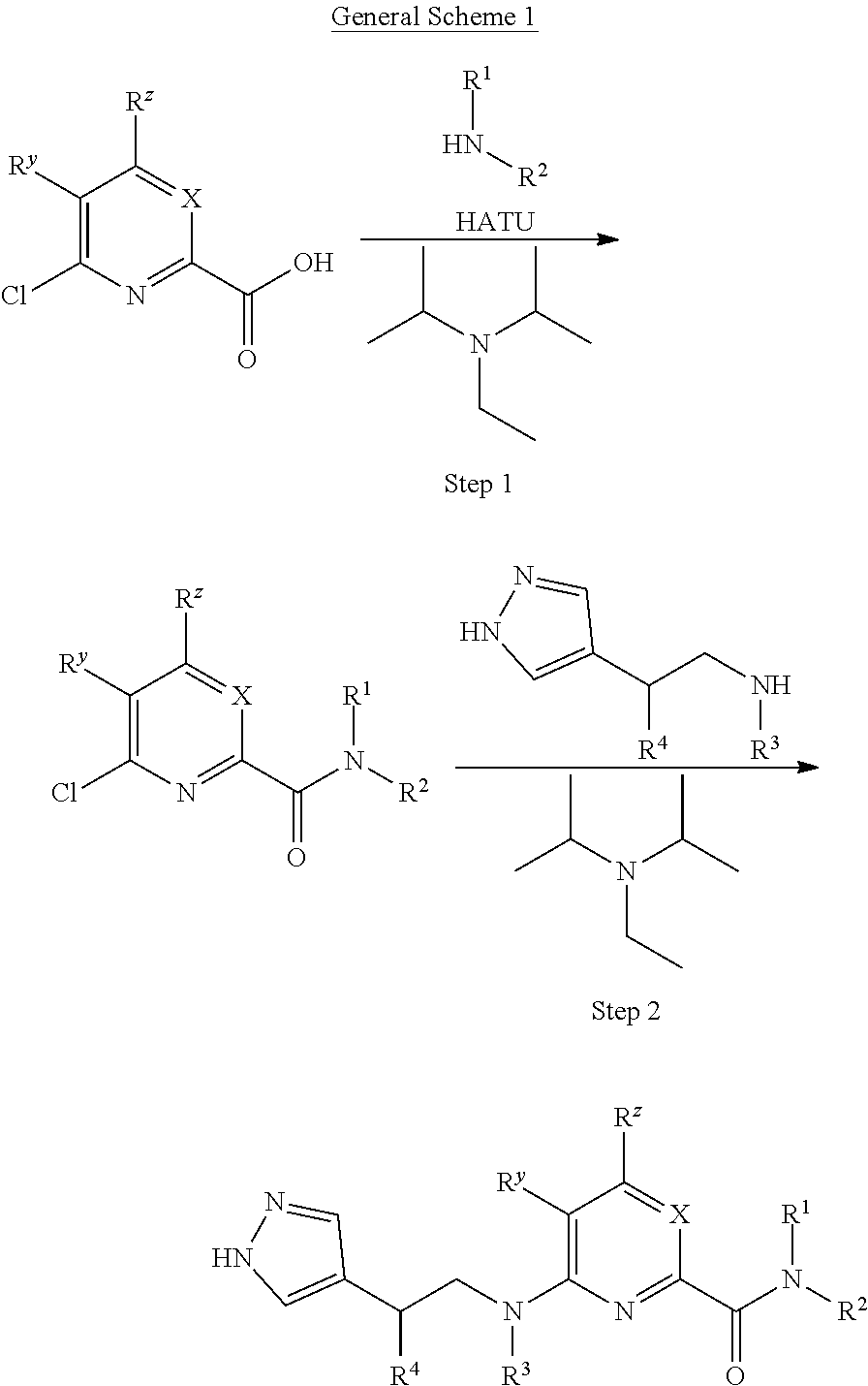
[0516]General Scheme A, shown below, may be used to prepare a compound as described herein, such as a compound of formula (I), such as a compound of formula (I-A), (I-A1), (I-A2), (I-A3), (I-B), or (I-B1), or a stereoisomer or tautomer thereof, or a pharmaceutically acceptable salt of any of the foregoing. In General Scheme A, R1, R2, R3, R4, Ry, and Rz are as defined else wherein herein for a compound of formula (I), such as a compound of formula (I-A), (I-A1), (I-A2), (I-A3), (I-B), or (I-B1), or a stereoisomer or tautomer thereof, or a pharmaceutically acceptable salt of any of the foregoing. General Scheme A, shown below, may be used to prepare a compound as described herein, such as a compound of formula (I), such as a compound of formula (I-A), (I-A1), (I-B), or (I-B1), or a stereoisomer or tautomer thereof, or a pharmaceutically acceptable salt of any of the foregoing. In General Scheme A, R1, R2, R3, R4, Ry, and Rz are as defined else wherein herein for a compound of formula (I), such as a compound of formula (I-A), (I-A1), (I-B), or (I-B1), or a stereoisomer or tautomer thereof, or a pharmaceutically acceptable salt of any of the foregoing.
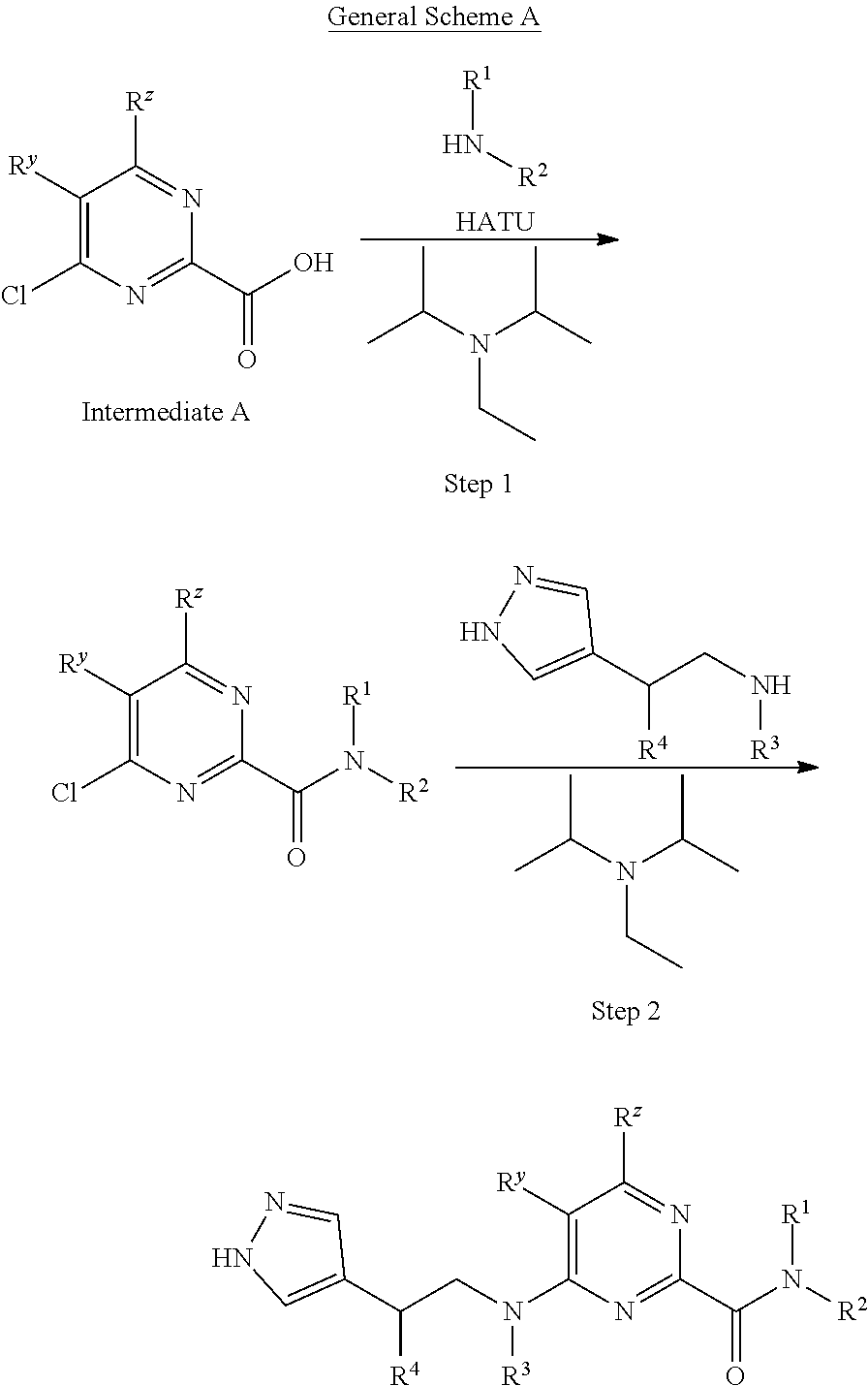
[0518]General Scheme B, shown below, may be used to prepare a compound as described herein, such as a compound of formula (II), such as a compound of formula (II-A) or (II-A1), or a stereoisomer or tautomer thereof, or a pharmaceutically acceptable salt of any of the foregoing. In General Scheme B, R1, R2, R3, R4, Ry, and Rz are as defined else wherein herein for a compound of formula (II), such as a compound of formula (II-A) or (II-A1), or a stereoisomer or tautomer thereof, or a pharmaceutically acceptable salt of any of the foregoing.

[0520]General Scheme 2, shown below, may be used to prepare a compound as described herein, such as a compound of formula (A), such as a compound of formula (I), (I-A), (I-A1), (I-A2), (I-A3), (I-B), (I-B1), (II), (II-A), or (II-A1), or a stereoisomer or tautomer thereof, or a pharmaceutically acceptable salt of any of the foregoing. In General Scheme 2, R1, R2, R3, R4, Ry, and Rz are as defined else wherein herein for a compound of formula (A), such as a compound of formula (I), (I-A), (I-A1), (I-A2), (I-A3), (I-B), (I-B1), (II), (II-A), or (II-A1), or a stereoisomer or tautomer thereof, or a pharmaceutically acceptable salt of any of the foregoing.
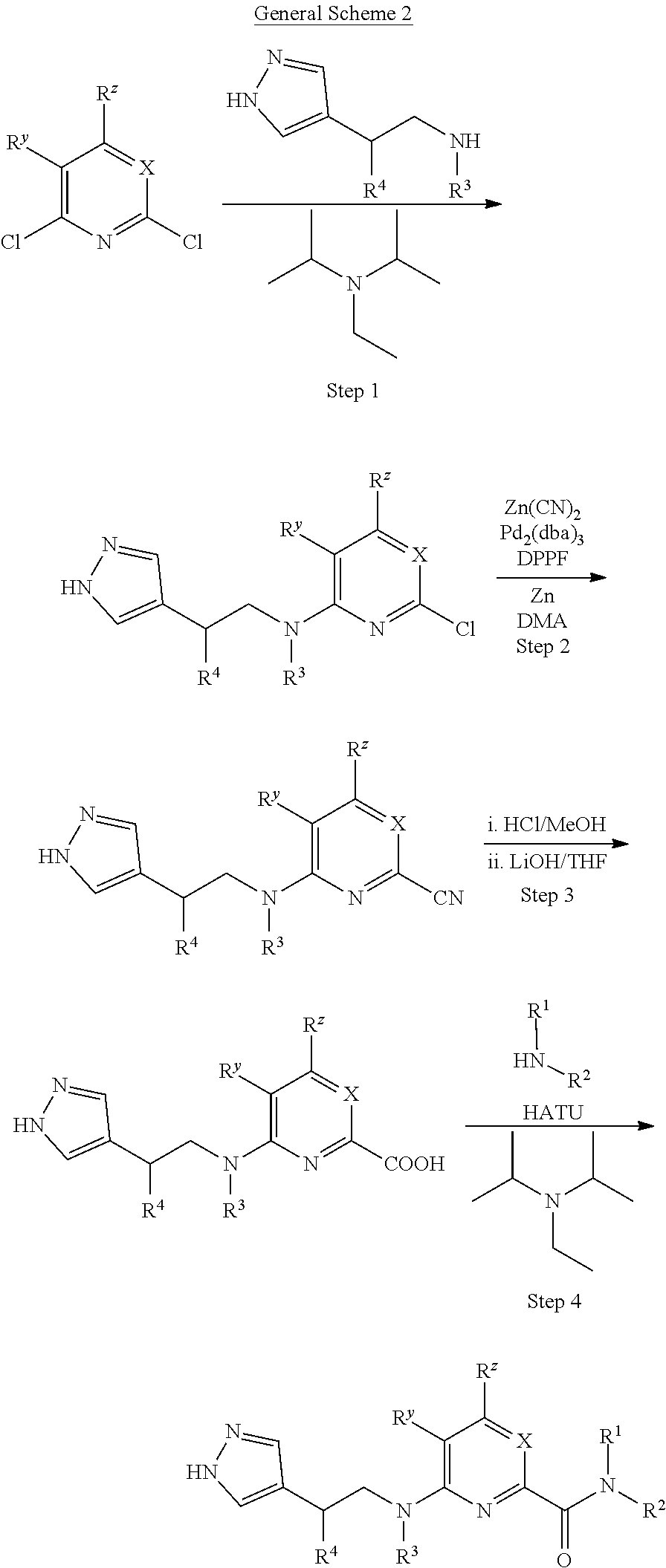
[0522]General Scheme C, shown below, may be used to prepare a compound as described herein, such as a compound of formula (I), such as a compound of formula (I-A), (I-A1), (I-A2), (I-A3), (I-B), or (I-B1), or a stereoisomer or tautomer thereof, or a pharmaceutically acceptable salt of any of the foregoing. In General Scheme C, R1, R2, R3, R4, Ry, and Rz are as defined else wherein herein for a compound of formula (I), such as a compound of formula (I-A), (I-A1), (I-A2), (I-A3), (I-B), or (I-B1), or a stereoisomer or tautomer thereof, or a pharmaceutically acceptable salt of any of the foregoing.
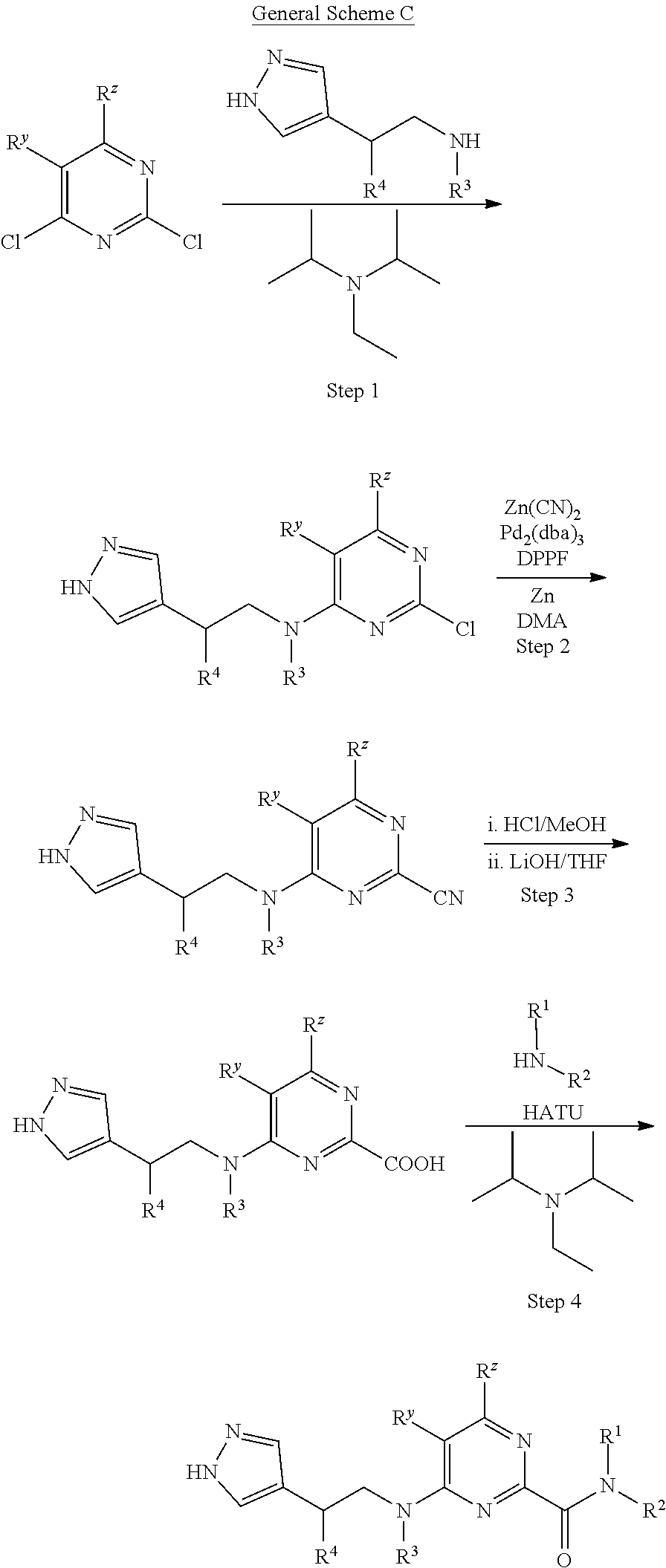
[0524]General Scheme D, shown below, may be used to prepare a compound as described herein, such as a compound of formula (II), such as a compound of formula (II-A) or (II-A1), or a stereoisomer or tautomer thereof, or a pharmaceutically acceptable salt of any of the foregoing. In General Scheme D, R1, R2, R3, R4, Ry, and Rz are as defined else wherein herein for a compound of formula (II), such as a compound of formula (II-A) or (II-A1), or a stereoisomer or tautomer thereof, or a pharmaceutically acceptable salt of any of the foregoing.
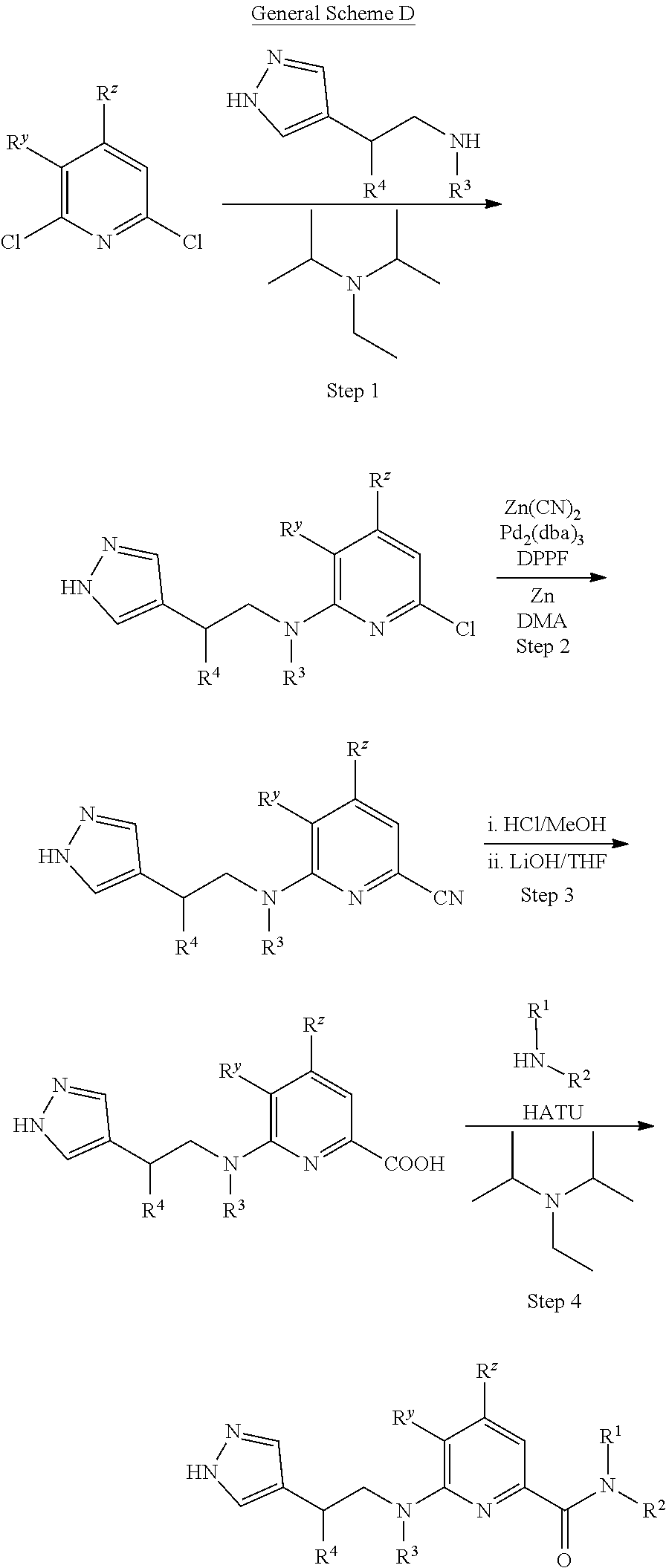
[0526]Particular non-limiting examples are provided in the Example section below.
EXAMPLES
[0527]The following general schemes and examples are offered to illustrate but not to limit the compositions, uses, and methods provided herein. The compounds are prepared using the general methods described above.
[0528]The following abbreviations are used throughout the Examples: TEA (triethylamine), DCM (dichloromethane), (Boc)2O (di-tert-butyl dicarbonate), EA (Ethyl acetate), PE (Petroleum ether), DMF (N,N-dimethylformamide), DIEA (N-ethyl-N-isopropylpropan-2-amine), HATU (1-[Bis(dimethylamino)methylene]-1H-1,2,3-triazolo[4,5-b]pyridinium 3-oxid hexafluorophosphate), HOAt (1-Hydroxy-7-azabenzotriazole), HOBt (Hydroxybenzotriazole), EDCI (1-Ethyl-3-(3-dimethylaminopropyl)carbodiimide), McOH (methanol), EtOH (ethanol), iPrOH (propan-2-ol), ACN (acetonitrile), TFA (trifluoroacetic acid), DPPA (Diphenylphosphoryl azide), DBU (1,8-Diazabicyclo(5.4.0)undec-7-ene), THE (tetrahydrofuran), PPh3 (triphenylphosphane), SM (starting material), Hex (hexane), NCS (N-chlorosuccinimide), r.t. (room temperature), DCE (dichloroethane), FA (formic acid), CHCl3 (Chloroform), BnBr (benzyl bromide), HCl (hydrogen chloride), equiv (equivalent), and DSC (bis(2,5-dioxopyrrolidin-1-yl) carbonate), HBTU (O-(benzotriazol-1-yl)-N,N,N′,N′-tetramethyluronium hexafluorophosphate).
Example A
Preparation of 4-chloro-5,6-dimethylpyrimidine-2-carboxylic acid (Intermediate 1)

[0530]To a solution of methyl 4-chloro-5,6-dimethylpyrimidine-2-carboxylate (3.1 g, 15.0 mmol, 1.0 equiv) in THE (45 mL) was added a solution of LiOH (15 mL, 2 M in H2O, 30.0 mmol, 2.0 equiv) slowly at 0° C. The reaction was then allowed to stir at 23° C. for 3 hours. Upon completion, 4 N HCl solution (8 mL) was added and pH was monitored to be lower than 2. EtOAc (50 mL) and H2O (30 mL) were added and the aqueous phase was extracted by EtOAc (10 mL). The combined organic phase was dried (MgSO4), filtered, and concentrated to yield the desired acid (2.5 g, 90%) as a brownish solid. LRMS (APCI+) calcd for C7H8ClN2O2+ [M+H+] 187, found 187. 1H NMR (400 MHz, Methanol-d4) δ 2.66 (s, 3H), 2.48 (s, 3H).
Example A-1
Preparation of 4-chloro-6,7-dihydro-5H-cyclopenta[d]pyrimidine-2-carboxylic acid (Intermediate 1-1)

[0532]To a solution of methyl 4-chloro-6,7-dihydro-5H-cyclopenta[d]pyrimidine-2-carboxylate (638 mg, 3.00 mmol) in THE (10 mL) was added LiOH solution (2 M in H2O, 1.8 mL, 3.60 mmol) dropwise at 0° C. The resulting solution was stirred at rt for 30 min. LC-MS showed complete consumption of starting material. 4 M HCl was then added to acidify the reaction media till pH=3. This mixture was extracted by EtOAc (10 mL×3). The combined organic phase was dried over MgSO4, filtered, and concentrated to yield the desired product as a solid (596 mg, 83%). LRMS (APCI+) 199.00 [M+H+]. This intermediate is directly used in the next step without purification.
Example A-2
Preparation of 4-bromo-6-chloropicolinic acid (Intermediate 1-2)
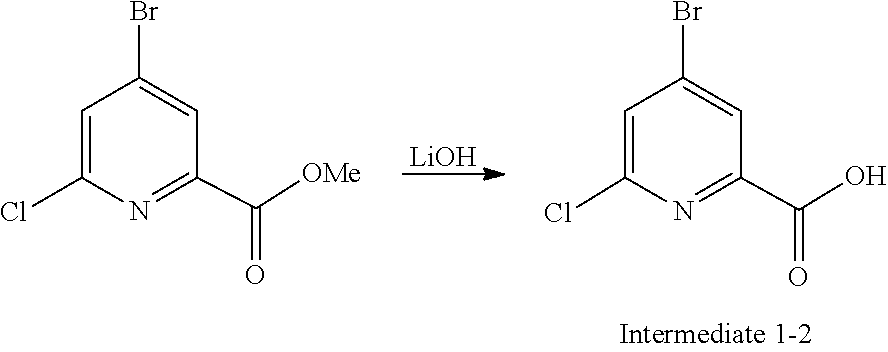
[0534]4-bromo-6-chloropicolinic acid (Intermediate 1-2) was prepared according to Example A-1.
Example A-3
Preparation of 4-methyl-6-chloropicolinic acid (Intermediate 1-3)
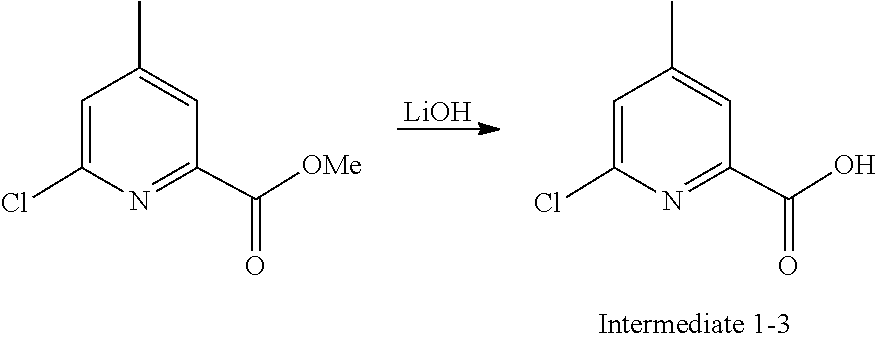
[0536]4-methyl-6-chloropicolinic acid (Intermediate 1-3) was prepared according to Example A-1.
Example B
Preparation of N-(2-(1H-pyrazol-4-yl)ethyl)-2-chloro-5,6-dimethylpyrimidin-4-amine (Intermediate 2)
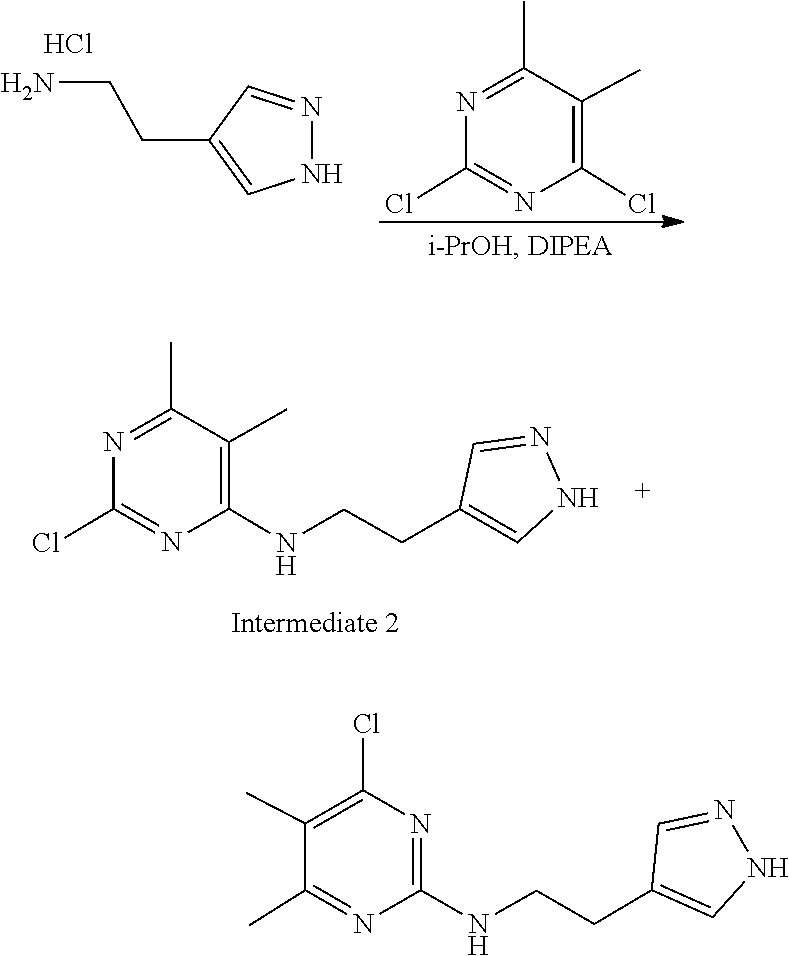
[0538]To a solution of 2,4-dichloro-5,6-dimethylpyrimidine (7.0 g, 38.0 mmol, 1.0 equiv) in i-PrOH (150 mL) was added 2-(1H-pyrazol-4-yl)ethanamine hydrochloride (6.73 g, 38.0 mmol, 1.01 equiv) and diisopropylethylamine (29.4 g, 228 mmol, 6.0 equiv). The resulting mixture was stirred at 90° C. for 15 h. The mixture was directly concentrated and purified by reverse-phase column chromatography (H2O (0.05% NH4HCO3)/MeCN, 3:2) to afford the desired product Intermediate 2 (4.4 g, 46%) as a white solid and regio-isomer N-(2-(1H-pyrazol-4-yl)ethyl)-4-chloro-5,6-dimethylpyrimidin-2-amine (600 mg).
[0539]Intermediate 2: 1H NMR (400 MHz, DMSO-d6) δ 12.61-12.56 (m, 1H), 7.45 (s, 2H), 7.17 (t, J=5.6 Hz, 1H), 3.49 (td, J=7.6, 5.7 Hz, 2H), 2.71 (t, J=7.4 Hz, 2H), 2.22 (s, 3 H), 1.93 (s, 3H).
[0540]Regio-isomer: 1H NMR (400 MHz, DMSO-d6) δ 12.64-12.53 (m, 1H), 7.45 (s, 2H), 7.29 (t, J=5.8 Hz, 1H), 3.38 (t, J=7.0 Hz, 2H), 2.67 (t, J=7.4 Hz, 2H), 2.30 (s, 3H), 2.11 (d, J=1.5 Hz, 3H).
Example C
Preparation of 1-(3-fluorophenyl)-N-methyl-1-(1-methyl-1H-imidazol-2-yl)methanamine (Amine 1)
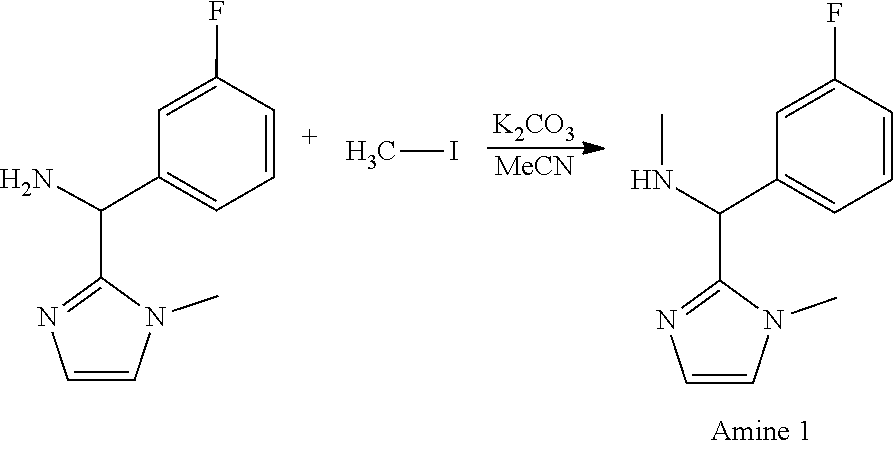
[0542]To a solution of (3-fluorophenyl)(1-methyl-1H-imidazol-2-yl)methanamine (205 mg, 1.0 mmol, 1.0 equiv) in MeCN (5 mL) was added K2CO3 (345 mg, 2.5 mmol, 2.5 equiv) and MeI (149 mg, 1.05 mmol, 1.05 equiv) at 23° C. The resulting mixture was vigorously stirred at this temperature for 14 hours. LC-MS monitoring indicated that a mixture of starting material, desired product, and bis-methylated product was formed. EtOAc (10 mL) and half-saturated NH4Cl solution (10 mL) were added and the aqueous phase was extracted by EtOAc (5 mL). The combined organic phase was dried (MgSO4), filtered, concentrated, and purified by reverse-phase HPLC (formic acid in H2O/formic acid in MeCN, 100% to 70%) to yield a sample of mono-methylated product (30 mg, 14%). LRMS (APCI+) calcd for C10H15FN3+ [M+H+] 220, found 220.
Example D
Preparation of (3-fluorophenyl)(oxazol-2-yl)methanamine (Amine 2)
Step 1: Synthesis of (3-fluorophenyl)(oxazol-2-yl)methanol

[0544]To a solution of oxazole (138 mg, 2.0 mmol, 1.0 equiv) in THF (10 mL) was added n-BuLi (1.6 M in hexanes, 1.3 mL, 2.1 mmol, 1.05 equiv) dropwise over 5 min at −78° C. The resulting solution was stirred at this temperature for 1 hour before 3-fluorobenzaldehyde (260 mg, 2.1 mmol, 1.05 equiv) was added at −78° C. The reaction was maintained at −78° C. for 2 hours and was then allowed to warm up to 23° C. over 2 hours. After stirring at 23° C. for 10 hours, the reaction was quenched by the addition of half-saturated NH4Cl solution (15 mL). The aqueous phase was extracted by EtOAc (10 mL×2) and the combined organic phase was dried (MgSO4), filtered, and concentrated to yield the crude alcohol which was directly used in the next step. LRMS (APCI+) calcd for C10H7FNO+ [M+H−H2O+] 177, found 177.
Step 2: Synthesis of 2-(chloro(3-fluorophenyl)methyl)oxazole
[0545]To a vial charged with the crude alcohol (2.0 mmol, 1.0 equiv) was added SOCl2 (0.6 mL). The mixture was then stirred at 70° C. for 4 hours. Upon completion, EtOAc (15 mL) was added to dilute and the organic phase was carefully washed by Na2CO3 solution and brine. the combined organic phase was dried (MgSO4), filtered, and concentrated to yield the crude benzyl chloride which was directly used in the next step. LRMS (APCI+) m/z 212 (M+H). LRMS (APCI+) calcd for C10H8ClFNO+ [M+H+] 212, found 212.
Step 3: Synthesis of (3-fluorophenyl)(oxazol-2-yl)methanamine (Amine 2)
[0546]To a solution of the crude benzyl chloride in THF (1 mL) was added NH3 (7 M in McOH, 0.5 mL) at 23° C. The reaction was stirred at this temperature for 14 hours. Upon completion, the volatile was removed in vacuo and the crude amine (158 mg, 82%) was used directly in synthetic method 1 without further purification. LRMS (APCI+) calcd for C10H10FN2O+ [M+H+] 212, found 212.
Example E
Preparation of 4-((2-(1H-pyrazol-4-yl)ethyl)amino)-5-chloro-6-methylpyrimidine-2-carboxylic acid (Intermediate 2-1)
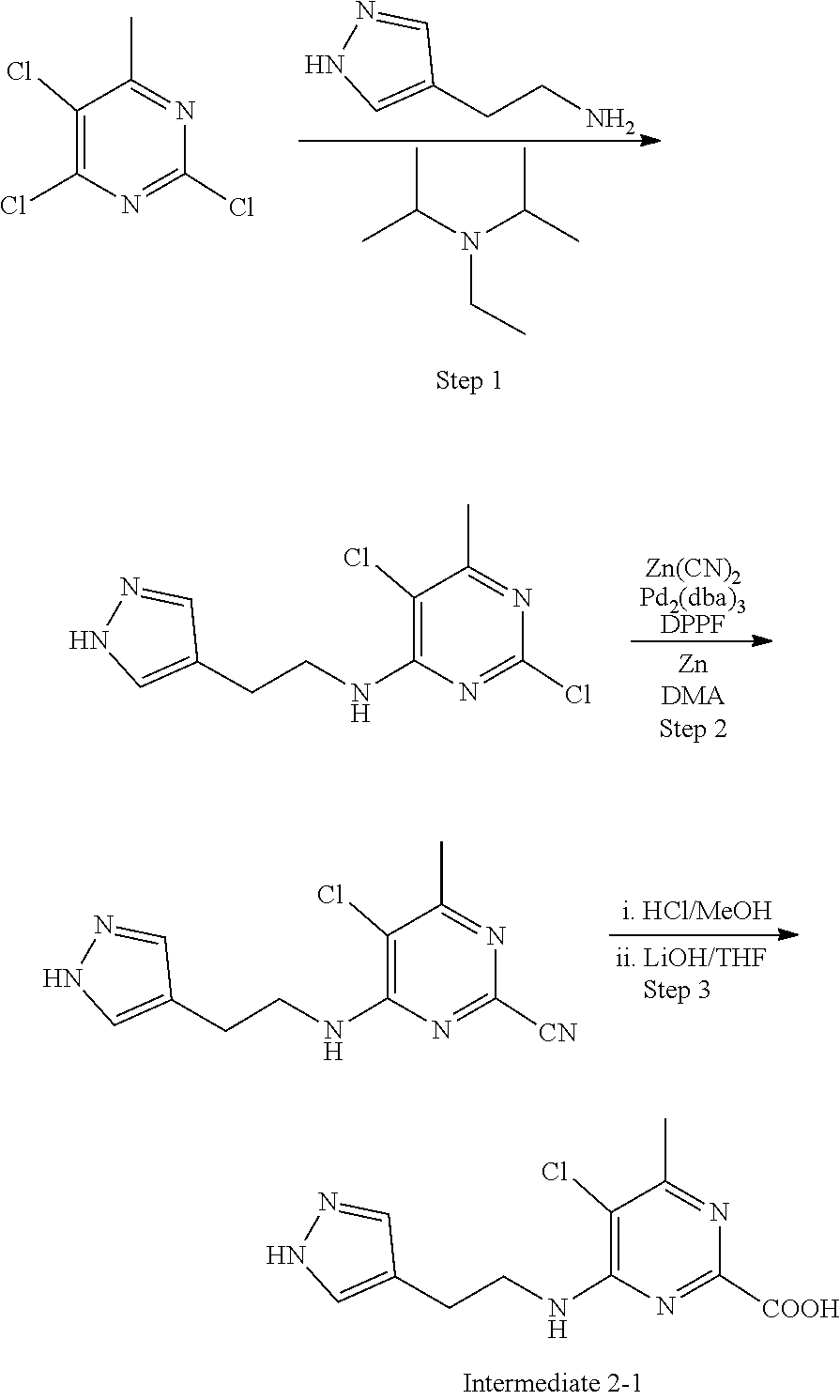
Step 1: Synthesis of N-(2-(1H-pyrazol-4-yl)ethyl)-2,5-dichloro-6-methylpyrimidin-4-amine
[0548]To a solution of 2,4,5-trichloro-6-methylpyrimidine (1.58 g, 8.0 mmol) in iPrOH (20 mL) was added 2-(1H-pyrazol-4-yl)ethan-1-amine (934 mg, 8.4 mmol) and DIPEA (4.18 mL, 24 mmol) sequentially. The mixture was stirred at rt for 0.5 h. LC-MS showed complete conversion. Upon completion, iPrOH was removed under vacuum. EtOAc (20 mL) and H2O (20 mL) were added. The precipitate was collected by filtration to give the desired product (2.2 g, yield quantitative) as an off-white solid. LRMS (APCI+) 272.10 [M+H+].
Step 2: Synthesis of 4-((2-(1H-pyrazol-4-yl)ethyl)amino)-5-chloro-6-methylpyrimidine-2-carbonitrile
[0549]To N-(2-(1H-pyrazol-4-yl)ethyl)-2,5-dichloro-6-methylpyrimidin-4-amine (0.256 g, 1.0 mmol) in a round bottom flask was added DMA (4 mL), tris(dibenzylideneacetone)dipalladium (0.055 g, 0.1 mmol), 1,1′-bis(diphenylphosphino)ferrocene (0.046 g, 0.05 mmol), zinc cyanide (0.088 g, 0.7 mmol), and zinc dust (0.033 g, 0.53 mmol). The flask was capped, flushed with nitrogen, and stirred at 120° C. for 2 h. The reaction was cooled to room temperature, filtered through celite, and washed with dichloromethane (DCM). The filtrate was poured into water and extracted with DCM. The combined organic layers were dried (Na2SO4), filtered, and concentrated in vacuo. The residue was purified by Agilent RP-HPLC (20% to 100% MeCN linearly with 0.1% HCOOH) to give the desired product (0.160 g, yield 61%) as an off-white solid. LRMS (APCI+) 263.00 [M+H+]. 1H NMR (400 MHz, Chloroform-d) δ 7.55 (s, 1H), 5.73 (s, OH), 3.75 (q, J=6.5 Hz, 1H), 2.88 (t, J=6.9 Hz, 1H), 2.50 (s, 1H).
Step 3: Synthesis of 4-((2-(1H-pyrazol-4-yl)ethyl)amino)-5-chloro-6-methylpyrimidine-2-carboxylic acid
[0550]To a nitrile compound 4-((2-(1H-pyrazol-4-yl)ethyl)amino)-5-chloro-6-methylpyrimidine-2-carbonitrile (155 mg, 0.592 mmol) stirring in 2 mL McOH was added 2 mL conc. HCl, the mix was stirred at 50° C. for 1 h and concentrated to dryness. The residue was dissolved in 2 mL THE followed by addition of LiOH (1M, 2 mL, 2.0 mmol), the mixture was stirred at rt for 1 hour until the completion of esterification. The mix was extracted with 2 mL EtOAc, the aq. solution was acidified to pH 3 with 1 M HCl, then extracted with DCM (3×2 mL). The DCM solution was concentrated to give the desired product as an off-white solid (82 mg). The aqueous solution was purified by an Agilent HPLC eluted with 5 to 100% MeCN with 0.1% HCOOH over 40 min to give the pure product as a white solid (28 mg). The portions of product were combined to afford Intermediate 2-1 (110 mg, yield 67%). LRMS (APCI+) 282.10 [M+H+].
Example E-2
Preparation of 4-((2-(1H-pyrazol-4-yl)ethyl)amino)-5-fluoro-6-methylpyrimidine-2-carboxylic acid (Intermediate 2-2)
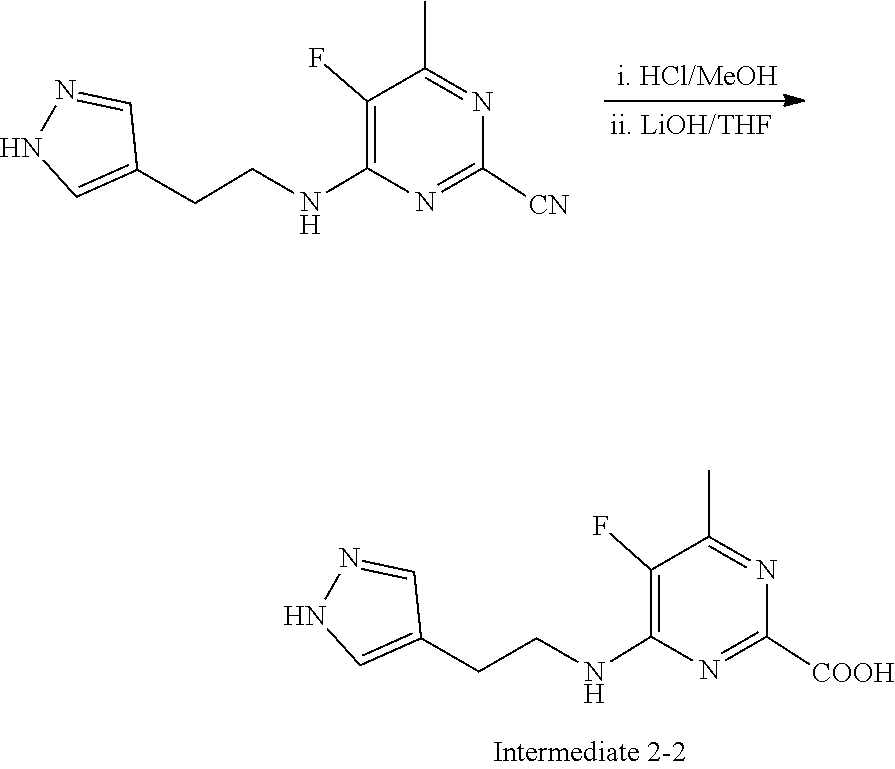
[0552]Intermediate 2-2 was prepared according to Step 3 of Example E.
Example 1
Representative example: Preparation of (4-((2-(1H-pyrazol-4-yl)ethyl)amino)-5,6-dimethylpyrimidin-2-yl)(3-(3-fluorophenyl)-3-hydroxyazetidin-1-yl)methanone
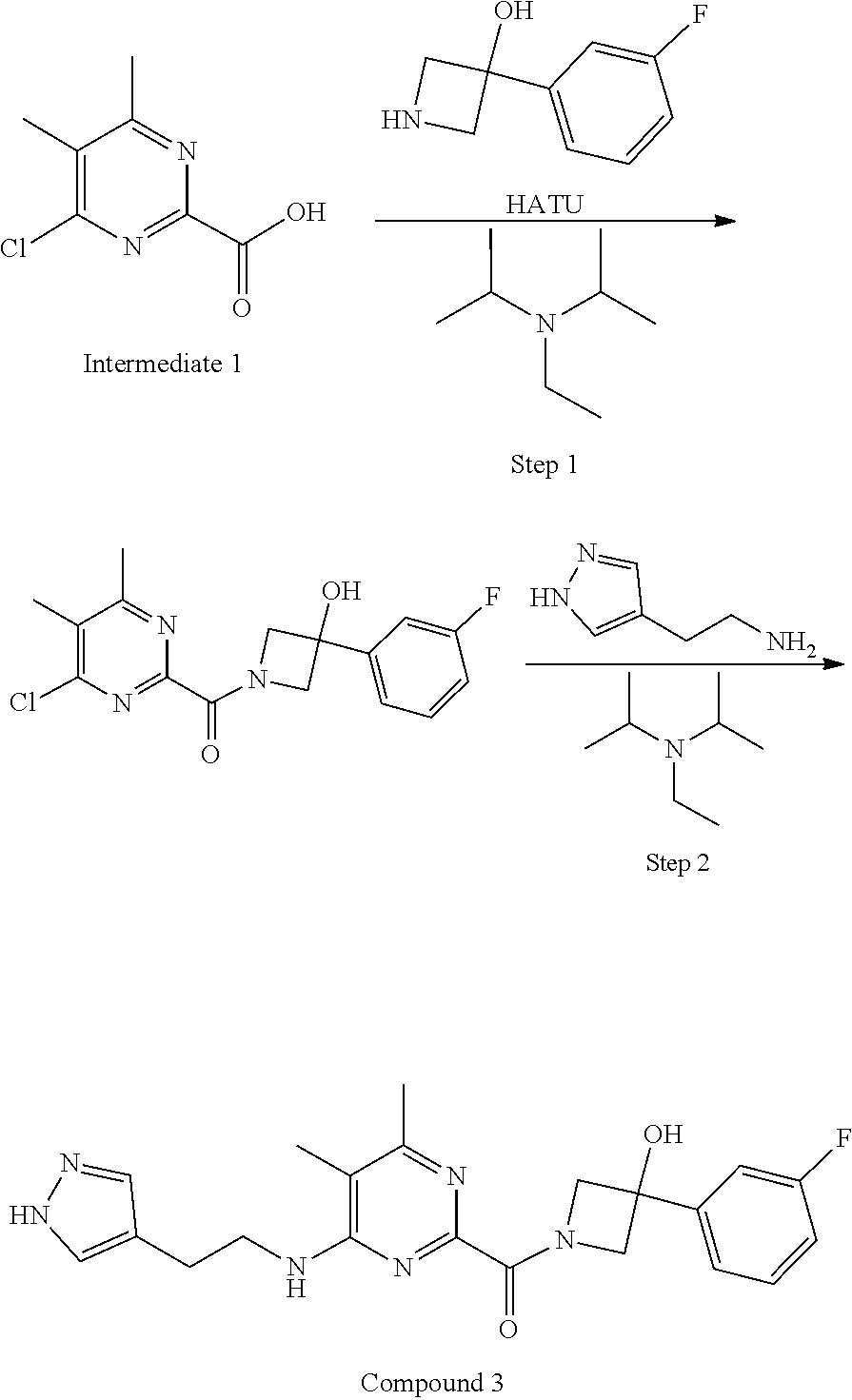
Step 1: Synthesis of (4-chloro-5,6-dimethylpyrimidin-2-yl)(3-(3-fluorophenyl)-3-hydroxyazetidin-1-yl)methanone
[0554]To a solution of 4-chloro-5,6-dimethylpyrimidine-2-carboxylic acid (Intermediate 1, 30 mg, 0.16 mmol, 1.0 equiv), 3-(3-fluorophenyl)azetidin-3-ol HCl salt (34 mg, 0.17 mmol, 1.05 equiv), and Hexafluorophosphate azabenzotriazoie tetramethyl uronium (HATU, 70 mg, 0.19 mmol, 1.2 equiv) in DMF (1 mL) was added diisopropylethylamine (DIPEA, 0.08 mL, 0.48 mmol, 3.0 equiv) dropwise at 23° C. The resulting solution was stirred at this temperature for 30 min. LC-MS showed complete conversion. EtOAc (5 mL) and water (5 mL) were added. The organic phase was washed by half-saturated brine, dried (MgSO4), filtered, and concentrated to give the crude amide coupling product (4-chloro-5,6-dimethylpyrimidin-2-yl)(3-(3-fluorophenyl)-3-hydroxyazetidin-1-yl)methanone which was directly carried to the next step. Step 2: Synthesis of (4-((2-(1H-pyrazol-4-yl)ethyl)amino)-5,6-dimethylpyrimidin-2-yl)(3-(3-fluorophenyl)-3-hydroxyazetidin-1-yl)methanone
[0555]A solution of crude coupling product intermediate (4-chloro-5,6-dimethylpyrimidin-2-yl)(3-(3-fluorophenyl)-3-hydroxyazetidin-1-yl)methanone (0.16 mmol, 1.0 equiv), 2-(1H-pyrazol-4-yl)ethan-1-amine (54 mg, 0.48 mmol, 3.0 equiv), and DIPEA (0.08 mL, 0.48 mmol, 3.0 equiv) in McOH (0.5 mL)/i-PrOH (1 mL) was heated under microwave at 165° C. for 30 min. LC-MS showed complete conversion. The reaction was directly concentrated and subjected to reverse-phase HPLC separation (H2O (0.1% HCO2H)/MeCN (0.1% HCO2H), 100% to 40%) to yield the desired product (19 mg, 29%) as a colorless foam. (4-((2-(1H-pyrazol-4-yl)ethyl)amino)-5,6-dimethylpyrimidin-2-yl)(3-(3-fluorophenyl)-3-hydroxyazetidin-1-yl)methanone (Compound 3): 1H NMR (400 MHz, Methanol-d4) δ 7.49-7.37 (m, 2H), 7.42 (s, 2H), 7.33 (d, J=10.4 Hz, 1H), 7.06 (t, J=8.6 Hz, 1H), 4.95-4.88 (m, 1H), 4.82 (d, J=10.8 Hz, 1H), 4.48 (d, J=10.7 Hz, 1H), 4.36 (d, J=11.5 Hz, 1H), 3.70 (t, J=6.7 Hz, 2H), 2.84 (t, J=7.0 Hz, 2H), 2.45 (s, 3H), 2.10 (s, 3H). LRMS (APCI+) calcd for C21H24FN6O2+ [M+H+] 411.19, found 411.10.
[0556]The following compounds were prepared according to the procedures described above using in step 1 the amine reagent described in the table below.
| Compound | Amine in | |
|---|---|---|
| No. | Step 1 | Structure, Name, and Data |
| 3 | 3-(3-fluorophenyl)azetidin- 3-ol | |
| 4 | (R)-1-(6-fluoropyridin-2- yl)ethan-1-amine | |
| 5 | (rac)-1-(3-fluorophenyl)-N- methyl-1-(1-methyl-1H- imidazol-2- yl)methanamine(amine 1) | |
| 6 | 3-(piperidin-4-yl)-1H-indole | |
| 7 | (rac)-3-(3- fluorophenyl)morpholine | |
| 8 | (S)-1-(thiophen-2-yl)ethan- 1-amine | |
| 10 | (S)-1-(3- fluorophenyl)ethan-1-amine | |
| 11 | 2-(3-fluorophenyl)propan-2- amine | |
| 12 | (rac)-3-(3- chlorophenyl)morpholine | |
| 13 | (R)-2-(3- chlorophenyl)pyrrolidine | |
| 14 | (R)-1-(thiophen-2-yl)ethan- 1-amine | |
| 15 | (R)-2-(3- fluorophenyl)pyrrolidine | |
| 16 | (R)-3-phenylmorpholine | |
| 17 | (R)-1-phenylethan-1-amine | |
| 18 | 3-(3-fluorophenyl)azetidine | |
| 19 | thiophen-2-ylmethanamine | |
| 20 | (rac)-(3-fluorophenyl)(1- methyl-1H-imidazol-2- yl)methanamine | |
| 21 | 2-phenylpropan-2-amine | |
| 22 | 3-phenylazetidin-3-ol | |
| 23 | (rac)-(3- fluorophenyl)(oxazol-2- yl)methanamine(amine 2) | |
| 24 | tert-butyl 3-(3- fluorophenyl)piperazine-1- carboxylate | |
| 25 | 3-methyl-3- phenylmorpholine | |
| 26 | (R)-1-(2- chlorophenyl)ethan-1-amine | |
| 27 | 2-(3-fluorophenyl)-2- methylpropan-1-amine | |
| 28 | 4,4-difluoro-2- phenylpiperidine | |
| 29 | (S)-1-(2-chlorophenyl)-N- methylethan-1-amine | |
| 30 | (R)-1-(3-chloropyridin-2- yl)ethan-1-amine | |
| 31 | benzylamine | |
| 32 | 3-fluorobenzylamine | |
| 33 | 2,2,2-trifluoro-1- phenylethan-1-amine | |
| 34 | 4-phenylpiperidin-4-ol | |
| 35 | (R)-1-(thiophen-3-yl)ethan- 1-amine | |
| 36 | 1-(6-chloropyridin-2- yl)ethan-1-amine | |
| 37 | (R)-1-(3-methylpyridin-2- yl)ethan-1-amine | |
| 38 | (R)-2-phenylpyrrolidine | |
| 39 | (R)-1-(3- fluorophenyl)ethan-1-amine | |
| 40 | rac-(1-methyl-1H-imidazol- 2-yl)(phenyl)methanamine | |
| 41 | 1-(3-fluorophenyl)-2- methylpropan-2-amine | |
| 42 | rac-trans-4- phenylpyrrolidin-3-ol | |
| 43 | (R)-1-(6-methoxypyridin-2- yl)ethan-1-amine | |
| 44 | 1-methyl-3- phenylpiperazine | |
| 45 | 1-benzylpiperazin-2-one | |
| 46 | (rac)-(3- fluorophenyl)(pyridin-2- yl)methanamine | |
| 47 | (R)-1-(pyridin-2-yl)ethan-1- amine | |
| 48 | 3-(trifluoromethyl)azetidin- 3-ol | |
| 49 | (R)-1-(3-fluorophenyl)-2- methoxyethan-1-amine | |
| 50 | 2-phenylethan-1-amine | |
| 51 | 3-(2,3- difluorophenyl)azetidin-3-ol | |
| 52 | (R)-3-phenylpyrrolidine | |
| 53 | (R)-1-(2-chlorophenyl)-N- methylethan-1-amine | |
| 54 | (R)-2-(2- fluorophenyl)pyrrolidine | |
| 55 | (6-fluoropyridin-2- yl)methanamine | |
| 56 | (R)-1-(3-fluoropyridin-2- yl)ethan-1-amine | |
| 57 | (3-(aminomethyl)azetidin-1- yl)(phenyl)methanone | |
| 58 | benzofuran-3- ylmethanamine | |
| 59 | (S)-1-phenylethan-1-amine | |
| 60 | 3-benzylazetidin-3-ol | |
| 61 | (S)-3-phenylpyrrolidine | |
| 62 | (2R,5R)-2-methyl-5- phenylmorpholine | |
| 63 | (S)-3-phenylmorpholine | |
| 64 | (R)-3-benzylmorpholine | |
| 65 | (R)-1-(benzofuran-3- yl)ethan-1-amine | |
| 66 | (rac)-3-(2- fluorophenyl)pyrrolidine | |
| 67 | 3-(4- fluorophenyl)morpholine | |
| 68 | (rac)-1-(6-methoxypyridin- 2-yl)ethan-1-amine | |
| 69 | 2-(pyridin-2-yl)propan-2- amine | |
| 70 | 1-(5-chlorothiophen-2- yl)ethan-1-amine | |
| 71 | (rac)-2-benzylpyrrolidine | |
| 72 | (S)-3-benzylmorpholine | |
| 73 | (S)-1-(6-fluoropyridin-2- yl)ethan-1-amine | |
| 74 | (3-(3-fluorophenyl)oxetan- 3-yl)methanamine | |
| 75 | (R)-1-(furan-2-yl)ethan-1- amine | |
| 76 | 3-phenylazetidine | |
| 77 | 3-(2-fluorophenyl)azetidin- 3-ol | |
| 78 | (R)-1-(6-methylpyridin-2- yl)ethan-1-amine | |
| 79 | 3,3-difluoro-2,3-dihydro- 1H-inden-1-amine | |
| 80 | 3-(2- chlorophenyl)morpholine | |
| 81 | 3- (trifluoromethoxy)azetidine | |
| 82 | (S)-1-(3-fluorophenyl)-2- methoxyethan-1-amine | |
| 83 | 2-(4-fluorophenyl)propan-2- amine | |
| 84 | (3-phenylazetidin-3- yl)methanol | |
| 85 | 4-(2-chloro-4- fluorobenzyl)tetrahydro-2H- pyran-4-amine | |
| 86 | (R)-2-(4- fluorophenyl)pyrrolidine | |
| 87 | (S)-1-(pyridin-4-yl)ethan-1- amine | |
| 88 | (6-methoxypyridin-2- yl)methanamine | |
| 89 | 3-methyl-3-phenylazetidine | |
| 90 | 1-(isoxazol-3-yl)ethan-1- amine | |
| 91 | 3,3-difluoroazetidine | |
| 92 | 1-(4-fluorophenyl)-2- methoxy-N-methylethan-1- amine | |
| 93 | pyridin-2-ylmethanamine | |
| 94 | (3-phenyloxetan-3- yl)methanamine | |
| 95 | (R)-1-(pyridin-4-yl)ethan-1- amine | |
| 96 | 4-phenylpiperidine-4- carbonitrile | |
| 97 | 3-cyclopropylazetidin-3-ol | |
| 98 | (rac)-(2-fluorophenyl)(1- methyl-1H-imidazol-2- yl)methanamine | |
| 99 | (S)-1-(2- chlorophenyl)ethan-1-amine | |
| 100 | 3-(trifluoromethyl)azetidine | |
| 101 | (R)-1-(5-methylfuran-2- yl)ethan-1-amine | |
| 102 | 3-methoxy-3- phenylazetidine | |
| 103 | 1-(thiazol-5-yl)ethan-1- amine | |
| 104 | (rac)-1-amino-2- phenylpropan-2-ol | |
| 105 | (1H-indazol-3- yl)methanamine | |
| 107 | 3-ethyl-3-hydroxyazetidine | |
| 108 | (rac)-1-(oxazol-2-yl)ethan- 1-amine | |
| 109 | (R)-1-(5-fluoropyridin-3- yl)ethan-1-amine | |
| 110 | (rac)-1-(3-fluoropyridin-4- yl)ethan-1-amine | |
| 111 | 2,2-difluoro-2-phenylethan- 1-amine | |
| 112 | (R)-1-(benzofuran-2- yl)ethan-1-amine | |
| 113 | 2-(3-fluoropyridin-4- yl)ethan-1-amine | |
| 114 | 3-phenyloxetan-3-amine | |
| 115 | 2-(3-fluorophenyl)azetidine | |
| 116 | (R)-1-cyclohexylethan-1- amine | |
| 117 | 3,5-difluoroaniline | |
| 118 | (R)-1-(5-fluoropyridin-2- yl)ethan-1-amine | |
| 119 | 4- (trifluoromethyl)piperidine | |
| 120 | (3-fluoropyridin-2- yl)methanamine | |
| 121 | 2-(pyridin-3-yl)propan-2- amine | |
| 122 | 3-amino-1,1,1-trifluoro-2- phenylpropan-2-ol | |
| 123 | 2-azaspiro[3.3]heptane | |
| 124 | (R)-1-(3-methoxypyridin-2- yl)ethan-1-amine | |
| 125 | 3-methylazetidin-3-ol | |
| 126 | (R)-2-(pyrrolidin-2- yl)pyridine | |
| 127 | (R)-1-(pyridin-3-yl)ethan-1- amine | |
| 128 | (rac)-3-amino-1,1,1- trifluoropropan-2-ol | |
| 129 | 2-(5-fluoropyridin-3- yl)ethan-1-amine | |
| 130 | 1-(5-methylthiophen-2- yl)ethan-1-amine | |
| 132 | 2-phenylazetidine | |
| 133 | pyridin-4-ylmethanamine | |
| 134 | (rac)-(3,4- difluorophenyl)(1-methyl- 1H-imidazol-2- yl)methanamine | |
| 135 | cis-3-phenylcyclobutan-1- amine | |
| 136 | 2,2,2-trifluoro-1-(pyridin-3- yl)ethan-1-amine | |
| 137 | (S)-1-(pyridin-2-yl)ethan-1- amine | |
| 138 | 3- (trifluoromethyl)morpholine | |
| 139 | 2-fluoro-6-methylaniline | |
| 140 | Aniline | |
| 141 | 2-(benzylsulfonyl)ethan-1- amine | |
| 142 | spiro[azetidine-3,3′- indolin]-2′-one | |
| 143 | 4,4,4-trifluoro-3,3- dimethylbutan-1-amine | |
| 144 | 3-fluoropyridin-4-amine | |
| 145 | 1-(pyridin-2-yl)cyclobutan- 1-amine | |
Example 1-2
Representative example: Preparation of (R)-4-chloro-N-(1-(6-fluoropyridin-2-yl)ethyl)-6,7-dihydro-5H-cyclopenta[d]pyrimidine-2-carboxamide
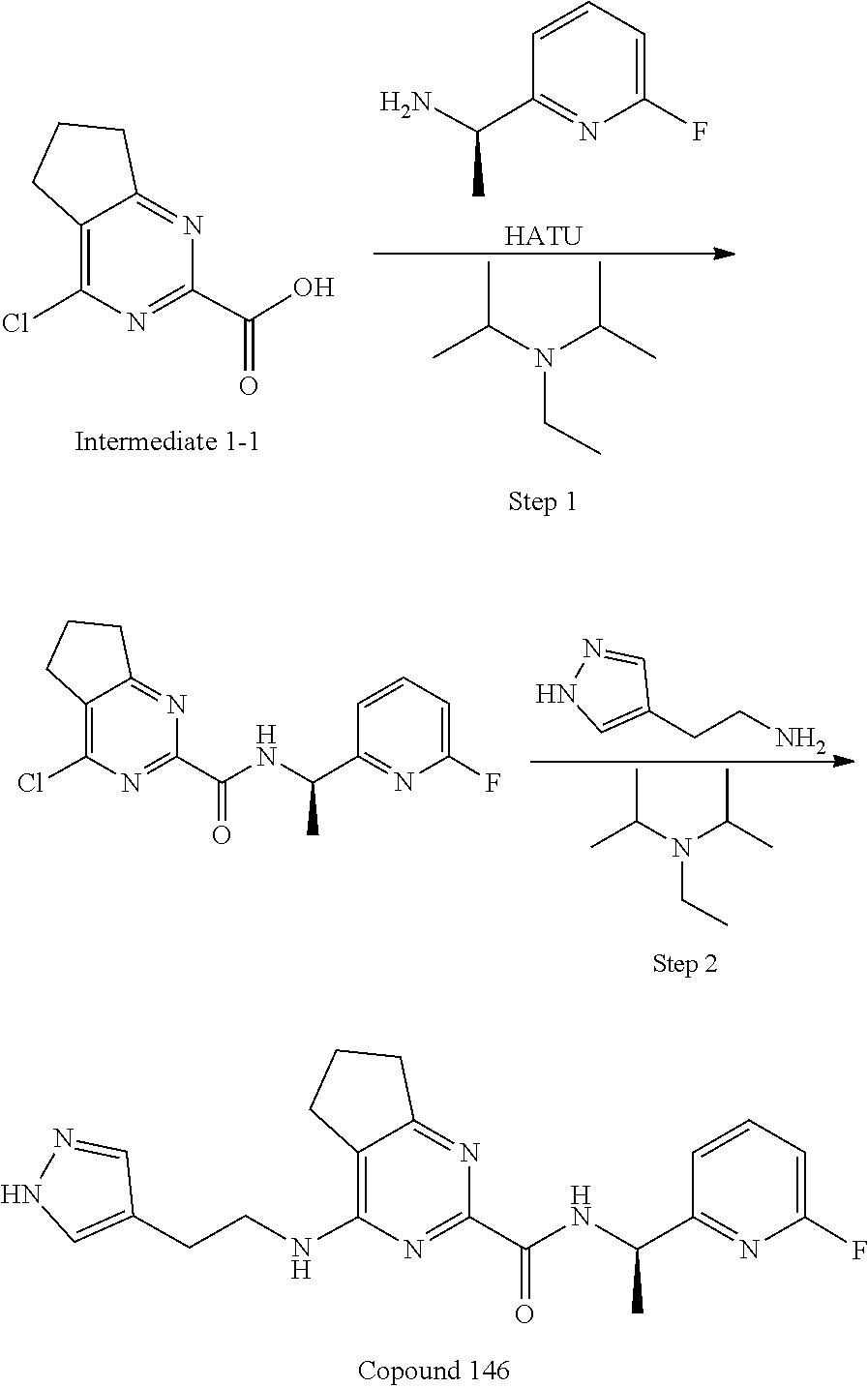
Step 1: Synthesis of (R)-4-chloro-N-(1-(6-fluoropyridin-2-yl)ethyl)-6,7-dihydro-5H-cyclopenta[d]pyrimidine-2-carboxamide
[0559]To a solution of 4-chloro-6,7-dihydro-5H-cyclopenta[d]pyrimidine-2-carboxylic acid (55 mg, 0.277 mmol, 1.0 equiv), (R)-1-(6-fluoropyridin-2-yl)ethan-1-amine HCl salt (59 mg, 0.277 mmol, 1.0 equiv), and Hexafluorophosphate azabenzotriazole tetramethyl uronium (HATU, 111 mg, 0.291 mmol, 1.1 equiv) in DMF (1.5 mL) was added diisopropylethylamine (DIPEA, 0.52 mL, 1.39 mmol, 5.0 equiv) dropwise at 23° C. The resulting solution was stirred at this temperature for 30 min. LC-MS showed complete conversion. EtOAc (5 mL) and water (5 mL) were added. The organic phase was washed by brine, dried (MgSO4), filtered, and concentrated to give the crude amide coupling product which was directly used in the next step without further purification.
Step 2: Synthesis of (R)-4-((2-(1H-pyrazol-4-yl)ethyl)amino)-N-(1-(6-fluoropyridin-2-yl)ethyl)-6,7-dihydro-5H-cyclopenta[d] pyrimidine-2-carboxamide
[0560]A solution of crude coupling product intermediate (R)-4-chloro-N-(1-(6-fluoropyridin-2-yl)ethyl)-6,7-dihydro-5H-cyclopenta[d]pyrimidine-2-carboxamide (0.277 mmol, 1.0 equiv), 2-(1H-pyrazol-4-yl)ethan-1-amine (62 mg, 0.55 mmol, 2.0 equiv), and DIPEA (0.08 mL, 0.831 mmol, 3.0 equiv) in McOH (0.5 mL)/i-PrOH (1 mL) was heated under microwave at 165° C. for 30 min. LC-MS showed complete conversion. The reaction was directly concentrated and subjected to reverse-phase HPLC separation (10% to 100% MeCN, 0.1% HCOOH linearly) to yield the desired product (45 mg, 41%) as a colorless foam. 1H NMR (400 MHz, Chloroform-d) δ 8.93 (d, J=8.2 Hz, 1H), 7.92 (s, 1H), 7.76 (q, J=7.8 Hz, 1H), 7.49 (s, 2H), 7.22 (dd, J=7.5, 2.2 Hz, 1H), 6.82 (dd, J=8.3, 2.6 Hz, 1H), 5.35 (p, J=7.1 Hz, 1H), 5.13 (s, 1H), 3.78 (h, J=6.7 Hz, 2H), 2.91 (dt, J=33.7, 7.3 Hz, 3H), 2.65 (t, J=7.4 Hz, 2H), 2.14 (d, J=31.2 Hz, 2H), 1.58 (d, J=6.8 Hz, 2H). LRMS (APCI+) 396.10 [M+H+].
[0561]The following compounds were prepared according to the procedures described above using in step 1 the carboxylic acid and amine reagent described in the table below.
| Carboxylic | ||
| Compound | Acid in | Amine in | |
| No. | Step 1 | Step 1 | Structure, Name, and Data |
| 146 | 4-chloro-6,7-dihydro- 5H- cyclopenta[pyrimidine- 2-carboxylic acid (Intermediate 1-1) | (R)-1-(6-fluoropyridin- 2-yl)ethan-1-amine | |
| 151 | 4-bromo-6- chloropicolinic acid (Intermediate 1-2) | (R)-1-(6-fluoropyridin- 2-yl)ethan-1-amine | |
| 152 | 4-methyl-6- chloropicolinic acid (Intermediate 1-3) | (R)-2-(3- fluorophenyl)pyrrolidine | |
Example 2
Preparation of (R)-(4-((2-(1H-pyrazol-4-yl)ethyl)amino)-5,6-dimethylpyrimidin-2-yl)(2-(6-methylpyridin-2-yl)pyrrolidin-1-yl)methanone
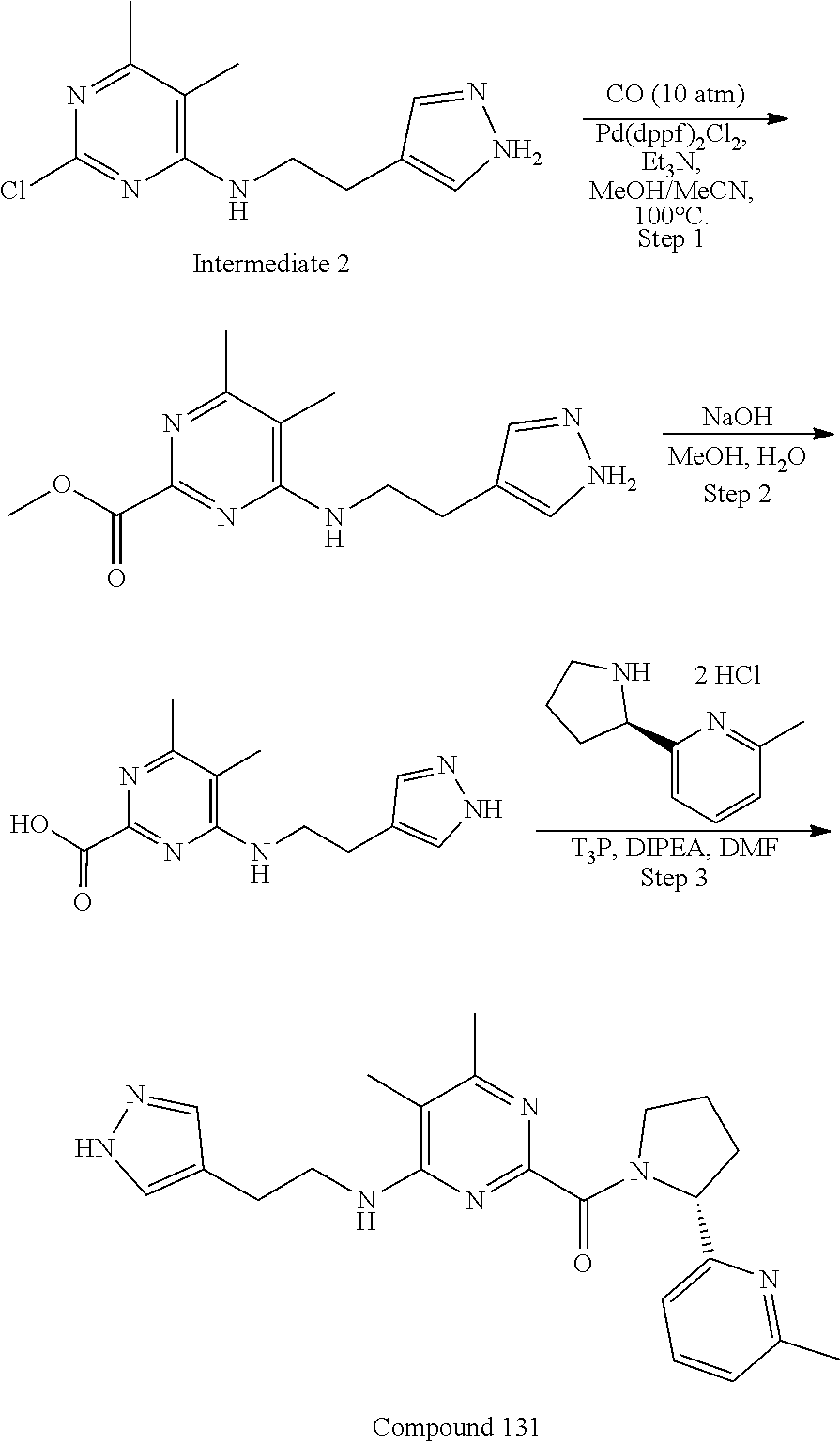
Step 1: Synthesis of methyl 4-((2-(1H-pyrazol-4-yl)ethyl)amino)-5,6-dimethylpyrimidine-2-carboxylate
[0564]To a solution of 2-chloro-5,6-dimethyl-N-[2-(1H-pyrazol-4-yl)ethyl]pyrimidin-4-amine (Intermediate 2, 4.87 g, 19.3 mmol, 1.0 equiv) in McOH/MeCN (120 mL/30 mL) was added Pd(dppf)Cl2 (2.83 g, 3.87 mmol, 0.2 equiv) and Et3N (3.90 g, 38.5 mmol, 2.0 equiv) in a pressure tank. The mixture was purged with nitrogen for 2 min and then was pressurized to 10 atm with carbon monoxide at 100° C. for 15 h. The reaction mixture was cooled to 23° C., filtered, concentrated, and purified by reverse phase column chromatography (Water (0.05% NH4HCO3)/MeCN, 7:3) to afford methyl 4,5-dimethyl-6-[[2-(1H-pyrazol-4-yl)ethyl]amino]pyrimidine-2-carboxylate (2.42 g, 45%) as a white solid.
Step 2: Synthesis of 4-((2-(1H-pyrazol-4-yl)ethyl)amino)-5,6-dimethylpyrimidine-2-carboxylic acid
[0565]To a solution of methyl 4,5-dimethyl-6-[[2-(1H-pyrazol-4-yl)ethyl]amino]pyrimidine-2-carboxylate (2.42 g, 8.79 mmol, 1.0 equiv) in McOH (20 mL) at 0° C. was added NaOH (701.00 mg, 17.526 mmol, 1.99 equiv) in H2O (4 mL). The resulting mixture was stirred at 23° C. for 15 h. The resulting mixture was acidified to pH 5-6 with 1 N HCl. The precipitated solid was collected by filtration and dried in vacuo to obtain 4,5-dimethyl-6-[[2-(1H-pyrazol-4-yl)ethyl]amino]pyrimidine-2-carboxylic acid (2.2 g, 96%) as a white solid.
Step 3: Synthesis of (R)-(4-((2-(1H-pyrazol-4-yl)ethyl)amino)-5,6-dimethylpyrimidin-2-yl) (2-(6-methylpyridin-2-yl)pyrrolidin-1-yl)methanone
[0566]To a stirred solution of 4,5-dimethyl-6-[[2-(1H-pyrazol-4-yl)ethyl]amino]pyrimidine-2-carboxylic acid (100 mg, 0.38 mmol, 1.0 equiv) in DMF (2 mL) was added 2-methyl-6-[(2R)-pyrrolidin-2-yl]pyridine dihydrochloride (90.00 mg, 0.383 mmol, 1.00 equiv), Propanephosphonic add anhydride (T3P, 370 mg, 1.16 mmol, 1.5 equiv, 50% in EtOAc) and diisopropylethylamine (250 mg, 1.93 mmol, 5.05 equiv). The resulting mixture was stirred at 23° C. for 15 h. Upon completion, the mixture was directly purified by reverse-phase prep-HPLC (H2O (10 MMOL/L NH4HCO3+0.1% NH3·H2O)/MeCN) to yield (R)-(4-((2-(1H-pyrazol-4-yl)ethyl)amino)-5,6-dimethylpyrimidin-2-yl)(2-(6-methylpyridin-2-yl)pyrrolidin-1-yl)methanone (Compound 131-48 mg, 31%) as an off-white solid. 1H NMR (400 MHz, DMSO-d6) δ 12.55 (s, 1H), 7.69-6.87 (m, 5H), 6.81-6.59 (m, 1H), 5.05 (ddd, J=37.8, 8.1, 3.6 Hz, 1H), 4.12-3.34 (m, 4H), 2.82-2.62 (m, 2H), 2.52 (d, J=1.9 Hz, 3H), 2.38 (d, J=66.9 Hz, 3H), 2.29-1.72 (m, 7H). LRMS (APCI+) calcd for C22H28N7O+[M+H+] 406, found 406.
Example 3
Preparation of 4-((2-(1H-pyrazol-4-yl)ethyl)(phenethyl)amino)-5,6-dimethylpyrimidine-2-carboxamide
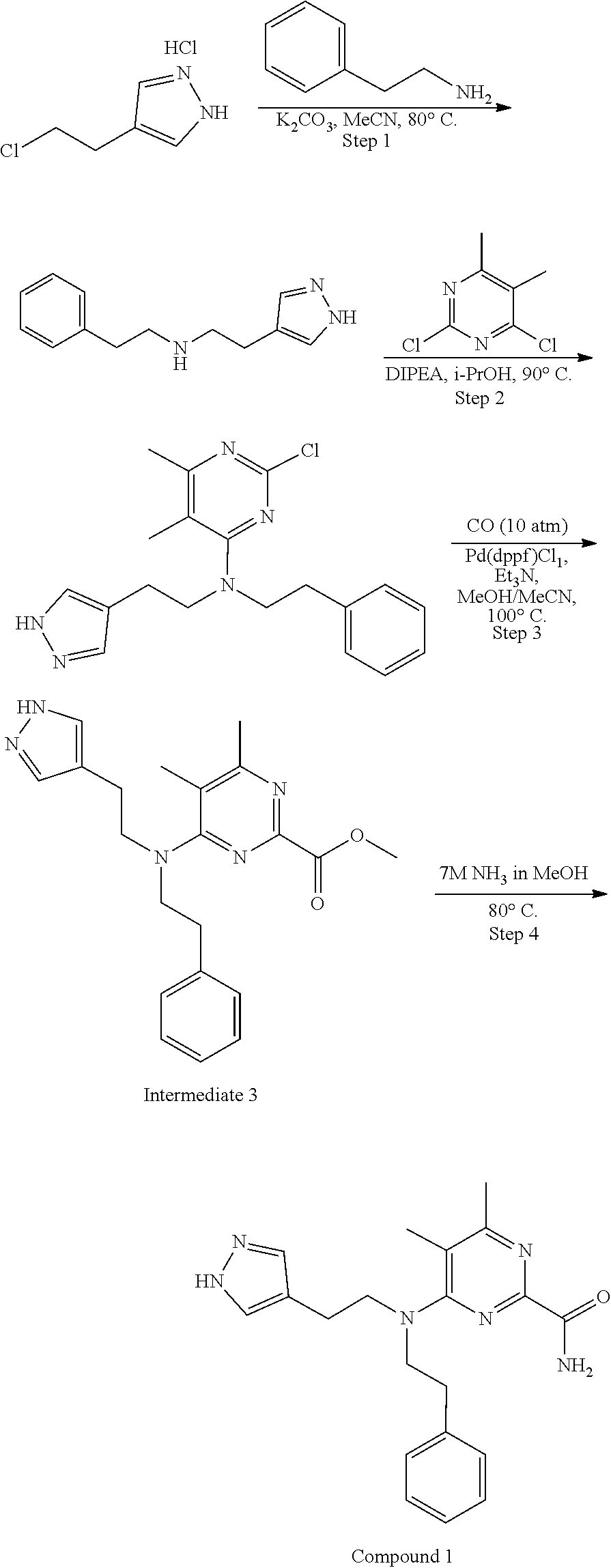
Step 1: Synthesis of N-(2-(1H-pyrazol-4-yl)ethyl)-2-phenylethan-1-amine
[0568]To a solution of phenylacetaldehyde (500 mg, 4.16 mmol, 1.0 equiv) in MeCN (10 mL) was added 4-(2-chloroethyl)-1H-pyrazole HCl salt (759 mg, 4.54 mmol, 1.09 equiv) and K2CO3 (1.10 g, 7.96 mmol, 1.91 equiv). The resulting mixture was stirred at 80° C. for 15 h. Upon completion, the mixture was cooled down to 23° C. and the solid was filtered. The filtrate was concentrated and purified by reverse phase column chromatography (H2O (0.05% NH4HCO3)/MeCN, 3:1) to afford (2-phenylethyl)[2-(1H-pyrazol-4-yl)ethyl]amine (230 mg, 26%) as a colorless oil.
Step 2: Synthesis of N-(2-(1H-pyrazol-4-yl)ethyl)-2-chloro-5,6-dimethyl-N-phenethylpyrimidin-4-amine
[0569]To a stirred solution of (2-phenylethyl) [2-(1H-pyrazol-4-yl)ethyl]amine (230 mg, 1.07 mmol, 1.0 equiv) in i-PrOH (3 mL) was added 2,4-dichloro-5,6-dimethylpyrimidine (189 mg, 1.07 mmol, 1.0 equiv) and diisopropylethylamine (413 mg, 3.19 mmol, 3.0 equiv). The resulting mixture was stirred at 90° C. for 15 h. Upon completion, the reaction was directly concentrated and purified by reverse phase column chromatography (H2O (0.05% NH4HCO3)/MeCN, 1:3) to afford N-(2-(1H-pyrazol-4-yl)ethyl)-2-chloro-5,6-dimethyl-N-phenethylpyrimidin-4-amine (66 mg, 17%) as a white solid and 60 mg regio-isomer N-(2-(1H-pyrazol-4-yl)ethyl)-4-chloro-5,6-dimethyl-N-phenethylpyrimidin-2-amine. N-(2-(1H-pyrazol-4-yl)ethyl)-2-chloro-5,6-dimethyl-N-phenethylpyrimidin-4-amine: 1H NMR (400 MHz, DMSO-d6) δ 12.51 (s, 1H), 7.42 (s, 2H), 7.32-7.15 (m, 5H), 3.63-3.55 (m, 2H), 3.55-3.47 (m, 2H), 2.86-2.78 (m, 2H), 2.70-2.62 (m, 2H), 2.29 (s, 3H), 2.07 (s, 3H). Regio-isomer: 1H NMR (400 MHz, DMSO-d6) δ 12.51 (s, 1H), 7.42 (s, 2H), 7.30 (t, J=7.4 Hz, 2H), 7.27-7.21 (m, 2H), 7.20 (t, J=7.1 Hz, 1H), 3.63 (dt, J=15.0, 7.6 Hz, 4H), 2.80 (t, J=7.7 Hz, 2H), 2.71-2.62 (m, 2H), 2.37 (s, 3H), 2.14 (s, 3H).
Step 3: Synthesis of methyl 4-((2-(1H-pyrazol-4-yl)ethyl)(phenethyl)amino)-5,6-dimethylpyrimidine-2-carboxylate (Intermediate 3)
[0570]To a solution of N-(2-(1H-pyrazol-4-yl)ethyl)-2-chloro-5,6-dimethyl-N-phenethylpyrimidin-4-amine (120 mg, 0.34 mmol, 1.0 equiv) in McOH/MeCN (4 mL/1 mL) was added Pd(dppf)Cl2 (49 mg, 0.067 mmol, 0.2 equiv), Et3N (68 mg, 0.67 mmol, 2.0 equiv) in a pressure tank. The mixture was purged with nitrogen for 2 min and then was pressurized to 10 atm with carbon monoxide at 100° C. for 15 h. Upon completion, the reaction mixture was cooled to 23° C. and filtered to remove solid. The filtrate was concentrated and purified by reverse phase column chromatography (H2O (0.1% NH3·H2O)/MeCN=1:1) to afford methyl 4-((2-(1H-pyrazol-4-yl)ethyl)(phenethyl)amino)-5,6-dimethylpyrimidine-2-carboxylate (Intermediate 3, 120 mg, 94%) as a yellowish solid.
Step 4: Synthesis of 4-((2-(1H-pyrazol-4-yl)ethyl)(phenethyl)amino)-5,6-dimethylpyrimidine-2-carboxamide
[0571]To a stirred solution of NH3 (7 M in McOH, 1.00 mL) was added methyl 4-((2-(1H-pyrazol-4-yl)ethyl)(phenethyl)amino)-5,6-dimethylpyrimidine-2-carboxylate (Intermediate 3, 70 mg, 0.18 mmol, 1.0 equiv). The resulting mixture was stirred at 80° C. for 3 h. Upon completion, the reaction mixture was directly concentrated and purified by Prep-HPLC (H2O (10 MMOL/L NH4HCO3+0.1% NH3·H2O)/MeCN) to yield 4-((2-(1H-pyrazol-4-yl)ethyl)(phenethyl)amino)-5,6-dimethylpyrimidine-2-carboxamide (Compound 1-19.7 mg, 29%) as a white solid. 1H NMR (300 MHz, DMSO-d6) δ 12.55 (s, 1H), 7.82 (s, 1H), 7.58 (s, 2H), 7.40-7.13 (m, 6H), 3.64 (dd, J=8.9, 6.3 Hz, 2H), 3.59-3.48 (m, 2H), 2.84 (t, J=7.6 Hz, 2H), 2.67 (t, J=7.7 Hz, 2H), 2.38 (s, 3H), 2.14 (s, 3H). LRMS (ESI+) calcd for C20H25N6O+ [M+H+] 365, found 365.
Example 4
Preparation of 4-((2-(1H-pyrazol-4-yl)ethyl)(phenethyl)amino)-N,5,6-trimethylpyrimidine-2-carboxamide
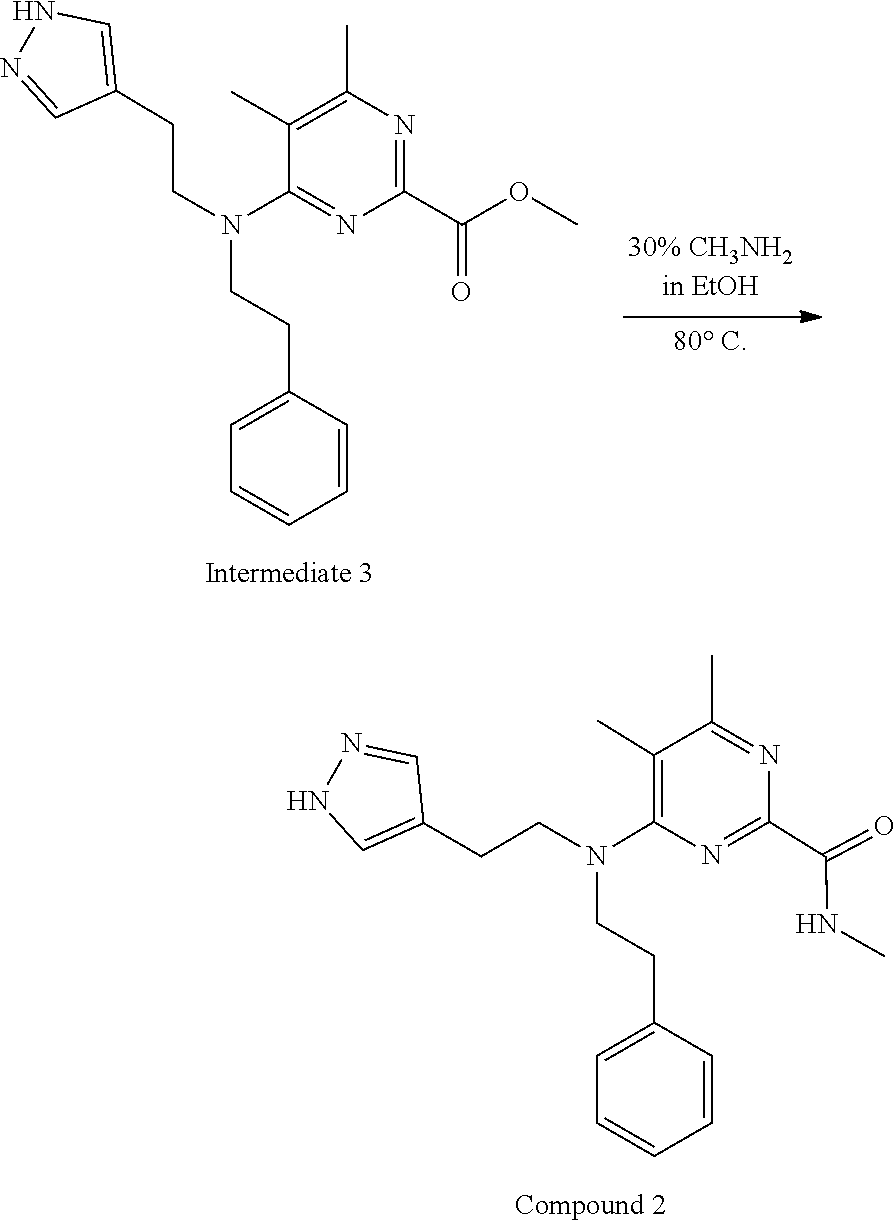
[0573]To a stirred solution of CH3NH2 (30% in EtOH, 1.00 mL) was added methyl 4-((2-(1H-pyrazol-4-yl)ethyl)(phenethyl)amino)-5,6-dimethylpyrimidine-2-carboxylate (Intermediate 3, 70 mg, 0.18 mmol, 1.0 equiv). The resulting mixture was stirred at 80° C. for 3 h. Upon completion, the reaction mixture was directly concentrated and purified by Prep-HPLC (H2O (10 mM NH4HCO3+0.1% NH3·H2O)/MeCN) to yield 4-((2-(1H-pyrazol-4-yl)ethyl)(phenethyl)amino)-N,5,6-trimethylpyrimidine-2-carboxamide (Compound 2-18.9 mg, 27%) as a white solid. 1H NMR (300 MHz, DMSO-d6) δ 12.55 (s, 1H), 8.43 (d, J=5.1 Hz, 1 H), 7.45 (s, 2H), 7.28 (d, J=3.8 Hz, 4H), 7.27-7.13 (m, 1H), 3.64 (dd, J=8.9, 6.3 Hz, 2H), 3.59-3.49 (m, 2H), 2.90-2.77 (m, 5H), 2.67 (dd, J=8.8, 6.5 Hz, 2H), 2.39 (s, 3H), 2.13 (s, 3 H). LRMS (ESI+) calcd for C21H27N6O+ [M+H+] 379, found 379.
Example 5
Preparation of 4-((2-(1H-pyrazol-4-yl)ethyl)(propyl)amino)-5,6-dimethylpyrimidine-2-carboxamide
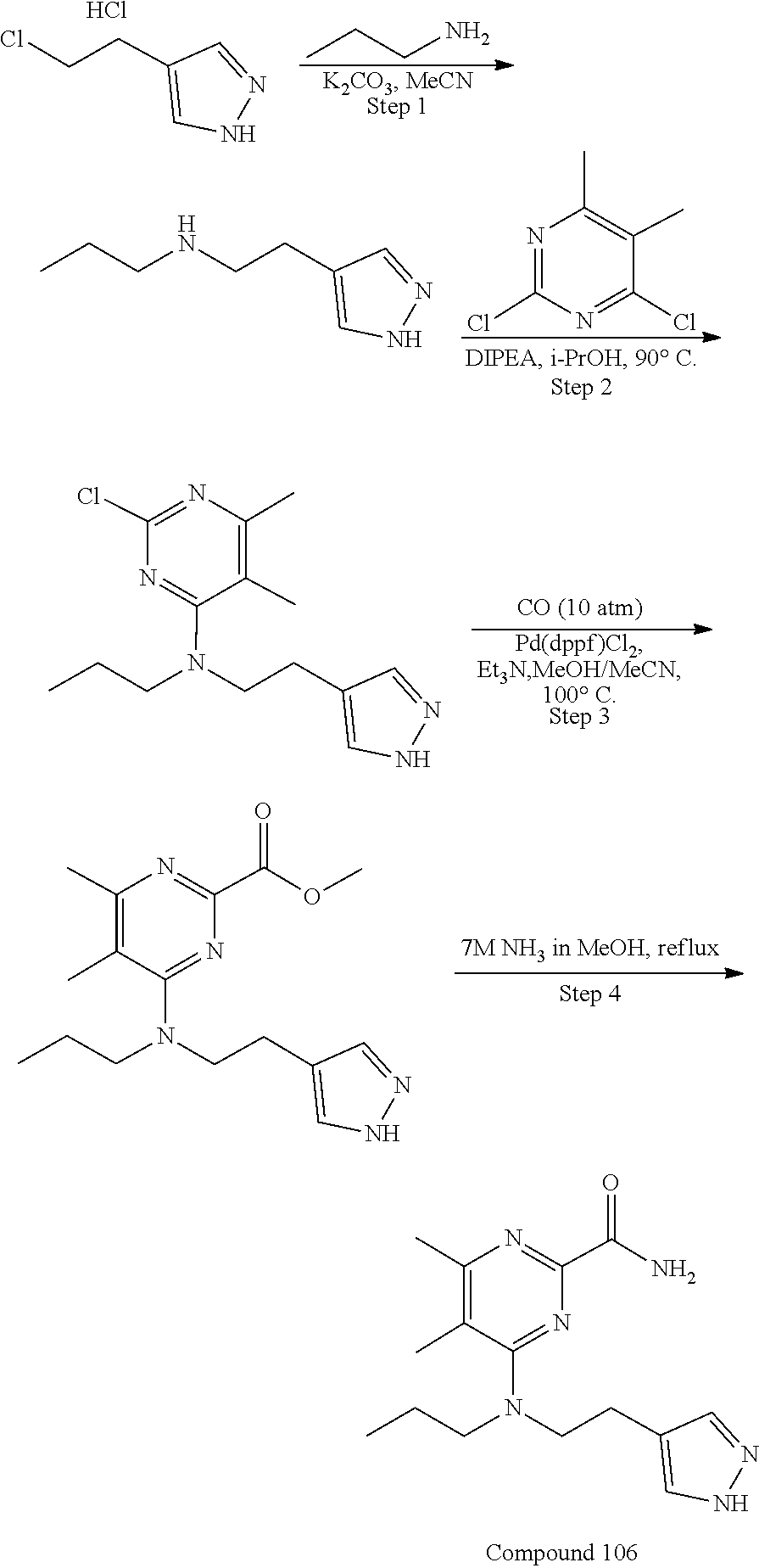
Step 1: Synthesis of N-(2-(1H-pyrazol-4-yl)ethyl)propan-1-amine
[0575]To a stirred solution of 4-(2-chloroethyl)-1H-pyrazole HCl salt (500 mg, 2.99 mmol, 1.0 equiv) in MeCN (5 mL) was added n-propylamine (353 mg, 5.97 mmol, 2.0 equiv) and K2CO3 (1.65 g, 11.9 mmol, 4.0 equiv). The resulting mixture was stirred at 80° C. for 15 h. Upon completion, the mixture was cooled down to 23° C. and filtered to remove solid. The filtrate was and purified by reverse phase column chromatography (H2O (0.05% NH4HCO3)/MeCN, 4:1) to afford N-(2-(1H-pyrazol-4-yl)ethyl)propan-1-amine (230 mg, 25%) as a yellowish oil.
Step 2: Synthesis of N-(2-(1H-pyrazol-4-yl)ethyl)-2-chloro-5,6-dimethyl-N-propylpyrimidin-4-amine
[0576]To a solution of N-(2-(1H-pyrazol-4-yl)ethyl)propan-1-amine (230 mg, 1.50 mmol, 1.0 equiv) in i-PrOH (3 mL) was added 2,4-dichloro-5,6-dimethylpyrimidine (264 mg, 1.49 mmol, 1.0 equiv) and diisopropylethylamine (578 mg, 4.47 mmol, 2.98 equiv). The resulting mixture was stirred at 90° C. for 15 h. Upon completion, the reaction was directly concentrated and purified by reverse phase column chromatography (H2O (0.05% NH4HCO3)/MeCN, 3:2) to afford N-(2-(1H-pyrazol-4-yl)ethyl)-2-chloro-5,6-dimethyl-N-propylpyrimidin-4-amine (65 mg, 15%) as a white solid and 120 mg regio-isomer. N-(2-(1H-pyrazol-4-yl)ethyl)-2-chloro-5,6-dimethyl-N-propylpyrimidin-4-amine: 1H NMR (300 MHz, DMSO-d6) δ 12.54 (s, 1H), 7.43 (s, 2H), 3.56-3.45 (m, 2H), 3.32 (d, J=7.5 Hz, 2H), 2.70 (dd, J=8.9, 6.3 Hz, 2H), 2.30 (s, 3H), 2.10 (s, 3H), 1.55 (h, J=7.4 Hz, 2H), 0.84 (t, J=7.4 Hz, 3H). Regio-isomer: 1H NMR (300 MHz, DMSO-d6) δ 12.55 (s, 1H), 7.45 (s, 2H), 3.65 (dd, J=9.0, 6.4 Hz, 2H), 3.43 (t, J=7.5 Hz, 2H), 2.75-2.64 (m, 2H), 2.34 (s, 3H), 2.13 (s, 3H), 1.55 (h, J=7.4 Hz, 2H), 0.85 (t, J=7.4 Hz, 3H).
Step 3: Synthesis of methyl 4-((2-(1H-pyrazol-4-yl)ethyl)(propyl)amino)-5,6-dimethylpyrimidine-2-carboxylate
[0577]To a solution of N-(2-(1H-pyrazol-4-yl)ethyl)-2-chloro-5,6-dimethyl-N-propylpyrimidin-4-amine (50 mg, 0.17 mmol, 1.0 equiv) in McOH/MeCN (8 mL/2 mL) was added Pd(dppf)Cl2 (25 mg, 0.03 mmol, 0.2 equiv) and Et3N (34 mg, 0.34 mmol, 2.0 equiv) in a pressure tank. The mixture was purged with nitrogen for 2 min and then was pressurized to 10 atm with carbon monoxide at 100° C. for 15 h. Upon completion, the reaction mixture was cooled to 23° C. and filtered to remove solid. The filtrate was concentrated to yield crude methyl 4-((2-(1H-pyrazol-4-yl)ethyl)(propyl)amino)-5,6-dimethylpyrimidine-2-carboxylate (50 mg, 93%) as a brownish solid.
Step 4: Synthesis of 4-((2-(1H-pyrazol-4-yl)ethyl)(propyl)amino)-5,6-dimethylpyrimidine-2-carboxamide
[0578]To a stirred solution of NH3 (7 M in McOH, 1 mL) was added methyl 4-((2-(1H-pyrazol-4-yl)ethyl)(propyl)amino)-5,6-dimethylpyrimidine-2-carboxylate (50 mg, 0.16 mmol, 1.0 equiv). The resulting mixture was stirred at 80° C. for 15 h. Upon completion, the reaction mixture was directly concentrated and purified by reverse-phase prep-HPLC (H2O (0.05% NH4HCO3)/MeCN=3:2) to afford 4-((2-(1H-pyrazol-4-yl)ethyl)(propyl)amino)-5,6-dimethylpyrimidine-2-carboxamide (Compound 106-24.7 mg, 52%) as a white solid. 1H NMR (300 MHz, DMSO-d6) δ 12.55 (s, 1H), 7.80 (s, 1H), 7.56 (s, 1H), 7.46 (s, 2H), 3.54 (t, J=7.7 Hz, 2H), 3.35 (s, 2H), 2.71 (t, J=7.7 Hz, 2H), 2.39 (s, 3H), 2.16 (s, 3H), 1.56 (q, J=7.5 Hz, 2H), 0.90-0.79 (m, 3H). LRMS (ESI+) calcd for C15H23N6O+ [M+H+] 303, found 303.
Example 6
Preparation of (S)-(4-(3-(1H-pyrazol-4-yl)pyrrolidin-1-yl)-5,6-dimethylpyrimidin-2-yl)(3-hydroxy-3-phenylazetidin-1-yl)methanone
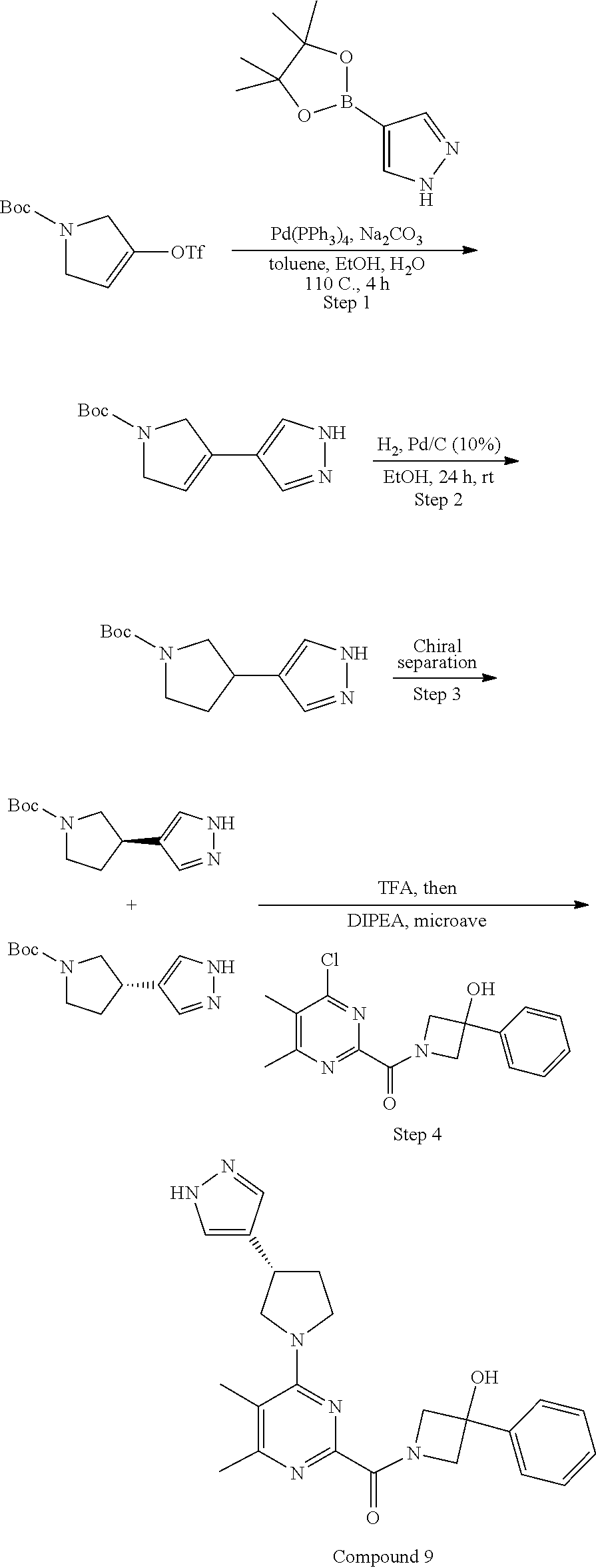
Step 1: Synthesis of tert-butyl 3-(1H-pyrazol-4-yl)-2,5-dihydro-1H-pyrrole-1-carboxylate
[0580]To a solution of tert-butyl 3-(trifluoromethanesulfonyloxy)-2,5-dihydropyrrole-1-carboxylate (20.0 g, 63.0 mmol), 4-(tetramethyl-1,3,2-dioxaborolan-2-yl)-1H-pyrazol (24.5 g, 126.1 mmol), Pd(PPh3)4 (7.3 g, 6.3 mmol), sodium carbonate (13.4 g, 126 mmol) in 300 mL of toluene was added 40 mL of water and 40 mL of ethanol. The solution was heated at 110° C. for 4 hr, cooled to rt, and was poured into ether (1.5 L). It was washed with NaHCO3, dried with Na2SO4, filtered and concentrated. The crude solid was purified by silica gel column chromatography (120 g biotage column, 20%-100% EtOAc/Hex then 10% McOH/DCM) provided product (9.0 g, 38.2 mmol, 60.6% yield) as a pale-yellow solid set-up. Rf=0.44 (50% EtOAc/hexanes). LRMS (ESI+) calcd for C12H18N3O2+ [M+H+] 236.1, found 236.2.
Step 2: Synthesis of tert-butyl 3-(1H-pyrazol-4-yl)pyrrolidine-1-carboxylate
[0581]tert-butyl 3-(1H-pyrazol-4-yl)-2,5-dihydro-1H-pyrrole-1-carboxylate (8.4 g, 35.7 mmol) was dissolved in 50 mL of EtOH and hydrogenated over 10% Pd/C (400 mg) for 24 hours. LCMS indicated complete consumption of starting material. The reaction was filtered and concentrated to provide the product (8.2 g, 34.6 mmol, 96.8% yield) as a light-yellow oil.
Step 3: Chiral Separation of tert-butyl 3-(1H-pyrazol-4-yl)pyrrolidine-1-carboxylate
[0582]The chiral hydrogenation product was purified using SFC (ChromegaChiral CCS from ES Industries, 2.0×25 cm, 100% McOH with 0.25% isopropylamine over 5 min).
Enantiomer 1: Retention Time 1.6 Mins
[0583]1H NMR (400 MHz, DMSO-d6) δ 12.62 (s, 1H), 7.50 (s, 2H), 3.61 (dd, J=10.2, 7.2 Hz, 1H), 3.39 (ddd, J=11.1, 8.1, 3.3 Hz, 1H), 3.25 (qd, J=11.1, 10.6, 7.4 Hz, 2H), 3.07 (t, J=9.4 Hz, 1H), 2.14 (dtp, J=12.9, 6.3, 3.1 Hz, 1H), 1.91-1.75 (m, 1H), 1.40 (s, 9H). LRMS (ESI+) calcd for C12H20N3O2+ [M+H+] 238.1, found 238.2.
Enantiomer 2: Retention Time 3.6 Mins
[0584]1H NMR (400 MHz, DMSO-d6) δ 12.62 (s, 1H), 7.50 (s, 2H), 3.61 (dd, J=10.2, 7.2 Hz, 1H), 3.39 (ddd, J=11.1, 8.1, 3.3 Hz, 1H), 3.32-3.15 (m, 2H), 3.07 (t, J=9.4 Hz, 1H), 2.13 (dtd, J=16.4, 9.3, 7.7, 4.9 Hz, 1H), 1.83 (ddt, J=13.2, 9.4, 6.1 Hz, 1H), 1.40 (s, 9H). LRMS (ESI+) calcd for C12H20N3O2+ [M+H+] 238.1, found 238.2.
Step 4: Synthesis of (S)-(4-(3-(1H-pyrazol-4-yl)pyrrolidin-1-yl)-5,6-dimethylpyrimidin-2-yl) (3-hydroxy-3-phenylazetidin-1-yl) methanone
[0585]To a solution of Enantiomer 1 which was arbitrarily assigned to be tert-butyl (S)-3-(1H-pyrazol-4-yl)pyrrolidine-1-carboxylate (40 mg, 0.17 mmol, 2.8 equiv) in CH2Cl2 (1.0 mL) was added trifluoroacetic acid (0.1 mL). The mixture was stirred at this temperature for 30 min before volatile was removed in vacuo. The so-obtained crude (S)-4-(pyrrolidin-3-yl)-1H-pyrazole was transferred to a microwave vial charged with (4-chloro-5,6-dimethylpyrimidin-2-yl)(3-hydroxy-3-phenylazetidin-1-yl)methanone (20 mg, 0.06 mmol, 1.0 equiv, synthesized via Synthetic Method 1, Step 1), diisopropylethylamine (31 mg, 0.24 mmol, 5.0 equiv), and i-PrOH/MeOH (1.5 mL, 2:1). The reaction was heated at 165° C. under microwave irradiation for 30 min. Upon completion, the crude content was directly concentrated and subjected to reverse-phase HPLC separation (formic acid in H2O/formic acid in MeCN, 100% to 0%) to yield (S)-(4-(3-(1H-pyrazol-4-yl)pyrrolidin-1-yl)-5,6-dimethylpyrimidin-2-yl)(3-hydroxy-3-phenylazetidin-1-yl)methanone (Compound 9-13 mg, 32%) as a colorless foam. 1H NMR (400 MHz, Methanol-d4) δ 7.63-7.53 (m, 4H), 7.41 (t, J=7.6 Hz, 2H), 7.32 (t, J=7.4 Hz, 1H), 4.49 (d, J=11.1 Hz, 1H), 4.35 (d, J=11.1 Hz, 1H), 4.08 (t, J=8.6 Hz, 1H), 3.86 (s, 2H), 3.70 (t, J=9.6 Hz, 1H), 3.44 (t, J=8.0 Hz, 2H), 3.37 (s, 2H), 2.46 (s, 3H), 2.36 (s, 3H), 2.03 (p, J=10.9, 10.1 Hz, 1H). LRMS (APCI+) calcd for C23H27N6O2+[M+H+] 419.2, found 419.1.
Example 7
Representative example: Preparation of (R)-4-((2-(1H-pyrazol-4-yl)ethyl)amino)-5-chloro-N-(1-(6-fluoropyridin-2-yl)ethyl)-6-methylpyrimidine-2-carboxamide

[0587]To a solution of 4-((2-(1H-pyrazol-4-yl)ethyl)amino)-5-chloro-6-methylpyrimidine-2-carboxylic acid (Intermediate 2-1, 28 mg, 0.100 mmol, 1.0 equiv), (R)-1-(6-fluoropyridin-2-yl)ethan-1-amine HCl salt (28 mg, 0.12 mmol, 1.2 equiv), and hexafluorophosphate azabeuzotriazoie tetramethyl uronium (HATU, 57 mg, 0.15 mmol, 1.5 equiv) in DMF (1 mL) was added diisopropylethylamine (DIPEA, 0.053 mL, 0.3 mmol, 5.0 equiv) dropwise at 23° C. The resulting solution was stirred at this temperature for 30 min. LC-MS showed complete conversion. EtOAc (3 mL) and water (3 mL) were added. The organic phase was washed by half-saturated brine, dried (MgSO4), filtered, and concentrated. The residue was subjected to reverse-phase HPLC separation (20% to 100% MeCN in water with 0.1% HCOOH over 40 min) to yield (R)-4-((2-(1H-pyrazol-4-yl)ethyl)amino)-5-chloro-N-(1-(6-fluoropyridin-2-yl)ethyl)-6-methylpyrimidine-2-carboxamide (Compound 147-40 mg, yield 74%) as an off-white solid. 1H NMR (400 MHz, Methanol-d4) δ 7.93 (q, J=7.9 Hz, 1H), 7.52 (s, 2H), 7.36 (dd, J=7.5, 2.2 Hz, 1H), 6.98 (dd, J=8.1, 2.4 Hz, 1H), 5.24 (q, J=6.8 Hz, 1H), 3.82 (t, J=7.2 Hz, 2H), 2.88 (t, J=7.2 Hz, 2H), 2.49 (s, 3H), 1.59 (d, J=6.8 Hz, 3H).
[0588]The following compounds were prepared according to the procedures described above using the carboxylic acid and amine reagent described in the table below.
| Compound | Carboxylic | ||
|---|---|---|---|
| No. | Acid | Amine | Structure, Name, and Data |
| 147 | 4-((2-(1H-pyrazol- 4-yl)ethyl)amino)- 5-chloro-6- methylpyrimidine- 2-carboxylic acid (Intermediate 2-1) | (R)-1-(6-fluoropyridin- 2-yl)ethan-1-amine | |
| 148 | 4-((2-(1H-pyrazol- 4-yl)ethyl)amino)- 5-chloro-6- methylpyrimidine- 2-carboxylic acid (Intermediate 2-1) | (R)-2-(3- fluorophenyl)pyrrolidine | |
| 149 | 4-((2-(1H-pyrazol- 4-yl)ethyl)amino)- 5-fluoro-6- methylpyrimidine- 2-carboxylic acid (Intermediate 2-2) | (R)-1-(6-fluoropyridin- 2-yl)ethan-1-amine | |
| 150 | 4-((2-(1H-pyrazol- 4-yl)ethyl)amino)- 5-fluoro-6- methylpyrimidine- 2-carboxylic acid (Intermediate 2-2) | (R)-2-(3- fluorophenyl)pyrrolidine | |
Biological Example 1
NMN Fluorescence Biochemical and NAD Cellular Assay
A. Human Recombinant Enzyme Assay
[0590]Compounds described herein were assayed for their ability to stimulate the synthesis of nicotinamide mononucleotide (NMN) by the enzyme NAMPT. The human recombinant enzyme assay measures the activation of the enzyme activity by compounds using recombinant enzyme and substrates in a buffered cell-free system. The assay conditions closely mimic cellular environments. Dose responses were measured using an assay to detect the formation of nicotinamide mono-nucleotide. All experiments were performed in the 384-well format. Generally, 0.5 μL of DMSO containing varying concentrations of the test compound was mixed with 10 μL of the enzyme reagent solution. Enzyme reactions were initiated with the addition of 10 μL of a solution containing the substrates. The final assay conditions were as follows: 6 nM human NAMPT, 2.5 mM ATP, 2011M PRPP and 15011M nicotinamide in 50 mM HEPES, pH 7.2, 1 mM DTT, 1 mM CHAPS 50 mM NaCl, 100 mM MgCl2. Following an incubation of 60 min at ambient temperature, 10 μL of 20% acetophenone in DMSO was added, followed by 10 μL of 2 M KOH and 40 μL of formic acid. The plates were read for fluorescence (Excitation/Emission=355 nm/460 nm) using an EnVision plate reader after 40 mins of incubation at ambient temperature. The potency measurements for compounds, are quantified and represented as AC1.4 (the concentration of compounds that generates 40% higher activity over basal) and EC50 (concentration of the compound that gives half-maximal activation). Table A shows the AC1.4 and EC50 data and for the tested compounds.
| TABLE A | ||
|---|---|---|
| AC1.4 | EC50 | |
| Compound | Human | Human |
| No. | (μM) | (μM) |
| 1 | 0.003 | 0.131 |
| 2 | 0.007 | 0.1555 |
| 3 | 0.0165 | 0.653 |
| 4 | 0.02 | 0.1055 |
| 5 | 0.0235 | 0.449 |
| 6 | 0.0385 | 1.839 |
| 7 | 0.029 | 0.3255 |
| 8 | 0.0325 | 0.1825 |
| 9 | 0.044 | 0.633 |
| 10 | 0.046 | 0.52 |
| 11 | 0.0465 | 0.282 |
| 12 | 0.048 | 0.5145 |
| 13 | 0.035 | 3.7435 |
| 14 | 0.054 | 0.156 |
| 15 | 0.051 | 0.39 |
| 16 | 0.0585 | 0.621 |
| 17 | 0.0715 | 0.549 |
| 18 | 0.0745 | 0.597 |
| 19 | 0.075 | 0.4995 |
| 20 | 0.062 | 0.848 |
| 21 | 0.0815 | 0.5505 |
| 22 | 1.956 | 12.761 |
| 23 | 0.0955 | 3.2415 |
| 24 | 0.0955 | 0.77 |
| 25 | 0.106 | 0.8715 |
| 26 | 0.1215 | 0.429 |
| 27 | 0.1305 | 1.6305 |
| 28 | 0.144 | 1.356 |
| 29 | 0.1725 | 1.8735 |
| 30 | 0.1725 | 0.741 |
| 31 | 0.192 | 1.6095 |
| 32 | 0.193 | 0.929 |
| 33 | 0.2615 | 1.3775 |
| 34 | 2.839 | 17.651 |
| 35 | 0.231 | 0.617 |
| 36 | 0.2015 | 0.8815 |
| 37 | 0.2055 | 1.192 |
| 38 | 0.1635 | 3.8305 |
| 39 | 0.21 | 1.512 |
| 40 | 0.214 | 1.266 |
| 41 | 0.2615 | 2.871 |
| 42 | 0.265 | 2.9235 |
| 43 | 0.273 | 0.827 |
| 44 | 0.275 | 1.8355 |
| 45 | 0.277 | 3.5165 |
| 46 | 0.2845 | 2.3535 |
| 47 | 0.2915 | 1.9985 |
| 48 | 0.2925 | 6.835 |
| 49 | 0.3055 | 2.1035 |
| 50 | 0.311 | 2.079 |
| 51 | 0.327 | 1.876 |
| 52 | 0.3305 | 1.7765 |
| 53 | 0.3335 | 2.604 |
| 54 | 0.35 | 2.371 |
| 55 | 0.375 | 4.678 |
| 56 | 0.439 | 1.374 |
| 57 | 0.396 | 2.8765 |
| 58 | 0.406 | 0.788 |
| 59 | 0.4045 | 3.0805 |
| 60 | 0.4085 | 3.7485 |
| 61 | 0.409 | 2.113 |
| 62 | 0.4295 | 3.2105 |
| 63 | 0.4315 | 2.285 |
| 64 | 0.458 | 2.1605 |
| 65 | 0.4805 | 1.686 |
| 66 | 4.5565 | 16.307 |
| 67 | 0.505 | 3.8615 |
| 68 | 0.563 | 1.644 |
| 69 | 0.5395 | 4.181 |
| 70 | 0.5795 | 3.1245 |
| 71 | 0.5835 | 6.0665 |
| 72 | 0.625 | 3.527 |
| 73 | 0.6455 | 3.2365 |
| 74 | 0.715 | 8.007 |
| 75 | 0.7725 | 2.625 |
| 76 | 0.773 | 6.8315 |
| 77 | 0.8835 | 13.73 |
| 78 | 0.81 | 5.623 |
| 79 | 0.8395 | 4.624 |
| 80 | 0.877 | 10.399 |
| 81 | 0.891 | 5.9785 |
| 82 | 0.966 | 3.9925 |
| 83 | 0.9695 | 14.4735 |
| 84 | 31.857 | 40.186 |
| 85 | 1.072 | 8.3455 |
| 86 | 1.1115 | 8.0415 |
| 87 | 1.1375 | 13.342 |
| 88 | 1.1435 | 7.2145 |
| 89 | 4.9195 | 37.3495 |
| 90 | 1.17 | 9.2395 |
| 91 | 0.9345 | 7.7595 |
| 92 | 1.1995 | 5.678 |
| 93 | 1.244 | 14.898 |
| 94 | 1.271 | 8.133 |
| 95 | 1.2975 | 10.97 |
| 96 | 1.3075 | 8.5145 |
| 97 | 6.337 | 22.291 |
| 98 | 1.3275 | 5.1525 |
| 99 | 1.5915 | 19.97 |
| 100 | 6.3085 | 40.2145 |
| 101 | 1.519 | 4.092 |
| 102 | 2.0105 | 12.9455 |
| 103 | 1.6375 | 21.4845 |
| 104 | 1.6495 | 11.3035 |
| 105 | 1.669 | 2.5205 |
| 106 | 1.7115 | 32.734 |
| 107 | 2.339 | 13.991 |
| 108 | 1.7855 | 18.0665 |
| 109 | 1.933 | 11.211 |
| 110 | 1.9815 | 16.177 |
| 111 | 1.9995 | 18.489 |
| 112 | 2.084 | 2.966 |
| 113 | 2.084 | 18.2565 |
| 114 | 2.1125 | 23.0915 |
| 115 | 2.136 | 10.7 |
| 116 | 2.9705 | 29.602 |
| 117 | 2.2385 | 47.5795 |
| 118 | 2.384 | 11.754 |
| 119 | 32.854 | 47.194 |
| 120 | 2.443 | 15.159 |
| 121 | 2.5075 | 22.0545 |
| 122 | 2.574 | 16.724 |
| 123 | 2.581 | 26.389 |
| 124 | 2.6905 | 11.974 |
| 125 | 4.313 | 22.028 |
| 126 | 3.1455 | 13.4295 |
| 127 | 32.9385 | 60.0485 |
| 128 | 3.235 | 28.029 |
| 129 | 3.249 | 21.3385 |
| 130 | 3.2975 | 41.0095 |
| 131 | 3.487 | 10.7915 |
| 132 | 3.5055 | 13.1015 |
| 133 | 3.5315 | 28.907 |
| 134 | 3.578 | 26.1965 |
| 135 | 3.7335 | 17.4745 |
| 136 | 3.778 | 50.1845 |
| 137 | 3.794 | 34.501 |
| 138 | 4.125 | 30.698 |
| 139 | 3.809 | 28.545 |
| 140 | 4.0885 | 18.379 |
| 141 | 3.8305 | 20.3335 |
| 142 | 4.3845 | 31.7825 |
| 143 | 4.433 | 45.983 |
| 144 | 4.755 | 18.431 |
| 145 | 4.9555 | 22.4285 |
| 146 | 2.7 | n.d. |
| 147 | <0.003 | n.d. |
| 148 | >31 | n.d. |
| 149 | 0.02 | n.d. |
| 150 | 0.12 | n.d. |
| 152 | 12.6 | n.d. |
| n.d. = not determined | ||
[0591]
B. Cellular NAD+ Modulation Assay.
[0592]The compounds described herein were also assayed for their ability to stimulate the endogenous NAMPT in a native cellular environment in the cellular NAD+ modulation assay, which measures the ability of the compound to modulate cellular NAD levels. Increased levels of NAD are expected by compounds that permeate the cells and activate the catalytic activity of the endogenous NAMPT.
[0593]Neuroblastoma SH-SY5Y cells were grown in 1:1 mixture of Eagle's Minimum Essential Medium and F12 Medium, along with 10% fetal bovine serum, in a humidified incubator with an atmosphere of 95% air and 5% CO2 at 37° C. The assays were initiated by plating 20 μL of SH-SY5Y cells in culture medium with 0.1% fetal bovine serum, at a density of 5000 cells per well to a 384-well Corning™ BioCoat™ Poly-D-Lysine Multiwell Plates. The plates were incubated in the 37° C. incubators for a period of 5 hours. Compounds in DMSO were added to the plates in a volume of 120 nL using the Labcyte Echo Liquid Handlers. 5 μL of a 1.5 uM Doxorubicin solution in assay medium is added to each well. The plates are then incubated for 40 hours. 30 μL of a readout-solution containing 0.2 U/mL Diaphorase enzyme, 40 uM resazurin, 10 uM FMN, 0.8 U/mL Alcohol dehydrogenase, 3% ethanol, 0.4 mg/mL bovine serum albumin, 0.2% Triton X-100 in 100 mM Tris-HCl, 30 mM EDTA, pH 8.4. The plates were read for fluorescence (Excitation/Emission=540 nm/590 nm) using an EnVision plate reader after 60 mins of incubation at ambient temperature. Table B shows the AC0.3 and EC50 data for the tested compounds.
| TABLE B | ||
|---|---|---|
| SY5Y (human) NAD | SY5Y (human) NAD | |
| Compound No. | Cell Dox AC0.3 (μM) | Cell Dox EC50 (μM) |
| 4 | 0.07 | 0.11 |
| 5 | 2.68 | 1.76 |
| 7 | 0.19 | 0.19 |
| 10 | 0.2 | 0.47 |
| 13 | 0.24 | 0.23 |
| 14 | 0.28 | 0.48 |
| 15 | 0.26 | 0.19 |
| 16 | 0.41 | 0.33 |
| 17 | 0.24 | 0.44 |
| 20 | 2.97 | 8.79 |
| 21 | 0.13 | 0.28 |
| 22 | 7.15 | 8.84 |
| 23 | 1.57 | 3.25 |
| 24 | 2.49 | 2.26 |
| 26 | 0.26 | 0.72 |
| 27 | 0.28 | 0.74 |
| 30 | 0.88 | 1.60 |
| 147 | 0.02 | n.d. |
| 149 | 0.01 | n.d. |
| 151 | 0.17 | n.d. |
| n.d. = not determined | ||
Claims
What is claimed is:
1. A compound of formula (A):
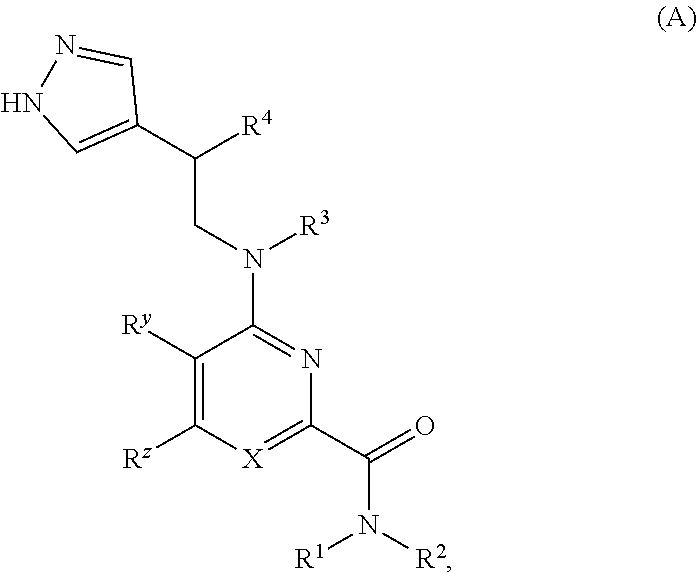
or a pharmaceutically acceptable salt thereof, wherein:
X is N or CH;
R1 and R2 are each independently H, optionally substituted C1-6alkyl, optionally substituted C3-10cycloalkyl, optionally substituted C6-20aryl, optionally substituted 3-15 membered heterocyclyl, or optionally substituted 5-20 membered heteroaryl;
or R1 and R2 are taken together with the nitrogen to which they are attached to form an optionally substituted 3-15 membered heterocyclyl;
R3 is H or optionally substituted C1-6alkyl, and R4 is H;
or R3 and R4 taken together are —CH2CH2—; and
Ry and Rz are each independently H, halo, or optionally substituted C1-6alkyl;
or Ry and Rz are taken together with the carbon atoms to which they are attached to form an optionally substituted non-aromatic cyclic ring containing 3 to 10 carbon atoms.
2. The compound of
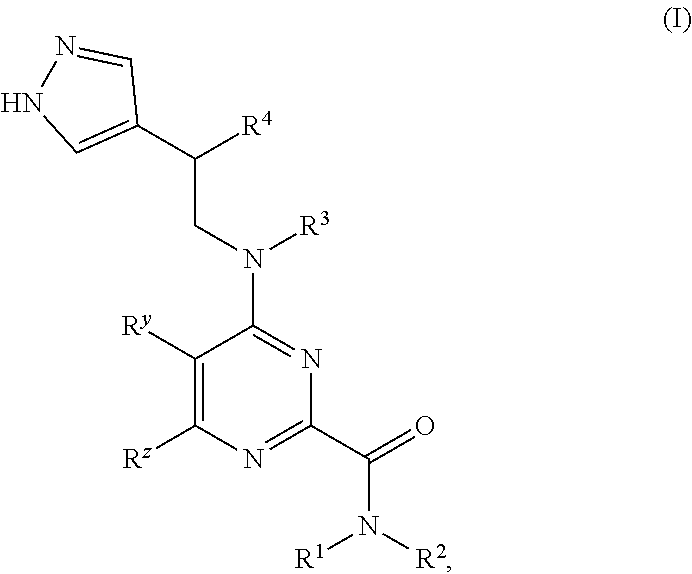
or a pharmaceutically acceptable salt thereof.
3. The compound of
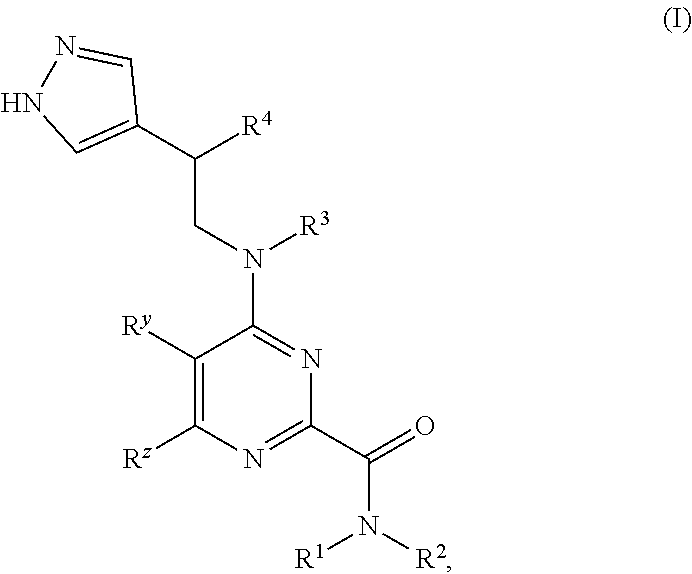
or a pharmaceutically acceptable salt thereof, wherein:
R1 and R2 are each independently H, optionally substituted C1-6alkyl, optionally substituted C3-10cycloalkyl, optionally substituted C6-20aryl, optionally substituted 3-15 membered heterocyclyl, or optionally substituted 5-20 membered heteroaryl;
or R1 and R2 are taken together with the nitrogen to which they are attached to form an optionally substituted 3-15 membered heterocyclyl;
R3 is H or optionally substituted C1-6alkyl, and R4 is H;
or R3 and R4 taken together are —CH2CH2—; and
Ry and Rz are each independently optionally substituted C1-6alkyl.
4. The compound of

or a pharmaceutically acceptable salt thereof.
5. The compound of

or a pharmaceutically acceptable salt thereof.
6. The compound of
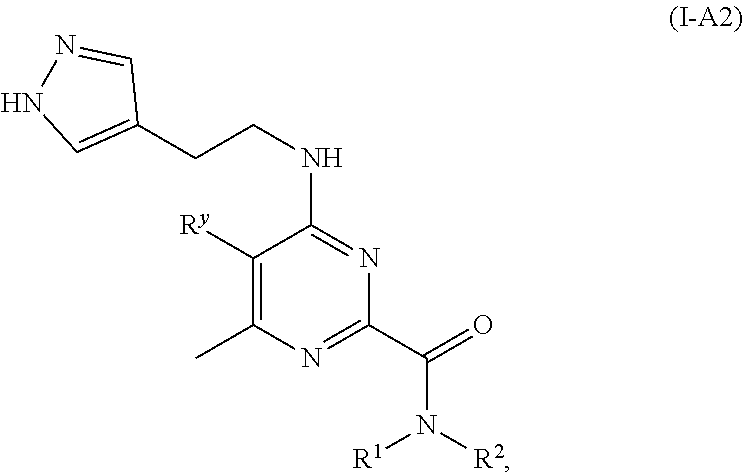
or a pharmaceutically acceptable salt thereof, wherein Ry is halo.
7. The compound of
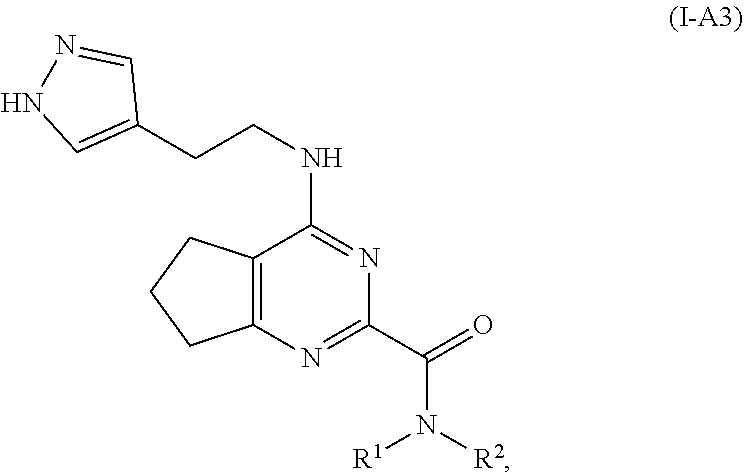
or a pharmaceutically acceptable salt thereof.
8. The compound of
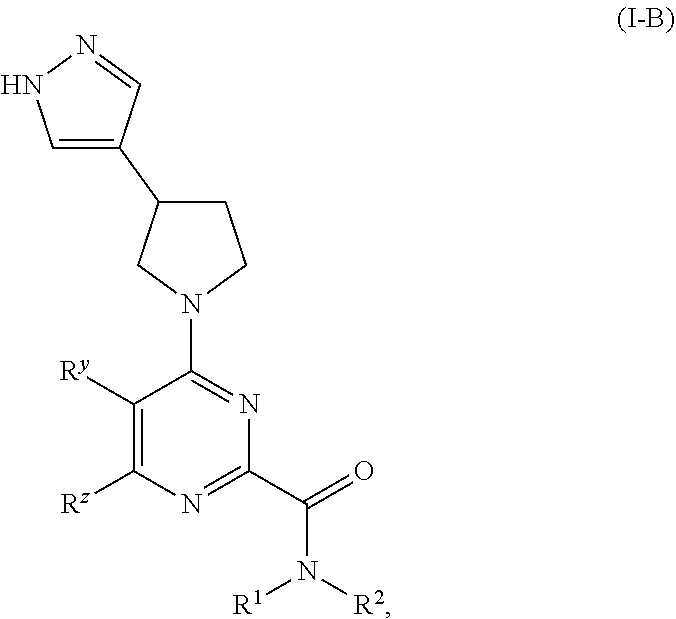
or a pharmaceutically acceptable salt thereof.
9. The compound of
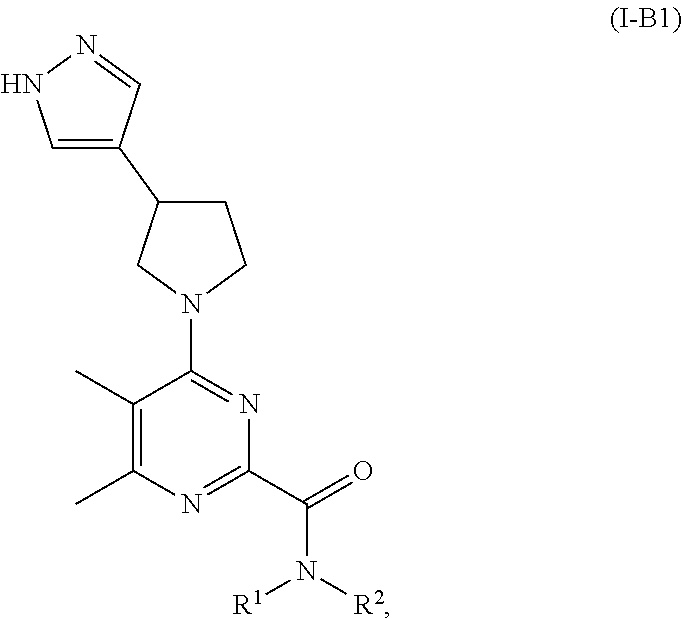
or a pharmaceutically acceptable salt thereof.
10. The compound of
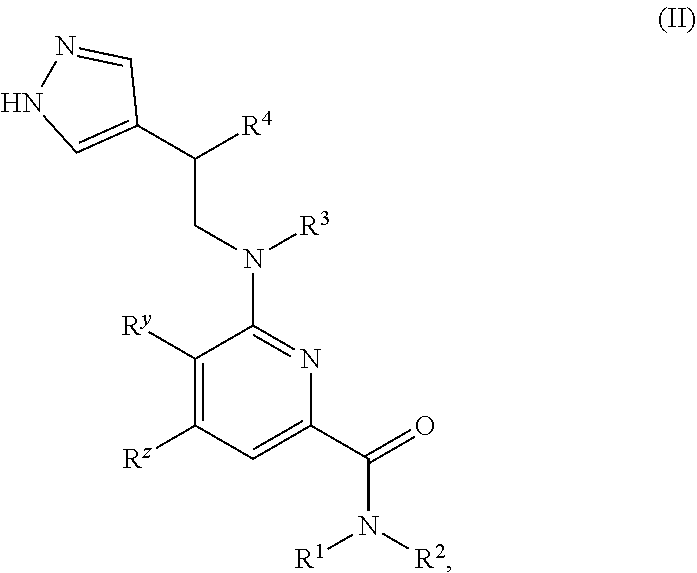
or a pharmaceutically acceptable salt thereof.
11. The compound of
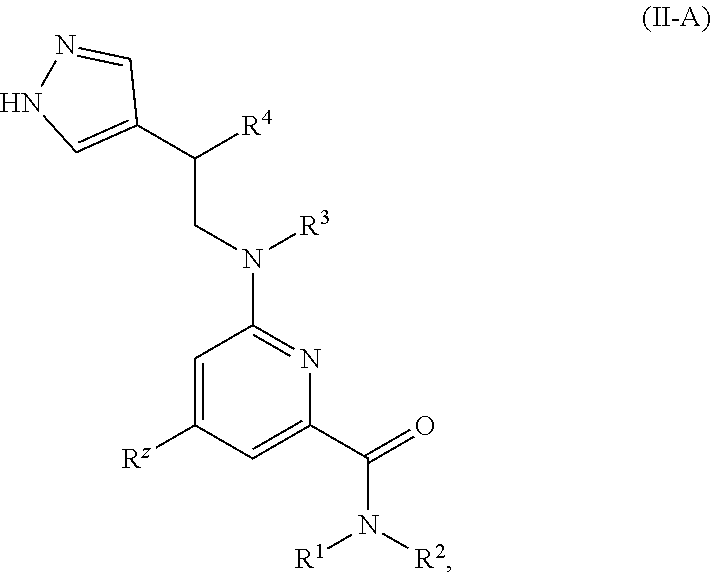
or a pharmaceutically acceptable salt thereof.
12. The compound of
13. The compound of
14. The compound of
15. The compound of
16. The compound of
17. The compound of
18. The compound of
19. The compound of
20. The compound of
21. The compound of
22. The compound of
23. The compound of
24. The compound of
25. The compound of
26. The compound of
27. The compound of
28. A compound selected from the group consisting of:
or a pharmaceutically acceptable salt thereof.
29. A compound selected from the group consisting of:
or a pharmaceutically acceptable salt thereof.
30. A pharmaceutical composition comprising a compound of
31. A method of treating a disease or condition mediated by NAMPT activity in a subject in need thereof, comprising administering to the subject a compound of
32. The method of
33. The method of