US12679823B2 · App 18/004,731
Oxopyrrolidine FPR2 agonists
Publication
Application
Classifications
IPC Classifications
CPC Classifications
Applicants
BRISTOL-MYERS SQUIBB COMPANY
Inventors
Pravin Sudhakar Shirude, Chandrasekhar Reddy Rachamreddy, Amit Kumar Chattopadhyay, Balaji Seshadri, Vishweshwaraiah Baligar, Sudhakara Reddy Madduri, Ellen K. Kick, Nicholas R. Wurtz
Abstract
The disclosure relates to compounds of Formula (I), which are formyl peptide 2 (FPR2) receptor agonists and/or formyl peptide 1 (FPR1) receptor agonists. The disclosure also provides compositions and methods of using the compounds, for example, for the treatment of atherosclerosis, heart failure, chronic obstructive pulmonary disease (COPD), and related diseases.
Get a summary, plain-language explanation, or ask your own question.
Description
CROSS REFERENCE TO RELATED APPLICATIONS
[0001]This application is a 371 application of PCT/US2021/040798, filed Jul. 8, 2021, which is entitled to priority pursuant to 35 U.S.C. § 119(e) to U.S. provisional patent application No. 63/049,838, filed Jul. 9, 2020, which is incorporated herein in its entirety.
BACKGROUND OF THE INVENTION
[0002]The present invention relates to novel oxopyrrolidine compounds, which are formyl peptide 2 (FPR2) receptor agonists and/or formyl peptide 1 (FPR1) receptor agonists, compositions containing them, and methods of using them, for example, for the treatment of atherosclerosis, heart failure, chronic obstructive pulmonary disease (COPD), and related diseases.
[0003]Formyl peptide receptor 2 (FPR2) belongs to a small group of seven-transmembrane domain, G protein-coupled receptors that are expressed in multiple human tissues including immune cells and are known to be important in host defense and inflammation. FPR2 shares significant sequence homology with FPR1 and FPR3 (Journal of Autoimmunity 85, 2017, 64-77). Collectively, these receptors bind a number of structurally diverse agonists, including N-formyl and nonformyl peptides which act as chemo attractants and activate phagocytes. The endogenous peptide Annexin A1 and its N-terminal fragments are examples of ligands that bind human FPR1 and FPR2. Fatty acids such as eicosanoid, lipoxin A4, which belongs to a class of small pro-resolution mediators (SPMs), has also been identified as an agonist for FPR2 (Ye R D., et al., Pharmacol. Rev., 2009, 61, 119-61).
[0004]Endogenous FPR2 pro-resolution ligands, such as lipoxin A4 and Annexin A1, have been reported to trigger a wide array of cytoplasmatic cascades such as Gi coupling, Ca2+ mobilization and β-arrestin recruitment. (Int J Mol Sci. 2013 April; 14(4): 7193-7230). FPR2 regulates both innate and adaptive immune systems including neutrophils, macrophages, T-, and B-cells. In neutrophils, FPR2 ligands modulate movement, cytotoxicity and life span. In macrophages, agonism of FPR2 prevents apoptosis and enhances efferocytosis. (Chandrasekharan J A, Sharma-Walia N. J. Inflamm. Res., 2015, 8, 181-92). The initiation of resolution of inflammation by FPR2 agonism is responsible for enhancing anti-fibrotic wound healing and returning of the injured tissue to homeostasis (Romano M., et al., Eur. J. Pharmacol., 2015, 5, 49-63).
[0005]Chronic inflammation is part of the pathway of pathogenesis of many human diseases and stimulation of resolution pathways with FPR2 agonists may have both protective and reparative effects. Ischaemia-reperfusion (I/R) injury is a common feature of several diseases associated with high morbidity and mortality, such as myocardial infarction and stroke. Non-productive wound healing associated with cardiomyocyte death and pathological remodeling resulting from ischemia-reperfusion injury leads to scar formation, fibrosis, and progressive loss of heart function. FPR2 modulation is proposed to enhance myocardial wound healing post injury and diminish adverse myocardial remodeling (Kain V., et al., J. Mol. Cell. Cardiol., 2015, 84, 24-35). In addition, FPR2 pro-resolution agonists, in the central nervous system, may be useful therapeutics for the treatment of a variety of clinical I/R conditions, including stroke in brain (Gavins F N., Trends Pharmacol. Sci., 2010, 31, 266-76) and I/R induced spinal cord injury (Liu Z Q., et al., Int. J. Clin. Exp. Med., 2015, 8, 12826-33).
[0006]In addition to beneficial effects of targeting the FPR2 receptor with novel pro-resolution agonists for treatment of I/R induced injury therapeutic, utility of these ligands can also be applied to other diseases. In the cardiovascular system both the FPR2 receptor and its pro-resolution agonists were found to be responsible for atherogenic-plaque stabilization and healing (Petri M H., et al., Cardiovasc. Res., 2015, 105, 65-74; and Fredman G., et al., Sci. Trans. Med., 2015, 7(275); 275ra20). FPR2 agonists also have been shown to be beneficial in preclinical models of chronic inflammatory human diseases, including: infectious diseases, psoriasis, dermatitis, inflammatory bowel syndrome, Crohn's disease, occular inflammation, sepsis, pain, metabolic/diabetes diseases, cancer, COPD, asthma and allergic diseases, cystic fibrosis, acute lung injury and fibrosis, rheumatoid arthritis and other joint diseases, Alzheimer's disease, kidney fibrosis, and organ transplantation (Romano M., et al., Eur. J. Pharmacol., 2015, 5, 49-63, Perrett, M., et al., Trends in Pharm. Sci., 2015, 36, 737-755).
SUMMARY OF THE INVENTION
[0007]The present invention provides novel oxopyrrolidines, and their analogues thereof, which are useful as FPR2 agonists, including stereoisomers, tautomers, pharmaceutically acceptable salts, or solvates thereof.
[0008]The present invention also provides processes and intermediates for making the compounds of the present invention or stereoisomers, tautomers, pharmaceutically acceptable salts, or solvates thereof.
[0009]The present invention also provides pharmaceutical compositions comprising a pharmaceutically acceptable carrier and at least one of the compounds of the present invention or stereoisomers, tautomers, pharmaceutically acceptable salts, or solvates thereof.
[0010]The compounds of the invention may be used in therapy.
[0011]The compounds of the invention may be used in the treatment and/or prophylaxis of multiple diseases or disorders associated with FPR2, such as inflammatory diseases, heart diseases, chronic airway diseases, cancers, septicemia, allergic symptoms, HIV retrovirus infection, circulatory disorders, neuroinflammation, nervous disorders, pains, prion diseases, amyloidosis, and immune disorders. The heart diseases are selected from the group consisting of angina pectoris, unstable angina, myocardial infarction, acute coronary disease, cardiac iatrogenic damage, and heart failure including, but not limited to, acute heart failure, chronic heart failure of ischemic and non-ischemic origin, systolic heart failure, diastolic heart failure, heart failure with reduced ejection fraction (HFREF), and heart failure with preserved ejection fraction (HFPEF).
[0012]The compounds of the invention can be used alone, in combination with other compounds of the present invention, or in combination with one or more other agent(s).
[0013]Other features and advantages of the invention will be apparent from the following detailed description and claims.
DESCRIPTION OF THE INVENTION
[0014]The invention encompasses compounds of Formulae (I)—(VII), which are formyl peptide 2 (FPR2) receptor agonists and/or formyl peptide 1 (FPR1) receptor agonists, compositions containing them, and methods of using them, for example, in the treatment of atherosclerosis, heart failure, chronic obstructive pulmonary disease (COPD), and related diseases.
[0015]One aspect of the invention is a compound of Formula (I):

- [0017]or a pharmaceutically acceptable salt thereof, wherein:
- [0018]* is an asymmetric carbon atom;
- [0019]Ar1 is aryl or pyridyl, each substituted with 1-3 R1;
- [0020]Ar2 is C3-6 cycloalkyl, aryl, or 5- to 12-membered heterocyclyl comprising 1-4 heteroatoms selected from O, S(O)p, N, and NR2a, and each substituted with 0-3 R2;
- [0021]Ar3 is phenyl or pyridyl, each substituted with 1 R5a, 1 R5b, and 1 R5c;
- [0022]R1 is halo, C1-4 haloalkyl, C1-4 alkoxy, or C1-4 haloalkoxy;
- [0023]R2 is oxo, cyano, halo, C1-6 alkyl substituted with 0-5 Re, —ORb, —NR3R4, —NR4C(O)Rb, —NR4(CRdRd)0-1C(O)NR3R4, (C1-4 alkyl)2(O)P—, C3-6 cycloalkyl, aryl, 5 to 6-membered heterocyclyl comprising 1-4 heteroatoms selected from O, S(O)p, N, and NRa;
- [0024]R2a is hydrogen, C1-4 alkyl substituted with 0-5 Re, —(CRdRd)1-4—NR3R4, —(CRdRd)1-4—ORb, —(CRdRd)1-4—C(O)NR3R4, —(CRdRd)r—C3-6 cycloalkyl substituted with 0-5 Re, —(CRdRd)r-aryl substituted with 0-5 Re, or —(CRdRd)r-heterocyclyl comprising 1-4 heteroatoms selected from O, S(O)p, N, and NRa and substituted with 0-5 Re;
- [0025]R3 is hydrogen, C1-4 alkyl substituted with 0-5 Re, C3-6 cycloalkyl substituted with 0-5 Re, or heterocyclyl comprising 1-4 heteroatoms selected from O, S(O)p, N, and NR8 and substituted with 0-5 Re;
- [0026]R4 is hydrogen or C1-4 alkyl;
- [0027]alternatively, R3 and R4 together with the nitrogen to which they are both attached form a 4- to 9-membered heterocyclyl comprising 1-4 heteroatoms selected from O, S(O)p, N, and NR8 and substituted with 1-3 R6;
- [0028]R5a is hydrogen or halo;
- [0029]R5b is hydrogen or halo;
- [0030]R5c is halo, C1-4 alkyl, C1-4 haloalkyl, C1-4 alkoxy, or deuteroalkoxy;
- [0031]R6 is hydrogen, halo, oxo, hydroxy, or C1-4 alkyl substituted with 0-5 Re;
- [0032]R7 is hydrogen or C1-4 alkyl;
- [0033]R8 is hydrogen, C1-4 alkyl, or —S(O)pRc;
- [0034]Ra is hydrogen or C1-6 alkyl substituted with 0-5 Re, C3-6 cycloalkyl substituted with 0-5 Re, aryl substituted with 0-5 Re, or heterocyclyl comprising 1-4 heteroatoms selected from O, S(O)p, NRd and substituted with 0-5 Re;
- [0035]Rb is hydrogen, C1-6 alkyl substituted with 0-5 Re, C3-6 cycloalkyl substituted with 0-5 Re, aryl substituted with 0-5 Re, or heterocyclyl comprising 1-4 heteroatoms selected from O, S(O)p, NRd and substituted with 0-5 Re;
- [0036]Rc is C1-4 alkyl substituted with 0-5 Re;
- [0037]Rd is hydrogen or C1-4 alkyl substituted with 0-5 Re;
- [0038]Re is halo, cyano, oxo, —ORg, —NRgRg, —C(O)NRgRg, —S(O)pC1-4 alkyl, C1-6 alkyl substituted with 0-5 Rf, —(CH2)r-C3-6 cycloalkyl substituted with 0-5 Rf, —(CH2)r-aryl substituted with 0-5 Rf, or —(CH2)r-heterocyclyl comprising 1-4 heteroatoms selected from O, S(O)p, N, and NRg and substituted with 0-5 Rf;
- [0039]Rf is halo, cyano, hydroxy, oxo, C1-5 alkyl, C3-6 cycloalkyl, or phenyl;
- [0040]Rg is hydrogen, C1-5 alkyl, C3-6 cycloalkyl, aryl, or heterocyclyl; or Rg and Rg together with the nitrogen atom to which they are both attached form a heterocyclyl;
- [0041]n is zero or 1;
- [0042]p is zero, 1, or 2; and
- [0043]r is zero, 1, 2, 3, or 4.
- [0017]or a pharmaceutically acceptable salt thereof, wherein:
[0044]Another aspect of the invention is a compound of Formula (II):

- [0046]or a pharmaceutically acceptable salt thereof, wherein.
- [0047]Ar2 is C3-6 cycloalkyl, phenyl, 5- to 6-membered heterocyclyl comprising 1-2 N or NR2a, each substituted with 0-2 R2
- [0048]Ar3 is phenyl substituted with 1 R5a, 1 R5b, and 1 R5c;
- [0049]R1 is halo, C1-4haloalkyl, or C1-4haloalkoxy;
- [0050]R2 is oxo, cyano, halo, C1-5 alkyl substituted with 0-5 Re, —ORb, —NR3R4, —NR4C(O)Rb, (C1-3 alkyl)2(O)P—, C3-6 cycloalkyl, aryl, 5- to 6-membered heterocyclyl comprising 1-4 heteroatoms selected from O, S, N, and NRa;
- [0051]R2a is hydrogen, C1-4 alkyl substituted with 0-4 Re, —(CHRd)1-3—C(O)NR3R4, —(CHRd)r—C3-6 cycloalkyl substituted with 0-4 Re, —(CHRd)r-aryl substituted with 0-4 Re, or —(CHRd)r-heterocyclyl comprising 1-4 heteroatoms selected from O, S, N, and NRa and substituted with 0-4 Re;
- [0052]R3 is hydrogen, C1-4 alkyl substituted with 0-4 Re, C3-6 cycloalkyl, or heterocyclyl comprising 1-4 heteroatoms selected from O, S, N, and NR8 and substituted with 0-4 Re;
- [0053]R4 is hydrogen or C1-3 alkyl;
- [0054]alternatively, R3 and R4 together with the nitrogen to which they are both attached form a 4- to 8-membered heterocyclyl comprising 1-4 heteroatoms selected from O, S, N, and NR8 and substituted with 1-3 R6;
- [0055]R5a is hydrogen or halo;
- [0056]R5b is hydrogen or halo;
- [0057]R5c is halo, C1-4 alkyl, C1-4 haloalkyl, or C1-4 alkoxy;
- [0058]R6 is hydrogen, halo, oxo, hydroxy, or C1-4 alkyl substituted with 0-4 Re;
- [0059]R7 is hydrogen or C1-3 alkyl;
- [0060]R8 is hydrogen, C1-3 alkyl, or —S(O)pRe;
- [0061]Ra is hydrogen or C1-6 alkyl substituted with 0-5 Re;
- [0062]Rb is hydrogen, C1-6 alkyl substituted with 0-5 Re, or heterocyclyl comprising 1-4 heteroatoms selected from O, S, N, NRd and substituted with 0-5 Re;
- [0063]Rc is C1-3 alkyl substituted with 0-5 Re;
- [0064]Rd is hydrogen or C1-4 alkyl substituted with 0-1 —OC1-4 alkyl;
- [0065]Re is halo, cyano, oxo, —ORg, —NRgRg, —C(O)NRgRg, —S(O)pC1-4 alkyl, C1-4 alkyl substituted with 0-5 Rf, —(CH2)r—C3-6 cycloalkyl substituted with 0-5 Rf, —(CH2)r-aryl substituted with 0-5 Rf, or —(CH2)r-heterocyclyl comprising 1-4 heteroatoms selected from O, S, N, and NRg and substituted with 0-5 Rf;
- [0066]Rf is halo, cyano, hydroxy, C1-5 alkyl, or C3-6 cycloalkyl;
- [0067]Rg is hydrogen, C1-5 alkyl, or heterocyclyl;
- [0068]n is zero; and
- [0069]r is zero, 1, 2, or 3.
- [0046]or a pharmaceutically acceptable salt thereof, wherein.
[0070]Another aspect of the invention is a compound of Formula (III):

- [0072]or a pharmaceutically acceptable salt thereof, wherein:
- [0073]Ar2 is
- [0072]or a pharmaceutically acceptable salt thereof, wherein:
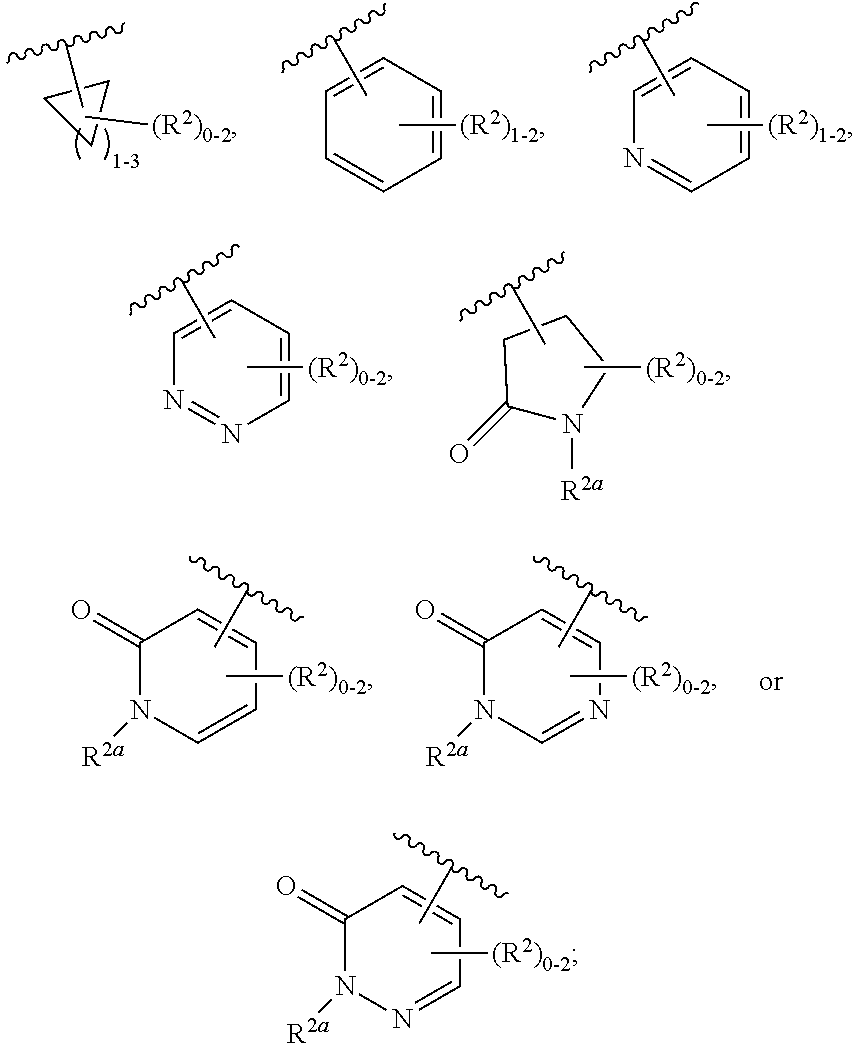
- [0075]R1 is halo, C1-3 haloalkyl, or C1-3 haloalkoxy;
- [0076]R2 is cyano, halo, C1-4 alkyl substituted with 0-5 Re, —ORb, —NR3R4, —NR4C(O)Rb, (C1-4 alkyl)2(O)P—, C3-6 cycloalkyl, aryl, or 5- to 6-membered heterocyclyl comprising 1-4 heteroatoms selected from O, S, N, and NRa;
- [0077]R2a is hydrogen, C1-4 alkyl substituted with 0-3 Re, —(CHRd)1-2—C(O)NR3R4, —(CH2)r—C3-6 cycloalkyl substituted with 0-3 Re, —(CH2)r-aryl substituted with 0-3 Re, or —(CH2)r-heterocyclyl comprising 1-4 heteroatoms selected from O, S, N, and NRa and substituted with 0-3 Re;
- [0078]R3 is hydrogen, C1-4 alkyl substituted with 0-3 Re, C3-6 cycloalkyl, or heterocyclyl comprising 1-4 heteroatoms selected from O, S, N, and NR8 and substituted with 0-3 Re;
- [0079]R4 is hydrogen or C1-2 alkyl;
- [0080]alternatively, R3 and R4 together with the nitrogen to which they are both attached form a 4- to 8-membered heterocyclyl comprising 1-3 heteroatoms selected from O, S, N, and NR8 and substituted with 1-3 R6;
- [0081]R5a is hydrogen or halo;
- [0082]R5b is hydrogen or halo;
- [0083]R5c is halo or C1-2 alkoxy;
- [0084]R6 is hydrogen, halo, oxo, hydroxy, or C1-4 alkyl substituted with 0-3 Re;
- [0085]R7 is hydrogen or CH3;
- [0086]R8 is hydrogen, C1-2 alkyl, or S(O)2C1-4 alkyl;
- [0087]Ra is hydrogen or C1-5 alkyl substituted with 0-4 Re;
- [0088]Rb is hydrogen, C1-5 alkyl substituted with 0-4 Re, heterocyclyl comprising 1-4 heteroatoms selected from O, S, N, NRd and substituted with 0-4 Re;
- [0089]Rd is hydrogen or C1-2 alkyl substituted with 0-1 —OC1-4 alkyl;
- [0090]Re is halo, cyano, oxo, —ORg, —NRgRg, C(O)NRgRg, —S(O)pC1-4 alkyl, C1-4 alkyl substituted with 0-4 Rf, —(CH2)r—C3-6 cycloalkyl substituted with 0-4 Rf, —(CH2)r-aryl substituted with 0-4 Rf, or —(CH2)r-heterocyclyl comprising 1-4 heteroatoms selected from O, S, N, and NRg and substituted with 0-4 Rf;
- [0091]Rf is halo, cyano, hydroxy, or C1-5 alkyl;
- [0092]Rg is hydrogen or C1-4 alkyl;
- [0093]n is zero; and
- [0094]r is zero, 1, or 2.
[0095]Another aspect of the invention is a compound of Formula (IVa):

- [0097]or a pharmaceutically acceptable salt thereof, wherein:
- [0098]Ar2 is

- [0100]R1 is Cl, —CF3, —OCHF2, or —OCF3;
- [0101]R2 is cyano, halo, C1-4 alkyl substituted with 0-4 Re, —ORb, —NR3R4, —NR4C(O)Rb, (C1-2 alkyl)2(O)P, —C3-6 cycloalkyl, or heterocyclyl comprising 1-4 heteroatoms selected from O, S, N, and NRa;
- [0102]R2a is hydrogen, C1-4 alkyl substituted with 0-4 Re, —(CHRd)1-2—C(O)NR3R4, —(CH2)r—C3-6 cycloalkyl substituted with 0-2 Re, —(CH2)r-aryl substituted with 0-2 Re, or —(CH2)r-heterocyclyl comprising 1-4 heteroatoms selected from O, S, N, and NRa and substituted with 0-2 Re;
- [0103]R3 is hydrogen, C1-4 alkyl substituted with 0-3 Re, or heterocyclyl comprising 1-4 heteroatoms selected from O, S, N, and NR8 and substituted with 0-3 Re;
- [0104]R4 is hydrogen or C1-2 alkyl;
- [0105]alternatively, R3 and R4 together with the nitrogen to which they are both attached form a 4- to 8-membered heterocyclyl comprising 1-3 heteroatoms selected from O, S, N, and NR8 and substituted with 1-3 R6;
- [0106]R5a is hydrogen, F, or Cl;
- [0107]R5b is hydrogen, F, or Cl;
- [0108]R5c is Cl or —OCH3;
- [0109]R6 is hydrogen, halo, oxo, hydroxy, or C1-3 alkyl substituted with 0-3 Re;
- [0110]R7 is hydrogen or C1-2 alkyl;
- [0111]R8 is hydrogen, C1-2 alkyl, or S(O)2C1-3 alkyl;
- [0112]Ra is hydrogen, C1-4 alkyl substituted with 0-3 Re;
- [0113]Rb is hydrogen, C1-4 alkyl substituted with 0-3 Re, heterocyclyl comprising 1-4 heteroatoms selected from O, S, N, and NRd and substituted with 0-3 Re;
- [0114]Rd is hydrogen or C1-2 alkyl substituted with 0-1 —OC1-4 alkyl;
- [0115]Re is halo, cyano, oxo, —ORg, —NRgRg, —C(O)NRgRg, —S(O)2C1-4 alkyl, C1-6 alkyl substituted with 0-3 Rf, —(CH2)r—C3-6 cycloalkyl substituted with 0-3 Rf, or —(CH2)r-heterocyclyl comprising 1-4 heteroatoms selected from O, S, N, and NRg and substituted with 0-3 Rf;
- [0116]Rf is halo, cyano, hydroxy, or C1-4 alkyl;
- [0117]Rg is hydrogen or C1-3 alkyl; and
- [0118]r is zero or 1.
- [0120]Ar2 is

- [0122]R2 is F, Cl, —CH2OH, —CH3, —CF3, or —CHF2; and
- [0123]R2a is —CH3, —CH2CH3, —CH2CHF2, —CH2CF3, —CH2CH2OCH3, —CH2CH(OH)CF3, —CH2CH(OH)CH3, —CH2CH2OH, —CH2CH(CH3)OH, —CH2CH(CF3)OH, —CH2CH2CF3, —CH(CH2OH)CH2OCH3, —CH(CH2NH2)OCH3, —CH2CH(CH3)OCH3, or —CH2CH(CF3)OCH3;
- [0124]other variables are as defined in Formula (IVa).
[0125]Another aspect of the invention is a compound of Formula (IVb):

- [0127]or a pharmaceutically acceptable salt thereof, wherein:
- [0128]R1 is Cl, —CF3, —OCHF2, or —OCF3;
- [0129]R2 is cyano, F, Cl, CH3, CF3, CHF2, or —NHC(O)CH3;
- [0130]R2a is —CH3, —CH2CH3, —CH2CN, —CH2CHF2, —CH2CH2OCH3, —CH2CH(OH)CF3, —CH2CH(OH)CH3, —CH2CH2OH, —CF2CH2OH, —CH2CH(CH3)OH, —CH2CH2CF3, —CH(CH2OH)CH2OCH3, —CH(CH2NH2)OCH3, —CH2CH(CH3)OCH3, —CH2CH(CF3)OCH3, —CH(CH2NH2)CH2OCH3, —CH(C(O)N(CH3)2)CH2OCH3, —CH2C(CH3)(CH2OH)2, —CH2CH2N(CH3)2, —CH2CH2S(O)2C1-4 alkyl, —CHRdC(O)NR3R4, —(CH2)0-1—C3-6 cycloalkyl, —(CH2)0-3-heterocyclyl selected from
- [0127]or a pharmaceutically acceptable salt thereof, wherein:

- [0132]R3 and R4 together with the nitrogen to which they are both attached form a heterocyclyl selected from

- [0134] and

- [0136]R5 is hydrogen or F;
- [0137]R5b is hydrogen or F;
- [0138]R5c is Cl or —OCH3;
- [0139]R6 is hydrogen, oxo, halo, or —CH3, —CHF3, —CF3, or —CH2OH;
- [0140]R7 is hydrogen or C1-2 alkyl;
- [0141]R8 is hydrogen, C1-2 alkyl, or —S(O)2C1-3 alkyl; and
- [0142]Rd is —CH2OCH3.
[0143]Another aspect of the invention is a compound of Formula (IVc):
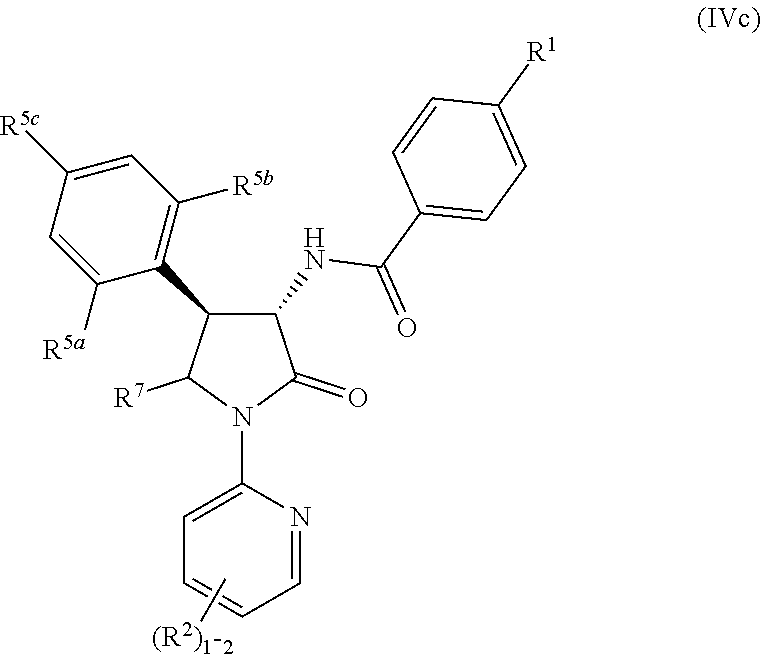
- [0145]or a pharmaceutically acceptable salt thereof, wherein:
- [0146]R1 is Cl, —CF3, —OCHF2, or —OCF3;
- [0147]R2 is cyano, F, Cl, CH2OH, CH3, CHF2, CF3, —OCH3, —OCH(CH3)2, —NR3R4, (CH3)2(O)P—, C3-6 cycloalkyl

- [0149] alkyl;
- [0150]R3 is hydrogen or C1-4 alkyl substituted with 0-2 Re,

- [0152]R4 is hydrogen;
- [0153]alternatively, R3 and R4 together with the nitrogen to which they are both attached form a heterocyclyl selected from

- [0155]R5a is hydrogen or F;
- [0156]R5b is hydrogen or F;
- [0157]R5c is Cl or OCH3
- [0158]R6 is hydrogen, halo, oxo, CH3, —CH2CH3, or —CH2OH;
- [0159]R7 is hydrogen or C1-4 alkyl; and
- [0160]R8 is hydrogen, C1-4 alkyl, or —S(O)2C1-3 alkyl.
[0161]Another aspect of the invention is a compound of Formula (IVd):

- [0163]or a pharmaceutically acceptable salt thereof, wherein:
- [0164]R1 is Cl, —CF3, —OCHF2, or —OCF3;
- [0165]R2 is —ORb or (C1-2 alkyl)2(O)P—;
- [0166]R5a is hydrogen or F;
- [0167]R5b is hydrogen or F;
- [0168]R5c is Cl or —OCH3;
- [0169]R7 is hydrogen or —CH3;
- [0170]Rb is hydrogen, C1-4 alkyl substituted with 0-3 Re, or

- [0172]Re is F, Cl, or —ORg; and
- [0173]Rg is hydrogen or C1-3 alkyl.
[0174]Another aspect of the invention is a compound of Formula (IVe):

- [0176]or a pharmaceutically acceptable salt thereof, wherein:
- [0177]R1 is Cl, —CF3, —OCHF2, or —OCF3;
- [0178]R2 is cyano, F, Cl, —CH2OH, —CH3, —CHF2, —CF3, —OCH3, —OCH(CH3)2, or —NR3R4;
- [0179]R3 is hydrogen or C1-4 alkyl;
- [0180]R4 is hydrogen or C1-2 alkyl;
- [0181]alternatively, R3 and R4 together with the nitrogen to which they are both attached form a heterocyclyl selected from
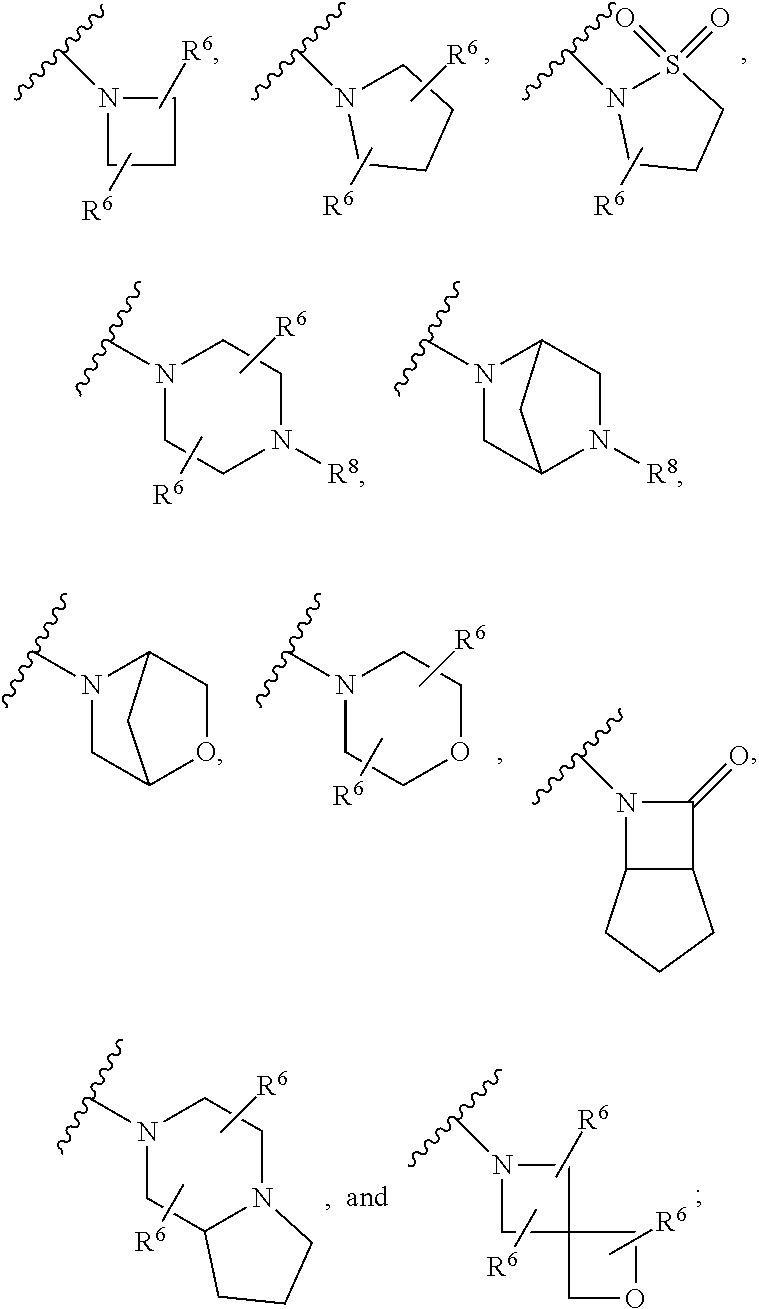
- [0183]R5a is hydrogen or F;
- [0184]R5b is hydrogen or F;
- [0185]R5, is Cl or —OCH3;
- [0186]R6 is hydrogen, halo, oxo, CH3, —CH2CH3, or —CH2OH;
- [0187]R7 is hydrogen or C1-4 alkyl; and
- [0188]R8 is hydrogen or C1-2 alkyl.
[0189]Another aspect of the invention is a compound of Formula (IVf):

- [0191]or a pharmaceutically acceptable salt thereof, wherein:
- [0192]R1 is Cl, —CF3, —OCH3, —OCHF2, or —OCF3;
- [0193]R2 is cyano, F, Cl, —CH2OH, —CH3, —CHF2, or —CF3;
- [0194]R2a is —CH3, —CH2CH3, —CH2CHF2, —CH2CH2OCH3, —CH2CH(OH)CF3, —CH2CH(OH)CH3, —CH2CH2OH, —CH2CH(CH3)OH, or —CH2CH2CF3;
- [0195]R5a is hydrogen, F, or Cl;
- [0196]R5b is hydrogen, F, or Cl;
- [0197]R5, is Cl or —OCH3; and
- [0198]R7 is hydrogen or —CH3.
- [0191]or a pharmaceutically acceptable salt thereof, wherein:
[0199]Another aspect of the invention is a compound of Formula (V):

- [0201]or a pharmaceutically acceptable salt thereof, wherein:
- [0202]Ar2 is C3-5 cycloalkyl;
- [0203]R1 is Cl, —CF3, —OCHF2, or —OCF3;
- [0204]R5a is F or Cl;
- [0205]R5b is F or Cl; and
- [0206]R5c is —OCH3.
- [0201]or a pharmaceutically acceptable salt thereof, wherein:
[0207]Another aspect of the invention is a compound of Formula (Va):

- [0209]or a pharmaceutically acceptable salt thereof, wherein:
- [0210]R1 is CF3, OCHF2, or OCF3;
- [0211]R5a is F or Cl;
- [0212]R5b is F or Cl; and
- [0213]R5c is OCH3.
[0214]Another aspect of the invention is a compound of Formula (VI):

- [0216]or a pharmaceutically acceptable salt thereof, wherein:
- [0217]R1 is —CF3, —OCHF2, or —OCF3;
- [0218]R2 is F, Cl, —CH2OH, —CF3, —CHF2, —OCH3, —OCH(CH3)2, or (CH3)2(O)P—;
- [0219]R5a is F or Cl;
- [0220]R5b is F or Cl; and
- [0221]R5c is —OCH3.
[0222]Another aspect of the invention is a compound of Formula (VII):

- [0224]or a pharmaceutically acceptable salt thereof, wherein:
- [0225]R1 is —CF3, —OCHF2, or —OCF3;
- [0226]R2 is F, Cl, or (CH3)2(O)P—;
- [0227]R5a is F;
- [0228]R5b is F; and
- [0229]R5c is —OCH3.
[0230]For a compound of Formula (I), (II), (III), (IVa), (IVb), (IVc), (IVd), (IVe), (IVf), (V), (Va), (VI), or (VII), i.e., Formulae (I-VII), the scope of any instance of a variable substituent, including Ar1, Ar2, Ar3, R1, R2, R2a, R3, R4, R5a, R5b, R5c, R6, R7, R8, Ra, Rb, Rc, Rd, Re, Rf, and Rg can be used independently with the scope of any other instance of a variable substituent. As such, the invention includes combinations of the different aspects.
[0231]In one non-limiting embodiment, for a compound of Formula (I), (II), or (III), Ar1 is phenyl substituted with 1 R1; R1 is CF3, OCHF2, or OCF3; n is zero or 1; Ar2 is phenyl, pyridinyl, or C3-6 cycloalkyl, each substituted with 0-2 R2; R2 is F, Cl, CH2OH, CF3, OCH3, OCH(CH3)2, CHF2, CF3, or (CH3)2(O)P; Ar3 is phenyl substituted with R5a, R5b, and R5c; R5a, R5b, and R5c are halo and alkoxy, respectively.
[0232]In one non-limiting embodiment, for a compound of Formula (I), (II), or (III), Ar1 is phenyl substituted with 1 R1; R1 is CF3; n is zero; Ar2 is phenyl, pyridinyl, or C3-6 cycloalkyl, each substituted with 0-2 R2; R2 is F, Cl, CH2OH, CF3, OCH3, OCH(CH3)2, CHF2, CF3, or (CH3)2(O)P; Ar3 is phenyl substituted with R5a, R5b, and R5c; R5a, R5b, and R5c are halo and alkoxy, respectively.
[0233]In one non-limiting embodiment, for a compound of Formula (I), (II), or (III), Ar1 is phenyl substituted with 1 R1; R1 is OCHF2; n is zero; Ar2 is phenyl, pyridinyl, or C3-6 cycloalkyl, each substituted with 0-2 R2; R2 is F, Cl, CH2OH, CF3, OCH3, OCH(CH3)2, CHF2, CF3, or (CH3)2(O)P; Ar3 is phenyl substituted with R5a, R5b, and R5c; R5a, R5b, and R5c are halo and alkoxy, respectively.
[0234]In one non-limiting embodiment, for a compound of Formula (I), (II), or (III), Ar1 is phenyl substituted with 1 R1; R1 is OCF3; n is zero; Ar2 is phenyl, pyridinyl, or C3-6 cycloalkyl, each substituted with 0-2 R2; R2 is F, Cl, CH2OH, CF3, OCH3, OCH(CH3)2, CHF2, CF3, or (CH3)2(O)P; Ar3 is phenyl substituted with R5a, R5b, and R5c; R5a, R5b, and R5c are halo and alkoxy, respectively.
[0235]In one non-limiting embodiment, for a compound of Formula (I), (II), or (III), Ar1 is phenyl substituted with 1 R1; R1 is CF3, OCHF2, or OCF3; n is 1; Ar2 is phenyl substituted with 0-2 R2; R2 is halo or alkoxy; Ar3 is phenyl substituted with R5a, R5b, and R5c; R5a, R5b, and R5c are halo and alkoxy, respectively.
[0236]In one non-limiting embodiment, for a compound of Formula (I), (II), or (III), Ar1 is phenyl substituted with 1 R1; R1 is CF3, OCHF2, or OCF3; n is 1; Ar2 is cyclopropyl; Ar3 is phenyl substituted with R5a, R5b, and R5c; R5a, R5b, and R5c are halo and alkoxy, respectively.
[0237]In one non-limiting embodiment, for a compound of Formula (I), (II), (III), or (IVa), Ar1 is phenyl substituted with 1 R1; R1 is Cl, CF3, OCHF2, or OCF3; n is zero; Ar2 is

R2a is —CH3, —CH2CH3, —CH2CHF2, —CH2CF3, —CH2CH2OCH3, —CH2CH(OH)CF3, —CH2CH(OH)CH3, —CH2CH2OH, —CH2CH(CH3)OH, —CH2CH(CF3)OH, or —CH2CH2CF3; Ar3 is phenyl substituted with R5a, R5b, and R5c; R5a, R5b, and R5c are halo and alkoxy, respectively.
[0239]In one non-limiting embodiment, for a compound of Formula (I), (II), (III), or (IVa), Ar1 is phenyl substituted with 1 R1; R1 is Cl, CF3, OCHF2, or OCF3; n is zero; Ar2 is

R2a is —CH3, —CH2CH3, —CH2CHF2, —CH2CF3, —CH2CH2OCH3, —CH2CH(OH)CF3, —CH2CH(OH)CH3, —CH2CH2OH, —CH2CH(CH3)OH, —CH2CH(CF3)OH, —CH2CH2CF3, —CH(CH2OH)CH2OCH3, —CH(CH2NH2)OCH3, —CH2CH(CH3)OCH3, or —CH2CH(CF3)OCH3; Ar3 is phenyl substituted with R5a, R5b, and R5c; R5a, R5b, and R5c are halo and alkoxy, respectively.
[0241]In one non-limiting embodiment, for a compound of Formula (I), (II), (III), or (IVa), Ar1 is phenyl substituted with 1 R1; R1 is Cl, CF3, OCHF2, or OCF3; n is zero; Ar2 is
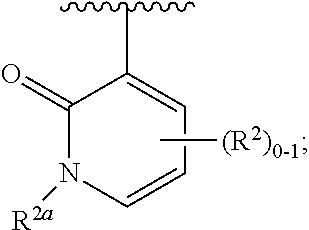
R2 is cyano, F, Cl, CH3 or —NHC(O) CH3; R2a is —CH3, —CH2CH3, —CH2CN, —CH2CHF2, —CH2CH2OCH3, —CH2CH(OH)CF3, —CH2CH(OH)CH3, —CH2CH2OH, —CF2CH2OH, —CH2CH(CH3)OH, —CH2CH2CF3, —CH(CH2OH)CH2OCH3, —CH(CH2NH2)OCH3, —CH2CH(CH3)OCH3, —CH2CH(CF3)OCH3, —CH(CH2NH2)CH2OCH3, —CH(C(O)N(CH3)2)CH2OCH3, —CH2C(CH3)(CH2OH)2, —CH2CH2N(CH3)2, —CH2CH2S(O)2C1-4 alkyl, —(CH2)0-1—C3-6 cycloalkyl, —(CH2)0-3-heterocyclyl selected from
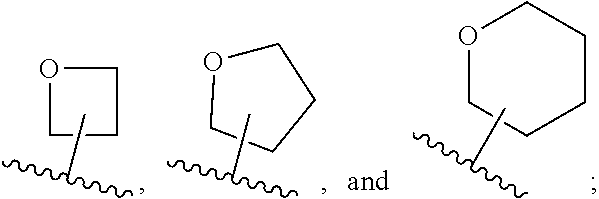
Ar3 is phenyl substituted with R5a, R5b, and R5c; R5a, R5b, and R5c are halo and alkoxy, respectively.
[0244]In one non-limiting embodiment, for a compound of Formula (I), (II), (III), or (IVa), Ar1 is phenyl substituted with 1 R1; R1 is Cl, CF3, OCHF2, or OCF3; n is zero; Ar2 is

R2 is cyano, F, Cl, CH3 or —NHC(O)CH3; R2a is —CH3, —CH2CH3, —CH2CN, —CH2CHF2, —CH2CH2OCH3, —CH2CH(OH)CF3, —CH2CH(OH)CH3, —CH2CH2OH, —CF2CH2OH, —CH2CH(CH3)OH, —CH2CH2CF3, —CH(CH2OH)CH2OCH3, —CH(CH2NH2)OCH3, —CH2CH(CH3)OCH3, —CH2CH(CF3)OCH3, —CH(CH2NH2)CH2OCH3, —CH(C(O)N(CH3)2)CH2OCH3, —CH2C(CH3)(CH2OH)2, —CH2CH2N(CH3)2, —CH2CH2S(O)2C1-4 alkyl, —(CH2)0-1—C3-6 cycloalkyl, —(CH2)0-3-heterocyclyl selected from

Ar3 is phenyl substituted with R5a, R5b, and R5c; R5a, R5b, and R5c are halo and alkoxy, respectively.
[0247]In one non-limiting embodiment, for a compound of Formula (I), (II), (III), or (IVa), Ar1 is phenyl substituted with 1 R1; R1 is Cl, CF3, OCHF2, or OCF3; n is zero; Ar2 is

R2 is cyano, F, Cl, CH2OH, CH3, CF3, CHF2, CF3, —OCH3, —OCH(CH3)2, —NR3R4, (CH3)2(O)P—, C3-6 cycloalkyl,

CH3, —CH2CH3, —CH2CN, —CH2CHF2, —CH2CH2OCH3, —CH2CH(OH)CF3, —CH2CH(OH)CH3, or —CH2CH2OH; R3 is hydrogen or C1-4 alkyl substituted with 0-2 Re,

R4 is hydrogen or C1-2 alkyl; alternatively, R3 and R4 together with the nitrogen to which they are both attached form a heterocyclyl selected from

Ar3 is phenyl substituted with R5a, R5b, and R5c; R5a, R5b, and R5c are halo and alkoxy, respectively.
[0252]In one non-limiting embodiment, for a compound of Formula (I), Ar1 is phenyl substituted with 1 R1; R1 is Cl, CF3, OCHF2, or OCF3; n is zero; Ar2 is

or

R2 is alkyl, haloalkyl, hydroxyalkyl, or cycloalkyl; Ar3 is phenyl substituted with R5a, R5b, and R5c; R5a, R5b, and R5c are halo and alkoxy, respectively.
[0255]In one non-limiting embodiment, for a compound of Formula (I), (II), (III), or (IVa), Ar1 is phenyl substituted with 1 R1; R1 is Cl, CF3, OCHF2, or OCF3; n is zero; Ar2 is

R2 is cyano, F, Cl, CH2OH, CF3, CHF2, CF3, —OCH3, —OCH(CH3)2, —NR3R4, (CH3)2(O)P—, C3-6 cycloalkyl,

alkyl; R3 is hydrogen or C1-4 alkyl substituted with 0-2 Re,

R4 is hydrogen or C1-2 alkyl; alternatively, R3 and R4 together with the nitrogen to which they are both attached form a heterocyclyl selected from
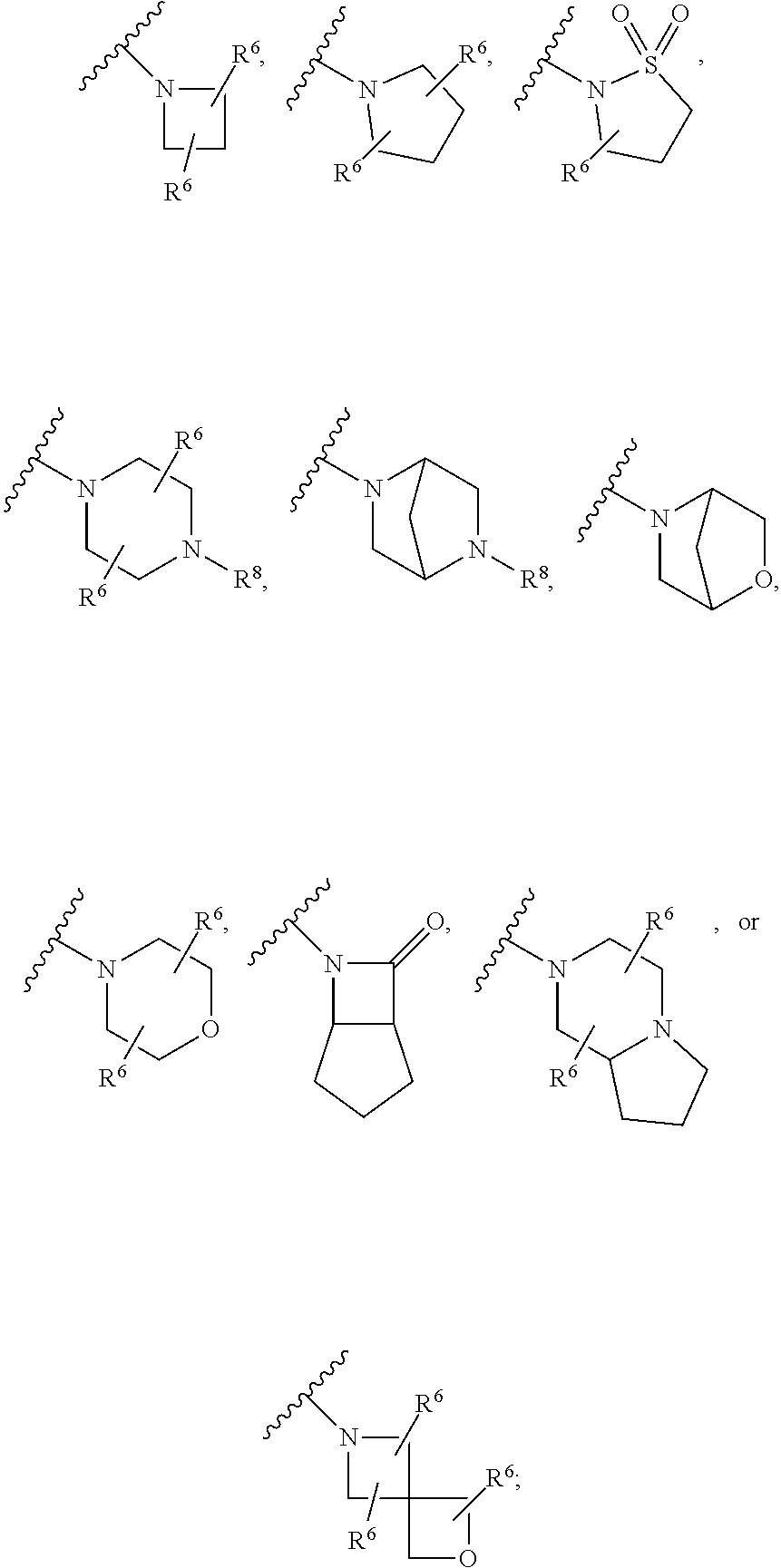
Ar3 is phenyl substituted with R5a, R5b, and R5c; R5a, R5b, and R5c are halo and alkoxy, respectively.
[0260]In one non-limiting embodiment, for a compound of Formula (I), (II), (III), or (IVa), Ar1 is phenyl substituted with 1 R1; R1 is Cl, CF3, OCHF2, or OCF3; n is zero; Ar2 is

R2 is alkoxy; R2a is alkyl or haloalkyl; Ar3 is phenyl substituted with R5a, R5b, and R5c; R5a, R5b, and R5c are halo and alkoxy, respectively.
[0262]In one non-limiting embodiment, for a compound of Formula (I), Ar1 is phenyl substituted with 1 R1; R1 is Cl, CF3, OCHF2, or OCF3; n is zero; Ar2 is

R2 is cyano, F, Cl, CH3 or —NHC(O) CH3; R2a is —CH3, —CH2CH3, —CH2CN, —CH2CHF2, —CH2CH2OCH3, —CH2CH(OH)CF3, —CH2CH(OH)CH3, —CH2CH2OH, —CF2CH2OH, —CH2CH(CH3)OH, —CH2CH2CF3, —CH(CH2OH)CH2OCH3, —CH(CH2NH2)OCH3, —CH2CH(CH3)OCH3, —CH2CH(CF3)OCH3, —CH(CH2NH2)CH2OCH3, —CH(C(O)N(CH3)2)CH2OCH3, —CH2C(CH3)(CH2OH)2, —CH2CH2N(CH3)2, —CH2CH2S(O)2C1-4 alkyl, —(CH2)0-1—C3-6 cycloalkyl, —(CH2)0-3-heterocyclyl selected from
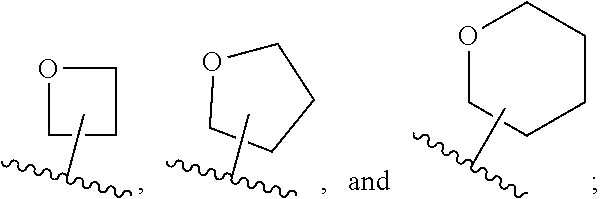
Ar3 is phenyl substituted with R5a, R5b, and R5c; R5a, R5b, and R5c are halo and alkoxy, respectively.
[0265]In another embodiment, the compounds of the present invention have FPR2 EC50 values≤1 μM.
[0266]In another embodiment, the compounds of the present invention have FPR2 EC50 values≤0.5 μM.
[0267]In another embodiment, the compounds of the present invention have FPR2 EC50 values≤0.1 μM.
[0268]In another embodiment, the compounds of the present invention have FPR2 EC50 values≤0.05 μM.
[0269]In another embodiment, the compounds of the present invention have FPR2 EC50 values≤0.01 μM.
[0270]In another embodiment, the compounds of the present invention have FPR2 EC50 values≤0.001 μM.
[0271]Unless specified otherwise, these terms have the following meanings.
[0272]A dash “—” that is not between two letters or symbols is used to indicate a point of attachment for a substituent. For example, —CONH2 is attached through the carbon atom.
[0273]A bond pointing to a wave line, such as
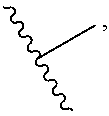
as used in structural formulas herein, depicts the bond that is the point of attachment of the moiety or substituent to the core or backbone structure.
[0275]“Cyano” means —CN.
[0276]“Hydroxy” means —OH.
[0277]“Alkyl” means a straight or branched hydrocarbon group composed of 1 to 6 carbons. “Alkenyl” means a straight or branched alkyl group composed of 2 to 6 carbons with at least one double bond. “Alkynyl” means a straight or branched alkyl group composed of 2 to 6 carbons with at least one triple bond. Terms with a hydrocarbon moiety (e.g. alkoxy) include straight and branched isomers for the hydrocarbon portion.
[0278]“Halo” includes fluoro, chloro, bromo, and iodo. “Haloalkyl” and “haloalkoxy” include all halogenated isomers from monohalo to perhalo.
[0279]“Haloalkoxy” and derivatives such as “C1-6 haloalkoxy” are used interchangeably and mean halo substituted alkyl groups linked through the oxygen atom. Haloalkoxy include mono-substituted as well as multiple halo substituted alkoxy groups, up to perhalo substituted alkoxy. For example trifluoromethoxy and difluoromethoxy are included.
[0280]“Alkoxy” means an alkyl group attached via an oxygen linkage to the rest of the molecule. Representative examples of such groups are —OCH3 and —OC2H5. Unless set forth or recited to the contrary, all alkoxy groups described or claimed herein may be straight chain or branched.
[0281]“Alkoxyalkyl” means an alkoxy group as defined above directly bonded to an alkyl group as defined above, e.g., —CH2—O—CH3, —CH2CH2—O—CH3 and the like.
[0282]“Cycloalkyl” means a non-aromatic mono or multicyclic ring system having 3 to 12 carbon atoms, such as cyclopropyl, cyclobutyl, cyclopentyl, cyclohexyl and the like.
[0283]“Aryl” means a monocyclic or bicyclic aromatic hydrocarbon groups having 6 to 12 carbon atoms, or a bicyclic fused ring system wherein one or both of the rings is aromatic. Bicyclic fused ring systems consist of a phenyl group fused to a four- to seven-membered aromatic or non-aromatic carbocyclic ring. Representative examples of aryl groups include but are not limited to phenyl, indanyl, indenyl, naphthyl, and tetrahydronaphthyl.
[0284]“Heterocycle,” “heterocyclyl,” or “heterocyclic ring” means a stable 3-, 4-, 5-, 6-, or 7-membered monocyclic or bicyclic or 7-, 8-, 9-, 10-, 11-, 12-, 13-, or 14-membered polycyclic heterocyclic ring that is saturated, partially unsaturated, or fully unsaturated, and that contains carbon atoms and 1, 2, 3 or 4 heteroatoms independently selected from the group consisting of N, O and S; and including any polycyclic group in which any of the above-defined heterocyclic rings is fused to a benzene ring. The nitrogen and sulfur heteroatoms may optionally be oxidized (i.e., N→O and S(O)p, wherein p is 0, 1 or 2). The nitrogen atom may be substituted or unsubstituted (i.e., N or NR wherein R is H or another substituent, if defined). The heterocyclic ring may be attached to its pendant group at any heteroatom or carbon atom that results in a stable structure. The heterocyclic rings described herein may be substituted on carbon or on a nitrogen atom if the resulting compound is stable. A nitrogen in the heterocyclyl may optionally be quaternized. It is preferred that when the total number of S and O atoms in the heterocyclyl exceeds 1, then these heteroatoms are not adjacent to one another. It is preferred that the total number of S and O atoms in the heterocyclyl is not more than 1. When the term “heterocyclyl” is used, it is intended to include heteroaryl.
[0285]Bridged rings are also included in the definition of heterocyclyl. A bridged ring occurs when one or more atoms (i.e., C, O, N, or S) link two non-adjacent carbon or nitrogen atoms. Examples of bridged rings include, but are not limited to, one carbon atom, two carbon atoms, one nitrogen atom, two nitrogen atoms, and a carbon-nitrogen group. It is noted that a bridge always converts a monocyclic ring into a tricyclic ring. When a ring is bridged, the substituents recited for the ring may also be present on the bridge.
[0286]“Heteroaryl” means a 5 to 7 membered monocyclic or 8 to 11 membered bicyclic aromatic ring system with 1-5 heteroatoms independently selected from nitrogen, oxygen, and sulfur.
[0287]Where a bonding attachment location is not specified, the bonding may be attached at any appropriate location as understood by practitioners in the art. Combinations of substituents and bonding patterns are only those that result in stable compounds as understood by practitioners in the art. Parenthetic and multiparenthetic terms are intended to clarify bonding relationships to those skilled in the art. For example, a term such as ((R)alkyl) means an alkyl substituent further substituted with the substituent R.
[0288]The invention includes all pharmaceutically acceptable salt forms of the compounds. Pharmaceutically acceptable salts are those in which the counter ions do not contribute significantly to the physiological activity or toxicity of the compounds and as such function as pharmacological equivalents. These salts can be made according to common organic techniques employing commercially available reagents. Some anionic salt forms include acetate, acistrate, besylate, bromide, chloride, citrate, fumarate, glucouronate, hydrobromide, hydrochloride, hydroiodide, iodide, lactate, maleate, mesylate, nitrate, pamoate, phosphate, succinate, sulfate, tartrate, tosylate, and xinofoate. Some cationic salt forms include ammonium, aluminum, benzathine, bismuth, calcium, choline, diethylamine, diethanolamine, lithium, magnesium, meglumine, 4-phenylcyclohexylamine, piperazine, potassium, sodium, tromethamine, and zinc.
[0289]Some of the compounds of the invention exist in stereoisomeric forms including the structure below with the indicated carbon. The invention includes all stereoisomeric forms of the compounds including enantiomers and diastereomers. Methods of making and separating stereoisomers are known in the art. The invention includes all tautomeric forms of the compounds. The invention includes atropisomers and rotational isomers.
[0290]The invention is intended to include all isotopes of atoms occurring in the compounds. Isotopes include those atoms having the same atomic number but different mass numbers. By way of general example and without limitation, isotopes of hydrogen include deuterium and tritium. Isotopes of carbon include 13C and 14C. Isotopically-labeled compounds of the invention can generally be prepared by conventional techniques known to those skilled in the art or by processes analogous to those described herein, using an appropriate isotopically-labeled reagent in place of the non-labeled reagent otherwise employed. Such compounds may have a variety of potential uses, for example as standards and reagents in determining biological activity. In the case of stable isotopes, such compounds may have the potential to favorably modify biological, pharmacological, or pharmacokinetic properties.
Biological Methods
[0291]N-formyl peptide receptors (FPRs) are a family of chemo attractant receptors that facilitate leukocyte response during inflammation. FPRs belong to the seven-transmembrane G protein-coupled receptor superfamily and are linked to inhibitory G-proteins (Gi). Three family members (FPR1, FPR2 and FPR3) have been identified in humans and are predominantly found in myeloid cells with varied distribution and have also been reported in multiple organs and tissues. After agonist binding, the FPRs activate a multitude of physiological pathways, such as intra cellular signaling transduction, Ca2+ mobilization and transcription. The family interacts with a diverse set of ligands that includes proteins, polypeptides and fatty acid metabolites which activate both pro-inflammatory and pro-resolution downstream responses. FPR2 and FPR1 Cyclic Adenosine Monophosphate (cAMP) Assays were used to measure the activity of the compounds in this patent.
[0292]FPR2 and FPR1 Cyclic Adenosine Monophosphate (cAMP) Assays. A mixture of forskolin (5 μM final for FPR2 or 10 μM final for FPR1) and IBMX (200 μM final) were added to 384-well Proxiplates (Perkin-Elmer) pre-dotted with test compounds in DMSO (1% final) at final concentrations in the range of 0.020 nM to 100 μM. Chinese Hamster Ovary cells (CHO) overexpressing human FPR1 or human FPR2 receptors were cultured in F-12 (Ham's) medium supplemented with 10% qualified FBS, 250 μg/ml zeocin and 300 μg/ml hygromycin (Life Technologies). Reactions were initiated by adding 2,000 human FPR2 cells per well or 4,000 human FPR1 cells per well in Dulbecco's PBS (with calcium and magnesium) (Life Technologies) supplemented with 0.1% BSA (Perkin-Elmer). The reaction mixtures were incubated for 30 min at room temperature. The level of intracellular cAMP was determined using the HTRF HiRange cAMP assay reagent kit (Cisbio) according to manufacturer's instruction. Solutions of cryptate conjugated anti-cAMP and d2 flurorophore-labelled cAMP were made in a supplied lysis buffer separately. Upon completion of the reaction, the cells were lysed with equal volume of the d2-cAMP solution and anti-cAMP solution. After a 1-h room temperature incubation, time-resolved fluorescence intensity was measured using the Envision (Perkin-Elmer) at 400 nm excitation and dual emission at 590 nm and 665 nm. A calibration curve was constructed with an external cAMP standard at concentrations ranging from 1 μM to 0.1 μM by plotting the fluorescent intensity ratio from 665 nm emission to the intensity from the 590 nm emission against cAMP concentrations. The potency and activity of a compound to inhibit cAMP production was then determined by fitting to a 4-parametric logistic equation from a plot of cAMP level versus compound concentrations.
[0293]The examples disclosed below were tested in the FPR2 and FPR1 cAMP assay described above and found having FPR2 and/or FPR1 agonist activity. Table 1 below lists EC50 values in the FPR2 and FPR1 cAMP assays measured for the following examples.
| TABLE 1 | ||
|---|---|---|
| hFPR2 | hFPR1 | |
| cAMP2 EC50 | cAMP EC50 | |
| Example | (μM) | (μM) |
| 1 | 0.028 | 4.2 |
| 2 | 0.022 | 0.086 |
| 3 | 0.029 | 1.7 |
| 4 | 0.0017 | 0.29 |
| 5 | 0.0029 | 0.014 |
| 6 | 0.0051 | 0.65 |
| 7 | 0.010 | 1.3 |
| 8 | 0.015 | 0.28 |
| 9 | 0.0067 | 4.4 |
| 10 | 0.050 | 0.29 |
| 11 | 0.031 | 0.086 |
| 12 | 0.091 | >10 |
| 13 | 0.045 | 0.085 |
| 14 | 0.037 | 0.043 |
| 15 | 0.022 | 1.1 |
| 16 | 0.180 | 0.48 |
| 17 | 0.036 | 0.069 |
| 18 | 0.037 | 0.20 |
| 19 | 0.024 | 0.54 |
| 20 | 0.032 | 0.56 |
| 21 | 0.035 | 2.3 |
| 22 | 0.013 | 3.2 |
| 23 | 0.028 | 1.5 |
| 24 | 0.045 | 0.30 |
| 25 | 0.035 | >10 |
| 26 | 0.035 | 0.027 |
| 27 | 0.027 | 0.57 |
| 28 | 0.007 | 1.1 |
| 29 | 0.051 | 0.11 |
| 30 | 0.010 | 0.75 |
| 31 | 0.010 | 0.15 |
| 32 | 0.018 | 0.96 |
| 33 | 0.005 | 1.61 |
| 34 | 0.0038 | 0.30 |
| 35 | 0.0031 | >10 |
| 36 | 0.0055 | 0.030 |
| 37 | 0.0089 | 0.016 |
| 38 | 0.0051 | 0.018 |
| 39 | 0.0005 | 0.072 |
| 40 | 0.0006 | 2.6 |
| 41 | 0.0006 | 0.11 |
| 42 | 0.0007 | 0.73 |
| 43 | 0.0008 | >5 |
| 44 | 0.001 | 0.010 |
| 45 | 0.001 | 0.0043 |
| 46 | 0.001 | 0.002 |
| 47 | 0.0011 | 0.15 |
| 48 | 0.0011 | 0.94 |
| 49 | 0.0011 | 2.0 |
| 50 | 0.0012 | 1.7 |
| 51 | 0.0012 | 5.5 |
| 52 | 0.0013 | 0.027 |
| 53 | 0.0014 | 0.0023 |
| 54 | 0.0014 | 0.82 |
| 55 | 0.0014 | 0.0086 |
| 56 | 0.0014 | 0.004 |
| 57 | 0.0014 | 0.000066 |
| 58 | 0.0015 | 0.0035 |
| 59 | 0.0015 | 0.0066 |
| 60 | 0.0016 | 0.0026 |
| 61 | 0.0016 | 0.034 |
| 62 | 0.0016 | 0.11 |
| 63 | 0.0017 | 0.016 |
| 64 | 0.0017 | 0.0072 |
| 65 | 0.0017 | 0.18 |
| 66 | 0.0018 | 0.049 |
| 67 | 0.0018 | 0.0044 |
| 68 | 0.0018 | 0.50 |
| 69 | 0.0019 | 0.0042 |
| 70 | 0.0019 | >10 |
| 71 | 0.0019 | 0.29 |
| 72 | 0.0019 | 0.0057 |
| 73 | 0.0019 | 0.0032 |
| 74 | 0.0019 | 0.094 |
| 75 | 0.002 | 0.0028 |
| 76 | 0.002 | 0.28 |
| 77 | 0.002 | 0.17 |
| 78 | 0.002 | 0.0052 |
| 79 | 0.002 | 0.012 |
| 80 | 0.0021 | 0.13 |
| 81 | 0.0022 | 0.0027 |
| 82 | 0.0022 | 0.0053 |
| 83 | 0.0022 | 0.0076 |
| 84 | 0.0023 | 0.12 |
| 85 | 0.0023 | 0.16 |
| 86 | 0.0023 | 0.0041 |
| 87 | 0.0023 | 0.75 |
| 88 | 0.0024 | 0.0079 |
| 89 | 0.0024 | 0.045 |
| 90 | 0.0025 | 0.0035 |
| 91 | 0.0026 | 0.016 |
| 92 | 0.0026 | 0.0036 |
| 93 | 0.0026 | 0.068 |
| 94 | 0.0027 | 0.095 |
| 95 | 0.0027 | 0.16 |
| 96 | 0.0027 | 0.046 |
| 97 | 0.0027 | 0.35 |
| 98 | 0.0027 | 0.043 |
| 99 | 0.0027 | 0.33 |
| 100 | 0.0027 | 0.022 |
| 101 | 0.0028 | 0.15 |
| 102 | 0.0028 | 0.0047 |
| 103 | 0.0028 | 0.0019 |
| 104 | 0.0029 | 0.12 |
| 105 | 0.0029 | 0.065 |
| 106 | 0.0029 | 0.87 |
| 107 | 0.0029 | 0.0057 |
| 108 | 0.0029 | 0.0004 |
| 109 | 0.0029 | 0.50 |
| 110 | 0.0029 | 0.020 |
| 111 | 0.003 | 1.1 |
| 112 | 0.003 | 0.0028 |
| 113 | 0.003 | 0.016 |
| 114 | 0.003 | 0.0059 |
| 115 | 0.0031 | 0.0024 |
| 116 | 0.0031 | 0.034 |
| 117 | 0.0031 | 0.21 |
| 118 | 0.0031 | 0.0041 |
| 119 | 0.0031 | 0.067 |
| 120 | 0.0031 | 0.013 |
| 121 | 0.0031 | 0.0014 |
| 122 | 0.0032 | 1.08 |
| 123 | 0.0032 | 0.041 |
| 124 | 0.0033 | 0.047 |
| 125 | 0.0033 | 1.1 |
| 126 | 0.0033 | 2.3 |
| 127 | 0.0033 | 0.39 |
| 128 | 0.0033 | 0.0063 |
| 129 | 0.0033 | 0.38 |
| 130 | 0.0034 | 0.34 |
| 131 | 0.0034 | 0.0008 |
| 132 | 0.0034 | 0.0008 |
| 133 | 0.0034 | 0.012 |
| 134 | 0.0035 | 0.0016 |
| 135 | 0.0035 | 0.058 |
| 136 | 0.0035 | 0.0022 |
| 137 | 0.0035 | 0.19 |
| 138 | 0.0035 | 0.0017 |
| 139 | 0.0035 | 0.57 |
| 140 | 0.0035 | 0.61 |
| 141 | 0.0036 | 0.029 |
| 142 | 0.0036 | 0.087 |
| 143 | 0.0036 | 0.053 |
| 144 | 0.0036 | 0.0231 |
| 145 | 0.0037 | 0.0082 |
| 146 | 0.0038 | 0.15 |
| 147 | 0.0038 | 0.0022 |
| 148 | 0.0038 | 0.019 |
| 149 | 0.0038 | 0.0001 |
| 150 | 0.0039 | 0.007 |
| 151 | 0.0039 | 0.0005 |
| 152 | 0.0039 | 0.46 |
| 153 | 0.004 | 0.0042 |
| 154 | 0.004 | 0.0033 |
| 155 | 0.004 | 0.0093 |
| 156 | 0.004 | 0.0013 |
| 157 | 0.004 | 0.10 |
| 158 | 0.0041 | 0.19 |
| 159 | 0.0041 | 0.074 |
| 160 | 0.0041 | 1.1 |
| 161 | 0.0041 | 0.0034 |
| 162 | 0.0041 | 0.0094 |
| 163 | 0.0042 | 1.2 |
| 164 | 0.0042 | 0.29 |
| 165 | 0.0042 | 0.0017 |
| 166 | 0.0043 | 2.3 |
| 167 | 0.0043 | >10 |
| 168 | 0.0043 | 1.6 |
| 169 | 0.0043 | 0.021 |
| 170 | 0.0044 | 0.0009 |
| 171 | 0.0044 | 2.4 |
| 172 | 0.0045 | 0.039 |
| 173 | 0.0045 | 0.012 |
| 174 | 0.0045 | 0.067 |
| 175 | 0.0046 | 0.0093 |
| 176 | 0.0046 | 0.0065 |
| 177 | 0.0046 | 0.015 |
| 178 | 0.0047 | 0.0001 |
| 179 | 0.0047 | 0.092 |
| 180 | 0.0047 | >10 |
| 181 | 0.0048 | 0.99 |
| 182 | 0.0048 | 0.0018 |
| 183 | 0.0048 | 0.0006 |
| 184 | 0.0048 | 0.0098 |
| 185 | 0.0048 | 0.0007 |
| 186 | 0.0049 | 0.003 |
| 187 | 0.0049 | 0.038 |
| 188 | 0.0049 | 0.038 |
| 189 | 0.005 | 3.4 |
| 190 | 0.005 | 0.13 |
| 191 | 0.005 | 0.090 |
| 192 | 0.0051 | 0.0008 |
| 193 | 0.0051 | 0.57 |
| 194 | 0.0051 | 0.15 |
| 195 | 0.0052 | 0.0013 |
| 196 | 0.0052 | 0.16 |
| 197 | 0.0052 | 0.0017 |
| 198 | 0.0052 | 0.013 |
| 199 | 0.0052 | 0.13 |
| 200 | 0.0052 | 0.29 |
| 201 | 0.0053 | 0.018 |
| 202 | 0.0053 | 0.062 |
| 203 | 0.0053 | 0.77 |
| 204 | 0.0053 | 0.52 |
| 205 | 0.0054 | 0.22 |
| 206 | 0.0054 | 0.024 |
| 207 | 0.0054 | >5 |
| 208 | 0.0054 | 0.0014 |
| 209 | 0.0055 | 0.13 |
| 210 | 0.0055 | 0.19 |
| 211 | 0.0055 | 0.025 |
| 212 | 0.0056 | 0.10 |
| 213 | 0.0056 | 1.8 |
| 214 | 0.0056 | 2.4 |
| 215 | 0.0056 | 0.041 |
| 216 | 0.0057 | 0.27 |
| 217 | 0.0057 | 0.042 |
| 218 | 0.0057 | 0.14 |
| 219 | 0.0058 | 0.14 |
| 220 | 0.0058 | 0.99 |
| 221 | 0.006 | 0.050 |
| 222 | 0.006 | 1.4 |
| 223 | 0.0061 | 0.1 |
| 224 | 0.0061 | 1.9 |
| 225 | 0.0062 | 0.63 |
| 226 | 0.0062 | 0.023 |
| 227 | 0.0062 | 0.24 |
| 228 | 0.0062 | 0.0012 |
| 229 | 0.0062 | 0.013 |
| 230 | 0.0062 | 0.088 |
| 231 | 0.0063 | 0.46 |
| 232 | 0.0063 | 0.0032 |
| 233 | 0.0063 | >5 |
| 234 | 0.0063 | 1.1 |
| 235 | 0.0065 | 0.084 |
| 236 | 0.0065 | 0.030 |
| 237 | 0.0065 | 0.44 |
| 238 | 0.0066 | 1.5 |
| 239 | 0.0066 | 0.65 |
| 240 | 0.0066 | 0.13 |
| 241 | 0.0066 | 0.038 |
| 242 | 0.0067 | 0.11 |
| 243 | 0.0067 | 0.17 |
| 244 | 0.0068 | 0.95 |
| 245 | 0.0068 | 0.0011 |
| 246 | 0.0069 | 0.28 |
| 247 | 0.0069 | 0.25 |
| 248 | 0.0069 | 0.0007 |
| 249 | 0.0069 | 0.013 |
| 250 | 0.0069 | 4.8 |
| 251 | 0.007 | >5 |
| 252 | 0.007 | 0.044 |
| 253 | 0.007 | 0.011 |
| 254 | 0.007 | 0.052 |
| 255 | 0.007 | 0.052 |
| 256 | 0.0072 | 0.53 |
| 257 | 0.0073 | 0.0016 |
| 258 | 0.0074 | 0.083 |
| 259 | 0.0074 | 0.58 |
| 260 | 0.0075 | 0.0012 |
| 261 | 0.0075 | 0.94 |
| 262 | 0.0075 | 0.018 |
| 263 | 0.0075 | 1.3 |
| 264 | 0.0075 | 0.37 |
| 265 | 0.0076 | 0.0015 |
| 266 | 0.0076 | 0.41 |
| 267 | 0.0077 | 1.6 |
| 268 | 0.0077 | 0.14 |
| 269 | 0.0077 | 0.027 |
| 270 | 0.0078 | 0.18 |
| 271 | 0.0078 | 1.4 |
| 272 | 0.0078 | 0.014 |
| 273 | 0.0078 | 1.4 |
| 274 | 0.008 | 0.019 |
| 275 | 0.008 | 6.1 |
| 276 | 0.008 | 0.013 |
| 277 | 0.008 | 0.21 |
| 278 | 0.0081 | 0.34 |
| 279 | 0.0081 | 5.8 |
| 280 | 0.0082 | 0.026 |
| 281 | 0.0082 | 0.56 |
| 282 | 0.0083 | 0.70 |
| 283 | 0.0084 | 0.019 |
| 284 | 0.0084 | 0.58 |
| 285 | 0.0029 | 0.22 |
| 286 | 0.0085 | 0.13 |
| 287 | 0.0086 | 4.6 |
| 288 | 0.0086 | 0.0008 |
| 289 | 0.0086 | 0.062 |
| 290 | 0.0086 | 1.8 |
| 291 | 0.0087 | 0.0066 |
| 292 | 0.0087 | 0.95 |
| 293 | 0.0087 | 0.044 |
| 294 | 0.0088 | 0.0091 |
| 295 | 0.0089 | 0.0006 |
| 296 | 0.009 | 0.44 |
| 297 | 0.009 | 0.0001 |
| 298 | 0.009 | 0.0085 |
| 299 | 0.0092 | 1.9 |
| 300 | 0.0093 | 0.36 |
| 301 | 0.0093 | 0.15 |
| 302 | 0.010 | 0.022 |
| 303 | 0.0096 | 0.39 |
| 304 | 0.0096 | 0.090 |
| 305 | 0.0096 | 1.3 |
| 306 | 0.0098 | 0.25 |
| 307 | 0.0099 | 0.0018 |
| 308 | 0.0099 | 0.18 |
| 309 | 0.01 | 0.41 |
| 310 | 0.01 | 0.067 |
| 311 | 0.010 | 1.9 |
| 312 | 0.010 | 0.0005 |
| 313 | 0.010 | 5.4 |
| 314 | 0.010 | 0.0004 |
| 315 | 0.010 | 0.0096 |
| 316 | 0.010 | 0.095 |
| 317 | 0.010 | 0.0026 |
| 318 | 0.010 | >10 |
| 319 | 0.010 | 0.20 |
| 320 | 0.010 | 0.044 |
| 321 | 0.010 | 0.57 |
| 322 | 0.01 | 0.097 |
| 323 | 0.011 | 0.75 |
| 324 | 0.011 | 0.13 |
| 325 | 0.011 | 0.0016 |
| 326 | 0.011 | 0.035 |
| 327 | 0.012 | 1.7 |
| 328 | 0.012 | 0.61 |
| 329 | 0.012 | 2.5 |
| 330 | 0.013 | 3.7 |
| 331 | 0.013 | 5.6 |
| 332 | 0.013 | 5.8 |
| 333 | 0.014 | 5.7 |
| 334 | 0.014 | 0.48 |
| 335 | 0.015 | 0.45 |
| 336 | 0.017 | 0.06 |
| 337 | 0.017 | 4.3 |
| 338 | 0.018 | 1.8 |
| 339 | 0.023 | 0.0006 |
| 340 | 0.023 | 0.0011 |
| 341 | 0.023 | 4.1 |
| 342 | 0.032 | 0.83 |
| 343 | 0.033 | 0.12 |
| 344 | 0.046 | 2.0 |
| 345 | 0.089 | 0.0031 |
| 346 | 0.097 | 1.9 |
| 347 | 0.11 | 0.84 |
| 348 | 0.1107 | 1.4 |
| 349 | 0.57 | 5.5 |
| 350 | 0.0009 | 0.0006 |
| 351 | 0.008 | 0.005 |
| 352 | 0.0048 | 0.003 |
| 353 | 0.0042 | 0.017 |
| 354 | 0.0032 | 0.007 |
| 355 | 0.0045 | 0.004 |
| 356 | 0.0035 | 0.031 |
| 357 | 0.0031 | 0.012 |
| 358 | 0.0020 | 0.014 |
| 359 | 0.0045 | 0.006 |
| 360 | 0.0032 | 0.018 |
| 361 | 0.0017 | 0.003 |
| 362 | 0.0001 | 0.012 |
| 363 | 0.0008 | 0.003 |
| 364 | 0.0023 | 0.001 |
| 365 | 0.0026 | 0.001 |
| 366 | 0.0030 | 0.003 |
| 367 | 0.0012 | 0.003 |
| 368 | 0.0017 | 0.086 |
| 369 | 0.0037 | 1.1 |
| 370 | 0.0037 | 1.4 |
| 371 | 0.0019 | 0.008 |
| 372 | 0.0028 | 0.017 |
| 373 | 0.0125 | 0.233 |
| 374 | 0.0041 | 0.014 |
| 375 | 0.0016 | 0.003 |
| 376 | 0.0004 | 0.004 |
| 377 | 0.0016 | 0.005 |
| 378 | 0.0046 | 3.8 |
| 379 | 0.0026 | 0.32 |
| 380 | 0.0018 | 0.003 |
| 381 | 0.0040 | 0.010 |
| 382 | 0.0052 | 0.002 |
| 383 | 0.0055 | 0.002 |
| 384 | 0.0019 | 0.001 |
| 385 | 0.0071 | 0.001 |
| 386 | 0.0024 | 0.001 |
| 387 | 0.0022 | 0.001 |
| 388 | 0.0046 | 0.002 |
| 389 | <0.005 | <0.005 |
| 390 | 0.0048 | 0.076 |
| 391 | 0.0055 | 0.036 |
| 392 | 0.0149 | 0.005 |
| 393 | 0.0024 | 0.002 |
| 394 | 0.0019 | 0.011 |
| 395 | 0.0024 | 0.001 |
| 396 | 0.0095 | 0.039 |
| 397 | 0.0027 | 0.015 |
| 398 | 0.0072 | 0.011 |
| 399 | 0.0027 | 0.013 |
| 400 | 0.0029 | 0.000 |
| 401 | 0.0037 | 0.007 |
| 402 | 0.0028 | 0.003 |
| 403 | 0.0040 | 0.002 |
| 404 | 0.0059 | 0.003 |
| 405 | 0.0047 | 0.002 |
| 406 | 0.0029 | 0.009 |
| 407 | 0.0078 | 0.64 |
| 408 | 0.0035 | 0.009 |
| 409 | 0.0063 | 0.036 |
| 410 | 0.0117 | 3.3 |
| 411 | 0.0026 | 0.12 |
| 412 | 0.0076 | 0.093 |
| 413 | 0.0006 | 0.12 |
| 414 | 0.0047 | 0.019 |
| 415 | 0.0068 | 0.003 |
| 416 | 0.0017 | 0.001 |
| 417 | 0.0029 | 0.017 |
| 418 | 0.0027 | 0.004 |
| 419 | 0.0048 | 0.11 |
| 420 | 0.0073 | 0.051 |
| 421 | 0.0033 | 0.015 |
| 422 | 0.0011 | 0.003 |
| 423 | 0.0047 | 1.1 |
| 424 | 0.0022 | 0.011 |
| 425 | 0.0079 | 0.001 |
| 426 | 0.0023 | 0.004 |
| 427 | 0.0044 | 0.002 |
| 428 | 0.0090 | 0.008 |
| 429 | 0.0015 | 0.000 |
| 430 | 0.0033 | 0.005 |
| 431 | 0.0034 | 0.008 |
| 432 | 0.0091 | 3.8 |
| 433 | 0.0018 | 0.001 |
| 434 | 0.0044 | 0.010 |
| 435 | 0.0028 | 0.004 |
| 436 | <0.005 | 0.009 |
| 437 | 0.0010 | 0.001 |
| 438 | 0.0039 | 0.007 |
| 439 | 0.0055 | 0.007 |
| 440 | 0.0013 | 0.011 |
| 441 | 0.0052 | 0.003 |
| 442 | 0.0096 | 0.001 |
| 443 | 0.0051 | 0.002 |
| 444 | 0.0018 | 0.001 |
| 445 | 0.0042 | 0.62 |
| 446 | <0.005 | 0.003 |
| 447 | 0.0047 | 2.8 |
| 448 | 0.0080 | 0.009 |
| 449 | 0.0035 | 0.0002 |
| 450 | 0.0030 | 0.003 |
| 451 | 0.002 | 1.9 |
| 452 | 0.0096 | 0.004 |
| 453 | 0.0095 | 2.9 |
| 454 | 0.0044 | 0.017 |
| 455 | 0.0029 | 0.010 |
| 456 | 0.0028 | 0.001 |
| 457 | 0.0032 | 0.002 |
| 458 | 0.0012 | 0.0008 |
| 459 | 0.0009 | 0.0002 |
| 460 | 0.0014 | 0.001 |
| 461 | 0.0037 | 0.003 |
| 462 | 0.0006 | 1.4 |
| 463 | 0.0039 | 0.006 |
| 464 | 0.0016 | 0.004 |
| 465 | 0.0029 | 0.013 |
| 466 | 0.0030 | 0.004 |
| 467 | 0.0018 | 1.5 |
| 468 | 0.0021 | 0.018 |
| 469 | 0.0014 | 0.002 |
| 470 | 0.0019 | 0.008 |
| 471 | 0.0011 | 0.002 |
| 472 | 0.0012 | 0.0017 |
| 473 | 0.0018 | 0.002 |
| 474 | 0.0021 | 0.004 |
| 475 | 0.0020 | 0.020 |
| 476 | 0.0017 | 0.014 |
| 477 | 0.0010 | 0.013 |
| 478 | 0.0059 | 0.001 |
| 479 | 0.0094 | 0.005 |
| 480 | 0.0057 | 0.3 |
| 481 | 0.0012 | 2.2 |
| 482 | 0.0025 | 0.001 |
| 483 | 0.0056 | 0.016 |
| 484 | 0.0030 | 0.42 |
| 485 | 0.0017 | 0.002 |
| 486 | 0.0043 | 0.036 |
| 487 | 0.0019 | 0.72 |
| 488 | 0.0026 | 0.79 |
| 489 | 0.0007 | 0.005 |
| 490 | 0.001 | 0.001 |
| 491 | 0.0018 | >5 |
| 492 | 0.0087 | >5 |
| 493 | 0.0022 | 0.27 |
| 494 | 0.0034 | 0.44 |
| 495 | 0.0016 | 0.86 |
| 496 | 0.0030 | 1.1 |
| 497 | 0.0012 | 0.72 |
| 498 | 0.0018 | >5 |
| 499 | 0.029 | 0.060 |
| 500 | 0.0022 | 0.71 |
| 501 | 0.0016 | 2.5 |
| 502 | 0.0077 | 0.90 |
| 503 | 0.0043 | 3.5 |
| 504 | 0.0022 | 3.3 |
| 505 | 0.10 | 3.4 |
| 506 | 0.0008 | 0.068 |
| 507 | 0.0023 | 0.15 |
| 508 | 0.0064 | 0.11 |
| 509 | 0.041 | 0.079 |
| 510 | 0.0035 | 0.29 |
| 511 | 0.066 | 0.39 |
| 512 | 0.0037 | 2.1 |
| 513 | 0.0024 | 1.5 |
| 514 | 0.0026 | 0.27 |
| 515 | 0.0021 | 2.2 |
| 516 | 0.0013 | 1.7 |
| 517 | 0.0028 | 1.8 |
| 518 | 0.0020 | 3.3 |
| 519 | 0.0031 | 0.48 |
| 520 | 0.0049 | 1.3 |
| 521 | 0.0090 | 0.33 |
| 522 | 0.0054 | >5 |
| 523 | 0.0014 | 3.6 |
| 524 | 0.0008 | 1.4 |
| 525 | 0.0014 | 0.42 |
| 526 | 0.0011 | 2.3 |
| 527 | 0.0013 | 0.77 |
| 528 | 0.0002 | 0.60 |
| 529 | 0.0067 | >5 |
| 530 | 0.0031 | 0.68 |
| 531 | 0.0016 | 3.2 |
| 532 | 0.0023 | 0.63 |
| 533 | 0.0040 | 0.90 |
| 534 | 0.0034 | >5 |
| 535 | 0.0010 | 0.20 |
| 536 | 0.0021 | 0.65 |
| 537 | 0.0099 | 0.035 |
| 538 | 0.0013 | 2.0 |
| 539 | 0.0068 | 0.47 |
| 540 | 0.0027 | >5 |
| 541 | 0.020 | 0.81 |
| 542 | 0.0057 | 1.2 |
| 543 | 0.0069 | 1.9 |
| 544 | 0.034 | 1.7 |
| 545 | 0.0060 | 0.33 |
| 546 | 0.0021 | 1.8 |
| 547 | 0.0045 | 2.4 |
| 548 | 0.28 | >5 |
| 549 | 0.0041 | 0.028 |
| 550 | 0.010 | 0.0035 |
| 551 | 0.0015 | 0.077 |
| 552 | 0.13 | 0.44 |
| 553 | 0.0007 | 1.2 |
| 554 | 0.0043 | 2.4 |
| 555 | 0.031 | 0.53 |
| 556 | 0.0022 | 2.0 |
| 557 | 0.0018 | 0.13 |
| 558 | 0.0064 | 2.0 |
| 559 | 0.0066 | 0.45 |
| 560 | 0.0008 | 0.12 |
| 561 | 0.0043 | 0.17 |
| 562 | 0.0016 | 0.75 |
| 563 | 0.0023 | 0.0023 |
| 564 | 0.0036 | 0.0005 |
| 565 | 0.0082 | 0.72 |
| 566 | 0.0011 | 0.99 |
| 567 | 0.0096 | >5 |
| 568 | 0.0028 | 0.44 |
| 569 | 0.0012 | 1.6 |
| 570 | 0.0012 | 1.5 |
| 571 | 0.0060 | 0.58 |
| 572 | 0.0035 | 1.6 |
| 573 | 0.0087 | 1.3 |
| 574 | 0.015 | 0.55 |
| 575 | 0.48 | >5 |
| 576 | 0.0014 | 0.0015 |
| 577 | 0.0006 | 0.0002 |
| 578 | 0.0015 | 0.006 |
| 579 | 0.0058 | 0.0055 |
| 580 | 0.0036 | 0.74 |
| 581 | 0.0013 | 0.010 |
| 582 | 0.0047 | 0.55 |
| 583 | 0.0038 | 0.057 |
| 584 | 0.0218 | 0.66 |
| 585 | 0.0218 | 1.2 |
| 586 | 0.0098 | 1.3 |
| 587 | 0.0011 | 0.60 |
| 588 | 0.0069 | 0.41 |
| 589 | 0.13 | 2.6 |
| 590 | 0.0019 | 1.6 |
| 591 | 0.0105 | 0.0085 |
| 592 | 0.0071 | 0.0062 |
| 593 | 0.0033 | 0.040 |
| 594 | 0.0024 | 0.0014 |
| 595 | 0.0024 | 0.013 |
| 596 | 0.0437 | 0.86 |
| 597 | 0.0015 | 0.21 |
| 598 | 0.0062 | 0.59 |
| 599 | 0.0041 | 0.040 |
| 600 | 0.0078 | 0.17 |
| 601 | 0.0020 | 0.17 |
| 602 | 0.0038 | 0.088 |
| 603 | 0.0039 | 0.056 |
| 604 | 0.0005 | 0.015 |
| 605 | <0.005 | 0.0019 |
| 606 | 0.0200 | 0.053 |
| 607 | 0.0133 | 0.030 |
| 608 | 0.0041 | 0.0042 |
| 609 | 0.0018 | 0.028 |
| 610 | 0.0010 | 0.0003 |
| 611 | 0.0024 | 0.0059 |
| 612 | 0.0135 | 0.033 |
| 613 | 0.0118 | 0.0093 |
| 614 | 0.0060 | 0.033 |
| 615 | 0.0087 | 0.0053 |
| 616 | 0.0094 | 0.020 |
| 617 | 0.0091 | 0.018 |
| 618 | 0.0010 | 0.0095 |
| 619 | 0.0094 | 0.064 |
| 620 | 0.0074 | 0.0065 |
| 621 | 0.090 | 0.064 |
| 622 | 0.0084 | 0.0022 |
| 623 | 0.0115 | 0.16 |
| 624 | 0.0015 | 0.0093 |
| 625 | 0.0019 | 0.012 |
| 626 | 0.0007 | 0.013 |
| 627 | 0.0086 | 0.0020 |
| 628 | 0.0047 | 0.059 |
| 629 | 0.0099 | 0.67 |
| 630 | 0.0052 | 1.1 |
| 631 | 0.0100 | 0.16 |
| 632 | 0.0009 | 0.0037 |
| 633 | 0.0014 | 0.0043 |
| 634 | 0.0020 | 0.0023 |
| 635 | 0.0037 | 0.0063 |
| 636 | 0.0016 | 0.0032 |
| 637 | 0.0066 | 0.0057 |
| 638 | 0.014 | 0.29 |
| 639 | 0.0058 | 0.057 |
| 640 | 0.0022 | 1.2 |
| 641 | 0.0028 | 1.0 |
| 642 | 0.015 | 0.57 |
| 643 | 0.0026 | 0.075 |
| 644 | 0.0021 | 0.064 |
| 645 | 0.0028 | 0.19 |
| 646 | 0.016 | 0.67 |
| 647 | 0.0015 | 0.022 |
| 648 | 0.0007 | 0.0041 |
| 649 | 0.0013 | 0.0078 |
| 650 | 0.011 | 1.7 |
| 651 | 0.0035 | 0.78 |
| 652 | 0.0072 | 0.70 |
| 653 | 0.0033 | 0.012 |
| 654 | 0.0010 | 0.012 |
| 655 | 0.0038 | 0.0012 |
| 656 | 0.0025 | 0.013 |
| 657 | 0.0020 | 0.045 |
| 658 | 0.0034 | 0.0017 |
| 659 | 0.0010 | 0.0013 |
| 660 | 0.0014 | 0.029 |
| 661 | 0.0012 | 0.11 |
| 662 | 0.0040 | 0.014 |
| 663 | 0.0011 | 1.7 |
| 664 | 0.0087 | 0.19 |
| 665 | <0.010 | 0.0074 |
| 666 | 0.015 | 0.015 |
| 667 | 0.063 | 0.0077 |
| 668 | 0.0088 | 0.21 |
| 669 | 0.011 | 0.27 |
| 670 | 0.0065 | |
| 671 | 0.0058 | |
| 672 | 0.0079 | 0.005 |
| 673 | 0.0031 | 0.012 |
| 674 | 0.0068 | 0.023 |
| 675 | 0.0055 | 0.005 |
| 676 | 0.013 | 0.295 |
| 677 | 0.0053 | 0.230 |
| 678 | 0.011 | 0.092 |
| 679 | 0.006 | 0.028 |
| 680 | 0.0028 | 0.78 |
| 681 | 0.010 | 1.000 |
| 682 | 0.015 | 0.001 |
| 683 | 0.013 | |
| 684 | 0.007 | 0.005 |
| 685 | 0.014 | 0.0014 |
| 686 | 0.013 | 0.00070 |
| 687 | 0.0018 | 0.00028 |
| 688 | 0.012 | 0.0015 |
| 689 | 0.0045 | 0.0015 |
| 690 | 0.011 | 0.024 |
| 691 | 0.011 | 0.011 |
| 692 | 0.0038 | 0.0028 |
| 693 | 0.0020 | 0.0025 |
| 694 | 0.0061 | 0.056 |
| 695 | 0.0035 | 0.004 |
| 696 | 0.0072 | 0.0083 |
| 697 | 0.0036 | 0.0067 |
| 698 | 0.0057 | 0.0025 |
| 699 | 0.0066 | 0.0030 |
| 700 | 0.0030 | 0.00067 |
| 701 | 0.012 | 0.027 |
| 702 | 0.0085 | 0.0075 |
| 703 | 0.057 | 0.099 |
| 704 | 0.0024 | 0.001 |
| 705 | 0.0006 | 0.0039 |
| 706 | 0.0094 | 0.019 |
| 707 | 0.0054 | 0.13 |
| 708 | 0.011 | >1 |
| 709 | 0.014 | 0.21 |
| 710 | 0.0040 | 0.49 |
| 711 | 0.0042 | 3.4 |
| 712 | 0.0021 | 2.8 |
| 713 | 0.0040 | >5 |
| 714 | 0.0064 | 3.6 |
| 715 | 0.0055 | >5 |
| 716 | 0.0057 | >5 |
| 717 | 0.0007 | 0.15 |
| 718 | 0.0009 | 0.84 |
| 719 | 0.0014 | 1.9 |
| 720 | 0.0039 | >5 |
| 721 | 0.0056 | >5 |
[0294]
Pharmaceutical Compositions and Methods of Use
[0295]The compounds of the present invention may be administered to mammals, preferably humans, for the treatment of a variety of conditions and disorders including atherosclerosis, heart failure, lung diseases including asthma, COPD, and cystic fibrosis; neuroinflammatory diseases including multiple sclerosis, Alzheimer's disease, and stroke; and chronic inflammatory diseases such as inflammatory bowel disease, rheumatoid arthritis, psoriasis, sepsis, and kidney fibrosis.
[0296]Unless otherwise specified, the following terms have the stated meanings. The term “subject” refers to any human or other mammalian species that could potentially benefit from treatment with a FPR2 and/or FPR1 agonist as understood by practioners in this field. Some subjects include human beings of any age with risk factors for cardiovascular disease. Common risk factors include age, sex, weight, family history, sleep apnea, alcohol or tobacco use, physical inactivity arrthymia or signs of insulin resistance such as acanthosis nigricans, hypertension, dyslipidemia, or polycystic ovary syndrome (PCOS). The term “patient” means a person suitable for therapy as determined by practitioners in the field. “Treating” or “treatment” cover the treatment of a patient or subject as understood by practitioners in this field. “Preventing” or “prevention” cover the preventive treatment (i.e., prophylaxis and/or risk reduction) of a subclinical disease-state in a patient or subject aimed at reducing the probability of the occurrence of a clinical disease-state as understood by practitioners in this field. Patients are selected for preventative therapy based on factors that are known to increase risk of suffering a clinical disease state compared to the general population. “Therapeutically effective amount” means an amount of a compound that is effective as understood by practitioners in this field.
[0297]Another aspect of the invention are pharmaceutical compositions comprising a therapeutically effective amount of a compound of Formulae (I)—(VII) in combination with a pharmaceutical carrier.
[0298]Another aspect of the invention are pharmaceutical compositions comprising a therapeutically effective amount of a compound of Formulae (I)—(VII) in combination with at least one other therapeutic agent and a pharmaceutical carrier.
[0299]“Pharmaceutical composition” means a composition comprising a compound of the invention in combination with at least one additional pharmaceutically acceptable carrier. A “pharmaceutically acceptable carrier” refers to media generally accepted in the art for the delivery of biologically active agents to animals, in particular, mammals, including, i.e., adjuvant, excipient or vehicle, such as diluents, preserving agents, fillers, flow regulating agents, disintegrating agents, wetting agents, emulsifying agents, suspending agents, sweetening agents, flavoring agents, perfuming agents, anti-bacterial agents, anti-fungal agents, lubricating agents and dispensing agents, depending on the nature of the mode of administration and dosage forms.
[0300]Pharmaceutically acceptable carriers are formulated according to a number of factors well within the purview of those of ordinary skill in the art. These include, without limitation: the type and nature of the active agent being formulated; the subject to which the agent-containing composition is to be administered; the intended route of administration of the composition; and the therapeutic indication being targeted. Pharmaceutically acceptable carriers include both aqueous and non-aqueous liquid media, as well as a variety of solid and semi-solid dosage forms. Such carriers can include a number of different ingredients and additives in addition to the active agent, such additional ingredients being included in the formulation for a variety of reasons, e.g., stabilization of the active agent, binders, etc., well known to those of ordinary skill in the art. Descriptions of suitable pharmaceutically acceptable carriers, and factors involved in their selection, are found in a variety of readily available sources such as, for example, Allen, L. V., Jr. et al., Remington: The Science and Practice of Pharmacy (2 Volumes), 22nd Edition, Pharmaceutical Press (2012).
[0301]Particularly when provided as a single dosage unit, the potential exists for a chemical interaction between the combined active ingredients. For this reason, when the compound of the present invention and a second therapeutic agent are combined in a single dosage unit they are formulated such that although the active ingredients are combined in a single dosage unit, the physical contact between the active ingredients is minimized (that is, reduced). For example, one active ingredient may be enteric coated. By enteric coating one of the active ingredients, it is possible not only to minimize the contact between the combined active ingredients, but also, it is possible to control the release of one of these components in the gastrointestinal tract such that one of these components is not released in the stomach but rather is released in the intestines. One of the active ingredients may also be coated with a material that affects a sustained-release throughout the gastrointestinal tract and also serves to minimize physical contact between the combined active ingredients. Furthermore, the sustained-released component can be additionally enteric coated such that the release of this component occurs only in the intestine. Still another approach would involve the formulation of a combination product in which the one component is coated with a sustained and/or enteric release polymer, and the other component is also coated with a polymer such as a low viscosity grade of hydroxypropyl methylcellulose (HPMC) or other appropriate materials as known in the art, in order to further separate the active components. The polymer coating serves to form an additional barrier to interaction with the other component.
[0302]Another aspect of the invention is a method for treating heart disease comprising administering a therapeutically effective amount of a compound of Formulae (I)—(VII) to a patient.
[0303]Another aspect of the invention is a method for treating heart disease wherein the heart disease is selected from the group consisting of angina pectoris, unstable angina, myocardial infarction, heart failure, acute coronary disease, acute heart failure, chronic heart failure, and cardiac iatrogenic damage.
[0304]It will be understood that treatment or prophylaxis of heart failure may involve treatment or prophylaxis of a cardiovascular event as well. Treatment or prophylaxis as referred to herein may refer to treatment or prophylaxis of certain negative symptoms or conditions associated with or arising as a result of a cardiovascular event. By way of example, treatment or prophylaxis may involve reducing or preventing negative changes in fractional shortening, heart weight, lung weight, myocyte cross sectional area, pressure overload induced cardiac fibrosis, stress induced cellular senescence, and/or cardiac hypertrophy properties, or any combination thereof, associated with or arising as a result of a cardiovascular event. Treatment may be administered in preparation for or in response to a cardiovascular event to alleviate negative effects. Prevention may involve a pro-active or prophylactic type of treatment to prevent the cardiovascular event or to reduce the onset of negative effects of a cardiovascular event.
[0305]In one embodiment, the present invention provides the use of a compound of Formulae (I)—(VII) or a pharmaceutically acceptable salt thereof for the preparation of a pharmaceutical composition for the treatment or prophylaxis of heart failure, for example, heart failure results from hypertension, an ischemic heart disease, a non-ischemic heart disease, exposure to a cardiotoxic compound, myocarditis, Kawasaki's disease, Type I and Type II diabetes, thyroid disease, viral infection, gingivitis, drug abuse, alcohol abuse, pericarditis, atherosclerosis, vascular disease, hypertrophic cardiomyopathy, dilated cardiomyopathy, myocardial infarction, atrial fibrosis, left ventricular systolic dysfunction, left ventricular diastolic dysfunction, coronary bypass surgery, pacemaker implantation surgery, starvation, an eating disorder, muscular dystrophies, and a genetic defect. Preferably, the heart failure to be treated is diastolic heart failure, heart failure with reduced ejection fraction (HFREF), heart failure with preserved ejection fraction (HFPEF), acute heart failure, and chronic heart failure of ischemic and non-ischemic origin.
[0306]In one embodiment, the present invention provides the use of a compound of Formulae (I)—(VII) to treat systolic and/or diastolic dysfunction, wherein the compound is administered in a therapeutically effective amount to increase the ability of the cardiac muscle cells to contract and relax thereby increasing the filling and emptying of both the right and left ventricles, preferably, the left ventricle.
[0307]In another embodiment, the present invention provides the use of a compound of Formulae (I)—(VII) to treat heart failure wherein the compound is administered in a therapeutically effective amount to increase ejection fraction in the left ventricle.
[0308]In still another embodiment, the present invention provides the use of a compound of Formulae (I)—(VII) to treat heart failure wherein the compound is administered in a therapeutically effective amount to reduce fibrosis in heart tissue.
[0309]Another aspect of the invention is a method for treating heart disease wherein the treatment is post myocardial infarction.
[0310]Another aspect of the invention is a method for treating heart disease comprising administering a therapeutically effective amount of a compound of Formulae (I)—(VII) to a patient in conjunction with other therapeutic agents.
[0311]The compounds of this invention can be administered by any suitable means, for example, orally, such as tablets, capsules (each of which includes sustained release or timed release formulations), pills, powders, granules, elixirs, tinctures, suspensions (including nanosuspensions, microsuspensions, spray-dried dispersions), syrups, and emulsions; sublingually; buccally; parenterally, such as by subcutaneous, intravenous, intramuscular, or intrasternal injection, or infusion techniques (e.g., as sterile injectable aqueous or non-aqueous solutions or suspensions); nasally, including administration to the nasal membranes, such as by inhalation spray; topically, such as in the form of a cream or ointment; or rectally such as in the form of suppositories. They can be administered alone, but generally will be administered with a pharmaceutical carrier selected on the basis of the chosen route of administration and standard pharmaceutical practice.
[0312]The dosage regimen for the compounds of the present invention will, of course, vary depending upon known factors, such as the pharmacodynamic characteristics of the particular agent and its mode and route of administration; the species, age, sex, health, medical condition, and weight of the recipient; the nature and extent of the symptoms; the kind of concurrent treatment; the frequency of treatment; the route of administration, the renal and hepatic function of the patient, and the effect desired.
[0313]By way of general guidance, the daily oral dosage of each active ingredient, when used for the indicated effects, will range between about 0.01 to about 5000 mg per day, preferably between about 0.1 to about 1000 mg per day, and most preferably between about 0.1 to about 250 mg per day. Intravenously, the most preferred doses will range from about 0.01 to about 10 mg/kg/minute during a constant rate infusion. Compounds of this invention may be administered in a single daily dose, or the total daily dosage may be administered in divided doses of two, three, or four times daily.
[0314]Dosage forms (pharmaceutical compositions) suitable for administration may contain from about 1 milligram to about 2000 milligrams of active ingredient per dosage unit. In these pharmaceutical compositions the active ingredient will ordinarily be present in an amount of about 0.1-95% by weight based on the total weight of the composition. A typical capsule for oral administration contains at least one of the compounds of the present invention (250 mg), lactose (75 mg), and magnesium stearate (15 mg). The mixture is passed through a 60 mesh sieve and packed into a No. 1 gelatin capsule. A typical injectable preparation is produced by aseptically placing at least one of the compounds of the present invention (250 mg) into a vial, aseptically freeze-drying and sealing. For use, the contents of the vial are mixed with 2 mL of physiological saline, to produce an injectable preparation.
[0315]The compounds of the present invention may be employed in combination with other suitable therapeutic agents useful in the treatment of the aforementioned diseases or disorders including: anti-atherosclerotic agents, anti-dyslipidemic agents, anti-diabetic agents, anti-hyperglycemic agents, anti-hyperinsulinemic agents, anti-thrombotic agents, anti-retinopathic agents, anti-neuropathic agents, anti-nephropathic agents, anti-ischemic agents, anti-hypertensive agents, anti-obesity agents, anti-hyperlipidemic agents, anti-hypertriglyceridemic agents, anti-hypercholesterolemic agents, anti-restenotic agents, anti-pancreatic agents, lipid lowering agents, anorectic agents, memory enhancing agents, anti-dementia agents, cognition promoting agents, appetite suppressants, agents for treating heart failure, agents for treating peripheral arterial disease, agents for treating malignant tumors, and anti-inflammatory agents.
[0316]The compounds of the invention may be used with at least one of the following heart failure agents selected from loop diuretics, Angiotensin converting enzyme (ACE) inhibitors, Angiotensin II receptor blockers (ARBs), angiotensin receptor-neprilysin inhibitors (ARNI), beta blockers, mineralocorticoid receptor antagonists, nitroxyl donors, RXFP1 agonists, APJ agonists and cardiotonic agents. These agents include, but are not limited to furosemide, bumetanide, torsemide, sacubitrial-valsartan, thiazide diruetics, captopril, enalapril, lisinopril, carvedilol, metopolol, bisoprolol, serelaxin, spironolactone, eplerenone, ivabradine, candesartan, eprosartan, irbestarain, losartan, olmesartan, telmisartan, and valsartan.
[0317]The compounds of the present invention may be employed in combination with at least one of the following therapeutic agents in treating atherosclerosis: anti-hyperlipidemic agents, plasma HDL-raising agents, anti-hypercholesterolemic agents, cholesterol biosynthesis inhibitors (such as HMG CoA reductase inhibitors), LXR agonist, probucol, raloxifene, nicotinic acid, niacinamide, cholesterol absorption inhibitors, bile acid sequestrants (such as anion exchange resins, or quaternary amines (e.g., cholestyramine or colestipol)), low density lipoprotein receptor inducers, clofibrate, fenofibrate, benzofibrate, cipofibrate, gemfibrizol, vitamin B6, vitamin B12, anti-oxidant vitamins, β-blockers, anti-diabetes agents, angiotensin II antagonists, angiotensin converting enzyme inhibitors, platelet aggregation inhibitors, fibrinogen receptor antagonists, aspirin and fibric acid derivatives.
[0318]The compounds of the present invention may be employed in combination at least one of the following therapeutic agents in treating cholesterol biosynthesis inhibitor, particularly an HMG-CoA reductase inhibitor. Examples of suitable HMG-CoA reductase inhibitors include, but are not limited to, lovastatin, simvastatin, pravastatin, fluvastatin, atorvastatin, and rosuvastatin.
[0319]The compounds of the invention may be used in combination with at least one of the following anti-diabetic agents depending on the desired target therapy. Studies indicate that diabetes and hyperlipidemia modulation can be further improved by the addition of a second agent to the therapeutic regimen. Examples of anti-diabetic agents include, but are not limited to, sulfonylureas (such as chlorpropamide, tolbutamide, acetohexamide, tolazamide, glyburide, gliclazide, glynase, glimepiride, and glipizide), biguanides (such as metformin), thiazolidinediones (such as ciglitazone, pioglitazone, troglitazone, and rosiglitazone), and related insulin sensitizers, such as selective and non-selective activators of PPARα, PPARβ and PPARγ; dehydroepiandrosterone (also referred to as DHEA or its conjugated sulphate ester, DHEA-SO4); anti-glucocorticoids; TNFα inhibitors; dipeptidyl peptidase IV (DPP4) inhibitor (such as sitagliptin, saxagliptin), GLP-1 agonists or analogs (such as exenatide), α-glucosidase inhibitors (such as acarbose, miglitol, and voglibose), pramlintide (a synthetic analog of the human hormone amylin), other insulin secretagogues (such as repaglinide, gliquidone, and nateglinide), insulin, as well as the therapeutic agents discussed above for treating atherosclerosis.
[0320]The compounds of the invention may be used in combination with at least one of the following anti-obesity agents selected from phenylpropanolamine, phentermine, diethylpropion, mazindol, fenfluramine, dexfenfluramine, phentiramine, β3-adrenoreceptor agonist agents; sibutramine, gastrointestinal lipase inhibitors (such as orlistat), and leptins. Other agents used in treating obesity or obesity-related disorders include neuropeptide Y, enterostatin, cholecytokinin, bombesin, amylin, histamine H3 receptors, dopamine D2 receptor modulators, melanocyte stimulating hormone, corticotrophin releasing factor, galanin and gamma amino butyric acid (GABA).
[0321]The compounds of the present invention are also useful as standard or reference compounds, for example as a quality standard or control, in tests or assays involving the FPR2. Such compounds may be provided in a commercial kit, for example, for use in pharmaceutical research involving FPR2 activity. For example, a compound of the present invention could be used as a reference in an assay to compare its known activity to a compound with an unknown activity. This would ensure the experimenter that the assay was being performed properly and provide a basis for comparison, especially if the test compound was a derivative of the reference compound. When developing new assays or protocols, compounds according to the present invention could be used to test their effectiveness. The compounds of the present invention may also be used in diagnostic assays involving FPR2.
[0322]The present invention also encompasses an article of manufacture. As used herein, article of manufacture is intended to include, but not be limited to, kits and packages. The article of manufacture of the present invention, comprises: (a) a first container; (b) a pharmaceutical composition located within the first container, wherein the composition, comprises a first therapeutic agent, comprising a compound of the present invention or a pharmaceutically acceptable salt form thereof; and, (c) a package insert stating that the pharmaceutical composition can be used for the treatment of dyslipidemias and the sequelae thereof. In another embodiment, the package insert states that the pharmaceutical composition can be used in combination (as defined previously) with a second therapeutic agent for the treatment of dyslipidemias and the sequelae thereof. The article of manufacture can further comprise: (d) a second container, wherein components (a) and (b) are located within the second container and component (c) is located within or outside of the second container. Located within the first and second containers means that the respective container holds the item within its boundaries. The first container is a receptacle used to hold a pharmaceutical composition. This container can be for manufacturing, storing, shipping, and/or individual/bulk selling. First container is intended to cover a bottle, jar, vial, flask, syringe, tube (e.g., for a cream preparation), or any other container used to manufacture, hold, store, or distribute a pharmaceutical product. The second container is one used to hold the first container and, optionally, the package insert. Examples of the second container include, but are not limited to, boxes (e.g., cardboard or plastic), crates, cartons, bags (e.g., paper or plastic bags), pouches, and sacks. The package insert can be physically attached to the outside of the first container via tape, glue, staple, or another method of attachment, or it can rest inside the second container without any physical means of attachment to the first container. Alternatively, the package insert is located on the outside of the second container. When located on the outside of the second container, it is preferable that the package insert is physically attached via tape, glue, staple, or another method of attachment. Alternatively, it can be adjacent to or touching the outside of the second container without being physically attached. The package insert is a label, tag, marker, etc. that recites information relating to the pharmaceutical composition located within the first container. The information recited will usually be determined by the regulatory agency governing the area in which the article of manufacture is to be sold (e.g., the United States Food and Drug Administration). Preferably, the package insert specifically recites the indications for which the pharmaceutical composition has been approved. The package insert may be made of any material on which a person can read information contained therein or thereon. Preferably, the package insert is a printable material (e.g., paper, plastic, cardboard, foil, adhesive-backed paper or plastic, etc.) on which the desired information has been formed (e.g., printed or applied).
Chemistry Methods
- [0324]Ac acetic
- [0325]AcOH acetic acid
- [0326]Acn (or MeCN) acetonitrile
- [0327]Bn benzyl
- [0328]Boc tert-butyl carbonyl
- [0329]Boc2O di-tert-butyl dicarbonate
- [0330]Bu butyl
- [0331]Dba as in dibenzylideneacetone
- [0332](Pd2(dba)3)
- [0333]Cbz carboxybenzyl
- [0334]DCM dichloromethane
- [0335]DEA diethylamine
- [0336]DIEA or DIPEA diisopropylethylamine
- [0337]DMAP 4-dimethylaminopyridine
- [0338]DMF dimethylformamide
- [0339]DMSO dimethyl sulfoxide
- [0340]dppf 1,1′-bis(diphenylphosphino)ferrocene
- [0341]Et ethyl
- [0342]EtOH ethanol
- [0343]EtOAc ethyl acetate
- [0344]HATU 2-(7-Aza-1H-benzotriazole-1-yl)-1,1,3,3-tetramethyluronium hexafluorophosphate
- [0345]HBTU 2-(1H-Benzotriazole-1-yl)-1,1,3,3-tetramethyluronium
- [0346]hexafluorophosphate
- [0347]i-Bu isobutyl
- [0348]IPA isopropyl alcohol
- [0349]i-Pr isopropyl
- [0350]LAH lithium aluminum hydride
- [0351]Me methyl
- [0352]MeOH methanol
- [0353]pet petroleum
- [0354]Ph phenyl
- [0355]Pr propyl
- [0356]t-Bu tert-butyl
- [0357]TEA triethylamine
- [0358]TFA trifluoroacetic acid
- [0359]THF tetrahydrofuran
- [0360]Ts tosyl
[0361]The disclosed compounds can be made by various methods known in the art including those of the following schemes and in the specific embodiments section. The structure numbering and variable numbering shown in the synthetic schemes are distinct from and should not be confused with the structure or variable numbering in the claims or the rest of the specification. The variables in the schemes are meant only to illustrate how to make some of the compounds of this invention.
[0362]A consideration in the planning of any synthetic route in this field is the choice of the protecting group used for protection of the reactive functional groups present in the compounds described in this invention. An authoritative account describing the many alternatives to the trained practitioner is Greene, T. W. et al., Protecting Groups in Organic Synthesis, 4th Edition, Wiley (2007)).
[0363]Compounds having the general Formula (I): wherein A, B and C are defined above as Ar1, Ar2 and Ar3, respectively and Formula (II): wherein A, B and Y are defined above as Ar1, Ar2 and alkyl and/or cycloalkyl groups, respectively and can be prepared by the following one or more of the synthetic Schemes.

[0365]1-Arylpyrrolidinone compounds of this invention (Formula I) wherein ring A is a substituted phenyl or cycloalkyl ring, ring B is phenyl or heteroaryl ring and ring C is a substituted phenyl or heteroaryl ring can be prepared by the general route shown in Scheme 1. Compound 1a was synthesized as per the procedure reported in the patent literature (WO2015079692). Compound 1a was treated with diphenylphosphoryl azide (DPPA) and a tertiary amine such as triethylamine (TEA). Subsequent addition of benzyl alcohol yielded Cbz protected compound 1b. Removal of the Cbz protecting group from 1b with Pd/C in the presence of hydrogen, followed by amide coupling of the resulting free amine with a suitably substituted phenyl acid provided amides 1c. Other deprotection conditions and protecting groups known to those skilled in the art could also be used in this sequence. Copper or Pd-catalyzed coupling of 1c to a substituted iodobenzene or bromobenzene or other suitable halo aryl or heteroaryl compounds in a suitable solvent such as butanol or dioxane or toluene, in the presence of a base such as potassium carbonate or cesium carbonate and a suitable ligand such as N,N′-dimethylethylenediamine, or Xanthphos can afford desired compounds 1d. Suitable aryl or heteroaryl halides are either commercially available or can be readily obtained from the corresponding readily available starting materials by methods known to one skilled in the art. Additional methods for this transformation include other variations of Ullmann, Goldberg, and Buchwald copper-catalyzed amidation or Buchwald Pd-catalyzed C—N coupling depending on the nature of ring B, using methods known to one skilled in the art for these types of couplings (see for example Yin & Buchwald, Organic Lett. 2000, 2, 1101; Klapers et al., JACS, 2001, 123, 7727; Klapars et al., JACS, 2002, 124, 7421; Yin & Buchwald, JACS. 2002, 124, 6043; Kiyomor, Madoux & Buchwald, Tet. Lett., 1999, 40, 2657). Similarly, 1-arylpyrrolidinone compounds of this invention (Formula I) wherein rings A and C are substituted phenyl rings or heteroaryl or cycloalkyl and ring B is phenyl or heteroaryl can be prepared by the general route shown in Scheme 2.


[0367]1-Arylpyrrolidinone compounds of this invention (Formula II) wherein rings A and C are phenyl rings and Y is a substituted benzyl, heteroaryl alkyl, alkyl and or cycloalkyl group, can be prepared by the general route shown in Scheme 3, starting from an intermediate 1c, prepared as shown in Scheme 1.

[0369]In the Scheme 3, Y is a C1-6 alkyl group, benzyl, and heteroaryl with an alkyl spacer and X is a leaving group such as chloride, bromide, iodide, a methane sulfonyloxy group, a trifluoromethane sulfonyloxy group or the other known groups. Compound 1e can be obtained by reacting compound 1c with alkylating reagent YX in a solvent in the presence of a suitable base with heating in an appropriate solvent such as DMF or DMSO or obtained by other methods known to one skilled in the art.
[0370]Other features of the invention will become apparent in the course of the following descriptions of exemplary embodiments that are given for illustration of the invention and are not intended to be limiting thereof.
[0371]The following methods were used in the exemplified Examples, except where noted otherwise. Purification of intermediates and final products was carried out via either normal or reverse phase chromatography. Normal phase chromatography was carried out using prepacked SiO2 cartridges eluting with either gradients of hexanes and ethyl acetate or DCM and MeOH unless otherwise indicated. Reverse phase preparative HPLC was carried out using C18 columns with UV 220 nm or prep LCMS detection eluting with gradients of Solvent A (90% water, 10% MeOH, 0.1% TFA) and Solvent B (10% water, 90% MeOH, 0.1% TFA) or with gradients of Solvent A (95% water, 5% Acn, 0.1% TFA) and Solvent B (5% water, 95% Acn, 0.1% TFA) or with gradients of Solvent A (95% water, 2% Acn, 0.1% HCOOH) and Solvent B (98% Acn, 2% water, 0.1% HCOOH) or with gradients of Solvent A (95% water, 5% Acn, 10 mM NH4OAc) and Solvent B (98% Acn, 2% water, 10 mM NH4OAc) or with gradients of Solvent A (98% water, 2% Acn, 0.1% NH4OH) and Solvent B (98% Acn, 2% water, 0.1% NH4OH).
- [0373]Method A: Linear gradient of 0 to 100% B over 3 min, with 0.75 min hold time at 100% B;
- [0374]UV visualization at 220 nm
- [0375]Column: Waters BEH C18 2.1×50 mm
- [0376]Flow rate: 1.0 mL/min
- [0377]Solvent A: 0.1% TFA, 95% water, 5% Acn
- [0378]Solvent B: 0.1% TFA, 5% water, 95% Acn
- [0379]Method B: Linear gradient of 0 to 100% B over 3 min, with 0.75 min hold time at 100% B;
- [0380]UV visualization at 220 nm
- [0381]Column: Waters BEH C18 2.1×50 mm
- [0382]Flow rate: 1.0 mL/min
- [0383]Solvent A: 10 mM ammonium acetate, 95% water, 5% Acn
- [0384]Solvent B: 10 mM ammonium acetate, 5% water, 95% Acn
Analytical HPLC: Methods Employed in Characterization of Examples
- [0373]Method A: Linear gradient of 0 to 100% B over 3 min, with 0.75 min hold time at 100% B;
[0385]Products were analyzed by reverse phase analytical HPLC: carried out on a Shimadzu Analytical HPLC: system running Discovery VP software. RT=retention time.
[0386]Method C: Ascentis Express C18, 2.1×50 mm, 2.7-μm particles; Solvent A: 95% water, 5% acetonitrile, 0.05% TFA; Solvent B: 95% acetonitrile, 5% water, 0.1% TFA; Temperature: 50° C.; Gradient: 0-100% B over 3 minutes, then a 1-minute hold at 100% B; Flow: 1.1 mL/min.
[0387]Method D: Ascentis Express C18, 2.1×50 mm, 2.7-μm particles; Solvent A: 95% water, 5% acetonitrile with 10 mM ammonium acetate; Solvent B: 95% acetonitrile, 5% water with 10 mM ammonium acetate; Temperature: 50° C.; Gradient: 0-100% B over 3 minutes, then a 1-minute hold at 100% B; Flow: 1.1 mL/min.
[0388]The following representative conditions were used to screen compounds for chiral purity. Other conditions were used as well.
[0389]Columns: Chiralpak IA, 250×4.6 mm, 5.0-μm particles, Chiralpak IB, 250×4.6 mm, 5.0-μm particles, Chiralpak IC, 250×4.6 mm, 5.0-μm particles, Chiralpak ID, 250×4.6 mm, 5.0-μm particles, Chiralpak IE, 250×4.6 mm, 5.0-μm particles and Chiralpak IF, 250×4.6 mm, 5.0-μm particles;
[0390]Mobile Phase: 0.2% ammonia in Acn:MeOH (1:1).
[0391]NMR Employed in Characterization of Examples. 1H NMR spectra were obtained with Bruker or JEOL® Fourier transform spectrometers operating at frequencies as follows: 1H NMR: 300 MHz (Bruker or JEOL®) or 400 MHz (Bruker or JEOL®) or 500 MHz (Bruker or JEOL®). 13C NMR: 100 MHz (Bruker or JEOL®). Spectra data are reported in the format: chemical shift (multiplicity, coupling constants, and number of hydrogens). Chemical shifts are specified in ppm downfield of a tetramethylsilane internal standard (6 units, tetramethylsilane=0 ppm) and/or referenced to solvent peaks, which in 1H NMR spectra appear at 2.49 ppm for CD2HSOCD3, 3.30 ppm for CD2HOD, 1.94 for CD3CN, and 7.24 ppm for CHCl3, and which in 13C NMR spectra appear at 39.7 ppm for CD3SOCD3, 49.0 ppm for CD3OD, and 77.0 ppm for CDCl3. All 13C NMR spectra were proton decoupled.
Intermediate 1: benzyl ((3S,4R)-4-(2,6-difluoro-4-methoxyphenyl)-2-oxopyrrolidin-3-yl)carbamate

[0393]To a stirred solution of (3S,4R)-4-(2,6-difluoro-4-methoxyphenyl)-2-oxopyrrolidine-3-carboxylic acid (6.0 g, 22 mmol), TEA (3.7 mL, 27 mmol) in toluene (60 mL) and acetonitrile (12 mL) was added diphenylphosphoryl azide (5.7 mL, 27 mmol). The mixture was stirred at rt for 3 h, and then at 80° C. for 30 min. After the mixture was cooled to rt, benzyl alcohol (12 mL, 110 mmol) was added, and the mixture was stirred at 100° C. for 16 h. The reaction mixture was cooled and concentrated under reduced pressure. The residue was purified via column chromatography (pet. ether-ethyl acetate) to afford Intermediate 1 (4.0 g, 11 mmol, 50%) as a colorless liquid. MS (ESI) m/z: 377.3 [M+H]+
Intermediate 2: (3S,4R)-3-amino-4-(2,6-difluoro-4-methoxyphenyl)pyrrolidin-2-one

[0395]To a degassed solution of Intermediate 1 (4.0 g, 11 mmol) in EtOH (60 mL) was added Pd—C(0.11 g, 1.1 mmol). The reaction mixture was purged with H2 and stirred under an H2 atmosphere for 16 h at rt. The mixture was filtered through a pad of Celite and concentrated under reduced pressure to afford (3S,4R)-3-amino-4-(2,6-difluoro-4-methoxyphenyl)pyrrolidin-2-one (2.5 g, 10.3 mmol, 97%) as a white solid. The crude material was used in the next synthetic step without further purification. MS (ESI) m/z: 243.2 [M+H]+
Intermediate 3: N-((3S,4R)-4-(2,6-difluoro-4-methoxyphenyl)-2-oxopyrrolidin-3-yl)-4-(difluoromethoxy)benzamide

[0397]To a stirred solution of Intermediate 2 (1.2 g, 5.0 mmol) in DMF (10 mL) under argon atmosphere at rt were added DIEA (1.0 mL, 6.0 mmol), 4-(difluoromethoxy)benzoic acid (1.1 g, 6.0 mmol), and HATU (2.3 g, 6.0 mmol). After 16 h, the reaction mixture was quenched with water (20 mL) and extracted with EtOAc (20 mL×3). The combined organic layers were washed with water and brine (20 mL each), dried over Na2SO4 and concentrated under reduced pressure to give the crude product, which was purified via column chromatography (pet. ether-ethyl acetate) to afford Intermediate 3 (1.2 g, 2.9 mmol, 59% yield) as a white solid. MS(ESI) m/z: 413.1 [M+H]+. 1H NMR (300 MHz, DMSO-d6) δ 8.85 (d, J=8.6 Hz, 1H), 8.19 (s, 1H), 7.86 (d, J=8.6 Hz, 2H), 7.35 (t, J=75.0 Hz, 1H), 7.26 (d, J=8.6 Hz, 2H), 6.75 (d, J=12.0 Hz, 2H), 4.90-4.80 (m, 1H), 4.06-3.79 (m, 1H), 3.75 (s, 3H), 3.60-3.45 (m, 1H), 3.42-3.32 (m, 1H).
Intermediate 4: N-((3S,4R)-4-(2,6-difluoro-4-methoxyphenyl)-2-oxopyrrolidin-3-yl)-4-(trifluoromethoxy)benzamide
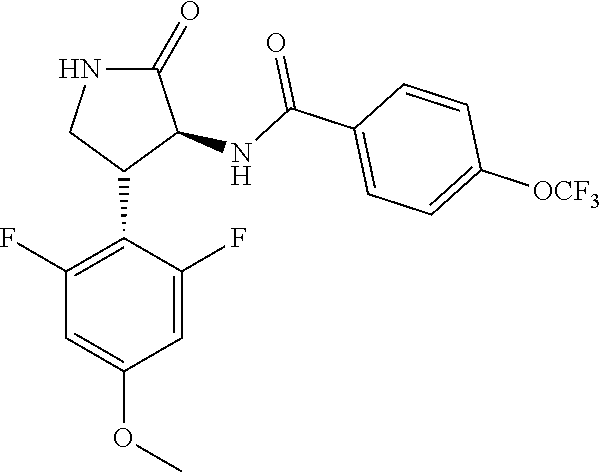
[0399]A similar protocol to the above procedure for Intermediate 3 was followed to synthesize Intermediate 4. MS(ESI) m/z: 431.1 [M+H]+. 1H NMR (300 MHz, CDCl3) δ=7.77 (d, J=8.4 Hz, 2H), 7.19 (d, J=7.9 Hz, 2H), 6.47 (m, 3H), 6.23 (s, 1H), 5.14-4.97 (m, 1H), 4.07-3.95 (m, 1H), 3.82-3.75 (m, 4H), 3.68-3.63 (m, 1H).
Intermediate 5A and 5B: 3-Bromo-4-methyl-1-(3,3,3-trifluoro-2-hydroxypropyl) pyridin-2(1H)-one

[0401]To a stirred solution of 3-bromo-4-methylpyridin-2(1H)-one (1.5 g, 8.0 mmol) in DMF (15 mL) at rt, were added 3-bromo-1,1,1-trifluoropropan-2-ol (2.3 g, 12 mmol) and K2CO3 (3.3 g, 24 mmol). The reaction mixture was heated at 90° C. for 16 h. The reaction mixture was cooled, filtered through Celite pad, and concentrated under reduced pressure. The crude compound was purified by silica gel chromatography (pet. ether-ethyl acetate) and the enantiomers were separated via chiral SFC separation to yield Intermediate 5A (0.80 g, 2.7 mmol, 33.4% yield) and Intermediate 5B (0.80 g, 2.7 mmol, 33% yield). SFC prep conditions: Column/dimensions: Whelk (R,R)(250×4.6) mm, 5p; CO2: 85%, % Co-solvent: 15% of 0.2% DEA in IPA. Total flow: 3.0 g/min, back pressure: 100 bar, temperature: 40° C., UV: 220 nm. Retention time peak 1=3.2 min and peak 2=4.4 min. Enantiomer 1: MS(ESI) m/z: 299.9 [M+H]+. 1H NMR (400 MHz, DMSO-d6) δ=7.60 (d, J=7.0 Hz, 1H), 6.62 (d, J=6.5 Hz, 1H), 6.29 (d, J=7.0 Hz, 1H), 4.42-4.29 (m, 2H), 3.87-3.79 (m, 1H), 2.28 (s, 3H). Enantiomer 2: MS(ESI) m/z: 299.9 [M+H]+. 1H NMR (400 MHz, DMSO-d6) δ=7.60 (d, J=7.0 Hz, 1H), 6.62 (d, J=6.5 Hz, 1H), 6.29 (d, J=7.0 Hz, 1H), 4.42-4.29 (m, 2H), 3.87-3.79 (m, 1H), 2.28 (s, 3H).
Intermediate 6: 2-(2-Methoxyethyl)-5-methylpyridazin-3(2H)-one

[0403]To a stirred solution of 5-methylpyridazin-3(2H)-one (1.0 g, 9.1 mmol) in DMF (10 mL) at rt, were added potassium carbonate (3.8 g, 27 mmol), and 1-bromo-2-methoxyethane (1.5 g, 11 mmol). The reaction mixture was heated at 70° C. for 15 h. Then, the reaction mixture was cooled, filtered through Celite pad, and concentrated under reduced pressure. The crude residue was purified by silica gel chromatography (pet. ether-ethyl acetate) to yield Intermediate 6 (1.0 g, 6.0 mmol, 66% yield) as a yellow liquid. MS(ESI) m/z: 169.1 [M+H]+. 1H NMR (400 MHz, DMSO-d6) δ=7.79 (d, J=2.0 Hz, 1H), 6.73 (m, 1H), 4.18 (t, J=5.8 Hz, 2H), 3.64 (t, J=5.8 Hz, 2H), 3.23 (s, 3H), 2.16 (d, J=2.0 Hz, 3H).
Intermediate 7: 4-Bromo-2-(2-methoxyethyl)-5-methylpyridazin-3(2H)-one

[0405]To a stirred solution of 2-(2-methoxyethyl)-5-methylpyridazin-3(2H)-one (500 mg, 3.0 mmol) in acetonitrile (5 mL) at rt, was added NBS (1060 mg, 5.95 mmol). Then, the reaction mixture was heated at 80° C. for 16 h. The reaction mixture was cooled, filtered through Celite pad and the filtrate was concentrated under reduced pressure. The crude compound was purified by silica gel chromatography (pet. ether-ethyl acetate) to afford the Intermediate 7 (350 mg, 1.4 mmol, 48% yield) as an orange solid. MS(ESI) m/z: 249.1 [M+H]+. 1H NMR (400 MHz, DMSO-d6) δ=7.86 (s, 1H), 4.26 (t, J=5.5 Hz, 2H), 3.67 (t, J=5.5 Hz, 2H), 3.22 (s, 3H), 2.27 (s, 3H).
Example 1: N-((3S,4R)-1-(2-cyanopyridin-3-yl)-4-(2,6-difluoro-4-methoxyphenyl)-2-oxopyrrolidin-3-yl)-4-(difluoromethoxy)benzamide
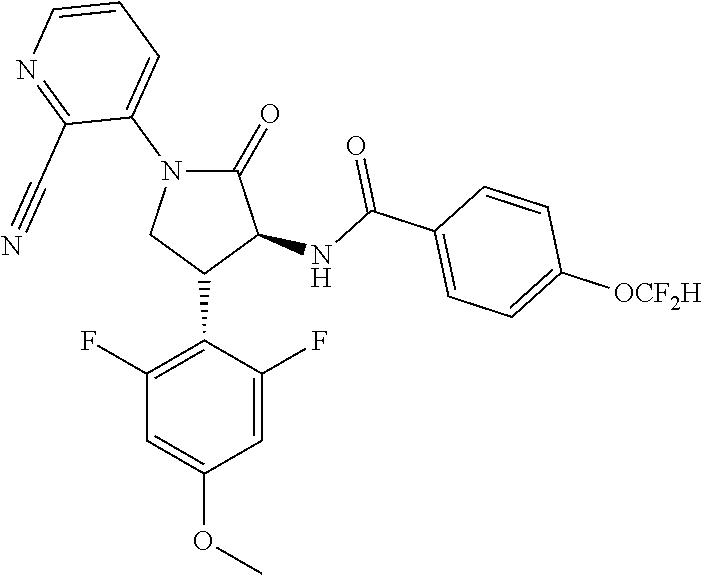
[0407]To a stirred solution of Intermediate 3 (80 mg, 0.19 mmol) in 1,4-dioxane (2 mL) were added 3-bromopicolinonitrile (43 mg, 0.23 mmol), and Cs2CO3 (130 mg, 0.39 mmol). The reaction mixture was purged with nitrogen for 5 min and charged with xanthphos (22 mg, 0.039 mmol) and Pd2(dba)3 (18 mg, 0.019 mmol). The reaction mixture was again purged with nitrogen for 3 min and heated at 100° C. for 16 h. The reaction mixture was cooled and filtered through a Celite pad. The filtrate was concentrated under reduced pressure, and the crude product was purified by reverse phase HPLC to afford Example 1 (26 mg, 0.051 mmol, 26% yield) as a white solid. MS(ESI) m/z: 515.2 [M+H]+. 1H NMR (400 MHz, DMSO-d6) δ=9.14 (d, J=8.3 Hz, 1H), 8.72 (d, J=4.6 Hz, 1H), 8.24 (d, J=8.3 Hz, 1H), 7.94-7.87 (m, 3H), 7.35 (s, 1H), 7.29 (d, J=8.8 Hz, 2H), 6.81 (d, J=10.8 Hz, 2H), 5.16-5.02 (m, 1H), 4.34-4.22 (m, 2H), 4.18-4.09 (m, 1H), 3.78 (s, 3H). RT=1.725 min, 100% (Method D).
Example 2: N-((3S,4R)-4-(2,6-difluoro-4-methoxyphenyl)-1-(1-methyl-6-oxo-1,6-dihydropyridin-3-yl)-2-oxopyrrolidin-3-yl)-4-(difluoromethoxy)benzamide

[0409]To a stirred solution of Intermediate 3 (60 mg, 0.15 mmol) in 1,4-dioxane (2 mL) at rt were added 5-bromo-1-methylpyridin-2(1H)-one (33 mg, 0.18 mmol), Cs2CO3 (95 mg, 0.29 mmol) and, N,N′-dimethylethylenediamine (2.6 mg, 0.029 mmol). The reaction mixture was purged with nitrogen for 5 min and then charged with copper (I) iodide (5.5 mg, 0.029 mmol), purged with nitrogen for 3 min and heated at 100° C. for 16 h. The reaction mixture was cooled, filtered through Celite pad and concentrated under reduced pressure to give the crude product, which was purified by reverse phase HPLC to afford the Example 2 (32 mg, 0.062 mmol, 42% yield) as a white solid. MS(ESI) m/z: 520.1 [M+H]+. 1H NMR (400 MHz, DMSO-d6) δ=9.03 (d, J=8.6 Hz, 1H), 8.01 (d, J=2.7 Hz, 1H), 7.93-7.81 (m, 3H), 7.55-7.13 (m, 3H), 6.80 (d, J=10.8 Hz, 2H), 6.46 (d, J=10.0 Hz, 1H), 4.98 (m, 1H), 4.18-4.07 (m, 1H), 4.00 (t, J=8.8 Hz, 1H), 3.93-3.85 (m, 1H), 3.78 (s, 3H), 3.45 (s, 3H). RT=1.677 min, 100% (Method D).
Example 3: N-((3S,4R)-1-(cyclopropylmethyl)-4-(2,6-difluoro-4-methoxyphenyl)-2-oxopyrrolidin-3-yl)-4-(difluoromethoxy)benzamide

[0411]To a stirred solution of Intermediate 3 (60 mg, 0.15 mmol) in DMF (2 mL) under argon atmosphere at 0° C. was added NaH (8.7 mg, 0.22 mmol), and the resulting reaction mixture was stirred for 30 min. Then bromomethyl cyclopropane (24 mg, 0.18 mmol) was added to the reaction mixture, and the mixture was gradually warmed to rt over a period of 2 h. The reaction mixture was quenched with ice/water and extracted with EtOAc (20 mL×2). The combined organic layers were washed with water (10 mL) and brine (10 mL), dried over Na2SO4 and concentrated under reduced pressure. The crude product was purified by reverse phase HPLC to afford Example 3 (23 mg, 0.049 mmol, 33% yield) as a white solid. MS(ESI) m/z: 467.1 [M+H]+. 1H NMR (400 MHz, DMSO-d6) δ=8.91 (d, J=8.8 Hz, 1H), 7.87 (d, J=8.8 Hz, 2H), 7.34 (s, 1H), 7.26 (d, J=8.6 Hz, 2H), 6.76 (d, J=10.8 Hz, 2H), 4.92 (t, J=9.5 Hz, 1H), 3.97-3.88 (m, 1H), 3.77 (s, 3H), 3.75-3.70 (m, 1H), 3.65-3.55 (m, 1H), 3.31-3.24 (m, 1H), 3.07 (m, 1H), 1.01-0.93 (m, 1H), 0.51 (d, J=8.1 Hz, 2H), 0.32-0.20 (m, 2H). RT=1.810 min, 99.2% (Method D).
Example 4 and 5: N-((3S,4R)-4-(2,6-Difluoro-4-methoxyphenyl)-2-oxo-1-(2-oxo-1-(3,3,3-trifluoro-2-hydroxypropyl)-1,2-dihydropyridin-3-yl)pyrrolidin-3-yl)-4-(difluoromethoxy)benzamide (Enantiomers 1 and 2)

[0413]To a stirred solution of N-((3S,4R)-4-(2,6-difluoro-4-methoxyphenyl)-2-oxopyrrolidin-3-yl)-4-(difluoromethoxy)benzamide (500 mg, 1.2 mmol) in 1,4-dioxane (10 mL) at rt, were added cesium carbonate (790 mg, 2.4 mmol), and 3-bromo-1-(3,3,3-trifluoro-2-hydroxypropyl)pyridin-2(1H)-one (382 mg, 1.34 mmol). The reaction mixture was purged with nitrogen for 5 min and then charged with N,N-dimethylethane-1,2-diamine (21 mg, 0.24 mmol) and copper (I) iodide (23 mg, 0.12 mmol). The reaction mixture was again purged with nitrogen for 3 min and heated at 100° C. for 16 h. The reaction mixture was cooled, filtered through Celite pad, concentrated under reduced pressure. The crude compound, which was purified reverse phase HPLC followed by chiral SFC to yield Example 4 (68 mg, 0.11 mmol, 9.1% yield), and Example 5 (65 mg, 0.10 mmol, 8.7% yield). SFC prep condition: Column/dimensions: Luxcellulose (250×30) mm, 5μ; % CO2: 60%, % Co-solvent: 40% of 4M methanolic ammonia in MeOH. Total flow: 120.0 g/min, back pressure: 100 bar, temperature: 30° C., UV: 220 nm; Retention time: peak 1=4.6 min and peak 2=9.7 min. Enantiomer 1: MS(ESI) m/z: 618.2 [M+H]*. 1H NMR (400 MHz, DMSO-d6) δ=9.01 (br d, J=8.6 Hz, 1H), 7.93-7.81 (m, 2H), 7.70 (dd, J=6.8, 2.0 Hz, 1H), 7.65 (dd, J=7.3, 2.0 Hz, 1H), 7.34 (t, J=73.6 Hz, 1H), 7.27 (m, 2H), 6.76 (d, J=10.8 Hz, 2H), 6.37 (t, J=7.1 Hz, 1H), 5.16-5.04 (m, 1H), 4.45 (dd, J=13.1, 2.8 Hz, 1H), 4.39-4.27 (m, 1H), 4.17-4.06 (m, 1H), 4.06-3.98 (m, 1H), 3.97-3.88 (m, 1H), 3.88-3.80 (m, 1H), 3.76 (s, 3H), 3.35 (br s, 1H). Enantiomer 2: MS(ESI) m/z: 618.2 [M+H]+. 1H NMR (400 MHz, DMSO-d6) δ=9.02 (d, J=8.8 Hz, 1H), 7.93-7.83 (m, 2H), 7.69 (dd, J=6.7, 2.1 Hz, 1H), 7.64 (dd, J=7.3, 2.1 Hz, 1H), 7.34 (t, J=73.6 Hz, 1H), 7.28 (d, J=8.8 Hz, 2H), 6.77 (d, J=10.8 Hz, 2H), 6.37 (t, J=7.0 Hz, 1H), 5.08 (dd, J=10.9, 8.9 Hz, 1H), 4.44 (dd, J=13.1, 3.1 Hz, 1H), 4.39-4.26 (m, 1H), 4.15-3.99 (m, 2H), 3.97-3.90 (m, 1H), 3.84 (dd, J=13.3, 9.4 Hz, 1H), 3.76 (s, 3H), 3.36 (br s, 1H).
[0414]The following Examples in Table 2 were made by using analogous procedures as shown in Examples 1-5 and/or modifications thereof known to one skilled in the art.
| TABLE 2 | ||||
|---|---|---|---|---|
| HPLC | ||||
| Method, | ||||
| LCMS | RT (min.) | |||
| Ex | Structure | (M + H)+ | & Purity | |
| 6 | 549.1 | Method D, RT = 2.022 min, 96.2% | ||
| 7 | 558.1 | Method D, RT = 1.907 min, 97.7% | 1H NMR (400 MHz, DMSO-d6) δ = 9.09 (d, J = 8.6 Hz, 1H), 8.94-8.85 (m, 1H), 8.39 (dd, J = 1.6, 7.9 Hz, 1H), 7.95-7.83 (m, 2H), 7.73 (dd, J = 5.3, 7.7 Hz, 1H), 7.57-7.09 (m, 3H), 6.80 (d, J = 10.8 Hz, 2H), 5.14 (m, 1H), 4.28 (m, 1H), 4.14 (m, J = 9.3 Hz, 1H), 4.02-3.94 (m, 1H), 3.77 (s, 3H). | |
| 8 | 555.1 | Method D, RT = 2.153 min, 97.9% | ||
| 9 | 510.2 | Method D, RT = 1.931 min, 97.7% | ||
| 10 | 520.1 | Method D, RT = 1.583 min, 90.7% | ||
| 11 | 538.1 | Method D, RT = 1.759 min, 99.2% | ||
| 12 | 591 | Method D, RT = 2.381 min, 92.5% | ||
| 13 | 584.2 | Method D, RT = 1.784 min, 98.7% | ||
| 14 | 583.2 | Method D, RT = 1.414 min, 99.8% | ||
| 15 | 533.1 | Method D, RT = 1.951 min, 97.8% | ||
| 16 | 529.2 | Method D, RT = 2.370 min, 100.0% | ||
| 17 | 597.2 | Method D, RT = 1.763 min, 98.4% | ||
| 18 | 579.2 | Method D, RT = 1.607 min, 100% | ||
| 19 | 583.1 | Method D, RT = 1.723 min, 93.7% | ||
| 20 | 485.1 | Method D, RT = 1.965 min, 100% | ||
| 21 | 533.1 | Method D, RT = 1.897 min, 96.7% | ||
| 22 | 584.1 | Method D, RT = 1.620 min, 93.1% | ||
| 23 | 538.1 | Method D, RT = 2.065 min, 94.0% | ||
| 24 | 558.1 | Method D, RT = 2.223 min, 92.5% | ||
| 25 | 566.2 | Method D, RT = 1.594 min, 100% | ||
| 26 | 538.1 | Method D, RT = 1.677 min, 100% | ||
| 27 | 538.1 | Method D, RT = 1.874 min, 93.8% | ||
| 28 | 526.1 | Method D, RT = 1.926 min, 97.9% | ||
| 29 | 565.2 | Method D, RT = 2.289 min, 93.5% | ||
| 30 | 566.2 | Method D, RT = 1.529 min, 89.8% | ||
| 31 | 565.1 | Method D, RT = 1.604 min, 95.1% | ||
| 32 | 520.1 | Method D, RT = 1.886 min, 94.2% | ||
| 33 | 508.1 | Method D, RT = 1.790 min, 90.9% | ||
| 34 | 520.2 | Method D, RT = 1.564 min, 99.4% | ||
| 35 | 618.3 | Method D, RT = 1.881 min, 94.8% | ||
| 36 | 564.2 | Method D, RT = 1.640 min, 97.8% | ||
| 37 | 582.2 | Method D, RT = 1.808 min, 95.8% | ||
| 38 | 534.2 | Method D, RT = 1.651 min, 100% | ||
| 39 | 488.1 | Method D, RT = 1.73 min, 99% | ||
| 40 | 598.2 | Method D, RT = 1.68 min, 100% | ||
| 41 | 593.3 | Method D, RT = 1.424 min, 100% | ||
| 42 | 634.2 | Method D, RT = 2.634 min, 99% | ||
| 43 | 529.15 | Method D, RT = 1.97 min, 97% | ||
| 44 | 593.3 | Method D, RT = 1.427 min, 100% | ||
| 45 | 570.2 | Method D, RT = 1.84 min, 96.7% | ||
| 46 | 577.2 | Method D, RT = 1.862 min, 99% | ||
| 47 | 636.2 | Method D, RT = 1.904 min, 100% | ||
| 48 | 616.3 | Method D, RT = 1.939 min, 99% | ||
| 49 | 612.3 | Method D, RT = 1.74 min, 100% | ||
| 50 | 618.2 | Method D, RT = 2.407 min, 96% | ||
| 51 | 644.3 | Method D, RT = 1.69 min, 100% | ||
| 52 | 556.2 | Method D, RT = 1.764 min, 100% | ||
| 53 | 564.3 | Method D, RT = 1.70 min, 94.9% | ||
| 54 | 606.2 | Method D, RT = 1.805 min, 97% | ||
| 55 | 584.2 | Method D, RT = 1.81 min, 100% | ||
| 56 | 564.2 | Method D, RT = 1.75 min, 98.9% | ||
| 57 | 556.3 | Method D, RT = 1.881 min, 100% | ||
| 58 | 625.2 | Method D, RT = 1.87 min, 100% | ||
| 59 | 552.2 | Method D, RT = 1.75 min, 100% | ||
| 60 | 546.2 | Method D, RT = 1.69 min, 100% | ||
| 61 | 502.1 | Method D, RT = 1.606 min, 100% | ||
| 62 | 611.2 | Method D, RT = 1.99 min, 100% | ||
| 63 | 550.2 | Method D, RT = 1.62 min, 100% | ||
| 64 | 532.2 | Method D, RT = 2.147 min, 99% | ||
| 65 | 668.2 | Method D, RT = 1.68 min, 98.5% | ||
| 66 | 617.2 | Method D, RT = 2.009 min, 95% | ||
| 67 | 520.2 | Method D, RT = 1.899 min, 100% | ||
| 68 | 613.2 | Method D, RT = 1.76 min, 99% | ||
| 69 | 556.2 | Method D, RT = 1.970 min, 97.7% | ||
| 70 | 612.3 | Method D, RT = 1.74 min, 100% | ||
| 71 | 644.2 | Method D, RT = 1.58 min, 100% | ||
| 72 | 570.2 | Method C, RT = 1.927 min, 100% | ||
| 73 | 588.2 | Method D, RT = 2.086 min, 98.8% | ||
| 74 | 546.2 | Method D, RT = 1.69 min, 100% | ||
| 75 | 602.2 | Method D, RT = 1.98 min, 100% | ||
| 76 | 502.2 | Method D, RT = 1.78 min, 100% | ||
| 77 | 534.2 | Method D, RT = 1.76 min, 100% | ||
| 78 | 611.3 | Method C, RT = 1.525 min, 97.1% | ||
| 79 | 514.2 | Method D, RT = 1.36 min, 100% | ||
| 80 | 548.2 | Method D, RT = 1.68 min, 100% | 1H NMR (400 MHz, DMSO-d6) δ = 8.86 (d, J = 8.6 Hz, 1H), 7.90 (d, J = 8.8 Hz, 2H), 7.77 (dd, J = 7.2, 1.8 Hz, 1H), 7.57 (dd, J = 7.2, 1.8 Hz, 1H), 7.35 (t, J = 73.6 Hz, 1H), 7.25-7.23 (m, 2H), 6.77 (d, J = 11.5 Hz, 2H), 6.34 (t, J = 7.0 Hz, 1H), 5.66 (dd, J = 12.0, 8.8 Hz, 1H), 4.69- 4.58 (m, 1H), 4.333-4.28 (m, 1H), 4.14- 3.98 (m, 1H), 3.98-3.87 (m, 1H), 3.76 (s, 3H), 1.25 (t, J = 7.1 Hz, 3H), 0.91 (d, J = 6.8 Hz, 3H). | |
| 81 | 546.2 | Method D, RT = 1.57 min, 95.1% | ||
| 82 | 534.2 | Method D, RT = 1.77 min, 98.9% | ||
| 83 | 516.2 | Method D, RT = 1.58 min, 96.07% | ||
| 84 | 611.2 | Method D, RT = 1.99 min, 99% | ||
| 85 | 595.3 | Method D, RT = 1.651 min, 100% | ||
| 86 | 602.2 | Method D, RT = 1.93 min, 97% | ||
| 87 | 474.1 | Method D, RT = 1.491 min, 95.5% | ||
| 88 | 498.2 | Method D, RT = 1.519 min, 100% | ||
| 89 | 582.2 | Method D, RT = 1.693 min, 100% | ||
| 90 | 584.2 | Method D, RT = 1.765 min, 100% | ||
| 91 | 534.2 | Method D, RT = 1.597 min, 100% | ||
| 92 | 635.2 | Method D, RT = 1.615 min, 100% | ||
| 93 | 566.2 | Method D, RT = 1.86 min, 98% | ||
| 94 | 524.1 | Method D, RT = 1.789 min, 98.8% | ||
| 95 | 506.1 | Method D, RT = 1.509 min, 96.5% | ||
| 96 | 610.2 | Method D, RT = 1.856 min, 100% | ||
| 97 | 577.3 | Method D, RT = 1.464 min, 98.5% | ||
| 98 | 502.1 | Method D, RT = 1.680 min, 99.7% | ||
| 99 | 619.2 | Method D, RT = 1.569 min, 100% | ||
| 100 | 596.2 | Method D, RT = 1.84 min, 98% | ||
| 101 | 620.1 | Method D, RT = 1.82 min, 100% | ||
| 102 | 536.2 | Method D, RT = 1.730 min, 100% | ||
| 103 | 596.2 | Method D, RT = 1.889 min, 100% | ||
| 104 | 564.2 | Method D, RT = 1.512 min, 100% | ||
| 105 | 578.3 | Method D, RT = 1.66 min, 100% | ||
| 106 | 547.2 | Method D, RT = 1.808 min, 97.5% | ||
| 107 | 550.2 | Method D, RT = 1.891 min, 100% | ||
| 108 | 546.2 | Method D, RT = 1.78 min, 100% | ||
| 109 | 684.3 | Method D, RT = 2.00 min, 100% | ||
| 110 | 518.2 | Method D, RT = 1.547 min, 97.1% | ||
| 111 | 490.1 | Method D, RT = 1.932 min, 95% | ||
| 112 | 608.3 | Method D, RT = 1.602 min, 98.8% | ||
| 113 | 564.2 | Method D, RT = 2.304 min, 99.9% | ||
| 114 | 597.2 | Method D, RT = 1.88 min, 97% | ||
| 115 | 582.3 | Method D, RT = 2.369 min, 99.5% | ||
| 116 | 548.2 | Method D, RT = 1.787 min, 99.6% | ||
| 117 | 599.2 | Method D, RT = 2.095 min, 93% | ||
| 118 | 562.2 | Method D, RT = 1.612 min, 95.8% | ||
| 119 | 617.2 | Method D, RT = 2.014 min, 94% | ||
| 120 | 552.3 | Method D, RT = 1.777 min, 100% | ||
| 121 | 566.2 | Method D, RT = 1.817 min, 99% | ||
| 122 | 593.3 | Method D, RT = 1.82 min, 98% | ||
| 123 | 524.1 | Method D, RT = 1.794 min, 94.4% | ||
| 124 | 639.2 | Method D, RT = 2.01 min, 100% | ||
| 125 | 611.2 | Method D, RT = 1.88 min, 100% | ||
| 126 | 562.2 | Method D, RT = 1.95 min, 100% | ||
| 127 | 578.3 | Method D, RT = 1.67 min, 100% | ||
| 128 | 516.2 | Method D, RT = 1.7 min, 100% | ||
| 129 | 631.2 | Method D, RT = 1.75 min, 98.77% | ||
| 130 | 518.2 | Method D, RT = 1.467 min, 100% | ||
| 131 | 691.2 | Method D, RT = 1.732 min, 99% | ||
| 132 | 572.3 | Method D, RT = 1.72 min, 100% | ||
| 133 | 594.2 | Method D, RT = 1.526 min, 100% | ||
| 134 | 653.3 | Method D, RT = 1.790 min, 98.6% | ||
| 135 | 607.2 | Method D, RT = 1.66 min, 100% | ||
| 136 | 576.3 | Method D, RT = 1.606 min, 98% | ||
| 137 | 532.1 | Method D, RT = 1.666 min, 99.6% | ||
| 138 | 596.2 | Method D, RT = 1.869 min, 100% | ||
| 139 | 536.3 | Method D, RT = 1.386 min, 97.2% | ||
| 140 | 502.2 | Method D, RT = 1.605 min, 98.6% | ||
| 141 | 564.2 | Method D, RT = 1.508 min, 100% | ||
| 142 | 594.3 | Method D, RT = 1.528 min, 100% | ||
| 143 | 532.2 | Method D, RT = 1.44 min, 100% | ||
| 144 | 612.3 | Method D, RT = 1.698 min, 100% | ||
| 145 | 570.2 | Method D, RT = 1.708 min, 97% | ||
| 146 | 565.2 | Method D, RT = 1.70 min, 98% | ||
| 147 | 650.2 | Method D, RT = 2.091 min, 100% | ||
| 148 | 588.2 | Method D, RT = 1.883 min, 96% | ||
| 149 | 631.3 | Method D, RT = 1.716 min, 100% | ||
| 150 | 502.2 | Method D, RT = 1.715 min, 98.1% | ||
| 151 | 592.3 | Method D, RT = 2.017 min, 100% | ||
| 152 | 684.3 | Method D, RT = 1.97 min, 100% | ||
| 153 | 612.2 | Method D, RT = 1.702 min, 100% | ||
| 154 | 580.2 | Method D, RT = 1.794 min, 100% | ||
| 155 | 636.2 | Method D, RT = 1.887 min, 96.2% | ||
| 156 | 650.2 | Method D, RT = 2.067 min, 100% | ||
| 157 | 576.2 | Method D, RT = 1.815 min, 99% | ||
| 158 | 626.2 | Method D, RT = 1.81 min, 98% | ||
| 159 | 536.2 | Method D, RT = 1.791 min, 97.8% | ||
| 160 | 593.2 | Method D, RT = 1.61 min, 98% | ||
| 161 | 632.2 | Method D, RT = 1.930 min, 100% | ||
| 162 | 532.2 | Method D, RT = 1.711 min, 100% | ||
| 163 | 581.2 | Method D, RT = 2.03 min, 98.4% | ||
| 164 | 631.3 | Method D, RT = 1.459 min, 98.3% | ||
| 165 | 530.2 | Method D, RT = 1.67 min, 98.58% | ||
| 166 | 613.2 | Method D, RT = 1.87 min, 98.43% | ||
| 167 | 609.3 | Method D, RT = 1.88 min, 98% | ||
| 168 | 588.2 | Method D, RT = 1.850 min, 100% | ||
| 169 | Method D, RT = 1.424 min, 100% | |||
| 170 | 530.2 | Method D, RT = 1.749 min, 100% | ||
| 171 | 522.1 | Method D, RT = 1.88 min, 99% | ||
| 172 | 635.3 | Method D, RT = 1.614 min, 100% | ||
| 173 | 582.2 | Method D, RT = 1.690 min, 98.6% | ||
| 174 | 568.1 | Method D, RT = 2.171 min, 100% | ||
| 175 | 626.2 | Method D, RT = 1.72 min, 99% | ||
| 176 | 578.2 | Method D, RT = 1.584 min, 100% | ||
| 177 | 579.3 | Method D, RT = 1.69 min, 94% | ||
| 178 | 560.3 | Method D, RT = 1.738 min, 100% | ||
| 179 | 608.2 | Method D, RT = 1.506 min, 100% | ||
| 180 | 614.2 | Method C, RT = 1.75 min, 89.7% | ||
| 181 | 652.2 | Method D, RT = 2.04 min, 100% | ||
| 182 | 584.2 | Method D, RT = 1.91 min, 100% | ||
| 183 | 548.2 | Method D, RT = 1.81 min, 94.5% | ||
| 184 | 573.1 | Method D, RT = 2.24 min, 100% | ||
| 185 | 596.2 | Method D, RT = 1.850 min, 98.6% | ||
| 186 | 632.3 | Method C, RT = 1.911 min, 100% | ||
| 187 | 626.2 | Method D, RT = 1.788 min, 100% | ||
| 188 | 574.2 | Method D, RT = 1.940 min, 98.8% | ||
| 189 | 522 | Method D, RT = 1.730 min, 99.3% | ||
| 190 | 588.2 | Method D, RT = 1.803 min, 100% | ||
| 191 | 606.2 | Method D, RT = 1.972 min, 100% | ||
| 192 | 556.3 | Method D, RT = 1.81 min, 100% | ||
| 193 | 488.2 | Method D, RT = 2.126 min, 100% | ||
| 194 | 611.3 | Method C, RT = 1.510 min, 96.6% | ||
| 195 | 574.3 | Method D, RT = 1.86 min, 100% | ||
| 196 | 522.2 | Method D, RT = 1.680 min, 100% | ||
| 197 | 548.2 | Method D, RT = 1.695 min, 98% | ||
| 198 | 529.3 | Method D, RT = 2.851 min, 99% | ||
| 199 | 607.2 | Method D, RT = 1.66 min, 100% | ||
| 200 | 596.3 | Method D, RT = 1.86 min, 100% | ||
| 201 | 576.2 | Method D, RT = 1.591 min, 100% | ||
| 202 | 631.3 | Method D, RT = 1.580 min, 100% | ||
| 203 | 502.2 | Method D, RT = 1.79 min, 100% | ||
| 204 | 572.1 | Method D, RT = 2.12 min, 100% | ||
| 205 | 552.2 | Method D, RT = 1.708 min, 100% | ||
| 206 | 583.2 | Method C, RT = 1.87 min, 100% | ||
| 207 | 513.1 | Method D, RT = 1.650 min, 99.4% | ||
| 208 | 560.2 | Method D, RT = 1.65 min, 100% | ||
| 209 | 605.2 | Method D, RT = 1.845 min, 97% | ||
| 210 | 649.3 | Method D, RT = 1.626 min, 95.6% | ||
| 211 | 587.2 | Method D, RT = 1.964 min, 94% | ||
| 212 | 611.2 | Method D, RT = 2.05 min, 95.7% | ||
| 213 | 616.2 | Method D, RT = 1.903 min, 100% | ||
| 214 | 646.3 | Method D, RT = 1.97 min, 100% | ||
| 215 | 482.2 | Method D, RT = 1.557 min, 100% | ||
| 216 | 621.2 | Method D, RT = 2.24 min, 100% | ||
| 217 | 608.3 | Method D, RT = 1.54 min, 97% | ||
| 218 | 608.3 | Method D, RT = 1.522 min, 97.4% | ||
| 219 | 550.2 | Method D, RT = 1.700 min, 98.8% | ||
| 220 | 546.2 | Method D, RT = 1.71 min, 95% | ||
| 221 | 570.2 | Method D, RT = 1.801 min, 100% | ||
| 222 | 526.1 | Method D, RT = 1.94 min, 95.6% | ||
| 223 | 617.2 | Method D, RT = 1.75 min, 93% | ||
| 224 | 688.2 | Method D, RT = 1.94 min, 100% | ||
| 225 | 646.3 | Method D, RT = 1.81 min, 97% | ||
| 226 | 516.2 | Method D, RT = 1.53 min, 95.1% | ||
| 227 | 568.2 | Method D, RT = 1.64 min, 96% | ||
| 228 | 566.2 | Method D, RT = 1.886 min, 100% | ||
| 229 | 560.2 | Method D, RT = 1.78 min, 100% | ||
| 230 | 570.2 | Method D, RT = 1.89 min, 100% | ||
| 231 | 668.2 | Method D, RT = 1.69 min, 100% | ||
| 232 | 578.2 | Method D, RT = 1.686 min, 99.4% | ||
| 233 | 586.2 | Method D, RT = 1.92 min, 97.4% | ||
| 234 | 631.3 | Method D, RT = 1.74 min, 98.5% | ||
| 235 | 594.2 | Method D, RT = 1.972 min, 95% | ||
| 236 | 538.2 | Method D, RT = 1.793 min, 96.3% | ||
| 237 | 506.2 | Method D, RT = 1.655 min, 96% | ||
| 238 | 556.2 | Method D, RT = 2.691 min, 100% | ||
| 239 | 645.2 | Method D, RT = 1.84 min, 100% | ||
| 240 | 554.2 | Method D, RT = 1.572 min, 98.7% | ||
| 241 | 602.2 | Method D, RT = 1.838 min, 100% | ||
| 242 | 566.2 | Method D, RT = 1.87 min, 100% | ||
| 243 | 550.2 | Method D, RT = 1.455 min, 94% | ||
| 244 | 534.2 | Method D, RT = 1.669 min, 100% | ||
| 245 | 621.2 | Method D, RT = 1.876 min, 97.5% | ||
| 246 | 639.2 | Method D, RT = 1.86 min, 96% | ||
| 247 | 572.2 | Method D, RT = 1.99 min, 94.3% | ||
| 248 | 667.3 | Method D, RT = 1.839 min, 100% | ||
| 249 | 534.2 | Method D, RT = 1.77 min, 98.9% | ||
| 250 | 624.2 | Method D, RT = 1.89 min, 96.4% | ||
| 251 | 513.2 | Method D, RT = 1.653 min, 100% | ||
| 252 | 558.3 | Method D, RT = 1.421 min, 100% | ||
| 253 | 578.3 | Method D, RT = 1.692 min, 93.2% | ||
| 254 | 626.2 | Method D, RT = 1.700 min, 98.8% | ||
| 255 | 548.2 | Method D, RT = 1.70 min, 96% | ||
| 256 | 605.2 | Method D, RT = 1.904 min, 95% | ||
| 257 | 649.3 | Method D, RT = 1.672 min, 97.1% | ||
| 258 | 552.2 | Method D, RT = 1.625 min, 100% | ||
| 259 | 598.3 | Method D, RT = 1.48 min, 97% | ||
| 260 | 542.3 | Method D, RT = 1.56 min, 94% | ||
| 261 | 587.2 | Method D, RT = 1.83 min, 100% | ||
| 262 | 564.3 | Method D, RT = 1.508 min, 100% | ||
| 263 | 611.2 | Method D, RT = 1.88 min, 100% | ||
| 264 | 582.3 | Method D, RT = 1.80 min, 94% | ||
| 265 | 554.3 | Method D, RT = 1.541 min, 96% | ||
| 266 | 621.1 | Method D, RT = 1.80 min, 98% | ||
| 267 | 533.2 | Method D, RT = 1.989 min, 93.4% | ||
| 268 | 582.2 | Method D, RT = 1.640 min, 100% | ||
| 269 | 628.2 | Method D, RT = 2.016 min, 100% | ||
| 270 | 641.2 | Method D, RT = 1.698 min, 94.4% | ||
| 271 | 593.3 | Method D, RT = 1.83 min, 98% | ||
| 272 | 578.2 | Method D, RT = 1.946 min, 100% | ||
| 273 | 498.3 | Method D, RT = 1.692 min, 93.2% | ||
| 274 | 626.2 | Method D, RT = 1.700 min, 98.8% | ||
| 275 | 626.2 | Method D, RT = 1.77 min, 97.5% | ||
| 276 | 528.3 | Method D, RT = 1.509 min, 100% | ||
| 277 | 566.2 | Method D, RT = 1.782 min, 99.6% | ||
| 278 | 637.3 | Method D, RT = 1.504 min, 100% | ||
| 279 | 656.3 | Method D, RT = 1.71 min, 97.5% | ||
| 280 | 591.2 | Method D, RT = 1.82 min, 98% | ||
| 281 | 638.3 | Method C, RT = 1.71 min, 98.5% | ||
| 282 | 720.2 | Method D, RT = 1.88 min, 97.8% | ||
| 283 | 653.3 | Method D, RT = 1.790 min, 100% | ||
| 284 | 614.3 | Method D, RT = 1.53 min, 99% | ||
| 285 | 630.2 | Method D, RT = 1.73 min, 96.8% | ||
| 286 | 554.1 | Method D, RT = 1.659 min, 97.8% | ||
| 287 | 581.3 | Method D, RT = 1.76 min, 94% | ||
| 288 | 578.2 | Method D, RT = 1.83 min, 100% | ||
| 289 | 644.1 | Method D, RT = 1.99 min, 94% | ||
| 290 | 626.2 | Method D, RT = 1.77 min, 100% | ||
| 291 | 552.2 | Method D, RT = 1.761 min, 100% | ||
| 292 | 512.3 | Method D, RT = 1.560 min, 100% | ||
| 293 | 626.2 | Method D, RT = 1.72 min, 94% | ||
| 294 | 632.2 | Method D, RT = 1.808 min, 98.1% | ||
| 295 | 613.3 | Method D, RT = 1.563 min, 100% | ||
| 296 | 518.2 | Method D, RT = 1.656 min, 100% | ||
| 297 | 664.2 | Method D, RT = 2.100 min, 100% | ||
| 298 | 594.2 | Method D, RT = 1.773 min, 100% | ||
| 299 | 545.2 | Method D, RT = 1.397 min, 94.9% | ||
| 300 | 491.1 | Method D, RT = 1.65 min, 99% | ||
| 301 | 582.1 | Method D, RT = 1.73 min, 100% | ||
| 302 | 582.2 | Method D, RT = 1.808 min, 100% | ||
| 303 | 618.2 | Method D, RT = 1.76 min, 100% | ||
| 304 | 562.2 | Method D, RT = 1.527 min, 96% | ||
| 305 | 534.1 | Method D, RT = 1.55 min, 95.6% | ||
| 306 | 667.2 | Method D, RT = 1.524 min, 98.4% | ||
| 307 | 562.2 | Method D, RT = 1.618 min, 100% | ||
| 308 | 578.2 | Method D, RT = 1.575 min, 100% | ||
| 309 | 592.2 | Method D, RT = 1.86 min, 94% | ||
| 310 | 534.2 | Method D, RT = 1.575 min, 99.1% | ||
| 311 | 588.2 | Method D, RT = 1.792 min, 98.8% | ||
| 312 | 574.3 | Method C, RT = 1.94 min, 98.3% | ||
| 313 | 534.2 | Method D, RT = 1.85 min, 99% | ||
| 314 | 646.3 | Method D, RT = 1.943 min, 98.6% | ||
| 315 | 558.3 | Method D, RT = 1.424 min, 100% | ||
| 316 | 592.2 | Method D, RT = 1.95 min, 98% | ||
| 317 | 603.2 | Method D, RT = 1.696 min, 96.6% | ||
| 318 | 609.3 | Method D, RT = 1.95 min, 100% | ||
| 319 | 493.2 | Method D, RT = 1.458 min, 100% | ||
| 320 | 576.2 | Method D, RT = 1.591 min, 98% | ||
| 321 | 529.2 | Method D, RT = 1.542 min, 100% | ||
| 322 | 600.2 | Method D, RT = 1.824 min, 97.6% | ||
| 323 | 577.2 | Method D, RT = 1.382 min, 99.03% | ||
| 324 | 534.2 | Method D, RT = 1.589 min, 99.7% | ||
| 325 | 626.3 | Method D, RT = 1.762 min, 98.6% | ||
| 326 | 625.2 | Method D, RT = 1.85 min, 98% | ||
| 327 | 597.2 | Method C, RT = 1.73 min, 100% | ||
| 328 | 630.3 | Method C, RT = 1.47 min, 97% | ||
| 329 | 509.2 | Method D, RT = 1.268 min, 97.5% | ||
| 330 | 545.2 | Method D, RT = 1.621 min, 100% | ||
| 331 | 636.1 | Method D, RT = 1.555 min, 100% | ||
| 332 | 641.3 | Method D, RT = 1.94 min, 100% | ||
| 333 | 606.2 | Method C, RT = 1.88 min, 90.3% | ||
| 334 | 636.2 | Method D, RT = 1.72 min, 100% | ||
| 335 | 485.2 | Method D, RT = 2.003 min, 100% | ||
| 336 | 578.2 | Method D, RT = 1.709 min, 100% | ||
| 337 | 556.2 | Method D, RT = 1.832 min, 100% | ||
| 338 | 459.1 | Method D, RT = 1.65 min, 96% | ||
| 339 | 564.2 | Method D, RT = 1.961 min, 98.7% | ||
| 340 | 546.2 | Method D, RT = 1.776 min, 100% | ||
| 341 | 500.1 | Method D, RT = 1.91 min, 100% | ||
| 342 | 528.2 | Method D, RT = 1.468 min, 100% | ||
| 343 | 617.2 | Method D, RT = 1.65 min, 96% | ||
| 344 | 527.1 | Method C, RT = 1.67 min, 94.1% | ||
| 345 | 498.2 | Method D, RT = 1.502 min, 100% | ||
| 346 | 507.1 | Method D, RT = 1.41 min, 95% | ||
| 347 | 556.3 | Method D, RT = 1.639 min, 98% | ||
| 348 | 656.3 | Method C, RT = 1.66 min, 95.3% | ||
| 349 | 576.3 | Method D, RT = 1.95 min, 100% | ||
| 350 | 608.3 | Method F, RT = 1.84 min, 98% | ||
| 351 | 560.2 | Method D, RT = 1.7 min, 100% | ||
| 352 | 578.2 | Method D, RT = 1.87 min, 100% | ||
| 353 | 572.2 | Method D, RT = 1.732 min, 100% | ||
| 354 | 600.2 | Method D, RT = 1.813 min, 100% | ||
| 355 | 604.2 | Method D, RT = 2.015 min, 100% | ||
| 356 | 569.2 | Method D, RT = 1.69 min, 100% | ||
| 357 | 553.2 | Method D, RT = 1.95 min, 100% | ||
| 358 | 535.3 | Method D, RT = 1.77 min, 100% | ||
| 359 | 596.2 | Method D, RT = 1.75 min, 98% | ||
| 360 | 578.3 | Method C, RT = 1.57 min, 99% | ||
| 361 | 596.2 | Method C, RT = 1.80 min, 93% | ||
| 362 | 546.2 | Method D, RT = 1.61 min, 97% | ||
| 363 | 707.3 | Method D, RT = 1.78 min, 100% | ||
| 364 | 632.2 | Method D, RT = 2.06 min, 100% | ||
| 365 | 510.2 | Method D, RT = 1.588 min, 89% | ||
| 366 | 516.2 | Method D, RT = 1.67 min, 100% | ||
| 367 | 546.2 | Method D, RT = 1.51 min, 100% | ||
| 368 | 586.1 | Method D, RT = 1.852 min, 98.6% | ||
| 369 | 535.2 | Method D, RT = 1.60 min, 98.7% | ||
| 370 | 565.2 | Method D, RT = 1.61 min, 98.7% | ||
| 371 | 582.2 | Method D, RT = 1.644 min, 100% | ||
| 372 | 542.2 | Method D, RT = 1.77 min, 100% | ||
| 373 | 552.2 | Method D, RT = 1.717 min, 94.7% | ||
| 374 | 498.2 | Method D, RT = 1.68 min, 100% | ||
| 375 | 564.2 | Method D, RT = 1.61 min, 100% | ||
| 376 | 566.2 | Method D, RT = 1.74 min, 94.2% | ||
| 377 | 534.2 | Method D, RT = 1.76 min, 100% | ||
| 378 | 503.2 | Method D, RT = 1.62 min, 97.9% | ||
| 379 | 615.2 | Method F, RT = 1.63 min, 96.0% | ||
| 380 | 582.2 | Method D, RT = 1.92 min, 95.7% | ||
| 381 | 570.2 | Method D, RT = 1.812 min, 96% | ||
| 382 | 480.2 | Method D, RT = 1.685 min, 96% | ||
| 383 | 552.2 | Method D, RT = 1.884 min, 97% | ||
| 384 | 534.2 | Method D, RT = 1.726 min, 93% | ||
| 385 | 506.2 | Method D, RT = 1.758 min, 100% | ||
| 386 | 548.2 | Method D, RT = 1.794 min, 97% | ||
| 387 | 580.2 | Method D, RT = 1.766 min, 100% | ||
| 388 | 512.3 | Method D, RT = 1.572 min, 100% | ||
| 389 | 572.3 | Method D, RT = 1.517 min, 100% | ||
| 390 | 524.2 | Method D, RT = 1.603 min, 98% | ||
| 391 | 496.1 | Method D, RT = 1.467 min, 100% | ||
| 392 | 532.2 | Method D, RT = 1.606 min, 97.2% | ||
| 393 | 564.2 | Method D, RT = 1.848 min, 100% | ||
| 394 | 514.2 | Method D, RT = 1.52 min, 100% | ||
| 395 | 578.2 | Method D, RT = 1.85 min, 100% | ||
| 396 | 568.2 | Method D, RT = 1.84 min, 94.9% | ||
| 397 | 526.2 | Method D, RT = 1.471 min, 91% | ||
| 398 | 565.2 | Method D, RT = 1.73 min, 97% | ||
| 399 | 538.1 | Method D, RT = 1.88 min, 94% | ||
| 400 | 596.3 | Method D, RT = 1.721 min, 100% | ||
| 401 | 566.2 | Method D, RT = 1.87 min, 94.4% | ||
| 402 | 598.2 | Method D, RT = 1.83 min, 100% | ||
| 403 | 566.2 | Method D, RT = 1.87 min, 94.4% | ||
| 404 | 598.2 | Method D, RT = 1.83 min, 100% | ||
| 405 | 560.3 | Method D, RT = 1.885 min, 100% | ||
| 406 | 530.2 | Method D, RT = 1.681 min, 97.2% | ||
| 407 | 564.2 | Method D, RT = 1.59 min, 100% | ||
| 408 | 582.2 | Method D, RT = 2.052 min, 95.7% | ||
| 409 | 532.2 | Method D, RT = 1.618 min, 98.4% | ||
| 410 | 599.2 | Method D, RT = 1.94 min, 95.8% | ||
| 411 | 526.2 | Method D, RT = 1.465 min, 93% | ||
| 412 | 564.2 | Method D, RT = 1.78 min, 99.3% | ||
| 413 | 532.2 | Method D, RT = 1.87 min, 98.2% | ||
| 414 | 530.2 | Method D, RT = 1.670 min, 97.1% | ||
| 415 | 552.2 | Method D, RT = 1.838 min, 97.2% | ||
| 416 | 596.2 | Method D, RT = 1.824 min, 100% | ||
| 417 | 600.2 | Method D, RT = 1.95 min, 100% | ||
| 418 | 560.3 | Method D, RT = 1.67 min, 100% | ||
| 419 | 585.2 | Method D, RT = 1.79 min, 92.4% | ||
| 420 | 611.2 | Method D, RT = 1.94 min, 97.4% | ||
| 421 | 552.2 | Method D, RT = 1.77 min, 100% | ||
| 422 | 546.3 | Method D, RT = 1.69 min, 100% | ||
| 423 | 599.2 | Method D, RT = 1.94 min, 100% | ||
| 424 | 500.2 | Method D, RT = 1.635 min, 100% | ||
| 425 | 510.2 | Method D, RT = 1.937 min, 97.2% | ||
| 426 | 608.3 | Method D, RT = 1.539 min, 97.8% | ||
| 427 | 626.2 | Method D, RT = 1.759 min, 98.3% | ||
| 428 | 617.7 | Method D, RT = 1.58 min, 100% | ||
| 429 | 626.3 | Method D, RT = 1.775 min, 100% | ||
| 430 | 584.2 | Method D, RT = 1.89 min, 99% | ||
| 431 | 516.2 | Method D, RT = 1.69 min, 94% | ||
| 432 | 502.2 | Method D, RT = 2.02 min, 100% | ||
| 433 | 614.2 | Method D, RT = 1.97 min, 100% | ||
| 434 | 528.3 | Method D, RT = 1.412 min, 98% | ||
| 435 | 564.2 | Method D, RT = 1.66 min, 100% | ||
| 436 | 546.2 | Method D, RT = 1.48 min, 100% | ||
| 437 | 594.3 | Method D, RT = 1.68 min, 100% | ||
| 438 | 576.2 | Method D, RT = 1.50 min, 98.8% | ||
| 439 | 550.2 | Method D, RT = 1.788 min, 100% | ||
| 440 | 546.2 | Method D, RT = 1.596 min, 100% | ||
| 441 | 641.3 | Method D, RT = 1.505 min, 100% | ||
| 442 | 542.2 | Method D, RT = 1.901 min, 97.7% | ||
| 443 | 570.2 | Method D, RT = 2.006 min, 100% | ||
| 444 | 625.3 | Method D, RT = 1.594 min, 100% | ||
| 445 | 564.2 | Method D, RT = 1.49 min, 100% | ||
| 446 | 604.3 | Method D, RT = 1.792 min, 100% | ||
| 447 | 625.2 | Method D, RT = 2.1 min, 100% | ||
| 448 | 677.2 | Method D, RT = 1.71 min, 100% | ||
| 449 | 590.3 | Method D, RT = 1.72 min, 100% | ||
| 450 | 542.2 | Method D, RT = 1.87 min, 97% | ||
| 451 | 647.2 | Method C, RT = 1.88 min, 100% | ||
| 452 | 613.2 | Method D, RT = 2.002 min, 96% | ||
| 453 | 490.2 | Method D, RT = 1.84 min, 96% | ||
| 454 | 600.2 | Method D, RT = 1.846 min, 96% | ||
| 455 | 577.2 | Method D, RT = 2.02 min, 98% | ||
| 456 | 636.3 | Method D, RT = 1.904 min, 100% | ||
| 457 | 618.3 | Method D, RT = 1.732 min, 100% | ||
| 458 | 592.2 | Method D, RT = 2.021 min, 100% | ||
| 459 | 538.3 | Method D, RT = 1.714 min, 94% | ||
| 460 | 588.3 | Method D, RT = 2.136 min, 100% | 1H NMR (400 MHz, DMSO-d6) δ = 8.99 (d, J = 8.8 Hz, 1H), 7.93-7.81 (m, 2H), 7.34 (t, J = 73.6 Hz, 1H), 7.34 (s, 1H), 7.27-7.25 (m, 2H), 6.76 (d, J = 10.8 Hz, 2H), 5.11 (dd, J = 11.1, 8.7 Hz, 1H), 4.16-3.99 (m, 3H), 3.94 (br d, J = 9.3 Hz, 2H), 3.76 (s, 3H), 2.75 (br t, J = 6.0 Hz, 2H), 2.52-2.47 (m, 2H), 1.85-1.72 (m, 2H), 1.70-1.54 (m, 2H), 1.18 (t, J = 7.0 Hz, 3H). | |
| 461 | 586.2 | Method D, RT = 2.146 min, 95% | ||
| 462 | 639.2 | Method D, RT = 1.707 min, 98.7% | ||
| 463 | 594.2 | Method D, RT = 1.777 min, 95% | ||
| 464 | 556.2 | Method D, RT = 2.145 min, 94% | ||
| 465 | 600.2 | Method D, RT = 1.85 min, 100% | ||
| 466 | 637.2 | Method D, RT = 2.07 min, 97% | ||
| 467 | 565.2 | Method D, RT = 1.619 min, 100% | ||
| 468 | 603.1 | Method D, RT = 1.97 min, 100% | ||
| 469 | 644.2 | Method D, RT = 2.00 min, 100% | ||
| 470 | 626.2 | Method D, RT = 1.84 min, 100% | ||
| 471 | 597.2 | Method D, RT = 2.12 min, 98% | ||
| 472 | 579.2 | Method D, RT = 1.89 min, 100% | ||
| 473 | 589.2 | Method D, RT = 2.17 min, 100% | ||
| 474 | 571.3 | Method D, RT = 2.00 min, 97% | ||
| 475 | 619.2 | Method D, RT = 1.95 min, 95% | ||
| 476 | 595.2 | Method D, RT = 1.74 min, 100% | ||
| 477 | 563.2 | Method C, RT = 1.76 min, 100% | ||
| 478 | 622.3 | Method D, RT = 1.86 min, 98% | ||
| 479 | 590.2 | Method D, RT = 1.66 min, 98% | ||
| 480 | 625.3 | Method D, RT = 2.03 min, 100% | ||
| 481 | 650.3 | Method D, RT = 2.15 min, 100% | ||
| 482 | 707.2 | Method D, RT = 1.83 min, 100% | ||
| 483 | 600.2 | Method D, RT = 1.84 min, 97% | ||
| 484 | 586.2 | Method D, RT = 2.007 min, 100% | ||
| 485 | 661.3 | Method D, RT = 1.93 min, 100% | ||
| 486 | 587.2 | Method D, RT = 1.862 min, 98.9% | ||
| 487 | 603.2 | Method D, RT = 1.791 min, 100% | ||
| 488 | 551.2 | Method D, RT = 1.441 min, 100% | ||
| 489 | 632.3 | Method D, RT = 1.77 min, 98% | ||
| 490 | 618.2 | Method F, RT = 1.999 min, 93% | ||
| 491 | 675.2 | Method-D, RT = 1.742 min, 97.5% | ||
| 492 | 649.2 | Method-D, RT = 1.963 min, 94.7% | ||
| 493 | 511.2 | Method C, RT = 1.465 min, 98.3%. | ||
| 494 | 527.12 | Method C, RT = 1.387 min, 95.6%. | ||
| 495 | 537.14 | Method C, RT = 1.635 min, 100%. | ||
| 496 | 539 | Method C, RT = 1.685 min, 100%. | ||
| 497 | 565 | Method C, RT = 2.034 min, 94.3%. | ||
| 498 | 617.2 | Method D, RT = 1.564 min, 98.7% | ||
| 499 | 559.15 | Method C, RT = 2.043 min, 100%. | ||
| 500 | 571.2 | Method D, RT = 1.489 min, 98%. | ||
| 501 | 617.3 | Method D, RT = 1.473 min, 100%. | ||
| 502 | 577* | 617.2 | Method D, RT = 1.494 min, 95%. | |
| 503 | 553.2 | Method D, RT = 2.977 min, 99%. | ||
| 504 | 661.35 | Method-D, RT = 1.605 min, 100% | ||
| 505 | 580.2 | Method D, RT = 1.636 min, 98%. | ||
| 506 | 571.2 | Method C, RT = 1.427 min, 92%. | ||
| 507 | 603.2 | Method D, RT = 1.531 min, 100%. | ||
| 508 | 603.2 | Method D, RT = 1.503 min, 96%. | ||
| 509 | 559.15 | Method C, RT = 2.012 min, 100%. | ||
| 510 | 572.2 | Method D, RT = 1.564 min, 94%. | ||
| 511 | 534.1 | Method D, RT = 1.671 min, 100%. | ||
| 512 | 601.2 | Method D, RT = 1.661 min, 94%. | ||
| 513 | 601.3 | Method D, RT = 1.657 min, 100%. | ||
| 514 | 558.1 | Method D, RT = 1.464 min, 100%. | ||
| 515 | 631.3 | Method C, RT = 1.553 min, 94%. | ||
| 516 | 631.2 | Method D, RT = 1.642 min, 98%. | ||
| 517 | 587.1 | Method D, RT = 1.683 min, 100%. | ||
| 518 | 587.1 | Method D, RT = 1.684 min, 100%. | ||
| 519 | 497.11 | Method C, RT = 1.449 min, 98%. | ||
| 520 | 517.1 | Method D, RT = 1.681 min, 100%. | ||
| 521 | 547.1 | Method D, RT = 1.686 min, 100%. | ||
| 522 | 573.2 | Method D, RT = 1.547 min, 94%. | ||
| 523 | 601.2 | Method D, RT = 1.942 min, 99%. | ||
| 524 | 631.2 | Method D, RT = 1.87 min, 99%. | ||
| 525 | 587.2 | Method D, RT = 1.896 min, 99%. | ||
| 526 | 614.2 | Method D, RT = 1.645 min, 94%. | ||
| 527 | 617.2 | Method D, RT = 1.497 min, 98%. | ||
| 528 | 587.2 | Method D, RT = 1.943 min, 99%. | ||
| 529 | 617.3 | Method-D, RT = 1.555 min, 97.7% | ||
| 530 | 557.2 | Method D, RT = 1.679 min, 99%. | ||
| 531 | 600.2 | Method C, RT = 1.491 min, 99%. | ||
| 532 | 504.1 | Method D, RT = 1.771 min, 97%. | ||
| 533 | 553.1 | Method D, RT = 1.665 min, 100%. | ||
| 534 | 603.3 | Method D, RT = 1.486 min, 100% | ||
| 535 | 608.2 | Method D, RT = 1.93 min, 94% | ||
| 536 | 587.2 | Method D, RT = 1.521 min, 94%. | ||
| 537 | 651.2 | Method D, RT = 2.252 min, 94%. | ||
| 538 | 631.2 | Method C, RT = 1.499 min, 95.9% | ||
| 539 | 618.3 | Method C, RT = 1.910 min, 93.3% | ||
| 540 | 647.2 | Method D, RT = 1.552 min, 98.4% | ||
| 541 | 512.1 | Method D, RT = 1.627 min, 98%. | ||
| 542 | 559.1 | Method D, RT = 1.574 min, 95%. | ||
| 543 | 559.2 | Method D, RT = 1.7 min, 99%. | ||
| 544 | 476.2 | Method D, RT = 2.282 min, 99%. | ||
| 545 | 557.1 | Method D, RT = 1.798 min, 96%. | ||
| 546 | 515.1 | Method D, RT = 1.597 min, 100%. | ||
| 547 | 573.2 | Method D, RT = 1.604 min, 96%. | ||
| 548 | 699.2 | Method-D, RT = 2.434 min, 100% | ||
| 549 | 655.2 | Method D, RT = 2.089 min, 95% | ||
| 550 | 673.2 | Method D, RT = 2.24 min, 96% | ||
| 551 | 601.1 | Method D, RT = 2.257 min, 98.7% | ||
| 552 | 649.3 | Method-C, RT = 1.916 min, 82.51% | ||
| 553 | 539.2 | Method D, RT = 2.426 min, 99% | ||
| 554 | 553.1 | Method D, RT = 1.76 min, 98%. | ||
| 555 | 585.1 | Method D, RT = 1.793 min, 100%. | ||
| 556 | 605.2 | Method D, RT = 1.43 min, 93% | ||
| 557 | 588.1 | Method-D, RT = 2.076 min, 94.45% | ||
| 558 | 600.2 | Method-D, RT = 1.712 min, 98.72% | ||
| 559 | 564.1 | Method D, RT = 1.744 min, 95%. | ||
| 560 | 553.1 | Method D, RT = 1.727 min, 96%. | ||
| 561 | 589.2 | Method C, RT = 1.536 min, 94%. | ||
| 562 | 550.1 | Method C, RT = 1.687 min, 96%. | ||
| 563 | 590.1 | Method D, RT = 1.729 min, 100% | ||
| 564 | 590.1 | Method D, RT = 1.675 min, 100% | ||
| 565 | 649.2 | Method-D, RT = 1.792 min, 96.9% | ||
| 566 | 588.2 | Method D, RT = 1.775 min, 93%. | ||
| 567 | 652.1 | Method D, RT = 1.866 min, 97%. | ||
| 568 | 589.2 | Method D, RT = 1.829 min, 96%. | ||
| 569 | 618.2 | Method D, RT = 1.59 min, 95% | ||
| 570 | 614.2 | Method D, RT = 1.55 min, 98% | ||
| 571 | 632.2 | Method D, RT = 1.77 min, 98% | ||
| 572 | 636.2 | Method D, RT = 1.77 min, 95% | ||
| 573 | 502 | Method D, RT = 1.695 min, 100%. | ||
| 574 | 589.2 | Method D, RT = 1.994 min, 97%. | ||
| 575 | 592.1 | Method-D, RT = 2.416 min, 100% | ||
| 576 | 644.2 | Method F, RT = 2.488 min, 99% | ||
| 577 | 538.2 | Method D, RT = 2.596 min, 100%. | ||
| 578 | 558.3 | Method D, RT = 2.358 min, 99%. | ||
| 579 | 615.1 | Method D, RT = 1.693 min, 94%. | ||
| 580 | 575.1 | Method D, RT = 1.977 min, 100%. | ||
| 581 | 546.2 | Method F, RT = 2.40 min, 99%, | ||
| 582 | 618.2 | Method D, RT = 1.757 min, 100% | ||
| 583 | 618.2 | Method D, RT = 1.744 min, 97.2% | ||
| 584 | 596.1 | Method-D, RT = 2.103 min, 100% | ||
| 585 | 578.1 | Method-D, RT = 1.924 min, 93.8% | ||
| 586 | 550.1 | Method-C, RT = 1.508 min, 98.1% | ||
| 587 | 568.1 | Method-D, RT = 1.895 min, 98.4% | ||
| 588 | 534.1 | Method-D, RT = 2.060 min, 96.8% | ||
| 589 | 560.2 | Method-D, RT = 2.253 min, 100% | ||
| 590 | 635.2 | Method D, RT = 1.43 min, 98% | ||
| 591 | 604.1 | Method D, RT = 1.656 min, 100% | ||
| 592 | 622.1 | Method D, RT = 1.788 min, 98.6% | ||
| 593 | 572.1 | Method D, RT = 1.649 min, 99.9% | ||
| 594 | 548.2 | Method D, RT = 2.609 min, 99%. | ||
| 595 | 577.2 | Method D, RT = 2.167 min, 99%. | ||
| 596 | 503.1 | Method-D, RT = 1.319 min, 100% | ||
| 597 | 535.2 | Method-D, RT = 1.308 min, 93.5% | ||
| 598 | 553.1 | Method-D, RT = 1.412 min, 97% | ||
| 599 | 544.1 | Method C, RT = 1.557 min, 99.1% | ||
| 600 | 683.1 | Method D, RT = 1.644 min, 100%. | ||
| 601 | 589.2 | Method D, RT = 1.422 min, 100%. | ||
| 602 | 607.1 | Method D, RT = 1.586 min, 95%. | ||
| 603 | 512.1 | Method C, RT = 1.625 min, 100% | ||
| 604 | 562.1 | Method C, RT = 1.728 min, 99.7% | ||
| 605 | 618.2 | Method D, RT = 1.791 min, 99.9% | ||
| 606 | 636.1 | Method D, RT = 1.766 min, 94.5% | ||
| 607 | 586.1 | Method D, RT = 1.629 min, 100% | ||
| 608 | 604.2 | Method D, RT = 2.015 min, 100% | ||
| 609 | 604.2 | Method D, RT = 2.029 min, 100% | ||
| 610 | 538.2 | Method F, RT = 2.51 min, 99%, | ||
| 611 | 584.2 | Method F, RT = 2.65 min, 99%, | ||
| 612 | 589.1 | Method D, RT = 1.34 min, 93%. | ||
| 613 | 607.2 | Method D, RT = 1.527 min, 95%. | ||
| 614 | 558.1 | Method D, RT = 1.611 min, 100% | ||
| 615 | 608.1 | Method D, RT = 1.759 min, 97.1% | ||
| 616 | 590.1 | Method D, RT = 1.579 min, 100% | ||
| 617 | 590.1 | Method D, RT = 1.597 min, 100% | ||
| 618 | 558.1 | Method D, RT = 1.616 min, 100% | ||
| 619 | 619.1 | Method D, RT = 1.484 min, 94.4% | ||
| 620 | 553.1 | Method D, RT = 1.75 min, 96% | ||
| 621 | 574.1 | Method D, RT = 1.59 min, 97% | ||
| 622 | 624.1 | Method D, RT = 1.66 min, 99% | ||
| 623 | 574.1 | Method D, RT = 1.53 min, 100% | ||
| 624 | 606.1 | Method D, RT = 1.50 min, 99% | ||
| 625 | 621 | Method D, RT = 1.59 min, 100% | ||
| 626 | 652.1 | Method D, RT = 1.57 min, 100% | ||
| 627 | 670.1 | Method D, RT = 1.74 min, 98% | ||
| 628 | 577.1 | Method D, RT = 1.56 min, 98% | ||
| 629 | 491.1 | Method D, RT = 1.70 min, 97% | ||
| 630 | 523.1 | Method D, RT = 1.67 min, 98% | ||
| 631 | 541.1 | Method D, RT = 1.84 min, 98% | ||
| 632 | 548.3 | Method D, RT = 2.482 min, 100%. | ||
| 633 | 546.3 | Method D, RT = 1.68 min, 100% | ||
| 634 | 632.2 | Method D, RT = 1.82 min, 98% | ||
| 635 | 528.2 | Method F, RT = 1.991 min, 99.1% | ||
| 636 | 564.2 | Method F, RT = 2.338 min, 99.7% | ||
| 637 | 594.2 | Method F, RT = 2.526 min, 99.5% | ||
| 638 | 580.2 | Method-D, RT = 1.890 min, 100% | ||
| 639 | 580.1 | Method-D, RT = 1.891 min, 98.5% | ||
| 640 | 560.1 | Method-D, RT = 1.737 min, 100% | ||
| 641 | 560.1 | Method-D, RT = 1.739 min, 98.5% | ||
| 642 | 562.1 | Method-D, RT = 1.725 min, 100% | ||
| 643 | 582.1 | Method D, RT = 1.603 min, 100%. | ||
| 644 | 582.1 | Method D, RT = 1.59 min, 100%. | ||
| 645 | 567.1 | Method D, RT = 1.81 min, 95% | ||
| 646 | 604.2 | Method D, RT = 1.649 min, 100% | ||
| 647 | 475.1 | Method C, RT = 1.824 min, 100% | ||
| 648 | 507.1 | Method C, RT = 1.780 min, 100% | ||
| 649 | 525.1 | Method C, RT = 1.961 min, 100% | ||
| 650 | 505.1 | Method D, RT = 1.658 min, 97.5% | ||
| 651 | 537.2 | Method D, RT = 1.622 min, 95.9% | ||
| 652 | 555.1 | Method D, RT = 1.809 min, 100% | ||
| 653 | 552.2 | Method D, RT = 1.77 min, 100% | ||
| 654 | 558.2 | Method D, RT = 1.69 min, 100% | ||
| 655 | 608.2 | Method D, RT = 1.846 min, 100% | ||
| 656 | 600.2 | Method D, RT = 1.813 min, 98.2% | ||
| 657 | 600.2 | Method D, RT = 1.828 min, 98.4% | ||
| 658 | 579.2 | Method D, RT = 1.89 min, 100% | ||
| 659 | 618.2 | Method D, RT = 2.709 min, 99%. | ||
| 660 | 511.1 | Method C, RT = 1.895 min, 100% | ||
| 661 | 543.1 | Method C, RT = 1.852 min, 100% | ||
| 662 | 561.1 | Method C, RT = 2.041 min, 97.1% | ||
| 663 | 588.1 | Method D, RT = 1.849 min, 100% | ||
| 664 | 588.1 | Method D, RT = 1.849 min, 100% | ||
| 665 | 619.1 | Method D, RT = 1.485 min, 95.7% | ||
| 666 | 467.1 | Method D, RT = 1.62 min, 97% | ||
| 667 | 594 | Method D, RT = 1.751 min, 100% | ||
| 668 | 576.1 | Method D, RT = 1.568 min, 97.9% | ||
| 669 | 598.2 | Method D, RT = 1.57 min, 98% | ||
| 670 | 467.1 | Method D, RT = 1.62 min, 97% | ||
| 671 | 535.1 | Method D, RT = 1.84 min, 92% | ||
| 672 | 567.1 | Method D, RT = 1.81 min, 95% | ||
| 673 | 553.2 | Method D, RT = 1.95 min, 100% | ||
| 674 | 499.2 | Method D, RT = 1.66 min, 96% | ||
| 675 | 517.2 | Method D, RT = 1.84 min, 96% | ||
| 676 | 614.2 | Method-D, RT = 2.004 min, 93.7% | ||
| 677 | 548.2 | Method D, RT = 1.42 min, 100% | ||
| 678 | 580.2 | Method D, RT = 1.40 min, 98% | ||
| 679 | 598.2 | Method D, RT = 1.57 min, 98% | ||
| 680 | 548.2 | Method D, RT = 1.42 min, 98% | ||
| 681 | 580.3 | Method D, RT = 1.40 min, 98% | ||
| 682 | 604.3 | Method D, RT = 1.69 min, 98% | ||
| 683 | 622.3 | Method D, RT = 1.85 min, 98% | ||
| 684 | 573.2 | Method D, RT = 1.67 min, 98% | ||
| 685 | 604.3 | Method D, RT = 1.72 min, 100% | ||
| 686 | 622.3 | Method D, RT = 1.87 min, 98% | ||
| 687 | 556.2 | Method D, RT = 1.881 min, 100%. | ||
| 688 | 574.2 | Method D, RT = 2.072 min, 99%. | ||
| 689 | 556.3 | Method D, RT = 1.819 min, 96%. | ||
| 690 | 503.1 | Method D, RT = 1.71 min, 100% | ||
| 691 | 535.1 | Method D, RT = 1.86 min, 100% | ||
| 692 | 553.1 | Method D, RT = 1.86 min, 100% | ||
| 693 | 604.3 | Method D, RT = 1.629 min, 99%. | ||
| 694 | 521 | Method D, RT = 1.78 min, 100% | ||
| 695 | 604.3 | Method D, RT = 1.619 min, 100%. | ||
| 696 | 571.1 | Method D, RT = 1.92 min, 100% | ||
| 697 | 622.2 | Method D, RT = 1.788 min, 97%. | ||
| 698 | 600.2 | Method D, RT = 1.642 min, 96%. | ||
| 699 | 582.3 | Method D, RT = 1.565 min, 94%. | ||
| 700 | 600.3 | Method D, RT = 1.75 min, 94%. | ||
| 701 | 638.3 | Method D, RT = 1.61 min, 100% | ||
| 702 | 656.2 | Method D, RT = 1.78 min, 100% | ||
| 703 | 612.2 | Method D, RT = 1.412 min, 95.6% | ||
| 704 | 572.2 | Method D, RT = 3.00 min, 99%. | ||
| 705 | 594.2 | Method F, RT = 2.526 min, 99.9% | ||
| 706 | 632.2 | Method D, RT = 1.765 min, 98.8% | ||
| 707 | 632.3 | Method C, RT = 1.720 min, 100% | ||
| 708 | 612.2 | Method-D, RT = 1.918 min, 98.4% | ||
| 709 | 612.2 | Method-D, RT = 1.918 min, 97.4% | ||
| 710 | 544.2 | Method D, RT = 1.207 min, 100%. | ||
| 711 | 663.3 | Method-C, RT = 1.606 min, 97.14% | ||
| 712 | 522.1 | Method C, RT = 1.594 min, 96.0%. | ||
| 713 | 558.2 | Method D, RT = 1.623 min, 99.7%. | ||
| 714 | 544.1 | Method D, RT = 1.204 min, 98%. | ||
| 715 | 631.2 | Method D, RT = 1.51 min, 96%. | ||
| 716 | 587.2 | Method D, RT = 1.485 min, 99%. | ||
| 717 | 511.12 | Method C, RT = 1.484 min, 100%. | ||
| 718 | 573.2 | Method D, RT = 1.429 min, 96%. | ||
| 719 | 573.2 | Method D, RT = 1.439 min, 94%. | ||
| 720 | 675.2 | Method-D, RT = 1.799 min, 93.08% | ||
| 721 | 558.2 | Method D, RT = 1.608 min, 97%. | ||
[0416]It will be evident to one skilled in the art that the present disclosure is not limited to the foregoing illustrative examples, and that it can be embodied in other specific forms without departing from the essential attributes thereof. It is therefore desired that the examples be considered in all respects as illustrative and not restrictive, reference being made to the appended claims, rather than to the foregoing examples, and all changes which come within the meaning and range of equivalency of the claims are therefore intended to be embraced therein.
Claims
We claim:
1. A compound, having Formula (IVa):

or a pharmaceutically acceptable salt thereof, wherein:
Ar2 is

R1 is Cl, —CF3, —OCHF2, or —OCF3;
R2 is F, Cl, CH2OH, CH3, CF3, or CHF2; and
R2a is —CH3, —CH2CH3, —CH2CHF2, —CH2CF3, —CH2CH2OCH3, —CH2CH(OH)CF3, —CH2CH(OH)CH3, —CH2CH2OH, —CH2CH(CH3)OH, —CH2CH(CF3)OH, —CH2CH2CF3, —CH(CH2OH)CH2OCH3, —CH(CH2NH2)OCH3, —CH2CH(CH3)OCH3, or —CH2CH(CF3)OCH3,
R5a is hydrogen, F, or Cl;
R5b is hydrogen, F, or Cl;
R5c is Cl or —OCH3; and
R7 is hydrogen or CH3.
2. A compound, having Formula (IVb):

or a pharmaceutically acceptable salt thereof, wherein:
R1 is Cl, —CF3, —OCHF2, or —OCF3;
R2 is cyano, F, Cl, —CH3, —CF3, —CHF2, —CF3, or —NHC(O)CH3;
R2a is —CH3, CHF2, —CH2CH3, —CH2CN, —CH2CHF2, —CH2CH2OCH3, —CH2CH(OH)CF3, —CH2CH(OH)CH3, —CH2CH2OH, —CF2CH2OH, —CH2CH(CH3)OH, —CH2CH2CF3, —CH(CH2OH)CH2OCH3, —CH(CH2NH2)OCH3, —CH2CH(CH3)OCH3, —CH2CH(CF3)OCH3, —CH(CH2NH2)CH2OCH3, —CH(C(O)N(CH3)2)CH2OCH3, —CH2C(CH3)(CH2OH)2, —CH2CH2N(CH3)2, —CH2CH2S(O)2C1-4 alkyl, —CHRdC(O)NR3R4, —(CH2)0-1—C3-6 cycloalkyl, —(CH2)0-3-heterocyclyl selected from
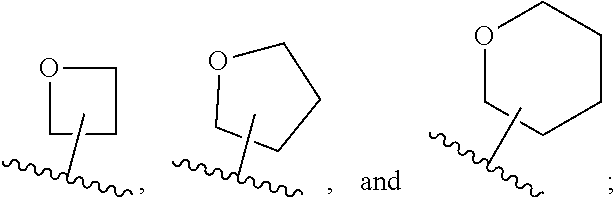
R3 and R4 together with the nitrogen to which they are both attached form a heterocyclyl selected from
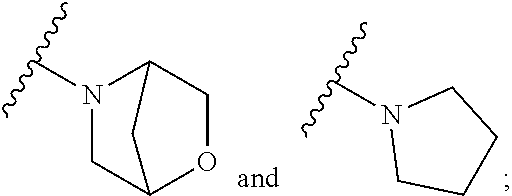
R5a is hydrogen or F;
R5b is hydrogen or F;
R5c is Cl or —OCH3;
R7 is hydrogen or CH3; and
Rd is —CH2OCH3.
3. A compound, having Formula (IVc):

or a pharmaceutically acceptable salt thereof, wherein:
R1 is Cl, —CF3, —OCHF2, or —OCF3;
R2 is cyano, F, Cl, —CH2OH, —CH3, —CHF2, —CF3, —OCH3, —OCH(CH3)2, —N3R4, (CH3)2(O)P—, C3-6 cycloalkyl,

R3 is hydrogen or C1-4 alkyl substituted with 0-1 S(O)2C1-3 alkyl,

R4 is hydrogen;
alternatively, R3 and R4 together with the nitrogen to which they are both attached form a heterocyclyl selected from

R5a is hydrogen or F;
R5b is hydrogen or F;
R5c is Cl or —OCH3;
R6 is hydrogen, halo, oxo, —CH3, —CH2CH3, or —CH2OH;
R7 is hydrogen or CH3; and
R8 is hydrogen, C1-2 alkyl, or —S(O)2C1-3 alkyl.
4. A compound, having Formula (IVd):

or a pharmaceutically acceptable salt thereof, wherein:
R1 is Cl, —CF3, —OCHF2, or —OCF3;
R2 is —ORb or (C1-2 alkyl)2(O)P—;
R5a is hydrogen or F;
R5b is hydrogen or F;
R5c is Cl or —OCH3;
R7 is hydrogen or CH3;
Rb is hydrogen, C1-4 alkyl substituted with 0-3 Re, or
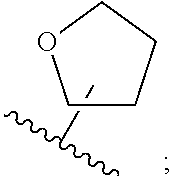
Re is F, Cl, or —ORg; and
Rg is hydrogen or C1-3 alkyl.
5. A compound, having Formula (IVe):
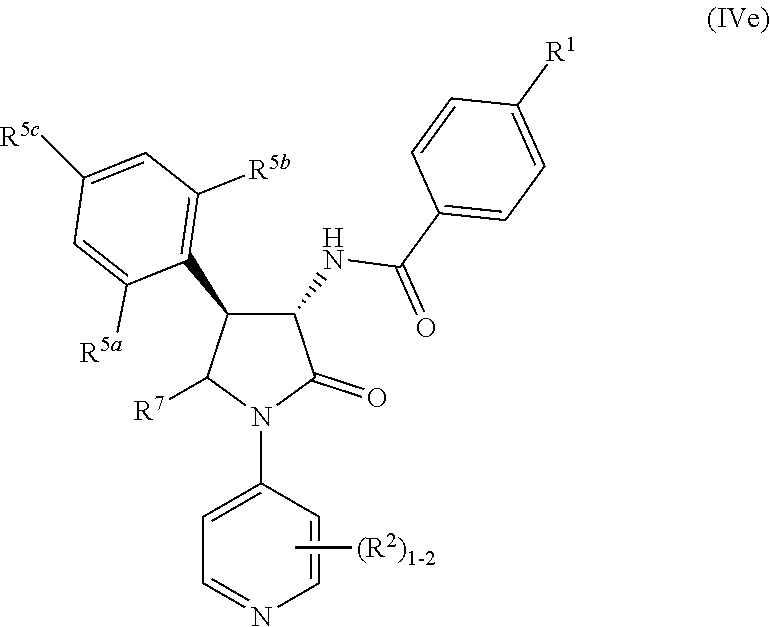
or a pharmaceutically acceptable salt thereof, wherein:
R1 is Cl, —CF3, —OCHF2, or —OCF3;
R2 is cyano, F, Cl, —CH2OH, —CH3, —CHF2, —CF3, —OCH3, —OCH(CH3)2, or —NR3R4;
R3 is hydrogen or C1-4 alkyl;
R4 is hydrogen or C1-2 alkyl;
alternatively, R3 and R4 together with the nitrogen to which they are both attached form a heterocyclyl selected from
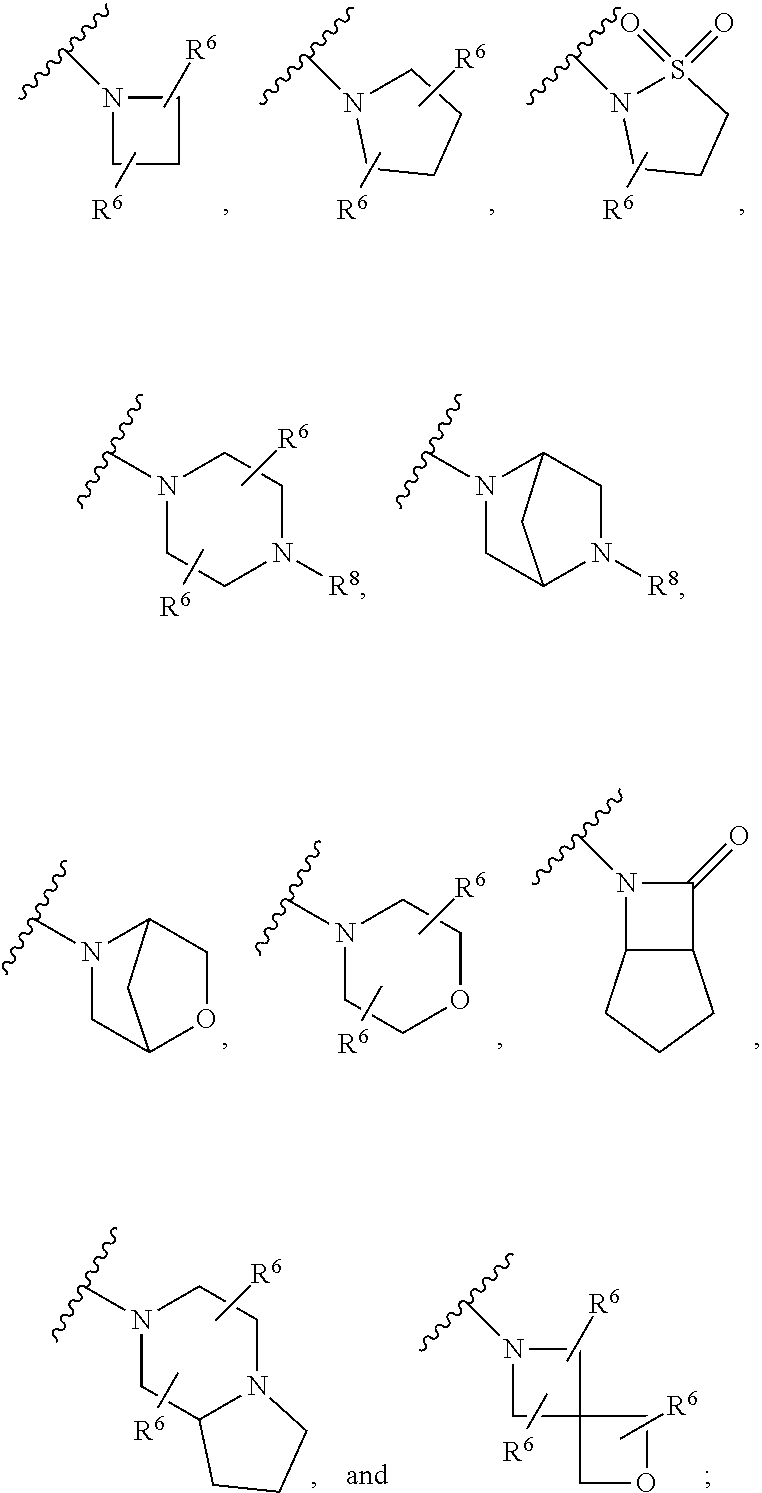
R5a is hydrogen or F;
R5b is hydrogen or F;
R5c is Cl or —OCH3,
R6 is hydrogen, halo, oxo, —CH3, —CH2CH3, or —CH2OH;
R7 is hydrogen or CH3; and
R8 is hydrogen, C1-2 alkyl, or —S(O)2C1-3 alkyl.
6. A compound, having Formula (IVf):

or a pharmaceutically acceptable salt thereof, wherein:
R1 is Cl, —CF3, —OCH3, —OCHF2, or —OCF3;
R2 is cyano, F, Cl, —CH2OH, —CH3, —CHF2, or —CF3;
R2a is —CH3, —CH2CH3, —CH2CHF2, —CH2CH2OCH3, —CH2CH(OH)CF3, —CH2CH(OH)CH3, —CH2CH2OH, —CH2CH(CH3)OH, or —CH2CH2CF3;
R5a is hydrogen, F, or Cl;
R5b is hydrogen, F, or Cl; and
R5c is Cl or —OCH3; and
R7 is hydrogen or CH3.
7. A pharmaceutical composition comprising one or more compounds according to
8. A method for the treatment or prophylaxis of inflammatory diseases, heart diseases, chronic airway diseases, cancers, septicemia, allergic symptoms, HIV retrovirus infection, circulatory disorders, neuroinflammation, nervous disorders, pains, prion diseases, amyloidosis, and immune disorders, comprising administrating a therapeutically effective amount of the pharmaceutical composition of
9. The method of
10. The method of