US20260191849A1 · App 19/131,934
PHARMACEUTICAL COMPOSITION FOR TREATMENT OF CANCER
Publication
Application
Classifications
IPC Classifications
CPC Classifications
Applicants
WIGEN BIOMEDICINE TECHNOLOGY (SHANGHAI) CO., LTD.
Inventors
Yuli XIE, Yingming WU, Lihui QIAN
Abstract
Disclosed is a pharmaceutical composition for the treatment of cancer. Specifically, the present invention relates to a composition composed of a KIF18A inhibitor and a compound for inhibiting protein activity, wherein the compound for inhibiting protein activity is preferably a compound for inhibiting PLK1 protein activity or a compound for inhibiting Aurora B protein activity.
Get a summary, plain-language explanation, or ask your own question.
Figures
Description
[0001]The present application claims priority to Chinese Patent Application No. 202211530468.2 filed on Nov. 30, 2022 and Chinese Patent Application No. 202310767807.7 filed on Jun. 27, 2023, which are incorporated herein by reference in their entirety.
TECHNICAL FIELD
[0002]The present disclosure relates to a pharmaceutical composition for treating a cancer, and particularly to a pharmaceutical composition of a KIF18A inhibitor and a compound for inhibiting protein activity, and use thereof in preparing a medicament for treating a cancer.
BACKGROUND
[0003]Genomic instability is a common feature of most tumor cells. Most tumor cells exhibit abnormal gain or deletion of chromosomes. The chromosome instability of tumor cells leads to abnormal interactions between chromosomes and spindle microtubules, which in turn causes chromosome segregation errors. Compared to cells carrying normal chromosomes, those with chromosome instability exhibit enhanced microtubule polymerization and reduced turnover of spindle microtubule-kinetochore attachments. Therefore, anti-mitotic therapies directed against the microtubule backbone may be particularly effective for cells with chromosome instability.
[0004]Kinesins are a class of molecular motors that play important roles in cell division and intracellular vesicle and organelle transport. Kinesins play crucial roles in several aspects such as spindle assembly, chromosome segregation, centrosome separation, and dynamics. Human kinesins are classified into 14 subfamilies based on differences in amino acid sequences of motor domains, and the ATPase activity in their motor domains drives the kinesins to move unidirectionally along the microtubules, while the non-motor domains are responsible for interactions with substrates such as membranous organelles, signaling scaffold systems, and chromosomes. Kinesins gain energy through ATP hydrolysis, moving the substrates along microtubules. Based on the movement direction of kinesins on microtubules, kinesins are referred to as “plus-end” or “minus-end” directed motors.
[0005]KIF18A protein belongs to the kinesin-8 subfamily. KIF18A protein is overexpressed in various types of cancers, such as lung, ovarian, cervical, breast, pancreatic, prostate, colon, and bladder cancers. Studies have shown that KIF18A plays important roles during cell division phase. On the one hand, KIF18A regulates the elongation of the plus ends (chromosome-bound end) of centromere microtubules, thereby ensuring correct chromosome positioning and spindle tension. In tumor cells with chromosome instability, abnormal microtubule dynamics make such cells particularly dependent on KIF18A protein to reduce spindle microtubule-kinetochore contact turnover and to limit microtubule growth (Nat Commun. 2021, 12, 1213). On the other hand, KIF18A sustains centriole integrity. When KIF18A protein is deleted from tumor cells with chromosome instability, centrosomes of the cells are fragmented, thereby slowing or arresting mitotic progression. Compared with normal cells, tumors with chromosome instability are particularly sensitive to KIF18A deletion, suggesting that the development of KIF18A inhibitors is a new promising approach against tumors with chromosome instability.
SUMMARY
[0006]The present disclosure provides a pharmaceutical composition for treating a cancer, which comprises a KIF18A inhibitor and a compound for inhibiting protein activity.
[0007]In another preferred embodiment, the compound for inhibiting protein activity is a compound for inhibiting PLK1 protein activity or a compound for inhibiting Aurora B protein activity.
[0008]In another preferred embodiment, the cancer treatment is the induction of cancer cell death.
[0009]In another preferred embodiment, the cancer treatment is the anti-proliferation of cancer cells.
[0010]In another preferred embodiment, the cancer is a cancer with chromosome instability characteristics.
[0011]In another preferred embodiment, the cancer is a cancer with aneuploidy characteristics.
[0012]In another preferred embodiment, the cancer is a cancer with whole genome duplication characteristics.
[0013]In another preferred embodiment, the cancer is a cancer with chromosome instability and aneuploidy characteristics.
[0014]In another preferred embodiment, the cancer is a cancer with chromosome instability and whole genome duplication characteristics.
[0015]In another preferred embodiment, the cancer is a cancer with aneuploidy and whole genome duplication characteristics.
[0016]In another preferred embodiment, the cancer is a cancer with chromosome instability, aneuploidy, and whole genome duplication characteristics.
[0017]In another preferred embodiment, the cancer is a solid tumor or a hematologic cancer.
[0018]In another preferred embodiment, the cancer includes, but is not limited to, uterine cancer, bladder cancer, prostate cancer, breast cancer, lung cancer, intestinal cancer, pancreatic cancer, kidney cancer, ovarian cancer, soft tissue cancer, osteosarcoma, or interstitial tumor.
[0019]In another preferred embodiment, the compound for inhibiting PLK1 protein activity includes a PLK1 inhibitor and a PLK1 degrader.
[0020]In another preferred embodiment, the PLK1 inhibitor is a dihydropteridinone compound, a pyridopyrimidine compound, an aminopyrimidine compound, a substituted thiazolidinone compound, a pteridine compound, a dihydroimidazo[1,5-f]pteridine compound, a benzyl styryl sulfone compound, a stilbene compound, or an isomer thereof, a crystalline form thereof, a pharmaceutically acceptable salt thereof, a hydrate thereof, or a solvate thereof.
[0021]In another preferred embodiment, the PLK1 inhibitor is


or an isomer thereof, a crystalline form thereof, a pharmaceutically acceptable salt thereof, a hydrate thereof, or a solvate thereof.
[0022]In another preferred embodiment, the PLK1 inhibitor is TKM-080301,

black phosphorus nanosheets incorporated with poly(d,l-lactide)-poly(ethylene glycol)-poly(d,l-lactide) (BP@PLEL hydrogel), or an isomer thereof, a crystalline form thereof, a pharmaceutically acceptable salt thereof, a hydrate thereof, or a solvate thereof.
[0023]In another preferred embodiment, the PLK1 degrader is

or an isomer thereof, a crystalline form thereof, a pharmaceutically acceptable salt thereof, a hydrate thereof, or a solvate thereof.
[0024]In another preferred embodiment, the compound for inhibiting Aurora B protein activity includes an Aurora B inhibitor and an Aurora B degrader.
[0025]In another preferred embodiment, the Aurora B inhibitor is

or an isomer thereof, a crystalline form thereof, a pharmaceutically acceptable salt thereof, a hydrate thereof, or a solvate thereof.
[0026]In another preferred embodiment, the KIF18A inhibitor is a compound represented by general formula (1) or an isomer thereof, a crystalline form thereof, a pharmaceutically acceptable salt thereof, a hydrate thereof, or a solvate thereof:

- [0027]wherein, in general formula (1):
- [0028]X1 is —CR5═ or N;
- [0029]X2 is —CR6═ or N;
- [0030]X3 is —CR7═ or N;
- [0031]X4 is —CR4═ or N;
- [0032]X5 is —CR15═ or N;
- [0033]when X5 is —CR15═ and X4 is —CR4═, R16 is —C3-8 cycloalkyl, —OR17, —SR18, —NR18R19, or —NO2;
- [0034]when X5 is —CR15═ and X4 is N, R16 is —O—C1-8 hydrocarbyl, —C3-8 cycloalkyl, —OR17, —SR18, —NR20R21, or —NO2;
- [0035]when X5 is N, R16 is —O—C1-8 hydrocarbyl, —C3-8 cycloalkyl, —OR17, —SR18, —NR20R21, or —NO2;
- [0036]L is —(C═O)—NR9—* or —NR9—(C═O)—*; and no more than four of X1, X2, X3, X4, and X5 are N;
- [0037]* represents a position linking to

- terminal;
- [0038]R17 is H, —C1-8 halohydrocarbyl, —C3-8 cycloalkyl, or —C3-8 halocycloalkyl, wherein the —C1-8 halohydrocarbyl, —C3-8 cycloalkyl, or —C3-8 halocycloalkyl may be optionally substituted with 0, 1, 2, or 3 of the following groups: H, halogen, and —C1-4 hydrocarbyl;
- [0039]R18 and R19 are each independently H, —C1-8 hydrocarbyl, —C1-8 halohydrocarbyl, —C3-8 cycloalkyl, or —C3-8 halocycloalkyl, wherein the —C1-8 hydrocarbyl, —C1-8 halohydrocarbyl, —C3-8 cycloalkyl, or —C3-8 halocycloalkyl may be optionally substituted with 0, 1, 2, or 3 of the following groups: H, halogen, and —C1-4 hydrocarbyl;
- [0040]R20 and R21 are each independently H, —C1-8 hydrocarbyl, —C1-8 halohydrocarbyl, —C3-8 cycloalkyl, or —C3-8 halocycloalkyl, wherein the —C1-8 hydrocarbyl, —C1-8 halohydrocarbyl, —C3-8 cycloalkyl, or —C3-8 halocycloalkyl may be optionally substituted with 0, 1, 2, or 3 of the following groups: H, halogen, and —C1-4 hydrocarbyl; or R20 and R21 may be combined with the nitrogen atom to which they are each connected to form a saturated or partially saturated 3-, 4-, 5-, or 6-membered monocyclic ring or 4-, 5-, 6-, 7-, 8-, 9-, 10-, 11-, or 12-membered bicyclic ring containing 0, 1, 2, or 3 N atoms and 0, 1, or 2 atoms selected from O and S;
- [0041]R1 is —CN or —Z—R10, wherein Z is a chemical bond, —C0-4 hydrocarbyl-, —NR11—, —NR11SO2—, —SO2NR11—, —NR11—S(═O)(═NH)—, —S(═O)(═NH)—, —S—, —S(═O)—, —SO2—, —C0-4 hydrocarbyl-O—, —(C═O)—, —(C═O)NR11—, —C(═N—OH)—, or —NR11(C═O)—; or the group —Z—R10 is —N═S(═O)—(R10)2, wherein two R10 may be combined with the sulfur atom to which they are each connected to form a saturated or partially saturated 3-, 4-, 5-, or 6-membered monocyclic ring containing 0, 1, 2, or 3 N atoms and 0, 1, or 2 atoms selected from O and S;
- [0042]R2 is halogen or a group —Y—R12, wherein Y is a chemical bond, —C0-4 hydrocarbyl-, —N(C0-1 hydrocarbyl)-C0-4 hydrocarbyl-, —C(═O)NRaRa(C1-4 hydrocarbyl)-, —O—C0-4 hydrocarbyl-, —S—, —S(═O)—, —SO2—, —SO2NR12—, or —S(═O)(═NH)—;
- [0043]R3 is H, halogen, C1-8 hydrocarbyl, or C1-4 halohydrocarbyl;
- [0044]R4 is H, halogen, R4a, or R4b;
- [0045]R5 is H, halogen, C1-8 alkyl, or C1-4 haloalkyl;
- [0046]R6 is H, halogen, C1-8 alkyl, C1-4 haloalkyl, —OH, —O—R6a, or R6b;
- [0047]R8 is H, halogen, C1-8 hydrocarbyl, or C1-4 halohydrocarbyl;
- [0048]R8 is selected from the group consisting of:

- [0050]R9 is H or C1-6 hydrocarbyl;
- [0051]R10 is H, R10a, R10b, or R10c;
- [0052]R11 is H, R11a, or R11b;
- [0053]R12 is R12a or R12b;
- [0054]R15 is H, halogen, C1-8 hydrocarbyl, C1-4 halohydrocarbyl, —O—C1-8 hydrocarbyl, or —O—R15a, wherein R15a is a saturated or partially saturated 3-, 4-, 5-, or 6-membered monocyclic ring containing 0, 1, 2, or 3 N atoms and 0, 1, or 2 atoms selected from O and S;
- [0055]R4a, R6a, R10a, R11a, R12a, or R13m, in each case, is independently selected from: a saturated, partially saturated, or unsaturated 3-, 4-, 5-, 6-, or 7-membered monocyclic ring or 4-, 5-, 6-, 7-, 8-, 9-, 10-, 11-, or 12-membered bicyclic ring containing 0, 1, 2, or 3 N atoms and 0, 1 or 2 atoms selected from O and S, wherein the monocyclic ring and bicyclic ring may be each independently and optionally substituted with 0, 1, 2, or 3 of the following groups: F, Cl, Br, C1-6 hydrocarbyl, C1-4 halohydrocarbyl, —ORa, —OC1-4 halohydrocarbyl, CN, —C(═O)Rb, —C(═O)ORa, —C(═O)NRaRa, —C(═NRa)NRaRa, —OC(═O)Rb, —OC(═O)NRaRa, —OC2-6 hydrocarbyl NRaRa, —OC2-6 hydrocarbyl ORa, —SRa, —S(═O)Rb, —S(═O)2Rb, —S(═O)2NRaRa, —NRaRa, —N(Ra)C(═O)Rb, —N(Ra)C(═O)ORb, —N(Ra)C(═O)NRaRa, —N(Ra)C(═NRa)NRaRa, —N(Ra)S(═O)2Rb, —N(Ra)S(═O)2NRaRa, —NRaC2-6 hydrocarbyl NRaRa, —NRaC2-6 hydrocarbyl ORa, —C1-6 hydrocarbyl NRaRa, —C1-6 hydrocarbyl ORa, —C1-6 hydrocarbyl N(Ra)C(═O)Rb, —C1-6 hydrocarbyl OC(═O)Rb, —C1-6 hydrocarbyl C(═O)NRaRa, —C1-6 hydrocarbyl C(═O)ORa, R14, and oxo;
- [0056]R4b, R6b, R10b, R11b, R12b, or R13n, in each case, is independently selected from: C1-6 hydrocarbyl, wherein the hydrocarbyl may be optionally substituted with 0, 1, 2, 3, 4, or 5 of the following groups: F, Cl, Br, —Ra, —ORa, —OC1-4 halohydrocarbyl, and CN;
- [0057]R10c, in each case, is independently selected from: C1-6 hydrocarbyl, wherein the hydrocarbyl may be optionally substituted with 0, 1, 2, 3, 4, or 5 of the following groups: F, Cl, Br, —Ra, —Rc, —ORa, —OC1-4 halohydrocarbyl, and CN;
- [0058]R14, in each case, is independently selected from: a saturated, partially saturated, or unsaturated 3-, 4-, 5-, 6-, or 7-membered monocyclic ring or 4-, 5-, 6-, 7-, 8-, 9-, 10-, 11-, or 12-membered bicyclic ring containing 0, 1, 2, or 3 N atoms and 0 or 1 atom selected from O and S, wherein the monocyclic ring and bicyclic ring may be each independently and optionally substituted with 0, 1, 2, or 3 of the following groups: F, Cl, Br, C1-6 hydrocarbyl, C1-4 halohydrocarbyl, —ORa, —OC1-4 halohydrocarbyl, CN, —C(═O)Rb, —C(═O)ORa, —C(═O)NRaRa, —C(═NRa)NRaRa, —OC(═O)Rb, —OC(═O)NRaRa, —OC2-6 hydrocarbyl NRaRa, —OC2-6 hydrocarbyl ORa, —SRa, —S(═O)Rb, —S(═O)2Rb, —S(═O)2NRaRa, —NRaRa, —N(Ra)C(═O)Rb, —N(Ra)C(═O)ORb, —N(Ra)C(═O)NRaRa, —N(Ra)C(═NRa)NRaRa, —N(Ra)S(═O)2Rb, —N(Ra)S(═O)2NRaRa, —NRaC2-6 hydrocarbyl NRaRa, —NRaC2-6 hydrocarbyl ORa, —C1-6 hydrocarbyl NRaRa, —C1-6 hydrocarbyl ORa, —C1-6 hydrocarbyl N(Ra)C(═O)Rb, —C1-6 hydrocarbyl OC(═O)Rb, —C1-6 hydrocarbyl C(═O)NRaRa, —C1-6 hydrocarbyl C(═O)ORa, and oxo;
- [0059]Ra, in each case, is independently H or Rb;
- [0060]Rb, in each case, is independently C1-6 hydrocarbyl, phenyl, or benzyl, wherein the hydrocarbyl may be optionally substituted with 0, 1, 2, or 3 of the following groups: halogen, —OH, —OC1-4 hydrocarbyl, —NH2, —NHC1-4 hydrocarbyl, —OC(═O)C1-4 hydrocarbyl, and —N(C1-4 hydrocarbyl) C1-4 hydrocarbyl; and the phenyl and benzyl may be each independently and optionally substituted with 0, 1, 2, or 3 of the following groups: halogen, C1-4 hydrocarbyl, C1-3 halohydrocarbyl, —OH, —OC1-4 hydrocarbyl, —NH2, —NHC1-4 hydrocarbyl, —OC(═O)C1-4 hydrocarbyl, and —N(C1-4 hydrocarbyl) C1-4 hydrocarbyl; and
- [0061]Rc, in each case, is independently —OC(═O)C1-5 hydrocarbyl, wherein the hydrocarbyl may be optionally substituted with 1, 2, or 3 of the following groups: —OH and —NH2.
[0062]In another preferred embodiment, general formula (1) has the following structure:

- [0063]wherein R6 is —C3-6 cycloalkyl, —OH, —O—C1-4 hydrocarbyl, —O—C1-4 halohydrocarbyl, —O—C3-6 cycloalkyl, —O—C3-6 halocycloalkyl, —SH, —S—C1-6 hydrocarbyl, —S—C1-4 halohydrocarbyl, —S—C3-6 cycloalkyl, —S—C3-6 halocycloalkyl, —NR20R21 or —NO2.
[0064]In another preferred embodiment, general formula (1) has the following structure:

- [0065]wherein R16 is —C3-6 cycloalkyl, —OH, —O—C1-4 hydrocarbyl, —O—C1-4 halohydrocarbyl, —O—C3-6 cycloalkyl, —O—C3-6 halocycloalkyl, —SH, —S—C1-6 hydrocarbyl, —S—C1-4 halohydrocarbyl, —S—C3-6 cycloalkyl, —S—C3-6 halocycloalkyl, —NR20R21, or —NO2.
[0066]In another preferred embodiment, general formula (1) has the following structure:

- [0067]wherein R16 is —C3-6 cycloalkyl, —OH, —O—C1-4 halohydrocarbyl, —O—C3-6 cycloalkyl, —O—C3-6 halocycloalkyl, —SH, —S—C1-6 hydrocarbyl, —S—C1-4 halohydrocarbyl, —S—C3-6 cycloalkyl, —S—C3-6 halocycloalkyl, —NR18R19, or —NO2.
[0068]In another preferred embodiment, in general formula (1), R16 is —OH, —OCF3, —OCH2F, —OCHF2, —OCH2CF3, —OCF2CF3, —OCF2Cl, —OCFCl2,

or —NO2, preferably —OCF3, —OCH2F, —OCHF2,

—SCH3, —SCF3, —SCF2Cl, —SCFCl2,

or —NO2, and more preferably —OCF3, —OCH2F, —OCHF2,

—SCH3, —SCF3,

or —NO 2 .
[0069]In another preferred embodiment, in general formula (1), R16 is —OCH3, —OCH2CH3, —OCH2CH2CH3,

preferably —OCH3.
[0070]In another preferred embodiment, in general formula (1), R9 is H, methyl, or ethyl, preferably H.
[0071]In another preferred embodiment, in general formula (1), R13c, R13d, R13e, R13f, R13g, R13h, R13i, R13j, R13k, and R13l are each independently H, halogen, C1-6 hydrocarbyl, or C1-4 halohydrocarbyl; and R13a and R13b in the pair of R13a/R13b may be combined with the carbon atom to which they are each connected to form a saturated 3-, 4-, or 5-membered monocyclic ring spiro-linked to R8 ring, wherein the monocyclic ring contains 0, 1, 2, or 3 N atoms and 0, 1, or 2 atoms selected from O and S; preferably, R13c, R13d, R13e, R13f, R13g, R13h, R13i, R13j, R13k, and R13l are each independently H, methyl, or ethyl; and R13a and R13b in the pair of R13a/R13b may be combined with the carbon atom to which they are each connected to form a cyclopropyl, cyclobutyl, or cyclopentyl ring spiro-linked to R8 ring.
[0072]In another preferred embodiment, m general formula (1), structural unit

is:

preferably

[0073]In another preferred embodiment, in general formula (1), Z is a chemical bond, —NH—, —NHSO2—, —SO2NH—, —S(═O)(═NH)—, —S—, —S(═O)—, —SO2—, —(C═O)—, —(C═O)NH—, or —NH(C═O)—.
[0074]In another preferred embodiment, in general formula (1), R10 is selected from: (a) H; (b) C1-6 hydrocarbyl, wherein the hydrocarbyl may be optionally substituted with 0, 1, 2, or 3 of the following groups: F, Cl, Br, —OH, and —OCH3; (c) a group such that when the group —Z—R10 is —N═S(═O)—(R10)2, two R10 may be combined with the sulfur atom to which they are each connected to form a saturated, partially saturated, or unsaturated 3-, 4-, 5-, 6-, or 7-membered monocyclic ring containing 0, 1, 2, or 3 N atoms and 0 or 1 atom selected from O and S, wherein the monocyclic ring is substituted with 0, 1, 2, or 3 groups selected from: F, Cl, Br, C1-6 hydrocarbyl, C1-4 halohydrocarbyl, —C1-6 hydrocarbyl OH, —OH, —OCH3, —NH2, and oxo; and (d) C1-6 hydrocarbyl, wherein the C1-6 hydrocarbyl may be optionally substituted with 1, 2, or 3 of the following group: —OC(═O)C1-5 hydrocarbyl, wherein the C1-5 hydrocarbyl may be optionally substituted with 1 or 2 of the following groups: —OH and —NH2; and the C1-6 hydrocarbyl may be optionally substituted with 0, 1, 2, or 3 of the following groups: F, Cl, Br, —OH, and —OCH3.
- [0076](a) H;
- [0077](b) cyclopropyl, cyclobutyl, cyclopentyl, cyclohexyl, oxiranyl, oxetanyl, tetrahydrofuranyl, azetidinyl, imidazolyl, morpholinyl, pyrrolidinyl, piperazinyl,

- wherein the rings may be each independently and optionally substituted with 0, 1, 2, or 3 of the following groups: OH, F, methyl, —CH2OH, —C(═O)OCH3, —C(═O)OC(CH3)3, NH2, CN, and oxo; and oxetanyl and cyclopropyl are preferred;
- [0078](c) C1-6 hydrocarbyl substituted with 0, 1, 2, or 3 OH, F, —C(═O)OCH3, —NH2, —NH(CH3), or —N(CH3)2, preferably C1-6 hydrocarbyl substituted with 0, 1, 2, or 3 OH groups, and more preferably C1-6 hydrocarbyl substituted with 1 OH group; and
- [0079](d) C1-6 hydrocarbyl, wherein the C1-6 hydrocarbyl may be optionally substituted with 1, 2, or 3 of the following groups:

- and the C1-6 hydrocarbyl may be optionally substituted with 0, 1, 2, or 3 of the following groups: F, Cl, Br, —OH, and —OCH3.
[0080]In another preferred embodiment, in general formula (1), the group —Z—R10 is —N═S(═O)—(R10)2, wherein two R10 may be combined with the sulfur atom to which they are each connected to form a saturated or partially saturated 3-, 4-, 5-, or 6-membered monocyclic ring containing 0, 1, 2, or 3 N atoms and 0, 1 or 2 atoms selected from O and S; preferably, the group —Z—R10 is selected from:

[0081]In another preferred embodiment, in general formula (1), R1 is a group —Z—R10, wherein Z is —NHSO2— or —SO2NH—; and R10 is oxetanyl or cyclopropyl, or R10 is C1-6 hydrocarbyl substituted with 0, 1, 2, or 3 OH groups; or R10 is C1-6 hydrocarbyl, wherein the C1-6 hydrocarbyl may be optionally substituted with 1, 2, or 3 of the following groups:

[0082]In another preferred embodiment, in general formula (1), R10 is selected from C1-6 hydrocarbyl, wherein the hydrocarbyl may be optionally substituted with 0, 1, 2, or 3 of the following groups:

the hydrocarbyl is preferably substituted with

Z is —NHSO2— or —SO2NH—; Z is preferably —NHSO2—.
[0083]In another preferred embodiment, in general formula (1), R10 is selected from C1-6 hydrocarbyl, wherein the hydrocarbyl may be optionally substituted with 1, 2, or 3 of the following groups:

Z is —NHSO2— or —SO2NH—.
[0084]In another preferred embodiment, in general formula (1), R2 is halogen or a group —Y—R12, wherein Y is a chemical bond, —NH—, —NH—(CH2)0-4—, or —O—(CH2)0-4—; and R12 is a saturated, partially saturated, or unsaturated 3-, 4-, 5-, 6-, or 7-membered monocyclic ring or 4-, 5-, 6-, 7-, 8-, 9-, 10-, 11-, or 12-membered bicyclic ring containing 0, 1, 2, or 3 N atoms and 0 or 1 atom selected from O and S, wherein the monocyclic ring and bicyclic ring may be each independently and optionally substituted with 0, 1, 2, or 3 of the following groups: F, Cl, Br, C1-6 hydrocarbyl, C1-4 halohydrocarbyl, —OH, —OC1-4 halohydrocarbyl, CN, R14, and oxo; or R12 is C1-6 hydrocarbyl, wherein the hydrocarbyl may be optionally substituted with 0, 1, 2, 3, 4, or 5 of the following groups: F, Cl, Br, —OH, —OC1-4 halohydrocarbyl, and CN.
[0085]In another preferred embodiment, in general formula (1), R2 is a saturated 5- or 6-membered monocyclic ring, wherein the ring contains 0, 1 or 2 N atoms and 0 or 1 O atom, and the ring is substituted with 0, 1, 2, or 3 groups selected from: F, Cl, Br, C1-6 hydrocarbyl, C1-4 halohydrocarbyl, —OH, —OC1-4 halohydrocarbyl, CN, R14, and oxo.
[0086]In another preferred embodiment, in general formula (1), R2 is: (a) halogen; (b) a group —Y—R12, wherein Y is a chemical bond; and R12 is morpholinyl, piperidinyl, azetidinyl, pyrrolidinyl, cyclopropyl, cyclobutyl, cyclopentyl, cyclohexyl, piperazinyl, tetrahydrofuranyl,

wherein each of the rings is substituted with 0, 1, 2, or 3 groups selected from: F, Cl, Br, methyl, CF3, —OH, —OCHF2, CN, and oxo; or (c) a group —Y—R12, wherein Y is —NH—, —O— —O—(CH2)—, —O(CH2)(CH2), or —O—(CH2)—(CH2)—(CH2)—, and R12 is

or R12 is C1-6 hydrocarbyl, wherein the hydrocarbyl may be optionally substituted with 0, 1, 2, 3, 4, or 5 of the following groups: F, Cl, Br, methyl, CF3, —OH, and CN.
[0087]In another preferred embodiment, in general formula (1), R2 is morpholinyl or piperidinyl, wherein the morpholinyl and piperidinyl may be optionally substituted with 0, 1, 2, or 3 of the following groups: F, Cl, Br, methyl, CF3, —OH, —OCHF2, and CN.
[0088]In another preferred embodiment, in general formula (1), R2 is piperidinyl substituted with 1, 2, or 3 fluorine groups.
[0089]In another preferred embodiment, in general formula (1), R2 is:

[0090]In another preferred embodiment, in general formula (1), R2 is morpholinyl substituted with 1, 2, or 3 methyl groups.
[0091]In another preferred embodiment, in general formula (1), R2 is

[0092]In another preferred embodiment, in general formula (1), R10 is selected from cyclopropyl, cyclobutyl, cyclopentyl, oxetanyl, azetidinyl, tetrahydrofuranyl, and 1,3,4-oxathiazinanyl.
[0093]In another preferred embodiment, in general formula (1), R3 is H.
[0094]In another preferred embodiment, in general formula (1), R4 is selected from: (a) H; (b) C1-6 hydrocarbyl substituted with 0, 1, 2, or 3 OH groups; (c) cyclopropyl; and (d) F; R4 is preferably H, F, or methyl; R4 is more preferably H.
[0095]In another preferred embodiment, in general formula (1), R5 is H or F, preferably H.
[0096]In another preferred embodiment, in general formula (1), R6 is H or F, preferably H.
[0097]In another preferred embodiment, in general formula (1), R7 is H.
[0098]In another preferred embodiment, in general formula (1), R15 is H or F, preferably H.
[0099]In another preferred embodiment, general formula (1) has the following structure:

- [0100]wherein R16 is —C3-6 cycloalkyl, —OH, —O—C1-4 hydrocarbyl, —O—C1-4 halohydrocarbyl, —O—C3-6 cycloalkyl, —O—C3-6 halocycloalkyl, —SH, —S—C1-6 hydrocarbyl, —S—C1-4 halohydrocarbyl, —S—C3-6 cycloalkyl, —S—C3-6 halocycloalkyl, —NR20R21, or —NO2, wherein R2, R3, R10, R20, and R21 are defined as previously described and exemplified in specific examples.
[0101]In another preferred embodiment, general formula (1) has the following structure:

- [0102]wherein R16 is —C3-6 cycloalkyl, —OH, —O—C1-4 halohydrocarbyl, —O—C3-6 cycloalkyl, —O—C3-6 halocycloalkyl, —SH, —S—C1-6 hydrocarbyl, —S—C1-4 halohydrocarbyl, —S—C3-8 cycloalkyl, —S—C3-8 halocycloalkyl, —NR18R19, or —NO2, wherein R2, R3, R10, R18, and R19 are defined as previously described and exemplified in specific examples.
[0103]In another preferred embodiment, general formula (1) has the following structure:

- [0104]wherein R16 is —C3-6 cycloalkyl, —OH, —O—C1-4 hydrocarbyl, —O—C1-4 halohydrocarbyl, —O—C3-6 cycloalkyl, —O—C3-6 halocycloalkyl, —SH, —S—C1-6 hydrocarbyl, —S—C1-4 halohydrocarbyl, —S—C3-6 cycloalkyl, —S—C3-6 halocycloalkyl, —NR20R21, or —NO2, wherein L, R10, R20, and R21 are defined as previously described and exemplified in specific examples.
[0105]In another preferred embodiment, general formula (1) has the following structure:

- [0106]wherein R16 is —C3-6 cycloalkyl, —OH, —O—C1-4 halohydrocarbyl, —O—C3-6 cycloalkyl, —O—C3-6 halocycloalkyl, —SH, —S—C1-6 hydrocarbyl, —S—C1-4 halohydrocarbyl, —S—C3-6 cycloalkyl, —S—C3-6 halocycloalkyl, —NR18R19, or —NO2, wherein L, R10, R18, and R19 are defined as previously described and exemplified in specific examples.
[0107]In various different embodiments of the present invention, the compound of general formula (1) has one of the following structures:


[0108]In another preferred embodiment, the KIF18A inhibitor is a compound represented by general formula (5) or an isomer thereof, a crystalline form thereof, a pharmaceutically acceptable salt thereof, a hydrate thereof, or a solvate thereof:

- [0109]wherein in general formula (5):
- [0110]X1 is —CR5═ or N;
- [0111]X2 is —CR6═ or N;
- [0112]X3 is —CR7═ or N;
- [0113]X4 is —CR4═;
- [0114]X5 is —CR15═;
- [0115]R16 is C1-8 hydrocarbyl;
- [0116]L is —(C═O)—NR9—* or —NR9—(C═O)—*; and no more than four of X1, X2, X3, X4, and X5 are N;
- [0117]* represents attachment to the

- end;
- [0118]R1 is —CN or —Z—R10, wherein Z is a chemical bond, —C0-4 hydrocarbyl-, —NR11—, —NR11SO2—, —SO2NR11—, —NR11—S(═O)(═NH)—, —S(═O)(═NH)—, —S—, —S(═O)—, —SO2—, —C0-4 hydrocarbyl-O—, —(C═O)—, —(C═O)NR11—, —C(═N—OH)—, or —NR11(C═O)—; or the group —Z—R10 is —N═S(═O)—(R10)2, wherein two R10 may be combined with the sulfur atom to which they are each attached to form a saturated or partially saturated 3-, 4-, 5-, or 6-membered monocyclic ring containing 0, 1, 2, or 3 N atoms and 0, 1, or 2 atoms selected from O and S;
- [0119]R2 is halogen or a group —Y—R12, wherein Y is a chemical bond, —C0-4 hydrocarbyl-, —N(C0-1 hydrocarbyl)-C0-4 hydrocarbyl-, —C(═O)NRaRa(C1-4 hydrocarbyl)-, —O—C0-4 hydrocarbyl-, —S—, —S(═O)—, —SO2—, —SO2NR12—, or —S(═O)(═NH)—;
- [0120]R3 is H, halogen, C1-8 hydrocarbyl, or C1-4 halohydrocarbyl;
- [0121]R4 is H, halogen, R4a, or R4b;
- [0122]R5 is H, halogen, C1-8 alkyl, or C1-4 haloalkyl;
- [0123]R6 is H, halogen, C1-8 alkyl, C1-4 haloalkyl, —OH, —O—R6a, or —O—R;
- [0124]R7 is H, halogen, C1-8 hydrocarbyl, or C1-4 halohydrocarbyl;
- [0125]R8 is selected from the group consisting of:

- [0126]R13a, R13b, R13c, R13d, R13e, R13f, R13g, R13h, R13i, R13j, R13k, and R13l are each independently H, halogen, R13m, or R13n; or each of the pairs of R13a/R13b, R13c/R13d, R13e/R13f, R13g/R13h, R13i/R13j, and R13k/R13l may independently form, with the carbon atom to which they are each attached, a saturated or partially saturated 3-, 4-, 5-, or 6-membered monocyclic ring spiro-linked to R8 ring, wherein the 3-, 4-, 5-, or 6-membered monocyclic ring contains 0, 1, 2, or 3 N atoms and 0, 1, or 2 atoms selected from O and S, and further, the 3-, 4-, 5-, or 6-membered monocyclic ring is substituted with 0, 1, 2, or 3 groups selected from: F, Cl, Br, C1-6 hydrocarbyl, C1-4 halohydrocarbyl, —ORa, —OC1-4 halohydrocarbyl, CN, —NRaRa, and oxo;
- [0127]R9 is H or C1-6 hydrocarbyl;
- [0128]R10 is H, R10a, R10b, or R10e;
- [0129]R11 is H, R11a, or R11b;
- [0130]R12 is R12a or R12b;
- [0131]R15 is H, halogen, C1-8 hydrocarbyl, C1-4 halohydrocarbyl, —O—C1-8 hydrocarbyl, or —O—R15a, wherein R15a is a saturated or partially saturated 3-, 4-, 5-, or 6-membered monocyclic ring containing 0, 1, 2, or 3 N atoms and 0, 1, or 2 atoms selected from O and S;
- [0132]R4a, R6a, R10a, R11a, R12a, or R13m, in each case, is independently selected from: a saturated, partially saturated, or unsaturated 3-, 4-, 5-, 6-, or 7-membered monocyclic ring or 4-, 5-, 6-, 7-, 8-, 9-, 10-, 11-, or 12-membered bicyclic ring containing 0, 1, 2, or 3 N atoms and 0, 1, or 2 atoms selected from O and S, wherein the monocyclic ring and bicyclic ring may be each independently and optionally substituted with 0, 1, 2, or 3 groups selected from: F, Cl, Br, C1-6 hydrocarbyl, C1-4 halohydrocarbyl, —ORa, —OC1-4 halohydrocarbyl, CN, —C(═O)Rb, —C(═O)ORa, —C(═O)NRaRa, —C(═NRa)NRaRa, —OC(═O)Rb, —OC(═O)NRaRa, —OC2-6 hydrocarbyl NRaRa, —OC2-6 hydrocarbyl ORa, —SRa, —S(═O)Rb, —S(═O)2Rb, —S(═O)2NRaRa, —NRaRa, —N(Ra)C(═O)Rb, —N(Ra)C(═O)ORb, —N(Ra)C(═O)NRaRa, —N(Ra)C(═NRa)NRaRa, —N(Ra)S(═O)2Rb, —N(Ra)S(═O)2NRaRa, —NRaC2-6 hydrocarbyl NRaRa, —NRaC2-6 hydrocarbyl ORa, —C1-6 hydrocarbyl NRaRa, —C1-6 hydrocarbyl ORa, —C1-6 hydrocarbyl N(Ra)C(═O)Rb, —C1-6 hydrocarbyl OC(═O)Rb, —C1-6 hydrocarbyl C(═O)NRaRa, —C1-6 hydrocarbyl C(═O)ORa, R14, and oxo;
- [0133]R4b, R6, R10b, R11b, R12b, or R13n, in each case, is independently selected from: C1-6 hydrocarbyl, wherein the hydrocarbyl may be optionally substituted with 0, 1, 2, 3, 4, or 5 groups selected from: F, Cl, Br, —Ra, —ORa, —OC1-4 halohydrocarbyl, and CN; R10e, in each case, is independently selected from: C1-6 hydrocarbyl, wherein the hydrocarbyl may be optionally substituted with 0, 1, 2, 3, 4, or 5 groups selected from: F, Cl, Br, —Ra, —Rc, —ORa, —OC1-4 halohydrocarbyl, and CN;
- [0134]R14, in each case, is independently selected from the group consisting of: a saturated, partially saturated, or unsaturated 3-, 4-, 5-, 6-, or 7-membered monocyclic ring or 4-, 5-, 6-, 7-, 8-, 9-, 10-, 11-, or 12-membered bicyclic ring containing 0, 1, 2, or 3 N atoms and 0 or 1 atom selected from O and S, wherein the monocyclic ring and bicyclic ring may be each independently and optionally substituted with 0, 1, 2, or 3 groups selected from: F, Cl, Br, C1-6 hydrocarbyl, C1-4 halohydrocarbyl, —ORa, —OC1-4 halohydrocarbyl, CN, —C(═O)Rb, —C(═O)ORa, —C(═O)NRaRa, —C(═NRa)NRaRa, —OC(═O)Rb, —OC(═O)NRaRa, —OC2-6 hydrocarbyl NRaRa, —OC2-6 hydrocarbyl ORa, —SRa, —S(═O)Rb, —S(═O)2Rb, —S(═O)2NRaRa, —NRaRa, —N(Ra)C(═O)Rb, —N(Ra)C(═O)ORb, —N(Ra)C(═O)NRaRa, —N(Ra)C(═NRa)NRaRa, —N(Ra)S(═O)2Rb, —N(Ra)S(═O)2NRaRa, —NRaC2-6 hydrocarbyl NRaRa, —NRaC2-6 hydrocarbyl ORa, —C1-6 hydrocarbyl NRaRa, —C1-6 hydrocarbyl ORa, —C1-6 hydrocarbyl N(Ra)C(═O)Rb, —C1-6 hydrocarbyl OC(═O)Rb, —C1-6 hydrocarbyl C(═O)NRaRa, —C1-6 hydrocarbyl C(═O)ORa, and oxo;
- [0135]Ra, in each case, is independently H or Rb;
- [0136]Rb, in each case, is independently C1-6 hydrocarbyl, phenyl, or benzyl, wherein the hydrocarbyl may be optionally substituted with 0, 1, 2, or 3 groups selected from: halogen, —OH, —OC1-4 hydrocarbyl, —NH2, —NHC1-4 hydrocarbyl, —OC(═O)C1-4 hydrocarbyl, and —N(C1-4 hydrocarbyl)C1-4 hydrocarbyl; and the phenyl and benzyl may be each independently and optionally substituted with 0, 1, 2, or 3 groups selected from: halogen, C1-4 hydrocarbyl, C1-3 halohydrocarbyl, —OH, —OC1-4 hydrocarbyl, —NH2, —NHC1-4 hydrocarbyl, —OC(═O)C1. 4 hydrocarbyl, and —N(C1-4 hydrocarbyl)C1-4 hydrocarbyl; and
- [0137]Rc, in each case, is independently —OC(═O)C1-5 hydrocarbyl, wherein the hydrocarbyl may be optionally substituted with 1, 2, or 3 groups selected from: —OH and —NH2.
[0138]In another preferred embodiment, general formula (5) has the following structure:

- [0139]wherein R16 is C1-4 hydrocarbyl.
[0140]In another preferred embodiment, in general formula (5), R16 is

preferably

[0141]In another preferred embodiment, in general formula (5), R9 is H, methyl, or ethyl, preferably H.
[0142]In another preferred embodiment, in general formula (5), R13c, R13d, R13e, R13f, R13g, R13h, R13i, R13j, R13k, and R13l are each independently H, halogen, C1-6 hydrocarbyl, or C1-4 halohydrocarbyl; and R13a and R13b in the pair of R13a/R13b may be combined with the carbon atom to which they are each attached to form a saturated 3-, 4-, or 5-membered monocyclic ring spiro-linked to R8 ring, wherein the monocyclic ring contains 0, 1, 2, or 3 N atoms and 0, 1, or 2 atoms selected from O and S; preferably, R13c, R13d, R13e, R13f, R13g, R13h, R13i, R13j, R13k, and R13l are each independently H, methyl, or ethyl; and R13a and R13b in the pair of R13a/R13b may be combined with the carbon atom to which they are each attached to form a cyclopropyl, cyclobutyl, or cyclopentyl ring spiro-linked to R8 ring.
[0143]In another preferred embodiment, in general formula (5), the structural unit

is:

preferably

[0144]In another preferred embodiment, in general formula (5), Z is a chemical bond, —NH—, —NHSO2—, —SO2NH—, —S(═O)(═NH)—, —S—, —S(═O)—, —SO2—, —(C═O)—, —(C═O)NH—, or —NH(C═O)—.
[0145]In another preferred embodiment, in general formula (5), R10 is selected from: (a) H; (b) C1-6 hydrocarbyl, wherein the hydrocarbyl may be optionally substituted with 0, 1, 2, or 3 groups selected from: F, Cl, Br, —OH, and —OCH3; (c) a group such that when the group —Z—R10 is —N═S(═O)—(R10)2, two R10 may be combined with the sulfur atom to which they are each attached to form a saturated, partially saturated, or unsaturated 3-, 4-, 5-, 6-, or 7-membered monocyclic ring containing 0, 1, 2, or 3 N atoms and 0 or 1 atom selected from O and S, wherein the monocyclic ring is substituted with 0, 1, 2, or 3 groups selected from: F, Cl, Br, C1-6 hydrocarbyl, C1-4 halohydrocarbyl, —C1-6 hydrocarbyl OH, —OH, —OCH3, —NH2, and oxo; and (d) C1-6 hydrocarbyl, wherein the C1-6 hydrocarbyl may be optionally substituted with 1, 2, or 3 groups selected from: —OC(═O)C1-5 hydrocarbyl, wherein the C1-5 hydrocarbyl may be optionally substituted with 1 or 2 groups selected from: —OH and —NH2; and the C1-6 hydrocarbyl may be optionally substituted with 0, 1, 2, or 3 groups selected from: F, Cl, Br, —OH, and —OCH3.
- [0147](a) H;
- [0148](b) cyclopropyl, cyclobutyl, cyclopentyl, cyclohexyl, oxiranyl, oxetanyl, tetrahydrofuranyl, azetidinyl, imidazolyl, morpholinyl, pyrrolidinyl, piperazinyl,

- wherein each of the rings may be independently and optionally substituted with 0, 1, 2, or 3 groups selected from: OH, F, methyl, —CH2OH, —C(═O)OCH3, —C(═O)OC(CH3)3, NH2, CN, and oxo; and oxetanyl and cyclopropyl are preferred:
- [0149](c) C1-6 hydrocarbyl substituted with 0, 1, 2, or 3 OH, F, —C(═O)OCH3, —NH2, —NH(CH3), or —N(CH3)2, preferably C1-6 hydrocarbyl substituted with 0, 1, 2, or 3 OH groups, and more preferably C1-6 hydrocarbyl substituted with 1 OH group; and
- [0150](d) C1-6 hydrocarbyl, wherein the C1-6 hydrocarbyl may be optionally substituted with 1, 2, or 3 groups selected from:

and the C1-6 hydrocarbyl may be optionally substituted with 0, 1, 2, or 3 groups selected from: F, Cl, Br, —OH, and —OCH3.
[0151]In another preferred embodiment, in general formula (5), the group —Z—R10 is —N═S(═O)—(R10)2, wherein two R10 may be combined with the sulfur atom to which they are each attached to form a saturated or partially saturated 3-, 4-, 5-, or 6-membered monocyclic ring containing 0, 1, 2, or 3 N atoms and 0, 1, or 2 atoms selected from O and S; preferably, the group —Z—R10 is selected from:

[0152]In another preferred embodiment, in general formula (5), R1 is a group —Z—R10, wherein Z is —NHSO2— or —SO2NH—; and R10 is oxetanyl or cyclopropyl, or R10 is C1-6 hydrocarbyl substituted with 0, 1, 2, or 3 OH groups; or R10 is C1-6 hydrocarbyl, wherein the C1-6 hydrocarbyl may be optionally substituted with 1, 2, or 3 groups selected from:

[0153]In another preferred embodiment, in general formula (5), R10 is selected from C1-6 hydrocarbyl, wherein the hydrocarbyl may be optionally substituted with 0, 1, 2, or 3 groups selected from:

the hydrocarbyl is preferably substituted with

Z is —NHSO2— or —SO2NH—; Z is preferably —NHSO2—.
[0154]In another preferred embodiment, in general formula (5), R10 is selected from C1-6 hydrocarbyl, wherein the hydrocarbyl may be optionally substituted with 1, 2, or 3 groups selected from:

Z is —NHSO2— or —SO2NH—.
- [0156]R12 is C1-6 hydrocarbyl, wherein the hydrocarbyl may be optionally substituted with 0, 1, 2, 3, 4, or 5 groups selected from: F, Cl, Br, —OH, —OC1-4 halohydrocarbyl, and CN.
[0157]In another preferred embodiment, in general formula (5), R2 is a saturated 5- or 6-membered monocyclic ring, wherein each of the rings contains 0, 1, or 2 N atoms and 0 or 1 O atom, and each of the rings is substituted with 0, 1, 2, or 3 groups selected from: F, Cl, Br, C1-6 hydrocarbyl, C1-4 halohydrocarbyl, —OH, —OC1-4 halohydrocarbyl, CN, R14, and oxo.
[0158]In another preferred embodiment, in general formula (5), R2 is: (a) halogen; (b) a group —Y—R12, wherein Y is a chemical bond; and R12 is morpholinyl, piperidinyl, azetidinyl, pyrrolidinyl, cyclopropyl, cyclobutyl, cyclopentyl, cyclohexyl, piperazinyl, tetrahydrofuranyl,

wherein each of the rings is substituted with 0, 1, 2, or 3 groups selected from: F, Cl, Br, methyl, CF3, —OH, —OCHF2, CN, and oxo; or (c) a group —Y—R12, wherein Y is —NH—, —O—, —O—(CH2)—, —O—(CH2)—(CH2)—, or —O—(CH2)—(CH2)—(CH2)—, and R12 is

or R12 is C1-6 hydrocarbyl, wherein the hydrocarbyl may be optionally substituted with 0, 1, 2, 3, 4, or 5 groups selected from: F, Cl, Br, methyl, CF3, —OH, and CN.
[0159]In another preferred embodiment, in general formula (5), R2 is morpholinyl or piperidinyl, wherein the morpholinyl and piperidinyl may be optionally substituted with 0, 1, 2, or 3 groups selected from: F, Cl, Br, methyl, CF3, —OH, —OCHF2, and CN.
[0160]In another preferred embodiment, in general formula (5), R2 is piperidinyl substituted with 1, 2, or 3 fluorine groups.
[0161]In another preferred embodiment, in general formula (5), R2 is:

[0162]In another preferred embodiment, in general formula (5), R2 is morpholinyl substituted with 1, 2, or 3 methyl groups.
[0163]In another preferred embodiment, in general formula (5), R2 is

[0164]In another preferred embodiment, in general formula (5), R10 is selected from cyclopropyl, cyclobutyl, cyclopentyl, oxetanyl, azetidinyl, tetrahydrofuranyl, and 1,3,4-oxathiazinanyl.
[0165]In another preferred embodiment, in general formula (5), R3 is H.
[0166]In another preferred embodiment, in general formula (5), R4 is selected from: (a) H; (b) C1-6 hydrocarbyl substituted with 0, 1, 2, or 3 OH groups; (c) cyclopropyl; and (d) F; R4 is preferably H, F, or methyl; R4 is more preferably H.
[0167]In another preferred embodiment, in general formula (5), R5 is H or F, preferably H.
[0168]In another preferred embodiment, in general formula (5), R6 is H or F, preferably H.
[0169]In another preferred embodiment, in general formula (5), R7 is H.
[0170]In another preferred embodiment, in general formula (5), R15 is H or F, preferably H.
[0171]In various different embodiments of the present disclosure, the compound of general formula (5) has one of the following structures:


[0172]In another preferred embodiment, the KIF18A inhibitor has a structure as shown in general formula (1) in WO2020132648/US2020239441:

General Formula (1) in WO2020132648/US2020239441
- [0173]wherein X, Rx, R1, R2, R3, R4, R5, R7, R8, and R9 are as defined in WO2020132648/US2020239441; the KIF18A inhibitor is preferably


or an isomer thereof, a crystalline form thereof, a pharmaceutically acceptable salt thereof, a hydrate thereof, or a solvate thereof.
[0174]In another preferred embodiment, the KIF18A inhibitor has a structure as shown in general formula (1) in WO2020132649/US2022056015:

General Formula (1) in WO2020132649/US2022056015
- [0175]wherein L, X1, X2, X3, X4, Rx, R1, R2, R4, and R5 are as defined in WO2020132649/US2022056015; the KIF18A inhibitor is preferably


or an isomer thereof, a crystalline form thereof, a pharmaceutically acceptable salt thereof, a hydrate thereof, or a solvate thereof.
[0176]In another preferred embodiment, the KIF18A inhibitor has a structure as shown in general formula (1) in

General Formula (1) in WO2020132651/US2022073504
- [0177]wherein X1, Rx, R1, R2, R3, R4, R5, R7, R8, and R9 are as defined in WO2020132651/US2022073504; the KIF18A inhibitor is preferably


or an isomer thereof, a crystalline form thereof, a pharmaceutically acceptable salt thereof, a hydrate thereof, or a solvate thereof.
[0178]In another preferred embodiment, the KIF18A inhibitor has a structure as shown in general formula (1) in WO2020132653/US2022002311:

General Formula (1) in WO2020132653/US2022002311
- [0179]wherein L, X1, X2, X3, X4, Rx, R1, R2, R4, and R5 are as defined in WO2020132653/US2022002311; the KIF18A inhibitor is preferably


or an isomer thereof, a crystalline form thereof, a pharmaceutically acceptable salt thereof, a hydrate thereof, or a solvate thereof.
[0180]In another preferred embodiment, the KIF18A inhibitor has a structure as shown in general formula (1) in WO2021026098/US2022289724:

General Formula (1) in WO2021026098/US2022289724
- [0181]wherein L, Rx, R1, R2, R3, R4, R5, R6, R7, R8 and R9 are as defined in WO2021026098/US2022289724; the KIF18A inhibitor is preferably


- [0182] or an isomer thereof, a crystalline form thereof, a pharmaceutically acceptable salt thereof, a hydrate thereof, or a solvate thereof.
[0183]In another preferred embodiment, the KIF1Aa inhibitor has a structure as shown in general formula (1) in WO2021026099:

General Formula (1) in WO2021026099
- [0184]wherein L, Rx, R1, R2, R3, R4, R5, R6, and R7 are as defined in WO2021026099; the KIF18A inhibitor is preferably


or an isomer thereof, a crystalline form thereof, a pharmaceutically acceptable salt thereof, a hydrate thereof, or a solvate thereof.
[0185]In another preferred embodiment, the KIF18A inhibitor has a structure as shown in general formula (1) in WO2021026100/US2022372018:

General Formula (1) in WO2021026100/US2022372018
- [0186]wherein L, X1, X2, X3, Rx, R2, R5, R6, R7, R8, and R9 are as defined in WO2021026100/US2022372018; the KIF18A inhibitor is preferably


or an isomer thereof, a crystalline form thereof, a pharmaceutically acceptable salt thereof, a hydrate thereof, or a solvate thereof.
[0187]In another preferred embodiment, the KIF18A inhibitor has a structure as shown in general formula (1) in WO2021026101/US2022281843:

General Formula (1) in WO2021026101/US2022281843
- [0188]wherein L, X1, X2, X3, X4, X5, X6, X7, Rx, R1, R2, R4, and R5 are as defined in WO2021026101/US-2022281843; the KIF18A inhibitor is preferably


or an isomer thereof, a crystalline form thereof, a pharmaceutically acceptable salt thereof, a hydrate thereof, or a solvate thereof.
[0189]In another preferred embodiment, the KIF18A inhibitor is

or an isomer thereof, a crystalline form thereof, a pharmaceutically acceptable salt thereof, a hydrate thereof, or a solvate thereof.
[0190]In another preferred embodiment, the KIF18A inhibitor has a structure as shown in general formula (1) in WO2022268230:

General Formula (1) in WO2022268230
- [0191]wherein A, B, L, X1, X2, X3, and X4 are as defined in WO2022268230; the KIF18A inhibitor is preferably


[0192]In another preferred embodiment, the KIF18A inhibitor has a structure as shown in general formula (1) in WO2023028564/US2023147507:

General Formula (1) in WO2023028564/US2023147507
- [0193]wherein A, B, Y1, Y2, Y3, Y4, RB, and m are as defined in WO2023028564/US2023147507; the KIF18A inhibitor is preferably


[0194]In another preferred embodiment, the KIF18A inhibitor has a structure as shown in general formula V in WO2023198209A1:

General Formula V in WO2023198209A1
- [0195]wherein A, B, RX, R1, R3, X4, X5, X6, and m are as defined in WO2023198209A1; the KIF18A inhibitor is preferably


[0196]In another preferred embodiment, the KIF18A inhibitor has a structure as shown in general formula (I) in WO2023212240A1:

General Formula (7) in WO2023212240A1
- [0197]wherein A, B1, B2, R3, R4, X, Y, Z, V, and W are as defined in WO2023212240A1; the KIF18A inhibitor is preferably


[0198]In another preferred embodiment, the KIF18A inhibitor has a structure as shown in general formula (I) in CN202211486927:

General Formula (I) in CN202211486927
- [0199]wherein A, R1, R2, R3, R4, X1, X2, and L are as defined in CN202211486927; the KIF18A inhibitor is preferably

[0200]In another preferred embodiment, the KIF18A inhibitor has a structure as shown in general formula (I) in CN202310220736:

General Formula (I) in CN202310220736
- [0201]wherein R1, R2, R3, m, and n are as defined in CN202310220736; the KIF18A inhibitor is preferably

[0202]In another preferred embodiment, the KIF18A inhibitor has a structure as shown in general formula (I) in WO2023217230A1:

General Formula (I) in WO2023217230A1
- [0203]wherein R1, R2, W1, W2, L1, L2, Cy1, Cy2, and Z are as defined in WO2023217230A1; the KIF18A inhibitor is preferably


[0204]In another preferred embodiment, the KIF18A inhibitor has a structure as shown in general formula (I) in WO2023217232A1:

General Formula (I) in WO2023217232A1
- [0205]wherein R1, R2, W1, W2, L1, L2, Cy1, Cy2, and Z are as defined in WO2023217232A1; the KIF18A inhibitor is preferably


[0206]In another preferred embodiment, the KIF18A inhibitor has a structure as shown in general formula (I) in WO2023217233A1:

General Formula (I) in WO2023217233A1
- [0207]wherein A, R1, W1, W2, W3, L1, L2, Cy1, Cy2, and Z are as defined in WO2023217233A1; the KIF18A inhibitor is preferably


[0208]In research of the related art, the inventors have unexpectedly found that a KIF18A inhibitor in combination with a PLK1 inhibitor or degrader, and a KIF18A inhibitor in combination with an Aurora B inhibitor or degrader, both exhibit synergistic effects in disease treatment, and the compositions exhibit significantly greater activity compared to the individual application of the KIF18A inhibitor, the PLK1 degrader or inhibitor, and the Aurora B inhibitor or degrader. The disease is preferably cancer, and the cancer is a hematologic cancer or a solid tumor.
- [0210]the concentration of the KIF18A inhibitor is preferably 0.0001-50000 nM, 0.0001-25000 nM, 0.0001-12500 nM, 0.0001-6250 nM, 0.0001-5000 nM, 0.0001-3125 nM, 0.0001-1562 nM, 0.0001-1000 nM, 0.0001-781 nM, 0.0001-400 nM, or 0.64-400 nM;
- [0211]the concentration of the PLK1 inhibitor is preferably 0.0001-50000 nM, 0.0001-25000 nM, 0.0001-12500 nM, 0.0001-6250 nM, 0.0001-3125 nM, 0.0001-1562 nM, 0.0001-1000 nM, 0.0001-781 nM, 0.0001-500 nM, 0.0001-400 nM, 0.0001-100 nM, 0.0001-50 nM, 0.0001-25 nM, 0.0001-10 nM, 1.6-1000 nM, 1.6-200 nM, 1.6-40 nM, or 3.125-50 nM.
[0212]The KIF18A inhibitor is preferably a compound of general formula (1), more preferably compound 257 of general formula (1); the KIF18A inhibitor is preferably AMG560; the PLK1 inhibitor is preferably Plogosertib, TAK960, Volasertib, Rigosertib, BI2536, Onvansertib, GSK461364, MLN0905, or Ro3280; the PLK1 inhibitor is preferably Plogosertib; the PLK1 inhibitor is preferably TAK960; the PLK1 inhibitor is preferably Volasertib; the PLK1 inhibitor is preferably Rigosertib; the PLK1 inhibitor is preferably BI2536; the PLK1 inhibitor is preferably Onvansertib; the PLK1 inhibitor is preferably GSK461364; the PLK1 inhibitor is preferably MLN0905; and the PLK1 inhibitor is preferably Ro3280.
- [0214]preferably, the pharmaceutical composition comprises 0.0001-100000 nM of the KIF18A inhibitor and 0.0001-50000 nM of the PLK1 inhibitor;
- [0215]preferably, the pharmaceutical composition comprises 0.0001-50000 nM of the KIF18A inhibitor and 0.0001-50000 nM of the PLK1 inhibitor;
- [0216]preferably, the pharmaceutical composition comprises 0.0001-50000 nM of the KIF18A inhibitor and 0.0001-25000 nM of the PLK1 inhibitor;
- [0217]preferably, the pharmaceutical composition comprises 0.0001-25000 nM of the KIF18A inhibitor and 0.0001-50000 nM of the PLK1 inhibitor;
- [0218]preferably, the pharmaceutical composition comprises 0.0001-25000 nM of the KIF18A inhibitor and 0.0001-25000 nM of the PLK1 inhibitor;
- [0219]preferably, the pharmaceutical composition comprises 0.0001-12500 nM of the KIF18A inhibitor and 0.0001-25000 nM of the PLK1 inhibitor;
- [0220]preferably, the pharmaceutical composition comprises 0.0001-25000 nM of the KIF18A inhibitor and 0.0001-12500 nM of the PLK1 inhibitor;
- [0221]preferably, the pharmaceutical composition comprises 0.0001-12500 nM of the KIF18A inhibitor and 0.0001-12500 nM of the PLK1 inhibitor;
- [0222]preferably, the pharmaceutical composition comprises 0.0001-12500 nM of the KIF18A inhibitor and 0.0001-6250 nM of the PLK1 inhibitor;
- [0223]preferably, the pharmaceutical composition comprises 0.0001-6250 nM of the KIF18A inhibitor and 0.0001-12500 nM of the PLK1 inhibitor;
- [0224]preferably, the pharmaceutical composition comprises 0.0001-6250 nM of the KIF18A inhibitor and 0.0001-6250 nM of the PLK1 inhibitor;
- [0225]preferably, the pharmaceutical composition comprises 0.0001-3125 nM of the KIF18A inhibitor and 0.0001-6250 nM of the PLK1 inhibitor;
- [0226]preferably, the pharmaceutical composition comprises 0.0001-6250 nM of the KIF18A inhibitor and 0.0001-3125 nM of the PLK1 inhibitor;
- [0227]preferably, the pharmaceutical composition comprises 0.0001-3125 nM of the KIF18A inhibitor and 0.0001-3125 nM of the PLK1 inhibitor;
- [0228]preferably, the pharmaceutical composition comprises 0.0001-3125 nM of the KIF18A inhibitor and 0.0001-1562 nM of the PLK1 inhibitor;
- [0229]preferably, the pharmaceutical composition comprises 0.0001-1562 nM of the KIF18A inhibitor and 0.0001-3125 nM of the PLK1 inhibitor;
- [0230]preferably, the pharmaceutical composition comprises 0.0001-1562 nM of the KIF18A inhibitor and 0.0001-1562 nM of the PLK1 inhibitor;
- [0231]preferably, the pharmaceutical composition comprises 0.0001-781 nM of the KIF18A inhibitor and 0.0001-1562 nM of the PLK1 inhibitor;
- [0232]preferably, the pharmaceutical composition comprises 0.0001-1562 nM of the KIF18A inhibitor and 0.0001-781 nM of the PLK1 inhibitor;
- [0233]preferably, the pharmaceutical composition comprises 0.0001-781 nM of the KIF18A inhibitor and 0.0001-781 nM of the PLK1 inhibitor;
- [0234]preferably, the pharmaceutical composition comprises 0.0001-781 nM of the KIF18A inhibitor and 0.0001-400 nM of the PLK1 inhibitor;
- [0235]preferably, the pharmaceutical composition comprises 0.0001-400 nM of the KIF18A inhibitor and 0.0001-781 nM of the PLK1 inhibitor;
- [0236]preferably, the pharmaceutical composition comprises 0.0001-400 nM of the KIF18A inhibitor and 0.0001-400 nM of the PLK1 inhibitor;
- [0237]preferably, the pharmaceutical composition comprises 0.0001-5000 nM of the KIF18A inhibitor and 0.0001-1000 nM of the PLK1 inhibitor;
- [0238]preferably, the pharmaceutical composition comprises 0.0001-1000 nM of the KIF18A inhibitor and 0.0001-1000 nM of the PLK1 inhibitor;
- [0239]preferably, the pharmaceutical composition comprises 0.0001-400 nM of the KIF18A inhibitor and 0.0001-1000 nM of the PLK1 inhibitor;
- [0240]preferably, the pharmaceutical composition comprises 0.0001-400 nM of the KIF18A inhibitor and 0.0001-50 nM of the PLK1 inhibitor;
- [0241]preferably, the pharmaceutical composition comprises 0.64-400 nM of a compound of general formula (1) and 1.6-1000 nM of Plogosertib;
- [0242]preferably, the pharmaceutical composition comprises 0.64-400 nM of a compound of general formula (1) and 1.6-200 nM of Plogosertib;
- [0243]preferably, the pharmaceutical composition comprises 0.64-400 nM of a compound of general formula (1) and 1.6-40 nM of Plogosertib;
- [0244]preferably, the pharmaceutical composition comprises 0.64-400 nM of compound 257 of general formula (1) and 1.6-1000 nM of Plogosertib;
- [0245]preferably, the pharmaceutical composition comprises 0.64-400 nM of compound 257 of general formula (1) and 1.6-200 nM of Plogosertib;
- [0246]preferably, the pharmaceutical composition comprises 0.64-400 nM of compound 257 of general formula (1) and 1.6-40 nM of Plogosertib;
- [0247]preferably, the pharmaceutical composition comprises 0.64-400 nM of AMG650 and 1.6-1000 nM of Plogosertib;
- [0248]preferably, the pharmaceutical composition comprises 0.64-400 nM of AMG650 and 1.6-200 nM of Plogosertib;
- [0249]preferably, the pharmaceutical composition comprises 0.64-400 nM of AMG650 and 1.6-40 nM of Plogosertib;
- [0250]preferably, the pharmaceutical composition comprises 0.64-400 nM of a compound of general formula (1) and 1.6-1000 nM of TAK960;
- [0251]preferably, the pharmaceutical composition comprises 0.64-400 nM of a compound of general formula (1) and 1.6-200 nM of TAK960;
- [0252]preferably, the pharmaceutical composition comprises 0.64-400 nM of a compound of general formula (1) and 1.6-40 nM of TAK960;
- [0253]preferably, the pharmaceutical composition comprises 0.64-400 nM of compound 257 of general formula (1) and 1.6-1000 nM of TAK960;
- [0254]preferably, the pharmaceutical composition comprises 0.64-400 nM of compound 257 of general formula (1) and 1.6-200 nM of TAK960;
- [0255]preferably, the pharmaceutical composition comprises 0.64-400 nM of compound 257 of general formula (1) and 1.6-40 nM of TAK960;
- [0256]preferably, the pharmaceutical composition comprises 0.64-400 nM of AMG650 and 1.6-1000 nM of TAK960;
- [0257]preferably, the pharmaceutical composition comprises 0.64-400 nM of AMG650 and 1.6-200 nM of TAK960;
- [0258]preferably, the pharmaceutical composition comprises 0.64-400 nM of AMG650 and 1.6-40 nM of TAK960;
- [0259]preferably, the pharmaceutical composition comprises 0.64-400 nM of a compound of general formula (1) and 3.125-50 nM of Volasertib;
- [0260]preferably, the pharmaceutical composition comprises 0.64-400 nM of compound 257 of general formula (1) and 3.125-50 nM of Volasertib;
- [0261]preferably, the pharmaceutical composition comprises 0.64-400 nM of AMG650 and 3.125-50 nM of Volasertib;
- [0262]preferably, the pharmaceutical composition comprises 0.0001-5000 nM of a compound of general formula (1) and 0.0001-100 nM of Rigosertib;
- [0263]preferably, the pharmaceutical composition comprises 0.0001-5000 nM of compound 257 of general formula (1) and 0.0001-100 nM of Rigosertib;
- [0264]preferably, the pharmaceutical composition comprises 0.0001-5000 nM of a compound of general formula (1) and 0.0001-10 nM of BI2536;
- [0265]preferably, the pharmaceutical composition comprises 0.0001-5000 nM of compound 257 of general formula (1) and 0.0001-10 nM of BI2536;
- [0266]preferably, the pharmaceutical composition comprises 0.0001-5000 nM of a compound of general formula (1) and 0.0001-25 nM of Volasertib;
- [0267]preferably, the pharmaceutical composition comprises 0.0001-5000 nM of compound 257 of general formula (1) and 0.0001-25 nM of Volasertib;
- [0268]preferably, the pharmaceutical composition comprises 0.0001-5000 nM of a compound of general formula (1) and 0.0001-1000 nM of Onvansertib;
- [0269]preferably, the pharmaceutical composition comprises 0.0001-5000 nM of a compound of general formula (1) and 0.0001-500 nM of Onvansertib;
- [0270]preferably, the pharmaceutical composition comprises 0.0001-5000 nM of a compound of general formula (1) and 0.0001-100 nM of Onvansertib;
- [0271]preferably, the pharmaceutical composition comprises 0.0001-5000 nM of a compound of general formula (1) and 0.0001-25 nM of Onvansertib;
- [0272]preferably, the pharmaceutical composition comprises 0.0001-5000 nM of compound 257 of general formula (1) and 0.0001-1000 nM of Onvansertib;
- [0273]preferably, the pharmaceutical composition comprises 0.0001-5000 nM of compound 257 of general formula (1) and 0.0001-500 nM of Onvansertib;
- [0274]preferably, the pharmaceutical composition comprises 0.0001-5000 nM of compound 257 of general formula (1) and 0.0001-100 nM of Onvansertib;
- [0275]preferably, the pharmaceutical composition comprises 0.0001-5000 nM of compound 257 of general formula (1) and 0.0001-25 nM of Onvansertib;
- [0276]preferably, the pharmaceutical composition comprises 0.0001-5000 nM of a compound of general formula (1) and 0.0001-1000 nM of GSK461364;
- [0277]preferably, the pharmaceutical composition comprises 0.0001-5000 nM of a compound of general formula (1) and 0.0001-500 nM of GSK461364;
- [0278]preferably, the pharmaceutical composition comprises 0.0001-5000 nM of a compound of general formula (1) and 0.0001-100 nM of GSK461364;
- [0279]preferably, the pharmaceutical composition comprises 0.0001-5000 nM of a compound of general formula (1) and 0.0001-10 nM of GSK461364;
- [0280]preferably, the pharmaceutical composition comprises 0.0001-5000 nM of compound 257 of general formula (1) and 0.0001-1000 nM of GSK461364;
- [0281]preferably, the pharmaceutical composition comprises 0.0001-5000 nM of compound 257 of general formula (1) and 0.0001-500 nM of GSK461364;
- [0282]preferably, the pharmaceutical composition comprises 0.0001-5000 nM of compound 257 of general formula (1) and 0.0001-100 nM of GSK461364;
- [0283]preferably, the pharmaceutical composition comprises 0.0001-5000 nM of compound 257 of general formula (1) and 0.0001-10 nM of GSK461364;
- [0284]preferably, the pharmaceutical composition comprises 0.0001-5000 nM of a compound of general formula (1) and 0.0001-1000 nM of MLN0905;
- [0285]preferably, the pharmaceutical composition comprises 0.0001-5000 nM of a compound of general formula (1) and 0.0001-500 nM of MLN0905;
- [0286]preferably, the pharmaceutical composition comprises 0.0001-5000 nM of a compound of general formula (1) and 0.0001-100 nM of MLN0905;
- [0287]preferably, the pharmaceutical composition comprises 0.0001-5000 nM of a compound of general formula (1) and 0.0001-25 nM of MLN0905;
- [0288]preferably, the pharmaceutical composition comprises 0.0001-5000 nM of compound 257 of general formula (1) and 0.0001-1000 nM of MLN0905;
- [0289]preferably, the pharmaceutical composition comprises 0.0001-5000 nM of compound 257 of general formula (1) and 0.0001-500 nM of MLN0905;
- [0290]preferably, the pharmaceutical composition comprises 0.0001-5000 nM of compound 257 of general formula (1) and 0.0001-100 nM of MLN0905;
- [0291]preferably, the pharmaceutical composition comprises 0.0001-5000 nM of compound 257 of general formula (1) and 0.0001-25 nM of MLN0905;
- [0292]preferably, the pharmaceutical composition comprises 0.0001-5000 nM of a compound of general formula (1) and 0.0001-25 nM of Ro3280; and
- [0293]preferably, the pharmaceutical composition comprises 0.0001-5000 nM of compound 257 of general formula (1) and 0.0001-25 nM of Ro3280.
BRIEF DESCRIPTION OF THE DRAWINGS
[0294]
[0295]
[0296]
[0297]
[0298]
[0299]
[0300]
[0301]
[0302]
[0303]
[0304]
[0305]
[0306]
[0307]
[0308]
[0309]
SYNTHESIS OF COMPOUND
[0310]Methods for preparing the compounds disclosed herein are specifically described below, which, however, are not intended to limit the present invention in any way.
[0311]The compounds described above may be synthesized using standard synthetic techniques or well-known techniques in combination with the methods described herein. In addition, solvents, temperatures, and other reaction conditions mentioned herein may vary. Starting materials for the synthesis of the compounds may be obtained synthetically or from commercial sources, such as, but not limited to, Aldrich Chemical Co. (Milwaukee, Wis.) or Sigma Chemical Co. (St. Louis, Mo.). The compounds described herein and other related compounds having various substituents may be synthesized using well-known techniques and starting materials, including the methods found in March, A
[0312]In one aspect, the compounds described herein are prepared according to methods well known in the art. However, the conditions involved in the methods, such as reactants, solvent, base, amount of the compound used, reaction temperature, and time required for the reaction are not limited to the following explanation. The compounds of the present invention can also be conveniently prepared by optionally combining various synthetic methods described herein or known in the art, and such combinations can be easily determined by those skilled in the art to which the present invention pertains. In one aspect, the present invention further provides a method for preparing the compounds described herein, wherein the compound of general formula (1) may be prepared by the following general reaction scheme 1, 2, 3, or 4.

[0313]Embodiments of the compound of general formula (1) may be prepared according to general reaction scheme 1, wherein R1, R2, R3, R8, R16, X1, X2, X3, X4, and X5 are as defined above; W1 represents fluorine, chlorine, bromine, or iodine; H represents hydrogen; N represents nitrogen; R1 reagent is, for example, (1) 1-methylcyclopropane-1-sulfonamide, (2) 3-methyloxetan-3-amine, (3) tert-butyl 3-mercaptoazetidine-1-carboxylate, (4) ethyl 2-sulfamoylpropionate, (5) 2-hydroxypropane-1-sulfonamide, (6) 2-hydroxyethane-1-sulfonamide, (7) ethyl iodoacetate, (8) 2-mercaptopropane-1-ol, (9) 2-mercapto-2-methylpropan-1-ol, (10) 2-aminoethyl-1-ol, or (11) cyclopropanethiol. As shown in general reaction scheme 1, compound 1-1 and compound 1-2 are subjected to an amidation reaction to generate compound 1-3, and compound 1-3 reacts with R1 reagent 1-4 to generate compound 1-5.

[0314]Embodiments of the compound of general formula (1) may be prepared according to general reaction scheme 2, wherein R1, R2, R3, R8, R16, X1, X2, X3, X4, and X5 are as defined above; W1 represents fluorine, chlorine, bromine, or iodine; H represents hydrogen; N represents nitrogen; R1 reagent is, for example, (1) 1-methylcyclopropane-1-sulfonamide, (2) 3-methyloxetan-3-amine, (3) tert-butyl 3-mercaptoazetidine-1-carboxylate, (4) ethyl 2-sulfamoylpropionate, (5) 2-hydroxypropane-1-sulfonamide, (6) 2-hydroxyethane-1-sulfonamide, (7) ethyl iodoacetate, (8) 2-mercaptopropane-1-ol, (9) 2-mercapto-2-methylpropan-1-ol, (10) 2-aminoethyl-1-ol, or (11) cyclopropanethiol. As shown in general reaction scheme 2, compound 2-1 and compound 2-2 are subjected to an amidation reaction to generate compound 2-3, and compound 2-3 reacts with R1 reagent 2-4 to generate compound 2-5.

[0315]Embodiments of the compound of general formula (1) may be prepared according to general reaction scheme 3, wherein R1, R2, R3, R8, R16, X1, X2, X3, X4, and X5 are as defined above; W1 represents fluorine, chlorine, bromine, or iodine; H represents hydrogen; N represents nitrogen; P1 is a ester group-protecting group; R1 reagent is, for example, (1) 1-methylcyclopropane-1-sulfonamide, (2) 3-methyloxetan-3-amine, (3) tert-butyl 3-mercaptoazetidine-1-carboxylate, (4) ethyl 2-sulfamoylpropionate, (5) 2-hydroxypropane-1-sulfonamide, (6) 2-hydroxyethane-1-sulfonamide, (7) ethyl iodoacetate, (8) 2-mercaptopropane-1-ol, (9) 2-mercapto-2-methylpropan-1-ol, (10) 2-aminoethyl-1-ol, or (11) cyclopropanethiol. As shown in general reaction scheme 3, compound 3-1 reacts with R1 reagent 3-2 to generate compound 3-3, compound 3-3 removes the ester group-protecting group P1 to give compound 3-4, and compound 3-4 and compound 3-5 are subjected to an amidation reaction to generate compound 3-6.

[0316]Embodiments of the compound of general formula (1) may be prepared according to general reaction scheme 4, wherein R1, R2, R3, R8, X1, X2, X3, X4, and X5 are as defined above; W1 represents fluorine, chlorine, bromine, or iodine; H represents hydrogen; N represents nitrogen; P2 is a amino-protecting group; R1 reagent is, for example, (1) 1-methylcyclopropane-1-sulfonamide, (2) 3-methyloxetan-3-amine, (3) tert-butyl 3-mercaptoazetidine-1-carboxylate, (4) ethyl 2-sulfamoylpropionate, (5) 2-hydroxypropane-1-sulfonamide, (6) 2-hydroxyethane-1-sulfonamide, (7) ethyl iodoacetate, (8) 2-mercaptopropane-1-ol, (9) 2-mercapto-2-methylpropan-1-ol, (10) 2-aminoethyl-1-ol, or (11) cyclopropanethiol. As shown in general reaction scheme 4, compound 4-1 reacts with R1 reagent 4-2 to generate compound 4-3, compound 4-3 removes the amino-protecting group P2 to give compound 4-4, and compound 4-4 and compound 4-5 are subjected to an amidation reaction to generate compound 4-6.
Further Forms of Compounds
[0317]“Pharmaceutically acceptable” herein refers to a substance, such as a carrier or diluent, which will not lead to loss of biological activity or properties in a compound and is relatively non-toxic. For example, when an individual is given a substance, such substance will not cause undesired biological effects or interact with any component contained therein in a deleterious manner.
[0318]The term “pharmaceutically acceptable salt” refers to a form of a compound that does not cause significant irritation to the organism receiving the administration or eliminate the biological activity and properties of the compound. In certain specific aspects, the pharmaceutically acceptable salt is obtained by subjecting the compound of the general formula to a reaction with acids or bases, wherein the acids or bases include, but are not limited to, those found in Stahl and Wermuth, Handbook of Pharmaceutical Salts: Properties, Selection, and Use, 1st Ed. (Wiley, 2002).
[0319]It should be understood that references to pharmaceutically acceptable salts include solvent addition forms or crystalline forms, especially solvates or polymorphs. A solvate contains either stoichiometric or non-stoichiometric amount of solvent and is selectively formed during crystallization in a pharmaceutically acceptable solvent such as water and ethanol. Hydrates are formed when the solvent is water, or alcoholates are formed when the solvent is ethanol. The solvates of the compound of general formula (1) are conveniently prepared or formed according to methods described herein. For example, hydrates of the compound of general formula (1) are conveniently prepared by recrystallization in a mixed solvent of water/organic solvent, wherein the organic solvent used includes, but is not limited to, tetrahydrofuran, acetone, ethanol, or methanol. Furthermore, the compounds described herein may be present in either a non-solvated form or a solvated form. In general, the solvated forms are considered equivalent to the non-solvated forms for purposes of the compounds and methods provided herein.
[0320]In other specific examples, the compound of general formula (1) is prepared in different forms including, but not limited to, amorphous, pulverized, and nanoparticle forms. In addition, the compound of general formula (1) includes crystalline forms, but may also be polymorphs. Polymorphs include different lattice arrangements of the same elements of a compound. Polymorphs generally have different X-ray diffraction spectra, infrared spectra, melting points, density, hardness, crystalline forms, optical and electrical properties, stability, and solubility. Different factors such as recrystallization solvent, crystallization rate, and storage temperature may lead to a single dominant crystalline form.
[0321]In another aspect, the compound of general formula (1) may have a chiral center and/or axial chirality, and thus may be present in the form of a racemate, a racemic mixture, a single enantiomer, a diastereomeric compound, a single diastereomer, and a cis-trans isomer. Each chiral center or axial chirality will independently produce two optical isomers, and all possible optical isomers, diastereomeric mixtures, and pure or partially pure compounds are included within the scope of the present invention. The present invention is meant to include all such isomeric forms of these compounds.
[0322]The compound of the present invention may contain unnatural proportions of atomic isotopes at one or more of the atoms that constitute the compound. For example, the compound may be labeled with radioactive isotopes, such as tritium (3H), iodine-125 (125I), and C-14 (14C). For another example, deuterium can be used to substitute a hydrogen atom to form a deuterated compound. The bond formed by deuterium and carbon is stronger than that formed by common hydrogen and carbon, and compared with an undeuterated medicament, the deuterated medicament generally has the advantages of reduced adverse effects, increased medicament stability, enhanced efficacy, prolonged in vivo half-life and the like. All isotopic variations of the compound of the present invention, whether radioactive or not, are intended to be encompassed within the scope of the present invention.
Terminology
[0323]Unless otherwise stated, the terms used in the present application, including those in the specification and claims, are defined as follows. It must be noted that in the specification and the appended claims, the singular forms “a” and “an” include plural meanings unless clearly indicated otherwise. Unless otherwise stated, conventional methods for mass spectrometry, nuclear magnetic resonance spectroscopy, HPLC, protein chemistry, biochemistry, recombinant DNA techniques, and pharmacology are used. As used herein, “or” or “and” refers to “and/or” unless otherwise stated.
[0324]Unless otherwise specified, “Cα-β hydrocarbyl” means a hydrocarbyl group containing a minimum of α and a maximum of β carbon atoms in a branched or linear relationship, wherein α and β represent integers. The hydrocarbyl described in this section may also contain one or two double or triple bonds. A designation of C0 hydrocarbyl represents a direct bond. Examples of the C1-6 hydrocarbyl include, but are not limited to, the following:

[0325]Unless otherwise specified, “Cα-β halohydrocarbyl” means a hydrocarbyl group, as described above, in which any number (at least one) of the hydrogen atoms attached to the hydrocarbyl chain are replaced by F, Cl, Br, or I.
[0326]Unless otherwise specified, “oxo” and “thio” represent ═O (e.g., carbonyl) and ═S (e.g., thiocarbonyl), respectively.
[0327]Unless otherwise specified, “halo” or “halogen” means a halogen atom selected from F, Cl, Br, and I.
[0328]Unless otherwise specified, “alkoxy” refers to an alkyl group that bonds to the rest of the molecule through an ether oxygen atom. Representative alkoxy groups are those having 1-6 carbon atoms, such as methoxy, ethoxy, propoxy, isopropoxy, butoxy, isobutoxy, sec-butoxy, and tert-butoxy. As used herein, “alkoxy” includes unsubstituted and substituted alkoxy, particularly alkoxy substituted with one or more halogens. Preferred alkoxy is selected from OCH3, OCF3, CHF2O, CF3CH2O, i—PrO, n—PrO, i-BuO, n-BuO, and t-BuO. Unless otherwise specified, “cycloalkyl” refers to a monocyclic non-aromatic hydrocarbon ring system. The ring carbon atoms of the cycloalkyl may optionally be oxidized to form an oxo or sulfido group. The cycloalkyl further includes cycloalkylene. In some embodiments, the cycloalkyl contains 0, 1, or 2 double bonds. In some embodiments, the cycloalkyl contains 1 or 2 double bonds (partially unsaturated cycloalkyl). Examples of the cycloalkyl include, but are not limited to, cyclopropyl, cyclobutyl, cyclopentyl, cyclohexyl, cycloheptyl, cyclopentenyl, cyclohexenyl, cyclohexadienyl, cycloheptatrienyl, and the like.
[0329]Unless otherwise specified, “bicyclic ring” means a group that features two connecting rings. The bicyclic ring may be a carbocyclic ring (all ring atoms are carbon atoms) or a heterocyclic ring (ring atoms include, for example, 1, 2, or 3 heteroatoms, such as N, O, or S, in addition to carbon atoms). These two rings may be aliphatic (e.g., decalin and norbomane), or may be aromatic (e.g., naphthalene), or a combination of aliphatic and aromatic (e.g., tetralin). Bicyclic rings include: (a) spirocyclic compounds, wherein the two rings share only one single atom (the spiro atom, which is typically a quaternary carbon); examples of the spirocyclic compounds include, but are not limited to:

- [0330](b) fused bicyclic compounds, wherein the two rings share two adjacent atoms, that is, the rings share a covalent bond, i.e., the bridgehead atoms are directly connected (e.g., α-thujene and decalin); examples of the fused bicyclic rings include, but are not limited to:

- [0331](c) bridged bicyclic compounds, wherein the two rings share three or more atoms and the two bridgehead atoms are separated by a bridge containing at least one atom; for example, norbomane, also known as bicyclo[2.2.1]heptane, can be thought of as a pair of cyclopentane rings, each sharing three of their five carbon atoms; examples of the bridged bicyclic rings include, but are not limited to:

[0332]Unless otherwise specified, “carbocyclic ring” or “carbocyclic”, by itself or in combination with other terms, represents a cyclic form of “Cα-β hydrocarbyl”. Examples of the carbocyclic ring include cyclopropyl, cyclobutyl, cyclopentyl, cyclohexyl, cycloheptyl, cyclopentenyl, cyclohexenyl, cyclohexadienyl, cycloheptatrienyl, norcamphanyl, norpinanyl, norcarnyl, bicyclo[1.1.1]pentyl, bicyclo[2.1.1]hexyl, and the like.
[0333]Unless otherwise specified, “heterocyclic ring” or “heterocyclic” means a ring containing at least one carbon atom and at least one other atom selected from N, O, and S. Examples of the heterocyclic ring that may be found in the claims include, but are not limited to, the following:

[0334]“Optional” or “optionally” means that the subsequently described event or circumstance may, but does not necessarily, occur, and the description includes instances where the event or circumstance occurs and instances where it does not.
[0335]“Saturated, partially saturated, or unsaturated” includes substituents saturated with hydrogen, substituents completely unsaturated with hydrogen, and substituents partially saturated with hydrogen.
[0336]When one of the variables is selected from a chemical bond, it means that the two groups linked by this variable are linked directly. For example, when L in X-L-Y represents a chemical bond, it means that the structure is actually X—Y.
[0337]When the number of a group is 0, such as —N(C0 hydrocarbyl)-C0-4 hydrocarbyl-, it means that the linker group is —NH—C0-4 hydrocarbyl-.
[0338]When the number of a linker group is 0, such as —(CH2)0—, it means that the linker group is a chemical bond.
Specific Pharmaceutical and Medical Terminology
[0341]The term “acceptable”, as used herein, means that a formulation component or an active ingredient does not unduly adversely affect a general therapeutic target's health.
[0342]The terms “treatment,” “treatment course,” and “therapy”, as used herein, include alleviating, inhibiting, or ameliorating a symptom or condition of a disease; inhibiting the development of complications; ameliorating or preventing underlying metabolic syndrome; inhibiting the development of a disease or symptom, e.g., controlling the progression of a disease or condition; alleviating a disease or symptom; leading to disease or symptom regression; and alleviating a complication caused by a disease or symptom, or preventing or treating a sign caused by a disease or symptom. As used herein, a compound or pharmaceutical composition, when administered, can ameliorate a disease, symptom, or condition, which particularly refers to ameliorating the severity, delaying the onset, slowing the progression, or reducing the duration of the disease. Fixed or temporary administration, or continuous or intermittent administration, may be attributed to or associated with the administration.
[0343]The “active ingredient” refers to the compound of general formula (1), and pharmaceutically acceptable inorganic or organic salts of the compound of general formula (1). The compounds of the present invention may contain one or more asymmetric centers (chiral center or axial chirality) and thus occur in the form of a racemate, racemic mixture, single enantiomer, diastereomeric compound, and single diastereomer. Asymmetric centers that may be present depend on the nature of the various substituents on the molecule. Each of these asymmetric centers will independently produce two optical isomers, and all possible optical isomers, diastereomeric mixtures, and pure or partially pure compounds are included within the scope of the present invention. The present invention is meant to include all such isomeric forms of these compounds.
[0344]The terms such as “compound”, “composition”, “agent”, or “medicine or medicament” are used interchangeably herein and all refer to a compound or composition that, when administered to an individual (human or animal), is capable of inducing a desired pharmacological and/or physiological response by local and/or systemic action.
[0345]The term “administered, administering, or administration” refers herein to the direct administration of the compound or composition, or the administration of a prodrug, derivative, analog, or the like of the active compound.
[0346]Although the numerical ranges and parameters defining the broad scope of the present invention are approximations, the related numerical values set forth in the specific examples have been presented herein as precisely as possible. Any numerical value, however, inherently contains a standard deviation necessarily resulting from certain methods of testing. Herein, “about” generally means that the actual numerical value is within a particular numerical value or range ±10%, 5%, 1%, or 0.5%. Alternatively, the term “about” indicates that the actual numerical value falls within the acceptable standard error of a mean, as considered by those skilled in the art. All ranges, quantities, numerical values, and percentages used herein (e.g., to describe an amount of a material, a length of time, a temperature, an operating condition, a quantitative ratio, and the like) are to be understood as being modified by the word “about”, except in the experimental examples or where otherwise explicitly indicated. Accordingly, unless otherwise contrarily stated, the numerical parameters set forth in the specification and the appended claims are all approximations that may vary as desired. At the very least, these numerical parameters should be understood as the significant digits indicated or the numerical value obtained using conventional rounding rules.
[0347]Unless otherwise defined in the specification, the scientific and technical terms used herein have the same meaning as commonly understood by those skilled in the art. Furthermore, nouns in their singular forms used in the specification encompass their plural forms, unless contradicted by context; nouns in their plural forms used also encompass their singular forms.
Therapeutic Use
[0348]The present disclosure provides a method for treating a disease, including but not limited to cancer, using the pharmaceutical composition of the present disclosure.
[0349]In some embodiments, a method for treating a cancer is provided, the method comprising administering to an individual in need thereof an effective amount of any aforementioned pharmaceutical composition. In other embodiments, the cancer is a hematologic cancer and a solid tumor, including but not limited to, leukemia, breast cancer, lung cancer, pancreatic cancer, colon cancer, bladder cancer, brain cancer, urothelial cancer, prostate cancer, liver cancer, ovarian cancer, head and neck cancer, gastric cancer, mesothelioma, or all cancer metastases.
Route of Administration
[0350]The compound and the pharmaceutically acceptable salt thereof disclosed herein can be prepared into various formulations comprising a safe and effective amount of the compound or the pharmaceutically acceptable salt thereof disclosed herein, and a pharmaceutically acceptable excipient or carrier, wherein the “safe and effective amount” means that the amount of the compound is sufficient to significantly improve the condition without causing serious adverse effects. The safe and effective amount of the compound is determined according to the age, condition, course of treatment, and other specific conditions of a treated subject.
[0351]The “pharmaceutically acceptable excipient or carrier” refers to one or more compatible solid or liquid fillers or gel substances that are suitable for human use and must be of sufficient purity and sufficiently low toxicity. “Compatible” means that the components of the composition are capable of intermixing with the compound of the present invention and with each other, without significantly diminishing the pharmaceutical efficacy of the compound. Examples of pharmaceutically acceptable excipients or carriers include cellulose and its derivatives (e.g., sodium carboxymethylcellulose, sodium ethylcellulose, or cellulose acetate), gelatin, tale, solid lubricants (e.g., stearic acid or magnesium stearate), calcium sulfate, vegetable oil (e.g., soybean oil, sesame oil, peanut oil, or olive oil), polyols (e.g., propylene glycol, glycerol, mannitol, or sorbitol), emulsifiers (e.g., Tween®), wetting agents (e.g., sodium lauryl sulfate), colorants, flavoring agents, stabilizers, antioxidants, preservatives, pyrogen-free water, etc.
[0352]When the compound of the present invention is administered, it may be administered orally, rectally, parenterally (intravenously, intramuscularly, or subcutaneously), or topically.
[0353]Solid dosage forms for oral administration include capsules, tablets, pills, pulvises, and granules. In these solid dosage forms, the active compound is mixed with at least one conventional inert excipient (or carrier), such as sodium citrate or dicalcium phosphate, or with the following ingredients: (a) fillers or extenders, such as starch, lactose, sucrose, glucose, mannitol, and silicic acid; (b) binders, such as hydroxymethyl cellulose, alginate, gelatin, polyvinylpyrrolidone, sucrose, and acacia; (c) humectants, such as glycerol; (d) disintegrants, such as agar, calcium carbonate, potato or tapioca starch, alginic acid, certain complex silicates, and sodium carbonate; (e) solution retarders, such as paraffin; (f) absorption accelerators, such as quaternary ammonium compounds; (g) wetting agents, such as cetyl alcohol and glycerol monostearate; (h) adsorbents, such as kaolin; and (i) lubricants, such as tale, calcium stearate, magnesium stearate, solid polyethylene glycol, and sodium lauryl sulfate, or mixtures thereof. In the case of capsules, tablets, and pills, the dosage forms may further comprise buffers.
[0354]Solid dosage forms such as tablets, dragees, capsules, pills, and granules can be prepared using coatings and shells such as enteric coatings and other materials well known in the art. They may comprise opacifying agents, and the active compound or compound in such a composition may be released in a certain part of the digestive tract in a delayed manner. Examples of embedding components that can be used are polymeric substances and wax-based substances. If necessary, the active compound can also be in microcapsule form with one or more of the above-mentioned excipients.
[0355]Liquid dosage forms for oral administration include pharmaceutically acceptable emulsions, solutions, suspensions, syrups, and elixirs. In addition to the active compound, the liquid dosage form may comprise inert diluents commonly used in the art, such as water or other solvents, solubilizers and emulsifiers, for example, ethanol, isopropanol, ethyl carbonate, ethyl acetate, propylene glycol, 1,3-butanediol, dimethylformamide, and oils, especially cottonseed oil, peanut oil, corn germ oil, olive oil, castor oil, and sesame oil, or mixtures of these substances.
[0356]Besides such inert diluents, the composition may further comprise adjuvants, such as wetting agents, emulsifiers, suspending agents, sweeteners, flavoring agents, and perfuming agents.
[0357]Suspensions, in addition to the active compound, may comprise suspending agents, such as ethoxylated isostearyl alcohols, polyoxyethylene sorbitol and sorbitan esters, microcrystalline cellulose, aluminum methylate and agar, or mixtures of these substances.
[0358]Compositions for parenteral injection may comprise physiologically acceptable sterile aqueous or anhydrous solutions, dispersions, suspensions or emulsions, and sterile powders for redissolving into sterile injectable solutions or dispersions. Suitable aqueous and non-aqueous carriers, diluents, solvents, or excipients include water, ethanol, polyols, and suitable mixtures thereof.
[0359]Dosage forms for topical administration of the compound of the present invention include ointments, pulvises, patches, sprays, and inhalants. The active ingredient is mixed under sterile conditions with a physiologically acceptable carrier and any preservatives, buffers, or propellants that may be required if necessary.
[0360]The compound of the present invention may be administered alone or in combination with other pharmaceutically acceptable compounds. When the pharmaceutical composition is used, a safe and effective amount of the compound of the present invention is administered to a mammal (such as a human) to be treated, wherein the administration dose is a pharmaceutically effective administration dose. For a human of 60 kg, the daily dose of administration is usually 1-2000 mg, preferably 50-1000 mg. In determining a specific dose, such factors as the route of administration, the health condition of the patient, and the like will also be considered, which are well known to skilled physicians.
[0361]The above features mentioned in the present invention or those mentioned in the examples may be combined arbitrarily. All the features disclosed in this specification may be used with any composition form and the various features disclosed in this specification may be replaced with any alternative features that provide the same, equivalent, or similar purpose. Thus, unless otherwise expressly stated, the features disclosed herein are merely general examples of equivalent or similar features.
DETAILED DESCRIPTION
[0362]Various specific aspects, features, and advantages of the compounds, methods, and pharmaceutical compositions described above will be set forth in detail in the following description, which will make the content of the present invention very clear. It should be understood that the detailed description and examples below describe specific embodiments for reference only. After reading the description of the present invention, those skilled in the art can make various changes or modifications to the present invention, and such equivalents also fall within the scope of the present invention defined herein.
[0363]In all examples, 1H-NMR spectra were recorded with a Varian Mercury 400 nuclear magnetic resonance spectrometer, and chemical shifts are expressed in δ (ppm); silica gel for separation was 200-300 mesh silica gel if not specified, and the ratio of the eluents was volume ratio.
[0364]The following abbreviations are used in the present invention: (Boc)2O for di-tert-butyl dicarbonate; BOPCl for bis(2-oxo-3-oxazolidinyl)phosphinic chloride; CDCl3 for deuterated chloroform; Cs2CO3 for cesium carbonate; CuI for cuprous iodide; EtOAc for ethyl acetate; Hexane for n-hexane; HPLC for high-performance liquid chromatography; MeCN for acetonitrile; DCE for 1,2-dichloroethane; DCM for dichloromethane; DIPEA for diisopropylethylamine; 1,4-Dioxane for 1,4-dioxane; DMF for N,N-dimethylformamide; DMAP for 4-(dimethylamino)pyridine; DMSO for dimethyl sulfoxide; h for hour; HATU for N-[(dimethylamino)-1H-1,2,3-triazolo-[4,5-b]pyridin-1-methylene]-N-methylmethanaminium hexafluorophosphate-N-oxide; IPA for isopropanol; min for minute; K2CO3 for potassium carbonate; KOAc for potassium acetate; K3PO4 for potassium phosphate; LiBH4 for lithium borohydride; min for minute; MeOH for methanol; MS for mass spectrometry; NMR for nuclear magnetic resonance; Pd/C for palladium carbon; Pd(PPh3)4 for tetrakis(triphenylphosphine)palladium; Pd2(dba)3 for tris(dibenzylideneacetone)dipalladium(0); PE for petroleum ether; RuPhos-Pd-G3 for (2-dicyclohexylphosphino-2′,6′-diisopropoxy-1,1′-biphenyl)[2-(2′-amino-1,1′-biphenylyl)]palladium(II) methanesulfonate; Sarcosine for sarcosine; TFA for trifluoroacetic acid; TMSCl for trimethylchlorosilane; T3P for 1-propanephosphonic anhydride; XantPhos for 4,5-bis(diphenylphosphino)-9,9-dimethylxanthene; X-Phos for 2-dicyclohexylphosphino-2′,4′,6′-triisopropylbiphenyl; TLC for thin-layer chromatography; XPhos for 2-dicyclohexylphosphino-2′,4′,6′-triisopropylbiphenyl; and XantPhos for 4,5-bis(diphenylphosphino)-9,9-dimethylxanthene.
Example 1. Synthesis of Compound 1


Step 1: Synthesis of Compound Int_1-3

[0365]Int_1-1 (800 mg, 5.124 mmol) was dissolved in DMSO (10 mL), and potassium carbonate (1.41 g, 10.249 mmol) and int_1-2 (1.24 g, 10.249 mmol) were added. The mixture was heated to 80° C. and incubated for reaction for 24 h, until LC-MS indicated the completion of the reaction. The reaction solution was diluted with water (50 mL), and the aqueous phase was extracted with ethyl acetate (50 mL×3). The organic phase was dried over anhydrous sodium sulfate, filtered, and distilled at reduced pressure to give a crude product, and the crude product was subjected to column chromatography to give the target product (1.2 g, yield: 91.6%).
[0366]ESI-MS m/z: 258 [M+H]+.
Step 2: Synthesis of Compound Int_1-5

[0367]Int_1-4 (15 g, 56.3 mmol) was dissolved in methanol (150 mL), and concentrated sulfuric acid (2.5 mL) was added. The mixture was heated to 80° C. and incubated for reaction for 4 h, until LC-MS indicated the completion of the reaction. The reaction solution was concentrated at reduced pressure to give a crude product, and the crude product was dissolved in ethyl acetate. The organic phase was washed with saturated sodium bicarbonate solution and then with saturated brine, dried over anhydrous sodium sulfate, filtered, and distilled at reduced pressure to give a white solid (14 g, yield: 89%). The solid was used directly in the next reaction.
[0368]ESI-MS m/z: 281 [M+H]+.
Step 3: Synthesis of Compound Int_1-7

[0369]Int_1-5 (14 g, 49.9 mmol) was dissolved in DMSO (100 mL), and cesium carbonate (23.4 g, 71.7 mmol) and int_1-6 (6.98 g, 62.8 mmol) were added. The mixture was heated to 90° C. and incubated for reaction for 24 h, until LC-MS indicated the completion of the reaction. The reaction solution was diluted with water (500 mL), and the aqueous phase was extracted with ethyl acetate (100 mL×3). The organic phase was dried over anhydrous sodium sulfate, filtered, and distilled at reduced pressure to give a crude product, and the crude product was subjected to column chromatography (SiO2, EtOAc:Hexane=1:1) to give the target product (16.3 g, yield: 88%).
[0370]ESI-MS m/z: 372 [M+H]+.
Step 4: Synthesis of Compound Int_1-8

[0371]Int_1-7 (16.3 g, 43.9 mmol) was dissolved in a mixed solvent of methanol (100 mL) and water (10 mL), and lithium hydroxide (2.1 g, 87.8 mmol) was added at room temperature. The mixture was stirred at room temperature for reaction for 6 h, until LC-MS indicated the completion of the reaction. The reaction solution was concentrated at reduced pressure to give a crude product (17 g). The crude product was used directly in the next reaction.
[0372]ESI-MS m/z: 358 [M+H]+.
Step 5: Synthesis of Compound Int_1-9

[0373]Int_1-8 (1.1 g, 3.08 mmol) was dissolved in DCM (10 mL), and oxalyl chloride (888.4 mg, 7 mmol) was added. The reaction solution was stirred at room temperature for 2 h and then concentrated at reduced pressure to remove the solvent, thus giving a solid. The solid was dissolved in DCM (10 mL), and int 1-3 (792 mg, 3.08 mmol) and pyridine (730 mg, 9.24 mmol) were added. The reaction solution was stirred at 40° C. for 10 h, until LC-MS indicated the completion of the reaction. The reaction solution was concentrated at reduced pressure to give a crude product. The crude product was purified by column chromatography (SiO2, PE:EtOAC=100:1) to give a solid (1.4 g, yield: 76.1%).
[0374]ESI-MS m/z: 597 [M+H]+.
Step 6: Synthesis of Compound 1

[0375]Int_1-10 (291 mg, 2.374 mmol), sarcosine (209.1 mg, 2.348 mmol), cuprous iodide (227 mg, 1.174 mmol), and potassium phosphate (1.5 g, 7.041 mmol) were dissolved in DMF (20 mL). The mixture was purged with argon three times before int_1-9 (1.4 g, 2.347 mmol) was added. In argon atmosphere, the reaction solution was heated to 90° C. and incubated for reaction for 3 h, until LC-MS indicated the completion of the reaction. The reaction solution was cooled to room temperature, concentrated by rotary evaporation, and purified by column chromatography (SiO2, EtOAc:Hexane=1:1) to give a solid (1 g, yield: 71.8%).
[0376]1H NMR (400 MHz, DMSO-d6) δ 11.92 (s, 1H), 8.03 (d, J=9.0 Hz, 1H), 7.78 (d, J=8.5 Hz, 1H), 7.75 (d, J=2.1 Hz, 1H), 7.49 (dd, J=9.0, 2.1 Hz, 1H), 7.14 (d, J=2.1 Hz, 1H), 7.01 (dd, J=8.5, 2.1 Hz, 1H), 3.74 (t, J=6.5 Hz, 2H), 3.32 (d, J=6.5 Hz, 2H), 3.14 (t, J=5.5 Hz, 4H), 2.95 (t, J=5.2 Hz, 4H), 2.11 (tq, J=14.6, 8.9, 7.2 Hz, 4H), 1.50 (s, 4H), 0.33 (s, 4H).
[0377]ESI-MS m/z: 594 [M+H]+.
Example 2. Synthesis of Compound 2

Step 1: Synthesis of Compound Int_2-2

[0378]Int_1-1 (200 mg, 1.281 mmol) was dissolved in DMSO (5 mL), and potassium carbonate (354 mg, 2.562 mmol) and int_2-1 (259 mg, 2.562 mmol) were added. The mixture was heated to 80° C. and incubated for reaction for 24 h, until LC-MS indicated the completion of the reaction. The reaction solution was diluted with water (50 mL), and the aqueous phase was extracted with ethyl acetate (50 mL×3). The organic phase was dried over anhydrous sodium sulfate, filtered, and distilled at reduced pressure to give a crude product, and the crude product was subjected to column chromatography to give the target product (300 mg, yield: 99%).
[0379]ESI-MS m/z: 238 [M+H]+.
Step 2: Synthesis of Compound Int_2-3

[0380]Int_1-8 (151 mg, 0.422 mmol) was dissolved in DMF (4 mL), and HATU (240 mg, 0.632 mmol), DIPEA (163 mg, 1.264 mmol), and int_2-2 (100 mg, 0.422 mmol) were added. The reaction solution was stirred at 80° C. for 10 h, until LC-MS indicated the completion of the reaction. The reaction solution was concentrated at reduced pressure to give a crude product. The crude product was purified by column chromatography to give a solid (60 mg, yield: 24.6%).
[0381]ESI-MS m/z: 577 [M+H]+.
Step 3: Synthesis of Compound 2

[0382]Int_1-10 (20 mg, 0.15 mmol), (1S,2S)—N,N-dimethylcyclohexane (7 mg, 0.05 mmol), cuprous iodide (10 mg, 0.05 mmol), and potassium phosphate (63 mg, 0.3 mmol) were dissolved in DMF (5 mL). The mixture was purged with argon three times before int_2-3 (60 mg, 0.1 mmol) was added. In argon atmosphere, the reaction solution was heated to 90° C. and incubated for reaction for 12 h, until LC-MS indicated the completion of the reaction. The reaction solution was cooled to room temperature, concentrated by rotary evaporation, and purified by column chromatography to give a solid (20 mg, yield: 34.9%).
[0383]1H NMR (400 MHz, Chloroform-d) δ 12.95 (s, 1H), 8.21 (d, J=8.1 Hz, 1H), 8.00 (d, J=8.9 Hz, 1H), 7.83 (d, J=2.3 Hz, 1H), 7.35 (s, 1H), 7.22-7.16 (m, 1H), 7.08 (d, J=8.0 Hz, 1H), 4.15 (s, 2H), 3.97-3.82 (m, 3H), 3.35 (d, J=5.4 Hz, 2H), 3.16 (t, J=10.5 Hz, 2H), 3.07 (q, J=7.6, 6.5 Hz, 4H), 3.04-2.96 (m, 1H), 2.70 (t, J=10.9 Hz, 2H), 1.66 (s, 4H), 1.21 (d, J=6.2 Hz, 3H), 0.45 (s, 4H).
[0384]ESI-MS m/z: 574 [M+H]+.
Example 3. Synthesis of Compound 3

Step 1: Synthesis of Compound Int_3-2

[0385]Int_1-1 (200 mg, 1.281 mmol) was dissolved in DMSO (10 mL), and potassium carbonate (354 mg, 2.562 mmol) and int_3-1 (259 mg, 2.562 mmol) were added. The mixture was heated to 80° C. and incubated for reaction for 24 h, until LC-MS indicated the completion of the reaction. The reaction solution was diluted with water (50 mL), and the aqueous phase was extracted with ethyl acetate (50 mL×3). The organic phase was dried over anhydrous sodium sulfate, filtered, and distilled at reduced pressure to give a crude product, and the crude product was subjected to column chromatography to give the target product (280 mg, yield: 92%).
[0386]ESI-MS m/z: 238 [M+H]+.
Step 2: Synthesis of Compound Int_3-3

[0387]Int_1-8 (151 mg, 0.422 mmol) was dissolved in DMF (4 mL), and HATU (240 mg, 0.632 mmol), DIPEA (163 mg, 1.264 mmol), and int_3-2 (100 mg, 0.422 mmol) were added. The reaction solution was stirred at 80° C. for 10 h, until LC-MS indicated the completion of the reaction. The reaction solution was concentrated at reduced pressure to give a crude product. The crude product was purified by column chromatography to give a solid (119 mg, yield: 48.9%).
[0388]ESI-MS m/z: 577 [M+H]+.
Step 3: Synthesis of Compound 3

[0389]Int_1-10 (39 mg, 0.310 mmol), (1S,2S)—N,N-dimethylcyclohexane (15 mg, 0.103 mmol), cuprous iodide (20 mg, 0.103 mmol), and potassium phosphate (132 mg, 0.620 mmol) were dissolved in DMF (5 mL). The mixture was purged with argon three times before int_3-3 (119 mg, 0.207 mmol) was added. In argon atmosphere, the reaction solution was heated to 90° C. and incubated for reaction for 3 h, until LC-MS indicated the completion of the reaction. The reaction solution was cooled to room temperature, concentrated by rotary evaporation, and purified by column chromatography to give a solid (50 mg, yield: 42.3%).
[0390]1H NMR (400 MHz, DMSO-d6) δ 12.00 (s, 1H), 7.99 (d, J=9.0 Hz, 1H), 7.80 (d, J=8.5 Hz, 1H), 7.65 (d, J=2.2 Hz, 1H), 7.47 (dd, J=9.0, 2.1 Hz, 1H), 7.14 (d, J=2.1 Hz, 1H), 7.01 (dd, J=8.5, 2.0 Hz, 1H), 3.85 (dd, J=11.4, 2.6 Hz, 1H), 3.79-3.60 (m, 4H), 3.07 (dd, J=29.4, 12.0 Hz, 2H), 2.95 (t, J=5.3 Hz, 4H), 2.90-2.78 (m, 1H), 2.59 (dd, J=11.9, 9.8 Hz, 1H), 1.52 (d, J=4.7 Hz, 4H), 1.10 (d, J=6.2 Hz, 3H), 0.33 (s, 4H).
[0391]ESI-MS m/z: 574 [M+H]+.
Example 4. Synthesis of Compound 4

Step 1: Synthesis of Compound Int_4-2

[0392]Int_1-1 (200 mg, 1.281 mmol) was dissolved in DMSO (5 mL), and potassium carbonate (710 mg, 5.124 mmol) and int_4-1 (hydrochloride, 310 mg, 2.562 mmol) were added. The mixture was heated to 80° C. and incubated for reaction for 24 h, until LC-MS indicated the completion of the reaction. The reaction solution was diluted with water (50 mL), and the aqueous phase was extracted with ethyl acetate (50 mL×3). The organic phase was dried over anhydrous sodium sulfate, filtered, and distilled at reduced pressure to give a crude product, and the crude product was subjected to column chromatography to give the target product (300 mg, yield: 100%).
[0393]ESI-MS m/z: 230 [M+H]+.
Step 2: Synthesis of Compound Int_4-3

[0394]Int_1-8 (156 mg, 0.436 mmol) was dissolved in DMF (3 mL), and HATU (342 mg, 0.872 mmol), DIPEA (165 mg, 1.308 mmol), and int_4-2 (100 mg, 0.436 mmol) were added. The reaction solution was stirred at 80° C. for 10 h, until LC-MS indicated the completion of the reaction. The reaction solution was concentrated at reduced pressure to give a crude product. The crude product was purified by column chromatography to give a solid (130 mg, yield: 52.6%).
[0395]ESI-MS m/z: 569 [M+H]+.
Step 3: Synthesis of Compound 4

[0396]Int_1-10 (16 mg, 0.123 mmol), (1S,2S)—N,N-dimethylcyclohexane (9 mg, 0.062 mmol), cuprous iodide (12 mg, 0.062 mmol), and potassium phosphate (80 mg, 0.369 mmol) were dissolved in DMF (5 mL). The mixture was purged with argon three times before int_4-3 (70 mg, 0.123 mmol) was added. In argon atmosphere, the reaction solution was heated to 90° C. and incubated for reaction for 3 h, until LC-MS indicated the completion of the reaction. The reaction solution was cooled to room temperature, concentrated by rotary evaporation, and purified by column chromatography to give a solid (54 mg, yield: 77.1%).
[0397]1H NMR (400 MHz, Chloroform-d) δ 12.85 (s, 1H), 8.20 (d, J=8.2 Hz, 1H), 8.02 (d, J=9.0 Hz, 1H), 7.69 (s, 1H), 7.34 (s, 1H), 7.07 (d, J=8.4 Hz, 1H), 6.96 (s, 1H), 6.84 (d, J=9.0 Hz, 1H), 4.39 (t, J=11.9 Hz, 4H), 4.16 (s, 2H), 3.34 (t, J=5.3 Hz, 2H), 3.08 (t, J=5.3 Hz, 4H), 1.63 (s, 4H), 0.45 (s, 4H).
[0398]ESI-MS m/z: 566 [M+H]+.
Example 5. Synthesis of Compound 6

Step 1: Synthesis of Compound Int_6-2

[0399]Int_1-1 (200 mg, 1.281 mmol) was dissolved in DMSO (5 mL), and potassium carbonate (710 mg, 5.124 mmol) and int_6-1 (hydrochloride, 171 mg, 1.281 mmol) were added. The mixture was heated to 80° C. and incubated for reaction for 24 h, until LC-MS indicated the completion of the reaction. The reaction solution was diluted with water (50 mL), and the aqueous phase was extracted with ethyl acetate (50 mL×3). The organic phase was dried over anhydrous sodium sulfate, filtered, and distilled at reduced pressure to give a crude product, and the crude product was subjected to column chromatography to give the target product (290 mg, yield: 97.0%).
[0400]ESI-MS m/z: 234 [M+H]+.
Step 2: Synthesis of Compound Int_6-3

[0401]Int_1-8 (100 mg, 0.28 mmol) was dissolved in DMF (3 mL), and HATU (342 mg, 0.872 mmol), DIPEA (165 mg, 1.308 mmol), and int_6-2 (65 mg, 0.28 mmol) were added. The reaction solution was stirred at 80° C. for 16 h, until LC-MS indicated the completion of the reaction. The reaction solution was concentrated at reduced pressure to give a crude product. The crude product was purified by column chromatography to give a solid (70 mg, yield: 43.8%).
[0402]ESI-MS m/z: 573 [M+H]+.
Step 3: Synthesis of Compound 6

[0403]Int_1-10 (16 mg, 0.123 mmol), (1S,2S)—N,N-dimethylcyclohexane (9 mg, 0.062 mmol), cuprous iodide (12 mg, 0.062 mmol), and potassium phosphate (80 mg, 0.369 mmol) were dissolved in DMF (5 mL). The mixture was purged with argon three times before int_6-3 (70 mg, 0.122 mmol) was added. In argon atmosphere, the reaction solution was heated to 90° C. and incubated for reaction for 3 h, until LC-MS indicated the completion of the reaction. The reaction solution was cooled to room temperature, concentrated by rotary evaporation, and purified by column chromatography to give a solid (45 mg, yield: 64.7%).
[0404]1H NMR (400 MHz, Chloroform-d) δ 12.71 (s, 1H), 8.20 (d, J=8.3 Hz, 1H), 7.90-7.76 (m, 2H), 7.33 (s, 1H), 7.06 (d, J=8.3 Hz, 2H), 6.85-6.71 (m, 1H), 4.14 (t, J=5.0 Hz, 2H), 3.46 (t, J=6.6 Hz, 2H), 3.34 (t, J=5.1 Hz, 2H), 3.16 (s, 2H), 3.07 (d, J=5.5 Hz, 4H), 1.90 (t, J=6.7 Hz, 2H), 1.65 (s, 4H), 0.62 (d, J=5.3 Hz, 4H), 0.43 (s, 4H).
[0405]ESI-MS m/z: 570 [M+H]+.
Example 6. Synthesis of Compound 7

Step 1: Synthesis of Compound Int_7-2

[0406]Int_7-1 (372 mg, 5.17 mmol) was dissolved in DMF (30 mL), and NaH (820 mg, 20.5 mmol, 60% purity) was added at 0° C. in nitrogen atmosphere. The reaction solution was incubated at 0° C. for reaction for 1 h in nitrogen atmosphere before int_1-1 (400 mg, 2.564 mmol) was added. The mixture was heated to 80° C. and incubated for reaction for 24 h, until LC-MS indicated the completion of the reaction. The reaction solution was diluted with water (50 mL), and the aqueous phase was extracted with ethyl acetate (50 mL×3). The organic phase was dried over anhydrous sodium sulfate, filtered, and distilled at reduced pressure to give a crude product, and the crude product was subjected to column chromatography to give the target product (170 mg, yield: 32%).
[0407]ESI-MS m/z: 209 [M+H]+.
Step 2: Synthesis of compound int 7-3

[0408]Int_1-8 (129 mg, 0.361 mmol) was dissolved in DCM (2 mL), and oxalyl chloride (1 mL) was added. The reaction solution was stirred at room temperature for 2 h and then concentrated at reduced pressure to remove the solvent, thus giving an acyl chloride product. Int_7-2 (50 mg, 0.24 mmol) was dissolved in tetrahydrofuran (5 mL), and sodium hydride (100 mg) was slowly added under an ice bath. The reaction solution was incubated at room temperature for reaction for 1 h, and the prepared acyl chloride product was added to the reaction solution. The reaction solution was incubated at 40° C. for reaction for 5 h, until LC-MS indicated the completion of the reaction. The reaction solution was diluted with water (50 mL), and the aqueous phase was extracted with dichloromethane (50 mL×3). The organic phase was dried over anhydrous sodium sulfate, filtered, and distilled at reduced pressure to give a crude product. The crude product was purified by column chromatography to give the target product (77 mg, yield: 59%).
[0409]ESI-MS m/z: 548 [M+H]+.
Step 3: Synthesis of Compound 7

[0410]Int_1-10 (36 mg, 0.29 mmol), (1S,2S)—N,N-dimethylcyclohexane (10 mg, 0.021 mmol), cuprous iodide (14 mg, 0.07 mmol), and potassium phosphate (90 mg, 0.42 mmol) were dissolved in DMF (7 mL). The mixture was purged with argon three times before int_7-3 (77 mg, 0.14 mmol) was added. In argon atmosphere, the reaction solution was heated to 90° C. and incubated for reaction for 16 h, until LC-MS indicated the completion of the reaction. The reaction solution was cooled to room temperature, concentrated by rotary evaporation, and purified by column chromatography to give a solid (44 mg, yield: 57%).
[0411]1H NMR (400 MHz, DMSO-d6) δ 11.80 (s, 1H), 7.99 (d, J=8.9 Hz, 1H), 7.76 (d, J=8.5 Hz, 1H), 7.58 (d, J=2.1 Hz, 1H), 7.47 (dd, J=9.1, 2.1 Hz, 1H), 7.12 (d, J=2.1 Hz, 1H), 7.00 (dd, J=8.5, 2.1 Hz, 1H), 4.79 (t, J=7.2 Hz, 1H), 3.74 (t, J=6.6 Hz, 2H), 2.95 (t, J=5.2 Hz, 4H), 2.22-2.04 (m, 2H), 1.91-1.61 (m, 2H), 1.49 (t, J=5.0 Hz, 4H), 0.32 (s, 4H).
[0412]ESI-MS m/z: 545 [M+H]+.
Example 7. Synthesis of Compound 65

Step 1: Synthesis of Compound Int_65-2

[0413]Int_1-8 (100 mg, 0.279 mmol) was dissolved in DCM (8 mL), and oxalyl chloride (1 mL) was added. The reaction solution was stirred at room temperature for 2 h and then concentrated at reduced pressure to remove the solvent, thus giving an acyl chloride product. Int_65-1 (72 mg, 0.279 mmol) was dissolved in tetrahydrofuran (5 mL), and sodium hydride (60 mg) was slowly added under an ice bath. The reaction solution was incubated at room temperature for reaction for 1 h, and the prepared acyl chloride product was added to the reaction solution. The reaction solution was incubated at 40° C. for reaction for 12 h, until LC-MS indicated the completion of the reaction. The reaction solution was diluted with water (50 mL), and the aqueous phase was extracted with dichloromethane (50 mL×3). The organic phase was dried over anhydrous sodium sulfate, filtered, and distilled at reduced pressure to give a crude product. The crude product was purified by column chromatography to give the target product (130 mg, yield: 78%).
[0414]ESI-MS m/z: 598 [M+H]+.
Step 2: Synthesis of Compound 65

[0415]Int_1-10 (40 mg, 0.325 mmol), (1S,2S)—N,N-dimethylcyclohexane (15 mg, 0.108 mmol), cuprous iodide (20 mg, 0.108 mmol), and potassium phosphate (138 mg, 0.651 mmol) were dissolved in DMF (10 mL). The mixture was purged with argon three times before int_65-2 (130 mg, 0.217 mmol) was added. In argon atmosphere, the reaction solution was heated to 90° C. and incubated for reaction for 16 h, until LC-MS indicated the completion of the reaction. The reaction solution was cooled to room temperature, concentrated by rotary evaporation, and purified by column chromatography to give a solid (10 mg, yield: 7.7%).
[0416]1H NMR (400 MHz, DMSO-d6) δ 13.70 (s, 1H), 8.44 (d, J=8.9 Hz, 1H), 8.06 (d, J=8.7 Hz, 1H), 7.86 (d, J=8.9 Hz, 1H), 7.24 (d, J=2.1 Hz, 1H), 7.10 (dd, J=8.7, 2.1 Hz, 1H), 3.75 (t, J=6.5 Hz, 2H), 3.50 (t, J=5.7 Hz, 4H), 3.33 (s, 2H), 2.99 (t, J=5.2 Hz, 4H), 2.12 (d, J=8.1 Hz, 4H), 1.86-1.48 (m, 4H), 0.40 (s, 4H).
[0417]ESI-MS m/z: 595 [M+H]+.
Example 8. Synthesis of Compound 97

Step 1: Synthesis of Compound Int_97-2

[0418]Int_97-1 (100 mg, 0.375 mmol) was dissolved in DCM (8 mL), and oxalyl chloride (1 mL) was added. The reaction solution was stirred at room temperature for 2 h and then concentrated at reduced pressure to remove the solvent, thus giving an acyl chloride product. Int_1-3 (96 mg, 0.375 mmol) was dissolved in tetrahydrofuran (5 mL), and sodium hydride (60 mg) was slowly added under an ice bath. The reaction solution was incubated at room temperature for reaction for 1 h, and the prepared acyl chloride product was added to the reaction solution. The reaction solution was incubated at 40° C. for reaction for 12 h, until LC-MS indicated the completion of the reaction. The reaction solution was diluted with water (50 mL), and the aqueous phase was extracted with dichloromethane (50 mL×3). The organic phase was dried over anhydrous sodium sulfate, filtered, and distilled at reduced pressure to give a crude product. The crude product was purified by column chromatography to give the target product (128 mg, yield: 68.1%).
[0419]ESI-MS m/z: 506 [M+H]+.
Step 2: Synthesis of Compound 97

[0420]Int_1-10 (52 mg, 0.414 mmol), cesium carbonate (135 mg, 0.414 mmol), Pd2(dba)3 (12 mg, 0.0138 mmol), XantPhos (19 mg, 0.033 mmol), and int_97-2 (128 mg, 0.253 mmol) were dissolved in dioxane (10 mL), and the mixture was purged with argon three times. In argon atmosphere, the reaction solution was heated to 90° C. and incubated for reaction for 12 h, until LC-MS indicated the completion of the reaction. The reaction solution was cooled to room temperature, concentrated by rotary evaporation, and purified by column chromatography to give a solid (10 mg, yield: 6.7%).
[0421]1H NMR (400 MHz, DMSO-d6) δ 10.69 (s, 1H), 7.99 (d, J=9.2 Hz, 2H), 7.72 (s, 1H), 7.41 (d, J=8.8 Hz, 1H), 6.53 (d, J=7.8 Hz, 1H), 3.74 (t, J=6.9 Hz, 2H), 3.11 (dd, J=13.5, 6.6 Hz, 8H), 2.09 (d, J=15.1 Hz, 4H), 1.37 (m, 4H), 0.28 (s, 4H).
[0422]ESI-MS m/z: 595 [M+H]+.
Example 9. Synthesis of Compound 129

Step 1: Synthesis of Compound Int_129-1

[0423]Int_97-1 (100 mg, 0.375 mmol) was dissolved in DCM (8 mL), and oxalyl chloride (1 mL) was added. The reaction solution was stirred at room temperature for 2 h and then concentrated at reduced pressure to remove the solvent, thus giving an acyl chloride product. Int_65-1 (96 mg, 0.375 mmol) was dissolved in tetrahydrofuran (5 mL), and sodium hydride (60 mg) was slowly added under an ice bath. The reaction solution was incubated at room temperature for reaction for 1 h, and the prepared acyl chloride product was added to the reaction solution. The reaction solution was incubated at 40° C. for reaction for 12 h, until LC-MS indicated the completion of the reaction. The reaction solution was diluted with water (50 mL), and the aqueous phase was extracted with dichloromethane (50 mL×3). The organic phase was dried over anhydrous sodium sulfate, filtered, and distilled at reduced pressure to give a crude product. The crude product was purified by column chromatography to give the target product (140 mg, yield: 74.4%).
[0424]ESI-MS m/z: 507 [M+H]+.
Step 2: Synthesis of Compound 129

[0425]Int_1-10 (52 mg, 0.414 mmol), cesium carbonate (135 mg, 0.414 mmol), Pd2(dba)3 (12 mg, 0.0138 mmol), XantPhos (19 mg, 0.033 mmol), and int_129-1 (140 mg, 0.276 mmol) were dissolved in dioxane (10 mL), and mixture was purged with argon three times. In argon atmosphere, the reaction solution was heated to 90° C. and incubated for reaction for 12 h, until L C-MS indicated the completion of the reaction. The reaction solution was cooled to room temperature, concentrated by rotary evaporation, and purified by column chromatography to give a solid (20 mg, yield: 12.2%).
[0426]1H NMR (400 MHz, DMSO-d6) δ 12.69 (s, 1H), 8.57 (s, 1H), 8.39 (d, J=9.0 Hz, 1H), 7.82 (d, J=8.9 Hz, 1H), 6.33 (s, 1H), 4.80 (s, 1H), 3.65 (t, J=7.0 Hz, 2H), 3.48 (t, J=5.7 Hz, 4H), 3.17-3.12 (m, 2H), 2.93 (t, J=5.2 Hz, 4H), 2.08 (d, J=14.6 Hz, 4H), 1.65 (s, 4H), 0.35 (s, 4H).
[0427]ESI-MS m/z: 596 [M+H]+.
Example 10. Synthesis of Compound 161

Step 1: Synthesis of Compound Int_161-3

[0428]Int_161-1 (100 mg, 0.348 mmol) was dissolved in DMF (4 mL), and HATU (264 mg, 0.696 mmol), DIPEA (163 mg, 1.264 mmol), and int_161-2 (98 mg, 0.348 mmol) were added. The reaction solution was stirred at 60° C. for 4 h, until LC-MS indicated the completion of the reaction. The reaction solution was concentrated at reduced pressure to give a crude product. The crude product was purified by column chromatography to give a solid (150 mg, yield: 78%).
[0429]ESI-MS m/z: 550 [M+H]+.
Step 2: Synthesis of Compound 161

[0430]Int_1-10 (24 mg, 0.191 mmol), sarcosine (6 mg, 0.064 mmol), cuprous iodide (12 mg, 0.062 mmol), and potassium phosphate (80 mg, 0.369 mmol) were dissolved in DMF (5 mL). The mixture was purged with argon three times before int_161-3 (70 mg, 0.127 mmol) was added. In argon atmosphere, the reaction solution was heated to 130° C. with microwave and incubated for reaction for 3 h, until LC-MS indicated the completion of the reaction. The reaction solution was cooled to room temperature, concentrated by rotary evaporation, and purified by column chromatography to give a solid (22 mg, yield: 19%).
[0431]1H NMR (400 MHz, DMSO-d6) δ 10.37 (s, 1H), 8.54 (d, J=8.2 Hz, 1H), 8.32 (d, J=8.8 Hz, 1H), 7.72 (d, J=8.2 Hz, 1H), 7.19 (d, J=2.4 Hz, 1H), 7.02 (dd, J=8.8, 2.4 Hz, 1H), 3.74 (t, J=6.7 Hz, 2H), 3.64 (t, J=5.8 Hz, 4H), 3.21 (t, J=6.7 Hz, 2H), 2.83 (t, J=5.3 Hz, 4H), 2.25-2.13 (m, 4H), 1.53 (s, 4H), 0.37 (s, 4H).
[0432]ESI-MS m/z: 595 [M+H]+.
Example 11. Synthesis of Compound 257


Step 1: Synthesis of Compound Int_257-2

[0433]Int_257-1 (25 g, 107 mmol) was dissolved in dioxane (400 mL), and int_1-2 (20 g, 161 mmol), Pd2(dba)3 (5 g, 5.4 mmol), Xantphos (3 g, 5.4 mmol), and Cs2CO3 (104 g, 321 mmol) were added. In nitrogen atmosphere, the mixture was heated to 100° C. and incubated for reaction for 16 h, until LC-MS indicated the completion of the reaction. The reaction solution was filtered to give a filtrate, and the filtrate was diluted with water (500 mL). The aqueous phase was extracted with ethyl acetate (500 mL×3), and the organic phase was dried over anhydrous sodium sulfate, filtered, and distilled at reduced pressure to give a crude product. The crude product was subjected to column chromatography (SiO2, n-hexane/ethyl acetate=5:1) to give the target product (5.5 g, yield: 19%).
[0434]ESI-MS m/z: 274 [M+H]+.
Step 2: Synthesis of Compound Int_257-3

[0435]Int_257-2 (5.5 g, 20 mmol) was dissolved in methanol (100 mL), and Pd/C (2.00 g, 10% purity) was added. The reaction system was purged with hydrogen 3 times. In hydrogen atmosphere, the reaction solution was incubated at 60° C. for reaction for 16 h, until LC-MS indicated the completion of the reaction. The reaction solution was filtered, and the filtrate was concentrated at reduced pressure to give a crude product (4.2 g, yield: 86%). The crude product was used directly in the next reaction.
[0436]ESI-MS m/z: 244 [M+H]+.
Step 3: Synthesis of Compound Int_257-4

[0437]Int_1-8 (1.2 g, 3.36 mmol) was dissolved in DCM (50 mL), and oxalyl chloride (888.4 mg, 7 mmol) was added. The reaction solution was stirred at room temperature for 2 h and then concentrated at reduced pressure to remove the solvent, thus giving an acyl chloride product.
[0438]Int_257-3 (0.7 g, 3.4 mmol) was dissolved in tetrahydrofuran (40 mL), and in nitrogen atmosphere, NaH (720 mg, 18 mmol, 60% purity) was added. The mixture was stirred at room temperature for 0.5 h and then the acyl chloride prepared previously was added at room temperature. The reaction solution was warmed to 40° C. and stirred for 10 h, until LC-MS indicated the completion of the reaction. Methanol was added under an ice bath to quench the reaction, and the reaction solution was concentrated at reduced pressure to give a crude product. The crude product was purified by column chromatography (SiO2, n-hexane/ethyl acetate=5:1) to give a solid (1.2 g, yield: 71%).
[0439]ESI-MS m/z: 583 [M+H]+.
Step 4: Synthesis of Compound 257

[0440]Int_257-4 (1 g, 1.7 mmol), (1S,2S)—N,N-dimethyl-1,2-cyclohexanediamine (122 mg, 0.85 mmol), cuprous iodide (164 mg, 0.85 mmol), and potassium phosphate (1.1 g, 5.1 mmol) were dissolved in DMF (20 mL). The mixture was purged with argon three times before int_1-10 (0.43 g, 3.4 mmol) was added. In argon atmosphere, the reaction solution was heated to 90° C. and incubated for reaction for 16 h, until LC-MS indicated the completion of the reaction. The reaction solution was cooled to room temperature, concentrated by rotary evaporation, and purified by column chromatography (SiO2, n-hexane/ethyl acetate=1:1) to give a solid (0.77 g, yield: 77%).
[0441]1H NMR (400 MHz, DMSO-d6) δ 12.81 (s, 1H), 10.16 (s, 1H), 8.06 (d, J=8.6 Hz, 1H), 7.81 (d, J=8.5 Hz, 1H), 7.36 (d, J=8.6 Hz, 1H), 7.25 (d, J=2.2 Hz, 1H), 7.11 (dd, J=8.6, 2.1 Hz, 1H), 4.93 (s, 1H), 3.81 (s, 3H), 3.76 (t, J=6.5 Hz, 2H), 3.52 (t, J=5.6 Hz, 4H), 3.35 (t, J=6.5 Hz, 2H), 2.97 (t, J=5.4 Hz, 4H), 2.09 (td, J=14.1, 6.7 Hz, 4H), 1.72 (s, 4H), 0.38 (s, 4H).
[0442]ESI-MS m/z: 580 [M+H]+.
Example 12. Synthesis of Compound 258

Step 1: Synthesis of Compound Int_258-1

[0443]Int_257-1 (1 g, 4.29 mmol) was dissolved in dioxane (30 mL), and int_2-1 (480 mg, 4.72 mmol), Ruphos-Pd-G3 (360 mg, 0.429 mmol), and Cs2CO3 (2.8 g, 8.58 mmol) were added. In nitrogen atmosphere, the mixture was heated to 100° C. and incubated for reaction for 12 h, until LC-MS indicated the completion of the reaction. The reaction solution was filtered to give a filtrate, and the filtrate was diluted with water (100 mL). The aqueous phase was extracted with ethyl acetate (100 mL×3), and the organic phase was dried over anhydrous sodium sulfate, filtered, and distilled at reduced pressure to give a crude product. The crude product was subjected to column chromatography (SiO2, n-hexane/ethyl acetate=5:1) to give the target product (780 mg, yield: 71.8%).
[0444]ESI-MS m/z: 254 [M+H]+.
Step 2: Synthesis of Compound Int_258-2

[0445]Int_258-1 (780 mg, 3.08 mmol) was dissolved in methanol (20 mL), and Pd/C (200 mg, 10% purity) was added. The reaction system was purged with hydrogen 3 times. In hydrogen atmosphere, the reaction solution was incubated at room temperature for reaction for 12 h, until LC-MS indicated the completion of the reaction. The reaction solution was filtered, and the filtrate was concentrated at reduced pressure to give a crude product (550 mg, yield: 80%). The crude product was used directly in the next reaction.
[0446]ESI-MS m/z: 224 [M+H]+.
Step 3: Synthesis of Compound Int_258-3

[0447]Int_1-8 (190 mg, 0.532 mmol) was dissolved in DCM (10 mL), and oxalyl chloride (888.4 mg, 7 mmol) was added. The reaction solution was stirred at room temperature for 2 h and then concentrated at reduced pressure to remove the solvent, thus giving an acyl chloride product.
[0448]Int_258-2 (120 mg, 0.532 mmol) was dissolved in tetrahydrofuran (10 mL), and in nitrogen atmosphere, NaH (72 mg, 1.8 mmol, 60% purity) was added. The mixture was stirred at room temperature for 0.5 h and then the acyl chloride prepared previously was added at room temperature. The reaction solution was warmed to 40° C. and stirred for 2 h, until LC-MS indicated the completion of the reaction. Methanol was added under an ice bath to quench the reaction, and the reaction solution was concentrated at reduced pressure to give a crude product. The crude product was purified by column chromatography (SiO2, n-hexane/ethyl acetate=5:1) to give a solid (250 mg, yield: 82.7%).
[0449]ESI-MS m/z: 563 [M+H]+.
Step 4: Synthesis of Compound 258

[0450]Int_258-3 (250 mg, 0.444 mmol), (1S,2S)—N,N-dimethyl-1,2-cyclohexanediamine (32 mg, 0.222 mmol), cuprous iodide (42 mg, 0.222 mmol), and potassium phosphate (282 mg, 1.332 mmol) were dissolved in DMF (20 mL). The mixture was purged with argon three times before int_1-10 (111 mg, 0.888 mmol) was added. In argon atmosphere, the reaction solution was heated to 90° C. and incubated for reaction for 16 h, until LC-MS indicated the completion of the reaction. The reaction solution was cooled to room temperature, concentrated by rotary evaporation, and purified by column chromatography to give a solid (150 mg, yield: 60.4%).
[0451]1H NMR (400 MHz, DMSO-d6) δ 12.77 (s, 1H), 8.05 (d, J=8.6 Hz, 1H), 7.78 (d, J=8.4 Hz, 1H), 7.31 (d, J=8.5 Hz, 1H), 7.24 (d, J=2.1 Hz, 1H), 7.09 (dd, J=8.6, 2.1 Hz, 1H), 3.86-3.72 (m, 6H), 3.65 (td, J=11.7, 3.0 Hz, 2H), 2.95 (d, J=5.4 Hz, 4H), 2.76 (td, J=12.3, 3.3 Hz, 1H), 2.51 (d, J=12.9 Hz, 2H), 1.71 (s, 4H), 1.12 (d, J=6.2 Hz, 3H), 0.36 (s, 4H).
[0452]ESI-MS m/z: 560 [M+H]+.
Example 13. Synthesis of Compound 259

Step 1: Synthesis of Compound Int_259-1

[0453]Int_257-1 (1 g, 4.29 mmol) was dissolved in dioxane (30 mL), and int_3-1 (480 mg, 4.72 mmol), Ruphos-Pd-G3 (360 mg, 0.429 mmol), and Cs2CO3 (2.7 g, 8.38 mmol) were added. In nitrogen atmosphere, the mixture was heated to 100° C. and incubated for reaction for 12 h, until LC-MS indicated the completion of the reaction. The reaction solution was filtered to give a filtrate, and the filtrate was diluted with water (100 mL). The aqueous phase was extracted with ethyl acetate (100 mL×3), and the organic phase was dried over anhydrous sodium sulfate, filtered, and distilled at reduced pressure to give a crude product. The crude product was subjected to column chromatography (SiO2, n-hexane/ethyl acetate=5:1) to give the target product (750 mg, yield: 69.4%).
[0454]ESI-MS m/z: 254 [M+H]+.
Step 2: Synthesis of Compound Int_259-2

[0455]Int_259-1 (750 mg, 2.964 mmol) was dissolved in methanol (20 mL), and Pd/C (200 mg, 10% purity) was added. The reaction system was purged with hydrogen 3 times. In hydrogen atmosphere, the reaction solution was incubated at room temperature for reaction for 12 h, until LC-MS indicated the completion of the reaction. The reaction solution was filtered, and the filtrate was concentrated at reduced pressure to give a crude product (560 mg, yield: 84.7%). The crude product was used directly in the next reaction.
[0456]ESI-MS m/z: 224 [M+H]+.
Step 3: Synthesis of Compound Int_259-3

[0457]Int_1-8 (335 mg, 0.938 mmol) was dissolved in DCM (10 mL), and oxalyl chloride (888.4 mg, 7 mmol) was added. The reaction solution was stirred at room temperature for 2 h and then concentrated at reduced pressure to remove the solvent, thus giving an acyl chloride product.
[0458]Int_259-2 (200 mg, 0.893 mmol) was dissolved in tetrahydrofuran (10 mL), and in nitrogen atmosphere, NaH (170 mg, 4.465 mmol, 60% purity) was added. The mixture was stirred at room temperature for 0.5 h and then the acyl chloride prepared previously was added at room temperature. The reaction solution was warmed to 40° C. and stirred for 2 h, until LC-MS indicated the completion of the reaction. Methanol was added under an ice bath to quench the reaction, and the reaction solution was concentrated at reduced pressure to give a crude product. The crude product was purified by column chromatography (SiO2, n-hexane/ethyl acetate=5:1) to give a solid (340 mg, yield: 67.7%).
[0459]ESI-MS m/z: 563 [M+H]+.
Step 4: Synthesis of Compound 259

[0460]Int_259-3 (340 mg, 0.604 mmol), (1S,2S)—N,N-dimethyl-1,2-cyclohexanediamine (44 mg, 0.302 mmol), cuprous iodide (58 mg, 0.302 mmol), and potassium phosphate (384 mg, 1.810 mmol) were dissolved in DMF (15 mL). The mixture was purged with argon three times before int_1-10 (151 mg, 1.210 mmol) was added. In argon atmosphere, the reaction solution was heated to 90° C. and incubated for reaction for 16 h, until LC-MS indicated the completion of the reaction. The reaction solution was cooled to room temperature, concentrated by rotary evaporation, and purified by column chromatography to give a solid (150 mg, yield: 44.4%).
[0461]ESI-MS m/z: 560 [M+H]+.
Example 14. Synthesis of Compound 260

Step 1: Synthesis of Compound Int_260-1

[0462]Int_257-1 (200 mg, 0.858 mmol) was dissolved in dioxane (15 mL), and int_4-1 (hydrochloride, 167 mg, 1.287 mmol), Pd2(dba)3 (78 mg, 0.086 mmol), Xantphos (49 mg, 0.086 mmol), and Cs2CO3 (839 mg, 2.575 mmol) were added. In nitrogen atmosphere, the mixture was heated to 100° C. and incubated for reaction for 12 h, until LC-MS indicated the completion of the reaction. The reaction solution was filtered to give a filtrate, and the filtrate was diluted with water (50 mL). The aqueous phase was extracted with ethyl acetate (50 mL×3), and the organic phase was dried over anhydrous sodium sulfate, filtered, and distilled at reduced pressure to give a crude product, and the crude product was subjected to column chromatography to give the target product (80 mg, yield: 36.7%).
[0463]ESI-MS m/z: 246 [M+H]+.
Step 2: Synthesis of Compound Int_260-2

[0464]Int_260-1 (80 mg, 0.858 mmol) was dissolved in methanol (10 mL), and Pd/C (20 mg, 10% purity) was added. The reaction system was purged with hydrogen 3 times. In hydrogen atmosphere, the reaction solution was incubated at room temperature for reaction for 12 h, until LC-MS indicated the completion of the reaction. The reaction solution was filtered, and the filtrate was concentrated at reduced pressure to give a crude product (60 mg, yield: 89.5%). The crude product was used directly in the next reaction.
[0465]ESI-MS m/z: 216 [M+H]+.
Step 3: Synthesis of Compound Int_260-3

[0466]Int_1-8 (95 mg, 0.266 mmol) was dissolved in DCM (10 mL), and oxalyl chloride (380.7 mg, 3 mmol) was added. The reaction solution was stirred at room temperature for 2 h and then concentrated at reduced pressure to remove the solvent, thus giving an acyl chloride product.
[0467]Int_260-2 (60 mg, 0.279 mmol) was dissolved in tetrahydrofuran (5 mL), and in nitrogen atmosphere, NaH (100 mg, 4.166 mmol, 60% purity) was added. The mixture was stirred at room temperature for 0.5 h and then the acyl chloride prepared previously was added at room temperature. The reaction solution was warmed to 40° C. and stirred for 2 h, until LC-MS indicated the completion of the reaction. Methanol was added under an ice bath to quench the reaction, and the reaction solution was concentrated at reduced pressure to give a crude product. The crude product was purified by column chromatography (SiO2, n-hexane/ethyl acetate=5:1) to give a solid (80 mg, yield: 51.9%).
[0468]ESI-MS m/z: 555 [M+H]+.
Step 4: Synthesis of Compound 260

[0469]Int_260-3 (80 mg, 0.144 mmol), (1S,2S)—N,N-dimethyl-1,2-cyclohexanediamine (11 mg, 0.072 mmol), cuprous iodide (14 mg, 0.072 mmol), and potassium phosphate (92 mg, 0.433 mmol) were dissolved in DMF (5 mL). The mixture was purged with argon three times before int_1-10 (36 mg, 0.289 mmol) was added. In argon atmosphere, the reaction solution was heated to 90° C. and incubated for reaction for 16 h, until LC-MS indicated the completion of the reaction. The reaction solution was cooled to room temperature, concentrated by rotary evaporation, and purified by column chromatography to give a solid (40 mg, yield: 50.6%).
[0470]1H NMR (400 MHz, DMSO-d6) δ 13.03 (s, 1H), 8.04 (d, J=8.6 Hz, 1H), 7.67 (d, J=8.4 Hz, 1H), 7.28 (d, J=8.5 Hz, 1H), 7.23 (d, J=2.1 Hz, 1H), 7.09 (dd, J=8.6, 2.1 Hz, 1H), 4.40 (t, J=12.6 Hz, 4H), 3.74 (d, J=3.4 Hz, 5H), 3.33 (m, 2H), 2.94 (t, J=5.5 Hz, 4H), 1.94-1.58 (m, 4H), 0.37 (s, 4H).
[0471]ESI-MS m/z: 552 [M+H]+.
Example 15. Synthesis of Compound 261

Step 1: Synthesis of Compound Int_261-2

[0472]Int_261-1 (300 mg, 2.618 mmol) was dissolved in DMF (30 mL), and NaH (208 mg, 5.2 mmol, 60% purity) was added at 0° C. in nitrogen atmosphere. The reaction solution was incubated at 0° C. for reaction for 1 h in nitrogen atmosphere before int_257-1 (610 mg, 2.618 mmol) was added. The mixture was heated to 80° C. and incubated for reaction for 24 h, until LC-MS indicated the completion of the reaction. The reaction solution was diluted with water (50 mL), and the aqueous phase was extracted with ethyl acetate (50 mL×3). The organic phase was dried over anhydrous sodium sulfate, filtered, and distilled at reduced pressure to give a crude product. The crude product was subjected to column chromatography to give the target product (500 mg, yield: 71.8%).
[0473]ESI-MS m/z: 267 [M+H]+.
Step 2: Synthesis of Compound Int_261-3

[0474]Int_261-2 (500 mg, 1.880 mmol) was dissolved in methanol (20 mL), and Pd/C (50 mg, 10% purity) was added. The reaction system was purged with hydrogen 3 times. In hydrogen atmosphere, the reaction solution was incubated at room temperature for reaction for 12 h, until LC-MS indicated the completion of the reaction. The reaction solution was filtered, and the filtrate was concentrated at reduced pressure to give a crude product (410 mg, yield: 92.3%). The crude product was used directly in the next reaction.
[0475]ESI-MS m/z: 237 [M+H]+.
Step 3: Synthesis of Compound Int_261-4

[0476]Int_1-8 (682 mg, 1.910 mmol) was dissolved in DCM (10 mL), and oxalyl chloride (482 mg, 3 mmol) was added. The reaction solution was stirred at room temperature for 2 h and then concentrated at reduced pressure to remove the solvent, thus giving an acyl chloride product.
[0477]Int_261-3 (450 mg, 1.910 mmol) was dissolved in tetrahydrofuran (10 mL), and in nitrogen atmosphere, NaH (366 mg, 9.550 mmol, 60% purity) was added. The mixture was stirred at room temperature for 0.5 h and then the acyl chloride prepared previously was added at room temperature. The reaction solution was warmed to 40° C. and stirred for 2 h, until LC-MS indicated the completion of the reaction. Methanol was added under an ice bath to quench the reaction, and the reaction solution was concentrated at reduced pressure to give a crude product. The crude product was purified by column chromatography (SiO2, n-hexane/ethyl acetate=5:1) to give a solid (500 mg, yield: 45.9%).
[0478]ESI-MS m/z: 576 [M+H]+.
Step 4: Synthesis of Compound 261

[0479]Int_261-4 (100 mg, 0.174 mmol), (1S,2S)—N,N-dimethyl-1,2-cyclohexanediamine (13 mg, 0.087 mmol), cuprous iodide (17 mg, 0.087 mmol), and potassium phosphate (111 mg, 0.523 mmol) were dissolved in DMF (5 mL). The mixture was purged with argon three times before int_1-10 (44 mg, 0.348 mmol) was added. In argon atmosphere, the reaction solution was heated to 90° C. and incubated for reaction for 16 h, until L C-MS indicated the completion of the reaction. The reaction solution was cooled to room temperature, concentrated by rotary evaporation, and purified by column chromatography to give a solid (25 mg, yield: 25.3%).
[0480]1H NMR (400 MHz, Methanol-d4) δ 8.11 (d, J=8.6 Hz, 1H), 7.86 (d, J=8.4 Hz, 1H), 7.40-7.27 (m, 2H), 7.14 (dd, J=8.6, 2.2 Hz, 1H), 4.58 (t, J=6.3 Hz, 2H), 3.94 (t, J=6.2 Hz, 2H), 3.84 (s, 3H), 3.36 (t, J=6.2 Hz, 2H), 3.07 (t, J=5.3 Hz, 4H), 2.75 (qt, J=10.9, 6.3 Hz, 2H), 1.79 (s, 4H), 0.42 (s, 4H).
[0481]ESI-MS m/z: 573 [M+H]+.
Example 16. Synthesis of Compound 262

Step 1: Synthesis of Compound Int_262-1

[0482]Int_257-1 (348 mg, 1.5 mmol) was dissolved in dioxane (15 mL), and int_6-1 (hydrochloride, 200 mg, 1.5 mmol), Ruphos-Pd-G3 (125 mg, 0.15 mmol), and Cs2CO3 (977 mg, 3 mmol) were added. In nitrogen atmosphere, the mixture was heated to 100° C. and incubated for reaction for 12 h, until LC-MS indicated the completion of the reaction. The reaction solution was filtered to give a filtrate, and the filtrate was diluted with water (50 mL). The aqueous phase was extracted with ethyl acetate (50 mL×3), and the organic phase was dried over anhydrous sodium sulfate, filtered, and distilled at reduced pressure to give a crude product. The crude product was subjected to column chromatography to give the target product (320 mg, yield: 68.6%).
[0483]ESI-MS m/z: 250 [M+H]+.
Step 2: Synthesis of Compound Int_262-2

[0484]Int_262-1 (320 mg, 1.28 mmol) was dissolved in methanol (20 mL), and Pd/C (30 mg, 10% purity) was added. The reaction system was purged with hydrogen 3 times. In hydrogen atmosphere, the reaction solution was incubated at room temperature for reaction for 12 h, until LC-MS indicated the completion of the reaction. The reaction solution was filtered, and the filtrate was concentrated at reduced pressure to give a crude product (165 mg, yield: 57.8%). The crude product was used directly in the next reaction.
[0485]ESI-MS m/z: 220 [M+H]+.
Step 3: Synthesis of Compound Int_262-3

[0486]Int_1-8 (270 mg, 0.752 mmol) was dissolved in DCM (10 mL), and oxalyl chloride (380.7 mg, 3 mmol) was added. The reaction solution was stirred at room temperature for 2 h and then concentrated at reduced pressure to remove the solvent, thus giving an acyl chloride product.
[0487]Int_262-2 (165 mg, 0.752 mmol) was dissolved in tetrahydrofuran (5 mL), and in nitrogen atmosphere, NaH (150 mg, 3.76 mmol, 60% purity) was added. The mixture was stirred at room temperature for 0.5 h and then the acyl chloride prepared previously was added at room temperature. The reaction solution was warmed to 40° C. and stirred for 2 h, until LC-MS indicated the completion of the reaction. Methanol was added under an ice bath to quench the reaction, and the reaction solution was concentrated at reduced pressure to give a crude product. The crude product was purified by column chromatography (SiO2, n-hexane/ethyl acetate=5:1) to give a solid (170 mg, yield: 40.4%).
[0488]ESI-MS m/z: 559 [M+H]+.
Step 4: Synthesis of Compound 262

[0489]Int_262-3 (170 mg, 0.304 mmol), (1S,2S)—N,N-dimethyl-1,2-cyclohexanediamine (22 mg, 0.152 mmol), cuprous iodide (29 mg, 0.152 mmol), and potassium phosphate (193 mg, 912 mmol) were dissolved in DMF (10 mL). The mixture was purged with argon three times before int_1-10 (76 mg, 0.608 mmol) was added. In argon atmosphere, the reaction solution was heated to 90° C. and incubated for reaction for 16 h, until LC-MS indicated the completion of the reaction. The reaction solution was cooled to room temperature, concentrated by rotary evaporation, and purified by column chromatography to give a solid (120 mg, yield: 71%).
[0490]1H NMR (400 MHz, DMSO-d6) δ 12.75 (s, 1H), 8.04 (d, J=8.6 Hz, 1H), 7.48 (d, J=8.3 Hz, 1H), 7.22 (d, J=2.2 Hz, 1H), 7.15 (d, J=8.4 Hz, 1H), 7.08 (dd, J=8.6, 2.1 Hz, 1H), 3.74 (dt, J=7.0, 3.6 Hz, 4H), 3.70 (s, 3H), 3.47 (s, 2H), 2.93 (d, J=5.2 Hz, 4H), 1.79 (s, 6H), 0.57 (s, 4H), 0.33 (s, 4H).
[0491]ESI-MS m/z: 556 [M+H]+.
Example 17. Synthesis of Compound 263

Step 1: Synthesis of Compound Int_263-1

[0492]Int_7-1 (460 mg, 1.974 mmol) was dissolved in DMF (20 mL), and NaH (510 mg, 3.948 mmol, 60% purity) was added at 0° C. in nitrogen atmosphere. The reaction solution was incubated at 0° C. for reaction for 1 h in nitrogen atmosphere before int_257-1 (1.5 g, 1.974 mmol) was added. The mixture was heated to 80° C. and incubated for reaction for 24 h, until LC-MS indicated the completion of the reaction. The reaction solution was diluted with water (50 mL), and the aqueous phase was extracted with ethyl acetate (50 mL×3). The organic phase was dried over anhydrous sodium sulfate, filtered, and distilled at reduced pressure to give a crude product The crude product was subjected to column chromatography to give the target product (300 mg, yield: 67.9%).
[0493]ESI-MS m/z: 225 [M+H]+.
Step 2: Synthesis of Compound Int_263-2

[0494]Int_263-1 (300 mg, 1.339 mmol) was dissolved in methanol (30 mL), and Pd/C (30 mg, 10% purity) was added. The reaction system was purged with hydrogen 3 times. In hydrogen atmosphere, the reaction solution was incubated at room temperature for reaction for 12 h, until LC-MS indicated the completion of the reaction. The reaction solution was filtered, and the filtrate was concentrated at reduced pressure to give a crude product (255 mg, yield: 98%). The crude product was used directly in the next reaction.
[0495]ESI-MS m/z: 195 [M+H]+.
Step 3: Synthesis of Compound Int_263-3

[0496]Int_1-8 (552 mg, 1.546 mmol) was dissolved in DCM (10 mL), and oxalyl chloride (482 mg, 3 mmol) was added. The reaction solution was stirred at room temperature for 2 h and then concentrated at reduced pressure to remove the solvent, thus giving an acyl chloride product.
[0497]Int_263-2 (300 mg, 1.546 mmol) was dissolved in tetrahydrofuran (10 mL), and in nitrogen atmosphere, NaH (180 mg, 4.5 mmol, 60% purity) was added. The mixture was stirred at room temperature for 0.5 h and then the acyl chloride prepared previously was added at room temperature. The reaction solution was warmed to 40° C. and stirred for 2 h, until LC-MS indicated the completion of the reaction. Methanol was added under an ice bath to quench the reaction, and the reaction solution was concentrated at reduced pressure to give a crude product. The crude product was purified by column chromatography to give a solid (510 mg, yield: 63.8%).
[0498]ESI-MS m/z: 534 [M+H]+.
Step 4: Synthesis of Compound 263

[0499]Int_263-3 (150 mg, 0.281 mmol), (1S,2S)—N,N-dimethyl-1,2-cyclohexanediamine (21 mg, 0.141 mmol), cuprous iodide (27 mg, 0.141 mmol), and potassium phosphate (180 mg, 0.843 mmol) were dissolved in DMF (5 mL). The mixture was purged with argon three times before int_1-10 (70 mg, 0.562 mmol) was added. In argon atmosphere, the reaction solution was heated to 90° C. and incubated for reaction for 16 h, until L C-MS indicated the completion of the reaction. The reaction solution was cooled to room temperature, concentrated by rotary evaporation, and purified by column chromatography to give a solid (55 mg, yield: 36.9%).
[0500]1H NMR (400 MHz, DMSO-d6) δ 12.63 (s, 1H), 8.04 (d, J=8.6 Hz, 1H), 7.81 (d, J=8.4 Hz, 1H), 7.34 (d, J=8.6 Hz, 1H), 7.24 (d, J=2.1 Hz, 1H), 7.09 (dd, J=8.6, 2.1 Hz, 1H), 5.31-5.19 (m, 1H), 3.74 (d, J=4.5 Hz, 5H), 2.96 (t, J=5.3 Hz, 4H), 2.48-2.39 (m, 2H), 2.08 (dtd, J=12.5, 10.0, 8.0 Hz, 2H), 1.80-1.53 (m, 6H), 0.41 (s, 4H).
[0501]ESI-MS m/z: 531 [M+H]+.
Example 18. Synthesis of Compound 273


Step 1: Synthesis of Compound Int_273-2

[0502]Int_273-1 (5 g, 22.8 mmol) was dissolved in DMF (50 mL), and sodium carbonate (4.9 g, 46.2 mmol) and benzyl bromide (5.9 g, 34.5 mmol) were added. The mixture was incubated at room temperature for reaction for 24 h, until LC-MS indicated the completion of the reaction. The reaction solution was diluted with water (200 mL), and the aqueous phase was extracted with ethyl acetate (200 mL×3). The organic phase was dried over anhydrous sodium sulfate, filtered, and distilled at reduced pressure to give a crude product. The crude product was purified by column chromatography (SiO2, n-hexane/ethyl acetate=30:1) to give the target product (6.9 g, yield: 99%).
[0503]ESI-MS m/z: 309 [M+H]+.
Step 2: Synthesis of Compound Int_273-3

[0504]Int_273-2 (5 g, 16.2 mmol) was dissolved in DMSO (20 mL), and DIPEA (6.3 g, 48.8 mmol) and int_1-6 (hydrochloride, 4.8 g, 32.5 mmol) were added. The mixture was heated to 100° C. and incubated for reaction for 16 h, until LC-MS indicated the completion of the reaction. The reaction solution was diluted with water (100 mL), and the aqueous phase was extracted with ethyl acetate (100 mL×3). The organic phase was dried over anhydrous sodium sulfate, filtered, and distilled at reduced pressure to give a crude product. The crude product was purified by column chromatography (SiO2, n-hexane/ethyl acetate=30:1) to give the target product (6.1 g, yield: 92%).
[0505]ESI-MS m/z: 400 [M+H]+.
Step 3: Synthesis of Compound Int_273-5

[0506]Int_273-3 (6.1 g, 15.3 mmol) was dissolved in dioxane (40 mL), and benzylmercaptan (5.7 g, 45.9 mmol), Pd2(dba)3 (2 g, 2.2 mmol), Xantphos (2 g, 3.6 mmol), and DIPEA (7.9 g, 61.2 mmol) were added. In nitrogen atmosphere, the mixture was heated to 100° C. and incubated for reaction for 16 h, until LC-MS indicated the completion of the reaction. The reaction solution was diluted with water (100 mL), and the aqueous phase was extracted with ethyl acetate (100 mL×3). The organic phase was dried over anhydrous sodium sulfate, filtered, and distilled at reduced pressure to give a crude product. The crude product was purified by column chromatography (SiO2, n-hexane/ethyl acetate=10:1) to give the target product (6.7 g, yield: 97%).
[0507]ESI-MS m/z: 444 [M+H]+.
Step 4: Synthesis of Compound Int_273-6

[0508]Int_273-5 (16.3 g, 43.9 mmol) was dissolved in a mixed solvent of acetonitrile/water/acetic acid (40 mL/1 mL/0.5 mL), and dichlorohydantoin (3.4 g, 17.3 mmol) was added under an ice bath. In nitrogen atmosphere, the mixture was stirred at 0° C. for reaction for 0.5 h, until LC-MS indicated the completion of the reaction. The reaction solution was diluted with water (50 mL), and the aqueous phase was extracted with ethyl acetate (50 mL×3). The organic phase was dried over anhydrous sodium sulfate, filtered, and distilled at reduced pressure to give a crude product. The crude product was dissolved in a mixed solution of acetonitrile and tetrahydrofuran (30 mL/10 mL), and glycine methyl ester hydrochloride (5.4 g, 43 mmol) and potassium carbonate (12 g, 87 mmol) were added. The mixture was stirred at room temperature for 1 h, until LC-MS indicated the completion of the reaction. The reaction solution was diluted with water (50 mL), and the aqueous phase was extracted with ethyl acetate (50 mL×3). The organic phase was dried over anhydrous sodium sulfate, filtered, and distilled at reduced pressure to give a crude product. The crude product was purified by column chromatography (SiO2, n-hexane/ethyl acetate=3:1) to give the target product (3.2 g, yield: 80%).
[0509]ESI-MS m/z: 473 [M+H]+.
Step 5: Synthesis of Compound Int_273-7

[0510]Int_273-6 (3.2 g, 6.8 mmol) was dissolved in methanol (30 mL), and Pd/C (1.00 g, 10% purity) and 5 drops of acetic acid were added. The reaction system was purged with hydrogen 3 times. In hydrogen atmosphere, the reaction solution was incubated at 50° C. for reaction for 16 h, until LC-MS indicated the completion of the reaction. The reaction solution was filtered, and the filtrate was concentrated at reduced pressure to give a crude product (2.5 g, yield: 96%). The crude product was used directly in the next reaction.
[0511]ESI-MS m/z: 383 [M+H]+.
Step 6: Synthesis of Compound Int_273-8

[0512]Int_273-7 (0.5 g, 1.3 mmol) was dissolved in DCM (15 mL), and oxalyl chloride (888 mg, 7 mmol) was added. The reaction solution was stirred at room temperature for 2 h and then concentrated at reduced pressure to remove the solvent, thus giving an acyl chloride product. The acyl chloride was dissolved in tetrahydrofuran (20 mL), and int_257-3 (318 mg, 1.3 mmol) and triethylamine (1.3 g, 13 mmol) were slowly added under an ice bath. The mixture was incubated at room temperature for reaction for 1 h, until LC-MS indicated the completion of the reaction. The reaction solution was diluted with water (50 mL), and the aqueous phase was extracted with ethyl acetate (50 mL×3). The organic phase was dried over anhydrous sodium sulfate, filtered, and distilled at reduced pressure to give a crude product. The crude product was subjected to column chromatography to give the target product (250 mg, yield: 31%).
[0513]1H NMR (400 MHz, DMSO-d6) δ 12.77 (s, 1H), 8.36 (s, 1H), 8.23 (d, J=8.2 Hz, 1H), 7.82-7.75 (m, 2H), 7.66 (dd, J=8.2, 1.7 Hz, 1H), 7.37 (d, J=8.6 Hz, 1H), 3.80 (s, 3H), 3.76 (s, 2H), 3.52 (d, J=6.3 Hz, 4H), 3.49 (s, 3H), 3.39 (d, J=6.7 Hz, 2H), 3.03 (t, J=5.4 Hz, 4H), 2.06 (t, J=5.1 Hz, 2H), 1.70 (s, 4H), 0.36 (s, 4H).
[0514]ESI-MS m/z: 608 [M+H]+.
Step 7: Synthesis of Compound 273

[0515]Int_273-8 (230 mg, 0.38 mmol) was dissolved in a mixed solvent of methanol and tetrahydrofuran (5 mL/5 mL), and sodium borohydride (43 mg, 1.1 mmol) and lithium chloride (48 mg, 1.1 mmol) were slowly added under an ice bath. The reaction solution was incubated at room temperature for reaction for 3 h, until LC-MS indicated the completion of the reaction. The reaction solution was diluted with water (20 mL), and the aqueous phase was extracted with ethyl acetate (20 mL×3). The organic phase was dried over anhydrous sodium sulfate, filtered, and distilled at reduced pressure to give a crude product. The crude product was subjected to column chromatography to give the target product (210 mg, yield: 95%).
[0516]1H NMR (400 MHz, DMSO-d6) δ 12.75 (s, 1H), 8.23 (d, J=8.2 Hz, 1H), 7.79 (dd, J=5.1, 3.4 Hz, 2H), 7.67 (dd, J=8.2, 1.7 Hz, 1H), 7.37 (d, J=8.6 Hz, 1H), 4.73 (s, 1H), 3.80 (s, 3H), 3.51 (t, J=5.7 Hz, 4H), 3.42-3.36 (m, 2H), 3.03 (t, J=5.3 Hz, 4H), 2.81 (t, J=6.2 Hz, 2H), 2.05 (q, J=11.2, 8.5 Hz, 4H), 1.70 (m, 4H), 0.36 (s, 4H).
[0517]ESI-MS m/z: 580 [M+H]+.
Example 19. Synthesis of Compound 321


Step 1: Synthesis of Compound Int_321-2

[0518]Int_321-1 (1 g, 4.55 mmol) was dissolved in DMF (20 mL), and int_1-6 (670 mg, 4.55 mmol) and potassium carbonate (1.8 g, 13.64 mmol) were added. In argon atmosphere, the mixture was incubated at 100° C. for reaction for 3 h, until LC-MS indicated the completion of the reaction. The reaction solution was concentrated at reduced pressure, and 100 mL of water was added. The aqueous phase was extracted with ethyl acetate (200 mL×3), and the organic phase was dried over anhydrous sodium sulfate, filtered, and distilled at reduced pressure to give a crude product (1.5 g, yield: 100%).
[0519]ESI-MS m/z: 311 [M+H]+.
Step 2: Synthesis of Compound Int_321-3

[0520]Int_321-2 (1.5 g, 4.82 mmol) was dissolved in methanol (50 mL), and 20 mL of acetic acid was added. The mixture was stirred for 10 min under an ice bath, and zinc powder (1.5 g, 24.10 mmol) was added in small batches. The reaction solution was warmed to room temperature and incubated for reaction for 1 h, until LC-MS indicated the completion of the reaction. The reaction solution was filtered to give a filtrate, and the filtrate was concentrated at reduced pressure to give a crude product. 100 mL of water was added to the crude product, and the aqueous phase was extracted with dichloromethane (200 mL×3). The organic phase was dried over anhydrous sodium sulfate, filtered, and distilled at reduced pressure to give a crude product (1 g, yield: 77%).
[0521]ESI-MS m/z: 281 [M+H]+.
Step 3: Synthesis of Compound Int_321-5

[0522]Int_321-4 (5 g, 21.55 mmol) was suspended in methanol (100 mL), and trimethylchlorosilane (7 g, 64.65 mmol) was added. The reaction solution was incubated at room temperature for reaction for 4 h and was gradually clarified, until LC-MS indicated the completion of the reaction. The reaction solution was concentrated at reduced pressure to give a crude product (5.2 g, yield: 98%).
[0523]ESI-MS m/z: 246 [M+H]+.
Step 4: Synthesis of Compound Int_321-6

[0524]Int_321-5 (5 g, 16.2 mmol) was dissolved in 1,4-dioxane (100 mL), and cesium carbonate (20 g, 63.4 mmol), Pd2(dba)3 (1.9 g, 2.11 mmol), and Xantphos (1.2 g, 2.11 mmol) were added. In argon atmosphere, the mixture was heated to 100° C. and incubated for reaction for 18 h, until LC-MS indicated the completion of the reaction. The reaction solution was diluted with water (300 mL), and the aqueous phase was extracted with dichloromethane (300 mL×3). The organic phase was dried over anhydrous sodium sulfate, filtered, and distilled at reduced pressure to give a crude product. The crude product was purified by column chromatography (SiO2, n-hexane/ethyl acetate=10:1) to give the target product (4.3 g, yield: 71%).
[0525]ESI-MS m/z: 287 [M+H]+.
Step 5: Synthesis of Compound Int_321-7

[0526]Int_273-6 (4.3 g, 15.02 mmol) was dissolved in methanol (50 mL), and NaOH (2 M, 20 mL) was added with stirring at room temperature. The reaction solution was incubated at room temperature for reaction for 4 h, until LC-MS indicated the completion of the reaction. The reaction solution was filtered to give a filtrate, and the filtrate was concentrated at reduced pressure to give a solid. Water (100 mL) was added to the solid. The aqueous phase was extracted with dichloromethane (50 mL×2) and then distilled at reduced pressure to give a crude product. The crude product was purified by column chromatography to give the target product (2 g, yield: 58%).
[0527]ESI-MS m/z: 273 [M+H]+.
Step 6: Synthesis of Compound Int_321-8

[0528]Int_321-7 (2 g, 7.37 mmol) was dissolved in DCM (100 mL), and oxalyl chloride (1.4 g, 11 mmol) was added. The reaction solution was stirred at room temperature for 2 h and then concentrated at reduced pressure to remove the solvent, thus giving an acyl chloride product. Int_321-3 (2.1 g, 7.37 mmol) was dissolved in tetrahydrofuran (50 mL), and sodium hydride (2.9 g, 73.7 mmol, 60% purity) was slowly added under an ice bath. The reaction solution was incubated at room temperature for reaction for 1 h, and the prepared acyl chloride product was added to the reaction solution. The reaction solution was incubated at 40° C. for reaction for 5 h, until LC-MS indicated the completion of the reaction. The reaction solution was diluted with water (100 mL), and the aqueous phase was extracted with dichloromethane (100 mL×3). The organic phase was dried over anhydrous sodium sulfate, filtered, and distilled at reduced pressure to give a crude product. The crude product was purified by column chromatography (SiO2, n-hexane/ethyl acetate=5:1) to give the target product (3.7 g, yield: 95%).
[0529]ESI-MS m/z: 535 [M+H]+.
Step 7: Synthesis of Compound 321

[0530]Int_321-8 (500 mg, 0.94 mmol), N,N-dimethylglycine (66 mg, 0.47 mmol), cuprous iodide (89 mg, 0.47 mmol), and potassium phosphate (596 mg, 2.8 mmol) were dissolved in DMF (20 mL). The mixture was purged with argon three times before int_1-10 (266 mg, 1.87 mmol) was added. In argon atmosphere, the reaction solution was heated to 130° C. with microwave and incubated for reaction for 3.5 h, until LC-MS indicated the completion of the reaction. The reaction solution was cooled to room temperature, concentrated by rotary evaporation, and purified by column chromatography to give a solid (260 mg, yield: 48%).
[0531]1H NMR (400 MHz, DMSO-d6) δ 10.37 (s, 1H), 8.39 (s, 1H), 8.30 (d, J=8.8 Hz, 1H), 7.76 (d, J=8.2 Hz, 1H), 7.47 (d, J=8.3 Hz, 1H), 7.14 (d, J=2.4 Hz, 1H), 6.97 (dd, J=8.7, 2.4 Hz, 1H), 3.90 (s, 3H), 3.71 (t, J=6.7 Hz, 2H), 3.56 (t, J=5.5 Hz, 4H), 3.18 (t, J=6.7 Hz, 2H), 2.78 (t, J=5.3 Hz, 4H), 2.13 (tt, J=13.7, 5.6 Hz, 4H), 1.52 (s, 4H), 0.33 (s, 4H).
[0532]ESI-MS m/z: 580 [M+H]+.
Example 20. Synthesis of Compound 337


Step 1: Synthesis of Compound Int_337-1

[0533]Int_321-2 (2 g, 6.43 mmol) was dissolved in dioxane (30 mL), and benzylmercaptan (2.4 g, 19.28 mmol), Pd2(dba)3 (300 mg, 0.33 mmol), Xantphos (300 mg, 0.54 mmol), and DIPEA (3.3 g, 25.72 mmol) were added. In nitrogen atmosphere, the mixture was heated to 100° C. and incubated for reaction for 16 h, until LC-MS indicated the completion of the reaction. The reaction solution was diluted with water (100 mL), and the aqueous phase was extracted with ethyl acetate (100 mL×3). The organic phase was dried over anhydrous sodium sulfate, filtered, and distilled at reduced pressure to give a crude product. The crude product was subjected to column chromatography to give the target product (1.7 g, yield: 74.9%).
[0534]ESI-MS m/z: 355 [M+H]+.
Step 2: Synthesis of Compound Int_337-2

[0535]Int_337-1 (360 mg, 1.02 mmol) was dissolved in a mixed solvent of acetonitrile/water/acetic acid (30 mL/1 mL/1 mL), and dichlorohydantoin (402 mg, 2.04 mmol) was added under an ice bath. In nitrogen atmosphere, the mixture was stirred at 0° C. for reaction for 0.5 h, until LC-MS indicated the completion of the reaction. The reaction solution was diluted with water (50 mL), and the aqueous phase was extracted with ethyl acetate (50 mL×3). The organic phase was dried over anhydrous sodium sulfate, filtered, and distilled at reduced pressure to give a crude product. The crude product was dissolved in a mixed solution of acetonitrile and tetrahydrofuran (30 mL/10 mL), and glycine methyl ester hydrochloride (1 g, 7.96 mmol) and potassium carbonate (3.3 g, 24 mmol) were added. The mixture was stirred at room temperature for 1 h, until L C-MS indicated the completion of the reaction. The reaction solution was diluted with water (50 mL), and the aqueous phase was extracted with ethyl acetate (50 mL×3). The organic phase was dried over anhydrous sodium sulfate, filtered, and distilled at reduced pressure to give a crude product. The crude product was subjected to column chromatography to give the target product (100 mg, yield: 25.6%).
[0536]ESI-MS m/z: 384 [M+H]+.
Step 3: Synthesis of Compound Int_337-3

[0537]Int_337-2 (100 mg, 0.261 mmol) was dissolved in methanol (10 mL), and Pd/C (30 mg, 10% purity) and 5 drops of acetic acid were added. The reaction system was purged with hydrogen 3 times. In hydrogen atmosphere, the reaction solution was incubated at room temperature for reaction for 16 h, until LC-MS indicated the completion of the reaction. The reaction solution was filtered, and the filtrate was concentrated at reduced pressure to give a crude product (90 mg, yield: 97.8%). The crude product was used directly in the next reaction.
[0538]ESI-MS m/z: 354 [M+H]+.
Step 4: Synthesis of Compound Int_337-4

[0539]Int_321-7 (220 mg, 0.809 mmol) was dissolved in DCM (10 mL), and oxalyl chloride (1 g, 8 mmol) was added. The reaction solution was stirred at room temperature for 2 h and then concentrated at reduced pressure to remove the solvent, thus giving an acyl chloride product. Int_337-3 (140 mg, 0.396 mmol) was dissolved in tetrahydrofuran (10 mL), and sodium hydride (56 mg, 1.4 mmol, 60% purity) was slowly added under an ice bath. The reaction solution was incubated at room temperature for reaction for 1 h, and the prepared acyl chloride product was added to the reaction solution. The reaction solution was incubated at 40° C. for reaction for 5 h, until LC-MS indicated the completion of the reaction. The reaction solution was diluted with water (30 mL), and the aqueous phase was extracted with dichloromethane (30 mL×3). The organic phase was dried over anhydrous sodium sulfate, filtered, and distilled at reduced pressure to give a crude product. The crude product was purified by column chromatography to give the target product (100 mg, yield: 41.7%).
[0540]ESI-MS m/z: 608 [M+H]+.
Step 5: Synthesis of Compound 337

[0541]Int_337-4 (100 mg, 0.165 mmol) was dissolved in a mixed solvent of methanol and tetrahydrofuran (5 mL/5 mL), and sodium borohydride (38 mg, 1 mmol) and lithium chloride (42 mg, 1 mmol) were slowly added under an ice bath. The reaction solution was incubated at room temperature for reaction for 3 h, until LC-MS indicated the completion of the reaction. The reaction solution was diluted with water (20 mL), and the aqueous phase was extracted with ethyl acetate (20 mL×3). The organic phase was dried over anhydrous sodium sulfate, filtered, and distilled at reduced pressure to give a crude product. The crude product was subjected to column chromatography to give the target product (82 mg, yield: 85.8%).
[0542]1H NMR (400 MHz, DMSO-d6) δ 10.66 (s, 1H), 8.58 (d, J=8.6 Hz, 1H), 7.81 (d, J=8.2 Hz, 1H), 7.68 (s, 1H), 7.58 (d, J=8.7 Hz, 1H), 7.49 (d, J=8.8 Hz, 1H), 4.69 (d, J=6.5 Hz, 1H), 3.91 (s, 3H), 3.58 (d, J=6.5 Hz, 4H), 2.81 (dt, J=37.8, 5.6 Hz, 6H), 2.15 (d, J=7.6 Hz, 4H), 1.55 (s, 4H), 0.35 (s, 4H).
[0543]ESI-MS m/z: 580 [M+H]+.
Example 21. Synthesis of Compound 353

Step 1: Synthesis of Compound Int_353-2

[0544]Int_321-7 (50 mg, 0.184 mmol) was dissolved in DCM (5 mL), and oxalyl chloride (12 mg, 1 mmol) was added. The reaction solution was stirred at room temperature for 2 h and then concentrated at reduced pressure to remove the solvent, thus giving an acyl chloride product. Int_353-1 (44 mg, 0.185 mmol) was dissolved in tetrahydrofuran (5 mL), and sodium hydride (50 mg, 1.25 mmol, 60% purity) was slowly added under an ice bath. The reaction solution was incubated at room temperature for reaction for 1 h, and the prepared acyl chloride product was added to the reaction solution. The reaction solution was incubated at room temperature for reaction for 5 h, until LC-MS indicated the completion of the reaction. The reaction solution was diluted with water (10 mL), and the aqueous phase was extracted with dichloromethane (10 mL×3). The organic phase was dried over anhydrous sodium sulfate, filtered, and distilled at reduced pressure to give a crude product. The crude product was purified by column chromatography to give the target product (50 mg, yield: 55%).
[0545]ESI-MS m/z: 492 [M+H]+.
Step 2: Synthesis of Compound 353

[0546]Int_353-2 (190 mg, 0.39 mmol), cesium carbonate (129.8 mg, 1.16 mmol), Pd2(dba)3 (95 mg, 0.218 mmol), and Xantphos (95 mg, 0.346 mmol) were dissolved in 1,4-dioxane (10 mL). The mixture was purged with argon three times before int_1-10 (97.2 mg, 0.78 mmol) was added. In argon atmosphere, the reaction solution was heated to 110° C. and incubated for reaction for 12 h, until LC-MS indicated the completion of the reaction. The reaction solution was cooled to room temperature, concentrated by rotary evaporation, and purified by column chromatography to give a solid (56 mg, yield: 27%).
[0547]1H NMR (400 MHz, DMSO-d6) δ 9.75 (s, 1H), 8.66 (s, 1H), 7.72 (d, J=8.2 Hz, 1H), 7.45 (d, J=8.3 Hz, 1H), 6.35 (s, 1H), 3.89 (s, 3H), 3.64 (t, J=6.6 Hz, 2H), 3.54 (d, J=3.1 Hz, 4H), 3.09 (t, J=6.6 Hz, 2H), 2.78 (d, J=5.5 Hz, 4H), 2.19-2.03 (m, 4H), 1.47 (s, 4H), 0.30 (s, 4H).
[0548]ESI-MS m/z: 581 [M+H]+.
Example 22. Synthesis of Compound 369

Step 1: Synthesis of Compound Int_369-2

[0549]Int_321-7 (27 mg, 0.1 mmol) was dissolved in DCM (5 mL), and oxalyl chloride (12 mg, 1 mmol) was added. The reaction solution was stirred at room temperature for 2 h and then concentrated at reduced pressure to remove the solvent, thus giving an acyl chloride product. Int_369-1 (37 mg, 0.1 mmol) was dissolved in tetrahydrofuran (5 mL), and triethylamine (202 mg, 2 mmol) and the prepared acyl chloride product were slowly added under an ice bath. The reaction solution was incubated at 40° C. for reaction for 12 h, until LC-MS indicated the completion of the reaction. The reaction solution was diluted with water (10 mL), and the aqueous phase was extracted with dichloromethane (10 mL×3). The organic phase was dried over anhydrous sodium sulfate, filtered, and distilled at reduced pressure to give a crude product. The crude product was purified by column chromatography to give the target product (2 mg, yield: 3.3%).
[0550]1H NMR (400 MHz, DMSO-d6) δ 10.16 (s, 1H), 9.38 (s, 1H), 8.29 (t, J=6.1 Hz, 1H), 7.80 (d, J=8.2 Hz, 1H), 7.63 (s, 1H), 7.50 (d, J=8.3 Hz, 1H), 3.92 (s, 3H), 3.85 (d, J=5.8 Hz, 2H), 3.56 (d, J=11.2 Hz, 6H), 3.31 (s, 2H), 2.99 (t, J=5.2 Hz, 3H), 2.21-1.95 (m, 4H), 1.53 (t, J=5.3 Hz, 4H), 0.34 (s, 4H).
[0551]ESI-MS m/z: 609 [M+H]+.
Step 2: Synthesis of Compound 369

[0552]Int_369-2 (70 mg, 0.115 mmol) was dissolved in a mixed solvent of methanol and tetrahydrofuran (5 mL/5 mL), and sodium borohydride (38 mg, 1 mmol) and lithium chloride (42 mg, 1 mmol) were slowly added under an ice bath. The reaction solution was incubated at room temperature for reaction for 3 h, until LC-MS indicated the completion of the reaction. The reaction solution was diluted with water (20 mL), and the aqueous phase was extracted with ethyl acetate (20 mL×3). The organic phase was dried over anhydrous sodium sulfate, filtered, and distilled at reduced pressure to give a crude product. The crude product was subjected to column chromatography to give the target product (9 mg, yield: 12.9%).
[0553]1H NMR (400 MHz, DMSO-d6) δ 10.15 (s, 1H), 9.40 (s, 1H), 7.80 (d, J=8.2 Hz, 1H), 7.67 (d, J=9.2 Hz, 2H), 7.50 (d, J=8.3 Hz, 1H), 4.63 (t, J=5.6 Hz, 1H), 3.92 (s, 3H), 3.57 (t, J=5.6 Hz, 4H), 3.44-3.34 (m, 2H), 2.97 (dt, J=26.4, 6.1 Hz, 6H), 2.27-2.04 (m, 4H), 1.53 (t, J=5.2 Hz, 4H), 0.34 (s, 4H).
[0554]ESI-MS m/z: 581 [M+H]+.
Example 23. Synthesis of Compound 385

Step 1: Synthesis of Compound Int_385-2

[0555]Int_1-8 (150 mg, 0.42 mmol) was dissolved in DCM (50 mL), and oxalyl chloride (507 mg, 4 mmol) was added. The reaction solution was stirred at room temperature for 2 h and then concentrated at reduced pressure to remove the solvent, thus giving an acyl chloride product.
[0556]Int_385-1 (70 mg, 0.28 mmol) was dissolved in tetrahydrofuran (40 mL), and in nitrogen atmosphere, NaH (67 mg, 1.68 mmol, 60% purity) was added. The mixture was stirred at room temperature for 0.5 h and then the acyl chloride prepared previously was added at room temperature. The reaction solution was warmed to 40° C. and stirred for 10 h, until LC-MS indicated the completion of the reaction. Methanol was added under an ice bath to quench the reaction, and the reaction solution was concentrated at reduced pressure to give a crude product. The crude product was purified by column chromatography (SiO2, n-hexane/ethyl acetate=8:1) to give a solid (140 mg, yield: 87%).
[0557]ESI-MS m/z: 600 [M+H]+.
Step 2: Synthesis of Compound 385

[0558]Int_385-2 (140 mg, 0.23 mmol), (1S,2S)—N,N-dimethyl-1,2-cyclohexanediamine (16 mg, 0.115 mmol), cuprous iodide (22 mg, 0.115 mmol), and potassium phosphate (146 mg, 0.69 mmol) were dissolved in DMF (5 mL). The mixture was purged with argon three times before int_1-10 (58 mg, 0.46 mmol) was added. In argon atmosphere, the reaction solution was heated to 90° C. and incubated for reaction for 16 h, until LC-MS indicated the completion of the reaction. The reaction solution was cooled to room temperature, concentrated by rotary evaporation, and purified by column chromatography to give a solid (77 mg, yield: 56.2%).
[0559]1H NMR (400 MHz, Chloroform-d) δ 12.45 (s, 1H), 8.20 (d, J=8.3 Hz, 1H), 7.75-7.70 (m, 1H), 7.33 (s, 1H), 7.20-7.16 (m, 1H), 7.12 (d, J=8.6 Hz, 1H), 7.02 (t, J=9.3 Hz, 1H), 5.80 (s, 1H), 5.66 (s, 1H), 4.13 (d, J=5.7 Hz, 2H), 3.37-3.29 (m, 2H), 3.23 (t, J=5.6 Hz, 4H), 3.07 (s, 4H), 2.14 (tt, J=13.1, 5.4 Hz, 4H), 1.62 (s, 4H), 0.43 (s, 4H).
[0560]ESI-MS m/z: 597 [M+H]+.
Example 24. Synthesis of Compound 577

Step 1: Synthesis of Compound Int_577-2

[0561]Int_1-8 (138 mg, 0.387 mmol) was dissolved in DCM (50 mL), and int_577-1 (100 mg, 0.387 mmol), HATU (294 mg, 0.774 mmol), and DIPEA (193.8 mg, 1.5 mmol) in DMF (10 mL) were added. In nitrogen atmosphere, the reaction solution was warmed to 60° C. and stirred for 2 h, until LC-MS indicated the completion of the reaction. The reaction solution was concentrated at reduced pressure to give a crude product. The crude product was purified by column chromatography to give a solid (130 mg, yield: 56%).
[0562]ESI-MS m/z: 598 [M+H]+.
Step 2: Synthesis of Compound 577

[0563]Int_577-2 (130 mg, 0.217 mmol), (1S,2S)—N,N-dimethyl-1,2-cyclohexanediamine (9 mg, 0.065 mmol), cuprous iodide (12 mg, 0.065 mmol), and potassium phosphate (138 mg, 0.653 mmol) were dissolved in DMF (10 mL). The mixture was purged with argon three times before int_1-10 (54 mg, 0.435 mmol) was added. In argon atmosphere, the reaction solution was heated to 90° C. and incubated for reaction for 16 h, until L C-MS indicated the completion of the reaction. The reaction solution was cooled to room temperature, concentrated by rotary evaporation, and purified by column chromatography to give a solid (80 mg, yield: 62%).
[0564]1H NMR (400 MHz, DMSO-d6) δ 11.76 (s, 1H), 7.80 (d, J=8.5 Hz, 1H), 7.63 (d, J=2.2 Hz, 1H), 7.48 (dd, J=8.5, 2.1 Hz, 1H), 7.17 (d, J=8.6 Hz, 1H), 7.12 (d, J=2.1 Hz, 1H), 6.99 (dd, J=8.5, 2.0 Hz, 1H), 3.74 (t, J=6.5 Hz, 2H), 3.27 (d, J=6.6 Hz, 2H), 3.01 (t, J=5.6 Hz, 4H), 2.94 (t, J=5.3 Hz, 4H), 2.39 (s, 3H), 2.10 (dt, J=14.3, 7.9 Hz, 4H), 1.53 (s, 4H), 0.34 (s, 4H).
[0565]ESI-MS m/z: 595 [M+H]+.
Example 25. Synthesis of Compound 641

Step 1: Synthesis of Compound Int_641-2

[0566]Int_1-8 (100 mg, 0.29 mmol) was dissolved in DCM (50 mL), and int_641-1 (100 mg, 0.29 mmol), HATU (220 mg, 0.585 mmol), and DIPEA (193.8 mg, 1.5 mmol) in DMF (8 mL) were added. In nitrogen atmosphere, the reaction solution was stirred at room temperature for 12 h, until LC-MS indicated the completion of the reaction. The reaction solution was concentrated at reduced pressure to give a crude product. The crude product was purified by column chromatography to give a solid (110 mg, yield: 55.2%).
[0567]ESI-MS m/z: 681 [M+H]+.
Step 2: Synthesis of Compound 641-3

[0568]Int_641-2 (160 mg, 0.235 mmol), (1S,2S)-(+)—N,N-dimethyl-1,2-cyclohexanediamine (17 mg, 0.117 mmol), cuprous iodide (22 mg, 0.117 mmol), and potassium phosphate (150 mg, 0.705 mmol) were dissolved in DMF (10 mL). The mixture was purged with argon three times before int_1-10 (60 mg, 0.47 mmol) was added. In argon atmosphere, the reaction solution was heated to 90° C. and incubated for reaction for 12 h, until L C-MS indicated the completion of the reaction. The reaction solution was cooled to room temperature, concentrated by rotary evaporation, and purified by column chromatography to give a solid (110 mg, yield: 69.1%).
[0569]ESI-MS m/z: 678 [M+H]+.
Step 3: Synthesis of Compound 641

[0570]Int_641-3 (110 mg, 0.162 mmol) was dissolved in methanol/hydrochloric acid (4 N, 15 mL), and the reaction solution was incubated at room temperature for reaction for 12 h, until LC-MS indicated the completion of the reaction. The reaction solution was concentrated by rotary evaporation and purified by column chromatography to give a solid (60 mg, yield: 64.5%).
[0571]1H NMR (400 MHz, Chloroform-d) δ 12.26 (s, 1H), 8.11 (d, J=8.4 Hz, 1H), 7.63 (d, J=2.3 Hz, 1H), 7.34 (s, 1H), 7.25 (d, J=3.0 Hz, 1H), 6.99 (d, J=8.3 Hz, 1H), 6.63 (d, J=8.6 Hz, 1H), 4.09 (t, J=5.1 Hz, 2H), 3.30 (t, J=5.1 Hz, 2H), 3.07-2.98 (m, 8H), 2.87 (s, 3H), 2.12 (ddt, J=16.7, 11.5, 5.6 Hz, 4H), 1.62 (s, 4H), 0.40 (s, 4H).
[0572]ESI-MS m/z: 578 [M+H]+.
Example 26. Synthesis of Compound 643

Step 1: Synthesis of Compound Int_643-2

[0573]Int_1-8 (1.17 g, 3.3 mmol) was dissolved in DCM (50 mL), and oxalyl chloride (1.9 g, 15 mmol) was added. The reaction solution was stirred at room temperature for 2 h and then concentrated at reduced pressure to remove the solvent, thus giving an acyl chloride product.
[0574]Int_643-1 (800 mg, 3.3 mmol) was dissolved in tetrahydrofuran (50 mL), and in nitrogen atmosphere, triethylamine (666 mg, 6.6 mmol) was added. The mixture was stirred at room temperature for 0.5 h and then the acyl chloride prepared previously was added at room temperature. The reaction solution was stirred at room temperature for 6 h, until LC-MS indicated the completion of the reaction. Methanol was added under an ice bath to quench the reaction, and the reaction solution was concentrated at reduced pressure to give a crude product. The crude product was purified by column chromatography (SiO2, n-hexane/ethyl acetate=7:1) to give a solid (1.1 g, yield: 57.8%).
[0575]ESI-MS m/z: 682 [M+H]+.
Step 2: Synthesis of Compound 643-3

[0576]Int_643-2 (1.1 g, 1.89 mmol), cesium carbonate (921 mg, 2.83 mmol), Pd2(dba)3 (35 mg, 0.037 mmol), and X-Phos (27 mg, 0.056 mmol) were dissolved in 1,4-dioxane (40 mL), and int_1-10 (473 mg, 3.78 mmol) was added. In argon atmosphere, the reaction solution was heated to 90° C. and incubated for reaction for 12 h, until LC-MS indicated the completion of the reaction. The reaction solution was cooled to room temperature, concentrated by rotary evaporation, and purified by column chromatography to give a solid (550 mg, yield: 50.45%).
[0577]ESI-MS m/z: 679 [M+H]+.
Step 3: Synthesis of Compound 643

[0578]Int_643-3 (100 mg, 0.147 mmol) was dissolved in methanol/hydrochloric acid (4 N, 15 mL), and the reaction solution was incubated at room temperature for reaction for 12 h, until LC-MS indicated the completion of the reaction. The reaction solution was concentrated by rotary evaporation and purified by column chromatography to give a solid (57 mg, yield: 67%).
[0579]1H NMR (400 MHz, DMSO-d6) δ 12.87 (s, 1H), 8.02 (d, J=8.6 Hz, 1H), 7.86 (d, J=8.4 Hz, 1H), 7.21 (d, J=2.1 Hz, 1H), 7.08 (dd, J=8.6, 2.1 Hz, 1H), 6.91 (d, J=8.6 Hz, 1H), 4.98 (q, J=5.2 Hz, 1H), 3.73 (t, J=6.5 Hz, 2H), 3.12 (t, J=5.7 Hz, 4H), 2.94 (d, J=5.2 Hz, 4H), 2.71 (d, J=5.1 Hz, 3H), 2.16 (tt, J=11.8, 5.2 Hz, 4H), 1.73 (s, 4H), 0.35 (s, 4H).
[0580]ESI-MS m/z: 579 [M+H]+.
Example 27. Synthesis of Compound 645


Step 1: Synthesis of Compound Int_645-2

[0581]Int_645-1 (10.0 g, 37.8 mmol) was dissolved in DCM (20 mL), and Boc2O (8.27 g, 37.8 mmol, 8.70 mL), TEA (4.98 g, 49.2 mmol, 6.85 mL), and DMAP (231 mg, 1.89 mmol) were added. The reaction solution was incubated at 25° C. for reaction for 16 h, until LC-MS indicated the completion of the reaction. The reaction solution was filtered to give a filtrate, and the filtrate was concentrated at reduced pressure to give a crude product. The crude product was purified by column chromatography (SiO2, n-hexane/ethyl acetate=5:1) to give the target product (10 g, yield: 68.6%).
[0582]1H NMR (400 MHz, DMSO-d6) δ=8.62 (s, 1H), 8.58 (d, J=2.8 Hz, 1H), 8.22 (dd, J=2.8, 9.0 Hz, 1H), 7.82 (d, J=9.0 Hz, 1H), 1.54-1.46 (m, 9H).
Step 2: Synthesis of Compound Int_645-4

[0583]Int_645-2 (10.00 g, 27.4 mmol), int_645-3 (6.65 g, 54.9 mmol), RuPhos Pd G3 (2.30 g, 2.75 mmol), and Cs2CO3 (26.8 g, 82.4 mmol) were dissolved in toluene (50 mL). The mixture was purged with nitrogen three times and heated to 100° C. In nitrogen atmosphere, the mixture was incubated for reaction for 2 h, until LC-MS indicated the completion of the reaction. The reaction solution was filtered, and the filtrate was concentrated at reduced pressure to give a crude product. Water (300 mL) was added to the crude product, and the aqueous phase was extracted with ethyl acetate (100 mL×3). The organic phase was dried over anhydrous sodium sulfate, filtered, and distilled at reduced pressure to give a crude product. The crude product was purified by column chromatography (SiO2, n-hexane/ethyl acetate=3:1) to give the target product (6 g, yield: 44.6%).
[0584]1H NMR (400 MHz, DMSO-d6) δ=8.49 (s, 1H), 8.14-8.07 (m, 1H), 8.06-8.00 (m, 1H), 7.98 (d, J=2.5 Hz, 1H), 2.97 (br t, J=5.4 Hz, 4H), 2.31-2.13 (m, 4H), 1.53-1.50 (m, 9H).
Step 3: Synthesis of Compound Int_645-5

[0585]Int_645-4 (3.60 g, 10.1 mmol) was dissolved in DCM (20 mL) and an HCl/EtOAc solution (4 M, 2.52 mL). The reaction solution was incubated at 25° C. for reaction for 16 h, until LC-MS indicated the completion of the reaction. The reaction solution was filtered to give a filtrate, and the filtrate was concentrated at reduced pressure to give a crude product (2.4 g, yield: 81.1%). The crude product was used directly in the next reaction.
[0586]1H NMR (400 MHz, DMSO-d6) δ=7.82 (dd, J=2.6, 8.9 Hz, 1H), 7.74 (d, J=2.5 Hz, 1H), 6.75 (d, J=8.9 Hz, 1H), 2.92 (br s, 4H), 2.28-2.11 (m, 4H).
Step 4: Synthesis of Compound Int_645-6

[0587]Int_645-5 (2.40 g, 8.17 mmol) was dissolved in DMF (20 mL), and in nitrogen atmosphere, NaH (1.63 g, 40.86 mmol, 60% purity, 5.00 eq) and Mel (5.80 g, 40.9 mmol, 2.54 mL, 5.00 eq) were added to the reaction solution at 0° C. After the addition, the reaction solution was warmed to room temperature and incubated for reaction for another 16 h, until LC-MS indicated the completion of the reaction. 30 mL of ice water was added to the reaction solution, and the mixture was stirred for another 0.5 h. Water (300 mL) was then added, and the aqueous phase was extracted with ethyl acetate (100 mL×3). The organic phases were combined, dried over anhydrous sodium sulfate, filtered, and distilled at reduced pressure to give a crude product. The crude product was purified by column chromatography (SiO2, n-hexane/ethyl acetate=3:1) to give the target product (2 g, yield: 83.7%).
[0588]1H NMR (400 MHz, DMSO-d6) δ=7.86 (dd, J=2.7, 9.0 Hz, 1H), 7.70 (d, J=2.6 Hz, 1H), 6.98 (d, J=9.1 Hz, 1H), 3.10 (br d, J=7.2 Hz, 4H), 2.99 (s, 6H), 2.26-2.09 (m, 4H).
Step 5: Synthesis of Compound Int_645-7

[0589]Int_645-6 (2.00 g, 7.01 mmol) was dissolved in methanol (20 mL), and Pd/C (1.00 g, 7.01 mmol, 10% purity) was added. The reaction system was purged with hydrogen 3 times. In hydrogen atmosphere, the reaction solution was incubated at 25° C. for reaction for 16 h, until LC-MS indicated the completion of the reaction. The reaction solution was filtered, and the filtrate was concentrated at reduced pressure to give a crude product. The crude product was purified by column chromatography (SiO2, dichloromethane/methanol=10:1) to give a solid (0.85 g, yield: 46.6%).
[0590]1H NMR (400 MHz, DMSO-d6) δ=6.65 (d, J=8.3 Hz, 1H), 6.23 (d, J=2.3 Hz, 1H), 6.18 (dd, J=2.4, 8.3 Hz, 1H), 4.60 (s, 2H), 3.12 (br s, 4H), 2.63 (s, 6H), 2.19-1.99 (m, 4H).
Step 6: Synthesis of Compound Int_645-8

[0591]Int_1-8 (1.2 g, 3.36 mmol) was dissolved in DCM (50 mL), and oxalyl chloride (888.4 mg, 7 mmol) was added. The reaction solution was stirred at room temperature for 2 h and then concentrated at reduced pressure to remove the solvent, thus giving an acyl chloride product.
[0592]Int_645-7 (760 mg, 3 mmol) was dissolved in tetrahydrofuran (40 mL), and in nitrogen atmosphere, NaH (720 mg, 18 mmol, 60% purity) was added. The mixture was stirred at room temperature for 0.5 h and then the acyl chloride prepared previously was added at room temperature. The reaction solution was warmed to 40° C. and stirred for 10 h, until LC-MS indicated the completion of the reaction. Methanol was added under an ice bath to quench the reaction, and the reaction solution was concentrated at reduced pressure to give a crude product. The crude product was purified by column chromatography (SiO2, n-hexane/ethyl acetate=15:1) to give a solid (1.75 g, yield: 98.3%).
[0593]ESI-MS m/z: 595 [M+H]+.
Step 7: Synthesis of Compound 645

[0594]Int_645-8 (1.75 g, 2.95 mmol), (1S,2S)-(+)—N,N′-dimethyl-1,2-cyclohexanediamine 210 mg, 1.475 mmol), cuprous iodide (281 mg, 1.475 mmol), and potassium phosphate (1.879 g, 8.85 mmol) were dissolved in DMF (50 mL). The mixture was purged with argon three times before int_1-10 (553 mg, 4.42 mmol) was added. In argon atmosphere, the reaction solution was heated to 90° C. and incubated for reaction for 3 h, until L C-MS indicated the completion of the reaction. The reaction solution was cooled to room temperature, concentrated by rotary evaporation, and purified by column chromatography (SiO2, dichloromethane/methanol=100:1) to give a solid (580 mg, yield: 33.2%).
[0595]1H NMR (400 MHz, Chloroform-d) δ 12.36 (s, 1H), 8.18 (d, J=8.3 Hz, 1H), 7.52 (s, 1H), 7.33 (s, 1H), 7.13 (s, 1H), 7.02 (d, J=8.2 Hz, 1H), 6.93 (d, J=8.4 Hz, 1H), 4.12 (s, 2H), 3.30 (dt, J=12.2, 5.1 Hz, 6H), 3.06 (t, J=5.4 Hz, 4H), 2.82 (s, 6H), 2.12 (d, J=15.2 Hz, 4H), 1.65 (s, 4H), 0.41 (s, 4H).
[0596]ESI-MS m/z: 592 [M+H]+.
Example 28. Synthesis of Compound 653

Step 1: Synthesis of Compound Int_653-2

[0597]Int_1-8 (140 mg, 0.396 mmol) was dissolved in DCM (50 mL), and int_653-1 (100 mg, 0.396 mmol), HATU (300 mg, 0.792 mmol), and DIPEA (206.8 mg, 1.6 mmol) in DMF (8 mL) were added. In nitrogen atmosphere, the reaction solution was stirred at room temperature for 12 h, until LC-MS indicated the completion of the reaction. The reaction solution was concentrated at reduced pressure to give a crude product. The crude product was purified by column chromatography to give a solid (90 mg, yield: 38.4%).
[0598]ESI-MS m/z: 592 [M+H]+.
Step 2: Synthesis of Compound 653

[0599]Int_653-2 (90 mg, 0.152 mmol), (1S,2S)—N,N-dimethyl-1,2-cyclohexanediamine (11 mg, 0.076 mmol), cuprous iodide (14 mg, 0.076 mmol), and potassium phosphate (96 mg, 0.456 mmol) were dissolved in DMF (8 mL). The mixture was purged with argon three times before int_1-10 (38 mg, 0.304 mmol) was added. In argon atmosphere, the reaction solution was heated to 90° C. and incubated for reaction for 16 h, until LC-MS indicated the completion of the reaction. The reaction solution was cooled to room temperature, concentrated by rotary evaporation, and purified by column chromatography to give a solid (25 mg, yield: 55%).
[0600]1H NMR (400 MHz, Chloroform-d) δ 12.40 (s, 1H), 8.19 (d, J=8.3 Hz, 1H), 7.67 (s, 1H), 7.32 (s, 1H), 7.24 (s, 1H), 7.02 (d, J=9.7 Hz, 1H), 6.80 (d, J=8.4 Hz, 1H), 4.13 (s, 2H), 3.32 (d, J=5.7 Hz, 2H), 3.19 (d, J=5.8 Hz, 4H), 3.06 (d, J=5.9 Hz, 4H), 2.70 (s, 1H), 2.16 (dd, J=18.3, 10.7 Hz, 4H), 1.62 (s, 4H), 1.01-0.95 (m, 2H), 0.71 (dd, J=5.6, 1.8 Hz, 2H), 0.41 (s, 4H).
[0601]ESI-MS m/z: 589 [M+H]+.
Example 29. Synthesis of Compound 655

Step 1: Synthesis of Compound Int_655-2

[0602]Int_1-8 (216.8 mg, 0.607 mmol) was dissolved in DCM (50 mL), and oxalyl chloride (761.4 mg, 6 mmol) was added. The reaction solution was stirred at room temperature for 2 h and then concentrated at reduced pressure to remove the solvent, thus giving an acyl chloride product.
[0603]Int_655-1 (150 mg, 0.507 mmol) was dissolved in tetrahydrofuran (5 mL), and in nitrogen atmosphere, NaH (300 mg, 7.5 mmol, 60% purity) was added. The mixture was stirred at room temperature for 0.5 h and then the acyl chloride prepared previously was added at room temperature. The reaction solution was warmed to 40° C. and stirred for 10 h, until LC-MS indicated the completion of the reaction. Methanol was added under an ice bath to quench the reaction, and the reaction solution was concentrated at reduced pressure to give a crude product. The crude product was purified by column chromatography to give a solid (320 mg, yield: 99%).
[0604]ESI-MS m/z: 636 [M+H]+.
Step 2: Synthesis of Compound 655

[0605]Int_655-2 (350 mg, 0.55 mmol), (1S,2S)—N,N-dimethyl-1,2-cyclohexanediamine (39 mg, 0.27 mmol), cuprous iodide (53 mg, 0.28 mmol), and potassium phosphate (351 mg, 1.66 mmol) were dissolved in DMF (7 mL). The mixture was purged with argon three times before int_1-10 (138 mg, 1.1 mmol) was added. In argon atmosphere, the reaction solution was heated to 90° C. and incubated for reaction for 16 h, until LC-MS indicated the completion of the reaction. The reaction solution was cooled to room temperature, concentrated by rotary evaporation, and purified by column chromatography to give a solid (250 mg, yield: 72%).
[0606]1H NMR (400 MHz, DMSO-d6) δ 11.78 (s, 1H), 7.79 (d, J=8.5 Hz, 1H), 7.65 (d, J=2.5 Hz, 1H), 7.43 (dd, J=8.8, 2.4 Hz, 1H), 7.30 (dd, J=8.7, 1.4 Hz, 1H), 7.13 (d, J=2.1 Hz, 1H), 7.00 (dd, J=8.5, 2.1 Hz, 1H), 3.74 (t, J=6.6 Hz, 2H), 3.29 (m, 2H), 3.13 (t, J=5.6 Hz, 4H), 2.95 (t, J=5.3 Hz, 4H), 2.09 (p, J=8.1 Hz, 4H), 1.52 (s, 4H), 0.33 (s, 4H).
[0607]ESI-MS m/z: 633 [M+H]+.
Example 30. Synthesis of Compound 661

Step 1: Synthesis of Compound 661

[0608]257 (1 g, 1.7 mmol) was dissolved in dichloromethane (20 mL), and acetic anhydride (176 mg, 1.7 mmol), pyridine (273 mg, 3.5 mmol), and DMAP (11 mg, 0.09 mmol) were added. The mixture was incubated at room temperature for reaction for 16 h, until LC-MS indicated the completion of the reaction. The reaction solution was filtered to give a filtrate, and the filtrate was concentrated at reduced pressure to give a crude product. The crude product was subjected to column chromatography to give the target product (0.7 g, yield: 70%).
[0609]1H NMR (400 MHz, DMSO-d6) δ 12.81 (s, 1H), 8.03 (d, J=8.6 Hz, 1H), 7.79 (d, J=8.5 Hz, 1H), 7.34 (d, J=8.6 Hz, 1H), 7.20 (d, J=2.2 Hz, 1H), 7.06 (dd, J=8.7, 2.1 Hz, 1H), 4.27 (t, J=5.7 Hz, 2H), 3.78 (s, 3H), 3.56 (t, J=5.7 Hz, 2H), 3.49 (t, J=5.5 Hz, 4H), 2.94 (t, J=5.2 Hz, 4H), 2.05 (dt, J=16.4, 6.8 Hz, 4H), 1.87 (s, 3H), 1.71 (m, 4H), 0.35 (s, 4H).
[0610]ESI-MS m/z: 622 [M+H]+.
Example 31. Synthesis of Compound 663

Step 1: Synthesis of Compound 663

[0611]257 (1 g, 1.7 mmol) was dissolved in dichloromethane (20 mL), and isobutyric anhydride (273 mg, 1.72 mmol), pyridine (273 mg, 3.5 mmol), and DMAP (11 mg, 0.09 mmol) were added. The mixture was incubated at room temperature for reaction for 16 h, until LC-MS indicated the completion of the reaction. The reaction solution was filtered to give a filtrate, and the filtrate was concentrated at reduced pressure to give a crude product. The crude product was subjected to column chromatography to give the target product (1.05 g, yield: 93.7%).
[0612]1H NMR (400 MHz, DMSO-d6) δ 12.79 (s, 1H), 10.43 (s, 1H), 8.04 (d, J=8.6 Hz, 1H), 7.79 (d, J=8.5 Hz, 1H), 7.34 (d, J=8.6 Hz, 1H), 7.19 (d, J=2.2 Hz, 1H), 7.08 (dd, J=8.7, 2.1 Hz, 1H), 4.31 (t, J=5.5 Hz, 2H), 3.79 (s, 3H), 3.59 (t, J=5.6 Hz, 2H), 3.50 (t, J=5.7 Hz, 4H), 2.94 (t, J=5.3 Hz, 4H), 2.38 (p, J=7.0 Hz, 1H), 2.07 (q, J=9.6, 6.0 Hz, 4H), 1.73 (m, 4H), 0.98 (d, J=7.0 Hz, 6H), 0.35 (s, 4H).
[0613]ESI-MS m/z: 650 [M+H]+.
Example 32. Synthesis of Compound 669

Step 1: Synthesis of Compound 669

[0614]321 (455 mg, 0.784 mmol) was dissolved in dichloromethane (14 mL), and acetic anhydride (80 mg, 0.784 mmol), pyridine (125 mg, 1.58 mmol), and DMAP (5.2 mg, 0.04 mmol) were added. The mixture was incubated at room temperature for reaction for 16 h, until LC-MS indicated the completion of the reaction. The reaction solution was filtered to give a filtrate, and the filtrate was concentrated at reduced pressure to give a crude product. The crude product was subjected to column chromatography to give the target product (233 mg, yield: 48%).
[0615]1H NMR (400 MHz, DMSO-d6) δ 10.37 (s, 1H), 9.73 (s, 1H), 8.31 (d, J=8.8 Hz, 1H), 7.76 (d, J=8.2 Hz, 1H), 7.48 (d, J=8.3 Hz, 1H), 7.13 (d, J=2.4 Hz, 1H), 6.97 (dd, J=8.8, 2.4 Hz, 1H), 4.27 (t, J=6.0 Hz, 2H), 3.90 (s, 3H), 3.56 (s, 4H), 3.41 (t, J=6.0 Hz, 2H), 2.79 (d, J=5.3 Hz, 4H), 2.12 (d, J=15.3 Hz, 4H), 1.95 (s, 3H), 1.53 (s, 4H), 0.33 (s, 4H).
[0616]ESI-MS m/z: 622 [M+H]+.
Example 33. Synthesis of Compound 714

Step 1: Synthesis of Compound Int_714-2

[0617]257 (1 g, 1.73 mmol) was dissolved in tetrahydrofuran (20 mL), and int_714-1 (1.87 g, 8.63 mmol), BOPCl (1.10 g, 4.31 mmol), 3-nitro-4H-1,2,4-triazole (491.94 mg, 4.31 mmol), and DIPEA (1.11 g, 8.63 mmol, 1.50 mL) were added. The mixture was incubated at room temperature for reaction for 16 h, until LC-MS indicated the completion of the reaction. The reaction solution was filtered to give a filtrate, and the filtrate was concentrated at reduced pressure to give a crude product. The crude product was purified by column chromatography (SiO2, ethyl acetate/methanol=1:1) to give the target product (1.16 g, yield: 86.3%).
[0618]1H NMR (400 MHz, DMSO-d6) δ 12.79 (s, 1H), 8.03 (d, J=8.6 Hz, 1H), 7.79 (d, J=8.5 Hz, 1H), 7.34 (d, J=8.7 Hz, 1H), 7.20 (s, 1H), 7.08 (t, J=8.6 Hz, 2H), 4.35 (s, 2H), 3.79 (m, 4H), 3.54 (s, 2H), 3.49 (d, J=5.9 Hz, 4H), 2.95 (s, 4H), 2.20-1.94 (m, 4H), 1.89-1.82 (m, 5H), 1.33 (s, 9H), 0.74 (dd, J=6.8, 4.7 Hz, 5H), 0.35 (s, 4H).
[0619]ESI-MS m/z: 779 [M+H]+.
Step 2: Synthesis of Compound 714

[0620]Int_714-2 (1.16 g, 1.49 mmol) was dissolved in an HCl/dioxane solution (4 M, 11.6 mL), and the mixture was incubated at room temperature for reaction for 1 h, until LC-MS indicated the completion of the reaction. The reaction solution was concentrated at reduced pressure to give a crude product, and a saturated NaHCO3 solution (15 mL) was added to the crude product to adjust the pH to 7-8. The aqueous phase was extracted with dichloromethane (20 mL×2), and the organic phases were combined, dried over anhydrous sodium sulfate, filtered, and distilled at reduced pressure to give the target product (300 mg, yield: 29.6%).
[0621]1H NMR: (400 MHz, DMSO-d6) δ 12.81 (s, 1H), δ 8.05 (d, J=8.6 Hz, 1H), 7.82 (d, J=8.5 Hz, 1H), 7.37 (d, J=8.6 Hz, 1H), 7.21 (d, J=2.2 Hz, 1H), 7.09 (dd, J=8.6, 2.1 Hz, 1H), 4.37 (t, J=5.7 Hz, 2H), 3.81 (s, 3H), 3.64-3.55 (m, 2H), 3.54-3.41 (m, 4H), 3.05 (d, J=5.3 Hz, 1H), 2.97 (br s, 4H), 2.15-2.02 (m, 4H), 1.93-1.52 (m, 5H), δ 0.81 (d, J=6.8 Hz, 3H), 0.75 (d, J=6.8 Hz, 3H), 0.37 (s, 4H).
[0622]ESI-MS m/z: 679 [M+H]+.
Example 34. Synthesis of Compound 727

Step 1: Synthesis of Compound Int_727-1

[0623]321 (1.3 g, 2.25 mmol) was dissolved in tetrahydrofuran (100 mL), and int_714-1 (2.4 g, 11.22 mmol), BOPCl (1.4 g, 5.61 mmol), 3-nitro-4H-1,2,4-triazole (640 mg, 5.61 mmol), and DIPEA (646.25 mg, 5 mmol) were added. The mixture was incubated at room temperature for reaction for 4 h, until LC-MS indicated the completion of the reaction. The reaction solution was filtered to give a filtrate, and the filtrate was concentrated at reduced pressure to give a crude product. The crude product was purified by column chromatography (SiO2, n-hexane/ethyl acetate=5:1 to 1:1) to give the target product (1.1 g, yield: 62.9%).
[0624]ESI-MS m/z: 779 [M+H]+.
Step 2: Synthesis of Compound 727

[0625]Int_727-1 (550 mg, 0.71 mmol) was dissolved in an HCl/dioxane solution (4 M, 11 mL), and the mixture was incubated at room temperature for reaction for 1 h, until LC-MS indicated the completion of the reaction. The reaction solution was concentrated at reduced pressure to give a crude product, and a saturated NaHCO3 solution (6 mL) was added to the crude product to adjust the pH to 7-8. The aqueous phase was extracted with dichloromethane (6 mL×3), and the organic phases were combined, dried over anhydrous sodium sulfate, filtered, and distilled at reduced pressure to give a product. The product was further purified by prep-HPLC (column: Phenomenex C18 250×50 mm×10 μm; mobile phase: [water (ammonia hydroxide v/v)-ACN]; B %: 43%-73%, 8 min) to give the target product (291 mg, yield: 58.8%).
[0626]1H NMR: (400 MHz, DMSO-d6) δ 10.44-10.34 (m, 1H), 8.34 (d, J=8.8 Hz, 1H), 7.79 (d, J=8.1 Hz, 1H), 7.50 (d, J=8.4 Hz, 1H), 7.15 (d, J=2.4 Hz, 1H), 7.06-6.96 (m, 1H), 4.35 (t, J=6.0 Hz, 2H), 3.93 (s, 3H), 3.65-3.54 (m, 4H), 3.07 (br d, J=5.3 Hz, 1H), 2.82 (br t, J=4.9 Hz, 4H), 2.22-2.10 (m, 4H), 1.85-1.71 (m, 1H), 1.67-1.42 (m, 4H), 0.88-0.73 (m, 6H), 0.35 (s, 4H).
[0627]ESI-MS m/z: 679 [M+H]+.
Example 35. Synthesis of Compound 740

Step 1: Synthesis of Compound Int_740-1

[0628]273 (1.3 g, 2.25 mmol) was dissolved in tetrahydrofuran (100 mL), and int_714-1 (2.4 g, 11.22 mmol), BOPCl (1.4 g, 5.61 mmol), 3-nitro-4H-1,2,4-triazole (640 mg, 5.61 mmol), and DIPEA (646.25 mg, 5 mmol) were added. The mixture was incubated at room temperature for reaction for 4 h, until LC-MS indicated the completion of the reaction. The reaction solution was filtered to give a filtrate, and the filtrate was concentrated at reduced pressure to give a crude product. The crude product was purified by column chromatography to give the target product (1 g, yield: 65.8%).
[0629]ESI-MS m/z: 779 [M+H]+.
Step 2: Synthesis of Compound 740

[0630]Int_740-1 (800 mg, 1.03 mmol) was dissolved in an HCl/dioxane solution (4 M, 11 mL), and the mixture was incubated at room temperature for reaction for 1 h, until LC-MS indicated the completion of the reaction. The reaction solution was concentrated at reduced pressure to give a crude product, and a saturated NaHCO3 solution (8 mL) was added to the crude product to adjust the pH to 7-8. The aqueous phase was extracted with dichloromethane (8 mL×3), and the organic phases were combined, dried over anhydrous sodium sulfate, filtered, and distilled at reduced pressure to give the target product (310 mg, yield: 44.3%).
[0631]1H NMR: (400 MHz, Chloroform-d) δ 12.53 (s, 1H), 8.36-8.34 (m, 1H), 7.85-7.80 (m, 1H), 7.73 (s, 1H), 7.66-7.64 (m, 1H), 7.11-7.04 (m, 1H), 4.21-4.10 (m, 2H), 4.13 (s, 3H), 3.52-3.35 (m, 4H), 3.25-3.20 (m, 1H), 3.20-3.10 (m, 2H), 3.05 (m, 4H), 2.12-2.10 (m, 4H), 1.90-1.71 (m, 1H), 1.75-1.42 (m, 4H), 0.75-0.85 (m, 6H), 0.34 (s, 4H).
[0632]ESI-MS m/z: 679 [M+H]+.
Example 36. Synthesis of Compound 825

Step 1: Synthesis of Compound Int_825-2

[0633]Int_1-8 (95 mg, 0.266 mmol) was dissolved in DCM (50 mL), and oxalyl chloride (380 mg, 3 mmol) was added. The reaction solution was stirred at room temperature for 2 h and then concentrated at reduced pressure to remove the solvent, thus giving an acyl chloride product.
[0634]Int_825-1 (75 mg, 0.266 mmol) was dissolved in tetrahydrofuran (6 mL), and in nitrogen atmosphere, NaH (100 mg, 2.5 mmol, 60% purity) was added. The mixture was stirred at room temperature for 0.5 h and then the acyl chloride prepared previously was added at room temperature. The reaction solution was warmed to 40° C. and stirred for 10 h, until LC-MS indicated the completion of the reaction. Methanol was added under an ice bath to quench the reaction, and the reaction solution was concentrated at reduced pressure to give a crude product. The crude product was purified by column chromatography (SiO2, n-hexane/ethyl acetate=10:1) to give a solid (59 mg, yield: 35.7%).
[0635]ESI-MS m/z: 622 [M+H]+.
Step 2: Synthesis of Compound 825

[0636]Int_825-2 (59 mg, 0.095 mmol), (1S,2S)—N,N-dimethyl-1,2-cyclohexanediamine (7 mg, 0.047 mmol), cuprous iodide (10 mg, 0.047 mmol), and potassium phosphate (60 mg, 0.285 mmol) were dissolved in DMF (5 mL). The mixture was purged with argon three times before int_1-10 (24 mg, 0.189 mmol) was added. In argon atmosphere, the reaction solution was heated to 90° C. and incubated for reaction for 16 h, until LC-MS indicated the completion of the reaction. The reaction solution was cooled to room temperature, concentrated by rotary evaporation, and purified by column chromatography to give a solid (7 mg, yield: 12.1%).
[0637]1H NMR (400 MHz, DMSO-d6) δ 12.84 (s, 1H), 8.03 (d, J=8.6 Hz, 1H), 7.79 (d, J=8.4 Hz, 1H), 7.31-7.14 (m, 2H), 7.07 (dd, J=8.6, 2.1 Hz, 1H), 3.73 (t, J=6.5 Hz, 2H), 3.38 (t, J=5.6 Hz, 4H), 3.31 (t, J=6.5 Hz, 2H), 3.06 (d, J=5.9 Hz, 4H), 2.95 (d, J=5.4 Hz, 4H), 2.10 (tt, J=13.1, 5.5 Hz, 4H), 1.93-1.50 (m, 8H), 0.36 (s, 4H).
[0638]ESI-MS m/z: 619 [M+H]+.
Example 37. Synthesis of Compound 826

Step 1: Synthesis of Compound Int_826-2

[0639]Int_321-3 (187.6 mg, 0.605 mmol) was dissolved in DCM (10 mL), and oxalyl chloride (760 mg, 6 mmol) was added. The reaction solution was stirred at room temperature for 2 h and then concentrated at reduced pressure to remove the solvent, thus giving an acyl chloride product.
[0640]Int_826-1 (170 mg, 0.605 mmol) was dissolved in tetrahydrofuran (10 mL), and in nitrogen atmosphere, NaH (170 mg, 4.25 mmol, 60% purity) was added. The mixture was stirred at room temperature for 0.5 h and then the acyl chloride prepared previously was added at room temperature. The reaction solution was warmed to 40° C. and stirred for 10 h, until LC-MS indicated the completion of the reaction. Methanol was added under an ice bath to quench the reaction, and the reaction solution was concentrated at reduced pressure to give a crude product. The crude product was purified by column chromatography (SiO2, n-hexane/ethyl acetate=10:1) to give a solid (190 mg, yield: 58.1%).
[0641]ESI-MS m/z: 547 [M+H]+.
Step 2: Synthesis of Compound 826

[0642]Int_826-2 (190 mg, 0.345 mmol), N,N-dimethylglycine (25 mg, 0.173 mmol), cuprous iodide (33 mg, 0.173 mmol), and potassium phosphate (219 mg, 1.035 mmol) were dissolved in DMF (4 mL). The mixture was purged with argon three times before int_1-10 (65 mg, 0.518 mmol) was added. In argon atmosphere, the reaction solution was heated to 130° C. and incubated for reaction for 3 h, until LC-MS indicated the completion of the reaction. The reaction solution was cooled to room temperature, concentrated by rotary evaporation, and purified by column chromatography to give a solid (51 mg, yield: 25%).
[0643]1H NMR (400 MHz, DMSO-d6) δ 9.36 (s, 1H), 8.06 (d, J=8.7 Hz, 1H), 7.55 (dd, J=8.4, 2.1 Hz, 1H), 7.48 (d, J=2.2 Hz, 1H), 7.11 (d, J=2.4 Hz, 1H), 7.01 (d, J=8.4 Hz, 1H), 6.95 (dd, J=8.7, 2.4 Hz, 1H), 3.72 (t, J=6.8 Hz, 2H), 3.18 (q, J=7.0 Hz, 6H), 2.88 (s, 6H), 2.82 (t, J=5.3 Hz, 4H), 2.21-2.10 (m, 4H), 1.51 (s, 4H), 0.34 (s, 4H).
[0644]ESI-MS m/z: 592 [M+H]+.
Example 38. Synthesis of Compound 828

Step 1: Synthesis of Compound Int_828-2

[0645]Int_1-8 (356 mg, 1 mmol) was dissolved in DCM (50 mL), and int_828-1 (340 mg, 1 mmol), HATU (760 mg, 2 mmol), and TEA (304 mg, 3 mmol) in DMF (8 mL) were added. In nitrogen atmosphere, the reaction solution was stirred at room temperature for 12 h, until LC-MS indicated the completion of the reaction. The reaction solution was concentrated at reduced pressure to give a crude product. The crude product was purified by column chromatography to give a solid (500 mg, yield: 83.6%).
[0646]ESI-MS m/z: 681 [M+H]+.
Step 2: Synthesis of Compound Int_828-3

[0647]Int_828-2 (200 mg, 0.29 mmol), (1S,2S)-(+)—N,N-dimethyl-1,2-cyclohexanediamine (20 mg, 0.145 mmol), cuprous iodide (30 mg, 0.145 mmol), and potassium phosphate (180 mg, 0.87 mmol) were dissolved in DMF (8 mL). The mixture was purged with argon three times before int_1-10 (60 mg, 0.47 mmol) was added. In argon atmosphere, the reaction solution was heated to 90° C. and incubated for reaction for 12 h, until LC-MS indicated the completion of the reaction. The reaction solution was cooled to room temperature, concentrated by rotary evaporation, and purified by column chromatography to give a solid (140 mg, yield: 70.3%).
[0648]ESI-MS m/z: 678 [M+H]+.
Step 3: Synthesis of Compound 828

[0649]Int_828-3 (80 mg, 0.118 mmol) was dissolved in methanol/hydrochloric acid (4 N, 10 mL), and the reaction solution was incubated at room temperature for reaction for 12 h, until LC-MS indicated the completion of the reaction. The reaction solution was concentrated by rotary evaporation and purified by column chromatography to give a solid (50 mg, yield: 73.5%).
[0650]1H NMR (400 MHz, DMSO-d6) δ 12.10 (s, 1H), 7.76 (d, J=8.6 Hz, 1H), 7.60 (d, J=2.0 Hz, 1H), 7.48 (dd, J=8.3, 2.0 Hz, 1H), 7.41 (s, 1H), 7.00 (d, J=2.1 Hz, 1H), 6.86 (dd, J=8.6, 2.0 Hz, 1H), 3.84 (s, 2H), 3.71 (t, J=6.6 Hz, 2H), 3.18-3.10 (m, 2H), 2.94 (dt, J=11.8, 5.5 Hz, 8H), 2.19-2.07 (m, 4H), 1.54 (s, 4H), 0.34 (s, 4H).
[0651]ESI-MS m/z: 578 [M+H]+.
Example 39. Synthesis of Compound 829

Step 1: Synthesis of Compound Int_829-2

[0652]Int_257-3 (100 mg, 0.374 mmol) was dissolved in DCM (10 mL), and oxalyl chloride (380 mg, 3 mmol) was added. The reaction solution was stirred at room temperature for 2 h and then concentrated at reduced pressure to remove the solvent, thus giving an acyl chloride product.
[0653]Int_829-1 (100 mg, 0.411 mmol) was dissolved in tetrahydrofuran (10 mL), and in nitrogen atmosphere, NaH (80 mg, 2 mmol, 60% purity) was added. The mixture was stirred at room temperature for 0.5 h and then the acyl chloride prepared previously was added at room temperature. The reaction solution was warmed to 40° C. and stirred for 10 h, until LC-MS indicated the completion of the reaction. Methanol was added under an ice bath to quench the reaction, and the reaction solution was concentrated at reduced pressure to give a crude product. The crude product was purified by column chromatography (SiO2, n-hexane/ethyl acetate=6:1) to give a solid (90 mg, yield: 44.5%).
[0654]ESI-MS m/z: 492 [M+H]+.
Step 2: Synthesis of Compound 829

[0655]Int_829-2 (90 mg, 0.183 mmol), int_829-3 (33 mg, 0.366 mmol), cesium carbonate (90 mg, 0.274 mmol), Pd2(dba)3 (17 mg, 0.0183 mmol), and XantPhos (10 mg, 0.0183 mmol) were dissolved in 1,4-dioxane (8 mL), and the mixture was purged with argon three times. In argon atmosphere, the reaction solution was heated to 95° C. and incubated for reaction for 16 h, until LC-MS indicated the completion of the reaction. The reaction solution was cooled to room temperature, concentrated by rotary evaporation, and purified by column chromatography to give a solid (50 mg, yield: 50.5%).
[0656]1H NMR (400 MHz, DMSO-d6) δ 11.82 (s, 1H), 8.24 (d, J=8.4 Hz, 1H), 7.73 (d, J=8.4 Hz, 1H), 7.34 (d, J=8.6 Hz, 1H), 6.68 (d, J=8.4 Hz, 1H), 4.18 (s, 2H), 3.78 (s, 3H), 3.51 (d, J=5.8 Hz, 4H), 3.12 (t, J=5.4 Hz, 4H), 2.05 (tt, J=13.7, 5.4 Hz, 4H), 1.64 (d, J=5.7 Hz, 4H), 1.22 (s, 6H), 0.33 (s, 4H).
[0657]ESI-MS m/z: 545 [M+H]+.
[0658]Target compounds 5, 8-64, 66-96, 98-128, 130-160, 162-256, 264-272, 274-320, 322-336, 338-352, 354-368, 370-384, 386-576, 578-640, 642, 644, 646-652, 654, 656-660, 662, 664-668, 670-713, 715-726, 728-739, 741-824, 827, and 830-837 in Table 1 were obtained by using the above synthesis methods with different starting materials.
| TABLE 1 | ||
|---|---|---|
| Com- | MS | |
| pound | Compound structure | (M + H)+ |
| 2 | 574 | |
| 3 | 574 | |
| 4 | 566 | |
| 5 | 587 | |
| 6 | 570 | |
| 7 | 545 | |
| 8 | 576 | |
| 9 | 576 | |
| 10 | 556 | |
| 11 | 562 | |
| 12 | 560 | |
| 13 | 608 | |
| 14 | 608 | |
| 15 | 588 | |
| 16 | 588 | |
| 17 | 594 | |
| 18 | 574 | |
| 19 | 574 | |
| 20 | 566 | |
| 21 | 587 | |
| 22 | 570 | |
| 23 | 545 | |
| 24 | 576 | |
| 25 | 576 | |
| 26 | 556 | |
| 27 | 562 | |
| 28 | 560 | |
| 29 | 608 | |
| 30 | 608 | |
| 31 | 588 | |
| 32 | 588 | |
| 33 | 594 | |
| 34 | 574 | |
| 35 | 574 | |
| 36 | 566 | |
| 37 | 587 | |
| 38 | 570 | |
| 39 | 545 | |
| 40 | 576 | |
| 41 | 576 | |
| 42 | 556 | |
| 43 | 562 | |
| 44 | 560 | |
| 45 | 608 | |
| 46 | 608 | |
| 47 | 588 | |
| 48 | 588 | |
| 49 | 594 | |
| 50 | 574 | |
| 51 | 574 | |
| 52 | 566 | |
| 53 | 587 | |
| 54 | 570 | |
| 55 | 545 | |
| 56 | 576 | |
| 57 | 576 | |
| 58 | 556 | |
| 59 | 562 | |
| 60 | 560 | |
| 61 | 608 | |
| 62 | 608 | |
| 63 | 588 | |
| 64 | 588 | |
| 65 | 595 | |
| 66 | 575 | |
| 67 | 575 | |
| 68 | 567 | |
| 69 | 588 | |
| 70 | 571 | |
| 71 | 546 | |
| 72 | 577 | |
| 73 | 577 | |
| 74 | 557 | |
| 75 | 563 | |
| 76 | 561 | |
| 77 | 609 | |
| 78 | 609 | |
| 79 | 589 | |
| 80 | 589 | |
| 81 | 595 | |
| 82 | 575 | |
| 83 | 575 | |
| 84 | 567 | |
| 85 | 588 | |
| 86 | 571 | |
| 87 | 546 | |
| 88 | 577 | |
| 89 | 577 | |
| 90 | 557 | |
| 91 | 563 | |
| 92 | 561 | |
| 93 | 609 | |
| 94 | 609 | |
| 95 | 589 | |
| 96 | 589 | |
| 97 | 595 | |
| 98 | 575 | |
| 99 | 575 | |
| 100 | 567 | |
| 101 | 588 | |
| 102 | 571 | |
| 103 | 546 | |
| 104 | 577 | |
| 105 | 577 | |
| 106 | 557 | |
| 107 | 563 | |
| 108 | 561 | |
| 109 | 609 | |
| 110 | 609 | |
| 111 | 589 | |
| 112 | 589 | |
| 113 | 595 | |
| 114 | 575 | |
| 115 | 575 | |
| 116 | 567 | |
| 117 | 588 | |
| 118 | 571 | |
| 119 | 546 | |
| 120 | 577 | |
| 121 | 577 | |
| 122 | 557 | |
| 123 | 563 | |
| 124 | 561 | |
| 125 | 609 | |
| 126 | 609 | |
| 127 | 589 | |
| 128 | 589 | |
| 129 | 596 | |
| 130 | 576 | |
| 131 | 576 | |
| 132 | 568 | |
| 133 | 589 | |
| 134 | 572 | |
| 135 | 547 | |
| 136 | 578 | |
| 137 | 578 | |
| 138 | 558 | |
| 139 | 564 | |
| 140 | 562 | |
| 141 | 610 | |
| 142 | 610 | |
| 143 | 590 | |
| 144 | 590 | |
| 145 | 596 | |
| 146 | 576 | |
| 147 | 576 | |
| 148 | 568 | |
| 149 | 589 | |
| 150 | 572 | |
| 151 | 547 | |
| 152 | 578 | |
| 153 | 578 | |
| 154 | 558 | |
| 155 | 564 | |
| 156 | 562 | |
| 157 | 610 | |
| 158 | 610 | |
| 159 | 590 | |
| 160 | 590 | |
| 161 | 595 | |
| 162 | 575 | |
| 163 | 575 | |
| 164 | 567 | |
| 165 | 588 | |
| 166 | 571 | |
| 167 | 546 | |
| 168 | 577 | |
| 169 | 577 | |
| 170 | 557 | |
| 171 | 563 | |
| 172 | 561 | |
| 173 | 609 | |
| 174 | 609 | |
| 175 | 589 | |
| 176 | 589 | |
| 177 | 595 | |
| 178 | 575 | |
| 179 | 575 | |
| 180 | 567 | |
| 181 | 588 | |
| 182 | 571 | |
| 183 | 546 | |
| 184 | 577 | |
| 185 | 577 | |
| 186 | 557 | |
| 187 | 563 | |
| 188 | 561 | |
| 189 | 609 | |
| 190 | 609 | |
| 191 | 589 | |
| 192 | 589 | |
| 193 | 595 | |
| 194 | 575 | |
| 195 | 575 | |
| 196 | 567 | |
| 197 | 588 | |
| 198 | 571 | |
| 199 | 546 | |
| 200 | 577 | |
| 201 | 577 | |
| 202 | 557 | |
| 203 | 563 | |
| 204 | 561 | |
| 205 | 609 | |
| 206 | 609 | |
| 207 | 589 | |
| 208 | 589 | |
| 209 | 595 | |
| 210 | 575 | |
| 211 | 575 | |
| 212 | 567 | |
| 213 | 588 | |
| 214 | 571 | |
| 215 | 546 | |
| 216 | 577 | |
| 217 | 577 | |
| 218 | 557 | |
| 219 | 563 | |
| 220 | 561 | |
| 221 | 609 | |
| 222 | 609 | |
| 223 | 589 | |
| 224 | 589 | |
| 225 | 596 | |
| 226 | 576 | |
| 227 | 576 | |
| 228 | 568 | |
| 229 | 589 | |
| 230 | 572 | |
| 231 | 547 | |
| 232 | 578 | |
| 233 | 578 | |
| 234 | 558 | |
| 235 | 564 | |
| 236 | 562 | |
| 237 | 610 | |
| 238 | 610 | |
| 239 | 590 | |
| 240 | 590 | |
| 241 | 596 | |
| 242 | 576 | |
| 243 | 576 | |
| 244 | 568 | |
| 245 | 589 | |
| 246 | 572 | |
| 247 | 547 | |
| 248 | 578 | |
| 249 | 578 | |
| 250 | 558 | |
| 251 | 564 | |
| 252 | 562 | |
| 253 | 610 | |
| 254 | 610 | |
| 255 | 590 | |
| 256 | 590 | |
| 257 | 580 | |
| 258 | 560 | |
| 259 | 560 | |
| 260 | 552 | |
| 261 | 573 | |
| 262 | 556 | |
| 263 | 531 | |
| 264 | 562 | |
| 265 | 562 | |
| 266 | 542 | |
| 267 | 548 | |
| 268 | 546 | |
| 269 | 594 | |
| 270 | 594 | |
| 271 | 574 | |
| 272 | 574 | |
| 273 | 580 | |
| 274 | 560 | |
| 275 | 560 | |
| 276 | 552 | |
| 277 | 572 | |
| 278 | 556 | |
| 279 | 531 | |
| 280 | 562 | |
| 281 | 562 | |
| 282 | 542 | |
| 283 | 548 | |
| 284 | 546 | |
| 285 | 594 | |
| 286 | 594 | |
| 287 | 574 | |
| 288 | 574 | |
| 289 | 581 | |
| 290 | 561 | |
| 291 | 561 | |
| 292 | 553 | |
| 293 | 574 | |
| 294 | 557 | |
| 295 | 532 | |
| 296 | 563 | |
| 297 | 563 | |
| 298 | 543 | |
| 299 | 549 | |
| 300 | 547 | |
| 301 | 595 | |
| 302 | 595 | |
| 303 | 575 | |
| 304 | 575 | |
| 305 | 581 | |
| 306 | 561 | |
| 307 | 561 | |
| 308 | 553 | |
| 309 | 574 | |
| 310 | 557 | |
| 311 | 532 | |
| 312 | 563 | |
| 313 | 563 | |
| 314 | 543 | |
| 315 | 549 | |
| 316 | 547 | |
| 317 | 595 | |
| 318 | 595 | |
| 319 | 575 | |
| 320 | 575 | |
| 321 | 580 | |
| 322 | 560 | |
| 323 | 560 | |
| 324 | 552 | |
| 325 | 573 | |
| 326 | 556 | |
| 327 | 531 | |
| 328 | 562 | |
| 329 | 562 | |
| 330 | 542 | |
| 331 | 548 | |
| 332 | 546 | |
| 333 | 594 | |
| 334 | 594 | |
| 335 | 574 | |
| 336 | 574 | |
| 337 | 580 | |
| 338 | 560 | |
| 339 | 560 | |
| 340 | 552 | |
| 341 | 573 | |
| 342 | 556 | |
| 343 | 531 | |
| 344 | 562 | |
| 345 | 562 | |
| 346 | 542 | |
| 347 | 548 | |
| 348 | 546 | |
| 349 | 594 | |
| 350 | 594 | |
| 351 | 574 | |
| 352 | 574 | |
| 353 | 581 | |
| 354 | 561 | |
| 355 | 561 | |
| 356 | 553 | |
| 357 | 574 | |
| 358 | 557 | |
| 359 | 532 | |
| 360 | 563 | |
| 361 | 563 | |
| 362 | 543 | |
| 363 | 549 | |
| 364 | 547 | |
| 365 | 595 | |
| 366 | 595 | |
| 367 | 575 | |
| 368 | 575 | |
| 369 | 581 | |
| 370 | 561 | |
| 371 | 561 | |
| 372 | 553 | |
| 373 | 574 | |
| 374 | 557 | |
| 375 | 532 | |
| 376 | 563 | |
| 377 | 563 | |
| 378 | 543 | |
| 379 | 549 | |
| 380 | 547 | |
| 381 | 595 | |
| 382 | 595 | |
| 383 | 575 | |
| 384 | 575 | |
| 385 | 597 | |
| 386 | 577 | |
| 387 | 577 | |
| 388 | 569 | |
| 389 | 590 | |
| 390 | 573 | |
| 391 | 548 | |
| 392 | 579 | |
| 393 | 579 | |
| 394 | 559 | |
| 395 | 565 | |
| 396 | 563 | |
| 397 | 611 | |
| 398 | 611 | |
| 399 | 591 | |
| 400 | 591 | |
| 401 | 597 | |
| 402 | 577 | |
| 403 | 577 | |
| 404 | 569 | |
| 405 | 590 | |
| 406 | 573 | |
| 407 | 548 | |
| 408 | 579 | |
| 409 | 579 | |
| 410 | 559 | |
| 411 | 565 | |
| 412 | 563 | |
| 413 | 611 | |
| 414 | 611 | |
| 415 | 591 | |
| 416 | 591 | |
| 417 | 598 | |
| 418 | 578 | |
| 419 | 578 | |
| 420 | 570 | |
| 421 | 591 | |
| 422 | 574 | |
| 423 | 549 | |
| 424 | 580 | |
| 425 | 580 | |
| 426 | 560 | |
| 427 | 566 | |
| 428 | 564 | |
| 429 | 612 | |
| 430 | 612 | |
| 431 | 592 | |
| 432 | 592 | |
| 433 | 598 | |
| 434 | 578 | |
| 435 | 578 | |
| 436 | 570 | |
| 437 | 591 | |
| 438 | 574 | |
| 439 | 549 | |
| 440 | 580 | |
| 441 | 580 | |
| 442 | 560 | |
| 443 | 566 | |
| 444 | 564 | |
| 445 | 612 | |
| 446 | 612 | |
| 447 | 592 | |
| 448 | 592 | |
| 449 | 598 | |
| 450 | 578 | |
| 451 | 578 | |
| 452 | 570 | |
| 453 | 591 | |
| 454 | 574 | |
| 455 | 549 | |
| 456 | 580 | |
| 457 | 580 | |
| 458 | 560 | |
| 459 | 566 | |
| 460 | 564 | |
| 461 | 612 | |
| 462 | 612 | |
| 463 | 592 | |
| 464 | 592 | |
| 465 | 598 | |
| 466 | 578 | |
| 467 | 578 | |
| 468 | 570 | |
| 469 | 591 | |
| 470 | 574 | |
| 471 | 549 | |
| 472 | 580 | |
| 473 | 580 | |
| 474 | 560 | |
| 475 | 566 | |
| 476 | 564 | |
| 477 | 612 | |
| 478 | 612 | |
| 479 | 592 | |
| 480 | 592 | |
| 481 | 599 | |
| 482 | 579 | |
| 483 | 579 | |
| 484 | 571 | |
| 485 | 592 | |
| 486 | 575 | |
| 487 | 550 | |
| 488 | 581 | |
| 489 | 581 | |
| 490 | 561 | |
| 491 | 567 | |
| 492 | 565 | |
| 493 | 613 | |
| 494 | 613 | |
| 495 | 593 | |
| 496 | 593 | |
| 497 | 599 | |
| 498 | 579 | |
| 499 | 579 | |
| 500 | 571 | |
| 501 | 592 | |
| 502 | 575 | |
| 503 | 550 | |
| 504 | 581 | |
| 505 | 581 | |
| 506 | 561 | |
| 507 | 567 | |
| 508 | 565 | |
| 509 | 613 | |
| 510 | 613 | |
| 511 | 593 | |
| 512 | 593 | |
| 513 | 597 | |
| 514 | 577 | |
| 515 | 577 | |
| 516 | 569 | |
| 517 | 590 | |
| 518 | 573 | |
| 519 | 548 | |
| 520 | 579 | |
| 521 | 579 | |
| 522 | 559 | |
| 523 | 565 | |
| 524 | 563 | |
| 525 | 611 | |
| 526 | 611 | |
| 527 | 591 | |
| 528 | 591 | |
| 529 | 597 | |
| 530 | 577 | |
| 531 | 577 | |
| 532 | 569 | |
| 533 | 590 | |
| 534 | 573 | |
| 535 | 548 | |
| 536 | 579 | |
| 537 | 579 | |
| 538 | 559 | |
| 539 | 565 | |
| 540 | 563 | |
| 541 | 611 | |
| 542 | 611 | |
| 543 | 591 | |
| 544 | 591 | |
| 545 | 598 | |
| 546 | 578 | |
| 547 | 578 | |
| 548 | 570 | |
| 549 | 591 | |
| 550 | 574 | |
| 551 | 549 | |
| 552 | 580 | |
| 553 | 580 | |
| 554 | 560 | |
| 555 | 566 | |
| 556 | 564 | |
| 557 | 612 | |
| 558 | 612 | |
| 559 | 592 | |
| 560 | 592 | |
| 561 | 598 | |
| 562 | 578 | |
| 563 | 578 | |
| 564 | 570 | |
| 565 | 591 | |
| 566 | 574 | |
| 567 | 549 | |
| 568 | 580 | |
| 569 | 580 | |
| 570 | 560 | |
| 571 | 566 | |
| 572 | 564 | |
| 573 | 612 | |
| 574 | 612 | |
| 575 | 592 | |
| 576 | 592 | |
| 577 | 595 | |
| 578 | 575 | |
| 579 | 575 | |
| 580 | 567 | |
| 581 | 588 | |
| 582 | 571 | |
| 583 | 546 | |
| 584 | 577 | |
| 585 | 577 | |
| 586 | 557 | |
| 587 | 563 | |
| 588 | 561 | |
| 589 | 609 | |
| 590 | 609 | |
| 591 | 589 | |
| 592 | 589 | |
| 593 | 596 | |
| 594 | 576 | |
| 595 | 576 | |
| 596 | 568 | |
| 597 | 589 | |
| 598 | 572 | |
| 599 | 547 | |
| 600 | 578 | |
| 601 | 578 | |
| 602 | 558 | |
| 603 | 564 | |
| 604 | 562 | |
| 605 | 610 | |
| 606 | 610 | |
| 607 | 590 | |
| 608 | 590 | |
| 609 | 596 | |
| 610 | 576 | |
| 611 | 576 | |
| 612 | 568 | |
| 613 | 589 | |
| 614 | 572 | |
| 615 | 547 | |
| 616 | 578 | |
| 617 | 578 | |
| 618 | 558 | |
| 619 | 564 | |
| 620 | 562 | |
| 621 | 610 | |
| 622 | 610 | |
| 623 | 590 | |
| 624 | 590 | |
| 625 | 597 | |
| 626 | 577 | |
| 627 | 577 | |
| 628 | 569 | |
| 629 | 590 | |
| 630 | 573 | |
| 631 | 548 | |
| 632 | 579 | |
| 633 | 579 | |
| 634 | 559 | |
| 635 | 565 | |
| 636 | 563 | |
| 637 | 611 | |
| 638 | 611 | |
| 639 | 591 | |
| 640 | 591 | |
| 641 | 578 | |
| 642 | 558 | |
| 643 | 579 | |
| 644 | 559 | |
| 645 | 592 | |
| 646 | 572 | |
| 647 | 593 | |
| 648 | 573 | |
| 649 | 605 | |
| 650 | 619 | |
| 651 | 619 | |
| 652 | 623 | |
| 653 | 589 | |
| 654 | 603 | |
| 655 | 633 | |
| 656 | 613 | |
| 657 | 615 | |
| 658 | 595 | |
| 659 | 649 | |
| 660 | 615 | |
| 661 | 622 | |
| 662 | 636 | |
| 663 | 650 | |
| 664 | 650 | |
| 665 | 664 | |
| 666 | 664 | |
| 667 | 664 | |
| 668 | 664 | |
| 669 | 622 | |
| 670 | 636 | |
| 671 | 650 | |
| 672 | 650 | |
| 673 | 664 | |
| 674 | 664 | |
| 675 | 664 | |
| 676 | 664 | |
| 677 | 622 | |
| 678 | 636 | |
| 679 | 650 | |
| 680 | 650 | |
| 681 | 664 | |
| 682 | 664 | |
| 683 | 664 | |
| 684 | 664 | |
| 685 | 622 | |
| 686 | 636 | |
| 687 | 650 | |
| 688 | 650 | |
| 689 | 664 | |
| 690 | 664 | |
| 691 | 664 | |
| 692 | 664 | |
| 693 | 634 | |
| 694 | 632 | |
| 695 | 633 | |
| 696 | 632 | |
| 697 | 634 | |
| 698 | 632 | |
| 699 | 634 | |
| 700 | 632 | |
| 701 | 564 | |
| 702 | 594 | |
| 703 | 592 | |
| 704 | 578 | |
| 705 | 593 | |
| 706 | 637 | |
| 707 | 651 | |
| 708 | 651 | |
| 709 | 651 | |
| 710 | 665 | |
| 711 | 665 | |
| 712 | 665 | |
| 713 | 679 | |
| 715 | 679 | |
| 716 | 693 | |
| 717 | 693 | |
| 718 | 693 | |
| 719 | 637 | |
| 720 | 651 | |
| 721 | 651 | |
| 722 | 651 | |
| 723 | 665 | |
| 724 | 665 | |
| 725 | 665 | |
| 726 | 679 | |
| 728 | 679 | |
| 729 | 693 | |
| 730 | 693 | |
| 731 | 693 | |
| 732 | 637 | |
| 733 | 651 | |
| 734 | 651 | |
| 735 | 651 | |
| 736 | 665 | |
| 737 | 665 | |
| 738 | 665 | |
| 739 | 679 | |
| 741 | 679 | |
| 742 | 693 | |
| 743 | 693 | |
| 744 | 693 | |
| 745 | 651 | |
| 746 | 650 | |
| 747 | 664 | |
| 748 | 664 | |
| 749 | 664 | |
| 750 | 678 | |
| 751 | 678 | |
| 752 | 678 | |
| 753 | 692 | |
| 754 | 692 | |
| 755 | 692 | |
| 756 | 706 | |
| 757 | 706 | |
| 758 | 706 | |
| 759 | 650 | |
| 760 | 664 | |
| 761 | 664 | |
| 762 | 664 | |
| 763 | 678 | |
| 764 | 678 | |
| 765 | 678 | |
| 766 | 692 | |
| 767 | 692 | |
| 768 | 692 | |
| 769 | 706 | |
| 770 | 706 | |
| 771 | 706 | |
| 772 | 650 | |
| 773 | 664 | |
| 774 | 664 | |
| 775 | 664 | |
| 776 | 678 | |
| 777 | 678 | |
| 778 | 678 | |
| 779 | 692 | |
| 780 | 692 | |
| 781 | 692 | |
| 782 | 706 | |
| 783 | 706 | |
| 784 | 706 | |
| 785 | 653 | |
| 786 | 652 | |
| 787 | 666 | |
| 788 | 666 | |
| 789 | 666 | |
| 790 | 680 | |
| 791 | 680 | |
| 792 | 680 | |
| 793 | 694 | |
| 794 | 694 | |
| 795 | 694 | |
| 796 | 708 | |
| 797 | 708 | |
| 798 | 708 | |
| 799 | 652 | |
| 800 | 666 | |
| 801 | 666 | |
| 802 | 666 | |
| 803 | 680 | |
| 804 | 680 | |
| 805 | 680 | |
| 806 | 694 | |
| 807 | 694 | |
| 808 | 694 | |
| 809 | 708 | |
| 810 | 708 | |
| 811 | 708 | |
| 812 | 652 | |
| 813 | 666 | |
| 814 | 666 | |
| 815 | 666 | |
| 816 | 680 | |
| 817 | 680 | |
| 818 | 680 | |
| 819 | 694 | |
| 820 | 694 | |
| 821 | 694 | |
| 822 | 708 | |
| 823 | 708 | |
| 824 | 708 | |
| 825 | 619 | |
| 826 | 592 | |
| 827 | 578 | |
| 828 | 578 | |
| 829 | 545 | |
| 830 | 564 | |
| 831 | 593 | |
| 832 | 579 | |
| 833 | 636 | |
| 834 | 594 | |
| 835 | 572 | |
| 836 | 594 | |
| 837 | 580 | |
| TABLE 2 |
|---|
| NMR data of some of the compounds in Table 1 |
| Compound | NMR |
| 827 | |
| Hz, 1H), 7.53 (s, 1H), 7.10 (s, 1H), 6.94 (d, J = 8.3 Hz, 1H), 6.63 (d, J = 8.5 Hz, 1H), 5.86 | |
| (d, J = 5.8 Hz, 1H), 3.72 (t, J = 6.8 Hz, 2H), 3.18 (t, J = 6.6 Hz, 2H), 2.92 (s, 4H), 2.81 (d, | |
| J = 5.3 Hz, 7H), 2.18 (s, 4H), 1.53 (s, 4H), 0.34 (s, 4H). | |
| 830 | |
| 7.29 (m, 1H), 7.21-6.95 (m, 2H), 6.75 (d, J = 8.3 Hz, 1H), 4.11 (s, 2H), 3.31 (s, 2H), | |
| 3.06 (s, 8H), 2.14 (t, J = 14.6 Hz, 4H), 1.61 (s, 4H), 0.43 (s, 4H). | |
| 831 | |
| 7.73 (d, J = 8.1 Hz, 1H), 7.35 (d, J = 8.2 Hz, 1H), 7.15 (d, J = 2.4 Hz, 1H), 6.98 (dd, J = | |
| 8.8, 2.4 Hz, 1H), 4.91 (s, 1H), 3.71 (t, J = 6.8 Hz, 2H), 3.53 (t, J = 5.6 Hz, 4H), 3.19 (t, J = | |
| 6.7 Hz, 2H), 2.85 (s, 6H), 2.78 (d, J = 5.5 Hz, 4H), 2.26-2.12 (m, 4H), 1.53 (s, 4H), 0.34 | |
| (s, 4H). | |
| 832 | |
| Hz, 1H), 7.12 (d, J = 2.4 Hz, 1H), 6.96 (d, J = 8.9 Hz, 2H), 5.94 (d, J = 5.4 Hz, 1H), 3.71 | |
| (t, J = 6.7 Hz, 2H), 3.18 (dd, J = 12.3, 6.2 Hz, 6H), 2.80 (d, J = 5.4 Hz, 7H), 2.23 (s, 4H), | |
| 1.57 (s, 4H), 0.33 (s, 4H). | |
| 833 | |
| 8.6 Hz, 1H), 7.52 (s, 1H), 7.14 (d, J = 8.6 Hz, 1H), 7.01 (d, J = 10.2 Hz, 1H), 6.68 (s, 1H), | |
| 4.15 (s, 2H), 3.87 (s, 3H), 3.49 (d, J = 5.6 Hz, 4H), 3.33-3.30 (m, 2H), 3.21 (d, J = 12.3 | |
| Hz, 2H), 2.99 (t, J = 11.9 Hz, 2H), 1.69 (d, J = 14.0 Hz, 4H), 1.43-1.38 (m, 4H), 1.27 (s, | |
| 3H). | |
| 834 | |
| Hz, 1H), 7.31 (d, J = 8.5 Hz, 1H), 7.10 (d, J = 2.2 Hz, 1H), 6.95 (dd, J = 8.8, 2.1 Hz, 1H), | |
| 4.02 (q, J = 6.9 Hz, 2H), 3.72 (t, J = 6.5 Hz, 2H), 3.53 (t, J = 5.7 Hz, 4H), 3.18 (d, J = 6.5 | |
| Hz, 2H), 2.93 (s, 4H), 2.10-2.02 (m, 4H), 1.70 (s, 4H), 1.33 (t, J = 6.9 Hz, 3H), 0.36 (s, | |
| 4H) | |
| 835 | |
| Hz, 1H), 7.15 (d, J = 2.1 Hz, 1H), 7.05 (d, J = 8.4 Hz, 1H), 7.01 (dd, J = 8.6, 2.1 Hz, 1H), | |
| 6.25 (t, J = 5.8 Hz, 1H), 3.76 (s, 3H), 3.72 (t, J = 6.5 Hz, 2H), 3.62-3.56 (m, 2H), 2.94 (t, | |
| J = 5.2 Hz, 4H), 2.58 (qt, J = 11.7, 7.2 Hz, 2H), 1.88-1.37 (s, 4H), 0.33 (s, 4H). | |
| 836 | |
| 7.23 (d, J = 2.2 Hz, 1H), 7.09 (dd, J = 8.7, 2.1 Hz, 1H), 3.74 (t, J = 6.5 Hz, 2H), 3.65 (s, | |
| 3H), 3.54 (t, J = 5.5 Hz, 4H), 2.94 (t, J = 5.2 Hz, 4H), 2.20 (s, 3H), 2.08 (dq, J = 13.4, 6.6, | |
| 5.3 Hz, 4H), 1.71 (s, 4H), 0.36 (s, 4H). | |
| 837 | |
| 7.17 (d, J = 2.1 Hz, 1H), 7.03 (dd, J = 8.5, 2.0 Hz, 1H), 6.48 (s, 1H), 3.80 (s, 3H), 3.74 (t, | |
| J = 6.5 Hz, 2H), 3.34 (d, J = 6.6 Hz, 2H), 3.12 (d, J = 5.8 Hz, 4H), 2.95 (t, J = 5.1 Hz, 4H), | |
| 1.98 (d, J = 12.5 Hz, 4H), 1.43 (s, 4H), 0.31 (s, 4H). | |
Biological Example 1. In Vitro Anti-Proliferative Activity of Compounds of the Present Disclosure Against HT-29 Cells
[0659]HT-29 cells were seeded on a 384-well plate at 3000 cells/well. After overnight adherence culture, DMSO or the compounds serially diluted in a 1:5 ratio from 5 μM were added. The cell viability was assessed 72 h after dosing by measuring the intracellular ATP content. The inhibition percentages of viable cells by the compounds were calculated by comparing with the DMSO group, and the IC50 values were also calculated. The results are shown in Table 3 below.
| TABLE 3 |
|---|
| Anti-proliferative activity of compounds of the present disclosure against HT-29 cells |
| (IC50, nM) |
| Compound | IC50 | Compound | IC50 | Compound | IC50 | Compound | IC50 |
| 1 | 75.31 | 3 | 1600.00 | 4 | 191.20 | 6 | 825.90 |
| 7 | 339.10 | 65 | 55.34 | 97 | >2000 | 129 | 134.50 |
| 161 | 66.11 | 257 | 11.10 | 258 | 190.00 | 259 | 281.90 |
| 260 | 55.21 | 261 | 75.72 | 262 | 242.40 | 263 | 85.65 |
| 289 | 27.71 | 305 | 40.36 | 321 | 59.30 | 337 | 48.78 |
| 353 | 74.56 | 385 | 145.60 | 593 | 97.88 | 641 | 75.82 |
| 643 | 34.17 | 645 | 71.30 | 647 | 334.20 | 655 | 1171.00 |
| 661 | 25.76 | 663 | 34.99 | 669 | 25.78 | 701 | 76.69 |
| 702 | 71.18 | 703 | 183.80 | 704 | 64.19 | 705 | 146.00 |
| 833 | 52.94 | 835 | 70.70 | 836 | 253.20 | AMG650 | 109 |
[0660]The reference compound AMG650 is compound 4 in WO2020132648A1.
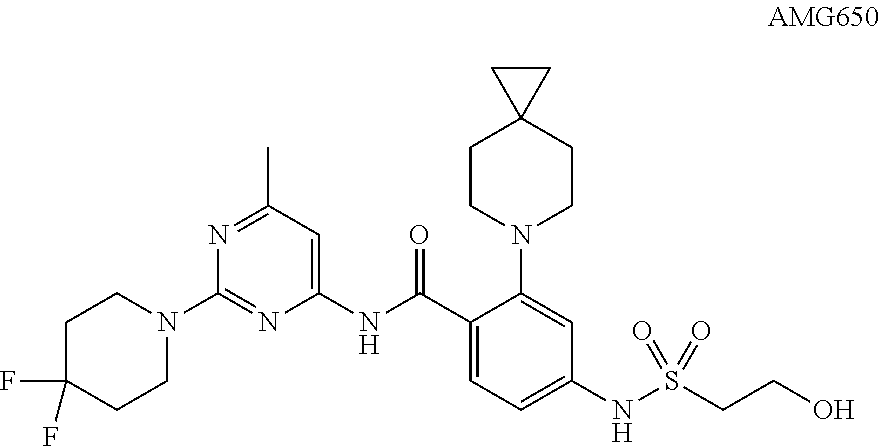
[0661]As can be seen from the data in Table 3, some of the compounds of the present disclosure exhibited stronger anti-proliferative activities against HT-29 cells compared with AMG650.
Biological Example 2. In Vitro Anti-Proliferative Activity of Compounds of the Present Disclosure Against HCT116 Cells
[0662]HCT116 cells were seeded on a 384-well plate at 3000 cells/well. After overnight adherence culture, DMSO or the compounds serially diluted in a 1:5 ratio from 5 μM were added. The cell viability was assessed 72 h after dosing by measuring the intracellular ATP content. The inhibition percentages of viable cells by the compounds were calculated by comparing with the DMSO group, and the IC50 values were also calculated. The results are shown in Table 4 below.
| TABLE 4 |
|---|
| Anti-proliferative activity of compounds of the present disclosure against HCT116 cells |
| (IC50, nM) |
| Compound | IC50 | Compound | IC50 | Compound | IC50 | Compound | IC50 |
| 1 | >10000 | 3 | >10000 | 4 | >10000 | 6 | >10000 |
| 7 | >10000 | 65 | >10000 | 97 | >10000 | 129 | >10000 |
| 161 | >10000 | 257 | >10000 | 258 | >10000 | 259 | >10000 |
| 260 | >10000 | 261 | >10000 | 262 | >10000 | 263 | >10000 |
| 289 | >10000 | 305 | >10000 | 321 | >10000 | 337 | >10000 |
| 353 | >10000 | 385 | >10000 | 593 | >10000 | 641 | >10000 |
| 643 | >10000 | 645 | >10000 | 647 | >10000 | 655 | >10000 |
| 661 | >10000 | 663 | >10000 | 669 | >10000 | 701 | >10000 |
| 702 | >10000 | 703 | >10000 | 704 | >10000 | 705 | >10000 |
| 833 | >10000 | 835 | >10000 | 836 | >10000 | AMG650 | >10000 |
[0663]As can be seen from the data in Table 4, neither the compounds of the present disclosure nor AMG65 exhibited anti-proliferative activity against HCT116 cells.
Biological Example 3. In Vivo Pharmacodynamic Study—HT29 Subcutaneous Xenograft Tumor Model of Mice
[0664]BALB/c nude mice were each inoculated subcutaneously with 5×10⁶ HT29 cells on the left dorsal side. After the tumors grew to 100-150 mm3, the mice were randomly divided into the following groups for intragastric administration once daily: group 1: vehicle control group; group 2: compound 661 (80 mg/kg); group 3: compound 669 (80 mg/kg); group 4: compound 677 (80 mg/kg); group 5: compound 714 (80 mg/kg); group 6: compound 727 (80 mg/kg); group 7: compound 740 (80 mg/kg); and group 8: AMG65 (80 mg/kg). The tumor volume was measured twice weekly and at the end of administration. Tumor growth inhibition rate of the compound was calculated according to the following equation: tumor growth inhibition rate (TGI)=1−(tumor volume on day 28 in treatment group−tumor volume on day 1 in treatment group)/(tumor volume on day 28 in vehicle control group−tumor volume on day 1 in treatment group). The results are shown in Table 5.
| TABLE 5 |
|---|
| Growth inhibition rates of HT29 subcutaneous xenograft tumors in mice |
| Tumor volume | Tumor volume | ||||
| on day 1 of | on day 28 of | ||||
| administration | administration | ||||
| Group | Compound | Dose | (mm3) | (mm3) | TGI |
| 1 | Control | Not | 121 | 1606 | Not |
| applicable | applicable | ||||
| 2 | 661 | 80 mg/kg | 121 | 704 | 61% |
| 3 | 669 | 80 mg/kg | 121 | 1158 | 30% |
| 4 | 677 | 80 mg/kg | 121 | 797 | 55% |
| 5 | 714 | 80 mg/kg | 121 | 424 | 80% |
| 6 | 727 | 80 mg/kg | 121 | 519 | 73% |
| 7 | 740 | 80 mg/kg | 121 | 605 | 67% |
| 8 | AMG650 | 80 mg/kg | 121 | 649 | 64% |
[0665]As can be seen from Table 5, the compounds of the present disclosure were able to inhibit tumor growth at a dose of 80 mg/kg in the subcutaneous xenograft tumor model of HT29-bearing mice, and compound 714, compound 727, and compound 740 showed stronger inhibitory effects on the HT29 subcutaneous xenograft tumor in mice compared with AMG650.
Biological Example 4. Phosphorylation Assay of Histone H3 Ser10 Site in HT29 Cells (Immunofluorescence Assay)
[0666]HT29 cells were seeded in a 96-well plate (Fisher 160376) at 8000 cells/well. The next day, the serially diluted compounds were added. Six hours after the addition of the compounds, the cells were washed once with 1×PBS, immobilized with 4% PFA for 15 min, further washed three times with 1×PBS, and permeabilized with 0.02% Triton-X100 for 10 min. Then, blocking was performed for 15-30 min using a blocking buffer. After a primary antibody (Phospho-Histone H3 (Ser10)) at a 1:3000 dilution was added, the well plate was left to stand at 4° C. overnight. The next day, the cells were washed three times with 1×PBS, and then a secondary antibody (Fluorescein (FITC)-conjugated Affinipure Goat Anti-Rabbit IgG (H+L)) at a 1:1000 dilution was added. The cells were incubated in the dark for 1-2 h and then washed three times with 1×PBS. Subsequently, the cell nuclei were stained using DAPI. The ratio of phosphorylation (FITC/DAPI) at H3 Ser10 site in HT29 cells was quantified. The effects of the compounds on Phospho-Histone H3 were evaluated, and EC50 values of the compounds were calculated. The results are shown in Table 6 below.
| TABLE 6 |
|---|
| Phosphorylation at H3 Ser10 site in HT29 cells induced |
| by compounds of the present disclosure (EC50, nM) |
| Compound | EC50 (nM) | Compound | EC50 (nM) | Compound | EC50 (nM) |
| 65 | 45.5 | 161 | 26.4 | 257 | 8.4 |
| 273 | 8.5 | 321 | 15.8 | 353 | 42.2 |
| 641 | 21.7 | 645 | 69.6 | 661 | 23.7 |
| 663 | 28.3 | 714 | 39.2 | AMG650 | 52.3 |
[0667]As can be seen from Table 6, the compounds of the present disclosure exhibited relatively strong activities in inducing the phosphorylation at H3 Ser10 site in HT-29 cells, and compared with AMG650, the compounds of the present disclosure exhibited stronger activities in inducing the phosphorylation at H3 Ser10 site.
Biological Example 5. Effect of Combined Use of Compound of the Present Disclosure with PLK1 Inhibitor on HT29 Cell Viability
[0668]HT29 cells were seeded on a 384-well plate at 3000 cells/well. After overnight adherence culture, DMSO or compound 257 serially diluted in a 1:5 ratio from 5 μM and a PLK1 inhibitor with a specified concentration were added. The cell viability was assessed 72 h after dosing by measuring the intracellular ATP content. The inhibition percentages of viable cells by the compounds were calculated by comparing with the DMSO group, and the IC50 values were also calculated. The results are shown in Table 7 below.
| TABLE 7 |
|---|
| Inhibitory activity of combined use of compound 257 of the present |
| disclosure with PLK1 inhibitor against HT29 cells (IC50, nM) |
| PLK1 inhibitor | Compound 257 | |
| Compound | concentration | IC50 (nM) |
| Rigosertib | 0 nM | 14.5 |
| 12.5 nM | 12.2 | |
| 25 nM | 15.2 | |
| 50 nM | 9.1 | |
| 100 nM | 0.4 | |
| BI 2536 | 0 nM | 13.5 |
| 1.25 nM | 9.9 | |
| 2.5 nM | 6.2 | |
| 5 nM | 2.0 | |
| 10 nM | 0.6 | |
| Volasertib | 0 nM | 13.1 |
| 12.5 nM | 1.1 | |
| 25 nM | 0.7 | |
| Onvansertib | 0 nM | 12.7 |
| 12.5 nM | 5.2 | |
| 25 nM | 0.8 | |
| GSK461364 | 0 nM | 13.5 |
| 1.25 nM | 14.3 | |
| 2.5 nM | 8.8 | |
| 5 nM | 3.3 | |
| 10 nM | 0.5 | |
| MLN0905 | 0 nM | 13.1 |
| 12.5 nM | 4.7 | |
| 25 nM | 0.5 | |
| Ro3280 | 0 nM | 13.6 |
| 12.5 nM | 2.9 | |
| 25 nM | 0.4 | |
[0669]As can be seen from the data in Table 7, compared with monotherapy with compound 257 of the present disclosure, the combined use of compound 257 with the PLK1 inhibitor exhibited a stronger inhibitory effect on HT-29 cells.
Biological Example 6. Effect of Combined Use of Compound of the Present Disclosure with PLK1 Inhibitor on HCT116 Cell Viability
[0670]HCT116 cells were seeded on a 384-well plate at 3000 cells/well. After overnight adherence culture, DMSO or compound 257 serially diluted in a 1:5 ratio from 5 μM and a PLK1 inhibitor with a specified concentration were added. The cell viability was assessed 72 h after dosing by measuring the intracellular ATP content. The inhibition percentages of viable cells by the compounds were calculated by comparing with the DMSO group, and the IC50 values were also calculated. The results are shown in Table 8 below.
| TABLE 8 |
|---|
| Inhibitory activity of combined use of compound 257 of the present |
| disclosure with PLK1 inhibitor against HCT116 cells (IC50, nM) |
| PLK1 inhibitor | Compound 257 | |
| Compound | concentration | IC50 (nM) |
| Volasertib | 0 nM | >10000 |
| 10 nM | >10000 | |
| 50 nM | >10000 | |
[0671]As can be seen from the data in Table 8, monotherapy with compound 257 of the present disclosure did not exhibit anti-proliferative activity against HCT116 cells, and the combined use of compound 257 with the PLK1 inhibitor showed no significant synergistic effect on HCT116 cell viability.
Biological Example 7. Effect of Combined Use of Compound of the Present Disclosure or AMG650 with PLK1 Inhibitor on HT29 Cell Viability
[0672]HT29 cells were seeded on a 384-well plate at 3000 cells/well. After overnight adherence culture, DMSO or compound 257 or AMG650 serially diluted in a 1:5 ratio from 400 nM and a PLK1 inhibitor with a specified concentration were added. The cell viability was assessed 168 h after dosing by measuring the intracellular ATP content. The inhibition percentages of viable cells by the compounds were calculated by comparing with the DMSO group, and the IC50 values were also calculated. The results are shown in Table 9 below.
| TABLE 9 |
|---|
| Inhibitory activity of combined use of compound |
| 257 of the present disclosure or AMG650 with PLK1 |
| inhibitor against HT29 cells (IC50, nM) |
| Volasertib concentration | 0 nM | 3.12 nM | 6.25 nM |
| Compound 257 | Maximum inhibition rate | 85.3% | 94.6% | 94.4% |
| Minimum inhibition rate | 3.2% | 1.8% | 0.5% | |
| IC50 (nM) | 14.0 | 7.0 | 2.8 | |
| AMG650 | Maximum inhibition rate | 96.5% | 95.8% | 97.0% |
| Minimum inhibition rate | −1.4% | 3.3% | −0.4% | |
| IC50 (nM) | 84.4 | 26.6 | 16.4 | |
[0673]As can be seen from the data in Table 9, compared with monotherapy with compound 257 of the present disclosure or monotherapy with AMG650, the combined use of compound 257 or AMG650 with the PLK1 inhibitor exhibited a stronger inhibitory effect on HT-29 cells.
Biological Example 8. Effect of Combined Use of Compound of the Present Disclosure or AMG650 with PLK1 Inhibitor on HCT116 Cell Viability
[0674]HCT116 cells were seeded on a 384-well plate at 3000 cells/well. After overnight adherence culture, DMSO or compound 257 or AMG650 serially diluted in a 1:5 ratio from 10 μM and a PLK1 inhibitor with a specified concentration were added. The cell viability was assessed 168 h after dosing by measuring the intracellular ATP content. The inhibition percentages of viable cells by the compounds were calculated by comparing with the DMSO group, and the IC50 values were also calculated. The results are shown in Table 10 below.
| TABLE 10 |
|---|
| Inhibitory activity of combined use of compound 257 |
| of the present disclosure or AMG650 |
| with PLK1 inhibitor against HCT116 cells (IC50, nM) |
| Volasertib concentration | 0 nM | 3.12 nM | 6.25 nM |
| Compound 257 | IC50 (nM) | >10000 | >10000 | >10000 |
| AMG650 | IC50 (nM) | >10000 | >10000 | >10000 |
[0675]As can be seen from the data in Table 10, mono therapy with compound of the present disclosure or monotherapy with AMG650 did not exhibit anti-proliferative activity against HCT116 cells, and the combined use of compound 257 or AMG650 with the PLK1 inhibitor showed no significant synergistic effect on HCT116 cell viability.
Biological Example 9. Effect of Combined Use of Compound of the Present Disclosure with PLK1 Inhibitor on HT29 Cell Viability
[0676]HT29 cells were seeded on a 384-well plate at 3000 cells/well. After overnight adherence culture, DMSO or compound 257 serially diluted in a 1:5 ratio from 400 nM and a PLK1 inhibitor with a specified concentration were added. The cell viability was assessed 168 h after dosing by measuring the intracellular ATP content. The inhibition percentages of viable cells by the compounds were calculated by comparing with the DMSO group, and the IC50 values were also calculated. The results are shown in Table 11 below.
| TABLE 11 |
|---|
| Inhibitory activity of combined use of compound 257 of the present disclosure with PLK1 |
| inhibitor against HT29 cells (IC50, nM) |
| CYC140 (Plogosertib) | TAK-960 |
| PLK1 inhibitor concentration |
| 0 nM | 1.6 nM | 8 nM | 0 nM | 8 nM | 40 nM | |
| Compound 257 | Maximum inhibition rate | 44.2% | 80.3% | 90.9% | 57.1% | 86.1% | 93.6% |
| Minimum inhibition rate | -7.1% | -0.7% | 0.4% | 1.5% | 7.5% | -4.0% | |
| IC50 (nM) | 15.7 | 10.4 | 3.1 | 14.0 | 13.1 | 2.4 | |
[0677]As can be seen from the data in Table 11, compared with monotherapy with compound 257 of the present disclosure, the combined use of compound 257 with the PLK1 inhibitor exhibited a stronger inhibitory effect on HT-29 cells.
Biological Example 10. Effect of Combined Use of Compound of the Present Disclosure with PLK1 Inhibitor on HCT116 Cell Viability
[0678]HCT116 cells were seeded on a 384-well plate at 3000 cells/well. After overnight adherence culture, DMSO or compound 257 serially diluted in a 1:5 ratio from 400 nM and a PLK1 inhibitor with a specified concentration were added. The cell viability was assessed 168 h after dosing by measuring the intracellular ATP content. The inhibition percentages of viable cells by the compounds were calculated by comparing with the DMSO group, and the IC50 values were also calculated. The results are shown in Table 12 below.
| TABLE 12 |
|---|
| Inhibitory activity of combined use of compound 257 of the present disclosure with PLK1 |
| inhibitor against HCT116 cells (IC50, nM) |
| PLK1 inhibitor |
| CYC140 (Plogosertib) | TAK-960 |
| PLK1 inhibitor concentration |
| 0 nM | 1.6 nM | 8 nM | 0 nM | 8 nM | 40 nM | |
| Compound 257 | IC50 (nM) | >400 | >400 | >400 | >400 | >400 | >400 |
[0679]As can be seen from the data in Table 12, monotherapy with compound 257 of the present disclosure did not exhibit anti-proliferative activity against HCT116 cells, and the combined use of compound 257 with the PLK1 inhibitor showed no significant synergistic effect on HCT116 cell viability.
Biological Example 11. Effect of Combined Use of Compound of the Present Disclosure with Aurora B Inhibitor on HT29 Cell Viability
[0680]HT29 cells were seeded on a 384-well plate at 3000 cells/well. After overnight adherence culture, DMSO or compound 257 serially diluted in a 1:5 ratio from 5 μM and an Aurora B inhibitor with a specified concentration were added. The cell viability was assessed 72 h after dosing by measuring the intracellular ATP content. The inhibition percentages of viable cells by the compounds were calculated by comparing with the DMSO group, and the IC50 values were also calculated. The results are shown in Table 13 below.
| TABLE 13 |
|---|
| Inhibitory activity of combined use of compound 257 of the present |
| disclosure with Aurora B inhibitor against HT29 cells (IC50, nM) |
| Aurora B inhibitor | Compound 257 | |
| Compound | concentration | IC50 (nM) |
| SP-96 | 0 nM | 14.5 |
| 20 nM | 16.1 | |
| 100 nM | 14.5 | |
| 500 nM | 5.8 | |
| Barasertib | 0 nM | 13.9 |
| 20 nM | 7.3 | |
| 100 nM | 4.2 | |
| 500 nM | 3.3 | |
[0681]As can be seen from the data in Table 13, compared with monotherapy with compound 257 of the present disclosure, the combined use of compound 257 with the Aurora B inhibitor exhibited a stronger inhibitory effect on HT-29 cells.
Biological Example 12. Effect of Combined Use of Compound of the Present Disclosure with Aurora B Inhibitor on HCT116 Cell Viability
[0682]HCT116 cells were seeded on a 384-well plate at 3000 cells/well. After overnight adherence culture, DMSO or compound 257 serially diluted in a 1:5 ratio from 5 μM and an Aurora B inhibitor with a specified concentration were added. The cell viability was assessed 72 h after dosing by measuring the intracellular ATP content. The inhibition percentages of viable cells by the compounds were calculated by comparing with the DMSO group, and the IC50 values were also calculated. The results are shown in Table 14 below.
| TABLE 14 |
|---|
| Inhibitory activity of combined use of compound 257 of the present |
| disclosure with Aurora B inhibitor against HCT116 cells (IC50, nM) |
| Aurora B inhibitor | Compound 257 | |
| Compound | concentration | IC50 (nM) |
| Barasertib | 0 nM | >10000 |
| 10 nM | >10000 | |
| 100 nM | >10000 | |
| 1000 nM | >10000 | |
[0683]As can be seen from the data in Table 14, monotherapy with compound 257 of the present disclosure did not exhibit anti-proliferative activity against HCT116 cells, and the combined use of compound 257 with the Aurora B inhibitor showed no significant synergistic effect on HCT116 cell viability.
Biological Example 13. In Vivo Pharmacodynamic Study of Combination Therapy—HT29 Subcutaneous Xenograft Tumor Model of Mice
[0684]BALB/c nude mice were each inoculated subcutaneously with 5×10⁶ HT29 cells on the left dorsal side. After the tumors grew to 100-150 mm3, the mice were randomly divided into the following groups for intragastric administration once daily: group 1: vehicle control group; group 2: compound 714; group 3: AMG650; group 4: compound 714+Rigosertib; group 5: compound 714+BI 2536; group 6: compound 714+Volasertib; group 7: compound 714+Onvansertib; group 8: compound 714+GSK461364; group 9: compound 714+MLN0905; group 10: compound 714+Ro3280; group 11: AMG650+Rigosertib; group 12: AMG650+BI 2536; group 13: AMG650+Volasertib; group 14: AMG650+Onvansertib; group 15: AMG650+GSK461364; group 16: AMG650+MLN0905; group 17: AMG650+Ro3280; group 18: compound 714+SP96; group 19: compound 714+Barasertib; group 20: AMG650+SP96; group 21: AMG650+Barasertib; group 22: Rigosertib; group 23: BI 2536; group 24: Volasertib; group 25: Onvansertib; group 26: GSK461364; group 27: MLN0905; group 28: Ro3280; group 29: SP96; and group 30: Barasertib. The tumor volume was measured twice weekly and at the end of administration. Tumor growth inhibition rate of the compound was calculated according to the following equation: tumor growth inhibition rate (TGI)=1−(tumor volume on day 28 in treatment group−tumor volume on day 1 in treatment group)/(tumor volume on day 28 in vehicle control group−tumor volume on day 1 in vehicle control group).
Biological Example 14. In Vivo Pharmacodynamic Study of Combination Therapy—HT29 Subcutaneous Xenograft Tumor Model of Mice
[0685]BALB/c nude mice were each inoculated subcutaneously with 5×10⁶ HT29 cells on the left dorsal side. After the tumors grew to 100-150 mm3, the mice were randomly divided into the following groups for intragastric administration once daily for 14 consecutive days: group 1: vehicle control group; group 2: AMG650 (50 mpk, PO, QD); group 3: compound 714 (50 mpk, PO, QD); group 4: AMG650 (50 mpk, PO, QD)+Onvasertib (20 mpk, PO, QD); group 5: compound 714 (50 mpk, PO, QD)+Onvasertib (20 mpk, PO, QD); and group 6: Onvasertib (20 mpk, PO, QD). The administration to all the groups was stopped on day 15, and the tumor growth continued to be observed until day 21. The tumor volume was measured twice weekly and at the end of administration. Tumor growth inhibition rate of the compound was calculated according to the following equation: tumor growth inhibition rate (TGI)=1−(tumor volume on day 15/day 21 in treatment group−tumor volume on day 1 in treatment group)/(tumor volume on day 15/day 21 in vehicle control group−tumor volume on day 1 in vehicle control group).
| TABLE 15 |
|---|
| Growth inhibition rates of HT29 subcutaneous xenograft tumors in mice |
| Tumor volume | Tumor volume | Tumor volume | ||||
| on day 1 of | on day 15 of | on day 21 of | ||||
| administration | administration | administration | TGI on | TGI on | ||
| Group | Compound | (mm3) | (mm3) | (mm3) | day 15 | day 21 |
| 1 | Control | 139 | 703 | 950 | Not | Not |
| applicable | applicable | |||||
| 2 | AMG650 | 132 | 49 | 126 | 115% | 100% |
| 3 | 714 | 134 | 17 | 49 | 121% | 110 % |
| 4 | AMG650 + | 134 | 6 | 0 | 123% | 116% |
| Onvasertib | ||||||
| 5 | 714 + | 133 | 1 | 0 | 123% | 116% |
| Onvasertib | ||||||
| 6 | Onvasertib | 134 | 249 | Not detected | 80% | Not |
| applicable | ||||||
[0686]As can be seen from Table 15, compound 714 of the present disclosure or AMG650 was able to inhibit tumor growth in the subcutaneous xenograft tumor model of HT29-bearing mice, while the PLK1 inhibitor Onvasertib exhibited a relatively weak therapeutic efficacy. Compared with monotherapy with compound 714, AMG650, or Onvasertib, the combined use of compound 714 or AMG650 with the PLK1 inhibitor Onvasertib exhibited a stronger tumor inhibitory effect. Furthermore, after the administration was stopped on day 14, the combination therapy groups exhibited more durable therapeutic efficacy compared with the monotherapy groups.
Biological Example 15. Effect of Combined Use of Compound of the Present Disclosure with PLK1 Degrader on HT29 Cell Viability
[0687]HT29 cells were seeded on a 384-well plate at 3000 cells/well. After overnight adherence culture, DMSO or compound 257 serially diluted in a 1:5 ratio from 5 μM and a PLK1 degrader with a specified concentration were added. The cell viability was assessed 72 h after dosing by measuring the intracellular ATP content. The inhibition percentages of viable cells by the compounds were calculated by comparing with the DMSO group, and the IC50 values were also calculated.
Biological Example 16. Effect of Combined Use of Compound of the Present Disclosure with PLK1 Degrader on HCT116 Cell Viability
[0688]HCT116 cells were seeded on a 384-well plate at 3000 cells/well. After overnight adherence culture, DMSO or compound 257 serially diluted in a 1:5 ratio from 5 μM and a PLK1 degrader with a specified concentration were added. The cell viability was assessed 72 h after dosing by measuring the intracellular ATP content. The inhibition percentages of viable cells by the compounds were calculated by comparing with the DMSO group, and the IC50 values were also calculated.
Biological Example 17. Effect of Combined Use of Compound of the Present Disclosure with PLK1 siRNA on HT29 Cell Viability
[0689]HT29 cells were seeded on a 384-well plate at 3000 cells/well. After overnight adherence culture, the cells were transfected with PLK1 siRNA with a specified concentration. Twenty-four hours later, DMSO or compound 257 serially diluted in a 1:5 ratio from 5 μM was added. The cell viability was assessed 72 h after dosing by measuring the intracellular ATP content. The inhibition percentages of viable cells by the compounds were calculated by comparing with the DMSO group, and the IC50 values were also calculated.
Biological Example 18. Effect of Combined Use of Compound of the Present Disclosure with PLK1 siRNA on HCT116 Cell Viability
[0690]HCT116 cells were seeded on a 384-well plate at 3000 cells/well. After overnight adherence culture, the cells were transfected with PLK1 siRNA with a specified concentration. Twenty-four hours later, DMSO or compound 257 serially diluted in a 1:5 ratio from 5 μM was added. The cell viability was assessed 72 h after dosing by measuring the intracellular ATP content. The inhibition percentages of viable cells by the compounds were calculated by comparing with the DMSO group, and the IC50 values were also calculated.
Biological Example 19. Effect of Combined Use of Compound of the Present Disclosure, AMG650, or Compound A with PLK1 Inhibitor on HT29 Cell Viability
[0691]HT29 cells were seeded on a 384-well plate at 3000 cells/well. After overnight adherence culture, DMSO or compound 257, AMG650, or Compound A serially diluted in a 1:5 ratio from 400 nM and a PLK1 inhibitor with a specified concentration were added. The cell viability was assessed 168 h after dosing by measuring the intracellular ATP content. The inhibition percentages of viable cells by the compounds were calculated by comparing with the DMSO group, and the results are shown in
| TABLE 16 |
|---|
| Inhibitory activity of combined use of compound 257 of the present disclosure, AMG650, |
| or Compound A with PLK1 inhibitor against HT29 cells |
| CYC140 (Plogosertib) | TAK-960 |
| PLK1 inhibitor | |
| concentration |
| 0.0001 | 1.6 | 8 | 40 | 0.0001 | 1.6 | 8 | 40 | |
| nM | nM | nM | nM | nM | nM | nM | nM | |
| Compound | IC50 (nM) | 10.6 | 8.3 | 6.9 | 0.9 | 10.1 | 8.5 | 1.7 | 1.7 |
| 257 | |||||||||
| AMG650 | IC50 (nM) | 91.8 | 74.4 | 50.6 | 11.1 | 88.9 | 58.6 | 16.5 | 16.1 |
| Compound A | IC50 (nM) | 26.1 | 19.6 | 15.5 | 2.2 | 23.8 | 17.3 | 4.2 | 4.1 |
| TABLE 17 |
|---|
| Inhibitory activity of combined use of compound 257 |
| of the present disclosure or AMG650 with PLK1 |
| inhibitor against HT29 cells (IC50, nM) |
| KIF18A inhibitor | CYC140 | ||
| Compound | concentration | (Plogosertib) | TAK-960 |
| Compound 257 | 0.0001 nM | 52.1 | 13.8 |
| 0.64 nM | 37.0 | 11.8 | |
| 3.2 nM | 15.5 | 5.0 | |
| 16 nM | 3.8 | 1.4 | |
| 80 nM | 1.6 | 1.3 | |
| 400 nM | 2.2 | 0.09 | |
| AMG650 | 0.0001 nM | 50.1 | 14.7 |
| 0.64 nM | 48.9 | 14.2 | |
| 3.2 nM | 49.9 | 14.8 | |
| 16 nM | 24.9 | 7.2 | |
| 80 nM | 7.9 | 2.5 | |
| 400 nM | 3.5 | 0.8 | |
[0692]As can be seen from the data in Table 16 and Table 17, as well as
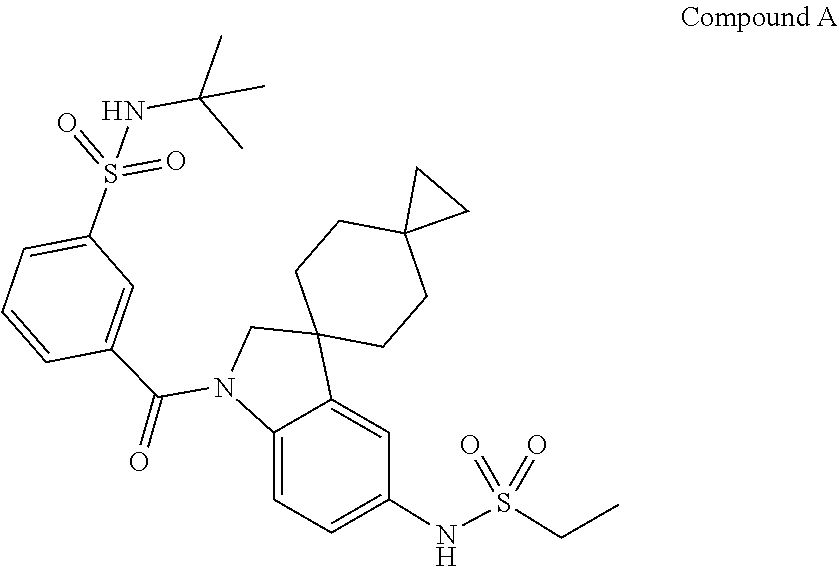
Biological Example 20. Effect of Combined Use of Compound of the Present Disclosure, AMG650, or Compound A with PLK1 Inhibitor on HCT116 Cell Viability
[0693]HCT116 cells were seeded on a 384-well plate at 3000 cells/well. After overnight adherence culture, DMSO or compound 257, AMG650, or Compound A serially diluted in a 1:5 ratio from 400 nM and a PLK1 inhibitor with a specified concentration were added. The cell viability was assessed 168 h after dosing by measuring the intracellular ATP content. The inhibition percentages of viable cells by the compounds were calculated by comparing with the DMSO group, and the IC50 values were also calculated. The results are shown in Table 18 below.
| TABLE 18 |
|---|
| Inhibitory activity of combined use of compound 257 of the present disclosure, AMG650, |
| or Compound A with PLK1 inhibitor against HCT116 cells (IC50, nM) |
| PLK1 inhibitor |
| CYC140 (Plogosertib) | TAK-960 |
| PLK1 inhibitor | ||
| concentration |
| 0 nM | 1.6 nM | 8 nM | 40 nM | 0 nM | 1.6 nM | 8 nM | 40 nM | ||
| Compound | IC50 (nM) | >400 | >400 | >400 | >400 | >400 | >400 | >400 | >400 |
| 257 | |||||||||
| AMG650 | IC50 (nM) | >400 | >400 | >400 | >400 | >400 | >400 | >400 | >400 |
| Compound A | IC50 (nM) | >400 | >400 | >400 | >400 | >400 | >400 | >400 | >400 |
[0694]As can be seen from the data in Table 18, monotherapy with compound 257 of the present disclosure, monotherapy with AMG650, or monotherapy with Compound A did not exhibit anti-proliferative activity against HCT116 cells, and the combined use of compound 257, AMG650, or Compound A with the PLK1 inhibitor showed no significant synergistic effect on HCT116 cell viability. Compound A is Compound 134 in patent WO2023028564A1.
Biological Example 21. Effect of Combined Use of Compound of the Present Disclosure or AMG650 with PLK1 Inhibitor on SK—OV-3 Cell Viability
[0695]SK—OV-3 cells were seeded on a 384-well plate at 3000 cells/well. After overnight adherence culture, DMSO or compound 257 or AMG650 serially diluted in a 1:5 ratio from 400 nM and a PLK1 inhibitor with a specified concentration were added. The cell viability was assessed 168 h after dosing by measuring the intracellular ATP content. The inhibition percentages of viable cells by the compounds were calculated by comparing with the DMSO group, and the results are shown in
| TABLE 19 |
|---|
| Inhibitory activity of combined use of compound 257 of the present disclosure or AMG650 |
| with PLK1 inhibitor against SK-OV-3 cells (IC50, nM) |
| Volasertib | |
| PLK1 inhibitor | |
| concentration |
| 0.0001 | ||||||
| nM | 3.13 nM | 6.25 nM | 12.5 nM | 25 nM | 50 nM | |
| Compound 257 | IC50 (nM) | 15.4 | 12.8 | 12.2 | 8.7 | 5.9 | 2.0 |
| AMG650 | IC50 (nM) | 72.2 | 66.0 | 51.7 | 34.5 | 27.1 | 11.2 |
| TABLE 20 |
|---|
| Inhibitory activity of combined use of compound 257 |
| of the present disclosure or AMG650 with PLK1 |
| inhibitor against SK-OV-3 cells (IC50, nM) |
| KIF18A inhibitor | Volasertib | ||
| Compound | concentration | IC50 (nM) | |
| Compound 257 | 0.0001 nM | 77.9 | |
| 0.64 nM | 61.6 | ||
| 3.2 nM | 35.8 | ||
| 16 nM | 10.1 | ||
| 80 nM | 5.7 | ||
| 400 nM | 5.3 | ||
| AMG650 | 0.0001 nM | 82.1 | |
| 0.64 nM | 70.5 | ||
| 3.2 nM | 60.5 | ||
| 16 nM | 38.2 | ||
| 80 nM | 9.9 | ||
| 400 nM | 8.1 | ||
[0696]As can be seen from the data in Table 19 and Table 20, as well as
Biological Example 22. Effect of Combined Use of Compound of the Present Disclosure or AMG650 with PLK1 Inhibitor on HT29 Cell Viability
[0697]HT29 cells were seeded on a 384-well plate at 3000 cells/well. After overnight adherence culture, DMSO or compound 257 or AMG650 serially diluted in a 1:5 ratio from 400 nM and a PLK1 inhibitor with a specified concentration were added. The cell viability was assessed 168 h after dosing by measuring the intracellular ATP content. The inhibition percentages of viable cells by the compounds were calculated by comparing with the DMSO group, and the results are shown in
| TABLE 21 |
|---|
| Inhibitory activity of combined use of compound 257 of the present disclosure or AMG650 |
| with PLK1 inhibitor against HT29 cells (IC50, nM) |
| Volasertib | |
| PLK1 inhibitor concentration |
| 0.0001 nM | 3.13 nM | 6.25 nM | 12.5 nM | 25 nM | |
| Compound 257 | IC50 (nM) | 10.9 | 7.9 | 5.9 | 2.5 | 0.4 |
| AMG650 | IC50 (nM) | 79.9 | 43.0 | 30.2 | 14.2 | 5.9 |
| TABLE 22 |
|---|
| Inhibitory activity of combined use of compound 257 |
| of the present disclosure or AMG650 with PLK1 |
| inhibitor against HT29 cells (IC50, nM) |
| KIF18A inhibitor | Volasertib | ||
| Compound | concentration | IC50 (nM) | |
| Compound 257 | 0.0001 nM | 17.2 | |
| 0.64 nM | 15.6 | ||
| 3.2 nM | 10.2 | ||
| 16 nM | 1.2 | ||
| 80 nM | 1.4 | ||
| 400 nM | 0.7 | ||
| AMG650 | 0.0001 nM | 22.8 | |
| 0.64 nM | 37.8 | ||
| 3.2 nM | 34.9 | ||
| 16 nM | 19.5 | ||
| 80 nM | 18.3 | ||
| 400 nM | 15.5 | ||
[0698]As can be seen from the data in Table 21 and Table 22, as well as
[0699]Although specific embodiments of the present disclosure have been described above, it will be appreciated by those skilled in the art that these embodiments are merely illustrative and that many changes or modifications can be made to these embodiments without departing from the principles and spirit of the present disclosure. The protection scope of the present disclosure is therefore defined by the appended claims.
Claims
1-84. (canceled)
85. A pharmaceutical composition for treating a cancer, comprising a KIF18A inhibitor and a compound for inhibiting protein activity,
wherein the KIF18A inhibitor is a compound represented by general formula (1) or an isomer thereof, a crystalline form thereof, a pharmaceutically acceptable salt thereof, a hydrate thereof, or a solvate thereof:

wherein, in general formula (1):
X1 is —CR5═ or N;
X2 is —CR6═ or N;
X3 is —CR7═ or N;
X4 is —CR4═ or N;
X5 is —CR15═ or N;
when X5 is —CR15═ and X4 is —CR4═, R16 is —C3-8 cycloalkyl, —OR17, —SR18, —NR18R19, or —NO2;
when X5 is —CR15═ and X4 is N, R16 is —O—C1-8 hydrocarbyl, —C3-8 cycloalkyl, —OR17, —SR18, —NR20R21, or —NO2;
when X5 is N, R16 is —O—C1-8 hydrocarbyl, —C3-8 cycloalkyl, —OR17, —SR18, —NR20R21, or —NO2;
L is —(C═O)—NR9—* or —NR9—(C═O)—*; and no more than four of X1, X2, X3, X4, and X5 are N;
* represents a position linking to

terminal;
R17 is H, —C1-8 halohydrocarbyl, —C3-8 cycloalkyl, or —C3-8 halocycloalkyl, wherein the —C1-8 halohydrocarbyl, —C3-8 cycloalkyl, or —C3-8 halocycloalkyl may be optionally substituted with 0, 1, 2, or 3 of the following groups: H, halogen, and —C1-4 hydrocarbyl;
R18 and R19 are each independently H, —C1-8 hydrocarbyl, —C1-8 halohydrocarbyl, —C3-8 cycloalkyl, or —C3-8 halocycloalkyl, wherein the —C1-8 hydrocarbyl, —C1-8 halohydrocarbyl, —C3-8 cycloalkyl, or —C3-8 halocycloalkyl may be optionally substituted with 0, 1, 2, or 3 of the following groups: H, halogen, and —C1-4 hydrocarbyl;
R20 and R21 are each independently H, —C1-8 hydrocarbyl, —C1-8 halohydrocarbyl, —C3-8 cycloalkyl, or —C3-8 halocycloalkyl, wherein the —C1-8 hydrocarbyl, —C1-8 halohydrocarbyl, —C3-8 cycloalkyl, or —C3-8 halocycloalkyl may be optionally substituted with 0, 1, 2, or 3 of the following groups: H, halogen, and —C1-4 hydrocarbyl; or R20 and R21 may be combined with the nitrogen atom to which they are each connected to form a saturated or partially saturated 3-, 4-, 5-, or 6-membered monocyclic ring or 4-, 5-, 6-, 7-, 8-, 9-, 10-, 11-, or 12-membered bicyclic ring containing 0, 1, 2, or 3 N atoms and 0, 1, or 2 atoms selected from O and S;
R1 is —CN or —Z—R10, wherein Z is a chemical bond, —C0-4 hydrocarbyl-, —NR11—, —NR11SO2—, —SO2NR11—, —NR11—S(═O)(═NH)—, —S(═O)(═NH)—, —S—, —S(═O)—, —SO2—, —C0-4 hydrocarbyl-O—, —(C═O)—, —(C═O)NR11—, —C(═N—OH)—, or —NR11(C═O)—; or the group —Z—R10 is —N═S(═O)—(R10)2, wherein two R10 may be combined with the sulfur atom to which they are each connected to form a saturated or partially saturated 3-, 4-, 5-, or 6-membered monocyclic ring containing 0, 1, 2, or 3 N atoms and 0, 1, or 2 atoms selected from O and S;
R2 is halogen or a group —Y—R12, wherein Y is a chemical bond, —C0-4 hydrocarbyl-, —N(C0-1 hydrocarbyl)-C0-4 hydrocarbyl-, —C(═O)NRaRa (C1-4 hydrocarbyl)-, —O—C0-4 hydrocarbyl-, —S—, —S(═O)—, —SO2—, —SO2NR12—, or —S(═O)(═NH)—;
R3 is H, halogen, C1-8 hydrocarbyl, or C1-4 halohydrocarbyl;
R4 is H, halogen, R4a, or R4b;
R5 is H, halogen, C1-8 alkyl, or C1-4 haloalkyl;
R6 is H, halogen, C1-8 alkyl, C1-4 haloalkyl, —OH, —O—R6a, or —O—R6b;
R7 is H, halogen, C1-8 hydrocarbyl, or C1-4 halohydrocarbyl;
R8 is selected from the group consisting of:

R13a, R13b, R13c, R13d, R13e, R13f, R13g, R13h, R13i, R13j, R13k, and R13l are each independently H, halogen, R13m, or R13n; or each of the pairs of R3a/R13b, R3c/R13d, R13e/R13f, R13g/R13h, R13i/R13j, and R13k/R13l may independently form, with the carbon atom to which they are each connected, a saturated or partially saturated 3-, 4-, 5-, or 6-membered monocyclic ring spiro-linked to R8 ring, wherein the 3-, 4-, 5-, or 6-membered monocyclic ring contains 0, 1, 2, or 3 N atoms and 0, 1, or 2 atoms selected from O and S, and further, the 3-, 4-, 5-, or 6-membered monocyclic ring is substituted with 0, 1, 2, or 3 groups selected from: F, Cl, Br, C1-6 hydrocarbyl, C1-4 halohydrocarbyl, —ORa, —OC1-4 halohydrocarbyl, CN, —NRaRa, and oxo;
R9 is H or C1-6 hydrocarbyl;
R10 is H, R10a, R10b, or R10c;
R11 is H, R11a, or R11b;
R12 is R12a or R12b;
R15 is H, halogen, C1-8 hydrocarbyl, C1-4 halohydrocarbyl, —O—C1-8 hydrocarbyl, or —O—R15a, wherein R15a is a saturated or partially saturated 3-, 4-, 5-, or 6-membered monocyclic ring containing 0, 1, 2, or 3 N atoms and 0, 1, or 2 atoms selected from O and S;
R4a, R6a, R10a, R11a, R12a, or R13m, in each case, is independently selected from: a saturated, partially saturated, or unsaturated 3-, 4-, 5-, 6-, or 7-membered monocyclic ring or 4-, 5-, 6-, 7-, 8-, 9-, 10-, 11-, or 12-membered bicyclic ring containing 0, 1, 2, or 3 N atoms and 0, 1 or 2 atoms selected from O and S, wherein the monocyclic ring and bicyclic ring may be each independently and optionally substituted with 0, 1, 2, or 3 of the following groups: F, Cl, Br, C1-6 hydrocarbyl, C1-4 halohydrocarbyl, —ORa, —OC1-4 halohydrocarbyl, CN, —C(═O)Rb, —C(═O)ORa, —C(═O)NRaRa, —C(═NRa)NRaRa, —OC(═O)Rb, —OC(═O)NRaRa, —OC2-6 hydrocarbyl NRaRa, —OC2-6 hydrocarbyl ORa, —SRa, —S(═O)Rb, —S(═O)2Rb, —S(═O)2NRaRa, —NRaRa, —N(Ra)C(═O)Rb, —N(Ra)C(═O)ORb, —N(Ra)C(═O)NRaRa, —N(Ra)C(═NRa)NRaRa, —N(Ra)S(═O)2Rb, —N(Ra)S(═O)2NRaRa, —NRaC2-6 hydrocarbyl NRaRa, —NRaC2-6 hydrocarbyl ORa, —C1-6 hydrocarbyl NRaRa, —C1-6 hydrocarbyl ORa, —C1-6 hydrocarbyl N(Ra)C(═O)Rb, —C1-6 hydrocarbyl OC(═O)Rb, —C1-6 hydrocarbyl C(═O)NRaRa, —C1-6 hydrocarbyl C(═O)ORa, R14, and oxo;
R4b, R6b, R10b, R11b, R12b, or R13n, in each case, is independently selected from: C1-6 hydrocarbyl, wherein the hydrocarbyl may be optionally substituted with 0, 1, 2, 3, 4, or 5 of the following groups: F, Cl, Br, —Ra, —ORa, —OC1-4 halohydrocarbyl, and CN;
R10c, in each case, is independently selected from: C1-6 hydrocarbyl, wherein the hydrocarbyl may be optionally substituted with 0, 1, 2, 3, 4, or 5 of the following groups: F, Cl, Br, —Ra, —Rc, —ORa, —OC1-4 halohydrocarbyl, and CN;
R14, in each case, is independently selected from: a saturated, partially saturated, or unsaturated 3-, 4-, 5-, 6-, or 7-membered monocyclic ring or 4-, 5-, 6-, 7-, 8-, 9-, 10-, 11-, or 12-membered bicyclic ring containing 0, 1, 2, or 3 N atoms and 0 or 1 atom selected from O and S, wherein the monocyclic ring and bicyclic ring may be each independently and optionally substituted with 0, 1, 2, or 3 of the following groups: F, Cl, Br, C1-6 hydrocarbyl, C1-4 halohydrocarbyl, —ORa, —OC1-4 halohydrocarbyl, CN, —C(═O)Rb, —C(═O)ORa, —C(═O)NRaRa, —C(═NRa)NRaRa, —OC(═O)Rb, —OC(═O)NRaRa, —OC2-6 hydrocarbyl NRaRa, —OC2-6 hydrocarbyl ORa, —SRa, —S(═O)Rb, —S(═O)2Rb, —S(═O)2NRaRa, —NRaRa, —N(Ra)C(═O)Rb, —N(Ra)C(═O)ORb, —N(Ra)C(═O)NRaRa, —N(Ra)C(═NRa)NRaRa, —N(Ra)S(═O)2Rb, —N(Ra)S(═O)2NRaRa, —NRaC2-6 hydrocarbyl NRaRa, —NRaC2-6 hydrocarbyl ORa, —C1-6 hydrocarbyl NRaRa, —C1-6 hydrocarbyl ORa, —C1-6 hydrocarbyl N(Ra)C(═O)Rb, —C1-6 hydrocarbyl OC(═O)Rb, —C1-6 hydrocarbyl C(═O)NRaRa, —C1-6 hydrocarbyl C(═O)ORa, and oxo;
Ra, in each case, is independently H or Rb;
Rb, in each case, is independently C1-6 hydrocarbyl, phenyl, or benzyl, wherein the hydrocarbyl may be optionally substituted with 0, 1, 2, or 3 of the following groups: halogen, —OH, —OC1-4 hydrocarbyl, —NH2, —NHC1-4 hydrocarbyl, —OC(═O)C1-4 hydrocarbyl, and —N(C1-4 hydrocarbyl) C1-4 hydrocarbyl; and the phenyl and benzyl may be each independently and optionally substituted with 0, 1, 2, or 3 of the following groups: halogen, C1-4 hydrocarbyl, C1-3 halohydrocarbyl, —OH, —OC1-4 hydrocarbyl, —NH2, —NHC1-4 hydrocarbyl, —OC(═O)C1-4 hydrocarbyl, and —N(C1-4 hydrocarbyl) C1-4 hydrocarbyl; and
Rc, in each case, is independently —OC(═O)C1-5 hydrocarbyl, wherein the hydrocarbyl may be optionally substituted with 1, 2, or 3 of the following groups: —OH and —NH2; and
wherein the compound for inhibiting protein activity is a compound for inhibiting PLK1 protein activity or a compound for inhibiting Aurora B protein activity.
86. The pharmaceutical composition according to
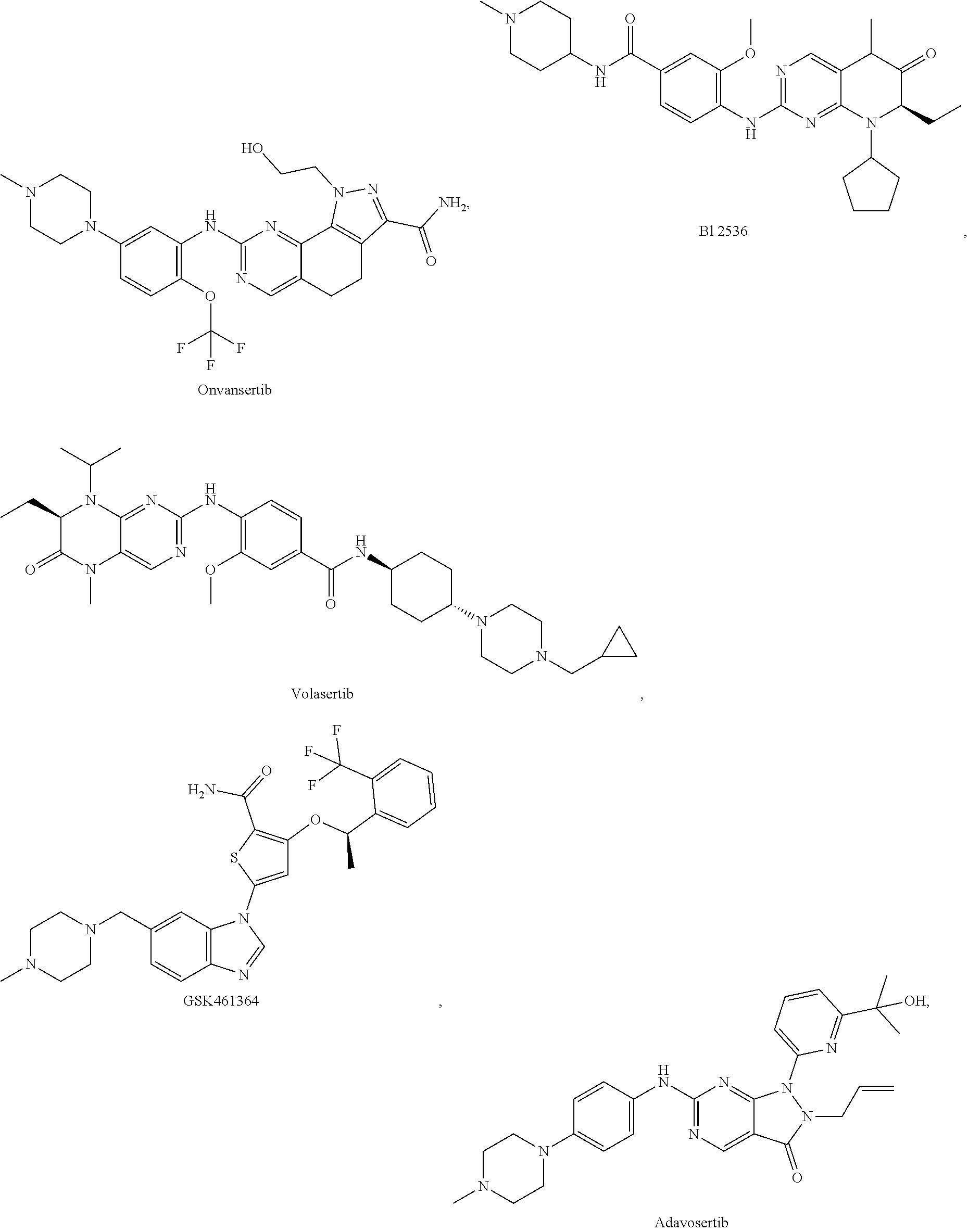


or black phosphorus nanosheets incorporated with poly(d,l-lactide)-poly(ethylene glycol)-poly(d,l-lactide); and
the PLK1 degrader is

87. The pharmaceutical composition according to

88. The pharmaceutical composition according to
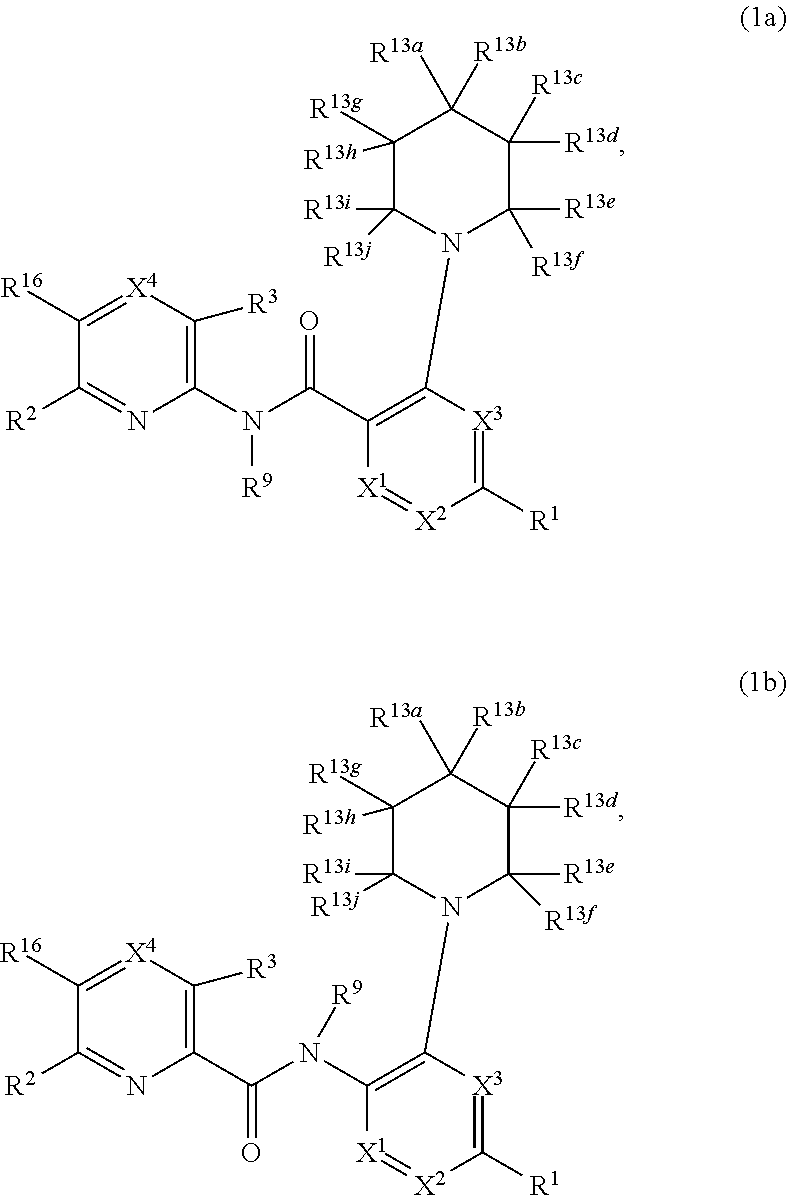
wherein R16 is —C3-6 cycloalkyl, —OH, —O—C1-4 hydrocarbyl, —O—C1-4 halohydrocarbyl, —O—C3-6 cycloalkyl, —O—C3-6 halocycloalkyl, —SH, —S—C1-6 hydrocarbyl, —S—C1-4 halohydrocarbyl, —S—C3-6 cycloalkyl, —S—C3-6 halocycloalkyl, —NR20R21, or —NO2,

wherein R16 is —C3-6 cycloalkyl, —OH, —O—C1-4 hydrocarbyl, —O—C1-4 halohydrocarbyl, —O—C3-6 cycloalkyl, —O—C3-6 halocycloalkyl, —SH, —S—C1-6 hydrocarbyl, —S—C1-4 halohydrocarbyl, —S—C3-6 cycloalkyl, —S—C3-6 halocycloalkyl, —NR20R21, or —NO2,

wherein R16 is —C3-6 cycloalkyl, —OH, —O—C1-4 halohydrocarbyl, —O—C3-6 cycloalkyl, —O—C3-6 halocycloalkyl, —SH, —S—C1-6 hydrocarbyl, —S—C1-4 halohydrocarbyl, —S—C3-6 cycloalkyl, —S—C3-6 halocycloalkyl, —NR18R19, or —NO2.
89. The pharmaceutical composition according to
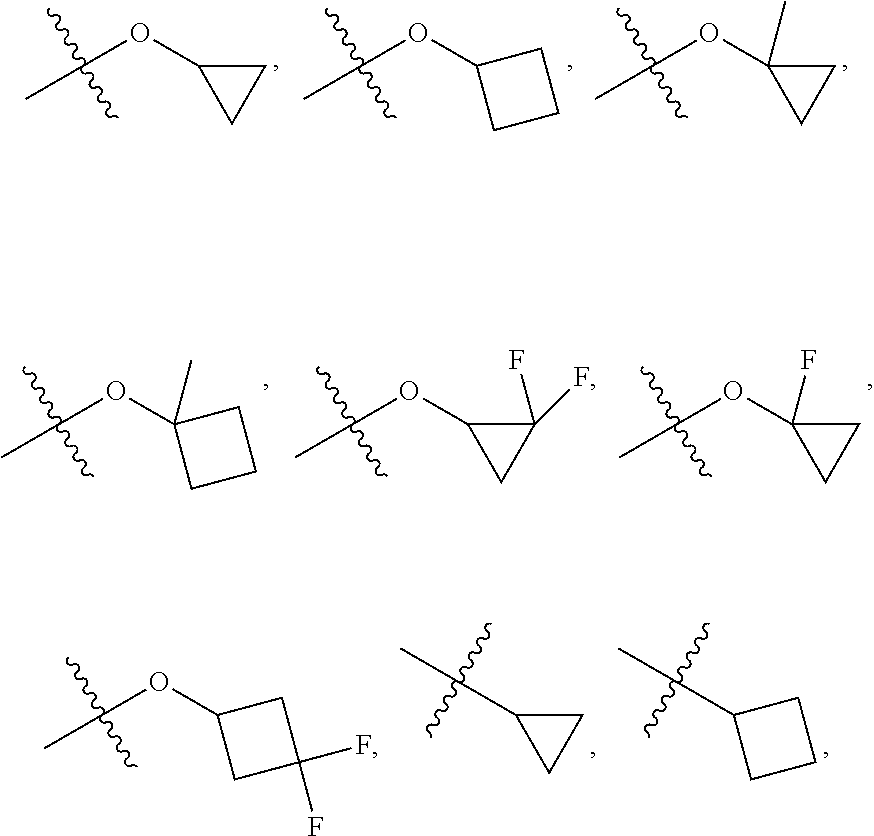
—SH, —SCH3, —SCH2CH3,
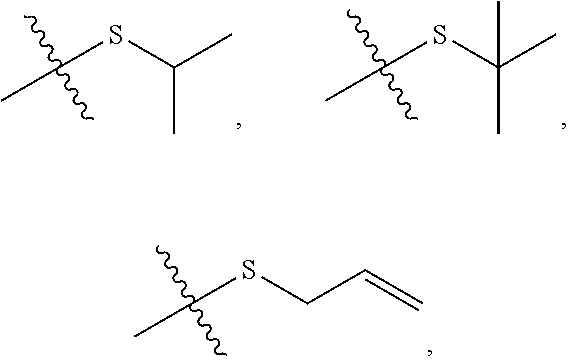
—SCF3, —SCH2CF3, —SCF2CF3, —SCF2Cl, —SCFCl2,

—NO2, —OCH3, —OCH2CH3, —OCH2CH2CH3,

90. The pharmaceutical composition according to
R13c, R13d, R13e, R13f, R13g, R13h, R13i, R13j, R13k, and R13l are each independently H, halogen, C1-6 hydrocarbyl, or C1-4 halohydrocarbyl; and R13a and R13b in the pair of R13a/R13b may be combined with the carbon atom to which they are each connected to form a saturated 3-, 4-, or 5-membered monocyclic ring spiro-linked to R8 ring, wherein the monocyclic ring contains 0, 1, 2, or 3 N atoms and 0, 1, or 2 atoms selected from O and S;
structural unit
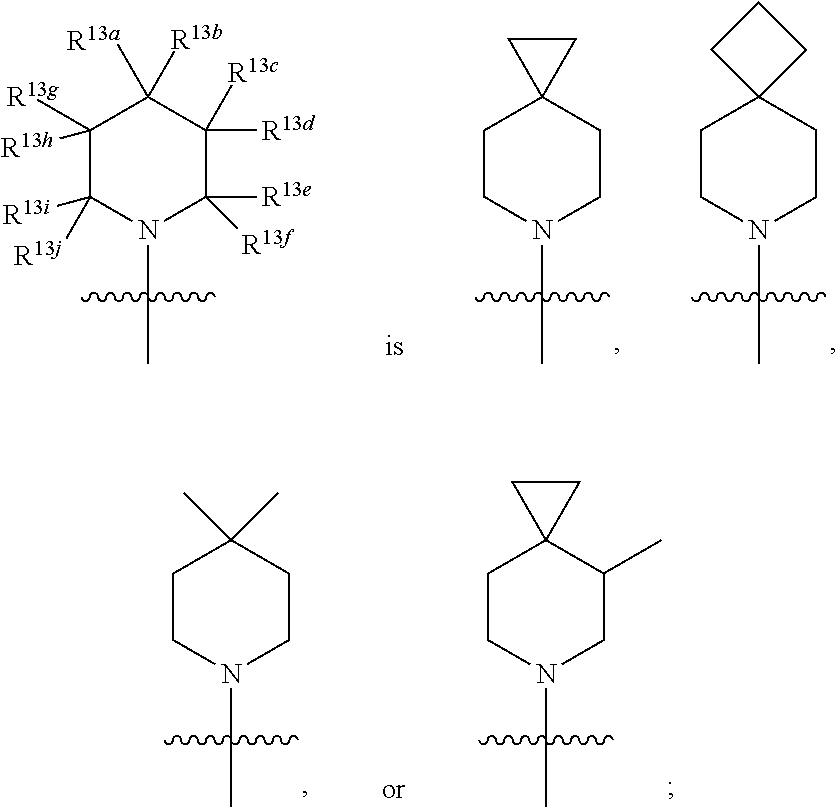
and
Z is a chemical bond, —NH—, —NHSO2—, —SO2NH—, —S(═O)(═NH)—, —S—, —S(═O)—, —SO2—, —(C═O)—, —(C═O)NH—, or —NH(C═O)—.
91. The pharmaceutical composition according to
92. The pharmaceutical composition according to
(a) H;
(b) cyclopropyl, cyclobutyl, cyclopentyl, cyclohexyl, oxiranyl, oxetanyl, tetrahydrofuranyl, azetidinyl, imidazolyl, morpholinyl, pyrrolidinyl, piperazinyl,
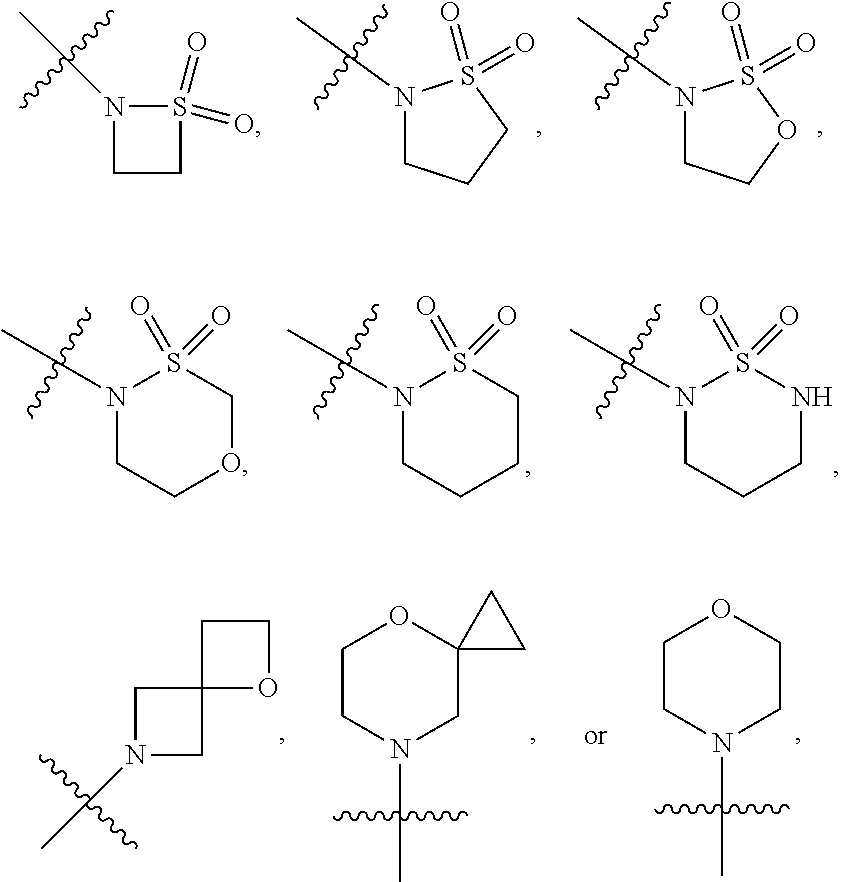
wherein the rings may be each independently and optionally substituted with 0, 1, 2, or 3 of the following groups: OH, F, methyl, —CH2OH, —C(═O)OCH3, —C(═O)OC(CH3)3, NH2, CN, and oxo;
(c) C1-6 hydrocarbyl substituted with 0, 1, 2, or 3 OH, F, —C(═O)OCH3, —NH2, —NH(CH3), or —N(CH3)2, preferably C1-6 hydrocarbyl substituted with 0, 1, 2, or 3 OH groups, and more preferably C1-6 hydrocarbyl substituted with 1 OH group; and
(d) C1-6 hydrocarbyl, wherein the C1-6 hydrocarbyl may be optionally substituted with 1, 2, or 3 of the following groups:
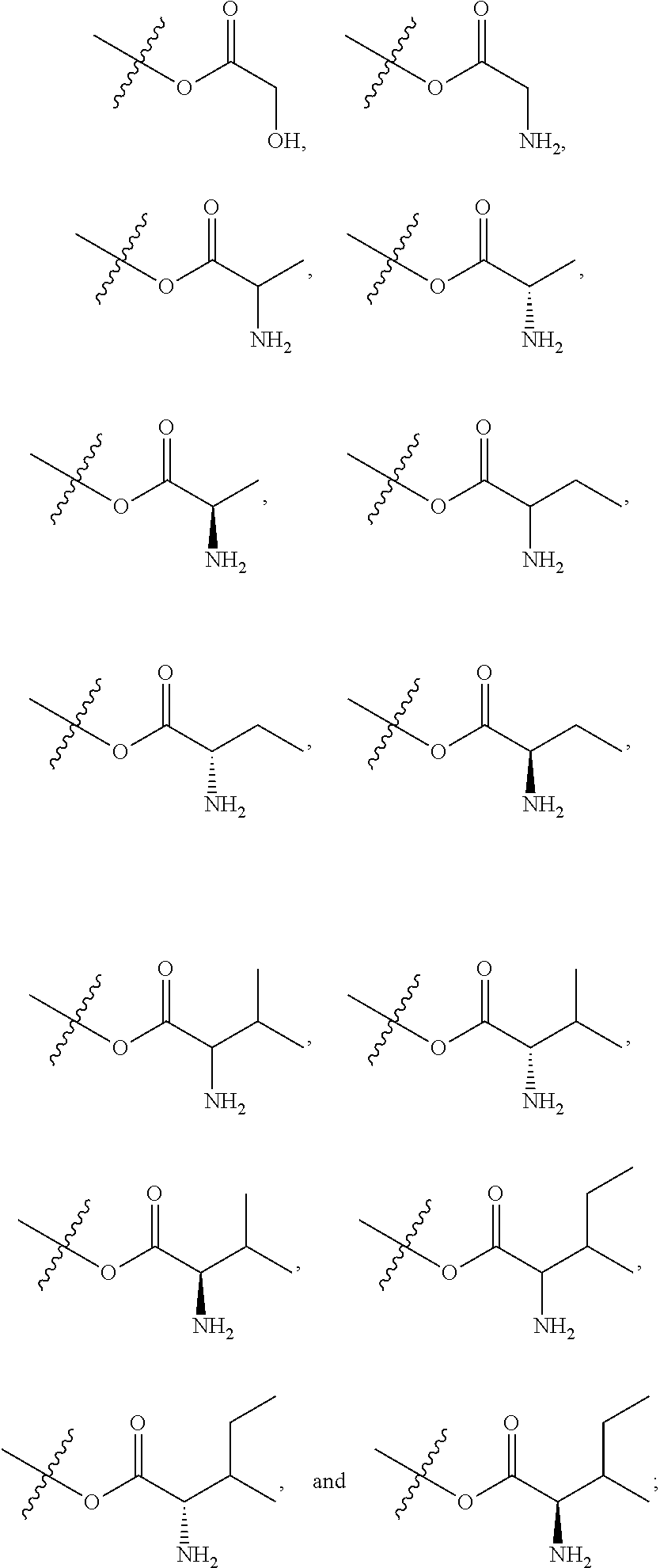
and the C1-6 hydrocarbyl may be optionally substituted with 0, 1, 2, or 3 of the following groups: F, Cl, Br, —OH, and —OCH3.
93. The pharmaceutical composition according to
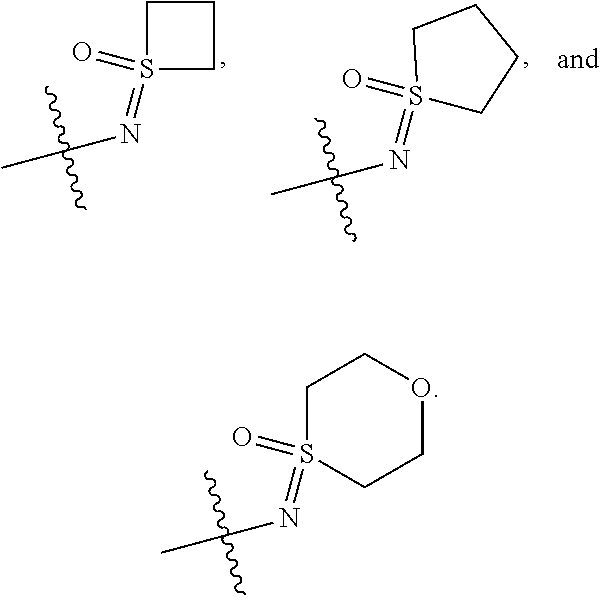
94. The pharmaceutical composition according to

95. The pharmaceutical composition according to
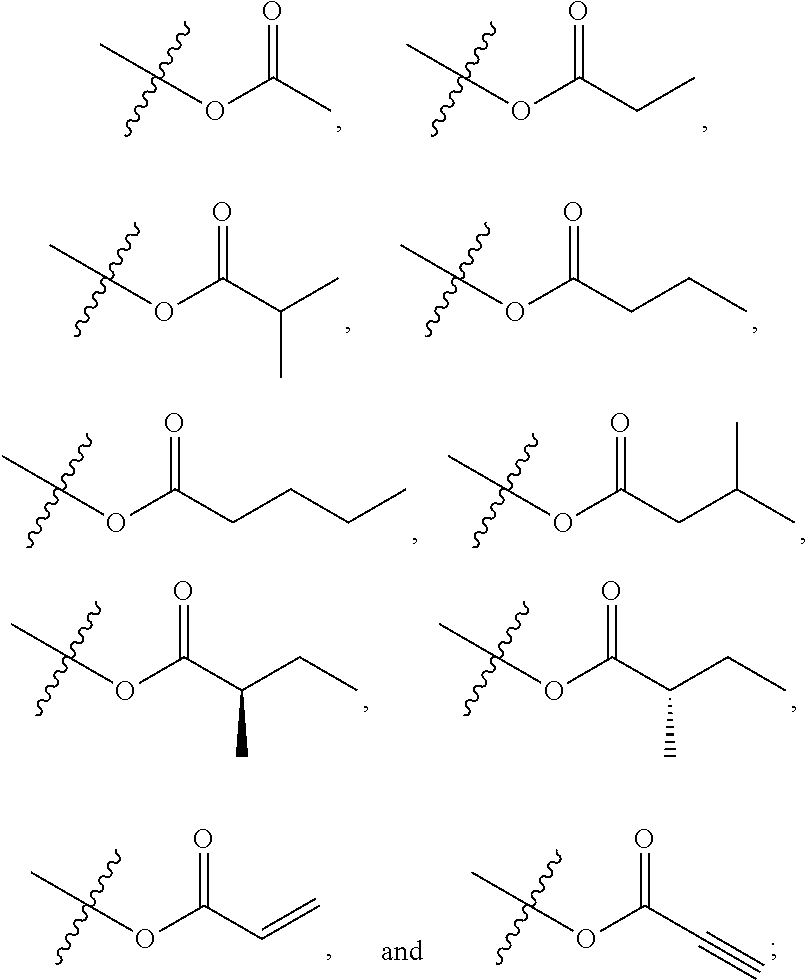
the hydrocarbyl is substituted with

and Z is —NHSO2— or —SO2NH—; or
R10 is selected from C1-6 hydrocarbyl, wherein the hydrocarbyl may be optionally substituted with 1, 2, or 3 of the following groups:

Z is —NHSO2— or —SO2NH—.
96. The pharmaceutical composition according to
R2 is a saturated 5- or 6-membered monocyclic ring, wherein the ring contains 0, 1 or 2 N atoms and 0 or 1 O atom, and the ring is substituted with 0, 1, 2, or 3 groups selected from: F, Cl, Br, C1-6 hydrocarbyl, C1-4 halohydrocarbyl, —OH, —OC1-4 halohydrocarbyl, CN, R14, and oxo; or
R2 is: (a) halogen; (b) a group —Y—R12, wherein Y is a chemical bond; and R12 is morpholinyl, piperidinyl, azetidinyl, pyrrolidinyl, cyclopropyl, cyclobutyl, cyclopentyl, cyclohexyl, piperazinyl, tetrahydrofuranyl,

wherein each of the rings is substituted with 0, 1, 2, or 3 groups selected from: F, Cl, Br, methyl, CF3, —OH, —OCHF2, CN, and oxo; or (c) a group —Y—R12, wherein Y is —NH—, —O—, —O—(CH2)—, —O—(CH2)—(CH2)—, or —O—(CH2)—(CH2)—(CH2)—, and R12 is

or R12 is C1-6 hydrocarbyl, wherein the hydrocarbyl may be optionally substituted with 0, 1, 2, 3, 4, or 5 of the following groups: F, Cl, Br, methyl, CF3, —OH, and CN; or
R2 is morpholinyl or piperidinyl, wherein the morpholinyl and piperidinyl may be optionally substituted with 0, 1, 2, or 3 of the following groups: F, Cl, Br, methyl, CF3, —OH, —OCHF2, and CN; or
R2 is piperidinyl substituted with 1, 2, or 3 fluorine groups; or
R2 is:

R2 is morpholinyl substituted with 1, 2, or 3 methyl groups; or
R2 is
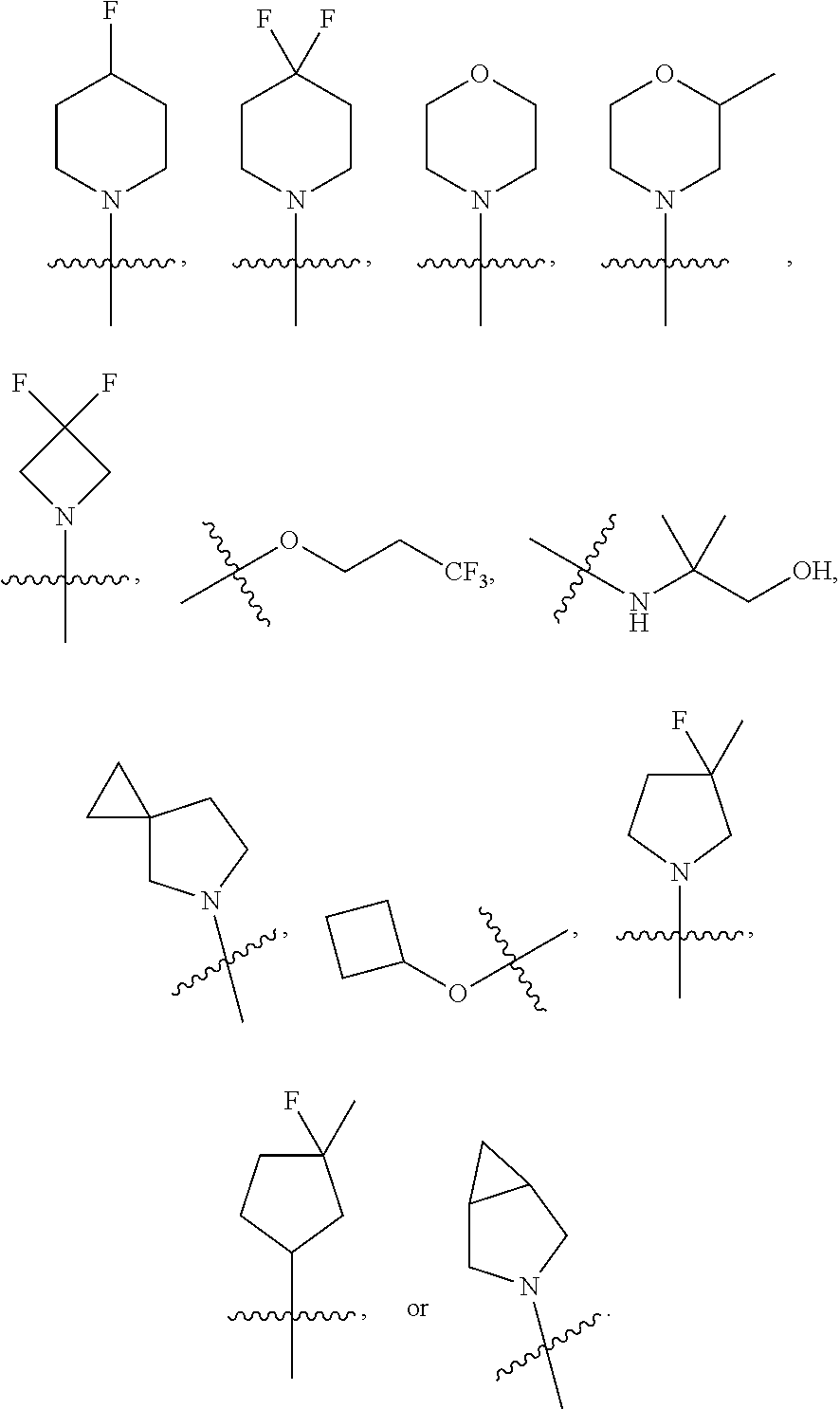
97. The pharmaceutical composition according to
R3 is H.
R4 is selected from: (a) H; (b) C1-6 hydrocarbyl substituted with 0, 1, 2, or 3 OH groups;
R5 is H or F;
R6 is H or F;
R7 is H; and
R15 is H or F.
98. The pharmaceutical composition according to

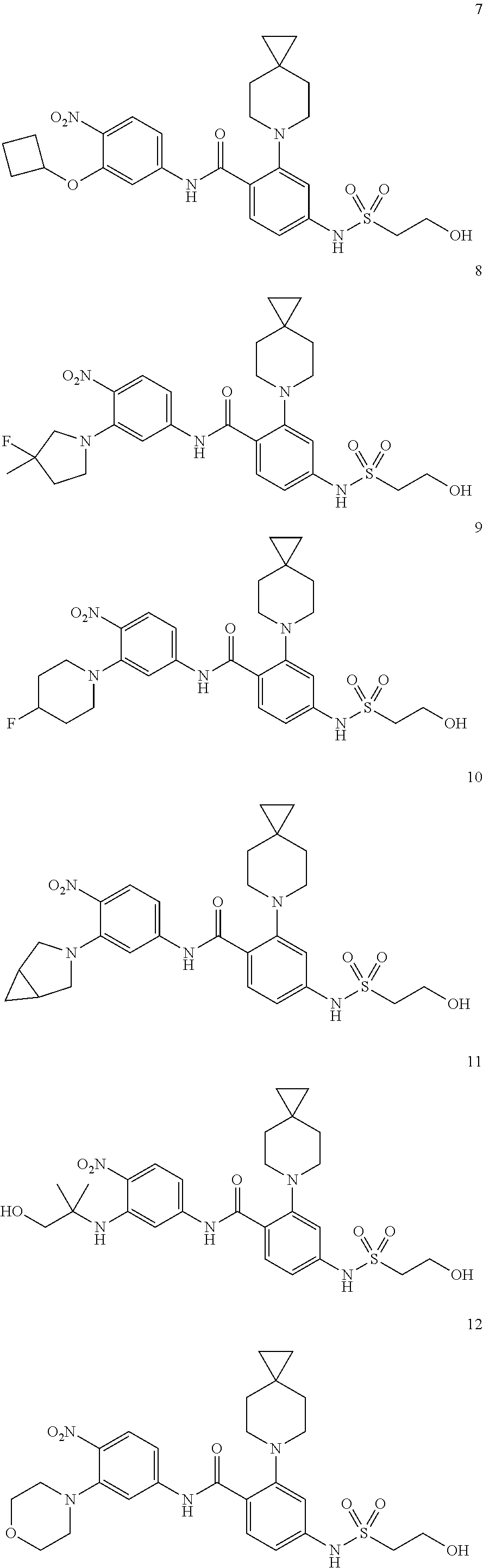


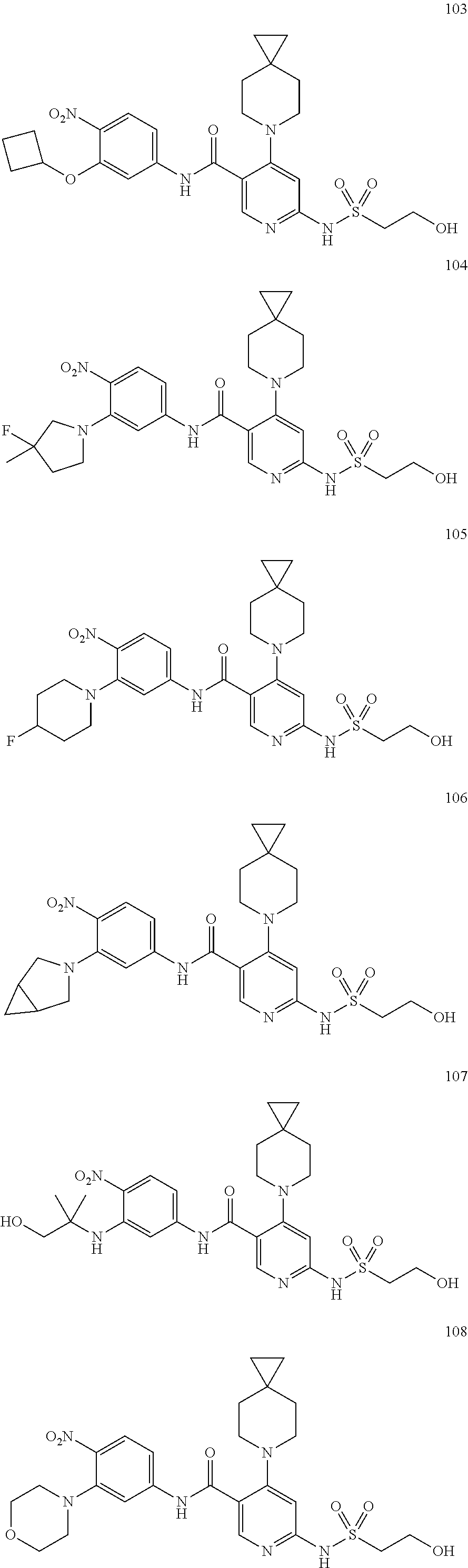


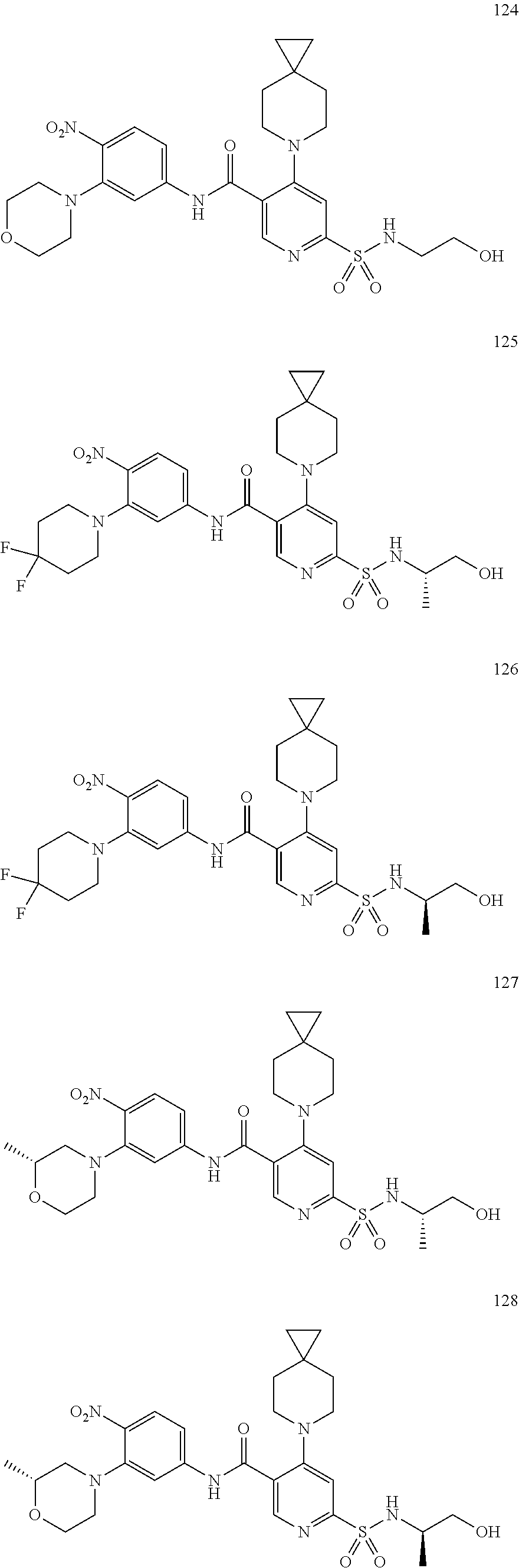


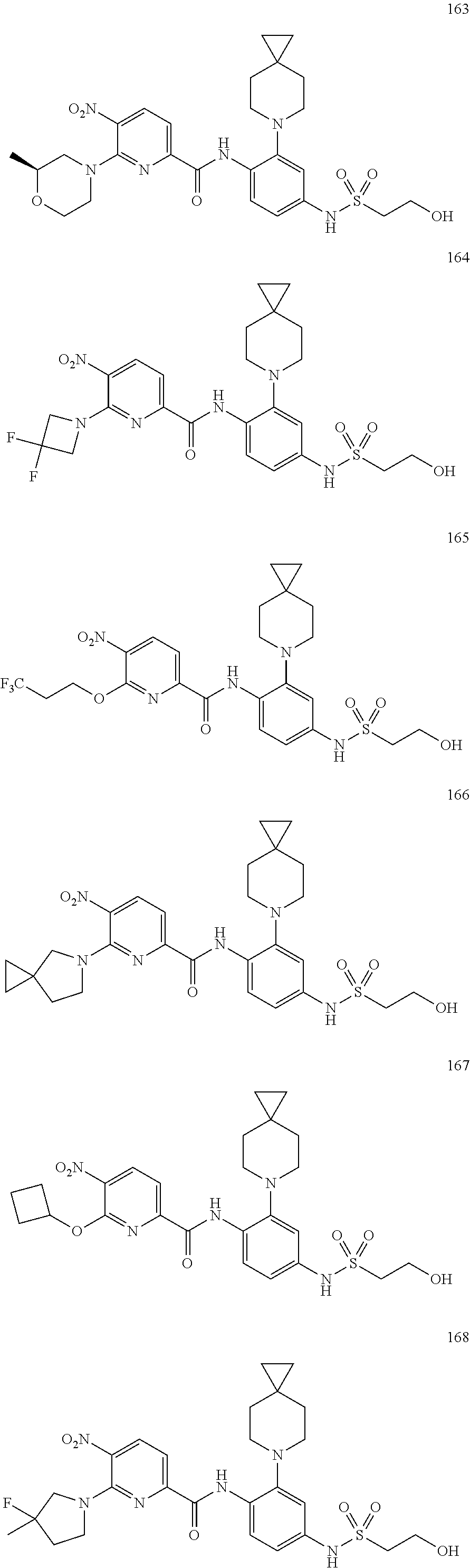

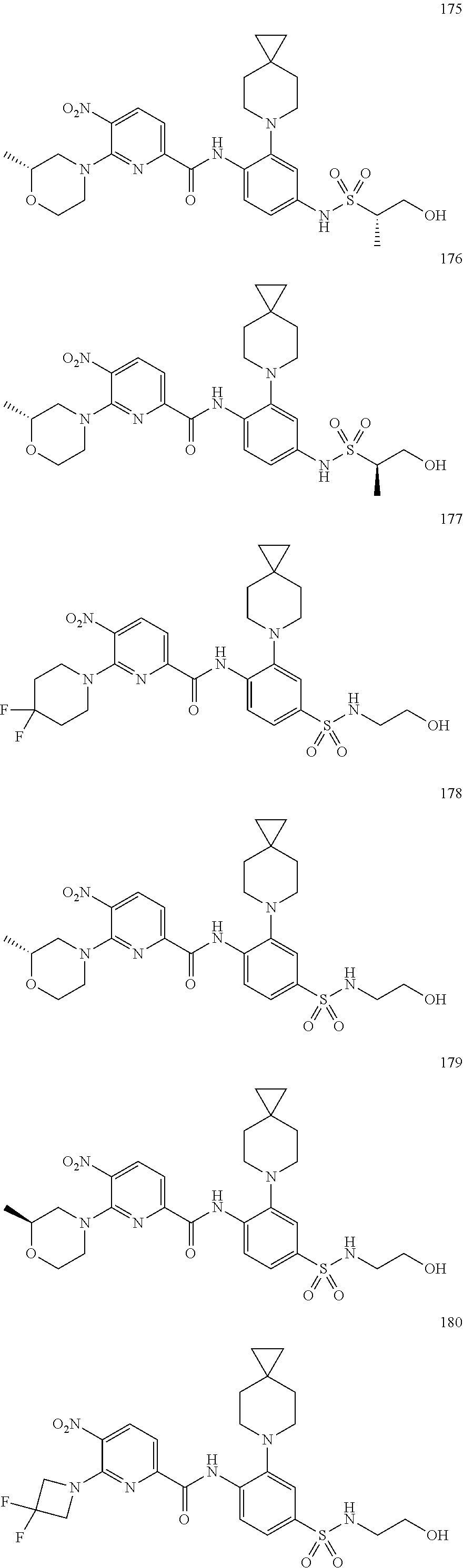


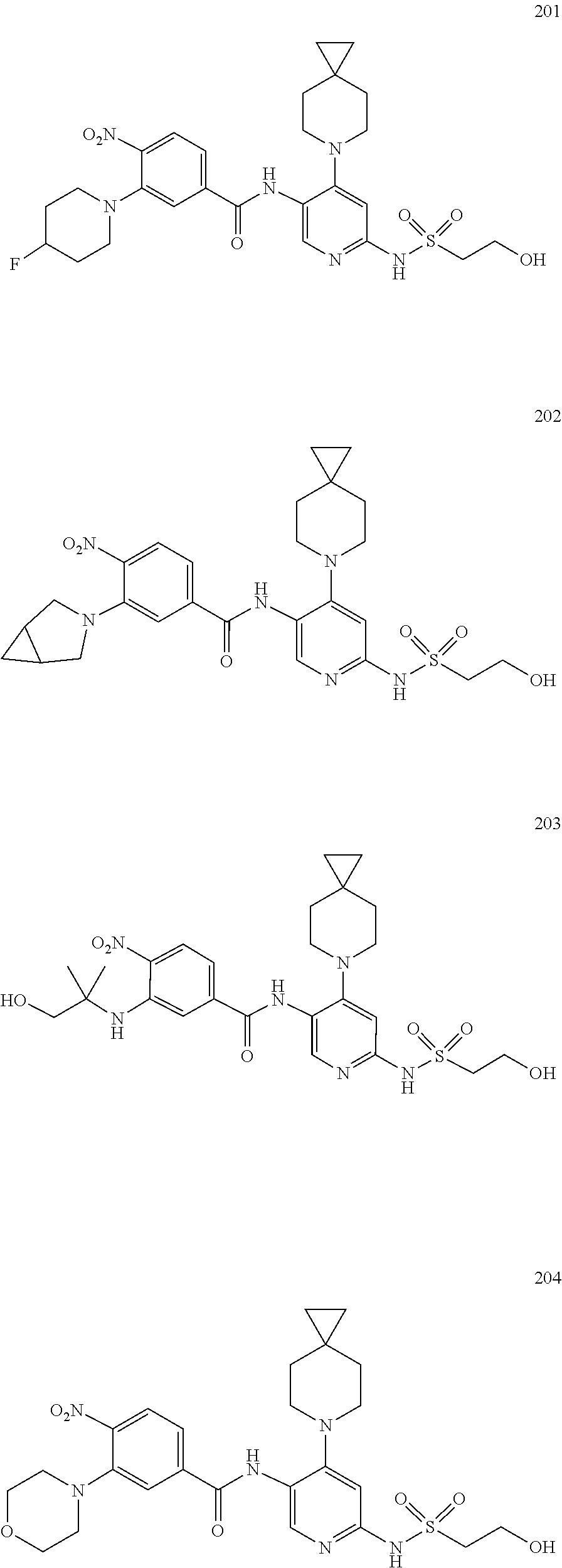


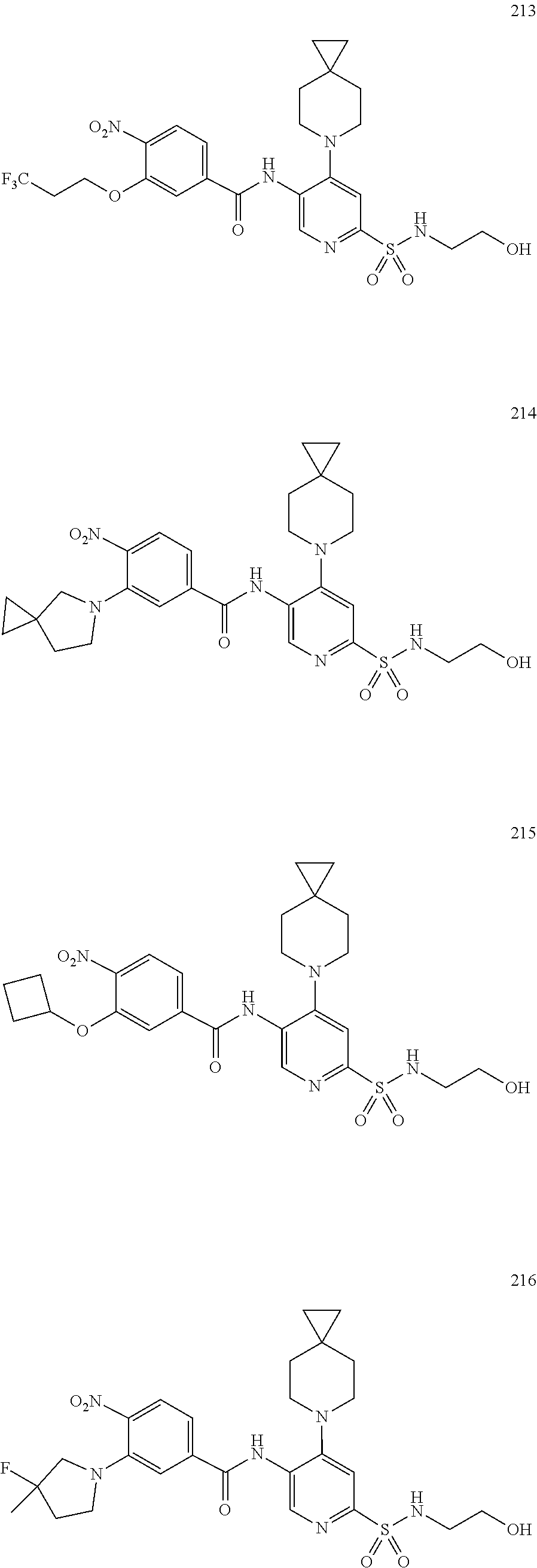

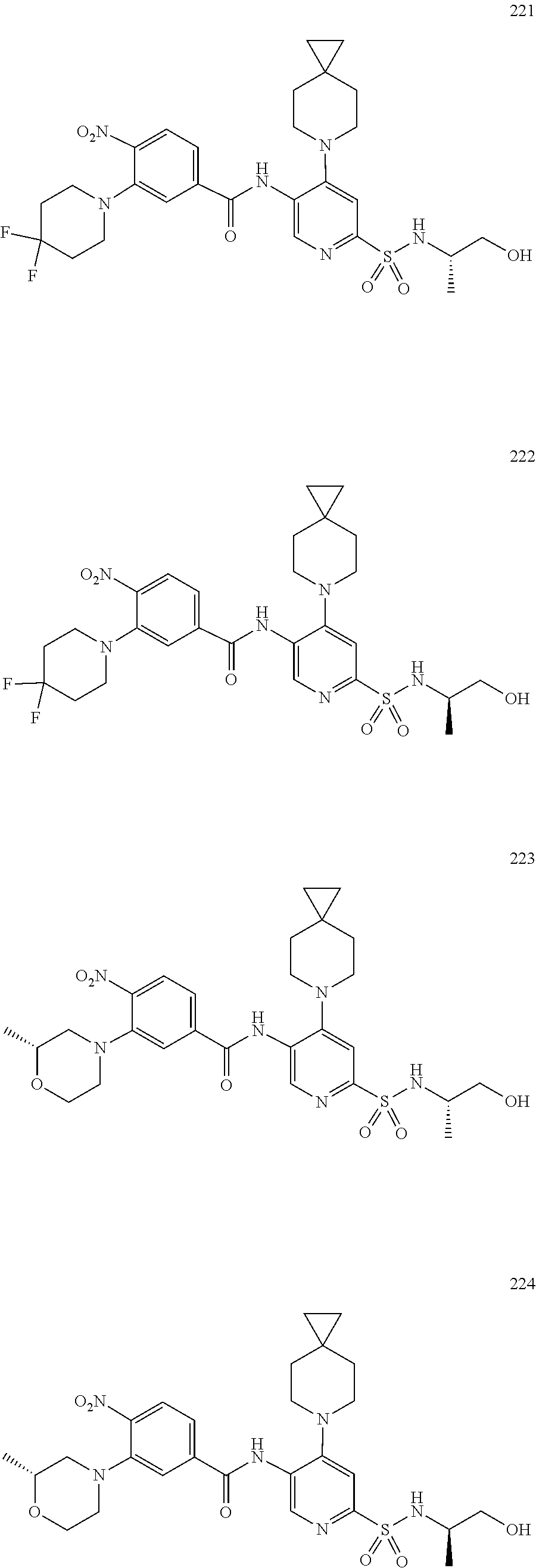


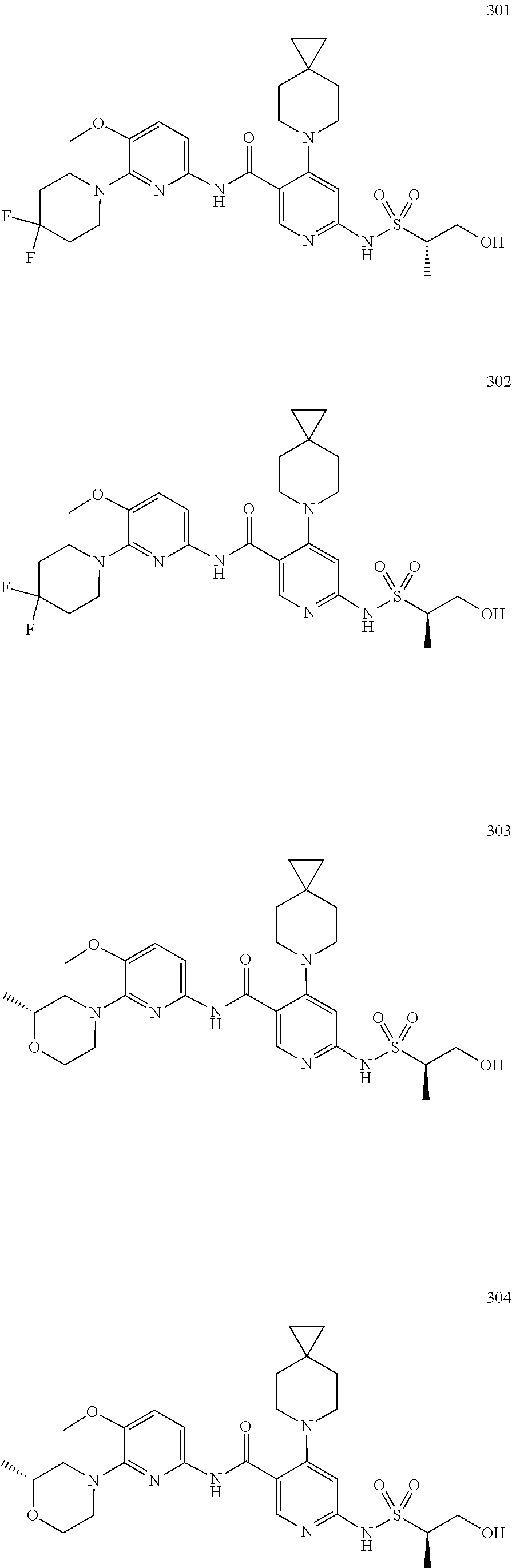


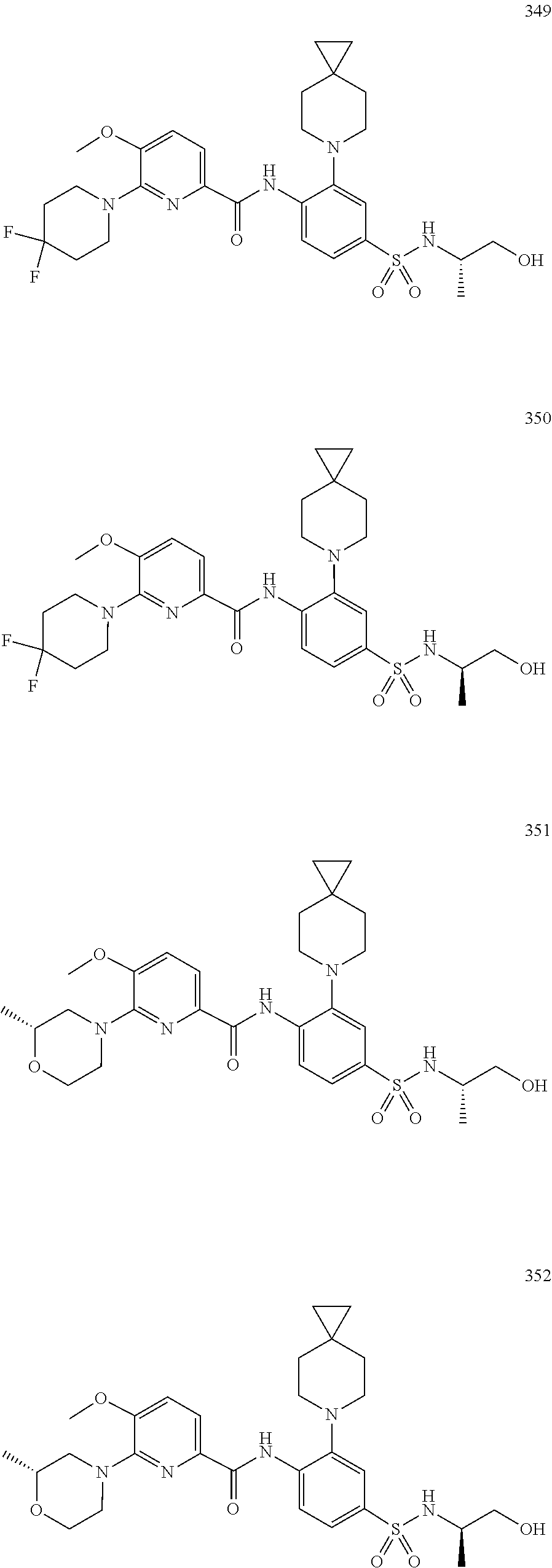

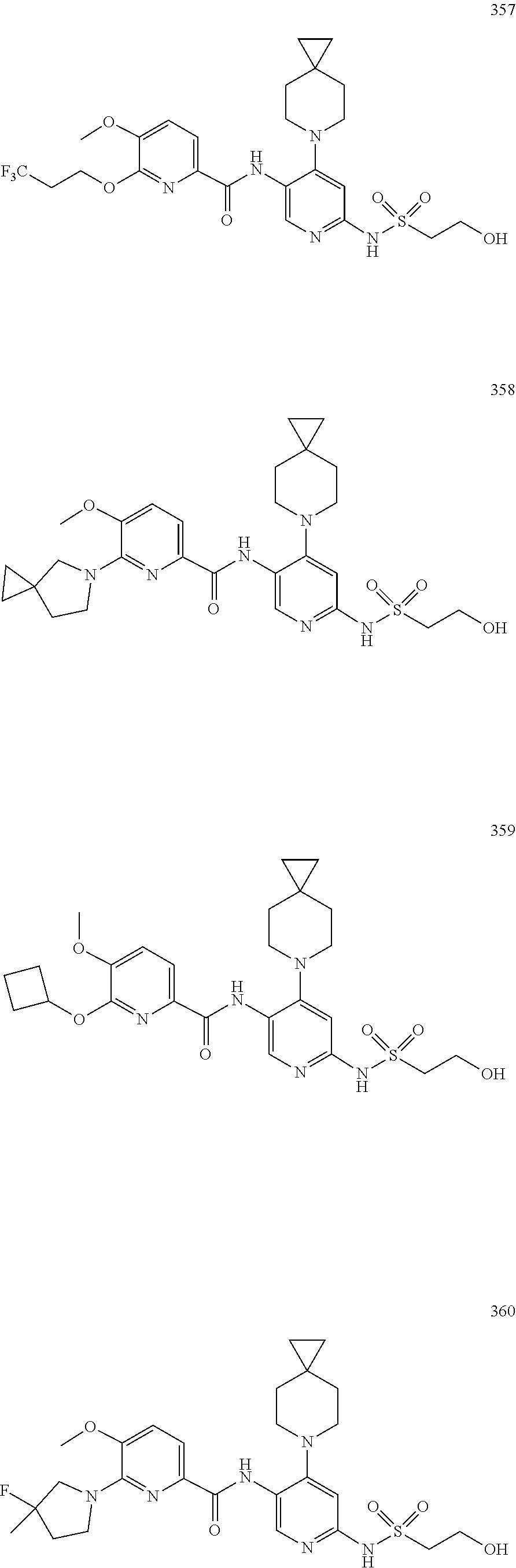


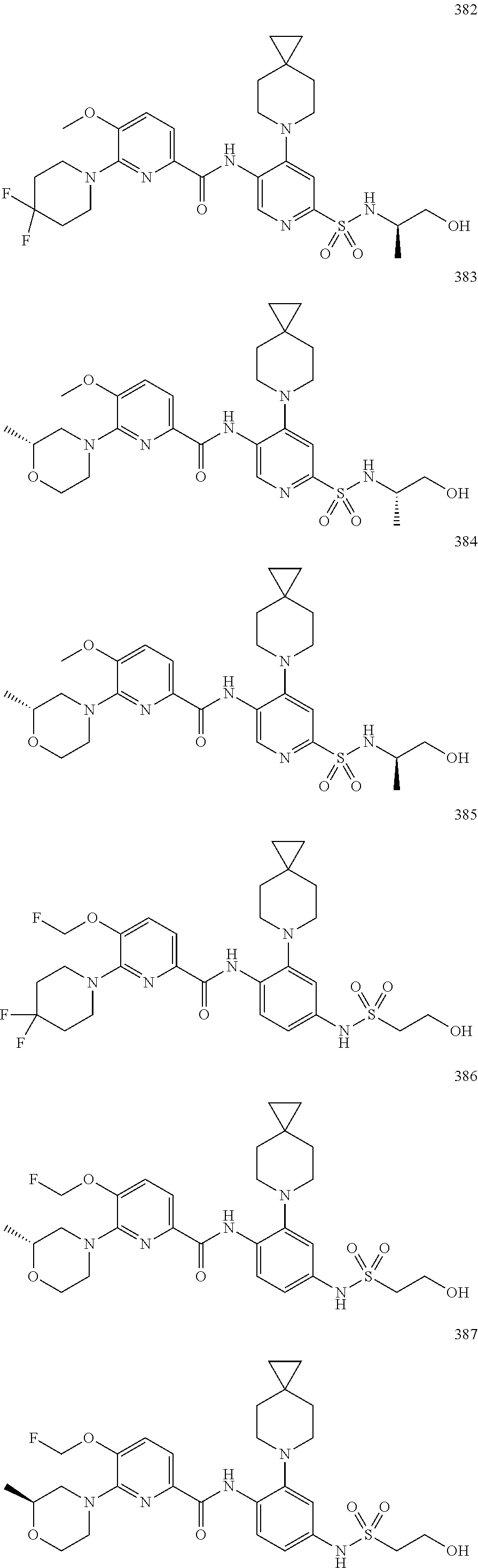

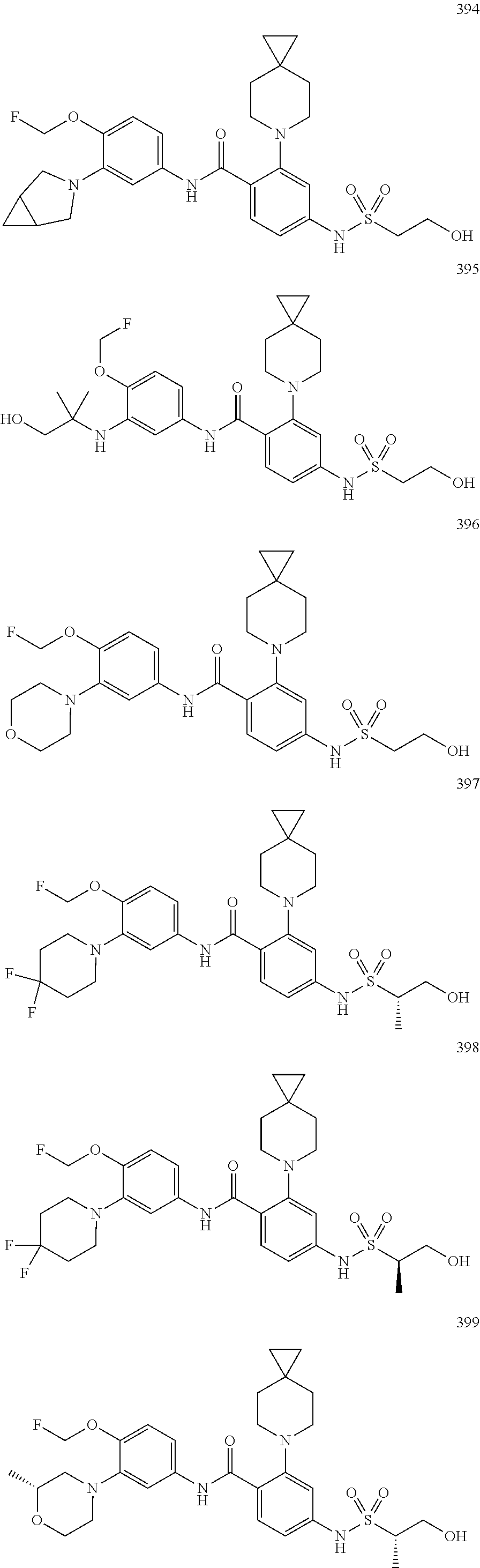


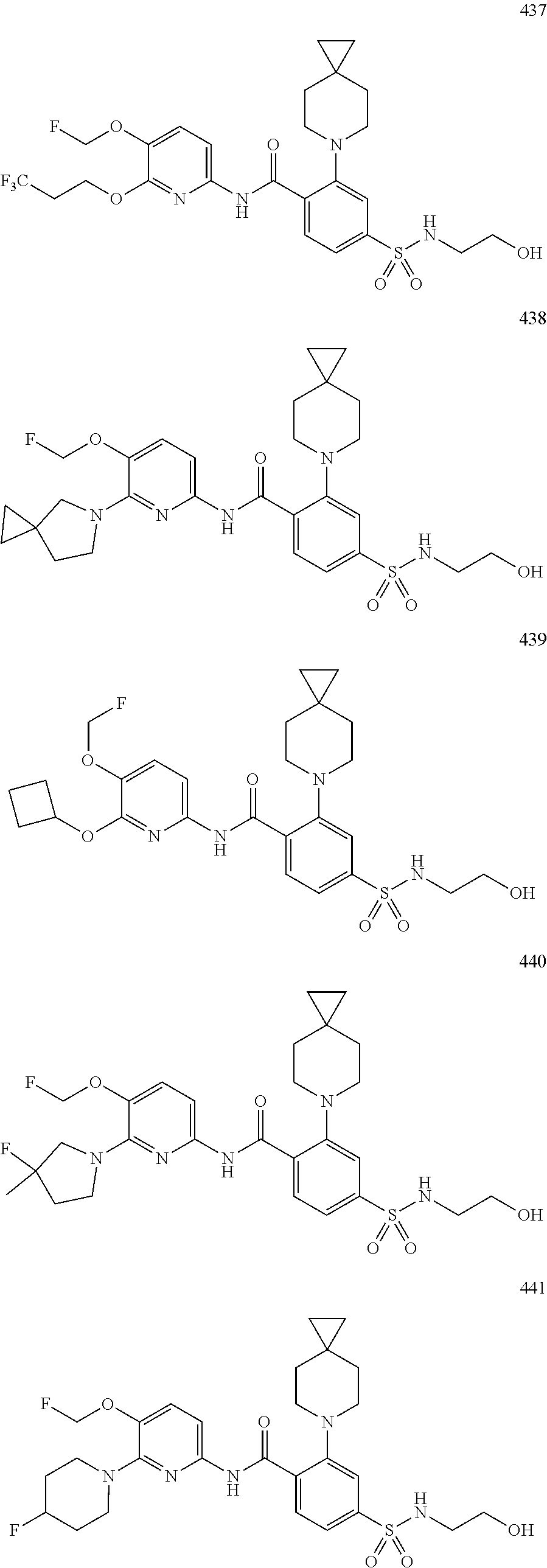

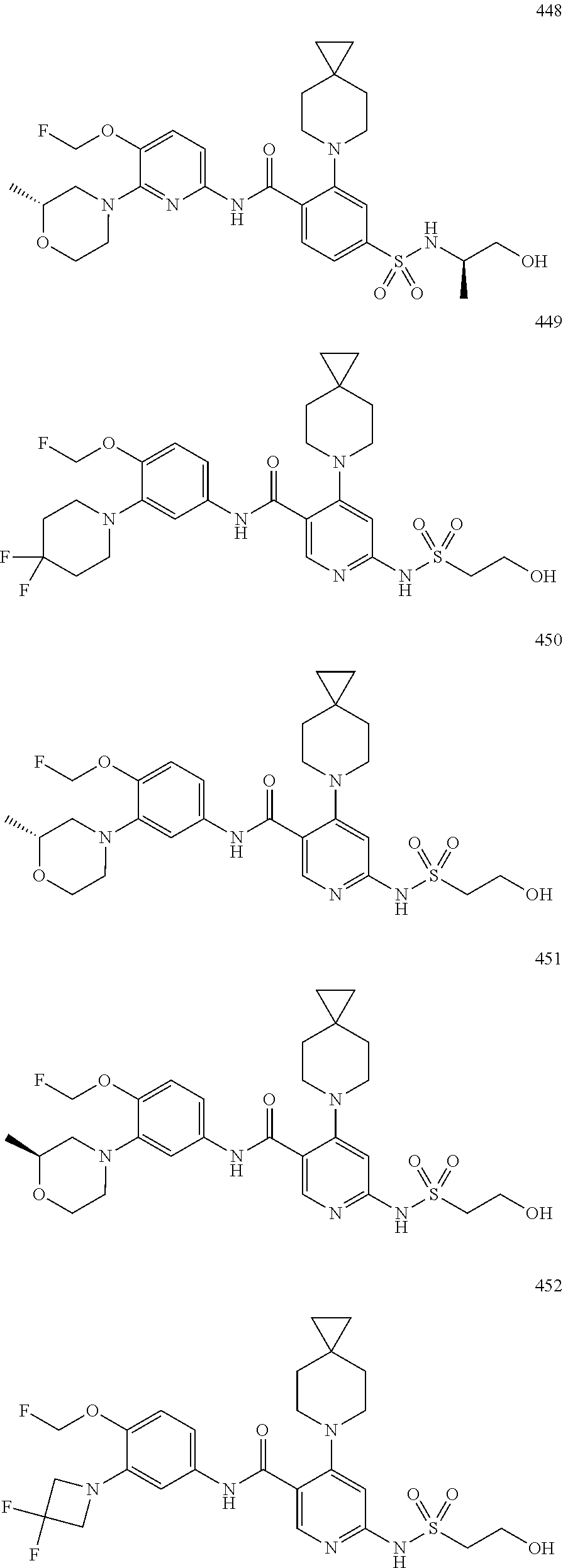

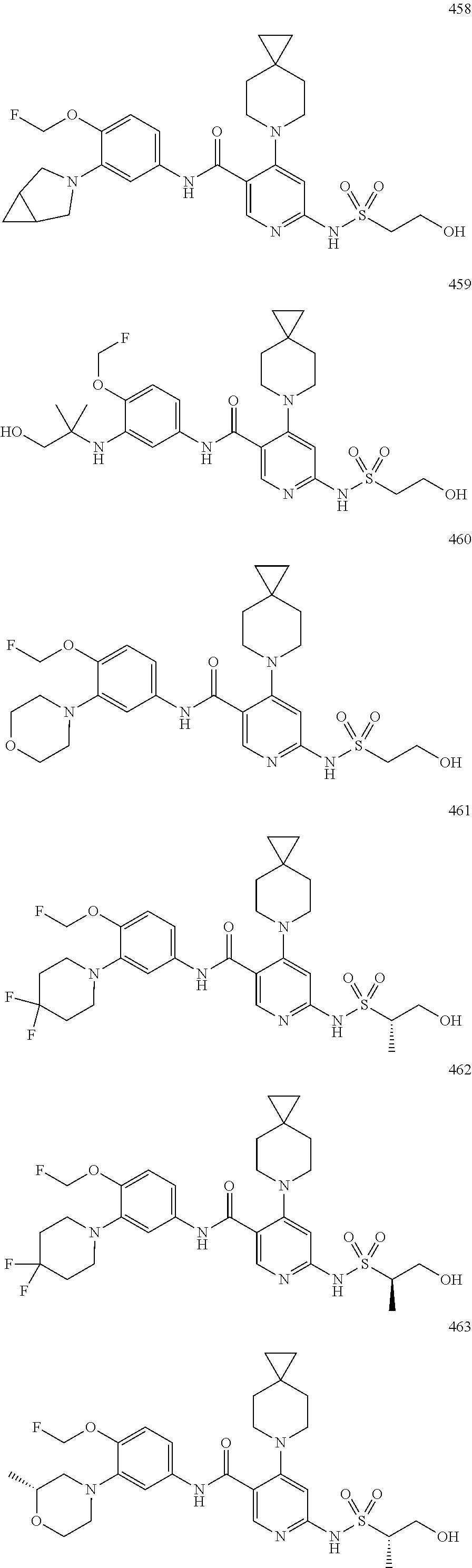


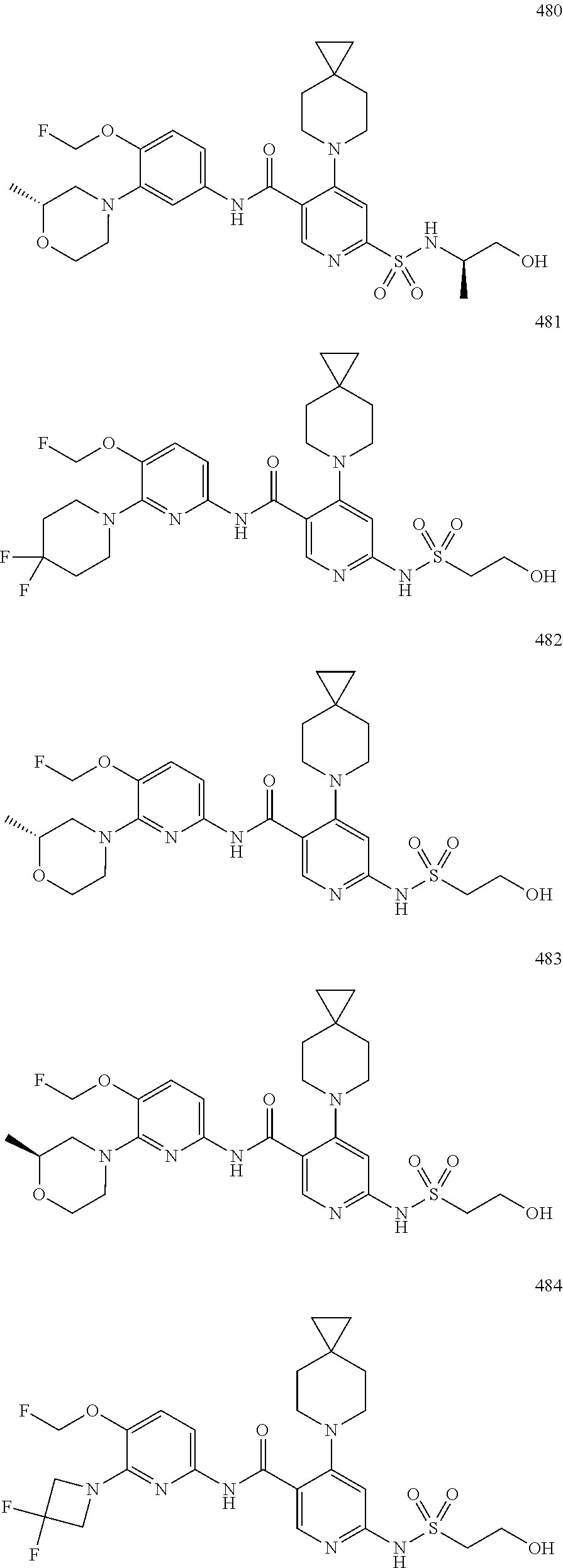


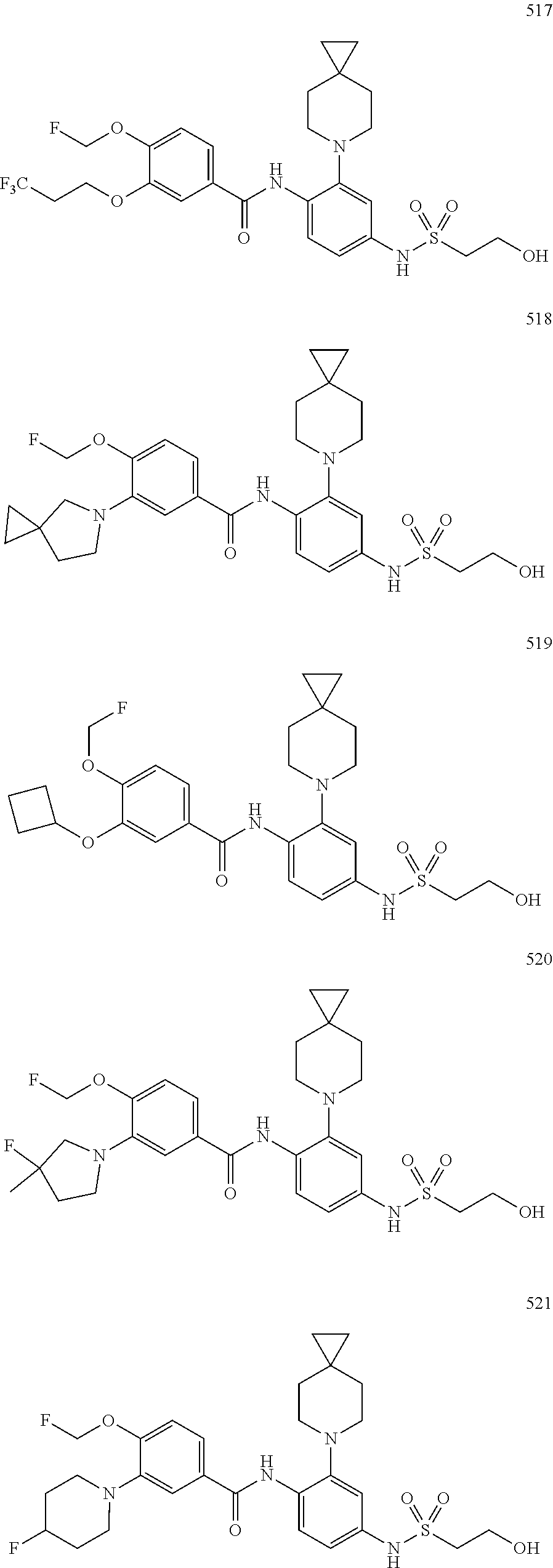

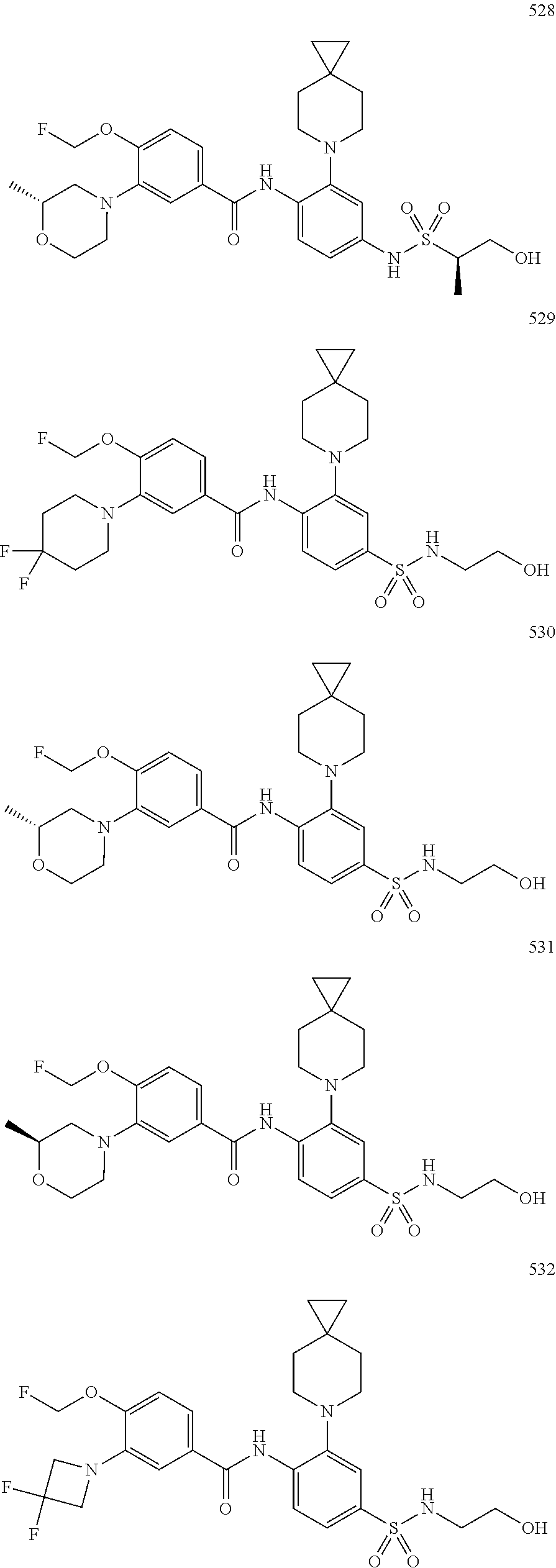
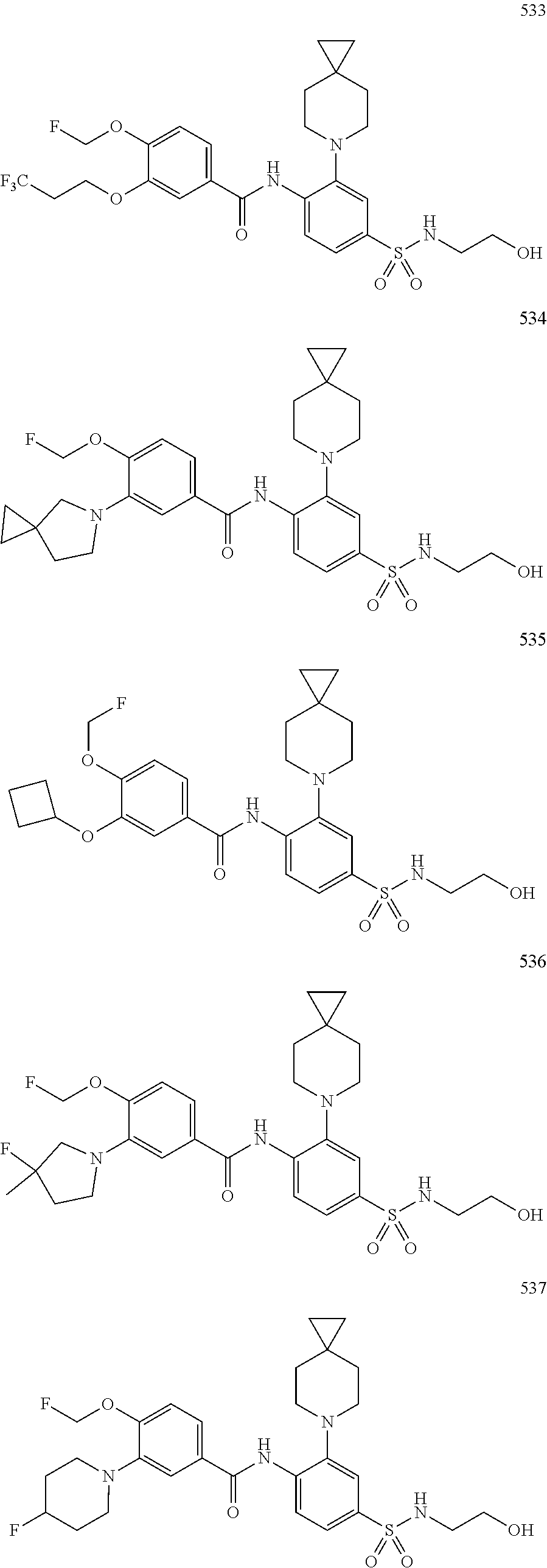


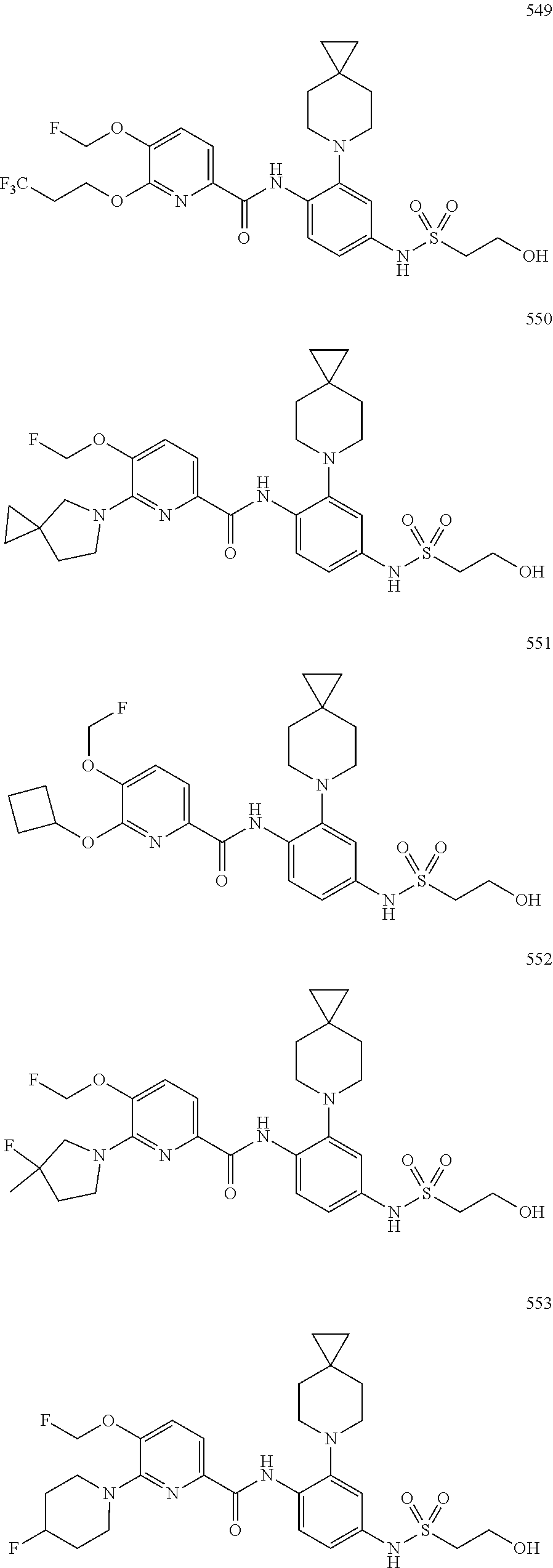
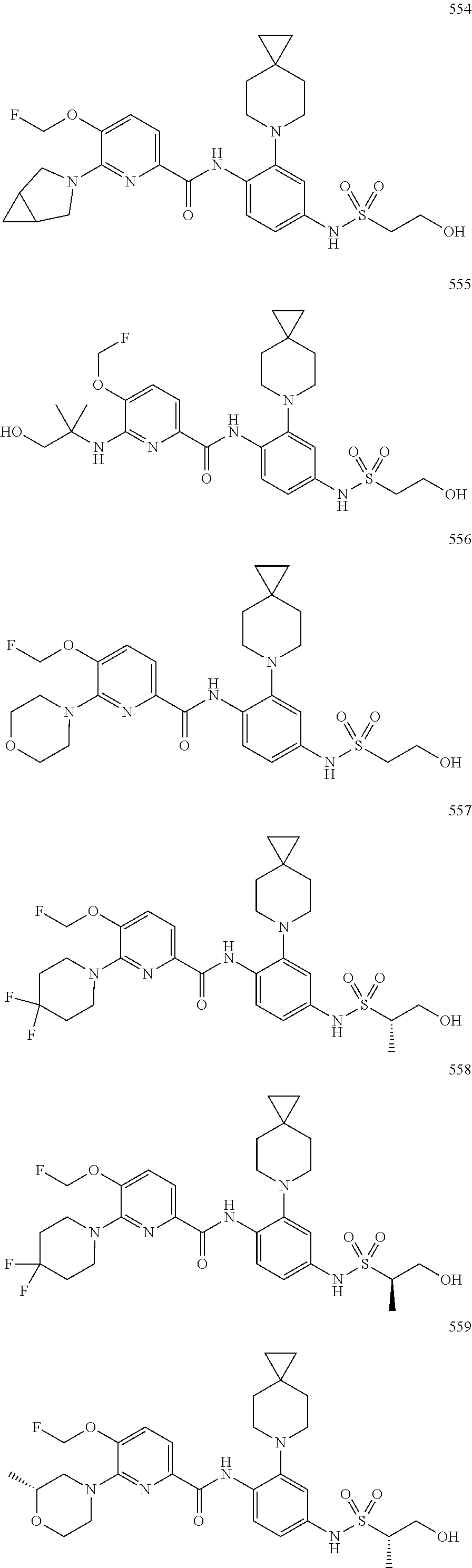
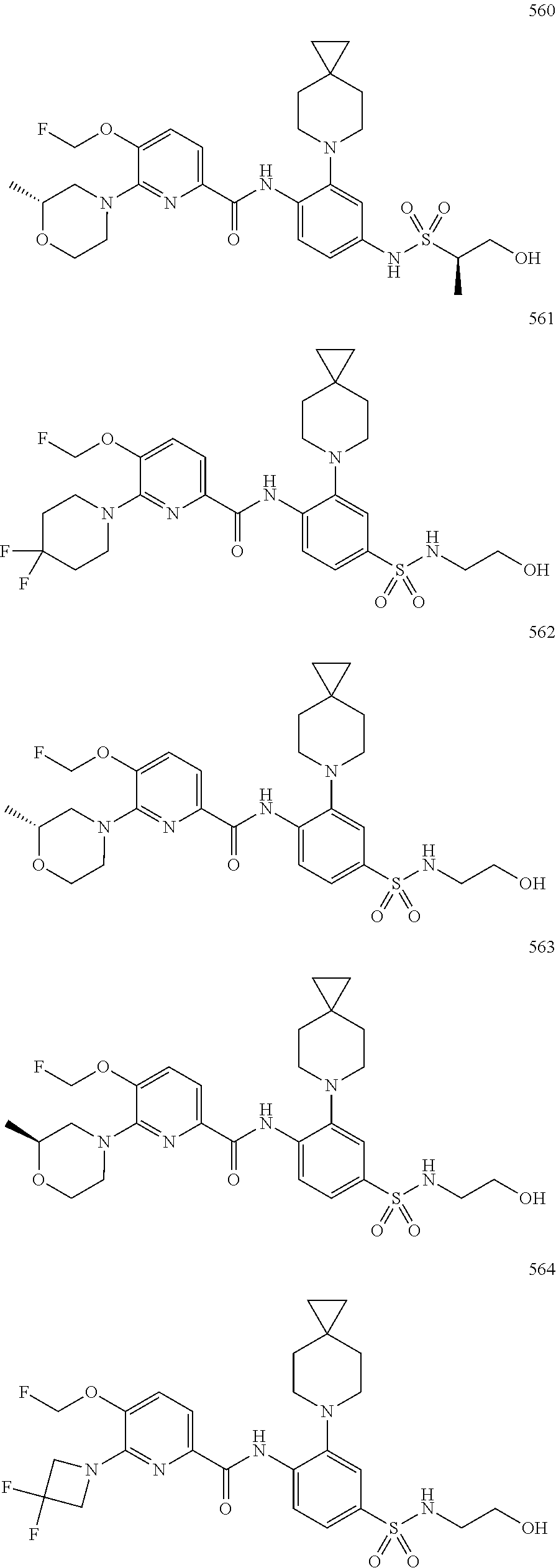


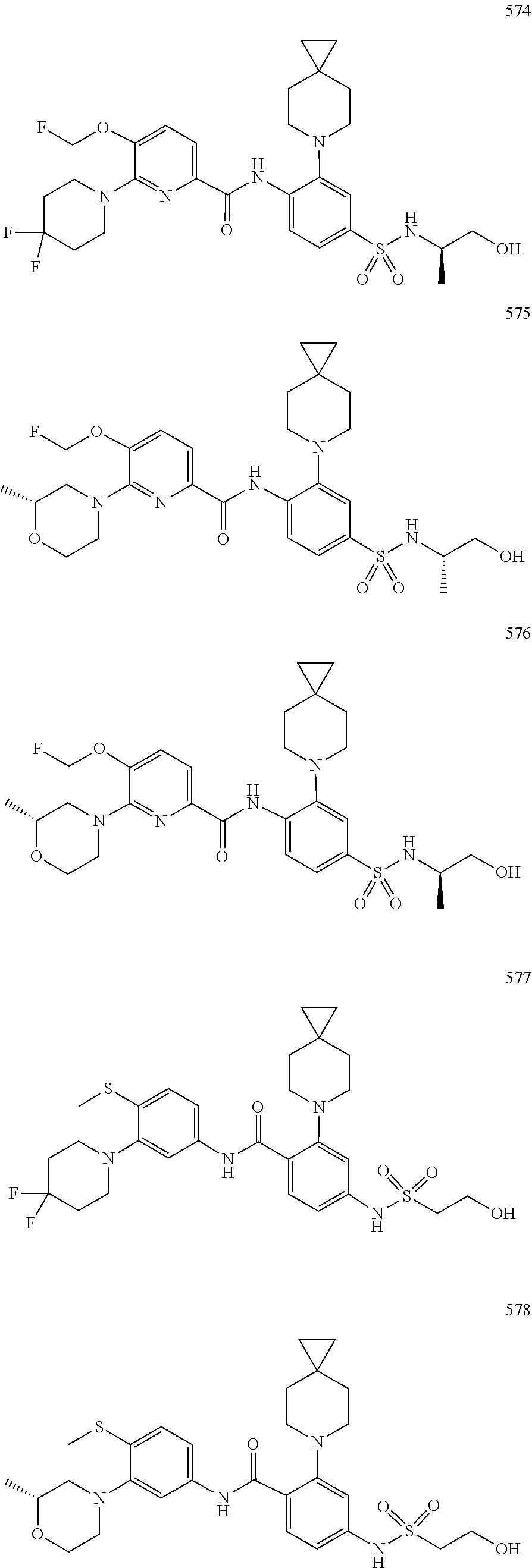

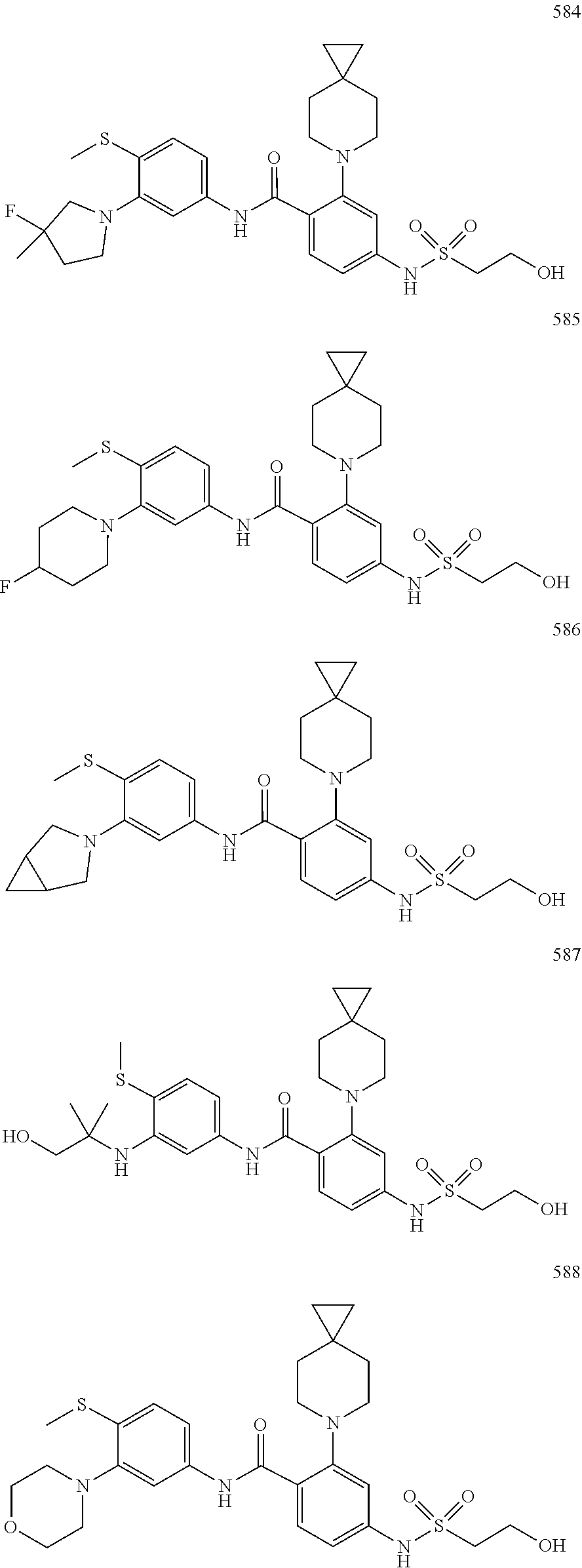


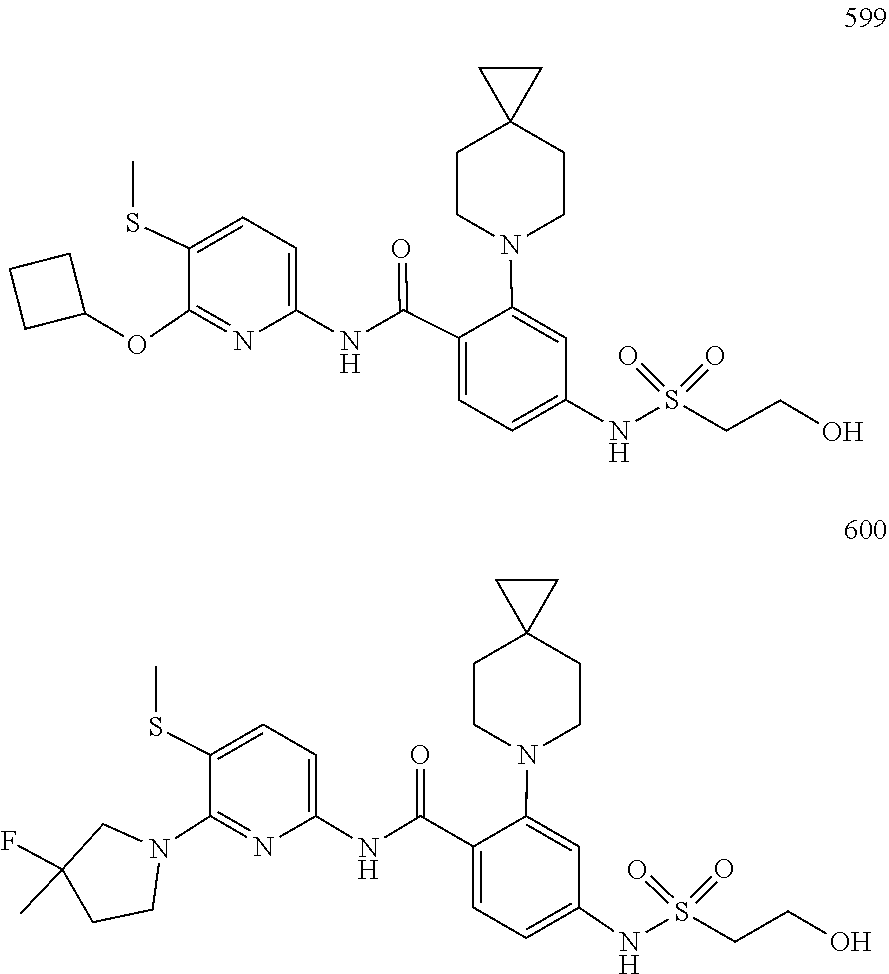
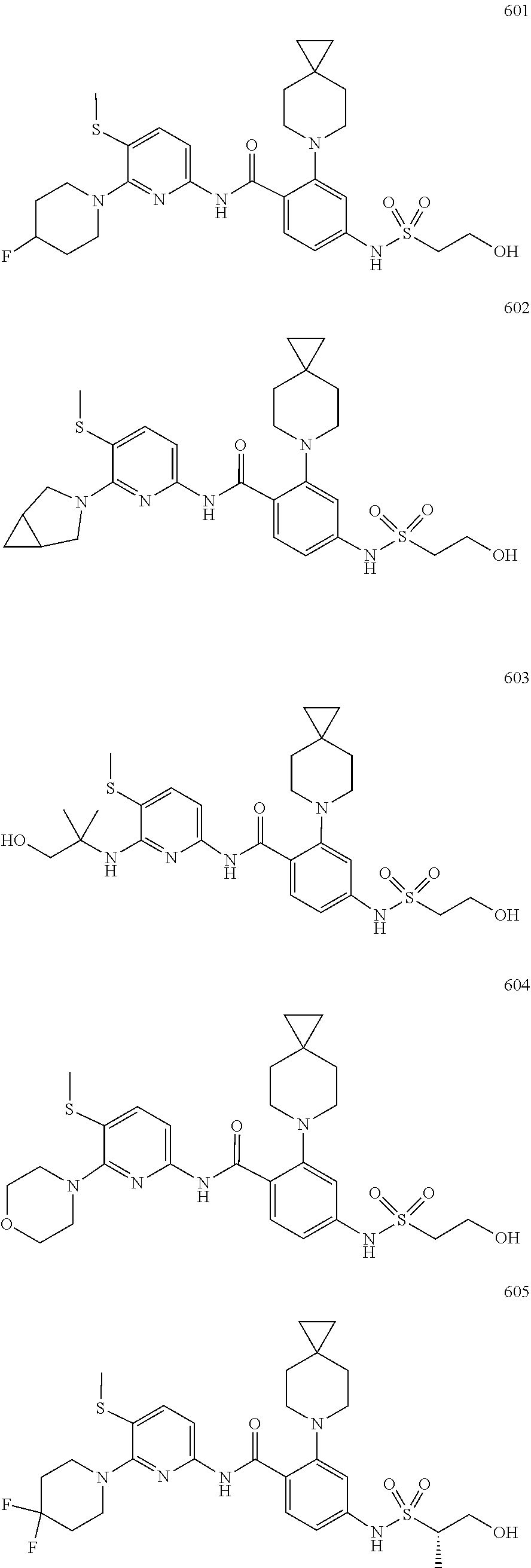


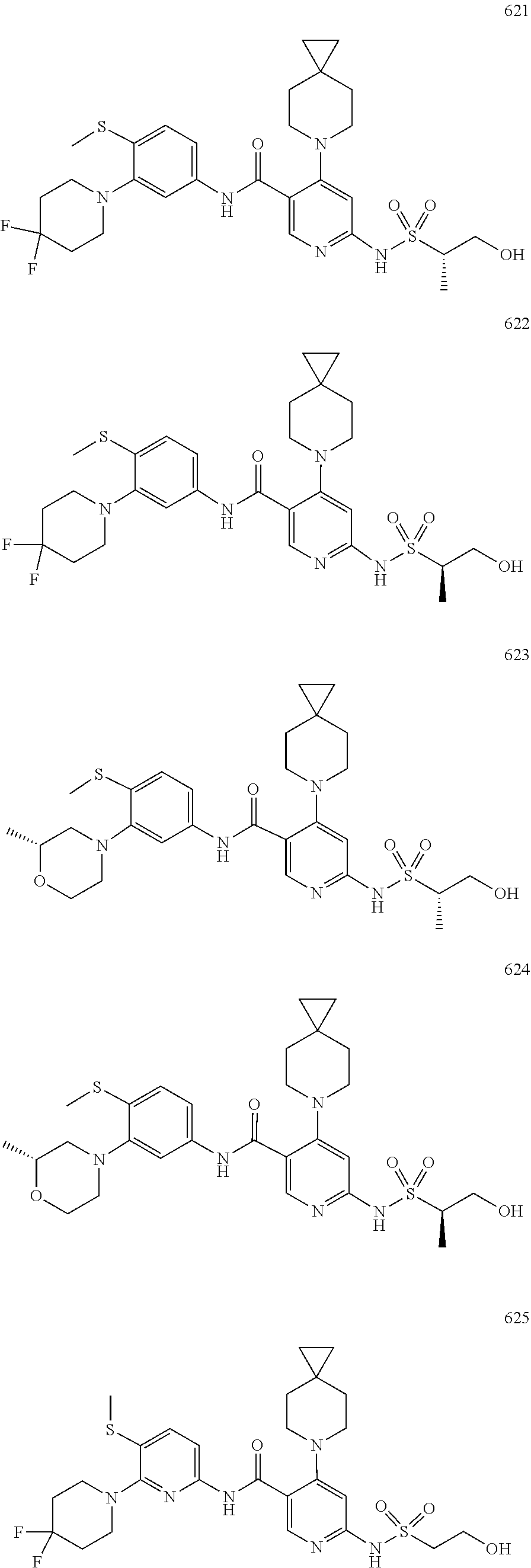
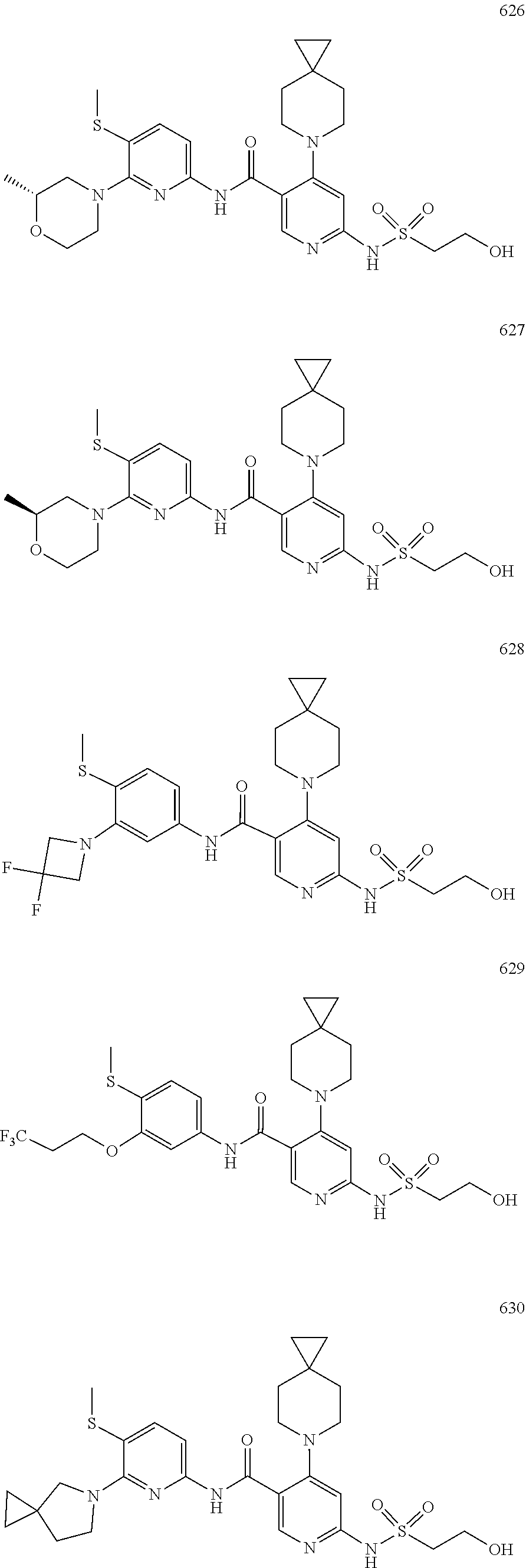


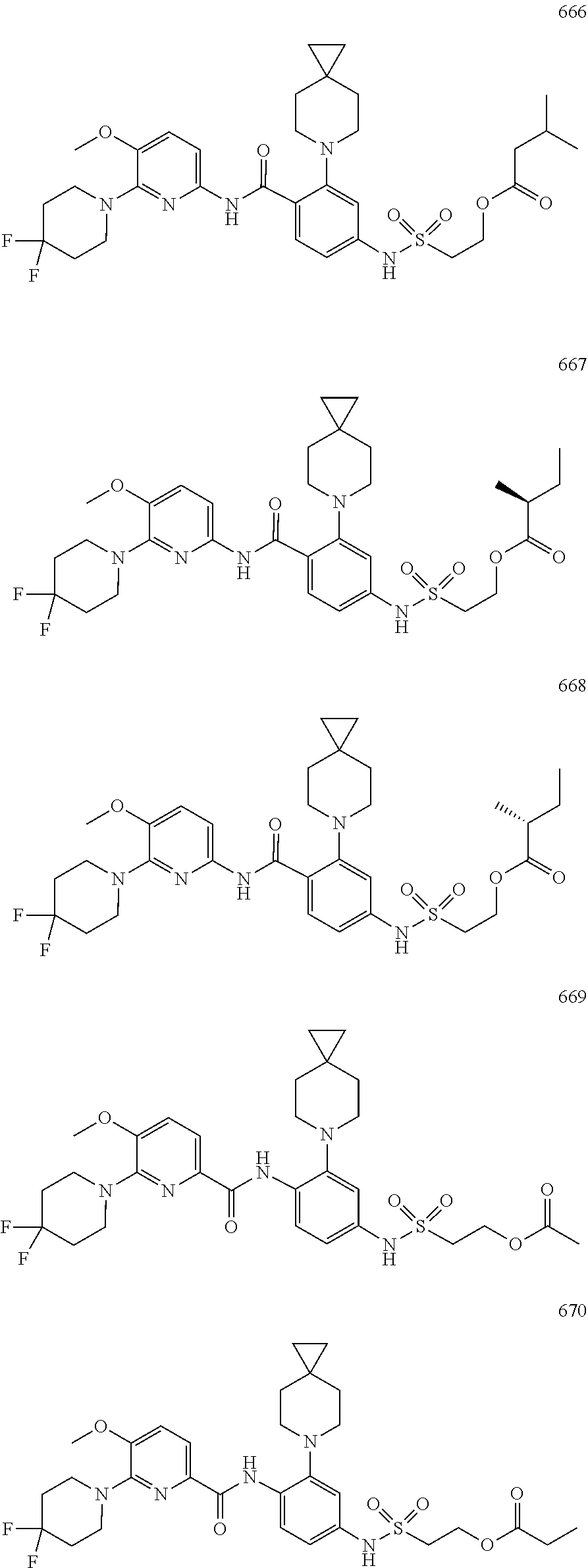


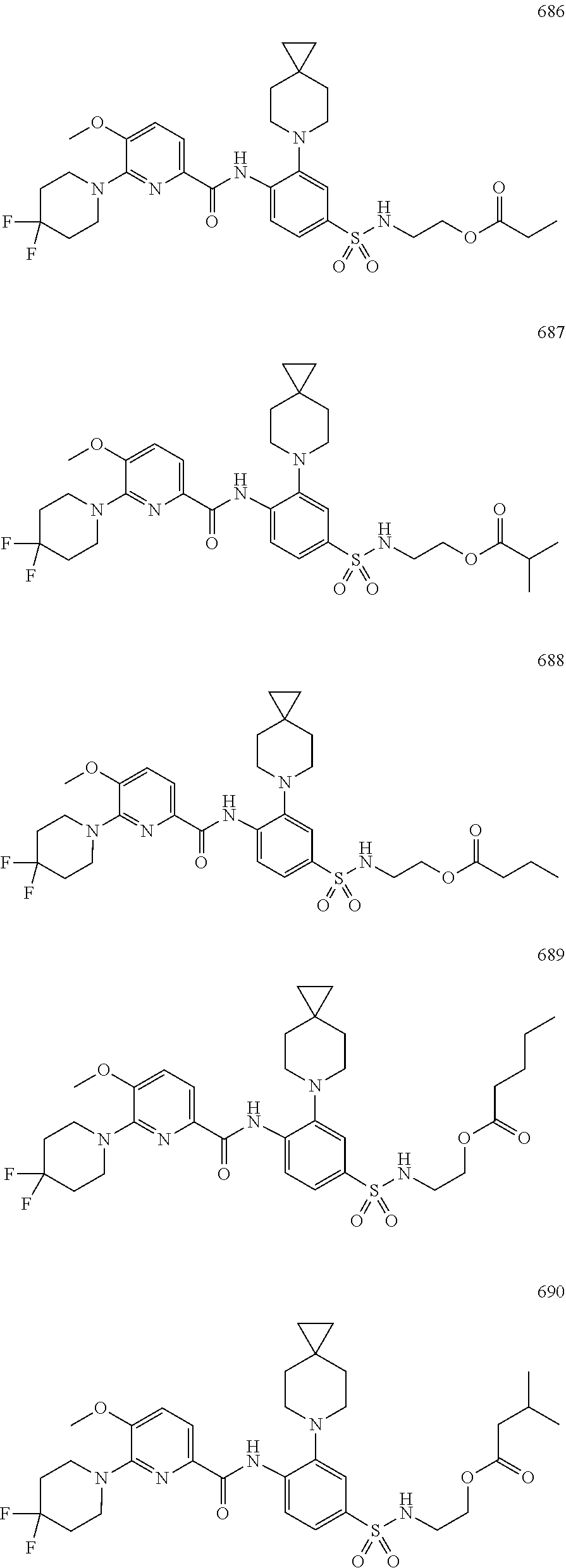


99. The pharmaceutical composition according to claim 1, wherein the KIF18A inhibitor is

100. The pharmaceutical composition according to claim 1, wherein the KIF18A inhibitor is


